
CNA Scholarships: How to Fund Your Certification Training 2026 October
Pass the CNA Scholarships: How to Fund Your exam with confidence. Practice questions with detailed explanations and instant feedback on every answer.
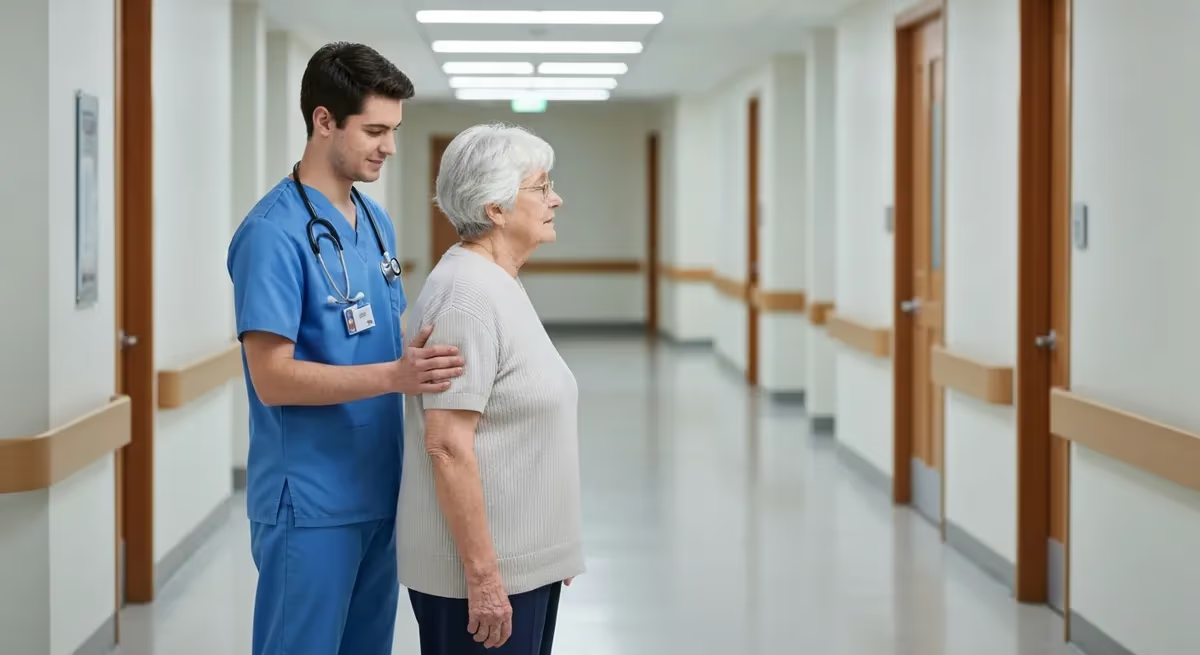
CNA scholarships open doors for people who want to enter healthcare but can't shoulder training costs alone. The average CNA program runs between $500 and $2,000 -- sometimes more if you're at a private school. That's real money, especially when you're already working a job to keep the lights on. But here's the thing: there's more funding out there than most people realize. Federal grants, state workforce programs, employer-paid training, and private foundation awards all exist to help you get certified without drowning in debt.
If you're searching for mn grants for cna class options or wondering how to pay for cna classes, you're in the right spot. Thousands of CNA students receive some form of financial assistance each year. Pell Grants alone cover up to $7,395 annually, and many state programs fill in the gaps. Some employers even pay your entire tuition in exchange for a work commitment after you pass the exam. The trick is knowing where to look and applying early -- these funds don't last forever.
This page breaks down every major scholarship and funding source for CNA training. We'll cover federal financial aid, state-specific grants, employer-sponsored programs, and private scholarships. Whether you're a high school graduate, a career changer, or someone re-entering the workforce, there's likely a funding path that fits your situation. You just need to know how to find it.

Federal financial aid remains the single biggest funding source for CNA students -- yet many people never apply. The FAFSA unlocks Pell Grants, which don't need to be repaid. If your expected family contribution is low enough, you could receive enough to cover tuition, books, and even scrubs. Mn grants for cna class seekers should know that Minnesota (and most other states) layers additional workforce grants on top of federal aid, stretching your funding further.
You don't need perfect grades or test scores. Pell Grants are need-based, not merit-based. That matters. It means your income situation -- not your GPA -- determines eligibility. If you're wondering how to pay for cna classes without loans, start with the FAFSA. It takes about 30 minutes to complete online, and you'll get results within days. Many community colleges also have emergency aid funds for students who hit unexpected financial walls mid-program. Those are worth asking about during enrollment.
State workforce development boards run cna training scholarships specifically designed to fill local nursing shortages. These programs often cover 100% of tuition and sometimes pay a stipend while you train. Check your state's workforce website or call your local American Job Center -- they'll walk you through what's available in your area.
Private scholarships and foundation grants add another layer of funding that most CNA students overlook. Organizations like the American Health Care Association, the National Network of Career Nursing Assistants, and local healthcare foundations all offer awards ranging from $500 to $5,000. CNA training scholarships from these groups usually require a short essay and proof of enrollment -- nothing overwhelming. The deadlines vary, so set calendar reminders and apply to every one you qualify for.
Grants for cna programs come from surprising places too. Religious organizations, Rotary clubs, community foundations, and even some credit unions run healthcare training scholarships. Your school's financial aid office should have a list of local options. If they don't, search your county name plus "healthcare scholarship" online. You'll find cna programs that accept financial aid listed alongside application deadlines and eligibility requirements.
Military-connected students have extra options. The GI Bill covers CNA training at approved programs, and some states offer veterans' training grants separate from federal benefits. Spouses of active-duty service members can also access MyCAA scholarships, which provide up to $4,000 for healthcare certifications. Don't leave that money on the table if you're eligible.
CNA Funding Sources Compared
The Pell Grant is the cornerstone of federal CNA funding. It awards up to $7,395 per year based on financial need. You won't repay a cent. Federal Supplemental Educational Opportunity Grants (FSEOG) add another $100 to $4,000 for students with extreme need. Subsidized Stafford Loans are also available, though grants should always come first. File the FAFSA at studentaid.gov -- it's free, and the earlier you submit, the more aid you'll receive.
Employer-sponsored CNA training is one of the best-kept secrets in healthcare. Nursing homes across the country are desperate for certified aides, and many will pay your entire tuition if you agree to work for them after certification. CNA programs that accept financial aid through employer sponsorship usually have shorter application processes than federal aid. You'll interview, get accepted, and start classes within weeks -- sometimes days.
CNA programs with financial aid through employers typically include more than just tuition. Many cover the cost of your state exam, background check, scrubs, and textbook. Some even pay an hourly wage during your clinical hours. The trade-off is a work commitment, usually 6 to 12 months at the sponsoring facility. That's not a bad deal when you consider you're getting trained, certified, and employed all at once. If the facility isn't a good fit, most contracts let you buy out the commitment or transfer to a sister facility.
Hospital systems tend to offer the most generous packages. Large networks like HCA Healthcare, Ascension, and Providence run internal CNA training programs with full tuition coverage and competitive starting pay after certification. Check their career pages directly -- these programs fill fast and often have rolling admission.
CNA classes that take financial aid are more common than you might think. Nearly every community college CNA program participates in federal student aid programs. That means Pell Grants, state grants, and subsidized loans all apply. Vocational schools and some Red Cross programs also accept financial aid, though you'll want to confirm their accreditation status before enrolling. Financial aid for cna classes only works at institutions recognized by the U.S. Department of Education.
Private CNA schools are trickier. Some accept financial aid, others don't. If a school isn't Title IV eligible, federal grants and loans won't apply -- but state workforce grants still might. Always ask two questions before enrolling: "Are you accredited?" and "Do you participate in federal financial aid programs?" If the answer to either is no, look for a program that does. Your cna classes that take financial aid options expand significantly when you stick with accredited community colleges.
Online CNA programs have complicated financial aid rules. The classroom portion might qualify for aid, but clinical hours must be done in person at an approved facility. Hybrid programs that combine online lectures with local clinicals sometimes fall through the cracks of traditional financial aid. Call the financial aid office directly before committing to any online program -- they'll tell you exactly what's covered and what isn't.
Pros and Cons of CNA Financial Aid Options
- +Pell Grants cover most program costs and never need repayment
- +Employer sponsorships include guaranteed employment after certification
- +State workforce grants often cover 100% of tuition and exam fees
- +Multiple funding sources can be stacked to eliminate out-of-pocket costs
- +Short program duration means less total financial aid needed
- +Many scholarships have simple applications requiring only a short essay
- −FAFSA processing can take weeks, delaying enrollment
- −Employer-sponsored programs require work commitments of 6-12 months
- −Private school programs may not qualify for federal financial aid
- −Scholarship deadlines vary and can be easy to miss
- −Some state grants are limited to specific geographic regions
- −Online programs may not qualify for the same aid as in-person classes
Pros and Cons at a Glance
| Pros | Cons |
|---|---|
| Pell Grants cover most program costs and never need repayment | FAFSA processing can take weeks, delaying enrollment |
| Employer sponsorships include guaranteed employment after certification | Private school programs may not qualify for federal financial aid |
| Multiple funding sources can be stacked to eliminate out-of-pocket costs | Scholarship deadlines vary and can be easy to miss |
| Short program duration means less total financial aid needed | Some state grants are limited to specific geographic regions |
| Many scholarships have simple applications requiring only a short essay | Online programs may not qualify for the same aid as in-person classes |
Grants for cna classes exist at every level of government. Federal grants come through FAFSA. State grants come through workforce boards. County and city grants come through local health departments and community action agencies. Even some tribal nations offer healthcare training grants for members. Financial aid for cna training isn't a single program -- it's a patchwork of funding sources that you need to piece together.
The HRSA Nurse Corps Scholarship is worth special attention. While it's more commonly associated with RN and LPN programs, some CNA-to-nursing bridge programs qualify. If you plan to advance your nursing career beyond the CNA level, this scholarship covers tuition, fees, and provides a monthly living stipend in exchange for working in a critical shortage facility after graduation. It's competitive, but the payoff is enormous for long-term career planners.
Religious and community organizations shouldn't be ignored either. Churches, mosques, synagogues, and community groups often maintain small scholarship funds for local residents entering healthcare. These awards are usually $200 to $1,000, but they add up. Your high school guidance office, local library, and community center bulletin boards are good places to find these opportunities.
Every dollar you don't borrow is a dollar you keep. Check bulletin boards at your local library too -- community organizations post flyers about healthcare training funds that never make it online. Small awards of $250 to $500 add up fast when you're combining multiple sources to cover a $1,500 program.
CNA Scholarship Application Checklist
- ✓Complete the FAFSA at studentaid.gov (required for all federal and most state aid)
- ✓Check your state workforce development board for CNA-specific grants
- ✓Contact at least 3 local nursing homes about employer-sponsored programs
- ✓Search for private scholarships on fastweb.com and scholarships.com
- ✓Request transcripts from your high school or GED program
- ✓Write a 500-word personal statement about your healthcare career goals
- ✓Gather income documentation (W-2s, tax returns, pay stubs)
- ✓Verify your chosen program is accredited and Title IV eligible
- ✓Set calendar reminders for each scholarship deadline
- ✓Follow up with every application within 2 weeks of submission
CNA scholarships near me is one of the most common searches from aspiring nursing assistants -- and for good reason. Location matters enormously for CNA funding. States with severe nursing shortages (think rural areas, the Midwest, and parts of the South) tend to offer the most generous grants. Your county health department is often the fastest way to find scholarships for cna programs in your specific area.
Community colleges are your best bet for maximizing local financial aid. They're almost always Title IV eligible, meaning federal grants apply. They typically have the lowest tuition rates in your area. And they maintain relationships with local employers who sponsor students. Many community college CNA programs cost under $1,000 total -- and after grants, your out-of-pocket cost could be zero. That's not an exaggeration. Students who qualify for Pell Grants at a low-cost community college often receive refund checks because their grant exceeds tuition.
Don't forget to check with your current employer, even if they're not in healthcare. Some companies offer tuition reimbursement for any accredited training program, including CNA certification. Walmart, Amazon, Starbucks, and other large retailers have education benefit programs that could cover your CNA training while you continue working part-time. It's worth asking HR before assuming you'll need to pay out of pocket.
Paid cna classes are everywhere if you know where to look. The term refers to employer-sponsored training where a healthcare facility pays your tuition and sometimes even pays you an hourly wage during training. Nursing homes are the most common sponsors because they face chronic staffing shortages. Hospitals, assisted living communities, and home health agencies also run these programs, though less frequently.
CNA green card sponsorship is a separate but related topic that international workers often search for. Some U.S. healthcare employers sponsor CNA workers for employment-based green cards, particularly in areas with extreme staffing shortages. The process is longer and more complex than domestic scholarship applications -- you'll typically need a job offer first, then the employer petitions on your behalf. States like Minnesota, North Dakota, and Vermont have been especially active in recruiting international CNAs. If you're on a work visa, ask potential employers directly about sponsorship before accepting a training position.
The financial math on paid CNA classes is compelling. A standard program costs $1,000 to $2,000. If an employer covers that and pays you $12/hour during 80 hours of training, you're getting $1,960 in wages plus free tuition. Compare that to paying out of pocket and being unemployed during training. Even with the 6-to-12 month work commitment, the employer-sponsored route puts you ahead financially from day one.
Be cautious of programs that charge upfront fees for "guaranteed scholarships" or "exclusive grant access." Legitimate financial aid is always free to apply for. Never pay someone to complete your FAFSA -- it's free at studentaid.gov. If a CNA program isn't accredited by your state's nursing board, any certification you earn may not be valid. Always verify accreditation before paying tuition or signing a training agreement.
CNA sponsorship program opportunities continue to grow as the nursing shortage intensifies. The Bureau of Labor Statistics projects steady demand for nursing assistants through 2032, and employers are responding with increasingly generous training incentives. Some facilities now offer sign-on bonuses of $1,000 to $3,000 on top of free training. Others provide housing assistance for students who relocate to underserved areas. The competition for CNA students has shifted the financial equation firmly in your favor.
If you're looking for cna programs that offer financial aid near me, start with three calls. First, call your county health department -- they track every approved CNA program in the area and know which ones offer financial aid. Second, call the nearest community college -- their financial aid office handles these questions daily. Third, call the largest nursing home in your area -- there's a strong chance they sponsor CNA students. Those three calls will give you a complete picture of local funding options in under an hour.
Timing matters more than most people realize. Pell Grant funds are distributed on a first-come, first-served basis at many schools. State workforce grants often run out mid-year. Employer-sponsored programs start new cohorts quarterly. The best time to start researching funding is now -- not next month, not next semester. File your FAFSA today if you haven't already. The process takes 30 minutes and unlocks thousands of dollars in potential aid.
CNA Practice Test Questions
Prepare for the CNA - Certified Nursing Assistant exam with our free practice test modules. Each quiz covers key topics to help you pass on your first try.
CNA Activities of Daily Living
CNA Exam Questions covering Activities of Daily Living. Master CNA Test concepts for certification prep.
CNA Aging Process
Free CNA Practice Test featuring Aging Process. Improve your CNA Exam score with mock test prep.
CNA Anatomy and Physiology Basics
CNA Mock Exam on Anatomy and Physiology Basics. CNA Study Guide questions to pass on your first try.
CNA Assisting with Daily Living
CNA Test Prep for Assisting with Daily Living. Practice CNA Quiz questions and boost your score.
CNA Assisting with Range of Motion Exercises
CNA Questions and Answers on Assisting with Range of Motion Exercises. Free CNA practice for exam readiness.
CNA Basic Human Anatomy and Age-Related Ch...
CNA Mock Test covering Basic Human Anatomy and Age-Related Changes. Online CNA Test practice with instant feedback.
CNA Basic Nursing Skills
Free CNA Quiz on Basic Nursing Skills. CNA Exam prep questions with detailed explanations.
CNA Basic Nursing Skills 10
CNA Practice Questions for Basic Nursing Skills 10. Build confidence for your CNA certification exam.
CNA Basic Nursing Skills 11
CNA Test Online for Basic Nursing Skills 11. Free practice with instant results and feedback.
CNA Basic Nursing Skills 1
CNA Study Material on Basic Nursing Skills 1. Prepare effectively with real exam-style questions.
CNA Basic Nursing Skills 12
Free CNA Test covering Basic Nursing Skills 12. Practice and track your CNA exam readiness.
CNA Basic Nursing Skills 13
CNA Exam Questions covering Basic Nursing Skills 13. Master CNA Test concepts for certification prep.
CNA Basic Nursing Skills 14
Free CNA Practice Test featuring Basic Nursing Skills 14. Improve your CNA Exam score with mock test prep.
CNA Basic Nursing Skills 15
CNA Mock Exam on Basic Nursing Skills 15. CNA Study Guide questions to pass on your first try.
CNA Basic Nursing Skills 16
CNA Test Prep for Basic Nursing Skills 16. Practice CNA Quiz questions and boost your score.
CNA Basic Nursing Skills 17
CNA Questions and Answers on Basic Nursing Skills 17. Free CNA practice for exam readiness.
CNA Basic Nursing Skills 18
CNA Mock Test covering Basic Nursing Skills 18. Online CNA Test practice with instant feedback.
CNA Basic Nursing Skills 19
Free CNA Quiz on Basic Nursing Skills 19. CNA Exam prep questions with detailed explanations.
CNA Basic Nursing Skills 20
CNA Practice Questions for Basic Nursing Skills 20. Build confidence for your CNA certification exam.
CNA Basic Nursing Skills 21
CNA Test Online for Basic Nursing Skills 21. Free practice with instant results and feedback.
CNA Basic Nursing Skills 2
CNA Study Material on Basic Nursing Skills 2. Prepare effectively with real exam-style questions.
CNA Basic Nursing Skills 3
Free CNA Test covering Basic Nursing Skills 3. Practice and track your CNA exam readiness.
CNA Basic Nursing Skills 4
CNA Exam Questions covering Basic Nursing Skills 4. Master CNA Test concepts for certification prep.
CNA Basic Nursing Skills 5
Free CNA Practice Test featuring Basic Nursing Skills 5. Improve your CNA Exam score with mock test prep.
CNA Basic Nursing Skills 6
CNA Mock Exam on Basic Nursing Skills 6. CNA Study Guide questions to pass on your first try.
CNA Basic Nursing Skills 7
CNA Test Prep for Basic Nursing Skills 7. Practice CNA Quiz questions and boost your score.
CNA Basic Nursing Skills 8
CNA Questions and Answers on Basic Nursing Skills 8. Free CNA practice for exam readiness.
CNA Basic Nursing Skills 9
CNA Mock Test covering Basic Nursing Skills 9. Online CNA Test practice with instant feedback.
CNA Basic Restorative Services
Free CNA Quiz on Basic Restorative Services. CNA Exam prep questions with detailed explanations.
CNA Basic Restorative Services 1
CNA Practice Questions for Basic Restorative Services 1. Build confidence for your CNA certification exam.
CNA Bathing and Dressing
CNA Test Online for Bathing and Dressing. Free practice with instant results and feedback.
CNA Body Mechanics
CNA Study Material on Body Mechanics. Prepare effectively with real exam-style questions.
CNA Career Advancement and Opportunities
Free CNA Test covering Career Advancement and Opportunities. Practice and track your CNA exam readiness.
CNA Career Opportunities and Benefits
CNA Exam Questions covering Career Opportunities and Benefits. Master CNA Test concepts for certification prep.
CNA Care for Residents with Cognitive Impa...
Free CNA Practice Test featuring Care for Residents with Cognitive Impairment. Improve your CNA Exam score with mock test prep.
CNA Care of Cognitively Impaired Residents
CNA Mock Exam on Care of Cognitively Impaired Residents. CNA Study Guide questions to pass on your first try.
CNA Care of Cognitively Impaired Residents 1
CNA Test Prep for Care of Cognitively Impaired Residents 1. Practice CNA Quiz questions and boost your score.
CNA Care Of Cognitively Impaired Residents 4
CNA Questions and Answers on Care Of Cognitively Impaired Residents 4. Free CNA practice for exam readiness.
CNA Common Medical Terms and Abbreviations
CNA Mock Test covering Common Medical Terms and Abbreviations. Online CNA Test practice with instant feedback.
CNA Communication and Interpersonal Skills
Free CNA Quiz on Communication and Interpersonal Skills. CNA Exam prep questions with detailed explanations.
CNA Communication and Interpersonal Skills 1
CNA Practice Questions for Communication and Interpersonal Skills 1. Build confidence for your CNA certification exam.
CNA Communication And Interpersonal Skills 4
CNA Test Online for Communication And Interpersonal Skills 4. Free practice with instant results and feedback.
CNA Eligibility and Qualifications
CNA Study Material on Eligibility and Qualifications. Prepare effectively with real exam-style questions.
CNA Emergency Procedure
Free CNA Test covering Emergency Procedure. Practice and track your CNA exam readiness.
CNA Ethics and Professionalism
CNA Exam Questions covering Ethics and Professionalism. Master CNA Test concepts for certification prep.
CNA Exam Structure and Content
Free CNA Practice Test featuring Exam Structure and Content. Improve your CNA Exam score with mock test prep.
CNA Feeding and Hydration
CNA Mock Exam on Feeding and Hydration. CNA Study Guide questions to pass on your first try.
CNA Infection Control
CNA Test Prep for Infection Control. Practice CNA Quiz questions and boost your score.
CNA Infection Control and Safety
CNA Questions and Answers on Infection Control and Safety. Free CNA practice for exam readiness.
CNA Isolation Precautions
CNA Mock Test covering Isolation Precautions. Online CNA Test practice with instant feedback.
CNA Legal & Ethical Behaviours
Free CNA Quiz on Legal & Ethical Behaviours. CNA Exam prep questions with detailed explanations.
CNA Legal & Ethical Behaviours 1
CNA Practice Questions for Legal & Ethical Behaviours 1. Build confidence for your CNA certification exam.
CNA Legal & Ethical Behaviours 4
CNA Test Online for Legal & Ethical Behaviours 4. Free practice with instant results and feedback.
CNA Mental Health and Social Services Needs
CNA Study Material on Mental Health and Social Services Needs. Prepare effectively with real exam-style questions.
CNA Mental Health and Social Services Needs 1
Free CNA Test covering Mental Health and Social Services Needs 1. Practice and track your CNA exam readiness.
CNA Mental Health And Social Services Needs 4
CNA Exam Questions covering Mental Health And Social Services Needs 4. Master CNA Test concepts for certification prep.
CNA Nutrition and Hydration Management
Free CNA Practice Test featuring Nutrition and Hydration Management. Improve your CNA Exam score with mock test prep.
CNA Patient Care Procedure
CNA Mock Exam on Patient Care Procedure. CNA Study Guide questions to pass on your first try.
CNA Personal Care Skills
CNA Test Prep for Personal Care Skills. Practice CNA Quiz questions and boost your score.
CNA Personal Care Skills 1
CNA Questions and Answers on Personal Care Skills 1. Free CNA practice for exam readiness.
CNA Personal Care Skills 4
CNA Mock Test covering Personal Care Skills 4. Online CNA Test practice with instant feedback.
CNA Personal Care Skills 5
Free CNA Quiz on Personal Care Skills 5. CNA Exam prep questions with detailed explanations.
CNA Personal Hygiene and Grooming
CNA Practice Questions for Personal Hygiene and Grooming. Build confidence for your CNA certification exam.
CNA Practice Test - Basic Nursing Skills #2
CNA Test Online for Practice Test - Basic Nursing Skills #2. Free practice with instant results and feedback.
CNA Practice Test - Basic Nursing Skills #2 1
CNA Study Material on Practice Test - Basic Nursing Skills #2 1. Prepare effectively with real exam-style questions.
CNA Preventing Patient Falls and Injuries
Free CNA Test covering Preventing Patient Falls and Injuries. Practice and track your CNA exam readiness.
CNA Promoting Resident Independence and Ch...
CNA Exam Questions covering Promoting Resident Independence and Choice. Master CNA Test concepts for certification prep.
CNA Proper Hand Hygiene and PPE Usage
Free CNA Practice Test featuring Proper Hand Hygiene and PPE Usage. Improve your CNA Exam score with mock test prep.
CNA Resident Rights and Communication
CNA Mock Exam on Resident Rights and Communication. CNA Study Guide questions to pass on your first try.
CNA Resident’s Rights
CNA Test Prep for Resident’s Rights. Practice CNA Quiz questions and boost your score.
CNA Resident's Rights 1
CNA Questions and Answers on Resident's Rights 1. Free CNA practice for exam readiness.
CNA Resident's Rights 4
CNA Mock Test covering Resident's Rights 4. Online CNA Test practice with instant feedback.
CNA Roles and Responsibilities
Free CNA Quiz on Roles and Responsibilities. CNA Exam prep questions with detailed explanations.
CNA Safety and Emergency Procedures
CNA Practice Questions for Safety and Emergency Procedures. Build confidence for your CNA certification exam.
CNA Safety and Emergency Procedures 1
CNA Test Online for Safety and Emergency Procedures 1. Free practice with instant results and feedback.
CNA Safety And Emergency Procedures 4
CNA Study Material on Safety And Emergency Procedures 4. Prepare effectively with real exam-style questions.
CNA Safety and Infection Control
Free CNA Test covering Safety and Infection Control. Practice and track your CNA exam readiness.
CNA Scope of Practice
CNA Exam Questions covering Scope of Practice. Master CNA Test concepts for certification prep.
CNA Skills and Competencies
Free CNA Practice Test featuring Skills and Competencies. Improve your CNA Exam score with mock test prep.
CNA Supporting Rehabilitation Activities
CNA Mock Exam on Supporting Rehabilitation Activities. CNA Study Guide questions to pass on your first try.
CNA The Nurse Aide's Role and Responsibili...
CNA Test Prep for The Nurse Aide's Role and Responsibilities. Practice CNA Quiz questions and boost your score.
CNA Time Management and Prioritization
CNA Questions and Answers on Time Management and Prioritization. Free CNA practice for exam readiness.
CNA Toileting and Elimination
CNA Mock Test covering Toileting and Elimination. Online CNA Test practice with instant feedback.
CNA Using Adaptive Devices
CNA Practice Questions for Using Adaptive Devices. Build confidence for your CNA certification exam.
Government funding for cna classes comes from multiple agencies, not just the Department of Education. The Department of Labor funds Workforce Innovation and Opportunity Act (WIOA) programs that cover CNA training for eligible adults. The Department of Health and Human Services runs HRSA grants that flow to training programs in shortage areas. Even the Department of Veterans Affairs funds CNA training through the GI Bill and vocational rehabilitation programs.
CNA training grants through WIOA deserve special attention because they're widely available and underused. Your local American Job Center (find yours at careeronestop.org) administers these funds. Eligibility is broad -- if you're unemployed, underemployed, or earning below a certain threshold, you likely qualify. The grants cover tuition, books, exam fees, and sometimes transportation. Some centers even provide childcare assistance during training hours. It's one of the most generous programs available, and many centers have unspent funds each year because not enough people apply.
State-specific CNA grants change frequently, so check every few months for new opportunities. Some states have responded to the nursing shortage by creating entirely new funding programs. Others have expanded existing workforce grants to include healthcare certifications. Your state's Department of Health or Board of Nursing website typically lists approved training programs and available funding. Bookmark those pages and check them regularly -- new grants appear throughout the year, and the early applicants always have an advantage. Setting up Google Alerts for "CNA grant" plus your state name catches new programs the exact moment they're announced.
Sample CNA Practice Questions
Try these questions from our free CNA practice tests. The correct answer and an explanation follow each question.
The CNA competency evaluation typically consists of which two components?
- A. A physical fitness test and a written exam
- B. A written or oral knowledge test and a clinical skills demonstration
- C. An interview and a background check
- D. A medication administration test and a CPR demonstration
Answer: B. A written or oral knowledge test and a clinical skills demonstration
The CNA competency evaluation includes a written (or oral) knowledge test and a clinical skills test. The written portion tests theoretical knowledge, while the skills test requires the candidate to demonstrate specific hands-on nursing assistant competencies before an evaluator.
A resident's physician orders a long-handled shoehorn. This device is MOST beneficial for residents who:
- A. Have poor grip strength in both hands
- B. Cannot bend forward due to hip precautions or limited flexibility
- C. Are visually impaired and cannot see their feet
- D. Have swollen feet requiring special orthotics
Answer: B. Cannot bend forward due to hip precautions or limited flexibility
A long-handled shoehorn allows the resident to guide the heel into a shoe without bending at the hip, which is critical after hip surgery.
When transferring responsibility for a patient to an oncoming CNA, what information is most critical to communicate?
- A. The patient's insurance provider
- B. Any changes in condition, pending tasks, and safety concerns
- C. The patient's preferred TV channel
- D. Which physician visited that shift
Answer: B. Any changes in condition, pending tasks, and safety concerns
Effective handoff communication focuses on condition changes and outstanding care needs to ensure continuity and safety.
When comparing the role of a CNA in palliative care versus hospice care, what is a key distinction regarding the patient's treatment plan?
- A. In hospice, the CNA's role is limited to post-mortem care.
- B. In palliative care, the CNA assists patients who are simultaneously receiving curative treatments.
- C. Only hospice care utilizes CNAs for emotional support.
- D. Palliative care is exclusively for patients with a prognosis of six months or less to live.
Answer: B. In palliative care, the CNA assists patients who are simultaneously receiving curative treatments.
A primary difference between the two is that palliative care can be provided at any stage of a serious illness and alongside curative treatments like chemotherapy. Hospice care is for patients when a cure is no longer possible and the focus shifts entirely to comfort. In both settings, CNAs provide vital personal care and emotional support.
CNA Questions and Answers
Restorative CNA: Duties, Training, Salary & How to Get Started

CNA Hospital Jobs Near Me: How to Find, Apply & Get Hired in 2026

Goodwill CNA Program: Free Classes, Costs, and How to Enroll
Hospice CNA: Duties, Salary, Per Diem Work & How to Get Started
4-Week CNA Program: Online Options, State Programs & How to Enroll
About the Author

Registered Nurse & Healthcare Educator
Johns Hopkins University School of NursingDr. Sarah Mitchell is a board-certified registered nurse with over 15 years of clinical and academic experience. She completed her PhD in Nursing Science at Johns Hopkins University and has taught NCLEX preparation and clinical skills courses for nursing students across the United States. Her research focuses on evidence-based exam preparation strategies for healthcare certification candidates.
Join the Discussion
Connect with other students preparing for this exam. Share tips, ask questions, and get advice from people who have been there.
View discussion (8 replies)