

BCBA Practice Test
Updated for October 2026Becoming a board certified behavior analyst bcba places you in one of the fastest-growing allied health professions in the United States, with demand driven by autism services expansion, insurance mandates, and the spread of applied behavior analysis (ABA) into schools, mental health, and organizational behavior management. This page walks through the credentialing path, the BACB exam, salary ranges, and where to find quality board certified behavior analyst bcba jobs — including what to expect at each career stage.
The BCBA credential is awarded by the Behavior Analyst Certification Board (BACB) and requires a master's degree in behavior analysis or a related field, completion of an approved Verified Course Sequence (VCS), supervised fieldwork hours, and a passing score on the 185-item exam. The work itself ranges from clinical ABA delivery (designing intervention plans for clients with autism, developmental disabilities, or behavioral challenges) to consulting, supervision, research, and increasingly OBM/safety roles in corporate settings.
If you're early in the planning stage, the structure cards section maps out the multi-year pathway from undergraduate degree through BCBA. If you're prepping for the exam, the 90-day study plan in the structure cards covers task list coverage, practice exam strategy, and the high-yield content areas where most candidates lose points. Either way, by the end of this guide you'll know exactly what to do next.
BCBA Practice Test Questions
Prepare for the BCBA - Board Certified Behavior Analyst exam with our free practice test modules. Each quiz covers key topics to help you pass on your first try.
BCBA Behavior Reduction and Antecedent Int...
BCBA Exam Questions covering Behavior Reduction and Antecedent Interventions. Master BCBA Test concepts for certification prep.
BCBA - Board Certified Behavior Analyst Be...
Free BCBA Practice Test featuring - Board Certified Behavior Analyst Behavioral Assessment Methods. Improve your BCBA Exam score with mock test prep.
BCBA - Board Certified Behavior Analyst Be...
BCBA Mock Exam on - Board Certified Behavior Analyst Behavior-Change Procedures. BCBA Study Guide questions to pass on your first try.
BCBA - Board Certified Behavior Analyst Et...
BCBA Test Prep for - Board Certified Behavior Analyst Ethics for Behavior Analysts. Practice BCBA Quiz questions and boost your score.
BCBA - Board Certified Behavior Analyst Ex...
BCBA Questions and Answers on - Board Certified Behavior Analyst Experimental Design. Free BCBA practice for exam readiness.
BCBA - Board Certified Behavior Analyst Me...
BCBA Mock Test covering - Board Certified Behavior Analyst Measurement and Data Interpretation. Online BCBA Test practice with instant feedback.
BCBA Reinforcement Schedules and Contingen...
Free BCBA Quiz on Reinforcement Schedules and Contingency Management. BCBA Exam prep questions with detailed explanations.
BCBA Stimulus Control and Verbal Behavior
BCBA Practice Questions for Stimulus Control and Verbal Behavior. Build confidence for your BCBA certification exam.
BCBA Board Certified Behavior Analyst Beha...
BCBA Test Online for Board Certified Behavior Analyst Behavior Assessment Procedures. Free practice with instant results and feedback.
BCBA Board Certified Behavior Analyst Ethi...
BCBA Study Material on Board Certified Behavior Analyst Ethics and Professional Conduct. Prepare effectively with real exam-style questions.
BCBA Board Certified Behavior Analyst Expe...
Free BCBA Test covering Board Certified Behavior Analyst Experimental Design. Practice and track your BCBA exam readiness.
BCBA Board Certified Behavior Analyst Meas...
BCBA Exam Questions covering Board Certified Behavior Analyst Measurement, Data, Interpretation. Master BCBA Test concepts for certification prep.
BCBA Board Certified Behavior Analyst Supe...
Free BCBA Practice Test featuring Board Certified Behavior Analyst Supervision and Management. Improve your BCBA Exam score with mock test prep.
BCBA Career by the Numbers
A board certified behavior analyst bcba works at the master's level supervising applied behavior analysis programs. The role is distinct from RBT (Registered Behavior Technician — bachelor's level direct service) and BCaBA (assistant level). BCBAs design intervention plans, train and supervise RBTs, conduct functional behavior assessments, and consult with families and multidisciplinary teams. Most BCBAs work in autism services, but the credential opens doors in clinical psychology, school consultation, OBM, and behavior research.
The board certified behavior analyst bcba certification is awarded by the BACB after candidates complete four prerequisites: a graduate degree, a verified course sequence (VCS-approved coursework totaling 270+ classroom hours), supervised fieldwork (typically 2,000 concentrated hours or 1,500 hours with restricted supervision), and a passing exam score. The BACB tightened these requirements in 2022 (the so-called "5th Edition" task list update), so older study guides may miss new content areas.
BCBA candidates apply through the BACB Gateway, submit transcripts and fieldwork verification, pay the fee, and schedule their Pearson VUE exam. Most first-time applicants get exam authorization within 4-8 weeks of submission. Plan ahead — application bottlenecks delay candidates more often than insufficient preparation does.
One detail worth knowing: the BACB updated its task list to the 6th Edition for candidates starting after January 2026. If you're currently in coursework, confirm whether your Verified Course Sequence is aligned with the 5th or 6th Edition. The differences are meaningful — 6th Edition expands ethics and supervision content while consolidating some measurement topics. Your VCS provider should confirm alignment in writing before your final term.
The board certified behavior analyst bcba certification exam is rigorous. The BCBA exam has 185 multiple-choice items administered through Pearson VUE testing centers (with some remote-proctored options) over a 4-hour window. Content is drawn from the BACB Task List (5th Edition), with weighting across nine major content areas: philosophical underpinnings, concepts and principles, measurement, experimental design, behavior assessment, behavior-change procedures, selecting and implementing interventions, personnel supervision, and ethical and professional conduct.
A board certified behavior analyst bcba salary varies widely by setting and geography. The BLS reports a national median of $78,470 for behavior analysts, but BCBAs in private autism clinics in California, Massachusetts, New York, and Texas often clear $90,000-$120,000+ with bonuses and case-load incentives. Supervisory BCBAs (clinical directors, regional directors) at large ABA companies can earn $100,000-$160,000. School district BCBAs typically earn $65,000-$90,000 with strong benefits and academic-year schedules.
The board certified assistant behavior analyst bcba certification (BCaBA) is the bachelor's-level alternative. BCaBAs work under BCBA supervision, can supervise RBTs, but cannot independently practice behavior analysis at the same scope as BCBAs. Many BCaBAs pursue master's degrees while working in the field to transition to the full BCBA credential.
One detail worth knowing: the BACB updated its task list to the 6th Edition for candidates starting after January 2026. If you're currently in coursework, confirm whether your Verified Course Sequence is aligned with the 5th or 6th Edition. The differences are meaningful — 6th Edition expands ethics and supervision content while consolidating some measurement topics. Your VCS provider should confirm alignment in writing before your final term.
BCBA Career Settings
The largest employment setting for BCBAs is clinical ABA at autism services companies — providers like CARD, Behavioral Innovations, Hopebridge, and ABA Centers of America. Day-to-day work involves writing behavior intervention plans, conducting parent training, supervising RBT teams, and ensuring insurance documentation supports continued care. Caseloads typically run 8-15 clients depending on company structure. Salaries typically range $70,000-$95,000.
A board certified assistant behavior analyst bcba career as a stepping stone makes sense for candidates who can't immediately commit to a master's degree. BCaBA requirements are a bachelor's degree, a 180-classroom-hour Verified Course Sequence, 1,300 supervised fieldwork hours, and the BCaBA exam. The credential lets you work in ABA settings supervising RBTs and contributing to assessment and treatment work, while you complete graduate coursework toward full BCBA.
The bcba board certified behavior analyst credential is recognized internationally, with significant adoption in Canada, Australia, the UK, and several European and Asian countries. International candidates can sit the exam in their home country at any Pearson VUE testing center. Reciprocity isn't automatic for state licensure — most US states require state-specific licensure in addition to BACB certification — but the underlying credential transfers globally.
One overlooked detail: BACB maintains a public registry of all certified behavior analysts. Employers verify your credential through this registry, and the public-facing nature means professional misconduct can be visible. Maintain ethical practice from day one — the BACB ethics code applies to candidates even before official certification.
One detail worth knowing: the BACB updated its task list to the 6th Edition for candidates starting after January 2026. If you're currently in coursework, confirm whether your Verified Course Sequence is aligned with the 5th or 6th Edition. The differences are meaningful — 6th Edition expands ethics and supervision content while consolidating some measurement topics. Your VCS provider should confirm alignment in writing before your final term.
Path to Becoming a BCBA
Major in psychology, education, child development, or a related field. GPA of 3.0+ helps with master's admission. Volunteer or work as an RBT during undergrad to build clinical exposure and confirm career fit before committing to graduate school.
Enroll in a BACB-approved Verified Course Sequence (VCS) at the master's level. Programs range from $20,000-$60,000+ depending on online vs in-person and public vs private. Most take 2-3 years part-time, 1.5-2 years full-time. Online VCS programs are widely available.
Complete 2,000 concentrated supervised fieldwork hours (or 1,500 intensive hours) under a qualified BCBA supervisor. Most candidates do this concurrently with master's coursework. Fieldwork can be paid (working as an RBT or BCaBA) or unpaid practicum.
Apply through BACB Gateway, schedule your Pearson VUE exam, and pass with 76%+ (the scaled equivalent). The exam tests 185 items across nine task list content areas in 4 hours. First-attempt pass rates hover around 76% nationally — solid prep separates passers from retakers.
The board certified behavior analyst bcba salary trajectory rewards experience and supervision responsibility. A first-year BCBA in a mid-cost-of-living state typically earns $70,000-$85,000. Five years in, supervisory BCBAs earn $90,000-$115,000, and clinical directors at established companies can clear $120,000-$160,000. Adding case-load productivity bonuses, on-call premiums, and quarterly metrics-based incentives pushes total compensation 10-25% above base salary.
The board certified behavior analyst bcba programs landscape has expanded enormously since 2018. Where there were once only 20-30 BACB-approved master's programs, there are now over 280 worldwide. Online programs (Ball State, ASU, Florida Tech, Capella, Liberty) have dominated growth, making the credential accessible to working professionals. In-person programs at top research universities (Auburn, University of Kansas, Western Michigan, UNT) remain the gold standard for research-track careers.
How do you become a board certified behavior analyst bcba? The simplified path: bachelor's degree → master's in ABA (with VCS coursework) → 1,500-2,000 supervised fieldwork hours → BACB exam → state licensure if your state requires it. Total timeline from starting the bachelor's to active BCBA is typically 6-8 years; from starting the master's to BCBA is 2.5-4 years.
One detail worth knowing: the BACB updated its task list to the 6th Edition for candidates starting after January 2026. If you're currently in coursework, confirm whether your Verified Course Sequence is aligned with the 5th or 6th Edition. The differences are meaningful — 6th Edition expands ethics and supervision content while consolidating some measurement topics. Your VCS provider should confirm alignment in writing before your final term.
BCBA Career: Pros & Cons
- +High demand — autism services expansion drives steady BCBA hiring across all 50 states
- +Solid salary trajectory — $70k entry, $100k+ mid-career, $150k+ supervisory at major ABA companies
- +Diverse settings — clinical ABA, schools, research, OBM consulting, telehealth, and academia
- +Internationally recognized credential opens global opportunities in ABA-mature markets
- +Strong job security tied to insurance-mandated autism services and IDEA-protected school placements
- +Career growth pathways into clinical leadership, training, or doctoral research
- −Long credentialing pipeline — typically 6-8 years from start of college to active BCBA
- −Significant educational investment — master's programs run $20,000-$60,000+ in tuition
- −Supervised fieldwork (1,500-2,000 hours) can be hard to secure, especially in low-density areas
- −Emotional intensity — working with severe behavior, family stress, and insurance bureaucracy
- −First-attempt pass rate around 76% means a real subset of candidates need retakes
- −State licensure adds complexity — some states require fees and exams on top of BACB certification
The board certified behavior analysts bcba hawaii market is a great example of how regional demand and licensure interact. Hawaii has its own state licensure requirement for behavior analysts, applied through the Hawaii Behavior Analyst Licensing Program. Hawaii's relative shortage of BCBAs (small population, high distance from mainland training programs) creates strong salary premiums — typically 15-25% above national median.
The bcba board certified behavior analyst prosper, McKinney, and Frisco searches reflect Dallas-Fort Worth area parents searching for local BCBA providers. The DFW market is dense with ABA companies (BlueSprig, ChanceLight, Hopebridge, Behavioral Innovations) and offers strong starting salaries for new BCBAs because demand exceeds supply across most North Texas suburbs. If you're certifying in DFW, expect competing offers from multiple employers.
One critical strategic point: state licensure matters as much as BACB certification. Texas, California, Massachusetts, New York, and a growing list of other states require state-level behavior analyst licensure in addition to BACB credential. Apply for state license immediately after passing the BACB exam — license processing can take 4-12 weeks, and many employers won't onboard without it.
One detail worth knowing: the BACB updated its task list to the 6th Edition for candidates starting after January 2026. If you're currently in coursework, confirm whether your Verified Course Sequence is aligned with the 5th or 6th Edition. The differences are meaningful — 6th Edition expands ethics and supervision content while consolidating some measurement topics. Your VCS provider should confirm alignment in writing before your final term.
BCBA Exam Test-Day Checklist
- ✓Bring two forms of valid government-issued photo ID — primary must match BACB Gateway name exactly
- ✓Arrive 30 minutes early at the Pearson VUE testing center — late arrivals are typically refused
- ✓Confirm test center address and parking 24 hours ahead — Pearson VUE locations can change
- ✓Eat a balanced meal 90 minutes before — protein + complex carbs beats sugar or skipped meals
- ✓Bring layered clothing — testing centers can run hot or cold and you can't adjust thermostats
- ✓Use the bathroom right before the session starts; breaks during the 4-hour exam are limited
- ✓Read every question stem carefully — task-list-aligned wording catches careless readers
- ✓Flag uncertain items and revisit them in the final 20-30 minutes of your session
- ✓Pace yourself at roughly 75 seconds per question; aim to finish with 30 minutes for review
- ✓Stay calm during hard stretches — the exam doesn't penalize guessing, so always answer
A board certified assistant behavior analyst bcba certification alternative pathway is worth considering if you're partway through a bachelor's degree and want to enter the ABA field without the full master's commitment. BCaBA work is meaningful, pays well ($45,000-$65,000 typically), and gives you 1-3 years of direct ABA experience before deciding whether to invest in a full master's.
The board certified behavior analyst bcba definition per the BACB: a master's-level behavior analyst who designs, supervises, and evaluates ABA-based intervention programs. The credential is not equivalent to a psychologist license (which requires a doctoral degree) and BCBAs cannot provide psychotherapy or diagnose mental health conditions. BCBA scope is defined by ABA principles applied to socially significant behavior change.
The bcba board certified behavior analyst mckinney Texas market is particularly active. McKinney and surrounding North Texas suburbs have seen rapid expansion of pediatric ABA clinics, school-based ABA partnerships, and parent-led ABA cooperatives. New BCBAs in this market typically receive 2-4 competing offers within a month of certification, with starting salaries $75,000-$90,000 plus signing bonuses at competitive employers.
One detail worth knowing: the BACB updated its task list to the 6th Edition for candidates starting after January 2026. If you're currently in coursework, confirm whether your Verified Course Sequence is aligned with the 5th or 6th Edition. The differences are meaningful — 6th Edition expands ethics and supervision content while consolidating some measurement topics. Your VCS provider should confirm alignment in writing before your final term.
76% First-Attempt Pass — Don't Be Casual
The BCBA first-attempt pass rate sits around 76% — meaning roughly 1 in 4 first-time candidates fails. The candidates who fail typically share three characteristics: under 200 hours of total exam prep, less than 500 practice questions completed, and over-reliance on Cooper textbook reading without active recall drills. Don't be that candidate. Plan 250-300 prep hours, 1,000+ practice questions, and active recall study sessions across the full task list.
The bcba board certified behavior analyst frisco Texas market follows similar dynamics to McKinney and Prosper — strong demand, multiple competing employers, and starting salaries that beat national median. North Texas in particular has seen 18-25% year-over-year growth in BCBA employment over the past three years, driven by school-district contracts, suburban autism prevalence rates, and parent-led advocacy for insurance-funded ABA services.
For candidates planning to relocate after certification, research the target state's licensure timeline before accepting an offer. Some states (California, Massachusetts) issue licenses within 2-4 weeks; others (Florida, New York) can take 8-12 weeks. Coordinate with your employer's HR — many will let you start in administrative/training roles while waiting for license issuance, but you can't see clients until your state license is active.
Continuing education is a permanent part of the career. The BACB requires 32 continuing education units (CEUs) every two years for recertification, with specific minimums for ethics and supervision content. Plan for $300-$800 per cycle in CEU costs. Many employers cover this; some require BCBAs to pay out of pocket. Confirm CEU policy as part of job offer negotiations.
BACB certification is not the same as state licensure. Texas, California, Massachusetts, New York, Florida, and a growing list of other states require behavior analysts to hold a state license in addition to BACB credential. Application processing can take 4-12 weeks. Apply for state license immediately after passing the BACB exam — waiting until after starting a job delays your billable client work and can delay your effective start date.
The bcba board certified behavior analyst frisco market also illustrates a broader trend: the value of being credential-ready before the job search starts. Employers in competitive markets prefer candidates who already hold state licenses, have CEU plans documented, and demonstrate ABA-aligned ethical conduct through their professional history. Build this portfolio during your fieldwork years, not in the weeks before your first job interview.
One often-overlooked tactic: get involved with state chapter ABA associations during graduate school. Most states have an active ABA professional association (TxABA, MassABA, CalABA, etc.) that hosts conferences, networking events, and student grants. Membership is typically $25-$75 per year for students, and the network connections directly translate to job opportunities post-certification. Attend at least one state conference before you graduate.
Finally, BCBA work is genuinely rewarding for the right person. The combination of evidence-based practice, measurable client outcomes, and stable employment makes it a strong career for candidates who enjoy data-driven clinical work with significant human impact. Burnout is a real risk in high-caseload settings, but BCBAs with strong boundaries and good employer match consistently report high career satisfaction over decade-plus careers.
The bcba board certified behavior analyst frisco hiring patterns reflect a broader insight: BCBAs who emphasize their training program, supervised fieldwork supervisor's reputation, and any specialty experience (early intervention, severe behavior, school consultation, OBM) command higher starting offers. Generic resumes get baseline offers; tailored resumes that highlight unique fit attract premium offers. Don't underestimate this — the difference between a baseline $72k offer and a tailored $85k offer is real money over a 10-year career.
For candidates targeting the Dallas-Fort Worth metro specifically, know that several large ABA companies (Action Behavior Centers, BlueSprig Pediatrics, ChanceLight, Behavioral Innovations) have headquarters or major regional offices in DFW. Networking with current employees through LinkedIn or state ABA chapter events is one of the strongest job-search levers available. A warm introduction beats a cold application 9 times out of 10.
Final tip: schedule your BCBA exam in a morning slot if possible. The 4-hour duration is demanding regardless, but morning slots give you peak cognitive function for the dense, task-list-aligned content. A 9 AM exam gives you clean focus for the four-hour marathon; a 1 PM exam puts the last hour past most people's afternoon cognitive trough. Small detail, real edge for an exam where every careful reading matters.
Sample BCBA - Board Certified Behavior Analyst Practice Questions
Try these questions from our free BCBA - Board Certified Behavior Analyst practice tests. The correct answer and an explanation follow each question.
A behavior analyst is monitoring the on-task behavior of a student during a 30-minute independent work period. The analyst decides to record whether the student is engaged in the assigned task for the entire 2-minute interval. Which discontinuous measurement procedure is being used?
- A. Partial Interval Recording
- B. Whole Interval Recording
- C. Momentary Time Sampling
- D. Latency Recording
Answer: B. Whole Interval Recording
Whole Interval Recording is the correct procedure because the observer records an occurrence only if the target behavior happens throughout the entire duration of the interval. In this scenario, the student must be on-task for the full 2 minutes for it to be counted. Partial interval recording would mark an occurrence if the behavior happened at any point, and momentary time sampling would only record the behavior if it was occurring at the very end of the interval. Latency recording is a continuous measurement of time, not an interval-based system.
A BCBA is designing a functional behavior assessment (FBA) for a client who engages in infrequent but severe aggressive outbursts. Direct observation has been challenging due to the low rate of the behavior. To develop a preliminary hypothesis about the function of the behavior, which assessment procedure would be the MOST appropriate first step?
- A. Conducting a trial-based functional analysis in a controlled setting.
- B. Implementing a descriptive assessment using ABC narrative recording in the natural environment.
- C. Administering a functional assessment screening tool (FAST) to caregivers.
- D. Initiating a reinforcer assessment to identify high-preference items.
Answer: C. Administering a functional assessment screening tool (FAST) to caregivers.
Administering a functional assessment screening tool (FAST) or other indirect assessment methods like interviews and rating scales is the most appropriate first step when behavior is infrequent and direct observation is difficult. These tools gather information from caregivers to form a hypothesis about the variables maintaining the behavior, which can then guide further, more direct assessment methods. A functional analysis is an experimental method and may not be the first choice, while a descriptive assessment requires the behavior to be observed directly. A reinforcer assessment identifies potential rewards but does not determine the function of the problem behavior.
A behavior analyst is interested in the total amount of time a student engages in stereotypy during a 30-minute observation. The behavior is continuous and varies in duration. Which measurement system would provide the most accurate data for this specific dimension of behavior?
- A. Partial Interval Recording
- B. Frequency
- C. Momentary Time Sampling
- D. Duration Recording
Answer: D. Duration Recording
Duration recording is a continuous measurement procedure that tracks the total time a behavior occurs from its onset to its offset. Since the analyst is interested in the total amount of time, this is the most direct and accurate method. Frequency would only count the instances, while partial interval and momentary time sampling would only provide an estimate, not the exact total time.
When collecting, storing, and sharing confidential client information, a behavior analyst's primary ethical obligation is to:
- A. ensure the information is easily accessible to all team members, including administrative staff.
- B. use a cloud-based storage system that is the most affordable for the company.
- C. protect confidentiality by limiting access to information and using secure methods for storage and transmission.
- D. share detailed progress with funders to guarantee continued authorization of services.
Answer: C. protect confidentiality by limiting access to information and using secure methods for storage and transmission.
The BACB Ethics Code (Standard 2.11) places a high priority on protecting the confidentiality of clients. This involves taking reasonable precautions to secure records, whether electronic or physical, limiting access only to those with a professional need-to-know, and using secure means (like encryption) when transmitting information. While accessibility, cost, and funding are practical considerations, they are secondary to the primary ethical duty of protecting client confidentiality.
Take the full BCBA - Board Certified Behavior Analyst practice test
BCBA Questions and Answers
About the Author
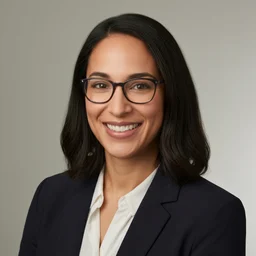
Licensed Psychologist & Mental Health Licensing Exam Expert
Northwestern UniversityDr. Nicole Warren holds a PhD in Clinical Psychology from Northwestern University and is licensed as both a Professional Counselor (LPC) and Clinical Social Worker (LCSW). She has 14 years of clinical practice in cognitive-behavioral therapy and trauma-informed care, and coaches psychology and counseling graduates through the EPPP, ASWB, NCE, and state mental health licensing examinations.
Join the Discussion
Connect with other students preparing for this exam. Share tips, ask questions, and get advice from people who have been there.
View discussion (6 replies)