

BMS Practice Test
Updated for October 2026As electric vehicles (EVs), renewable energy storage, and portable electronics surge in popularity, the Battery Management System (BMS) Certification has emerged as a critical credential for professionals working in energy systems and electronics engineering. A Battery Management System is the electronic brain behind any rechargeable battery pack, ensuring safety, efficiency, and longevity. Earning a certification in BMS signifies technical proficiency in designing, analyzing, and maintaining these intelligent battery interfaces—skills that are in high demand across industries.
BMS Practice Test Questions
Prepare for the BMS - Battery Management System Certification exam with our free practice test modules. Each quiz covers key topics to help you pass on your first try.
BMS Architecture & Functional Components
BMS Exam Questions covering Architecture & Functional Components. Master BMS Test concepts for certification prep.
BMS Battery Fundamentals & Electrochemistry
Free BMS Practice Test featuring Battery Fundamentals & Electrochemistry. Improve your BMS Exam score with mock test prep.
BMS Battery Testing & Validation
BMS Mock Exam on Battery Testing & Validation. BMS Study Guide questions to pass on your first try.
BMS Communication Protocols & Interfaces
BMS Test Prep for BMS Communication Protocols & Interfaces. Practice BMS Quiz questions and boost your score.
BMS Thermal Management & Cooling Systems
BMS Questions and Answers on BMS Thermal Management & Cooling Systems. Free BMS practice for exam readiness.
BMS Data Analysis & Decision Making
BMS Mock Test covering Data Analysis & Decision Making. Online BMS Test practice with instant feedback.
BMS Diagnostics Maintenance & Safety Stand...
Free BMS Quiz on Diagnostics Maintenance & Safety Standards. BMS Exam prep questions with detailed explanations.
BMS Financial Management & Budgeting
BMS Practice Questions for Financial Management & Budgeting. Build confidence for your BMS certification exam.
BMS Leadership & Team Management
BMS Test Online for Leadership & Team Management. Free practice with instant results and feedback.
BMS Monitoring Control & Protection Algori...
BMS Study Material on Monitoring Control & Protection Algorithms. Prepare effectively with real exam-style questions.
BMS Project Management Fundamentals
Free BMS Test covering Project Management Fundamentals. Practice and track your BMS exam readiness.
BMS Regulatory Compliance & Governance
BMS Exam Questions covering Regulatory Compliance & Governance. Master BMS Test concepts for certification prep.
BMS Risk Assessment & Mitigation
Free BMS Practice Test featuring Risk Assessment & Mitigation. Improve your BMS Exam score with mock test prep.
Key Takeaways
Free BMS Practice Test Online
Certifies expertise in the architecture, functions, and safety of Battery Management Systems
Relevant to industries like electric vehicles, energy storage, aerospace, and robotics
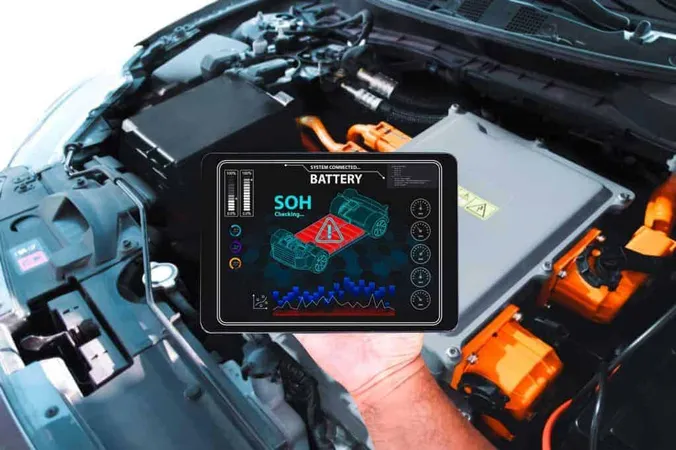
Covers voltage/current monitoring, thermal management, SOC (State of Charge) & SOH (State of Health) calculations
Offered by institutions, EV academies, and universities through online and hybrid programs
Ideal for electrical engineers, energy professionals, and automotive technicians
Understanding Battery Management Systems (BMS)
A Battery Management System is a sophisticated control system that oversees the operation of rechargeable batteries. It monitors parameters such as voltage, current, temperature, and charge/discharge cycles. A BMS ensures safety, optimizes performance, and prevents issues like overcharging, thermal runaway, or imbalance among cells.
Professionals working on EVs, drones, solar energy systems, or portable medical devices must understand how to implement or troubleshoot BMS technologies effectively. That’s where certification becomes essential—formalizing your knowledge in BMS architecture, software integration, and diagnostics.
- ✓Review the official BMS exam content outline
- ✓Take a diagnostic practice test to identify weak areas
- ✓Create a study schedule (4-8 weeks recommended)
- ✓Focus on your weakest domains first
- ✓Complete at least 3 full-length practice exams
- ✓Review all incorrect answers with detailed explanations
- ✓Take a final practice test 1 week before exam day

Top Topics Covered in BMS Certification
1. Core Components & Functions of a BMS
Participants learn about the core modules of a BMS, including the battery monitoring unit, control algorithms, communication interfaces (e.g., CAN bus), and protection circuitry.
2. Thermal Management & Safety Protocols
This section focuses on cooling systems, temperature sensors, and fire prevention measures—key in high-voltage applications like EVs and power grids.
3. SOC & SOH Estimation Techniques
Accurate estimation of State of Charge and State of Health is vital for predicting battery performance. Techniques such as Kalman filters, coulomb counting, and impedance spectroscopy are covered.
4. Simulation Tools & Practical Implementation
Training typically includes use of MATLAB/Simulink, ANSYS, or BMS development platforms for modeling and testing.
5. Compliance & Industry Standards
Familiarity with ISO 26262, IEC 61508, and UN 38.3 standards is critical for product development and regulatory compliance.
Popular Certification Providers
Several reputable organizations and institutions offer BMS certification courses:
IIT Bombay – BMS Design & Simulation (for engineering students and professionals)
EV Training Institutes like ARAI Academy, Skill-Lync, and DIYguru
Coursera & edX platforms offering online courses in energy storage and battery technology
OEM Programs from Tesla, BYD, or LG Energy Solution (in-house training options)
Most programs include hands-on labs, simulation assignments, and a final assessment or capstone project.
Who Should Pursue BMS Certification?
The certification is recommended for:
Electrical & electronics engineers
Mechanical and mechatronics engineers
Automotive engineers specializing in electric mobility
Battery pack designers and integration specialists
Energy system consultants working with solar, wind, or backup power systems
A background in circuit design, embedded systems, or thermodynamics is often helpful.
Career Advantages of BMS Certification
Earning this certification provides a competitive edge in fields experiencing rapid electrification and automation. Key benefits include:
Increased employability in sectors like EV, aerospace, and clean energy
Higher salary potential for certified specialists with niche technical knowledge
Greater project involvement in advanced BMS design and R&D
Qualification for global roles requiring ISO/IEC battery safety standards compliance
With the world moving toward sustainable energy solutions, BMS-certified professionals are vital to safe, efficient battery deployment.
Conclusion
Battery Management Systems are essential to the safe and efficient use of rechargeable battery packs across numerous sectors. A BMS Certification validates your ability to design, maintain, and improve these systems, setting you apart in a competitive job market. As technology evolves and the electrification of everything from transportation to energy storage accelerates, now is the ideal time to certify your expertise in BMS and power your career forward.
- +Industry-recognized credential boosts your resume
- +Higher earning potential (10-20% salary increase on average)
- +Demonstrates commitment to professional development
- +Opens doors to advanced career opportunities
- −Exam preparation requires significant time investment (4-8 weeks)
- −Certification fees can be $100-$400+
- −May require continuing education to maintain
- −Some employers may not require certification
Sample Battery Management System Certification Practice Questions
Try these questions from our free Battery Management System Certification practice tests. The correct answer and an explanation follow each question.
What is the main purpose of a Battery Management System (BMS)?
- A. To increase battery size.
- B. To reduce manufacturing costs.
- C. To monitor, control, and protect the battery
- D. To charge the battery directly.
Answer: C. To monitor, control, and protect the battery
The main purpose of a Battery Management System (BMS) is to monitor, control, and protect the battery pack. It continuously tracks parameters like voltage, current, and temperature, manages cell balancing, and implements safety features to prevent overcharge, over-discharge, over-current, and overheating. This ensures the battery operates safely, efficiently, and extends its lifespan.
A BMS project sponsor requests a major change to battery thermal management specifications after the design phase is complete. What is the FIRST step the PM should take?
- A. Implement the change immediately to satisfy the sponsor
- B. Submit a change request to the integrated change control process
- C. Reject the change as it is too late in the project
- D. Update the project schedule without formal documentation
Answer: B. Submit a change request to the integrated change control process
All changes must go through integrated change control to assess impact on scope, schedule, cost, and quality.
What does a Battery Management System log during diagnostics?
- A. Weather forecasts.
- B. Manufacturing costs.
- C. Voltage, temperature, current, and faults
- D. Display resolution.
Answer: C. Voltage, temperature, current, and faults
A Battery Management System (BMS) continuously monitors and logs critical operational parameters to ensure the battery's health and safety. These parameters include individual cell voltages to detect imbalance, overall current flow during charge and discharge, and internal temperatures to prevent overheating. The BMS also records any detected faults or anomalies, providing valuable data for diagnostics, performance analysis, and predictive maintenance.
Under OSHA's Process Safety Management (PSM) standard, at what threshold quantity of flammable liquids in a battery storage system might PSM coverage be triggered?
- A. 500 lbs
- B. 1,000 lbs
- C. 10,000 lbs
- D. Any quantity
Answer: C. 10,000 lbs
OSHA PSM (29 CFR 1910.119) applies to flammable liquids kept above their boiling point when the quantity exceeds 10,000 lbs, which can apply to large-scale battery electrolyte storage.
Take the full Battery Management System Certification practice test
(BMS) Battery Management System Certification Questions and Answers
About the Author

Certified Professional Development Expert & Niche Certification Advisor
University of Pennsylvania Graduate School of EducationDr. Alexandra Kim holds a PhD in Professional Studies from the University of Pennsylvania and is a Certified Professional in Learning and Performance (CPLP) and Certified Professional in Talent Development (CPTD). With 17 years of corporate training and professional certification advisory experience, she helps professionals navigate specialized, emerging, and cross-industry certification programs.