
BLS Renewal Course: Complete 2026 October Guide to Recertifying Your Basic Life Support Card
🆕 Complete 2026 October BLS renewal course guide: AHA & Red Cross options, costs, exam format, study tips, and how to recertify your Basic Life Support card fast.
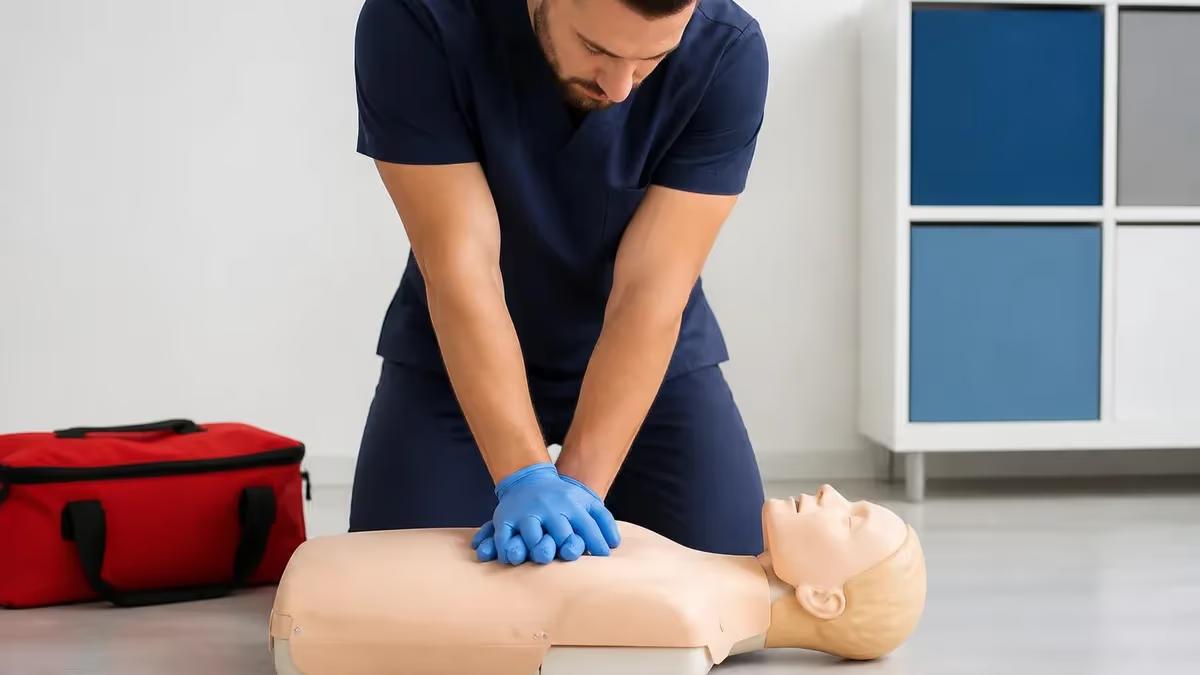
A bls renewal course is the simplified recertification pathway that healthcare professionals complete every two years to maintain their Basic Life Support credential. If you have been wondering what is a bls certification and how the renewal pathway differs from the initial provider course, the answer is simple: the renewal version assumes you already have working clinical knowledge, so it compresses the material into a shorter, more efficient experience focused on skill verification and 2025–2030 guideline updates.
Most providers complete a bls renewal course in roughly four to five hours when they choose a blended learning format, compared to seven or eight hours for the full initial class. The course refreshes high-quality CPR mechanics, automated external defibrillator (AED) operation, two-rescuer team dynamics, choking relief for adults, children, and infants, and the integration of bag-mask ventilation. Every renewal ends with a written exam and an in-person skills check performed on a manikin.
Healthcare employers in hospitals, dental offices, dialysis centers, surgical suites, and emergency departments require an active card on file. Letting your certification lapse, even by a single day, typically forces you to retake the full initial course rather than the abbreviated renewal version. That is why most providers schedule their aha basic life support exam renewal sixty to ninety days before expiration to allow time for retesting if needed.
The two dominant providers in the United States are the American Heart Association (AHA) and the American Red Cross. Both organizations align their curriculum with the International Liaison Committee on Resuscitation (ILCOR) consensus, which means the clinical content is nearly identical. The differences lie in card design, employer recognition, online platform usability, and cost. Hospitals tend to prefer AHA cards by tradition, while many ambulatory clinics now accept either.
What does BLS stand for? Basic Life Support — the foundational set of resuscitation skills that bridges the gap between bystander CPR and advanced cardiac life support (ACLS). The certification proves you can recognize cardiac arrest, deliver compressions at 100–120 per minute with proper depth, manage an airway, deploy an AED, and function effectively as part of a resuscitation team in any clinical setting.
This guide walks you through every component of the renewal process: eligibility windows, course formats, costs, exam expectations, skills testing requirements, and study strategies that have helped thousands of nurses, paramedics, dentists, and allied health professionals pass on their first attempt. Whether you prefer fully in-person training or a blended online-plus-skills-session option, you will leave this article with a clear plan.
By the end, you will know exactly which renewal format fits your schedule, what to expect on the exam, how to register, and how to use targeted practice questions to verify your readiness before you walk into the testing center.
BLS Renewal Course by the Numbers

BLS Renewal Course Format Options
Full four-hour in-person session with lecture, video segments, group skills practice, and same-day testing. Best for tactile learners who want immediate feedback from a certified instructor and prefer to complete everything in a single visit.
Complete the cognitive portion online at your own pace, then book a separate one-hour hands-on skills verification session. Ideal for busy clinicians who want to study during night shifts or breaks before completing the manikin checkoff.
Compressed three-hour format for providers who renew on or before their expiration date and have no documented skill deficiencies. Includes guideline updates, a brief written test, and direct skills evaluation without re-watching introductory content.
A skills-only format where eligible candidates skip the lecture entirely and demonstrate competency in compressions, ventilation, AED use, and team dynamics. Available at select training centers for experienced clinical staff with current cards.
An instructor travels to your hospital, dental practice, or clinic to renew an entire team in one session. Often the cheapest per-person option for groups of six or more, and reduces scheduling friction for managers.
Choosing between the American Heart Association and the American Red Cross is the most common question candidates face when scheduling a renewal. Both organizations are nationally recognized by hospitals, nursing boards, dental boards, EMS agencies, and the Joint Commission. The core curriculum is functionally identical because both follow the same ILCOR resuscitation science updates released every five years, with the current set published in October 2025.
The American Heart Association issues the eCard, a digital credential verified through a unique code on the AHA website. The Red Cross issues a similar digital card accessible through its online account portal. Both cards remain valid for exactly two years from the issue date, and both can be printed or stored on a phone. Employers that ask the question is bls the same as cpr are usually verifying that your card covers two-rescuer healthcare provider skills, not the lay-rescuer Heartsaver level.
Cost differences are modest. AHA renewal classes typically run $70 to $110 depending on geography, with blended HeartCode pricing around $32 for the online module plus a skills session fee of $40 to $60. Red Cross renewal pricing sits between $65 and $100, often with promotional discounts for first responders or returning students. Both providers accept major credit cards and most accept employer purchase orders for group bookings.
The biggest practical difference is platform usability. The AHA HeartCode platform is widely viewed as more polished, with adaptive scenario branching and integrated debriefing. The Red Cross platform emphasizes interactive simulations and includes a free refresh module up to 30 days after course completion. Candidates who want to retake practice questions multiple times tend to prefer the Red Cross interface, while those who value strict ILCOR alignment often choose AHA.
Both organizations require that your card be unexpired on the day of renewal. If your card lapsed yesterday, you technically need the full provider course, not the renewal. However, many training sites offer a 30-day grace window where they will still admit you to a renewal class as a professional courtesy. Always call ahead and confirm before paying for a class you may not be eligible for.
For nurses, paramedics, respiratory therapists, and physicians who work across state lines or float between facilities, the AHA card carries the broadest name recognition. For dental hygienists, medical assistants, and ambulatory-surgery staff, either provider is fully accepted. When in doubt, ask your employer's HR or education department which provider they prefer to see uploaded to your credentialing file.
Finally, remember that some specialty employers — military medical facilities, certain federal agencies, and a handful of academic medical centers — accept only AHA cards. Confirm acceptance before paying for a Red Cross renewal if you work in one of these niche environments. For everyone else, the choice usually comes down to schedule availability, location convenience, and personal preference for the online learning platform.
BLS Practice Test Questions
Prepare for the BLS - Basic Life Support exam with our free practice test modules. Each quiz covers key topics to help you pass on your first try.
BLS High-Quality CPR & Provider Skills
BLS Exam Questions covering BLS High-Quality CPR & Provider Skills. Master BLS Test concepts for certification prep.
BLS Special Situations & Scenarios
Free BLS Practice Test featuring BLS Special Situations & Scenarios. Improve your BLS Exam score with mock test prep.
BLS Adult, Child & Infant Resuscitation
BLS Mock Exam on Adult, Child & Infant Resuscitation. BLS Study Guide questions to pass on your first try.
BLS Airway Management & Ventilation
BLS Test Prep for Airway Management & Ventilation. Practice BLS Quiz questions and boost your score.
BLS Automated External Defibrillator (AED)...
BLS Questions and Answers on Automated External Defibrillator (AED) Use. Free BLS practice for exam readiness.
BLS Certification: Cardiac Arrest
BLS Mock Test covering Certification: Cardiac Arrest. Online BLS Test practice with instant feedback.
BLS Certification: Choking
Free BLS Quiz on Certification: Choking. BLS Exam prep questions with detailed explanations.
BLS Certification: Respiratory Arrest
BLS Practice Questions for Certification: Respiratory Arrest. Build confidence for your BLS certification exam.
BLS Chain of Survival
BLS Test Online for Chain of Survival. Free practice with instant results and feedback.
BLS CPR Techniques & Procedures
BLS Study Material on CPR Techniques & Procedures. Prepare effectively with real exam-style questions.
BLS Legal & Ethical Considerations
Free BLS Test covering Legal & Ethical Considerations. Practice and track your BLS exam readiness.
BLS Post-Resuscitation Care
BLS Exam Questions covering Post-Resuscitation Care. Master BLS Test concepts for certification prep.
What the AHA Basic Life Support Exam Covers
The adult portion of the renewal exam covers single-rescuer and two-rescuer CPR sequences, the adult chain of survival, and proper compression mechanics. You must demonstrate a rate of 100 to 120 compressions per minute, a depth of at least two inches but no more than 2.4 inches, and complete chest recoil between compressions. Pauses for ventilation should last no more than ten seconds at a time.
You will also be tested on AED operation: turning on the device, attaching pads to a bare chest, ensuring no one is touching the patient during analysis, and resuming compressions immediately after a shock or no-shock advisory. Expect at least three written questions about the recommended ventilation rate of one breath every six seconds during continuous compressions with an advanced airway in place.
Blended Online Renewal: Is It the Right Choice for You?
- +Complete the cognitive portion on your own schedule, including nights and weekends
- +Pause and replay any video segment until concepts click
- +Lower total seat time at the testing center (typically one hour vs four)
- +Built-in practice scenarios with immediate feedback
- +Lower total cost than full classroom courses in most markets
- +Easier to fit into busy nursing or shift-work rotations
- +Digital certificate issued within 24 hours of skills verification
- −Requires self-discipline to finish the online module before the skills slot
- −Less peer interaction and group practice time
- −Hands-on skills session still required — no fully-online option exists
- −Computer or tablet with reliable internet required for HeartCode
- −Some learners find adaptive scenarios harder than traditional lecture
- −Manikin time is shorter, so come prepared having reviewed mechanics
- −Skills-only sessions often fill up faster than full classroom dates

Pre-Renewal Readiness Checklist
- ✓Confirm your current BLS card has not yet expired on the renewal date
- ✓Decide between AHA and Red Cross based on employer preference
- ✓Choose your format: classroom, blended HeartCode, or fast-track renewal
- ✓Register at least two weeks in advance to secure a preferred date
- ✓Review the 2025–2030 ILCOR guideline updates published in October 2025
- ✓Practice 25-question sample exams until you score 90% or higher consistently
- ✓Refresh compression depth (2–2.4 inches) and rate (100–120/min) mentally
- ✓Re-read the adult, pediatric, and infant choking relief algorithms
- ✓Bring a government-issued photo ID and your current card to the session
- ✓Wear comfortable clothing that allows you to kneel on the floor for skills
Renew 60 days before your card expires
The American Heart Association allows you to renew up to 60 days before your current card expires without losing any time on your new certification. The new two-year clock starts the day after your old card expires, not the day you complete the renewal. This means there is no downside to scheduling early, and significant upside if you fail and need a retest before your old card lapses.
The total time investment for a bls renewal course depends heavily on the format you choose and your familiarity with the material. A traditional classroom renewal generally runs four to four-and-a-half hours from check-in to card issuance. This includes a brief lecture refresher, video segments highlighting guideline changes, hands-on rotations on adult and infant manikins, a 25-question written exam, and final skills verification with the instructor.
Blended HeartCode renewal splits this into two parts. The online module takes most students between 90 minutes and two hours to complete, depending on how much they pause to take notes or replay scenarios. The follow-up skills session at an AHA Training Center runs approximately one hour and includes the manikin checkoff and any remaining written exam questions not completed online. Total elapsed time can be as little as three hours of active engagement.
Fast-track or challenge renewal options compress the experience even further. A challenge course can sometimes be completed in 90 minutes if you arrive prepared and pass the skills station on the first attempt. These options are reserved for clinicians whose card has not yet expired and who can demonstrate competency without remediation. Failing any station bumps you to the standard renewal format, which adds time and occasionally additional cost.
Study time before the renewal also varies. Most healthcare providers who use BLS skills routinely on the job — emergency department nurses, paramedics, intensive care staff — spend two to four hours reviewing the provider manual and taking practice exams. Clinicians whose daily work rarely involves cardiac arrest, such as dental hygienists or outpatient psychiatry staff, often invest six to eight hours of preparation to feel confident.
Plan for an additional 30 to 45 minutes of administrative time after the course for card issuance, employer documentation, and uploading the eCard PDF to your credentialing system. AHA eCards are typically available within 20 minutes of course completion, while Red Cross digital cards may take up to 24 hours to appear in your online account. Print a backup copy and save the PDF to a cloud drive immediately.
Travel and parking add real time to the budget. Urban training centers in major cities can require 30 to 60 minutes of travel each way during peak hours. Many providers solve this by booking an on-site group renewal at their workplace, which eliminates travel entirely and lets the entire team renew in a single coordinated session. Group bookings often qualify for a per-person discount of 15 to 25 percent.
Finally, build in buffer time for the unexpected: a slow check-in line, an instructor running behind, or a brief delay while the previous class finishes skills testing. Arriving 15 minutes early and bringing a printed copy of your registration confirmation eliminates almost all friction. Treat the renewal like any other clinical commitment — block the entire half day on your calendar, and you will leave with a current card and confidence.
If your BLS certification expires before you complete renewal, most training centers will require you to retake the full provider course at the higher initial-course price. Worse, many employers consider you non-current and may pull you from clinical schedules until you produce a new card. Schedule your renewal at least 30 days before expiration to give yourself a safety buffer for retests or last-minute conflicts.
Online options for BLS renewal have expanded dramatically since 2020, but it is critical to understand that no fully-online renewal exists for healthcare providers in the United States. Every credible course — AHA, Red Cross, and military equivalents — requires an in-person skills verification with a certified instructor and a manikin. Be wary of any website promising a printable card after only an online test; those credentials are not recognized by hospitals or state licensing boards.
The legitimate online pathway is the blended-learning model. You complete the cognitive content through an interactive platform like AHA HeartCode BLS or the Red Cross digital course, then schedule a separate skills session at a local training center. The skills session covers compressions, ventilation, AED use, and choking relief, all evaluated on standardized manikins. The instructor signs off only after you demonstrate competency on each station.
For shift workers and clinicians with unpredictable schedules, the blended format is significant. You can complete a HeartCode module over three or four short sessions during night-shift breaks, then book the one-hour skills slot on your next day off. Many candidates pursuing is bls and cpr the same answers online discover the blended pathway and never return to traditional classroom-only renewal again.
The technical requirements are minimal: a modern web browser, stable internet, working speakers or headphones, and ideally a webcam for the simulation segments. The HeartCode platform works on tablets and even larger smartphones, though most users prefer a laptop for the longer reading and scenario sections. Save your progress frequently — the platform auto-saves every few minutes, but sessions can time out after 30 minutes of inactivity.
If you fail any portion of the online module, you can repeat individual sections at no additional cost until you pass. The skills session is different: failing skills typically requires either remediation that day or rescheduling, sometimes with an additional fee. This is why pre-session practice with a CPR mannequin or even a firm pillow at home pays off — you want to walk into the testing center with the right muscle memory.
For organizations renewing entire teams, on-site instructor visits combined with HeartCode pre-work offer the best of both worlds. Staff complete the cognitive section on their own time, then the instructor runs a single half-day of skills verification at the workplace. This model is now standard at many hospital systems and dental groups because it minimizes lost clinical hours while maintaining full ILCOR-aligned testing standards.
Whatever format you choose, verify that your training center is an officially recognized AHA Training Center or Red Cross Authorized Provider. The provider's website includes a search tool. Avoid third-party aggregators that resell seats — they sometimes deliver outdated curricula, and the resulting cards have occasionally been rejected by hospital credentialing offices.
The final stretch of renewal preparation is where most candidates separate confident first-attempt passes from frustrating retests. Begin your last 72 hours of prep by taking a full-length 25-question practice exam under timed conditions. If you score 88 percent or higher with no concept gaps, you are ready. If you miss multiple questions on a single topic — say, pediatric ventilation rates — circle back and re-read that chapter of the provider manual before retesting.
Focus heavy review time on the topics most candidates miss: the exact ventilation rate of one breath every six seconds during continuous compressions with an advanced airway, the 15:2 compression-to-ventilation ratio for two-rescuer pediatric and infant CPR, the pediatric pulse check location (brachial artery for infants, carotid or femoral for children), and the criteria for starting compressions in a bradycardic infant despite a palpable pulse. These four areas account for nearly half of all wrong answers nationally.
For the skills station, practice compression mechanics at home or at work before the test. Use a metronome app set to 110 beats per minute to internalize the correct rate. Press into a firm cushion or the floor to feel two inches of depth. Drill the rhythm of 30 compressions followed by two ventilations until it feels automatic. Instructors look for smooth, decisive transitions — not perfect form on every compression, but consistent, recoiled, in-rhythm work.
Bring a water bottle, a snack, and a copy of your existing card. Many testing centers require both a photo ID and your current BLS card at check-in. Wear scrubs or athletic clothing that lets you kneel and move freely. Avoid heavy bracelets, watches, and long necklaces that interfere with compressions on the manikin. If you wear glasses, bring a strap or be prepared to push them up frequently during chest compressions.
Mentally rehearse the algorithms the morning of the test. Walk yourself through the adult BLS sequence: scene safety, check responsiveness, shout for help and activate emergency response, check breathing and pulse simultaneously for no more than 10 seconds, begin CPR with 30 compressions, attach AED as soon as it arrives, follow AED prompts. This 30-second mental walkthrough primes your recall and reduces test-day anxiety significantly.
Avoid cramming new material in the final 12 hours. Sleep matters far more than additional review at that point. Eat a normal breakfast on test day — low blood sugar slows recall and degrades fine motor control during skills evaluation. Arrive 15 minutes early to settle in, find your station, and let your heart rate normalize before the exam begins.
After you pass, download your digital card immediately, save it to a cloud folder, and forward a copy to your employer's credentialing inbox. Set a calendar reminder for 21 months from your issue date so you receive a renewal alert with three months of buffer. With consistent every-two-year recertification, your skills stay sharp and your career stays uninterrupted.
BLS Questions and Answers
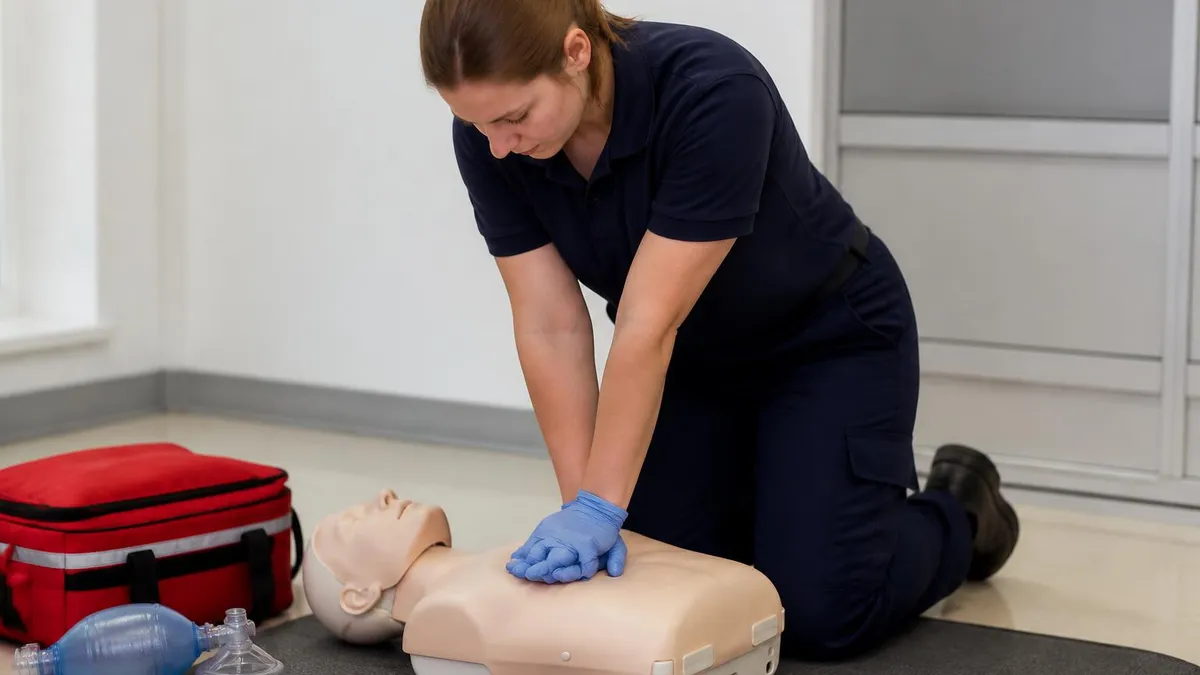
Pediatric BLS Algorithm: Complete 2026 Guide for Healthcare Providers
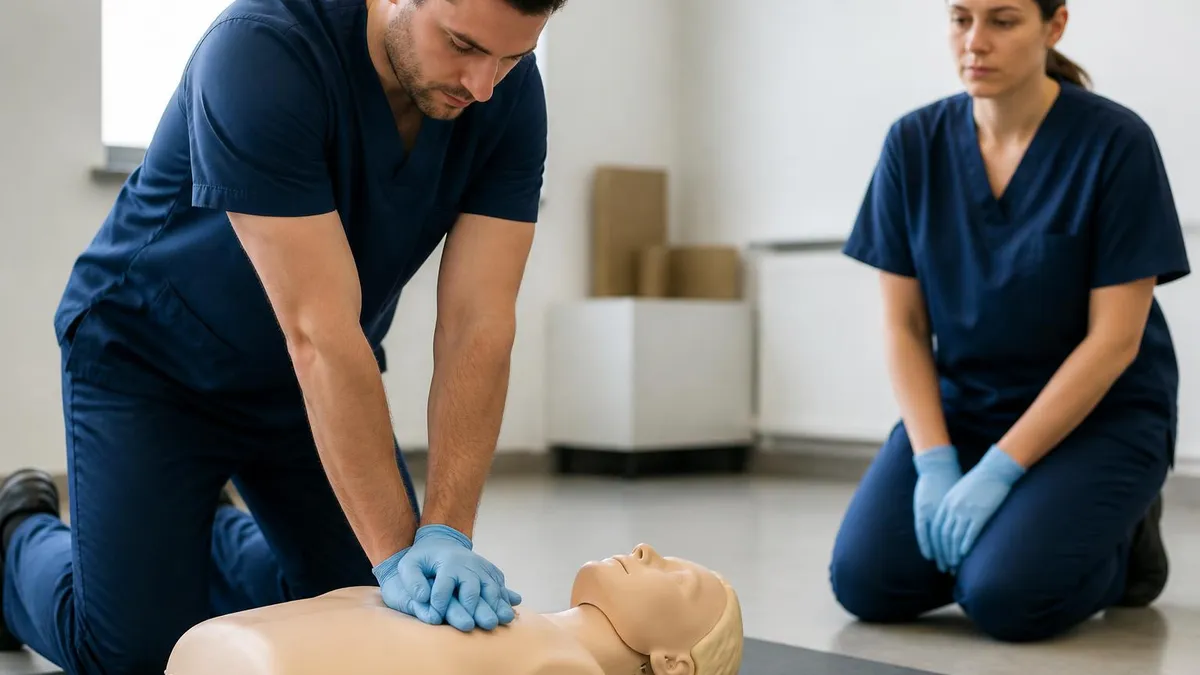
How Long Does BLS Certification Last? Complete 2026 Renewal Guide
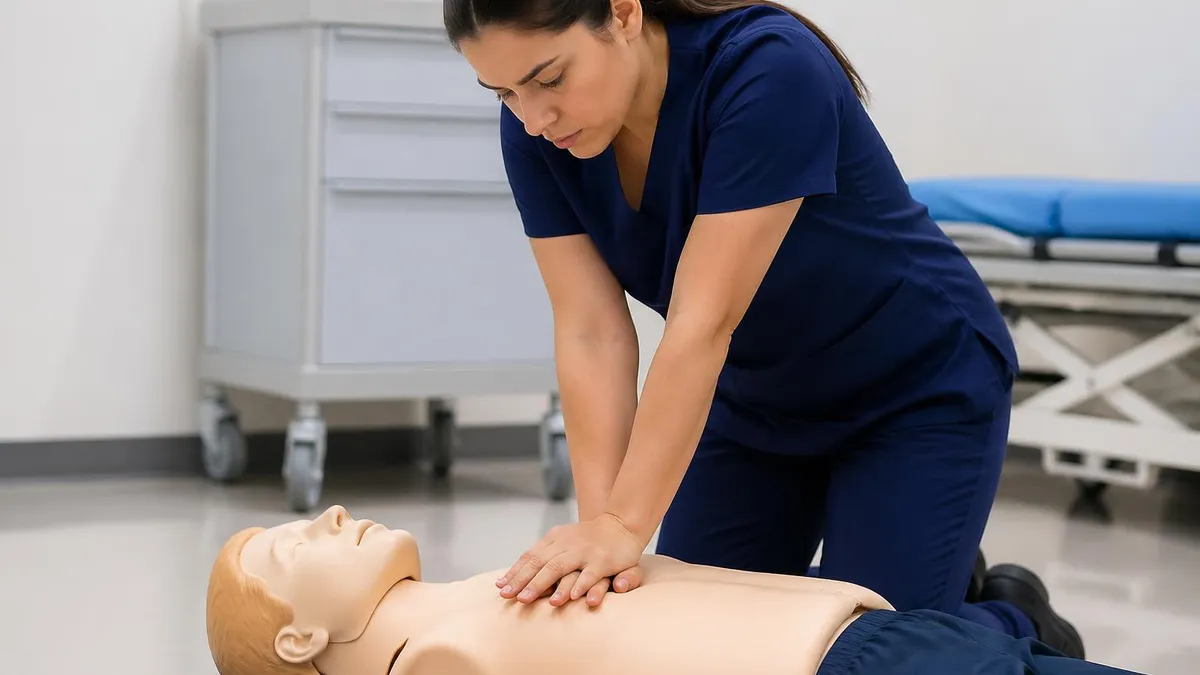
American Heart Association BLS: Certification, Renewal, Cost & What to Expect
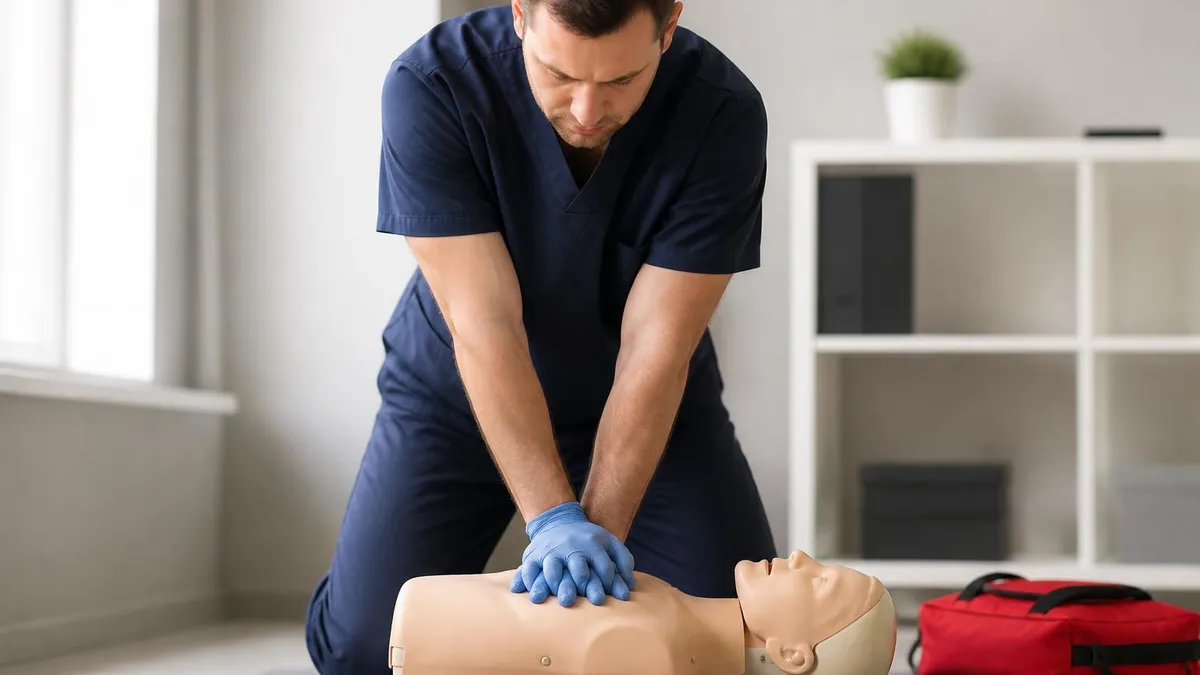
Online BLS Renewal: Complete 2026 Guide to Recertifying Your Basic Life Support Card
BLS Practice Test Video Answers
About the Author

Registered Nurse & Healthcare Educator
Johns Hopkins University School of NursingDr. Sarah Mitchell is a board-certified registered nurse with over 15 years of clinical and academic experience. She completed her PhD in Nursing Science at Johns Hopkins University and has taught NCLEX preparation and clinical skills courses for nursing students across the United States. Her research focuses on evidence-based exam preparation strategies for healthcare certification candidates.
Join the Discussion
Connect with other students preparing for this exam. Share tips, ask questions, and get advice from people who have been there.
View discussion (8 replies)