
Bartending School Near Me: How to Find the Best Local Program in 2026 October
Bartending school near me: compare local programs, costs, hours, certifications, and job placement to pick the right bartender training in 2026 October. 💡
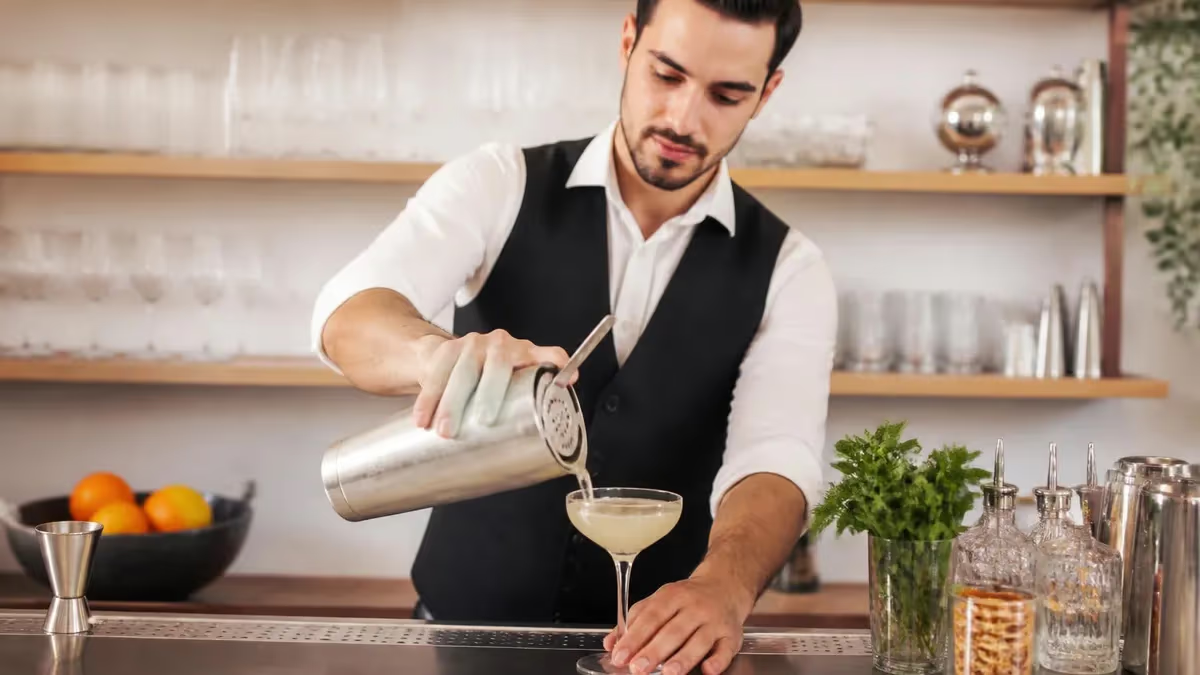
Searching "bartending school near me" is the first practical step thousands of aspiring bartenders take every month, and the quality of program you choose locally can determine whether you walk into your first shift confident or completely overwhelmed. A nearby school gives you hands-on practice behind a real bar, exposure to local liquor laws, and instructors who know which venues in your city actually hire graduates. In 2026, the average in-person bartending program runs 40 hours over two to four weeks, with tuition between $295 and $795 depending on metro area and curriculum depth.
Local bartending schools differ wildly in reputation, curriculum, and post-graduation support. A school in Las Vegas may emphasize high-volume nightclub speed, while a program in Portland or Austin focuses on craft cocktails, fresh ingredients, and seasonal menus. Before you enroll, you need to understand what your local hospitality market actually values, because the school you choose should mirror those expectations. Recruiters scan resumes for specific certifications and program names they recognize, and a respected local institution often opens more doors than a generic online certificate alone.
The good news is that finding a quality program close to home has never been easier. State licensing boards, the American Bartenders Association, and regional hospitality groups maintain searchable directories of accredited schools, and Google Maps reviews give you raw, unfiltered feedback from recent graduates. Pair that public data with a campus visit, a curriculum walkthrough, and a candid conversation with the placement coordinator, and you will quickly separate the serious training centers from the operations that simply hand out certificates after a weekend.
Beyond the classroom, a strong local school provides something online courses cannot: real glassware, real pour spouts, weighted bottles filled with colored water, and an instructor watching your every motion. Muscle memory matters in this trade, and you cannot build muscle memory through a webcam. Speed pouring, free pouring within a tenth of an ounce, jigger work, ice handling, and garnish prep are tactile skills. Employers can tell within thirty seconds of a stage shift whether a candidate trained on real equipment or watched videos at home.
Cost is another reason proximity matters. A local school lets you keep your day job, attend evening or weekend classes, and avoid travel or lodging expenses. Most reputable programs offer payment plans starting around $99 down, with the balance due before graduation. Some states also allow workforce development grants, GI Bill funding for veterans, or vocational rehabilitation support to cover tuition entirely. A nearby admissions office can walk you through these options in person, which is far more reliable than navigating financial aid through a chatbot.
Finally, the right local school connects you to the right local network. Bartending is a referral business at its core. Instructors moonlight as bar managers, alumni run brunch shifts at the hottest restaurants, and guest lecturers often own the neighborhood cocktail lounge. Walking into a school that already has a phone tree connecting graduates to hiring managers shortens your job hunt from months to days. Throughout this guide, we will show you exactly how to vet a program, what certifications you need alongside your training, and how to turn a school directory listing into a paying job.
Related reading: bartending school near me covers the next step in more detail.
Bartending School Near Me by the Numbers
How to Choose a Local Bartending School
Confirm the school is licensed by your state's department of education or workforce commission. Unaccredited schools cannot issue federally recognized certificates and often lack consumer protections if they close mid-session.
A real training bar has at least four pouring stations, ice wells, a three-compartment sink, glassware racks, and POS terminals. If you only see plastic bottles on folding tables, walk out and find a better option.
Ask for a syllabus covering classic cocktails, modern craft drinks, wine and beer service, responsible alcohol service, cash handling, and customer service. A serious program covers all six pillars across 40 to 60 hours.
Request a written placement rate with employer names from the last twelve months. Reputable schools track this metric and share it transparently. Vague answers like "most graduates work somewhere" are red flags.
Lead instructors should have at least five years of bartending experience plus active industry contacts. Ask how long they have worked behind a bar in your city and which venues they currently consult for.
Tuition for in-person bartending school in the United States ranges from a budget-friendly $295 at community college continuing education programs to $1,295 at premium private academies that include knife skills, sommelier basics, and a guaranteed paid externship. The sweet spot for most students sits between $450 and $695, which buys roughly 40 hours of hands-on instruction, all course materials, a take-home recipe book, and at least one nationally recognized responsible service certification. Compare three to five quotes before committing, because price often correlates with placement support, not training quality.
The typical curriculum is split between technical drink-making and the soft skills employers actually pay for. You will spend the first week on bar setup, glassware identification, pour timing, jigger calibration, and the construction of roughly seventy-five core cocktails that account for ninety percent of orders in most American bars. Week two layers in wine fundamentals, draft beer pouring, frozen drink machines, espresso martinis, and modifier-heavy menu items. Week three introduces speed drills, multi-ticket workflows, and guest interaction roleplay.
Hours matter as much as content. State licensing bodies in places like Texas, Pennsylvania, and Illinois require a minimum number of supervised training hours before issuing a bartender server permit. Forty hours is the floor most schools meet, but programs offering sixty to eighty hours give you measurable skill advantages. Students who clock more practice time before graduation pour more accurately, ring orders faster, and handle Friday night chaos with less panic. If two local schools cost the same, choose the one with more lab hours every single time.
Class size is another variable that drives outcomes. A 6:1 student-to-instructor ratio means you get personal feedback on every shake, stir, and pour. Once a class crosses fifteen students per instructor, individual coaching disappears and you essentially learn by watching other students. Ask the admissions office for a recent class roster size and visit during an actual session if possible. The energy of a busy training bar tells you everything you need to know about pacing and instructor engagement.
Look closely at what the tuition does and does not include. The best schools bundle a TIPS or ServSafe Alcohol certification, a state-required alcohol server permit, a printed recipe binder, and at least one resume and interview workshop. Lower-priced programs often charge separate fees for certification testing, materials, or graduation. Ask for an itemized cost sheet in writing. A school that hesitates to put the full price on paper is a school that will surprise you with add-ons later.
Finally, evaluate scheduling flexibility. Working students often need night classes that run from 6 p.m. to 10 p.m. four nights a week for two weeks, while career changers prefer daytime cohorts that finish in seven consecutive days. Look for programs with rolling enrollment so you can start within two weeks of registering. Schools that only run quarterly cohorts may force you to wait months before beginning training, which slows your timeline to a paying job significantly.
Bartender Practice Test Questions
Prepare for the Bartender Certification exam with our free practice test modules. Each quiz covers key topics to help you pass on your first try.
Bartender Certification Bar Inventory and ...
Bartender Exam Questions covering Certification Bar Inventory and Cost Control. Master Bartender Test concepts for certification prep.
Bartender Certification Bar Law and Liquor...
Free Bartender Practice Test featuring Certification Bar Law and Liquor Regulations. Improve your Bartender Exam score with mock test prep.
Bartender Certification Bar Sanitation and...
Bartender Mock Exam on Certification Bar Sanitation and Safety. Bartender Study Guide questions to pass on your first try.
Bartender Certification Bar Setup and Orga...
Bartender Test Prep for Certification Bar Setup and Organization. Practice Bartender Quiz questions and boost your score.
Bartender Certification Bar Tools and Glas...
Bartender Questions and Answers on Certification Bar Tools and Glassware. Free Bartender practice for exam readiness.
Bartender Certification Basic
Bartender Mock Test covering Certification Basic. Online Bartender Test practice with instant feedback.
Bartender Certification Cocktail Recipes a...
Free Bartender Quiz on Certification Cocktail Recipes and Techniques. Bartender Exam prep questions with detailed explanations.
Bartender Certification Customer Service a...
Bartender Practice Questions for Certification Customer Service and Sales. Build confidence for your Bartender certification exam.
Bartender Certification Customer Service S...
Bartender Test Online for Certification Customer Service Skills. Free practice with instant results and feedback.
Bartender Certification Mixology Fundamentals
Bartender Study Material on Certification Mixology Fundamentals. Prepare effectively with real exam-style questions.
Bartender Certification Responsible Alcoho...
Free Bartender Test covering Certification Responsible Alcohol Service. Practice and track your Bartender exam readiness.
Bartender Certification Spirits, Beer, and...
Bartender Exam Questions covering Certification Spirits, Beer, and Wine. Master Bartender Test concepts for certification prep.
Bartender Certification Spirits, Liqueurs,...
Free Bartender Practice Test featuring Certification Spirits, Liqueurs, and Cocktails. Improve your Bartender Exam score with mock test prep.
Bartender Responsible Alcohol Service
Bartender Mock Exam on Responsible Alcohol Service. Bartender Study Guide questions to pass on your first try.
Bartender Spirits, Liqueurs, and Cocktails
Bartender Test Prep for Spirits, Liqueurs, and Cocktails. Practice Bartender Quiz questions and boost your score.
Bartender Bar Sanitation and Safety
Bartender Questions and Answers on Bar Sanitation and Safety. Free Bartender practice for exam readiness.
Bartender Bar Setup and Organization
Bartender Mock Test covering Bar Setup and Organization. Online Bartender Test practice with instant feedback.
Bartender Bar Tools and Glassware
Free Bartender Quiz on Bar Tools and Glassware. Bartender Exam prep questions with detailed explanations.
Bartender Basic
Bartender Practice Questions for Basic. Build confidence for your Bartender certification exam.
Bartender Cocktail Recipes and Techniques
Bartender Test Online for Cocktail Recipes and Techniques. Free practice with instant results and feedback.
Bartender Customer Service and Sales
Bartender Study Material on Customer Service and Sales. Prepare effectively with real exam-style questions.
Bartender Customer Service Skills
Free Bartender Test covering Customer Service Skills. Practice and track your Bartender exam readiness.
Certifications You Need Alongside Bartending School
TIPS and ServSafe Alcohol are the two most widely accepted responsible alcohol service certifications in the United States. Most reputable bartending schools include one of these in their tuition, but if yours does not, expect to pay an additional $40 to $75 for the online course and exam. Both certifications cover spotting intoxication, checking identification, refusing service safely, and avoiding liability under state dram shop laws.
Employers in roughly forty states require new bartenders to hold one of these certifications before serving their first drink. The credential is valid for two to three years depending on the issuing body and your state of practice. Keep a digital copy in your phone wallet and a printed copy in your bag for opening shifts. Renewing on time prevents costly gaps in employment eligibility down the road.
In-Person Local School vs. Online Bartending Course
- +Hands-on practice with real glassware, ice, and bar tools
- +Direct instructor feedback on pour accuracy and technique
- +Local employer connections and externship pipelines
- +Speed drills that simulate Friday night rush volume
- +State-recognized certification accepted by liquor boards
- +Networking with classmates who become coworkers and referrals
- +Structured schedule that forces consistent daily practice
- −Higher tuition than fully online certificate programs
- −Fixed class schedule limits flexibility for shift workers
- −Commute time adds 3-5 hours per week to your investment
- −Quality varies dramatically between local schools
- −Some programs oversell job placement statistics
- −Materials and exam fees may not be included in tuition
Pros and Cons at a Glance
| Pros | Cons |
|---|---|
| Hands-on practice with real glassware, ice, and bar tools | Higher tuition than fully online certificate programs |
| Direct instructor feedback on pour accuracy and technique | Fixed class schedule limits flexibility for shift workers |
| Local employer connections and externship pipelines | Quality varies dramatically between local schools |
| Speed drills that simulate Friday night rush volume | Some programs oversell job placement statistics |
| State-recognized certification accepted by liquor boards | Materials and exam fees may not be included in tuition |
Enrollment Checklist Before You Pay Tuition
- ✓Verify the school holds current state accreditation or licensure.
- ✓Read at least twenty Google and Yelp reviews from the past twelve months.
- ✓Request a written placement rate with employer names from last year.
- ✓Tour the training lab during an active class session, not when it is empty.
- ✓Confirm tuition includes TIPS or ServSafe certification at no extra cost.
- ✓Ask for an itemized list of all fees, materials, and exam charges.
- ✓Check minimum age requirements for your state (18 or 21 depending on jurisdiction).
- ✓Get the refund policy in writing in case you cannot complete the course.
- ✓Confirm class size and student-to-instructor ratio is 10:1 or better.
- ✓Ask whether a paid externship or shadow shift is included after graduation.
Spend more on hours, not on logos
The single biggest predictor of post-graduation success is total supervised lab hours, not brand recognition. A 60-hour program at a community college often outperforms a 24-hour program at a flashy private academy. Calculate cost per lab hour before you commit, and lean toward the school giving you more time behind a real bar.
Job placement is the make-or-break feature that separates a great bartending school from a tuition mill. Top programs maintain ongoing relationships with twenty to fifty local venues and treat their graduates as a recurring talent pipeline. When you tour a school, ask the admissions director to name five hiring partners by venue, and then check those venues on Google to confirm they are real, operating businesses. If the school cannot produce specific names, their placement program likely consists of forwarding generic Indeed listings to your inbox.
The strongest local schools host monthly hiring events where managers from neighborhood bars, hotels, country clubs, and restaurants interview graduating students on-site. These events compress what would normally be a six-week job hunt into a single afternoon. Students who attend with a polished resume, a fresh haircut, and a memorized two-minute pitch routinely receive two or three offers within a week. Ask whether your prospective school runs these events and how many graduates typically receive offers at each one.
Externships are another major outcome driver. A paid externship places you in a real bar for forty to eighty hours under the supervision of a working bartender, often with a guaranteed interview at the conclusion. These positions function as extended job interviews, and roughly seventy percent of externs convert into permanent hires at the host venue. If your local school offers externships, prioritize that program even if tuition runs a few hundred dollars higher than competitors.
Income outcomes vary dramatically by market. A trained bartender in a major metro like New York, Miami, Chicago, or Los Angeles can clear $55,000 to $90,000 in their first year between hourly wages and tips, while bartenders in smaller markets typically earn $32,000 to $48,000. Hotel banquet and high-end steakhouse roles pay the most reliably, while neighborhood pubs offer lower but steadier income with predictable schedules. Your school's placement office should know which local segments pay best.
Career progression also depends on which doors your school opens. After two years behind a stick, a strong bartender can move into a head bartender role at $35 to $45 per hour plus tips, a bar manager role at $55,000 to $85,000 salary, or open their own pop-up consulting business. Schools with active alumni associations help you make these jumps faster by connecting you with successful graduates who have already walked the path you are considering.
Finally, factor in the side opportunities that local schools unlock. Private event bartending, wedding gigs, brand ambassador work for liquor distributors, and beverage consulting roles often come through alumni networks rather than public job postings. Graduates who stay engaged with their school for a year or two after completing the program report two to three times more freelance income than those who disappear after graduation. Treat your local bartending school as a lifetime professional resource, not a one-time transaction.
Some schools report placement rates as high as 99 percent by counting any job a graduate takes within a year, including non-bartending roles. Always ask specifically how many graduates were placed in bartending or bar-back positions within ninety days of graduation. Anything below sixty percent in that narrower metric should make you reconsider enrollment.
Bartending school scams cost American students an estimated twelve to fifteen million dollars every year, and protecting yourself starts with knowing the most common patterns. The first red flag is high-pressure sales tactics during an inquiry call. Legitimate schools answer your questions, send a syllabus, and let you take a campus tour without pushing for an immediate deposit. If an admissions counselor insists you must enroll today to lock in a discount, hang up and look elsewhere. Real programs do not vanish overnight.
The second pattern involves vague or unverifiable certification claims. Some schools advertise that they are "nationally certified" or "industry endorsed" without specifying the issuing body. Ask which state, federal, or trade organization recognizes the certificate. Cross-reference that body with your state's department of education website. If the credential is not traceable to a real regulator, it carries no weight with hiring managers and may actually hurt your application by signaling that you do not know the difference between legitimate and fake training.
Third, beware of schools that pressure you into financing through an in-house lender at high interest rates. Reputable programs accept credit cards, debit cards, employer reimbursement, GI Bill funds, vocational rehabilitation grants, and standard payment plans without interest. If a school steers you toward a private loan with rates above fifteen percent, you are about to pay double the sticker price by graduation. Walk away and find a program that accepts mainstream payment methods.
Fourth, examine the physical campus before committing. A legitimate school has a permanent training bar, full glassware inventory, working ice machines, POS terminals, and at least one back-of-house storage area. Pop-up schools that rent banquet rooms by the hour cannot give you the realistic environment you need. If the address on the website is a coworking space, a hotel meeting room, or a residential building, treat that as confirmation the operation is temporary.
Fifth, scrutinize online reviews carefully but skeptically. A school with only five-star reviews posted within the last month is almost certainly buying reviews. Look for a mix of three, four, and five-star ratings spread over multiple years with specific details about instructors, curriculum, and outcomes. Pay close attention to one and two-star reviews because dissatisfied graduates often share the most useful information about what went wrong, who refused to issue refunds, and whether the placement office actually delivered on its promises.
Finally, check whether your state's attorney general or consumer protection office has any open complaints against the school. Most states publish this information in a searchable online database. A school with three or more unresolved complaints in the past two years is a near-certain scam. Your local Better Business Bureau also tracks complaint patterns, and a quick fifteen-minute search through these resources can save you from losing hundreds or even thousands of dollars on a fraudulent program. For broader career planning, review the Bartender Certification: Cost, Time and How to Get Yours in 2026 guide to compare credible paths.
Once you have selected your local bartending school and enrolled, the next four to six weeks will determine how quickly you land that first paying gig. Treat the program like a full-time job even if your class schedule is part-time. Arrive thirty minutes early to every session, stay thirty minutes late to practice on the equipment, and use the drive home to mentally rehearse drink builds. Students who consistently log fifteen to twenty hours of self-directed practice per week graduate with measurably faster pour times and better recipe recall than classmates who only show up for scheduled lessons.
Invest in basic personal equipment during week one. A Boston shaker, a Hawthorne strainer, a fine mesh strainer, a Japanese-style jigger, a bar spoon, a citrus peeler, and a sharp paring knife together cost under sixty dollars and let you practice at home. Fill empty liquor bottles with colored water at different proof equivalents and rehearse free pours on your kitchen counter every morning. The muscle memory you build in those private reps is what separates a confident graduate from a nervous trainee on opening night.
Memorize the seventy-five most ordered drinks in American bars before graduation. These include the Old Fashioned, Margarita, Moscow Mule, Manhattan, Negroni, Espresso Martini, Aperol Spritz, Mojito, Daiquiri, Whiskey Sour, French 75, Paloma, Cosmopolitan, Sazerac, Boulevardier, Dark and Stormy, and dozens of vodka highballs. Write each recipe on a flashcard with the glass, ice, and garnish on the back. Drill yourself with a study partner until you can build any drink in under thirty seconds without looking at a recipe book.
Build your resume during week two, not the day before graduation. List your school, certifications, expected graduation date, and any prior customer service or food service experience. Even retail, fast food, or rideshare work counts because it demonstrates cash handling, customer interaction, and shift reliability. Have your instructor review the resume before you start applying. A polished one-page document with relevant keywords beats a fancy template every time when hiring managers scan stacks of applications during a Tuesday afternoon interview block.
Practice the staging shift before you ever walk into one. A stage shift is an unpaid working interview where you shadow or assist a current bartender for two to four hours. Managers use it to test your speed, attitude, and ability to take direction. Show up in a black shirt, black non-slip shoes, and minimal jewelry. Bring your own wine key, pen, and lighter. Ask one smart question every fifteen minutes, never sit down, and clean glassware whenever there is a lull. Most stage shifts convert into offers within forty-eight hours.
Finally, line up three to five interviews before graduation week, not after. Use your school's placement office, alumni network, and personal contacts to schedule meetings during the final ten days of your program. Walking into an interview the same week you finish school signals momentum and serious intent. Hiring managers love graduates who treat the job hunt with the same urgency they treated their training, and many of them will hold a slot open for a strong candidate they meet a week before the candidate is technically ready to start.
Sample Bartender Certification Practice Questions
Try these questions from our free Bartender Certification practice tests. The correct answer and an explanation follow each question.
A new cleaning chemical has been introduced for sanitizing bar surfaces. According to standard safety protocols, where should a bartender be able to find detailed information about its potential hazards, first aid measures, and proper handling instructions?
- A. On the product label itself.
- B. In the employee handbook.
- C. On the Safety Data Sheet (SDS).
- D. By asking a more experienced coworker.
Answer: C. On the Safety Data Sheet (SDS).
A Safety Data Sheet (SDS), formerly known as MSDS, is a standardized document that contains comprehensive information about a chemical's properties, hazards, handling precautions, and emergency procedures. Employers are required to make these sheets accessible to employees for all hazardous chemicals used in the workplace.
A bartender notices a small puddle of sticky liquid on the floor behind the bar near the soda gun, along with a few fruit flies. Which of the following is the most immediate and appropriate action to take?
- A. Ignore it until the end of the shift, as it's a low-traffic area.
- B. Spray insecticide in the area to eliminate the fruit flies quickly.
- C. Clean the spill immediately, check the soda gun for leaks, and set a pest trap.
- D. Inform the manager but continue serving drinks as normal.
Answer: C. Clean the spill immediately, check the soda gun for leaks, and set a pest trap.
Spills, especially sugary ones, attract pests like fruit flies and create slip hazards. The most appropriate action is to address the root cause immediately by cleaning the spill, inspecting for equipment malfunctions like a leaking soda gun, and implementing pest control measures. This prevents the problem from worsening and maintains a safe and sanitary environment.
A server takes a food order from a table and also asks, "Can I get you a bottle of Pinot Noir to go with your steaks, or perhaps a local IPA for the burgers?" This sales strategy is a classic example of:
- A. Inventory reduction
- B. Suggestive selling
- C. Discounting
- D. Customer recovery
Answer: B. Suggestive selling
Suggestive selling involves recommending specific items that complement a customer's existing order to enhance their experience and increase the check size. By suggesting specific wine and beer pairings, the server is actively guiding the customer's choice in a helpful way.
What is a 'mixing glass' used for in bartending?
- A. Blending frozen cocktails
- B. Stirring cocktails with ice before straining into a serving glass
- C. Washing bar tools
- D. Measuring spirits for multiple orders simultaneously
Answer: B. Stirring cocktails with ice before straining into a serving glass
A mixing glass is a heavy-walled glass vessel used for stirring cocktails with ice before straining into the serving glass.
Bartender Bartender Questions and Answers
About the Author
Executive Chef & Culinary Arts Certification Educator
Culinary Institute of AmericaChef Marco Bellini is a Certified Executive Chef and graduate of the Culinary Institute of America with over 20 years of professional kitchen experience in Michelin-recognized restaurants. He teaches culinary arts certification, food safety, and hospitality exam preparation, having guided thousands of culinary students through their ServSafe, ProStart, and professional chef certifications.
Join the Discussion
Connect with other students preparing for this exam. Share tips, ask questions, and get advice from people who have been there.
View discussion (7 replies)