
Bartending Certification: Complete Guide to Licensing, Training, and Career Success in 2026 October
Complete bartending certification guide: ✅ costs, state requirements, online vs in-person training, exam prep, and career outcomes for 2026 October.
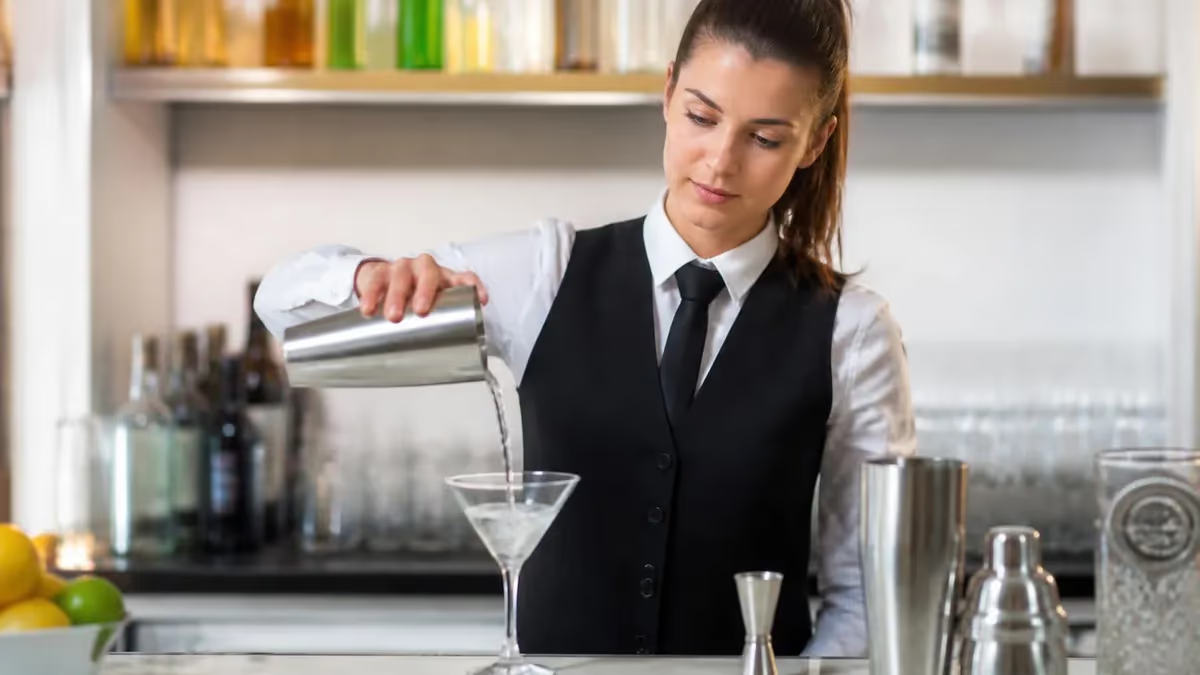
A bartending certification is your fastest entry into a hospitality career that pays cash tips nightly, offers flexible scheduling, and opens doors at bars, restaurants, hotels, cruise ships, and private events. Whether you are a college student looking for a high-earning side gig or a career changer drawn to the energy of nightlife, earning a recognized credential signals to hiring managers that you understand responsible service, drink recipes, inventory basics, and the legal landscape of alcohol sales in your state.
The phrase "bartending certification" actually covers two distinct credentials that often get confused. The first is a responsible alcohol service certification, like TIPS, ServSafe Alcohol, or a state-mandated card such as Utah's DABC permit or Washington's MAST card. The second is a bartending school diploma showing you completed 30-80 hours of mixology training. Most employers want the first by law, while the second is a resume booster that can shorten your job search.
According to the Bureau of Labor Statistics, bartenders in the United States earn a median wage of roughly $31,510 in base pay, but the real number including tips often reaches $45,000 to $75,000 in busy urban markets like Chicago, Miami, Las Vegas, and New York City. Certified bartenders consistently report faster hiring timelines—often two to three weeks shorter—because their paperwork is already cleared for insurance and compliance audits.
This guide walks you through every meaningful decision point: which certification your state legally requires, whether to take an online course or attend a physical bartending school, how much you should reasonably pay, what the exams actually test, and how to translate that credential into your first paycheck behind the stick. If you are completely new to the industry, the companion piece on how to become a bartender pairs nicely with this article.
We will also clear up persistent myths. No, a $20 online certificate from a no-name website will not satisfy your state liquor commission. No, you do not need to memorize 300 cocktails before your first shift. Yes, you can legally earn money behind a bar in many states the same week you complete your certification, provided you have the correct alcohol seller-server permit and meet the minimum age of 18 or 21 depending on jurisdiction.
The market for trained bartenders remains strong heading into 2026. Restaurant turnover continues at roughly 75% annually according to the National Restaurant Association, and craft cocktail bars, breweries with full liquor licenses, and high-end hotel concepts are aggressively recruiting candidates who can demonstrate verified training. Walking into an interview with a certification card already in your wallet puts you ahead of roughly 60% of applicants who show up untrained.
By the end of this guide, you will know exactly which course to enroll in, what it should cost, how to study for the exam, and what to do the day after you pass to start earning. Save this page, bookmark the quiz links throughout, and treat the practice tests as your final dress rehearsal before sitting for the real exam.
Bartending Certification by the Numbers
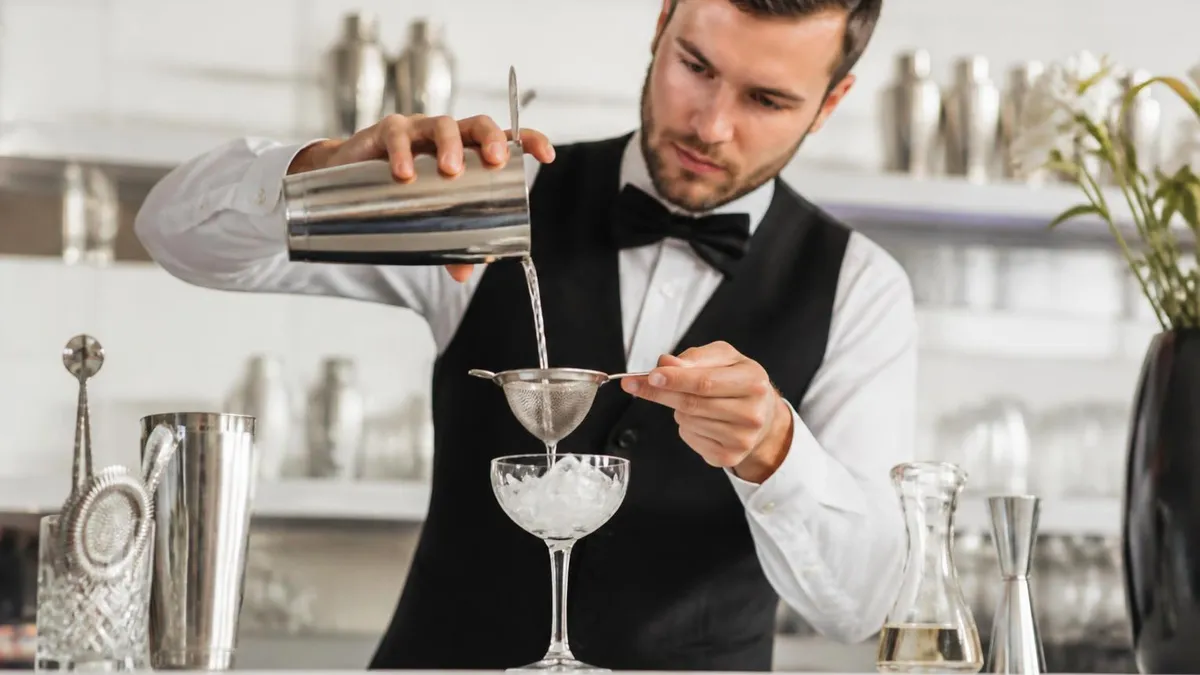
Certification Types & Requirements
Legally required in 38+ states. Includes TIPS, ServSafe Alcohol, Utah DABC, Washington MAST, Oregon OLCC. Covers checking ID, recognizing intoxication, and refusing service. Usually 3-4 hours of training.
Optional industry credential from schools like ABC Bartending, Harvard Bartending Course, or Bartending College. Teaches 100-200 recipes, free pouring, garnishing, and bar setup. Typically 40 hours.
Advanced credentials like BarSmarts, Cicerone, or WSET Spirits. Targets craft cocktail bars and hotel programs. Requires existing experience plus 60+ hours of study and a tasting exam.
Some jurisdictions like Clark County, Nevada require a separate food handler or sheriff's work card before you touch a glass. Costs $25-$75 and renews every 2-3 years.
Chains like Olive Garden, Yard House, and Hyatt run their own internal certification programs. These do not transfer between employers but count toward state CE in some places.
Choosing a training path is where most aspiring bartenders get stuck, so let us break it down by your real-world situation. If you live in a state that mandates an alcohol seller-server card, your first stop is always the state-approved provider list. In Texas you need a TABC-approved course; in California a RBS certificate via the ABC; in Pennsylvania a RAMP certification. These run $10 to $25, take two to four hours online, and are non-negotiable—working without one is a misdemeanor that can cost the bar its liquor license.
Once that legal floor is covered, you decide whether to add a bartending school diploma. The two big advantages of attending a brick-and-mortar school like ABC Bartending, Bartending College, or the Professional Bartending School are hands-on pouring practice with real bottles full of colored water and a job placement office that calls local bars on your behalf. The disadvantages are cost ($400-$700) and time (40 hours over two weeks).
Online bartending courses from Bartending Academy, Bar Smarts, or Udemy can teach you the same recipe knowledge for $100-$300, but you cannot replicate muscle memory with a video. Most experienced bartenders recommend a hybrid approach: take the state card online tonight, watch YouTube tutorials by educators like Steve the Bartender or Cocktail Chemistry for a month, then either pay for a weekend in-person workshop or jump straight into barback work where you will learn faster than any school can teach you.
Geographic differences matter enormously. In New York City, hiring managers at high-volume cocktail bars want to see USBG membership or a BarSmarts certificate, not a generic school diploma. In Las Vegas casinos, the union (Culinary 226) runs its own training pipeline that supersedes most outside credentials. In college towns like Boulder, Athens, and Madison, dive bars will hire you with just a state card and a friendly face. Tailor your investment to the market you actually plan to work in.
Accreditation is the trap. The bartending industry has no federal regulator, which means anyone can call their PDF a "certification." Stick to providers that are state-approved for the alcohol service portion, or those used by national chains for the mixology portion. Resources like bartender career FAQ can help you verify which credentials carry weight with employers in your area before you spend a dollar.
Time commitment varies more than people expect. A pure responsible-service card can be done on a Sunday afternoon while watching football. A full bartending school program is essentially a part-time job for two weeks. Specialty certifications like the Cicerone Server level or BarSmarts Wired require three to six months of self-study plus a proctored exam. Match the path to your timeline and your wallet, not to whatever Instagram ad showed up in your feed last week.
One pro tip that saves money: many community colleges offer credit-bearing mixology certificates that cost $300-$500 and qualify for Pell Grant funding if you enroll part-time. The diploma is functionally identical to private bartending schools but the financial aid pathway is night-and-day better for budget-conscious learners.
Bartender Practice Test Questions
Prepare for the Bartender Certification exam with our free practice test modules. Each quiz covers key topics to help you pass on your first try.
Bartender Certification Bar Inventory and ...
Bartender Exam Questions covering Certification Bar Inventory and Cost Control. Master Bartender Test concepts for certification prep.
Bartender Certification Bar Law and Liquor...
Free Bartender Practice Test featuring Certification Bar Law and Liquor Regulations. Improve your Bartender Exam score with mock test prep.
Bartender Certification Bar Sanitation and...
Bartender Mock Exam on Certification Bar Sanitation and Safety. Bartender Study Guide questions to pass on your first try.
Bartender Certification Bar Setup and Orga...
Bartender Test Prep for Certification Bar Setup and Organization. Practice Bartender Quiz questions and boost your score.
Bartender Certification Bar Tools and Glas...
Bartender Questions and Answers on Certification Bar Tools and Glassware. Free Bartender practice for exam readiness.
Bartender Certification Basic
Bartender Mock Test covering Certification Basic. Online Bartender Test practice with instant feedback.
Bartender Certification Cocktail Recipes a...
Free Bartender Quiz on Certification Cocktail Recipes and Techniques. Bartender Exam prep questions with detailed explanations.
Bartender Certification Customer Service a...
Bartender Practice Questions for Certification Customer Service and Sales. Build confidence for your Bartender certification exam.
Bartender Certification Customer Service S...
Bartender Test Online for Certification Customer Service Skills. Free practice with instant results and feedback.
Bartender Certification Mixology Fundamentals
Bartender Study Material on Certification Mixology Fundamentals. Prepare effectively with real exam-style questions.
Bartender Certification Responsible Alcoho...
Free Bartender Test covering Certification Responsible Alcohol Service. Practice and track your Bartender exam readiness.
Bartender Certification Spirits, Beer, and...
Bartender Exam Questions covering Certification Spirits, Beer, and Wine. Master Bartender Test concepts for certification prep.
Bartender Certification Spirits, Liqueurs,...
Free Bartender Practice Test featuring Certification Spirits, Liqueurs, and Cocktails. Improve your Bartender Exam score with mock test prep.
Bartender Responsible Alcohol Service
Bartender Mock Exam on Responsible Alcohol Service. Bartender Study Guide questions to pass on your first try.
Bartender Spirits, Liqueurs, and Cocktails
Bartender Test Prep for Spirits, Liqueurs, and Cocktails. Practice Bartender Quiz questions and boost your score.
Bartender Bar Sanitation and Safety
Bartender Questions and Answers on Bar Sanitation and Safety. Free Bartender practice for exam readiness.
Bartender Bar Setup and Organization
Bartender Mock Test covering Bar Setup and Organization. Online Bartender Test practice with instant feedback.
Bartender Bar Tools and Glassware
Free Bartender Quiz on Bar Tools and Glassware. Bartender Exam prep questions with detailed explanations.
Bartender Basic
Bartender Practice Questions for Basic. Build confidence for your Bartender certification exam.
Bartender Cocktail Recipes and Techniques
Bartender Test Online for Cocktail Recipes and Techniques. Free practice with instant results and feedback.
Bartender Customer Service and Sales
Bartender Study Material on Customer Service and Sales. Prepare effectively with real exam-style questions.
Bartender Customer Service Skills
Free Bartender Test covering Customer Service Skills. Practice and track your Bartender exam readiness.
Online vs In-Person Bartending Certification
Online bartending certification is the dominant format in 2026, accounting for roughly 70% of new credentials issued. Courses from TIPS, ServSafe, and Learn2Serve run between $10 and $25 for state alcohol cards and $99 to $299 for full mixology programs. You log in, watch video modules, take quizzes after each chapter, and complete a final proctored exam through a webcam.
The advantages are speed and price. You can finish a state card on the same day you start and have the printable certificate in your email within an hour of passing. The drawback is zero hands-on practice. You will not learn to free pour, build a layered shot, or move at speed behind a real bar. Plan to supplement with home practice using empty bottles and water.
Is Bartending Certification Worth It?
- +Legally required in 38+ states to handle alcohol commercially
- +Reduces hiring friction by clearing compliance and insurance checks upfront
- +Demonstrates commitment and reduces no-show rates for managers
- +Provides foundational knowledge that prevents costly serving mistakes
- +Many programs include job placement assistance and resume help
- +Tax-deductible as an unreimbursed work expense in most states
- +Boosts confidence during the first 30 days behind the bar
- −Online-only certificates do not teach speed or muscle memory
- −Some schools oversell job placement success rates
- −State cards require renewal every two to three years with added fees
- −A diploma alone will not overcome zero practical experience
- −Credit-card recipe knowledge fades quickly without active use
- −Cheap providers may not be accepted by upscale employers
- −Time investment of 40+ hours for in-person programs
Pros and Cons at a Glance
| Pros | Cons |
|---|---|
| Reduces hiring friction by clearing compliance and insurance checks upfront | Online-only certificates do not teach speed or muscle memory |
| Demonstrates commitment and reduces no-show rates for managers | Some schools oversell job placement success rates |
| Provides foundational knowledge that prevents costly serving mistakes | State cards require renewal every two to three years with added fees |
| Many programs include job placement assistance and resume help | A diploma alone will not overcome zero practical experience |
| Tax-deductible as an unreimbursed work expense in most states | Credit-card recipe knowledge fades quickly without active use |
Pre-Exam Bartending Certification Checklist
- ✓Confirm your state's required alcohol seller-server credential and approved provider list
- ✓Verify you meet the minimum age (18 in most states, 21 in a few)
- ✓Gather valid government ID and Social Security number for registration
- ✓Budget $25 to $700 depending on chosen path
- ✓Set aside 4 to 80 hours of dedicated study time based on program type
- ✓Take at least two free practice quizzes to identify weak areas
- ✓Memorize the top 25 cocktail recipes by category (sour, highball, martini, shot, classic)
- ✓Study state-specific dram shop and minor service laws
- ✓Practice fake-ID detection techniques and refusal-of-service scripts
- ✓Schedule the proctored exam during a low-stress block of time
- ✓Save digital and printed copies of your certificate to your phone
- ✓Add the credential to your resume, LinkedIn, and Indeed profile immediately
Bring two copies of your card to every interview
Bar managers run a tight ship and hate paperwork bottlenecks. Showing up with a printed copy of your alcohol service certificate plus a digital copy on your phone signals professionalism and lets you start on the schedule the same week. In high-turnover markets this single habit can move you from third-choice candidate to first-choice hire.
Let us talk real money. A state-mandated alcohol service card from a provider like Learn2Serve, TIPS, or ServSafe Alcohol typically costs $10.95 to $24.95 and is valid for two to three years depending on jurisdiction. That is the absolute minimum legal investment and the only credential you cannot skip if your state requires it. Renewal fees are usually identical to the original cost, and most providers send automated email reminders 30 days before expiration.
A traditional bartending school diploma runs $395 to $695 in most US cities, with premium programs in New York, Los Angeles, and San Francisco reaching $895 to $1,200. These tuition figures usually include all course materials, exam fees, and a printed diploma suitable for framing. Some schools tack on $50-$100 for a uniform, branded toolkit, or post-graduation networking events—read the fine print before signing the enrollment agreement.
Specialty mixology credentials sit higher. BarSmarts Wired costs $195 self-paced; BarSmarts Advanced is $1,400 and includes an in-person practical exam. Cicerone Certified Beer Server is $69, while the Certified Cicerone exam jumps to $395. WSET Level 2 in Spirits is around $700 with the exam fee included. These pay back primarily for bartenders aiming at hotel beverage director roles or craft cocktail flagship bars.
Return on investment is the right way to think about every dollar spent. The Bureau of Labor Statistics pegs median bartender wages at $14.99 per hour in base pay, but the National Restaurant Association reports that tips push the actual earned income to $20-$45 per hour in most US markets. At the midpoint of $30 per hour and a 32-hour workweek, that is roughly $50,000 annually—meaning a $500 bartending school pays for itself in your first two weeks behind a real bar.
Hidden costs deserve a mention. Plan to spend $50-$80 on a quality bar tool kit (shaker, jigger, strainer, bar spoon, channel knife) if your school does not provide one. Slip-resistant shoes are mandatory in most states under OSHA guidelines and cost $40-$80. Black pants, white shirts, and a bow tie or apron run another $50-$100 if your employer does not supply uniforms. Total realistic startup cost from zero to working bartender: $700-$1,500.
Tax-wise, the IRS treats certification fees as a deductible business expense if you are already employed in food and beverage. Self-employed bartenders working private events can deduct mileage, course fees, tool kits, and a portion of phone bills on Schedule C. Keep every receipt and consider consulting a CPA familiar with hospitality industry deductions—it routinely saves $300-$800 per year for active bartenders.
Geography drives salary outcomes more than any other factor. According to BLS occupational data, the top-paying metros for bartenders include Seattle ($66,520), San Francisco ($62,830), Honolulu ($59,210), and the New York metro area ($58,440). Rural areas and small Southern towns can pay as little as $24,000 total. If you have the flexibility to relocate, your certification investment yields wildly different returns depending on which zip code you target.
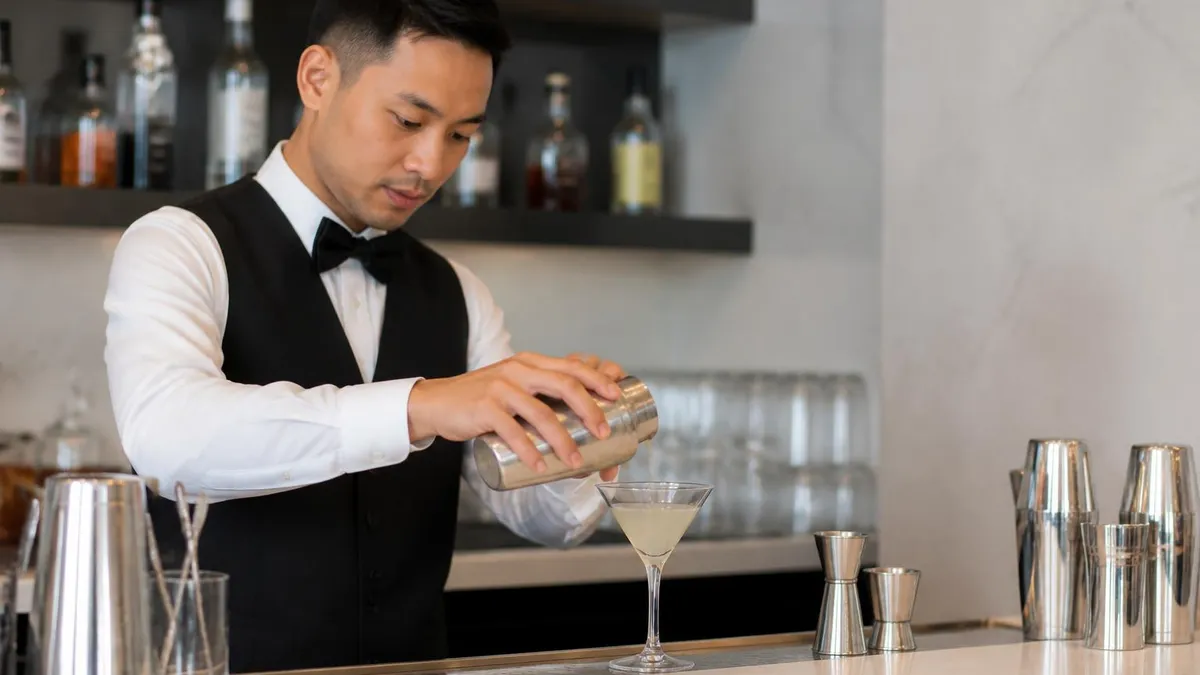
Most state alcohol service cards expire two to three years after issue, and serving alcohol with an expired card is a misdemeanor that can result in personal fines of $250-$1,000 plus liability for your employer. Set a calendar reminder 45 days before expiration. Do not assume your employer will track this for you.
You passed the exam. Now what? The first 48 hours after certification matter more than you might think. Print three copies of your card immediately, photograph both sides with your phone, and upload the image to cloud storage so you can re-print at any time. Update your resume, LinkedIn headline, and Indeed profile with the exact credential name and issue date before you go to bed that night.
Job hunting moves fastest when you apply in person during off-peak hours. Walk into target bars between 2 PM and 4 PM on a Tuesday or Wednesday, ask for the manager by name, and hand them your resume with your certification card stapled to the back. This old-school approach beats online applications by a wide margin because managers can size you up in real time and make an offer on the spot.
Expect to start as a barback at most reputable establishments, even with a diploma. Barbacks earn $12-$18 hourly plus 15-25% of the bartender tip pool, which still nets $25-$40 per hour in busy venues. Use this period to learn the bar's specific menu, pacing, regular customers, and POS system. Most barbacks earn a promotion to bartender within four to nine months, and the references you build are invaluable.
Build your network from day one. Join the local USBG chapter for $90 per year—the educational events, brand tastings, and competitions put you in front of beverage directors and territory reps who hire constantly. Follow industry publications like Imbibe, Punch, and Difford's Guide to stay current on trends. A trained palate and conversational fluency about brands will land you the better shifts.
Track your earnings religiously. Use an app like Tip Tracker or a simple spreadsheet to log shift dates, base wage, declared tips, and actual cash. This serves three purposes: it protects you in IRS audits, it shows you which shifts and venues actually pay best, and it builds the documented income history banks require for car loans, apartments, and mortgages. Many career bartenders regret not tracking this from their first shift.
If your long-term goal is a flexible side business, look into mobile bartender services as a complement to your venue work. Private events pay $40-$75 per hour plus tips, and a certified bartender with their own kit can build a profitable weekend operation within their first year. Many full-time bartenders eventually transition entirely to events because the schedule and margins are better.
Continuous education matters. Spirits brands, glassware companies, and tonic producers run free training sessions monthly in every major city. Distillery tours, brand ambassador workshops, and seasonal menu development classes keep your knowledge fresh and put you in direct contact with the territory managers who recommend you to bars that need staff. Treat learning like a paid part of the job—because it absolutely is.
Now for the practical exam-day tactics that separate first-time passers from candidates who have to retake. Sleep matters more than cramming. The night before your proctored exam, stop studying by 9 PM, eat a normal dinner, and aim for seven hours of sleep. Brain function on alcohol service and dram shop scenario questions drops measurably with fatigue, and these test items rely on careful reading comprehension rather than memorization.
During the exam, read every question twice. The most common wrong answers are caused by skimming. Phrases like "except," "not," "least likely," and "first action" completely flip the correct response. Highlight or mentally underline these qualifiers before considering the answer choices. Most certification exams are untimed or generously timed, so there is zero benefit to rushing.
For recipe-based questions on bartending school exams, use the BUFE framework: Base spirit, Underlying modifier, Flavoring agent, Embellishment. Nearly every classic cocktail fits this pattern. A Margarita = tequila (base), triple sec (modifier), lime juice (flavoring), salt rim (embellishment). When you blank on a recipe under exam pressure, walk through BUFE and the answer often surfaces.
Practice the refusal-of-service script out loud before your exam and your first shift. The wording matters: "I appreciate you stopping in tonight, but I'm not able to serve you another drink. I can get you water, coffee, or a soda, and I'm happy to call you a ride." Calm, non-judgmental, and offering alternatives keeps situations from escalating. Many state exams include a scenario question testing exactly this language.
ID-checking technique is heavily tested. The standard sequence is: take the ID into your own hands (do not let the guest hold it), inspect both sides, verify date of birth math (subtract birth year from current year), check for tampering or laminate separation, compare photo to face, and hand it back. Hesitation, joking, or skipping any step can cost the bar its license in a sting operation, and the test reflects that seriousness.
After you pass, write a one-page summary of the high-yield exam topics from memory. This document becomes your refresher reference for renewal exams in two to three years and your cheat sheet for explaining liquor law nuances to barbacks you train later. Save it to cloud storage and email it to yourself for future access. Many veteran bartenders look back and wish they had done this on day one.
Finally, treat your certification as the beginning of a craft, not the end of a checklist. The bartenders who build six-figure careers are the ones who keep reading, tasting, and competing long after the card is in their wallet. Subscribe to one new industry newsletter, attend one tasting per month, and follow three top bartenders on Instagram. Your earnings curve over five years will reflect the cumulative effect of this small ongoing investment.
Sample Bartender Certification Practice Questions
Try these questions from our free Bartender Certification practice tests. The correct answer and an explanation follow each question.
What is Absinthe and why was it banned in many countries in the early 20th century?
- A. A fruit brandy banned for excessive sweetness
- B. A highly alcoholic anise-flavored spirit banned due to concerns about the compound thujone (from wormwood) causing hallucinations — now largely debunked
- C. A beer banned for use of illegal grain varieties
- D. A rum-based liqueur banned for high sugar content
Answer: B. A highly alcoholic anise-flavored spirit banned due to concerns about the compound thujone (from wormwood) causing hallucinations — now largely debunked
Absinthe is an anise-flavored spirit containing wormwood (Artemisia absinthium), which contains thujone. It was banned in the early 1900s amid concerns — now largely debunked — that thujone caused hallucinations. Most countries have since lifted bans.
Which of the following is a sign that a draft beer system requires cleaning?
- A. Beer pours too slowly
- B. Beer tastes sour, buttery, or has off-flavors
- C. The tap handle is loose
- D. Beer is too cold when poured
Answer: B. Beer tastes sour, buttery, or has off-flavors
Sour, buttery (diacetyl), or otherwise off-flavored beer is a common sign of bacterial or yeast contamination in beer lines that require professional cleaning.
What type of still produces a lighter, more neutral spirit and is commonly used for vodka and grain whisky production?
- A. Pot still
- B. Column (continuous/Coffey) still
- C. Alembic still
- D. Retort still
Answer: B. Column (continuous/Coffey) still
A column still (also called a continuous still or Coffey still) produces a lighter, higher-proof, more neutral spirit suitable for vodka and grain whisky, as it allows for multiple distillation cycles in a continuous process.
What does 'ABV' stand for in relation to alcoholic beverages?
- A. Alcohol By Vintage
- B. Alcohol By Volume
- C. Approved Beverage Variety
- D. Aged Barrel Vintage
Answer: B. Alcohol By Volume
ABV stands for Alcohol By Volume, the standard measure of how much alcohol (ethanol) is contained in a given volume of an alcoholic beverage, expressed as a percentage.
Bartender Bartender Questions and Answers
About the Author
Executive Chef & Culinary Arts Certification Educator
Culinary Institute of AmericaChef Marco Bellini is a Certified Executive Chef and graduate of the Culinary Institute of America with over 20 years of professional kitchen experience in Michelin-recognized restaurants. He teaches culinary arts certification, food safety, and hospitality exam preparation, having guided thousands of culinary students through their ServSafe, ProStart, and professional chef certifications.
Join the Discussion
Connect with other students preparing for this exam. Share tips, ask questions, and get advice from people who have been there.
View discussion (7 replies)