
Bartender Salary 2026 October: Pay, Tips, and Earning Potential
✏️ Bartender salary guide for 2026 October — hourly wages, tip income, state-by-state pay differences, and how to boost earnings above $75K annually.
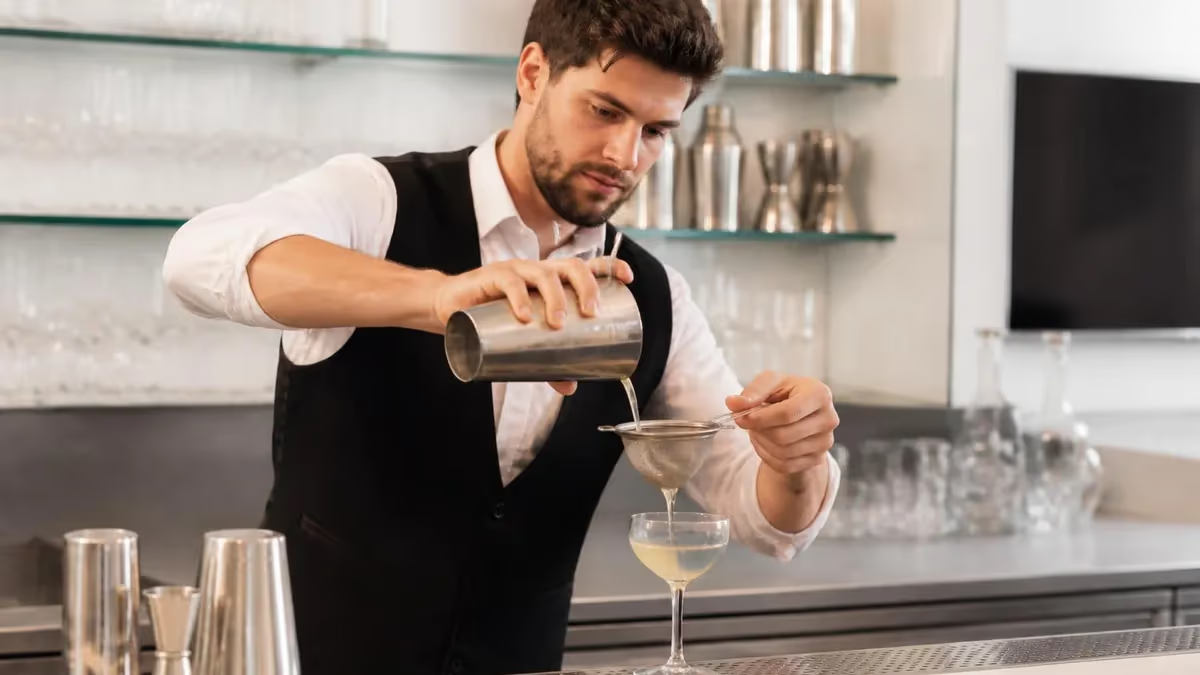
The average bartender salary in the United States in 2026 sits between $32,000 and $58,000 per year when you combine base hourly wages with reported tip income, though top earners in major metropolitan markets routinely pull in $75,000 to $110,000 annually. Pay varies wildly based on venue type, geographic market, shift schedule, and personal hustle, which is why national averages rarely tell the whole story for any individual bartender working a real bar tonight.
Base hourly wages alone do not paint an accurate picture. Federal tipped minimum wage remains $2.13 per hour in 2026, while seven states require employers to pay the full state minimum before tips. The real money in bartending comes from gratuities, which can double, triple, or even quadruple base pay depending on the establishment. A bartender at a high-volume nightclub in Las Vegas can out-earn a corporate paralegal, while a bartender at a dive in rural Alabama might struggle to clear $30,000.
Understanding compensation also means understanding the legal landscape. Tip credits, tip pooling rules, and service charge distributions are governed by both federal and state law, and missteps can cost workers thousands. Bartenders in states like California, Oregon, Washington, Nevada, Minnesota, Montana, and Alaska benefit from full minimum wage protections on top of tips. Bartenders in tipped-credit states rely more heavily on customer generosity to hit livable income.
Experience, certifications, and the bar's price point dramatically shift earning potential. A craft cocktail bartender with five years behind the stick at a top-50 cocktail bar in New York or Chicago commands $35 to $50 per hour in total compensation. A high-volume beer bartender at a sports venue earns through speed and volume. A hotel banquet bartender earns through service charges and shift premiums. Each pathway has different ceilings and different demands. Learn more about the career generally at our bartending certification online.
Tip income reporting is another wrinkle. The IRS expects bartenders to report 100% of tips, but underreporting remains common — and risky. W-2 reported income affects loan applications, Social Security benefits, and tax obligations. Cash-heavy bars often see lower reporting than card-heavy bars, which automatically capture digital gratuities. A bartender who reports honestly may show $48,000 on paper while a peer who reports only credit-card tips shows $32,000, even when their actual take-home is identical.
Location matters more than almost any other variable. The same skill set earns vastly different pay in different ZIP codes. Cost-of-living adjustments only partially explain the gap. A Manhattan bartender earning $85,000 may have less disposable income than a Nashville bartender earning $58,000 after rent and transportation. Smart bartenders weigh nominal wages against actual quality of life when choosing markets, just as smart restaurant operators weigh labor cost against revenue potential when setting tip-pool structures and base pay scales.
This guide covers everything you need to know about bartender pay in 2026 — from BLS data and state minimums to negotiating shift assignments, calculating tip averages, reading W-2s versus 1099s, and using certifications to move into higher-paying venues. Whether you are evaluating a career switch, negotiating a raise, or just curious what your tending peers earn, the data below will give you a sharper picture than any single salary aggregator.
Bartender Salary by the Numbers (2026)
Bartender Salary Ranges by Venue Type
Total compensation typically $32,000 to $48,000 annually. Steady regulars provide consistent tips but limited upside. Shift premiums are rare and tip averages run 12-18% of sales.
Total compensation $55,000 to $85,000. Higher check averages mean larger tips on lower volume. Skilled bartenders with menu development experience command top pay and equity in some venues.
Total compensation $65,000 to $120,000. Friday and Saturday shifts can yield $800-$1,500 in tips alone. Physical demands are brutal but earning potential rivals white-collar careers.
Total compensation $50,000 to $78,000. Stable hours, benefits, and 18% auto-gratuity on banquets. Union properties offer pensions and healthcare uncommon elsewhere in hospitality.
Total compensation $48,000 to $72,000. Salary plus service charge pool rather than direct tipping. Predictable income with weekend and event demands built into the schedule.
The split between hourly wages and tip income defines bartender economics. Federal law allows employers to pay tipped workers as little as $2.13 per hour as long as tips bring total compensation up to the full federal minimum of $7.25. This is called a tip credit. States layer their own rules on top, with eight states banning tip credits entirely and requiring full minimum wage before a penny of tips changes hands. The remaining states fall somewhere in between, with tipped minimums ranging from $2.13 to $11.42.
Tip income realistically accounts for 60-85% of a bartender's take-home pay in tip-credit states and 40-60% in full-wage states. A bartender earning $4.74 per hour in Pennsylvania might bring home $28 per hour after tips on a busy Friday. A bartender earning $16.50 per hour in California might bring home $42 per hour after tips on the same night. The base wage cushion matters most on slow Tuesdays when tips disappoint.
Credit card tips versus cash tips create different accounting realities. Credit card tips are tracked automatically by the POS system, taxed at standard rates, and deposited via payroll. Cash tips are reported by the employee on Form 4070 and remain harder to verify. The IRS uses tip allocation programs to flag underreporting at establishments where reported tips fall below 8% of gross sales — a threshold that triggers audits and employer disclosures.
Tip pools redistribute income among front-of-house staff. Traditional pools include bartenders, servers, bussers, and bar-backs. The Department of Labor 2018 amendment allows employers paying full minimum wage to include kitchen staff in pools, though tip-credit employers cannot. Pool percentages vary: a typical bartender might keep 70-80% of their tips and contribute 20-30% to support staff. Knowing your pool structure before accepting a position can mean $15,000 a year in either direction.
Shift assignments drive earning differences between coworkers more than skill does. A bartender on Friday and Saturday nights earns dramatically more than one stuck on Monday lunches. Senior bartenders typically claim the premium shifts. Newcomers earn their stripes on slow shifts before being promoted to weekend prime time. This shift hierarchy explains why two bartenders at the same venue might report $35,000 and $78,000 W-2s respectively.
Service charges are not tips and are treated very differently under tax law. Auto-gratuities on parties of six or more, banquet service fees, and resort fees are technically wages — fully taxable, subject to FICA, and distributable at employer discretion. A bartender working a wedding might see a 20% service charge that the venue keeps as revenue, sharing only a portion with staff as wages. Understanding the difference between tips and charges is essential when reading pay stubs. For licensing requirements that affect where you can work, see our bartending license requirements.
Bartenders should request an itemized breakdown of their compensation every pay period. The pay stub should show base hours and rate, declared cash tips, credit card tips, service charges treated as wages, tip-out contributions, deductions, and net pay. Errors in any of these lines are common in independent restaurants and can erode hundreds of dollars per month if not caught. Tip credit miscalculations are among the most-litigated wage violations in hospitality.
Bartender Practice Test Questions
Prepare for the Bartender Certification exam with our free practice test modules. Each quiz covers key topics to help you pass on your first try.
Bartender Certification Bar Inventory and ...
Bartender Exam Questions covering Certification Bar Inventory and Cost Control. Master Bartender Test concepts for certification prep.
Bartender Certification Bar Law and Liquor...
Free Bartender Practice Test featuring Certification Bar Law and Liquor Regulations. Improve your Bartender Exam score with mock test prep.
Bartender Certification Bar Sanitation and...
Bartender Mock Exam on Certification Bar Sanitation and Safety. Bartender Study Guide questions to pass on your first try.
Bartender Certification Bar Setup and Orga...
Bartender Test Prep for Certification Bar Setup and Organization. Practice Bartender Quiz questions and boost your score.
Bartender Certification Bar Tools and Glas...
Bartender Questions and Answers on Certification Bar Tools and Glassware. Free Bartender practice for exam readiness.
Bartender Certification Basic
Bartender Mock Test covering Certification Basic. Online Bartender Test practice with instant feedback.
Bartender Certification Cocktail Recipes a...
Free Bartender Quiz on Certification Cocktail Recipes and Techniques. Bartender Exam prep questions with detailed explanations.
Bartender Certification Customer Service a...
Bartender Practice Questions for Certification Customer Service and Sales. Build confidence for your Bartender certification exam.
Bartender Certification Customer Service S...
Bartender Test Online for Certification Customer Service Skills. Free practice with instant results and feedback.
Bartender Certification Mixology Fundamentals
Bartender Study Material on Certification Mixology Fundamentals. Prepare effectively with real exam-style questions.
Bartender Certification Responsible Alcoho...
Free Bartender Test covering Certification Responsible Alcohol Service. Practice and track your Bartender exam readiness.
Bartender Certification Spirits, Beer, and...
Bartender Exam Questions covering Certification Spirits, Beer, and Wine. Master Bartender Test concepts for certification prep.
Bartender Certification Spirits, Liqueurs,...
Free Bartender Practice Test featuring Certification Spirits, Liqueurs, and Cocktails. Improve your Bartender Exam score with mock test prep.
Bartender Responsible Alcohol Service
Bartender Mock Exam on Responsible Alcohol Service. Bartender Study Guide questions to pass on your first try.
Bartender Spirits, Liqueurs, and Cocktails
Bartender Test Prep for Spirits, Liqueurs, and Cocktails. Practice Bartender Quiz questions and boost your score.
Bartender Bar Sanitation and Safety
Bartender Questions and Answers on Bar Sanitation and Safety. Free Bartender practice for exam readiness.
Bartender Bar Setup and Organization
Bartender Mock Test covering Bar Setup and Organization. Online Bartender Test practice with instant feedback.
Bartender Bar Tools and Glassware
Free Bartender Quiz on Bar Tools and Glassware. Bartender Exam prep questions with detailed explanations.
Bartender Basic
Bartender Practice Questions for Basic. Build confidence for your Bartender certification exam.
Bartender Cocktail Recipes and Techniques
Bartender Test Online for Cocktail Recipes and Techniques. Free practice with instant results and feedback.
Bartender Customer Service and Sales
Bartender Study Material on Customer Service and Sales. Prepare effectively with real exam-style questions.
Bartender Customer Service Skills
Free Bartender Test covering Customer Service Skills. Practice and track your Bartender exam readiness.
Bartender Salary by Region and State
Washington D.C., Hawaii, New York, Massachusetts, and California consistently top the bartender pay rankings. D.C. bartenders report median annual income above $62,000 driven by high check averages and full minimum wage of $17 per hour. Hawaii benefits from tourist tipping culture and resort service charges. New York City bartenders at established cocktail bars routinely clear $90,000 with experience.
California's $16 minimum wage paired with strong tipping behavior makes it the most consistent high earner. A San Francisco or Los Angeles bartender at a mid-tier restaurant can expect $58,000 to $78,000. Massachusetts and Washington state offer similar wage protections with slightly lower ceilings. Top earners in these markets often work in fine dining, hotels, or destination cocktail bars where 22% gratuities are the cultural norm.

Is a Bartending Salary Worth It?
- +High earning potential without a four-year degree required
- +Cash flow comes in daily rather than waiting two weeks for payroll
- +Flexible scheduling allows pursuing school, art, or second careers
- +Skill builds transferable customer service and crisis management abilities
- +Tip income can outpace many salaried professional positions
- +Career mobility — bartenders move easily between cities and venues
- +Networking opportunities with industry, hospitality, and creative professionals
- −Income is unpredictable and varies week to week with weather and events
- −Limited employer-sponsored benefits at independent bars and restaurants
- −Late hours conflict with family, fitness, and traditional social life
- −Physical strain on feet, back, wrists, and hands accumulates over time
- −Tax complexity around tip reporting creates ongoing administrative burden
- −Retirement savings require active personal contribution since pensions are rare
- −Income reporting affects mortgage applications and rental approvals
Pros and Cons at a Glance
| Pros | Cons |
|---|---|
| High earning potential without a four-year degree required | Income is unpredictable and varies week to week with weather and events |
| Cash flow comes in daily rather than waiting two weeks for payroll | Limited employer-sponsored benefits at independent bars and restaurants |
| Flexible scheduling allows pursuing school, art, or second careers | Late hours conflict with family, fitness, and traditional social life |
| Skill builds transferable customer service and crisis management abilities | Physical strain on feet, back, wrists, and hands accumulates over time |
| Tip income can outpace many salaried professional positions | Tax complexity around tip reporting creates ongoing administrative burden |
| Career mobility — bartenders move easily between cities and venues | Retirement savings require active personal contribution since pensions are rare |
Bartender Salary Negotiation Checklist
- ✓Research the venue's average check size and weekly cover counts before applying
- ✓Ask about the tip pool structure and bartender percentage in writing
- ✓Confirm whether shift assignments are seniority-based or rotation-based
- ✓Negotiate Friday and Saturday shifts during your initial offer conversation
- ✓Verify your state's tipped minimum wage and confirm employer compliance
- ✓Request a sample pay stub showing the base, tip, and tip-out line items
- ✓Ask whether service charges on private events count as wages or tips
- ✓Confirm health insurance, PTO, and retirement match availability
- ✓Document your performance metrics monthly to support raise conversations
- ✓Compare offers against BLS data for your metro area before signing
Reporting 100% of tips is required by law — and protects future earnings
The IRS requires bartenders to report all tip income, but the often-overlooked benefit of full reporting is Social Security accrual, mortgage eligibility, and disability protection. A bartender who underreports by $20,000 a year for a decade reduces their lifetime Social Security benefit by roughly $400 per month in retirement — and may be unable to qualify for a home loan despite earning six figures in cash.
Six-figure bartender salaries are real and more common than outsiders assume, but they cluster in specific venue types and markets. The fastest pathway runs through high-volume nightclubs in Las Vegas, Miami, New York, Los Angeles, and Chicago. Bartenders at venues like Marquee, LIV, or Tao routinely report W-2 income above $120,000 during peak years. The work is grueling, the schedules brutal, and the career arc short — most bartenders cycle out within five to seven years due to physical demands.
Craft cocktail destinations offer a slower but more sustainable six-figure path. Bartenders at top-50 bars like Death and Co, Attaboy, The Aviary, or Trick Dog can build $90,000-$130,000 income over five to ten years through a combination of menu development royalties, brand partnerships, guest-shift travel income, and consulting work alongside their primary tending salary. These bartenders often become recognized industry figures who command premium fees.
Resort and cruise bartending creates concentrated earning windows. A Caribbean resort bartender on the breakfast shift earns modest base plus service charge share, but the same bartender working banquets at a destination wedding venue can clear $1,200 in a single Saturday. Cruise bartenders on Royal Caribbean, Carnival, and similar lines earn $4,000-$6,500 per month with no living expenses, allowing aggressive savings during contracts.
Sales-based incentive programs add additional upside. Premium spirits brands pay bartenders for menu placement, training other bartenders, and representing the brand at events. A bartender with relationships at three brands might earn $15,000-$25,000 in additional annual income through ambassador programs, brand events, and educational stipends. These arrangements are largely informal and depend on personal relationships built through industry events and competitions.
Bar ownership and partnership represent the ultimate earning ceiling for career bartenders. A bartender who builds reputation, raises modest capital, and partners with experienced operators can earn $150,000-$400,000 annually as a working owner. Equity stakes of 5-25% in successful bars create wealth that hourly bartending cannot match. The risk is real — most independent bars fail within five years — but the upside justifies the gamble for many seasoned pros.
Speed and personality remain the foundational drivers of bartender income at every level. The fastest bartender on staff earns more because they serve more guests per hour, generating more tips on more transactions. The most charismatic bartender earns more because regulars return specifically for them and tip generously to maintain rapport. Combining speed, charisma, and product knowledge creates the trifecta that separates $40,000 bartenders from $90,000 bartenders in the same building.
Continuous education separates plateaued bartenders from rising ones. WSET certifications, BarSmarts, USBG accreditations, and state-specific permits expand the menu of venues that will hire you and the price points at which you can operate. A bartender with sommelier-level wine knowledge can move from a beer bar to a fine-dining restaurant and triple their check average overnight. The earning ceiling rises with credentials even when the credentials themselves are not legally required.

The IRS audits hospitality workers at improved rates because tip income is historically underreported. Penalties include back taxes, interest, fines up to 50% of unpaid tax, and in severe cases criminal prosecution. Always report 100% of tips — both cash and credit card — using Form 4070 monthly. Honest reporting protects your Social Security benefits, mortgage eligibility, and unemployment claims if you lose your job.
Tax planning is a bartender's secret weapon for retaining more of every dollar earned. Because tip income is often paid in cash, bartenders bear personal responsibility for setting aside withholding throughout the year. The IRS expects estimated quarterly payments when annual tax liability exceeds $1,000, which applies to nearly every working bartender. Failing to make estimated payments triggers underpayment penalties even when the full balance is paid by April 15.
Deductions specific to bartenders include uniform costs, non-slip shoes, bar tools you personally own, continuing education, professional association dues, license renewal fees, and a portion of cell phone use for work scheduling. Mileage to off-site events, banquets, and training counts when not reimbursed. Keeping a simple notebook or app tracking these expenses can recover $1,500-$4,000 in annual tax savings for the diligent bartender.
W-2 employees and 1099 contractors face very different tax structures. Most bartenders are W-2 employees with FICA, Medicare, and income tax withheld automatically. Bartenders working as 1099 independent contractors — typically for private event companies, brand ambassador roles, or consulting — owe self-employment tax of 15.3% on top of income tax. Tracking the distinction by client matters, because misclassification disputes are common and consequential.
Health insurance is the most underrated component of bartender total compensation. ACA marketplace plans, spousal coverage, and union benefits represent thousands of dollars in implicit pay. A bartender earning $52,000 with employer-provided health insurance often nets more than a peer earning $65,000 with marketplace coverage costing $700 a month. When evaluating job offers, calculate the true after-benefits position rather than the headline salary.
Retirement savings demand active discipline because employer 401(k) matches are rare in independent hospitality. A Roth IRA accepting up to $7,000 per year in 2026 is the most flexible vehicle for tipped workers, allowing tax-free growth and penalty-free contributions removal if needed. SEP-IRAs work for 1099 income from brand work or consulting. A bartender saving 10% of a $55,000 income for 30 years at 7% returns retires with roughly $570,000 — life-changing wealth from disciplined small contributions. For state-specific requirements, review the Wisconsin Bartending License: Operator's License Guide 2026.
Income volatility planning protects bartenders against bad weeks, seasonal downturns, and unexpected closures. The 50/30/20 budget model fails for tipped income because the percentages assume stable monthly pay. A better model averages the last 12 months of W-2 plus reported tips, treats 80% of that figure as baseline, and treats anything above as bonus income. This buffers slow January weeks against strong December earnings and prevents lifestyle creep during high seasons.
Documentation discipline pays off at every life milestone. Mortgage lenders, auto lenders, landlords, and even some preschools require two years of income documentation. Bartenders who report tips honestly and retain pay stubs, tax returns, and W-2s can demonstrate stable earnings even when income is variable. Bartenders who hide tips struggle to qualify for housing despite earning more than peers in salaried jobs. The discipline of reporting compounds across every financial decision over a career.
Practical advice for maximizing your bartender salary starts with venue selection. Spend a week observing the bar before applying. Count covers, estimate check averages, watch shift transitions, and listen to bartender chatter about tip-out rules. The five minutes you spend asking smart questions during the interview matters less than the five hours you spend observing operations before applying. Walk away from venues with hidden tip pools, opaque pay structures, or hostile manager dynamics regardless of nominal pay.
Build a portfolio of skills that command premium rates. Latte art and espresso skills add brunch shifts. Wine knowledge adds fine-dining placements. Spirits expertise adds craft cocktail roles. Beer cicerone certification adds taproom positions. Each additional skill expands the venues that will hire you and the rates at which they will pay. Treat every shift as an opportunity to learn one new technique, one new recipe, or one new product story that will pay dividends in future earning power.
Track your numbers personally rather than trusting employer records alone. Note your sales each shift, your tip total, your tip-out, and your net hourly. After 90 days you will know which shifts pay best, which managers schedule fairly, and which sections of the bar generate the most income. Bartenders who track their own data negotiate better than bartenders who rely on memory. The same discipline used to manage bar inventory translates directly into managing your career.
Cultivate regulars as the foundation of stable income. Regulars tip 25-40% above the table average because they receive personalized service and remember to take care of you. A book of 50 strong regulars guarantees a baseline of $400-$800 per week regardless of foot traffic. Learn their names, their drinks, their kids' names, and their birthdays. This is not just service — it is income insurance against slow nights, bad weather, and economic downturns.
Invest in physical resilience because bartending is a body-intensive career. Quality non-slip shoes prevent the back injuries that end careers prematurely. Wrist stretches, forearm rolling, and core strength training extend tending careers by a decade. Hearing protection at loud venues preserves the ability to communicate with guests into your fifties. Bartenders who neglect their bodies retire involuntarily; bartenders who train consistently retire on their own terms with full earning power intact.
Network across the industry, not just within your venue. Industry nights, brand events, cocktail competitions, and supplier dinners build the relationships that lead to better jobs, brand partnerships, and consulting work. Many of the highest-earning bartenders attribute breakthrough opportunities to a single connection made at an industry event. Treat networking as part of the job rather than an extracurricular. The compounding value of a strong professional network exceeds the compounding value of any single skill.
Plan an exit strategy from day one. Bartending careers can last decades for those who manage their bodies, finances, and skills well, but the physical demands eventually catch up with everyone. Successful bartenders transition into bar management, beverage director roles, brand representation, hospitality consulting, or ownership. Save aggressively during peak earning years, build a transferable skill stack, and develop the relationships that will support your next chapter. The bartenders who plan for tomorrow earn more peace of mind than any tip ever bought.
Sample Bartender Certification Practice Questions
Try these questions from our free Bartender Certification practice tests. The correct answer and an explanation follow each question.
Which of the following is a critical safety practice for handling and storing bar garnishes like citrus wedges and olives?
- A. Storing pre-cut garnishes in an open-air container on the bar top for easy access.
- B. Using bare hands to place garnishes on drinks to be more efficient during a rush.
- C. Washing all fruit thoroughly before cutting and storing it in a clean, covered container.
- D. Cutting all garnishes for the week at once and storing them in a single, large bin in the cooler.
Answer: C. Washing all fruit thoroughly before cutting and storing it in a clean, covered container.
To prevent cross-contamination and foodborne illness, it is essential to treat garnishes as ready-to-eat food. This includes washing the exterior of fruits like lemons and limes before slicing them to remove pesticides and bacteria. Storing them in clean, covered containers protects them from airborne contaminants and pests.
Which of the following is a recommended strategy for preventing a patron from becoming intoxicated?
- A. Encourage them to drink quickly to meet last call.
- B. Offer high-protein and fatty foods, and serve water with alcoholic beverages.
- C. Suggest switching to drinks with a higher alcohol concentration.
- D. Avoid conversation to allow them to focus on their drinking.
Answer: B. Offer high-protein and fatty foods, and serve water with alcoholic beverages.
Offering food, particularly items high in fat and protein, can help slow the absorption of alcohol into the bloodstream. Serving water helps keep the patron hydrated and provides an alternative to more alcohol, both of which are effective strategies to prevent over-intoxication.
What garnish is traditional for a classic Gin and Tonic?
- A. Maraschino cherry
- B. Orange wheel
- C. Lime wedge or cucumber slice
- D. Celery stalk
Answer: C. Lime wedge or cucumber slice
A classic Gin and Tonic is traditionally garnished with a lime wedge or, increasingly in modern craft versions, a cucumber slice, which complements the botanical character of gin.
What are the three classic components of a Negroni?
- A. Vodka, triple sec, and lime juice
- B. Gin, sweet vermouth, and Campari
- C. Rum, lime juice, and sugar
- D. Tequila, orange juice, and grenadine
Answer: B. Gin, sweet vermouth, and Campari
A classic Negroni is made with equal parts gin, sweet vermouth, and Campari, stirred over ice and garnished with an orange peel.
Bartender Bartender Questions and Answers
Bartending License Requirements: State Guide 2026
Wisconsin Bartending License: Operator's License Guide 2026
Bartending: Complete Career and Skills Guide
Wisconsin Bartending License (Operator's License): Requirements, Training, Fees, and Application Process by Municipality
How to Get a Bartending License: Requirements by State, Training Options, Steps, Costs, and Online Certification
About the Author

Executive Chef & Culinary Arts Certification Educator
Culinary Institute of AmericaChef Marco Bellini is a Certified Executive Chef and graduate of the Culinary Institute of America with over 20 years of professional kitchen experience in Michelin-recognized restaurants. He teaches culinary arts certification, food safety, and hospitality exam preparation, having guided thousands of culinary students through their ServSafe, ProStart, and professional chef certifications.
Join the Discussion
Connect with other students preparing for this exam. Share tips, ask questions, and get advice from people who have been there.
View discussion (7 replies)