
ALCPT Practice Strategies — How to Pass the Military English Test 2026 October
Boost your ALCPT Practice Strategies exam score with practice questions and detailed answer explanations. Track progress with instant feedback. 💯
Why Strategy Matters for the ALCPT
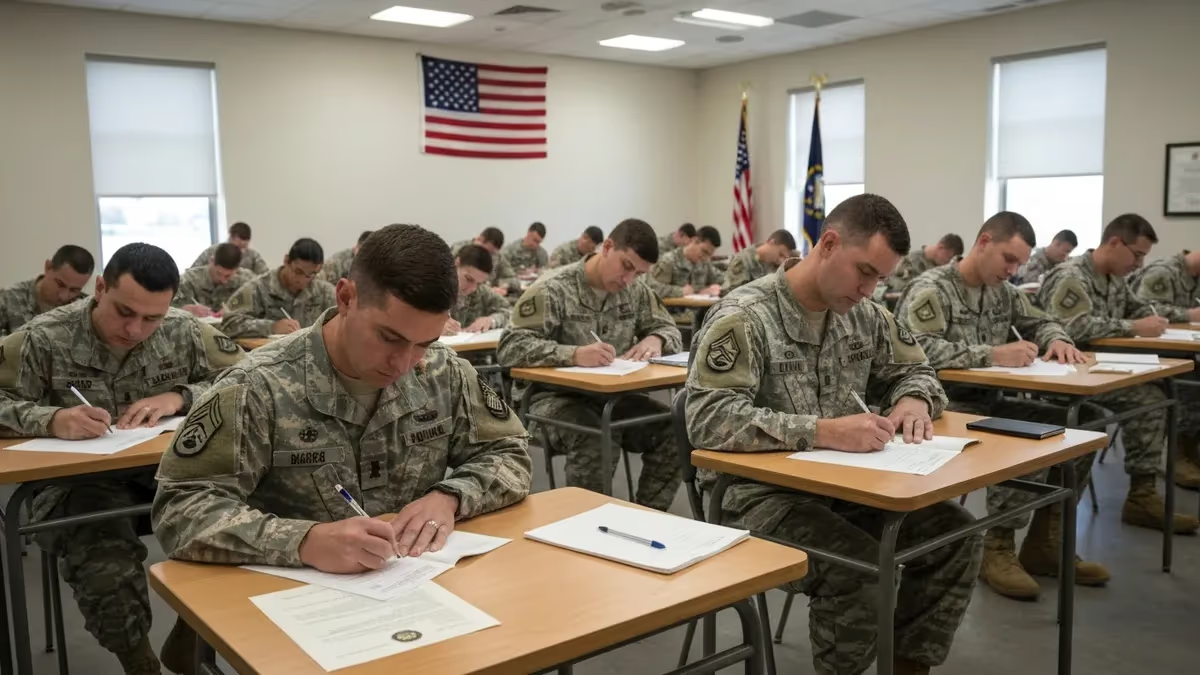
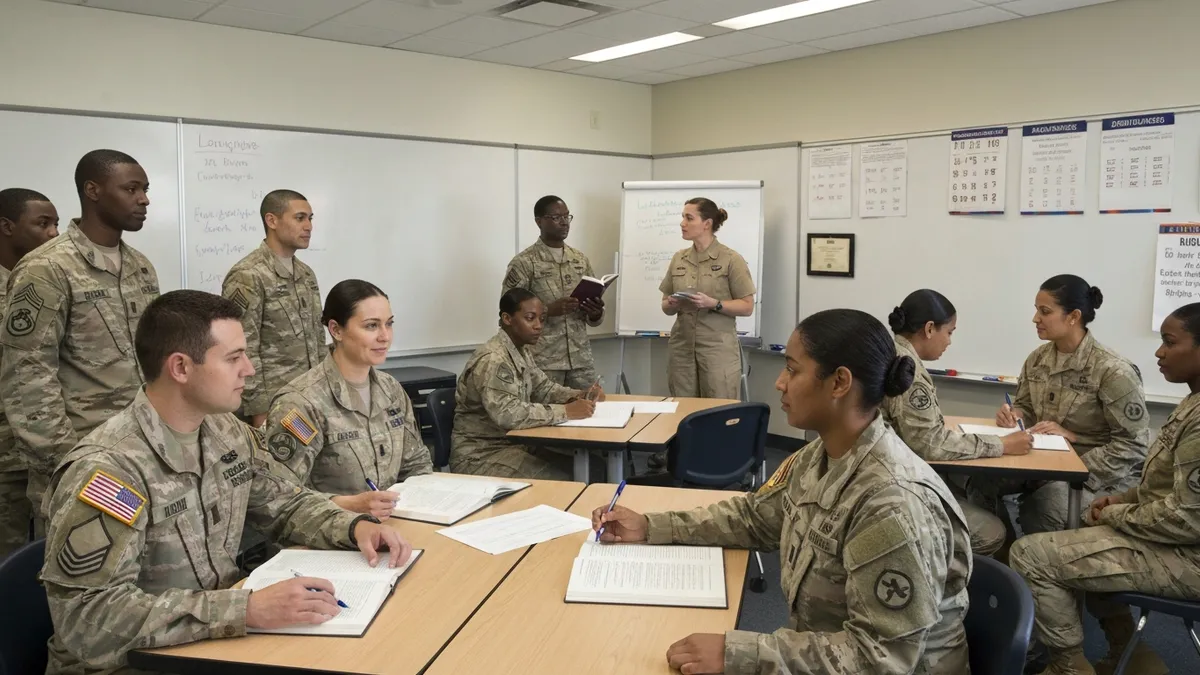
The American Language Course Placement Test (ALCPT) is not a general English exam — it is a military-grade assessment designed to determine whether a student is ready for English-medium instruction in defense training programs. Hundreds of thousands of military personnel from allied nations take it each year. Passing is not optional: your ALCPT score directly determines which course level you enter, how quickly you advance, and sometimes whether you are selected for a program at all.
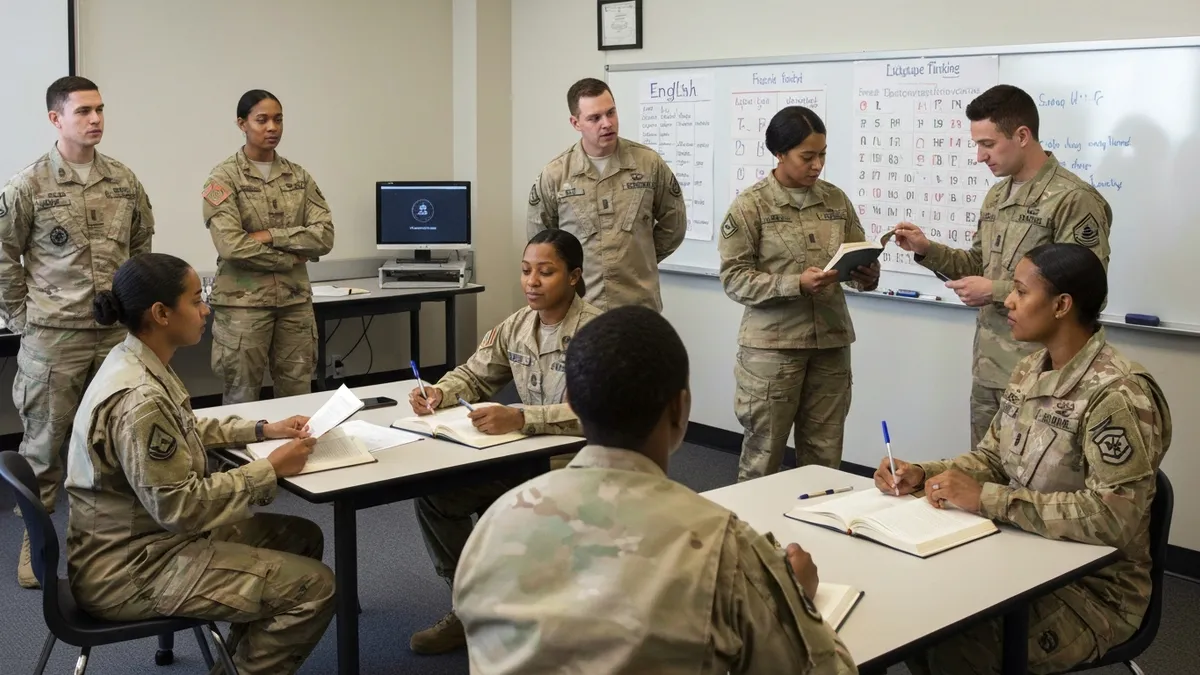
Because the test is high-stakes and specific in format, random study does not work. You need targeted preparation that mirrors real test conditions. This guide covers the five core strategies military students use to pass the ALCPT, plus a week-before game plan and test-day tips.
ALCPT Test Overview
The ALCPT is a 100-item multiple-choice test. It has two major sections:
- Listening Comprehension — 50 questions. Audio recordings of conversations, statements, and questions. You choose the correct response or identify what you heard.
- English Usage (Grammar and Vocabulary) — 50 questions. Sentence completion, word choice, and structural grammar items.
The test is scored on a scale. Each military or training program sets its own minimum score requirement. Knowing that target number is the first step in your preparation. Review the complete ALCPT guide if you need a full overview before diving into strategies.
The Week Before the Test
The final week is not for learning new material — it is for consolidating what you already know and arriving at the test center in optimal condition.
- Days 7–4: Take one full timed practice test per day. Review every wrong answer immediately after. Focus study sessions on your two weakest grammar patterns only.
- Days 3–2: Review your vocabulary flashcard deck — mastered cards only, at speed. Listen to 45 minutes of English audio each day without transcripts. Do not study new vocabulary this late.
- Day 1 (eve of test): Light review — read over your error log notes, do 10–15 grammar items, then stop. Get 8 hours of sleep. Eat a full meal.
- Test day: Arrive early. Bring your ID and any required documents. During the listening section, focus entirely on each audio item — do not think about previous questions. For English usage items, eliminate obviously wrong answers first, then choose among remaining options.
Score Requirements and Retakes
Minimum ALCPT scores vary by program. Common thresholds:
- English language training entry: typically 30–50
- Technical or officer programs: typically 60–75
- Advanced military education: typically 80+
Always verify the exact score required for your specific program with your sponsoring command or training institution — do not rely on general tables. See the ALCPT score guide for a full breakdown by program type.
Retakes: Retake policy is set by your sponsoring military organization. In most cases, students may retake the ALCPT after a waiting period (commonly 30–90 days) if they do not meet the minimum score. Use that interval as structured study time with the strategies above — students who follow a disciplined plan between retakes typically improve 10–20 points.
You can continue preparing with the alcpt test, which includes answer explanations for every question.
ALCPT Checklist
- ✓Week 1: Take a baseline practice test — identify your current score and weakest sections
- ✓Week 1: Begin daily listening (30 min/day) — news, podcasts, no transcripts
- ✓Week 1: Start vocabulary flashcard deck with 15 military/professional words per day
- ✓Week 2: Add timed practice test twice per week — log score and wrong answers
- ✓Week 2: Drill verb tenses (past simple, present perfect, past continuous) — 20 items/day
- ✓Week 2: Drill prepositions in context — 15 items/day from error log targets
- ✓Week 3: Shift 60% of study time to weakest question type identified from tests
- ✓Week 3: Increase listening to 45 min/day — include military or technical audio
- ✓Week 3: Review and expand vocabulary deck — aim for 300+ targeted words total
- ✓Week 4: Daily timed practice tests (days 7–4), light review only (days 3–1)
- ✓Week 4: Full 8-hour sleep the night before — no last-minute cramming
- ✓Test day: Arrive early, eliminate wrong answers first, stay calm during listening
ALCPT Pros and Cons
- +ALCPT exam content is organized around a published blueprint, making targeted preparation efficient and systematic
- +Official and third-party practice materials provide realistic exposure to question types before the actual exam
- +Score reporting after practice tests and the actual exam provides detailed feedback for focused improvement
- +Study communities (forums, Discord groups, Reddit) share current insights about tested content and effective strategies
- +Multiple registration windows and retake policies give candidates flexibility in timing and recovery from suboptimal first attempts
- −High-quality preparation materials require financial investment that not all candidates can easily access
- −Time required for thorough preparation is often underestimated, leading to rushed review of critical content
- −ALCPT preparation resources vary widely in quality and accuracy — not all published guides are aligned with current exam content
- −Self-study without external accountability increases the risk of avoiding weak subjects and over-studying familiar ones
- −Performance under actual exam conditions often differs from practice performance due to time pressure and stress factors
ALCPT Practice Strategies Questions and Answers
About the Author

Educational Psychologist & Academic Test Preparation Expert
Columbia University Teachers CollegeDr. Lisa Patel holds a Doctorate in Education from Columbia University Teachers College and has spent 17 years researching standardized test design and academic assessment. She has developed preparation programs for SAT, ACT, GRE, LSAT, UCAT, and numerous professional licensing exams, helping students of all backgrounds achieve their target scores.
Join the Discussion
Connect with other students preparing for this exam. Share tips, ask questions, and get advice from people who have been there.
View discussion (8 replies)