

ABE Practice Test
Updated for October 2026Ace Your ABE (American Board of Endodontics) Test
Getting certified by the American Board of Endodontics (ABE) is a big deal for endodontists. It shows you're a pro in root canal therapy. The test checks your skills in advanced techniques, making tough decisions, and giving top-notch care to patients. Passing it is a big win for you, boosting your career and showing you're serious about your work.
Getting ready for the ABE test means being focused and organized. It's packed with lots of endodontic stuff, real-life scenarios, and ethics. By getting good at the test, you'll stand out as a top endodontist. This guide will give you the lowdown on the ABE test, like who can take it, what it's about, and how to prepare well. Try our NCLEX practice test.
ABE Practice Test Questions
Prepare for the ABE - American Board of Endodontics exam with our free practice test modules. Each quiz covers key topics to help you pass on your first try.
ABE Dental Trauma Management
ABE Exam Questions covering ABE Dental Trauma Management. Master ABE Test concepts for certification prep.
ABE Endodontic Surgery
Free ABE Practice Test featuring ABE Endodontic Surgery. Improve your ABE Exam score with mock test prep.
ABE Clinical Endodontics
ABE Mock Exam on Clinical Endodontics. ABE Study Guide questions to pass on your first try.
ABE Dental Anatomy and Pathology
ABE Test Prep for Dental Anatomy and Pathology. Practice ABE Quiz questions and boost your score.
ABE Diagnostic Methods
ABE Questions and Answers on Diagnostic Methods. Free ABE practice for exam readiness.
ABE Endodontic Diagnosis and Radiology
ABE Mock Test covering Endodontic Diagnosis and Radiology. Online ABE Test practice with instant feedback.
ABE Endodontic Materials
Free ABE Quiz on Endodontic Materials. ABE Exam prep questions with detailed explanations.
ABE Endodontic Microbiology and Pathology
ABE Practice Questions for Endodontic Microbiology and Pathology. Build confidence for your ABE certification exam.
ABE Regenerative Endodontics
ABE Test Online for Regenerative Endodontics. Free practice with instant results and feedback.
Key Takeaways
- The ABE test is a big deal for endodontists in the U.S.
- Passing the ABE test boosts your career and shows you're all in on endodontics.
- Getting ready for the ABE test means learning a lot about endodontics, real-life cases, and ethics.
- Being great at the ABE test makes you a top endodontist, known for your skills.
- This guide covers everything you need to know about the ABE test, like who can take it and how to prepare.
Eligibility Requirements
Understanding the ABE (American Board of Endodontics) Test
Becoming an endodontist means passing a tough exam, and the American Board of Endodontics (ABE) Test is key. It checks if someone has the skills in advanced dental training, root canal therapy, endodontic mastery, and endodontist credentialing.
To take the ABE Test, you need to: Try our DAT practice test.
- Finish an approved endodontic program
- Have a valid dental license
- Show at least two years of endodontic work experience
Exam Structure and Format
The ABE Test has two parts: a written test and a clinical test. The written test checks your endodontic skills proficiency and root canal procedure qualification. It covers topics like diagnosis, treatment planning, and managing patients. The clinical test looks at your endodontic mastery by seeing you do endodontic procedures.
| Exam Component | Description |
|---|---|
| Written Examination | Tests your knowledge and decision-making in endodontics |
| Clinical Examination | Checks your skills in doing endodontic procedures |
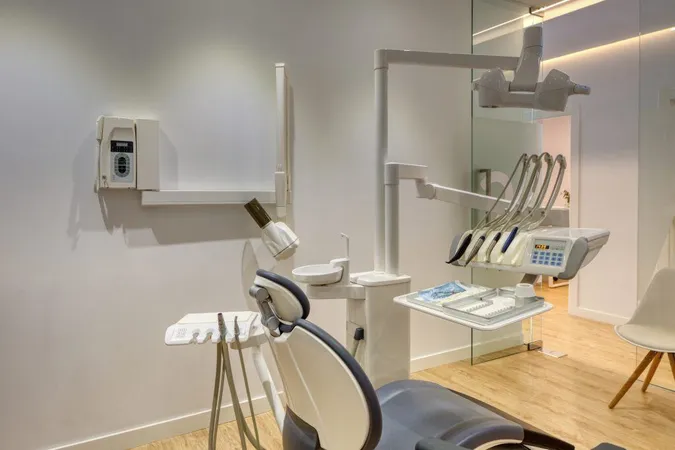
Passing the ABE Test is a big deal for endodontists. It shows they've got the advanced dental training evaluation and root canal therapy expertise. This tough test makes sure endodontists are top-notch, giving patients top-quality care.

ABE: Pros and Cons
- +ABE exam preparation strengthens your knowledge across all domains
- +Passing the exam proves competency to employers and clients
- +Study materials and practice tests are widely available
- +Exam-based credentials are portable across states and employers
- +Clear exam objectives help focus your study plan effectively
- −Exam anxiety can affect performance — practice tests help reduce it
- −Registration fees are non-refundable if you miss your test date
- −Limited retake opportunities may apply with waiting periods
- −Exam content updates periodically — use current study materials
- −Testing center availability may require advance scheduling
Sample American Board of Endodontics Practice Questions
Try these questions from our free American Board of Endodontics practice tests. The correct answer and an explanation follow each question.
A dentist anesthetizes tooth #30 with an IANB and the patient still reports cold sensitivity. The tooth has a positive cold response and no periapical pathology. What test should be performed next?
- A. Selective anesthesia of adjacent teeth to localize the source
- B. Repeat IANB injection at higher dose
- C. Begin endodontic treatment on tooth #30
- D. Order CBCT imaging immediately
Answer: A. Selective anesthesia of adjacent teeth to localize the source
When the symptomatic tooth cannot be identified after anesthesia, selective anesthesia of adjacent teeth helps localize the true source of pain.
What is the primary use of Cone Beam Computed Tomography (CBCT) in endodontics?
- A. To assess the cosmetic appearance of the tooth
- B. To provide detailed three-dimensional imaging of the tooth and surrounding structures
- C. To measure the tooth's sensitivity
- D. To track the tooth's eruption pattern
Answer: B. To provide detailed three-dimensional imaging of the tooth and surrounding structures
Cone Beam Computed Tomography (CBCT) is an advanced imaging technique that provides high-resolution, three-dimensional views of dental and maxillofacial structures. In endodontics, this detailed 3D visualization is invaluable for accurately assessing complex root canal anatomy, identifying subtle periapical lesions, and planning intricate treatments. Unlike traditional 2D radiographs, CBCT eliminates the problem of superimposition, offering a comprehensive understanding of the tooth's internal and surrounding structures.
What is a common challenge when interpreting periapical radiographs in endodontics?
- A. Difficulty in visualizing the tooth's surface texture
- B. Overlapping of anatomical structures, which can obscure root canal anatomy
- C. Lack of color differentiation in radiographs
- D. Excessive radiation exposure to patients
Answer: B. Overlapping of anatomical structures, which can obscure root canal anatomy
A common challenge with periapical radiographs in endodontics is the overlapping of anatomical structures. Since these are two-dimensional images of three-dimensional objects, features like the zygomatic arch, cortical bone, or adjacent roots can be superimposed, obscuring the intricate root canal anatomy, accessory canals, or subtle periapical pathology. This superimposition can make it difficult to obtain a clear and complete diagnostic picture, often requiring multiple angulations or 3D imaging for a comprehensive assessment.
Triple antibiotic paste (TAP) used in regenerative endodontics is classically composed of which three antibiotics?
- A. Metronidazole, ciprofloxacin, and minocycline
- B. Amoxicillin, metronidazole, and tetracycline
- C. Clindamycin, ciprofloxacin, and doxycycline
- D. Penicillin, metronidazole, and erythromycin
Answer: A. Metronidazole, ciprofloxacin, and minocycline
The classic TAP formulation consists of metronidazole, ciprofloxacin, and minocycline, first described by Hoshino et al. to disinfect infected root canals.
ABE Questions and Answers
About the Author

Registered Nurse & Healthcare Educator
Johns Hopkins University School of NursingDr. Sarah Mitchell is a board-certified registered nurse with over 15 years of clinical and academic experience. She completed her PhD in Nursing Science at Johns Hopkins University and has taught NCLEX preparation and clinical skills courses for nursing students across the United States. Her research focuses on evidence-based exam preparation strategies for healthcare certification candidates.
Join the Discussion
Connect with other students preparing for this exam. Share tips, ask questions, and get advice from people who have been there.
View discussion (8 replies)