
Wound Care Certification for LPN: Complete 2026 October Guide to Requirements, Exams & Career Growth
Complete guide to wound care certification for LPN: eligibility, exam prep, costs, salary boost, and step-by-step path to becoming a certified LPN 📗
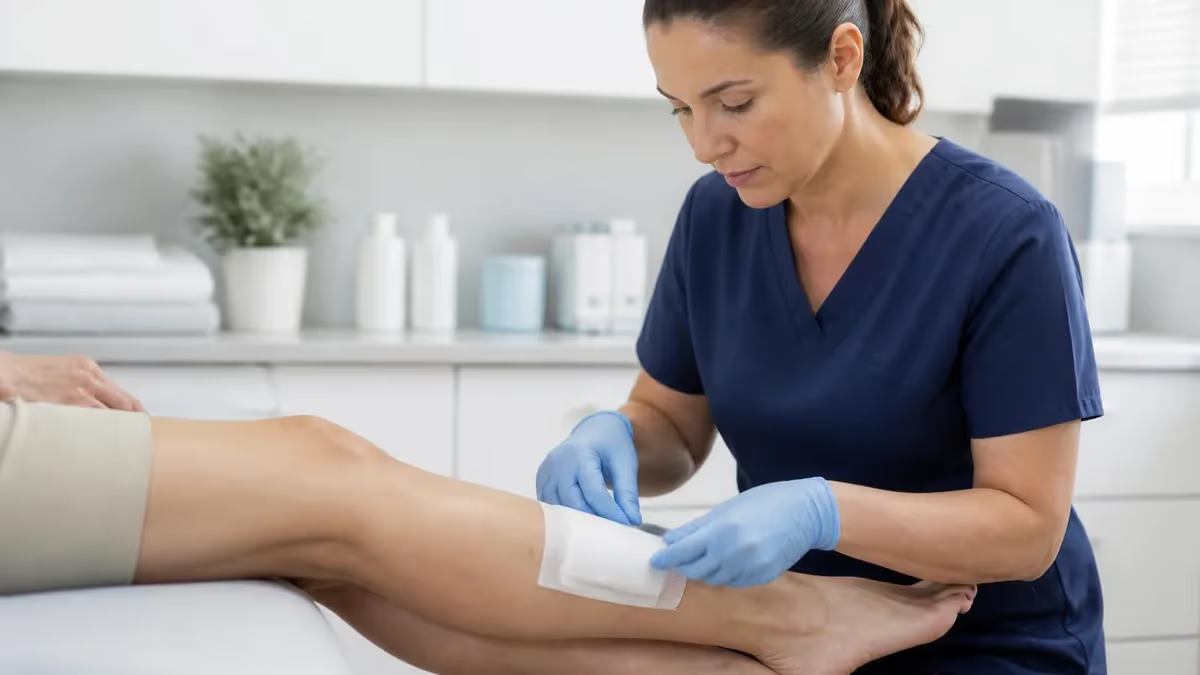
Pursuing a wound care certification for LPN is one of the smartest career moves a licensed practical nurse can make in 2026. As chronic wounds, diabetic ulcers, and pressure injuries continue to rise across the United States, healthcare facilities are aggressively recruiting LPNs with specialized credentials in wound care wound care management. Certification signals to employers that you have mastered evidence-based dressing selection, infection prevention, and advanced healing protocols that go beyond standard nursing curriculum, opening doors to higher pay, leadership roles, and specialty clinic placements.
The Wound, Ostomy and Continence Nursing Certification Board (WOCNCB) and the National Alliance of Wound Care and Ostomy (NAWCO) both offer LPN-level credentials that meet industry hiring standards. The most popular pathway, the WCC (Wound Care Certified) credential through NAWCO, accepts LPNs with at least one year of clinical experience and completion of an approved preparatory course. Pass rates hover around 70 percent, but candidates who complete a structured 50-hour skin and wound management program consistently outperform self-studiers.
Before enrolling, LPNs should weigh the financial commitment against projected returns. Course fees range from $795 to $1,995, exam fees add another $295 to $450, and renewal is required every five years. However, certified LPNs report wage premiums of $4 to $9 per hour, with home health agencies and long-term care facilities paying the highest differentials. In high-demand states like Florida, Texas, and California, the return on investment typically arrives within six to eight months of credentialing.
Beyond the paycheck, certification transforms how nurses practice. You will learn to differentiate venous from arterial ulcers in under sixty seconds, select appropriate alginate, foam, hydrocolloid, or hydrogel dressings based on exudate volume, and recognize early signs of biofilm formation. These competencies reduce healing time by 30 to 45 percent in clinical studies, lowering readmission rates and earning recognition from physicians, case managers, and wound consultants who often defer to certified staff for complex cases.
The certification process itself has become more accessible than ever. Online preparatory courses from Wound Care Education Institute (WCEI), the National Alliance, and the American Board of Wound Management Foundation now offer self-paced modules, virtual simulations, and live proctor-supervised testing through PSI or Prometric centers. LPNs balancing full-time shifts can typically complete preparation within twelve to sixteen weeks while still working their regular schedule, making this credential one of the most achievable specialty certifications in nursing.
This comprehensive guide walks you through every requirement, cost, study timeline, and exam-day strategy needed to earn your wound care credential as an LPN. Whether you currently work in skilled nursing, home health, hospice, an outpatient clinic, or a hospital floor, the steps outlined below will help you transition from general practitioner to specialist with confidence. You will also find downloadable checklists, practice question banks, and renewal roadmaps that thousands of LPNs have used to pass on their first attempt.
By the end of this article, you will know exactly which certification fits your scope of practice, how to budget for the full credentialing journey, and what employers are willing to pay for your new expertise. Most importantly, you will understand how to position yourself in a job market where specialized LPNs are no longer optional staff but essential frontline clinicians in the multi-billion-dollar wound care industry.
Wound Care Certification for LPN by the Numbers
Key Facts at a Glance
| Item | Value | Details |
|---|---|---|
| Typical Prep Time | 12-16 wks | While working full-time |
| Required CE Hours | 50 hrs | For most LPN pathways |
| Renewal Cycle | 5 yrs | 60 CE hours to renew |

Certification Requirements & Eligibility for LPNs
You must hold an unencumbered LPN or LVN license in your state of practice. Compact state licenses are accepted, but disciplinary actions on file may disqualify candidates from sitting for the WCC or CWCA exams.
Most boards require a minimum of one year of clinical nursing experience, with at least 120 hours directly involved in wound assessment, dressing changes, or skin integrity management within the previous three years.
Candidates must complete a board-approved 50-hour skin and wound management course from providers like WCEI, NAWCO, or the American Professional Wound Care Association before scheduling their certification exam.
Submit a complete application including license verification, course completion certificate, employer attestation, and $295 to $450 exam fee. Processing takes two to four weeks before scheduling is permitted.
Pass a 110 to 120 question proctored examination at a PSI or Prometric testing center, or via remote online proctoring. A minimum scaled score of 75 percent is typically required to earn the credential.
LPNs have several legitimate certification pathways, and choosing the right one depends on your work setting, career goals, and budget. The three most widely recognized credentials accepting LPNs are the WCC (Wound Care Certified) from NAWCO, the CWCA (Certified Wound Care Associate) from the American Board of Wound Management, and the WCC-LPN designation through WCEI. Each carries different prestige levels, cost structures, and recertification requirements, so understanding the differences saves both time and money.
The WCC credential is the most popular choice for LPNs because it is accepted in all 50 states, recognized by Medicare for documentation purposes, and held by over 25,000 nurses nationwide. The exam covers wound assessment, dressing selection, nutrition, infection control, and legal documentation. Preparation typically involves the Skin and Wound Management Course offered by WCEI, which runs $1,895 and includes a comprehensive textbook, online modules, and a final practice exam closely modeled on the actual certification test.
The CWCA from the ABWM Foundation positions itself as the entry-level credential within a broader credentialing ladder that includes CWS for advanced practice nurses. LPNs holding CWCA can later upgrade their credential as they gain experience or pursue RN licensure. This pathway costs slightly less at $1,495 for the bundled course and exam, and recertification requires 30 hours of continuing education every five years rather than 60.
For LPNs working in home health or hospice settings, the NAWCO WCC remains the gold standard because case managers and insurance reviewers specifically request this credential when assigning complex cases. Home health agencies report that WCC-certified LPNs are assigned 25 to 40 percent more wound-care visits, generating significantly higher productivity bonuses and per-visit reimbursement under Medicare's Patient-Driven Groupings Model.
Hospital-based LPNs often pursue dual credentialing in wound care and ostomy management through the WOCNCB, although this pathway requires RN licensure for full certification. LPNs in these settings can still complete the foundational coursework, work alongside certified WOC nurses, and prepare for an eventual RN-to-BSN bridge program that opens the door to advanced certifications and specialty wound care products consultation roles.
Long-term care and skilled nursing facility LPNs benefit most from credentials emphasizing pressure injury prevention, since CMS quality measures heavily penalize facilities for stage 3 and 4 pressure ulcers. The WCC curriculum dedicates substantial content to Braden Scale risk assessment, repositioning protocols, support surface selection, and nutritional interventions, all of which directly align with state survey deficiency citations.
Finally, LPNs working in outpatient wound care clinics should consider the CWCA or WCC credential combined with manufacturer-specific training on negative pressure wound therapy, compression bandaging systems, and bioengineered skin substitutes. Many clinic directors require certification within the first 12 months of hire, and several major chains reimburse certification costs upon successful completion as part of their retention strategy.

Wound Care Certification Practice Test Questions
Prepare for the Wound Care Certification Exam exam with our free practice test modules. Each quiz covers key topics to help you pass on your first try.
Wound Care Certification Beginner's Guide
Wound Care Certification Exam Questions covering Beginner's Guide. Master Wound Care Certification Test concepts for certification prep.
Wound Care Certification Knowledge
Free Wound Care Certification Practice Test featuring Knowledge. Improve your Wound Care Certification Exam score with mock test prep.
Wound Care Certification MCQ
Wound Care Certification Mock Exam on MCQ. Wound Care Certification Study Guide questions to pass on your first try.
Wound Care Certification Practice
Wound Care Certification Test Prep for Practice. Practice Wound Care Certification Quiz questions and boost your score.
Wound Care Certification
Wound Care Certification Questions and Answers on Wound Care Certification. Free Wound Care Certification practice for exam readiness.
Wound Care Certification Trivia
Wound Care Certification Mock Test covering Trivia. Online Wound Care Certification Test practice with instant feedback.
Wound Care Certification Atypical Wound Et...
Free Wound Care Certification Quiz on Atypical Wound Etiologies. Wound Care Certification Exam prep questions with detailed explanations.
Wound Care Certification Dressings and Top...
Wound Care Certification Practice Questions for Dressings and Topical Agents. Build confidence for your Wound Care Certification certification exam.
Wound Care Certification Exam Wound Care C...
Wound Care Certification Test Online for Exam Wound Care Certification Debridement Methods and Indications. Free practice with instant results and feedback.
Wound Care Certification Exam Wound Care C...
Wound Care Certification Study Material on Exam Wound Care Certification Infection Management and Antimicrobials. Prepare effectively with real exam-style questions.
Wound Care Certification Pressure Injury P...
Free Wound Care Certification Test covering Pressure Injury Prevention. Practice and track your Wound Care Certification exam readiness.
Wound Care Certification Systemic Factors ...
Wound Care Certification Exam Questions covering Systemic Factors Affecting Healing. Master Wound Care Certification Test concepts for certification prep.
Exam Content Areas: Wound Care Dressings, Assessment & Documentation
Approximately 25 percent of the WCC exam focuses on wound assessment skills. LPNs must demonstrate accurate measurement using length-by-width-by-depth methodology, undermining and tunneling documentation, exudate characterization, periwound skin evaluation, and pain scoring. Expect questions on distinguishing pressure injuries from moisture-associated skin damage and identifying arterial versus venous insufficiency through ankle-brachial index interpretation.
The exam also tests staging knowledge using the most current NPIAP guidelines, including deep tissue pressure injury identification and unstageable wound recognition. Diabetic foot ulcer Wagner classification and the University of Texas system appear frequently, so candidates should memorize both grading systems and understand when each applies clinically to ensure correct documentation in electronic health records.
Is Wound Care Certification Worth It for LPNs?
- +Average hourly pay increase of $4-$9 within first year of credentialing
- +Higher priority assignment to complex wound cases and visit bonuses
- +Recognition as facility wound resource nurse and informal team leader
- +Strong job security in aging population and chronic disease markets
- +Foundation for RN bridge programs and advanced specialty credentials
- +Reimbursable as continuing education by many employers and unions
- +Boosts resume visibility in competitive home health and clinic hiring
- −Upfront cost of $1,500-$2,500 before any salary increase materializes
- −Significant study time commitment of 100+ hours over 3-4 months
- −Renewal every five years requires 60 CE hours and renewal fees
- −Some hospital systems pay RN wound nurses but not LPN equivalents
- −Scope of practice limits remain in certain states despite credential
- −Course refund policies are restrictive once materials are accessed
- −Exam anxiety and proctoring requirements can intimidate first-time testers

Wound Care Certification Application Checklist for LPN
- ✓Verify your LPN license is active, unencumbered, and current in your practice state
- ✓Document at least 120 hours of wound-related clinical experience over the past three years
- ✓Research certifying bodies and choose between WCC, CWCA, or WCEI pathway based on goals
- ✓Enroll in a board-approved 50-hour skin and wound management course before applying
- ✓Complete all online modules, case studies, and practice quizzes within course timeframe
- ✓Request employer attestation letter confirming clinical wound care experience
- ✓Gather LPN license documentation, course completion certificate, and government-issued photo ID
- ✓Submit certification application with $295-$450 exam fee through online portal
- ✓Schedule proctored exam at PSI, Prometric, or approved remote testing platform
- ✓Complete a minimum of three full-length practice exams scoring 80 percent or higher
- ✓Review weak content areas using flashcards, study groups, and instructor office hours
- ✓Arrive 30 minutes early on exam day with two forms of identification and confirmation email
Schedule Your Exam Before You Feel Ready
Veteran certified LPNs consistently advise scheduling the WCC exam four to six weeks after course completion, even if you do not feel fully prepared. Procrastination is the leading cause of certification abandonment, and exam fees are non-refundable after 48 hours of scheduling. Booking the test forces structured study and dramatically improves first-attempt pass rates.
The total investment for LPN wound care certification typically ranges from $1,790 to $2,945 when accounting for the preparatory course, exam fee, study supplements, and travel to testing centers. While that figure seems substantial for an LPN salary, the return on investment is among the fastest in nursing credentialing. Most LPNs recoup the full cost within six to nine months through pay raises, visit bonuses, or shift differentials at facilities that recognize the credential financially.
National salary data from 2025 shows uncertified LPNs earning a median wage of $54,620 annually, while WCC-certified LPNs report median earnings of $63,840, a difference of nearly $9,200 per year. Home health agencies offer the largest premiums, with per-visit rates rising from $42 to $58 for certified clinicians handling complex wound cases. Long-term care facilities typically offer flat hourly bumps of $2 to $5, while outpatient clinics may include certification bonuses ranging from $1,500 to $3,000 paid upon successful credentialing.
Geographic location significantly impacts salary outcomes. LPNs in California, Massachusetts, New Jersey, and Washington report the highest certified wages, often exceeding $72,000 annually when combined with overtime and on-call differentials. Conversely, certified LPNs in Mississippi, Arkansas, and West Virginia earn closer to $48,000 to $54,000 despite identical credentials, reflecting regional cost-of-living adjustments and Medicaid reimbursement variability across state lines.
Beyond base salary, certification opens consulting and per-diem opportunities that uncertified LPNs cannot access. Many wound care product manufacturers contract certified nurses for in-service training, clinical education events, and product evaluation studies at rates of $75 to $150 per hour. Some certified LPNs build six-figure income streams by combining staff employment with weekend consulting work for skilled nursing facilities, finding the right clients through wound care networking events and searches for wound care near me partnerships.
Tax implications also favor certified LPNs. Course tuition, exam fees, study materials, and renewal CE hours are generally deductible as unreimbursed employee expenses or qualifying continuing education on Schedule A or Schedule C for those who freelance. Consult a tax professional, but many certified LPNs recover 22 to 32 percent of their certification investment through federal and state tax deductions in the year of credentialing.
Employer reimbursement programs are increasingly common and should be explored before paying out of pocket. Major health systems including HCA, Encompass Health, and Kindred reimburse 50 to 100 percent of certification costs after a minimum employment commitment, typically 12 to 24 months. Union contracts in California, New York, and Illinois often include dedicated certification reimbursement funds that nurses must specifically request rather than receiving automatically.
Finally, consider the compound career value of certification. LPNs who certify within their first five years of practice are 3.4 times more likely to pursue RN licensure within ten years, and certified LPN-to-RN graduates command starting salaries 12 to 18 percent above their non-certified peers. The credential signals professional commitment to admissions committees and hiring managers alike, accelerating long-term earning potential well beyond the immediate post-certification pay bump.
Do not enroll in a certification preparatory course until you have verified your eligibility directly with the certifying board. Some LPNs have invested $1,895 in coursework only to discover their state licensure status, clinical hour documentation, or employer setting did not qualify them to sit for the exam. Email the credentialing board, save the response, and document your eligibility confirmation before any payment is made.
Maintaining your credential is just as important as earning it initially. The WCC certification requires 60 continuing education contact hours every five years, with at least 30 hours specifically related to wound, skin, or ostomy care topics. CWCA recertification requires 30 hours over the same period. Many certified LPNs accumulate these hours through annual wound care symposiums, manufacturer-sponsored webinars, online learning platforms, and journal-based CE offered through Wounds, Advances in Skin & Wound Care, and Ostomy Wound Management publications.
Renewal fees range from $150 to $295 depending on the certifying body, and applications must be submitted 60 to 90 days before your credential expiration date. Late renewals incur additional reinstatement fees of $100 to $250, and credentials lapsed for more than 12 months typically require retesting from scratch, an outcome every certified LPN works hard to avoid through proactive CE tracking and calendar reminders.
Career advancement after initial certification often follows one of three trajectories. The first path leads toward clinical specialization, with certified LPNs moving from generalist roles into dedicated wound care positions at outpatient centers, hyperbaric oxygen therapy clinics, or skin integrity teams within hospitals. These roles typically command salaries 15 to 25 percent above general LPN positions and offer predictable Monday-through-Friday schedules without weekend or holiday demands.
The second trajectory involves educational advancement through LPN-to-RN bridge programs, then BSN completion, and eventually CWOCN certification for nurses interested in becoming Wound, Ostomy and Continence specialists. CWOCN-certified RNs earn median salaries between $92,000 and $115,000 nationally, with some experienced practitioners exceeding $140,000 in metropolitan markets. The WCC credential earned as an LPN provides foundational knowledge that significantly eases this academic transition.
The third path leads toward entrepreneurship and consulting. Certified LPNs with strong clinical instincts increasingly launch private wound care consulting practices, working with assisted living facilities, group homes, hospice agencies, and even veterinary settings handling complex dog wound care protocols. While LPN scope-of-practice rules apply, consulting arrangements focused on education, protocol development, and care planning are widely permitted across states.
Specialization within wound care continues to expand. LPNs can layer additional micro-credentials in lymphedema management, compression therapy, hyperbaric oxygen safety, and diabetic foot care on top of their core wound certification. Each layered credential typically requires 16 to 40 additional CE hours and a focused exam, while adding $2 to $4 per hour in market value for certified clinicians willing to invest in continued professional development.
Networking remains essential to long-term success in this specialty. Joining the National Alliance of Wound Care and Ostomy member directory, attending the annual Symposium on Advanced Wound Care, and participating in state wound care nurse associations provide ongoing access to job leads, mentorship, and emerging clinical research. Many certified LPNs report that their most rewarding career opportunities arrived through peer connections rather than online job boards or recruiter outreach.
Final exam preparation should follow a structured 30-day countdown that combines content review, practice testing, and physical readiness. During the first ten days, focus on mastering wound assessment terminology, NPIAP staging definitions, and Wagner classification for diabetic ulcers. Use flashcards, anatomy diagrams, and color photographs of real wounds to train your eye, since the exam frequently includes image-based questions requiring rapid visual recognition under timed conditions.
The middle ten days should emphasize dressing selection logic, infection control protocols, and product category memorization. Create a single-page dressing matrix listing exudate level on one axis and wound depth on the other, then map alginate, foam, hydrocolloid, hydrogel, and antimicrobial products into the appropriate cells. This visual organizational tool consistently helps test-takers eliminate distractor options on selection-based multiple-choice questions during the actual exam.
The final ten days should be devoted to full-length timed practice exams under realistic conditions, including 120-minute test sessions without interruptions, breaks limited to bathroom only, and no reference materials. Aim to complete at least four full practice exams during this period, scoring 80 percent or higher on each before exam day. Review every missed question with full rationale, paying particular attention to topics that recur across multiple tests.
On exam day itself, arrive at the testing center 30 minutes early with two forms of government-issued identification, your scheduling confirmation email, and a light high-protein snack for use during the optional break. Avoid heavy meals, excessive caffeine, and last-minute cramming, since stress-induced cognitive fatigue impairs recall more than mild knowledge gaps for most test-takers. Trust your preparation and allow muscle memory from practice tests to guide your pacing.
During the exam, read each question carefully and identify keywords like first, best, most appropriate, or initial, since these qualifiers dramatically change correct answer selection. When two answers appear equally valid, choose the option emphasizing patient safety, evidence-based practice, or established standards of care, as these align with WOCNCB, NAWCO, and ABWM scoring rubrics across all wound care certification examinations.
If you become stuck on a question, mark it for review and continue moving forward rather than burning excessive time on any single item. The exam allows you to return to flagged questions during the final review period, and your subconscious often surfaces correct answers while you work through subsequent questions on related topics. This strategy alone has saved many candidates from running out of time during the final ten questions of the exam.
After receiving your passing score, immediately update your professional profiles, request your digital badge, and notify your employer's human resources department to trigger any contractual pay adjustments. Order your printed certificate, frame it for visible display in your workspace, and add the credential letters after your name on email signatures, business cards, and electronic health record displays. These small visibility steps reinforce your new professional identity and accelerate workplace recognition.
Wound Care Questions and Answers
About the Author

Registered Nurse & Healthcare Educator
Johns Hopkins University School of NursingDr. Sarah Mitchell is a board-certified registered nurse with over 15 years of clinical and academic experience. She completed her PhD in Nursing Science at Johns Hopkins University and has taught NCLEX preparation and clinical skills courses for nursing students across the United States. Her research focuses on evidence-based exam preparation strategies for healthcare certification candidates.