
The Essential Guide to Becoming a Certified Nurse Assistant
The essential guide to becoming a certified nurse assistant. Training options, certification steps, salary data, and free CNA study guide resources for 2026.
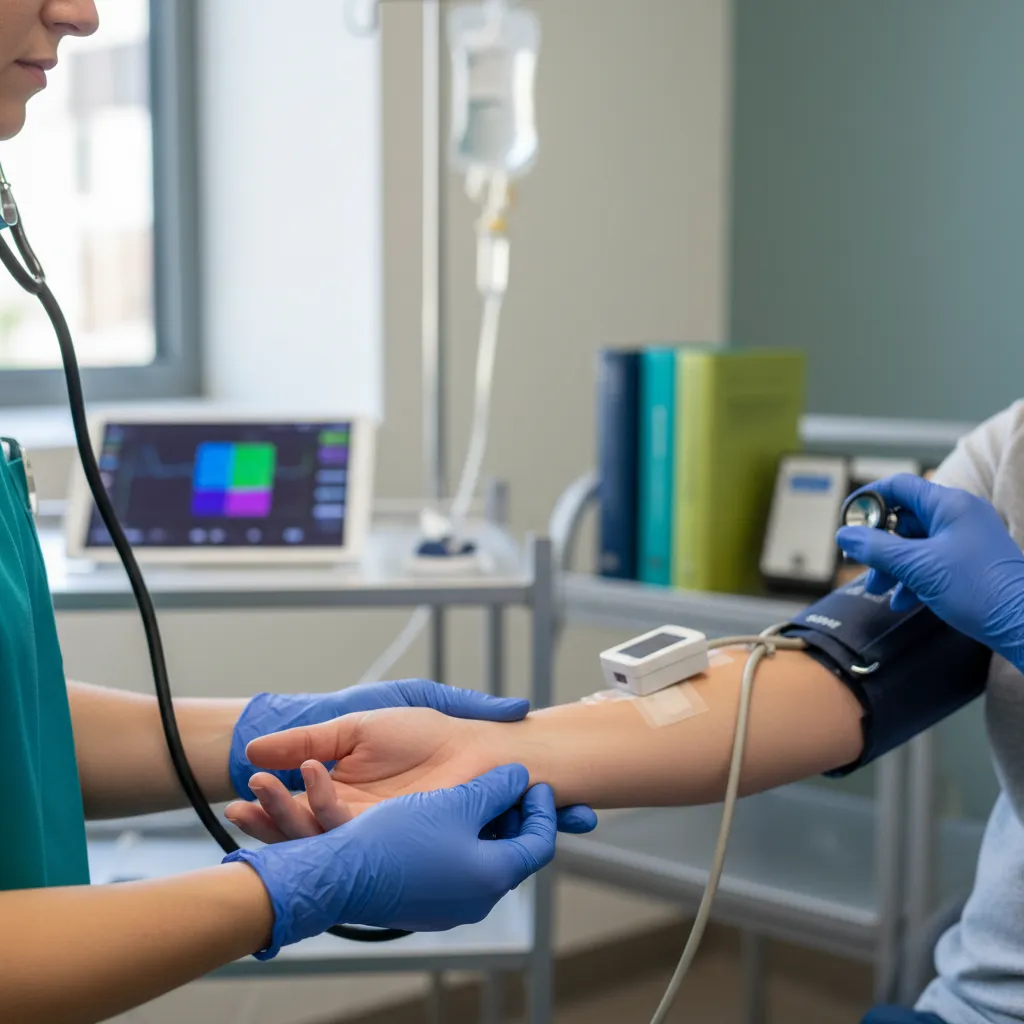
If you're looking for the essential guide to becoming a certified nurse assistant, you've landed in the right spot. This career doesn't require a four-year degree — or even a two-year one. Most CNA training programs run four to twelve weeks, and you can start working in healthcare almost immediately after passing your state's certification exam. That's the draw. Fast entry, real patient contact, and a paycheck that keeps climbing as demand for nursing assistants grows across every state in the country.
Think of this page as your cna study guide — the single resource that walks you through what to expect from training, how to prepare for the written and skills portions of the exam, and what happens after you earn that credential. Whether you're nineteen and fresh out of high school or forty-two and switching careers, the path looks roughly the same: complete an approved program, pass the competency test, get listed on your state's nurse aide registry. Three steps. Not always easy, but straightforward.
We'll also cover the money side — how much CNAs earn in different settings, which specialties pay more, and what your options look like if you decide to climb into nursing later on. A solid cna exam study guide doesn't just help you pass a test. It maps the whole career, from day one of training through your first year on the floor and beyond. Ready? Let's get into it.
CNA Career at a Glance
A good cna exam study guide starts before you even open a textbook — it starts with picking the right training program. You've got options. Community colleges offer semester-length courses that count toward an associate degree if you decide to keep going. Vocational schools compress the same material into four to eight weeks. Some employers — hospitals, nursing homes, even staffing agencies — run their own programs and pay for your training in exchange for a work commitment afterward. Free training does exist, and it's worth looking into before you pay out of pocket.
Online? Partially. The classroom portion of CNA training can happen remotely in many states now, but the clinical hours — those hands-on skills labs where you practice bed-making, vital signs, patient transfers — still need to happen in person. No state will certify you without supervised clinical experience. That's non-negotiable. If someone's promising a fully online CNA certification, walk away.
Something you'll find on cna guides 2025 reddit threads: people recommending employer-sponsored training over private schools. The reasoning is simple — why pay $800 to $2,000 when a nursing facility will train you for free and guarantee a job at the end? The tradeoff is usually a six-month to one-year employment commitment, but most new CNAs plan to stay at their first job at least that long anyway. Worth considering.
Every state sets its own minimum hours. Federal law requires at least 75 hours of training (including 16 clinical hours), but many states exceed that. California mandates 150 hours. New York requires 100. Check your state's specific requirements before enrolling — a program that meets federal minimums might not qualify in your state.
So you've decided. Becoming a cna means committing to a training program, showing up for every clinical shift, and studying material that's more practical than academic. You won't be memorizing organic chemistry formulas. You'll learn how to take blood pressure manually, how to assist a patient from bed to wheelchair without hurting yourself or them, how to recognize signs of skin breakdown, and how to document everything accurately. It's hands-on work from day one.
The skills portion of the exam — the part that scares most people — tests five randomly selected competencies in front of an evaluator. You'll walk into a mock patient room and demonstrate tasks like catheter care, feeding assistance, or range-of-motion exercises while someone watches and scores you on a checklist. Nerve-wracking? Sure. But if you've practiced during clinicals, you already know the steps. A nursing assistant study guide focused specifically on skills testing can make the difference between freezing up and flowing through each task naturally.
Here's something nobody tells you before your first clinical rotation: the emotional weight is real. You'll be working with elderly patients, many of whom are confused or in pain. Some will grab your hand and not want you to leave. Others won't remember your name five minutes after you introduced yourself. That's the job. If you can handle it — and most people who choose this career can — you'll find it more meaningful than almost any other entry-level position in healthcare.
Don't underestimate the written portion either. Multiple-choice questions cover infection control, patient rights, communication with the care team, nutrition, and basic anatomy. It's not trick questions — it's practical knowledge you'll use every shift. Study it like you'll need it tomorrow, because you will.
CNA Training Program Types
Semester-length programs (12–16 weeks) at community colleges typically cost $500–$1,500 and include both classroom instruction and supervised clinical hours at a partner facility. Credits often transfer toward an associate degree in nursing if you decide to pursue an RN later. Class sizes tend to be larger — 20 to 30 students — but you'll get structured scheduling and access to campus resources like tutoring labs and financial aid. Most programs accept students year-round with rolling admissions.
Let's talk exam prep. A cna test study guide should cover two things: the written exam and the skills demonstration. Most states use either Prometric or Pearson VUE to administer the certification test, and each testing company publishes its own candidate handbook with sample questions, skill checklists, and scoring criteria. Download yours — it's free — and read it cover to cover before you start studying anything else. That handbook tells you exactly what they're testing and how they score it.
For the written portion, you'll face 60 to 100 multiple-choice questions depending on your state. Topics include infection control (handwashing, PPE, isolation precautions), patient rights (HIPAA, abuse reporting, informed consent), basic nursing skills (vital signs, positioning, nutrition), and communication. A cna study guide pdf from your testing company is genuinely the best starting resource. Not a random download from some website — the official one. It matches the actual exam blueprint question for question.
Flashcards work. They've always worked for this type of material. Make a set for medical terminology, another for normal vital sign ranges, and a third for the steps of each clinical skill. Quiz yourself daily. Three weeks of consistent flashcard review beats two days of cramming every time — your brain needs repetition to lock in procedural knowledge, and that's what 80% of the CNA exam actually tests.
Practice tests matter too. Taking timed practice exams builds familiarity with the question format and helps you identify weak areas before the real thing. If you're consistently missing infection control questions, you know where to focus. If vital signs come easy, spend that study time elsewhere. Work smarter, not longer. Find a cna exam study guide with a structured timeline and stick to it.
What the CNA Exam Tests
Hand hygiene, PPE procedures, isolation precautions, bloodborne pathogen protocols. This domain typically represents 15-20% of the written exam.
HIPAA compliance, abuse recognition and reporting, informed consent, culturally sensitive communication with patients and families.
Vital signs measurement, patient positioning, nutrition and hydration support, elimination assistance, specimen collection procedures.
Five randomly selected hands-on tasks performed before an evaluator — catheter care, ambulation, feeding, range of motion, bed-making, and more.
The cna written exam study guide breakdown looks like this: you'll sit at a computer (or fill in a paper booklet, depending on the testing site), answer multiple-choice questions for about 90 minutes, and need a score around 70-80% to pass — the exact threshold varies by state. Questions aren't designed to trick you. They test whether you understand standard procedures and can apply them in realistic scenarios. "A resident refuses to eat lunch. What should you do first?" That kind of thing. Practical reasoning, not memorization of obscure facts.
Your cna written test study guide should include scenario-based practice questions, not just definition drills. The exam presents situations — a patient falls, a coworker skips handwashing, a family member asks for medical information — and you choose the best response from four options. Two answers are usually obviously wrong. The challenge is picking between the two remaining choices, and that comes down to understanding the "why" behind each procedure.
The skills test is where most failures happen. Not because people don't know the steps — they do. They fail because nerves make them skip a step or perform tasks out of order. The evaluator watches you demonstrate five skills selected at random from a list of about 25 possibilities. Each skill has a specific checklist: did you wash hands before and after, did you explain the procedure to the patient, did you check the ID bracelet, did you raise the bed rail when finished? Miss one critical step and you fail that entire skill.
Practice with a partner. Seriously. Have someone read the checklist while you perform each skill, and switch roles. Do this twenty times for each of the 25 possible skills until the steps feel automatic. When you walk into that testing room, you want muscle memory carrying you through — not conscious thought. That's how you pass on the first attempt, and most people who prepare this way do exactly that.
Pros and Cons of a CNA Career
- +Fast entry — training takes 4-12 weeks, not years
- +No college degree required to start working
- +Direct patient care gives immediate job satisfaction
- +Stepping stone to RN, LPN, or other nursing careers
- +High demand across all 50 states — job security is strong
- +Multiple work settings: hospitals, nursing homes, home health, schools
- −Physical demands — lifting, bending, standing for 8-12 hour shifts
- −Emotional toll from working with terminally ill or confused patients
- −Starting pay is below the national average for healthcare workers
- −Irregular schedules including nights, weekends, and holidays
- −Risk of workplace injuries (back strain, exposure to illness)
- −Limited advancement without additional education and certification
People searching for a free cna study guide pdf want downloadable materials they can print and mark up with a highlighter. Good news: they exist. Your state's testing company — Prometric or Pearson VUE — publishes a free candidate handbook that includes sample questions, skill checklists, and scoring rubrics. The American Red Cross also offers free CNA prep materials through its nurse assistant training portal. These aren't random PDFs from questionable websites — they're vetted, current, and aligned with your actual exam.
For a cna study guide 2025, you want materials updated to reflect current federal and state regulations. Infection control protocols changed significantly during and after the pandemic, and older study guides may not cover updated PPE requirements or revised isolation procedures. The OBRA (Omnibus Budget Reconciliation Act) standards that govern CNA training haven't changed much, but the practical application — how facilities implement those standards day-to-day — shifts regularly. Get current materials or risk studying outdated procedures.
Study groups help more than most people expect. Find two or three classmates from your training program and meet weekly. Quiz each other on terminology, practice skills together, and talk through scenario questions out loud. Explaining why you'd choose answer B instead of answer C forces deeper understanding than just reading the right answer in a book. If you can teach a concept, you know it well enough to pass a test on it.
One more thing about exam prep: don't overstudy. Seriously. The CNA exam isn't the MCAT. You don't need six months of preparation. Three to four weeks of focused, daily study — one to two hours per day — is enough for most people. The material isn't complex. It's voluminous but straightforward. If you cna certification requirements are met and you've completed your training program, you already know 80% of what's on the test. The last 20% comes from targeted review and practice questions.
CNA Certification Checklist
If you're hunting for a certified nursing assistant study guide pdf that covers everything in one document, check your training program's materials first. Most accredited programs provide a comprehensive student manual as part of tuition — and that manual is specifically aligned to your state's exam content. Third-party study guides from publishers like Mometrix or Ascencia can supplement, but they shouldn't replace program-issued materials. Your instructors wrote their curriculum to match the test. Use what they gave you.
A solid cna guide covers more than just exam prep — it maps the career itself. Where will you work? Nursing homes employ the most CNAs nationally, but hospitals pay more. Home health is the fastest-growing segment. Hospice work requires emotional resilience but offers deeper patient relationships. Rehabilitation centers, assisted living facilities, schools, correctional facilities — the list goes on. Each setting has a different pace, different patient population, and different daily routine. Shadowing a CNA in your preferred setting before committing to a job gives you realistic expectations.
The cna salary picture varies dramatically by state and setting. National median sits around $38,200 per year — roughly $18.37 per hour. But that number hides huge variation. California CNAs average over $45,000. Mississippi CNAs average closer to $28,000. Hospital CNAs earn 10-15% more than nursing home CNAs in the same city. Travel CNA positions — yes, those exist — can pay $25 to $35 per hour with housing stipends. Geography and setting matter more than experience in your first few years.
Night shift and weekend differentials add $1 to $3 per hour at most facilities. Overtime is widely available — most healthcare facilities are chronically understaffed — and some CNAs routinely work 48 to 56 hours per week. That boosts annual earnings significantly, though burnout is a real concern at those hours. Know your limits before saying yes to every extra shift. The money feels good until your body doesn't.
Your First 90 Days Matter Most
The first three months on the job shape your entire CNA career. Ask questions constantly — experienced aides and nurses expect it from new hires and prefer questions over mistakes. Learn every patient's routine, dietary restrictions, and mobility level during your first week. Build relationships with your charge nurse and the rest of the care team. The CNAs who last in this field aren't necessarily the strongest or the fastest — they're the ones who communicate well and ask for help before problems escalate.
Becoming cna isn't just a job decision — it's a lifestyle choice. You'll work holidays. You'll miss family dinners. You'll come home smelling like industrial disinfectant more nights than you'd like. But you'll also be the person who helps someone walk for the first time after a hip replacement. You'll hold a patient's hand during their last hours. You'll catch a change in vital signs that saves someone's life because you noticed what the machine didn't. That's the trade.
The cna essentials you'll carry through your career aren't just clinical skills — they're soft skills too. Time management when you're assigned twelve patients and the call lights won't stop. De-escalation when a confused resident becomes combative. Empathy when a family member is crying in the hallway because their parent doesn't recognize them anymore. No study guide prepares you for those moments. Experience does, and experience only comes from showing up and doing the work.
Career growth? It's real and it's accessible. The most common path is CNA to RN through a bridge program — many community colleges offer CNA-to-LPN or CNA-to-RN tracks that credit your aide experience toward the nursing degree. Some hospitals offer tuition reimbursement for CNAs pursuing nursing school. You could also specialize: medication aide, restorative aide, hospice aide, or home health aide certifications each open different doors without requiring a full nursing degree.
The Bureau of Labor Statistics projects steady demand for CNAs through 2034. An aging Baby Boomer population needs more hands-on care. Nursing homes can't fill positions fast enough. Hospitals are expanding CNA roles to free up nurses for higher-acuity tasks. Whether you plan to stay a CNA for thirty years or use it as a springboard into nursing, the credential has value — and the training investment is minimal compared to almost any other healthcare entry point.
Most states require CNA certification renewal every two years. You'll need to prove you've worked at least 8 paid hours as a CNA during that period and completed any required continuing education hours. Let your certification lapse and you'll have to retake the full exam — there's no grace period in most states. Set a calendar reminder six months before your expiration date to start the renewal paperwork.
Becoming a certified nursing assistant isn't the kind of decision you make on a whim — or maybe it is, and that's fine too. Some of the best CNAs in the field started because they needed a job, not because they had a calling. The calling came later, after they realized they were good at it and that patients depended on them. Either way, the steps to becoming a cna are the same for everyone: find an approved program, complete training, pass the exam, get listed on the registry, and start working.
What separates the CNAs who last five years from the ones who burn out in six months? Boundaries and self-care. This isn't a desk job. You're lifting, bending, pushing, and standing for entire shifts. Invest in good shoes — not the $30 ones, the $120 ones with real arch support. Stretch before shifts. Drink water constantly. And when a patient dies — it will happen — give yourself permission to feel it without letting it consume you. Talk to coworkers. They understand in a way nobody else can.
If you're comparing healthcare career entry points, CNA beats most alternatives for speed and accessibility. Medical assistant programs take 9 to 12 months. Phlebotomy certification takes 4 to 8 months. EMT training runs about 6 months. CNA? Four to twelve weeks. You're working — and earning — faster than almost any other healthcare role, and you're gaining clinical experience that counts toward future education in nursing.
Find cna classes near me through your state's board of nursing website or the American Red Cross. Most states maintain a searchable database of approved training programs by zip code. Community colleges, vocational schools, and employer-sponsored options will all show up. Compare tuition, schedule, clinical placement sites, and pass rates — yes, programs publish their first-time pass rates, and that number tells you more about program quality than any marketing brochure. Pick the program with the highest pass rate you can access. Everything else is secondary.
Looking for a free cna study guide pdf free download? Start with the official resources. Prometric's CNA candidate handbook is available as a free PDF directly from their website — no email signup, no paywall, just the document. It includes sample written questions, the complete skills checklist with critical steps highlighted, and scoring criteria for each competency. Pearson VUE offers a similar handbook for states that use their testing platform. Between these two documents, you have the closest thing to the actual exam that exists outside the testing center.
A free printable cna study guide should include at minimum: a medical terminology glossary, normal ranges for vital signs (temperature, pulse, respiration, blood pressure), a list of common abbreviations used in patient charts, and the step-by-step procedure for each of the 25 testable clinical skills. Print these out. Laminate the vital signs sheet and tape it inside your locker. Carry the skills checklists in your clinical bag. The CNAs who pass on the first attempt aren't smarter — they're just more prepared, and preparation starts with having the right materials within arm's reach every single day of training.
YouTube is underrated for CNA exam prep. Search for skills demonstration videos — nurses and CNA instructors post walkthroughs of every testable competency, filmed from the student's perspective. Watch how they position their hands during a patient transfer. Notice when they wash hands and check ID bracelets. Pause, rewind, practice along with the video. It's not a replacement for in-person clinical practice, but it's a powerful supplement, especially the night before your skills test when you want one final review.
Your training program, a how do you become a cna guide, official candidate handbooks, practice tests on this site, and YouTube demonstrations — that's your study toolkit. Nothing else required. No expensive prep courses, no subscription services, no $200 textbooks. The CNA exam is passable with free resources and consistent effort. Don't let anyone convince you otherwise.
CNA Questions and Answers
About the Author
Registered Nurse & Healthcare Educator
Johns Hopkins University School of NursingDr. Sarah Mitchell is a board-certified registered nurse with over 15 years of clinical and academic experience. She completed her PhD in Nursing Science at Johns Hopkins University and has taught NCLEX preparation and clinical skills courses for nursing students across the United States. Her research focuses on evidence-based exam preparation strategies for healthcare certification candidates.