
TEAS practise test: General & More (2026 October)
Prepare for the Teas practise certification. 📗 Practice questions with answer explanations covering all exam domains.
What Is the TEAS Test?
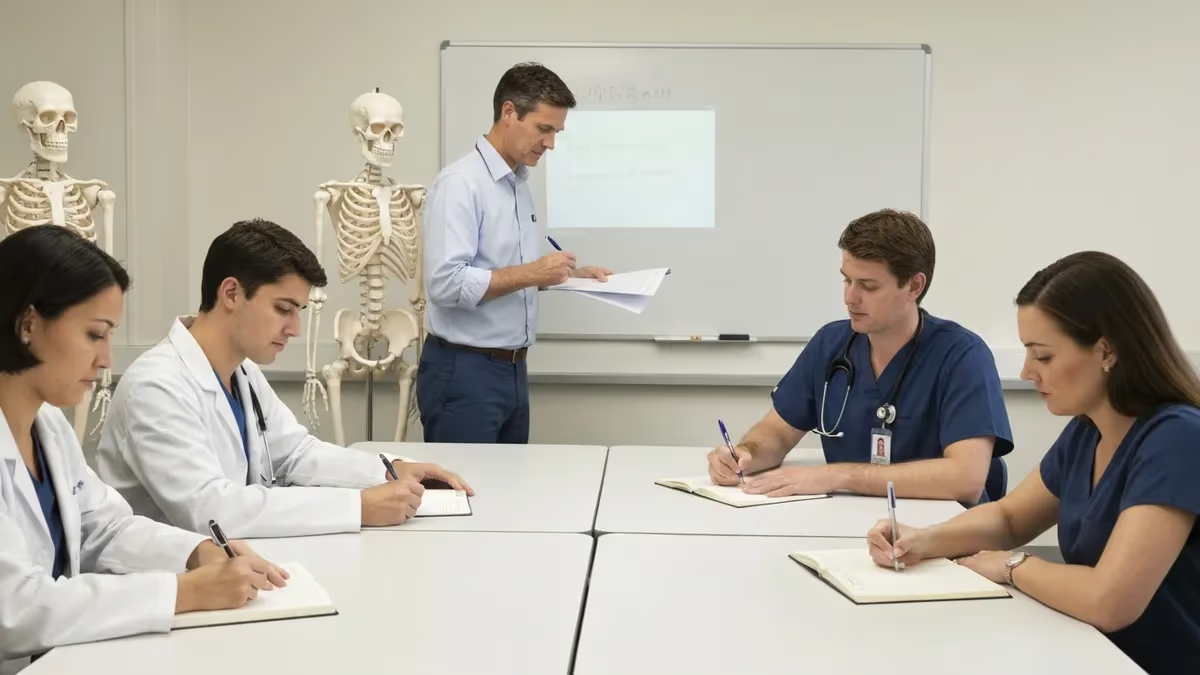
The TEAS — Test of Essential Academic Skills — is a standardized entrance exam developed by ATI (Assessment Technologies Institute). It measures academic readiness for health science programs and is required by the majority of U.S. nursing schools. The current version is ATI TEAS 7, which replaced TEAS 6 in 2026 with updated content and question styles. You can find full background on the ati teas exam structure on our dedicated overview page.
The exam contains 170 questions across four content areas — Reading, Mathematics, Science, and English and Language Usage — administered in 209 minutes. Scores range from 0–100%, and most programs require a minimum composite of 60–70%. Competitive BSN programs often expect 75% or higher.
Taking a teas practice test before your official test date is the fastest way to identify weak areas, build timing strategy, and reduce test-day anxiety. Research consistently shows that retrieval practice — answering real questions rather than re-reading notes — produces significantly stronger long-term retention.
Taking Your TEAS Pre-Test: Setting a Baseline
What Is a TEAS Pre-Test?
A teas pre test is a full-length or abbreviated diagnostic exam you complete before structured study begins. Its purpose is to show you where you stand today. Take it under real conditions — timed, no notes, no breaks beyond the allotted time — and score each section separately. Your lowest section should receive the heaviest study focus in the weeks ahead.
ATI reports scores on a proficiency scale: Basic, Proficient, Advanced, and Exemplary. A diagnostic result in the Basic range is completely normal. Students who begin there and follow a structured plan routinely close gaps of 15–20 percentage points within four to six weeks. Use your results to build a personalized calendar, and use timed mini-quizzes weekly to track progress. Our teas study guide provides a complete day-by-day roadmap from diagnostic to test day.
How Many Days Before the Test Should You Start?
Most students benefit from 4–8 weeks of preparation spending 1–2 hours daily. Students with significant gaps in science or math content may need 8–12 weeks. The earlier you take your pre-test, the more time you have to close gaps strategically rather than cramming.
TEAS 6 Science Questions: What Carried Over to TEAS 7
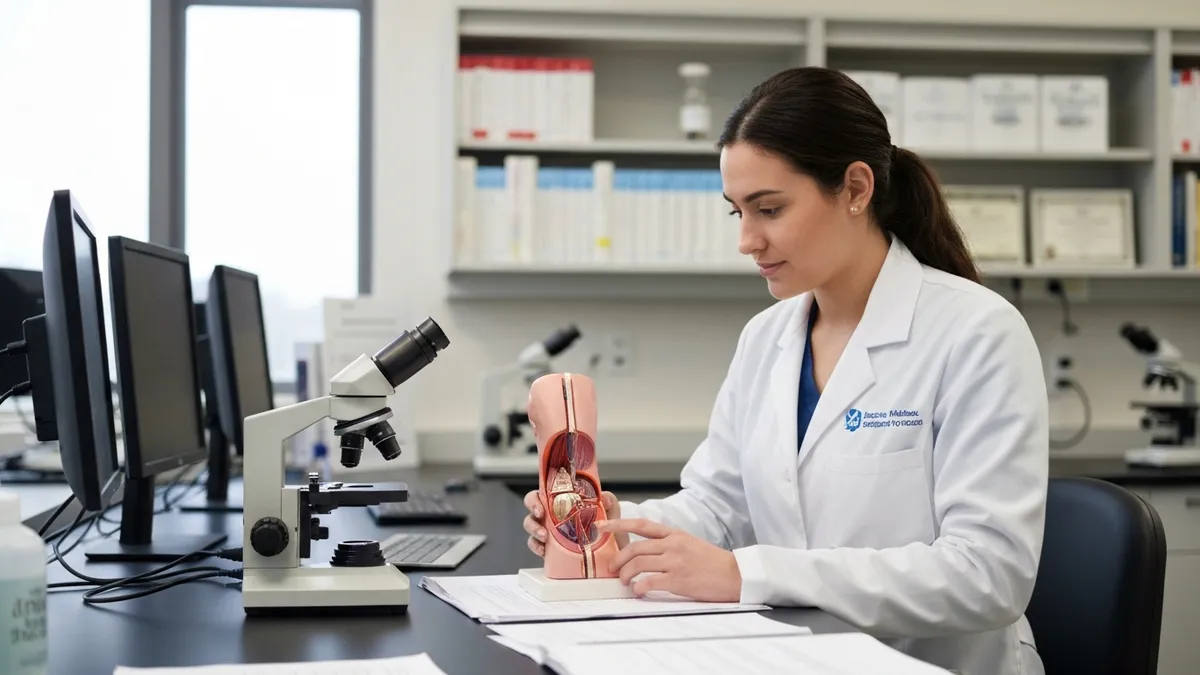
Many prep resources still reference teas 6 science questions, and for good reason — roughly 70–80% of the core science content from TEAS 6 remains relevant in TEAS 7. Knowing what changed lets you use older materials efficiently without wasting time on retired content.
Human body systems still dominate the Science section: anatomy and physiology accounts for approximately 32% of all science questions. Life and physical sciences together cover another 36%. Scientific reasoning — which expanded with TEAS 7 — makes up the remaining ~32%. If you are using TEAS 6 study books, the A&P and life science chapters transfer almost directly. Scientific reasoning questions in TEAS 7 now require interpreting experimental data and evaluating research design, which older prep books cover less thoroughly.
For current questions mapped to the TEAS 7 blueprint, our teas 6 science questions practice resource includes updated section-specific quizzes. Prioritize cardiovascular, respiratory, and musculoskeletal systems, which appear most frequently on recent exams.
Chegg TEAS: Math, Science, and Reading Resources Compared
Students searching for chegg teas content find a mix of user-created flashcard decks and community Q&A threads. Chegg can supplement your prep for concept clarification, but it is not purpose-built for ATI TEAS preparation and does not offer full-length exam simulations.
TEAS Math Chegg vs. Dedicated Practice Tests
Searching for teas math chegg returns step-by-step problem walkthroughs useful when you are stuck on a specific formula or conversion. However, Chegg does not replicate the timed, on-screen calculator environment of the actual TEAS Math section. For realistic timed practice, our dedicated teas math resource mirrors the actual question format and time pressure.
TEAS Science Chegg
Teas science chegg searches surface anatomy flashcard sets and biology Q&A threads — useful for quick concept refreshers on topics like mitosis stages or skin layers. For complete science section preparation, our ati teas exam practice tests include passage-based science questions aligned to the current ATI blueprint.
TEAS Reading Chegg
Teas reading chegg content centers on vocabulary and grammar flashcards. The TEAS Reading section, however, is almost entirely passage-based — you read short excerpts and answer inference, main-idea, and author-purpose questions under time pressure. Flashcards alone cannot develop that skill. Full-passage teas exam practice under timed conditions is far more effective preparation for Reading.
Chegg TEAS vs. Dedicated Practice Test Sites
- +Clear concept explanations for individual topics
- +Step-by-step math walkthroughs when stuck on specific problems
- +Large flashcard library for anatomy and vocabulary terms
- +Mobile-accessible for review between classes or shifts
- +Community Q&A answers niche science questions quickly
- −No full-length ATI TEAS simulation exams
- −Question formats do not match actual ATI TEAS item styles
- −No adaptive scoring, section analytics, or performance tracking
- −Reading flashcards cannot replicate passage-based comprehension practice
- −Monthly subscription costs $20–$35 when free alternatives offer more realistic prep
Pros and Cons at a Glance
| Pros | Cons |
|---|---|
| Clear concept explanations for individual topics | No full-length ATI TEAS simulation exams |
| Step-by-step math walkthroughs when stuck on specific problems | Question formats do not match actual ATI TEAS item styles |
| Large flashcard library for anatomy and vocabulary terms | No adaptive scoring, section analytics, or performance tracking |
| Mobile-accessible for review between classes or shifts | Reading flashcards cannot replicate passage-based comprehension practice |
High Tea TEAS Scores: What Benchmarks You Actually Need
Knowing the high tea teas score benchmarks that separate competitive applicants from minimum-passing ones lets you set a precise target rather than guessing. Here is a practical breakdown by program type:
- Community college ADN programs: Minimum composite typically 58–62%; mean admitted student approximately 68%
- BSN programs at public universities: Minimum composite 65–70%; mean admitted student approximately 75%
- Competitive private BSN programs: Minimum 72–76%; leading admitted applicants often score 82%+
- Accelerated BSN / direct-entry MSN: Minimum 75–78%; top applicants frequently above 85%
When your target program publishes average admitted-student scores, aim for the 75th percentile of that range — not the floor. A score above the published mean strengthens a borderline application. Always confirm current requirements directly on your program's admissions page, as thresholds change each cycle.
For a complete roadmap to hitting your target composite, our teas test prep guide covers section-by-section strategies tested across thousands of students.

Study Lifestyle: Fuel Your TEAS Prep
Twisted TEAS Study Myths You Should Ignore
There is no shortage of twisted teas-style myths about the exam circulating in nursing school forums. Here are the most damaging ones:
- "Memorize every drug name." The TEAS does not test pharmacology. Focus on anatomy, physiology, and scientific reasoning.
- "A week of cramming is enough." Consistent daily practice over 4–6 weeks outperforms last-minute study in every retention study.
- "High GPA means high TEAS score." The TEAS tests applied reasoning. Students with 4.0 GPAs frequently underestimate it and underperform on first attempts.
- "Doing hundreds of random questions is sufficient." Untargeted practice with no answer review is far less effective than focused review of errors followed by targeted re-practice.
Geeky TEAS Study Strategies That Move the Needle
A geeky teas approach — data-driven, systematic, evidence-based — separates students who improve rapidly from those who plateau. These tactics work:
- Spaced repetition flashcards (Anki is free) for anatomy terminology
- Error logs: every wrong practice question written down with the correct reasoning
- Active recall: close the book, then write everything you remember before checking
- Section-specific timed sprints at least twice per week
- Weekly full-length simulations starting three weeks before test day
Herbal Teas and Study Fuel Tips
Your brain performs measurably better when properly fueled and rested. Many focused TEAS students use herbal teas strategically during study sessions — chamomile and lemon balm for evening review (calming, reduces cortisol), peppermint or green tea for afternoon sessions (mild alertness without a caffeine crash). Even mild dehydration reduces working memory and focus. Keep water or herbal tea at your study desk, use the Pomodoro method (50 minutes on, 10 minutes off), and protect 7–8 hours of sleep on nights before practice tests.
For a fuller set of questions on this topic, see our teas practice test resource.
For a fuller set of questions on this topic, see our ati teas practice test resource.
TEAS Test Day Checklist
- ✓Government-issued photo ID matching your registration name exactly
- ✓ATI test confirmation email or registration number
- ✓Calculator policy confirmed with your site (on-screen calculator provided for ATI-proctored tests)
- ✓Arrive 15–30 minutes early for check-in procedures
- ✓Eat a balanced meal 1–2 hours before your appointment
- ✓Water and light snack if your test site permits (confirm in advance)
- ✓Dress in layers — testing centers frequently run cold
- ✓Phone notifications silenced before entering the testing room
- ✓Take three slow breaths at your seat — your preparation has been thorough
Sample TEAS Practice Questions
Try these questions from our free TEAS practice tests. The correct answer and an explanation follow each question.
An article states: 'Some studies support Drug A; however, a recent meta-analysis of 50 studies found Drug B was significantly more effective.' Which should the reader give more weight to?
- A. The studies supporting Drug A, because they came first
- B. The meta-analysis, because it synthesizes a larger body of evidence
- C. Both are equally valid and cannot be compared
- D. Drug A studies, because newer is not always better in medicine
Answer: B. The meta-analysis, because it synthesizes a larger body of evidence
A meta-analysis synthesizes data from 50 studies, representing a much larger evidence base than individual studies. Higher-level evidence carries greater weight.
Which sentence is punctuated correctly with a series of three or more items?
- A. The patient needed oxygen, fluids and rest.
- B. The patient needed oxygen, fluids, and rest.
- C. The patient needed, oxygen fluids, and rest.
- D. The patient needed oxygen fluids, and rest.
Answer: B. The patient needed oxygen, fluids, and rest.
In a series of three or more items, a comma should appear after each item including before the conjunction. The Oxford (serial) comma before 'and' clarifies meaning.
You come across a vocabulary term with a superscript while reading a textbook. You want to find out more about it. Where should you start looking?
- A. A reference dictionary
- B. The textbook's glossary
- C. The textbook's footnote
- D. The textbook's index
Answer: C. The textbook's footnote
A superscript in a textbook typically indicates a footnote, which provides additional information, clarification, or a source citation at the bottom of the page. Footnotes are specifically designed to elaborate on or reference content marked with a superscript in the main text. Therefore, to find out more about a term marked with a superscript, the footnote is the most direct and intended place to look.
A passage reads: 'Florence Nightingale's use of statistical graphics to illustrate mortality causes during the Crimean War was revolutionary. Her polar area diagrams demonstrated that preventable diseases killed far more soldiers than battle injuries, ultimately convincing Parliament to improve sanitary conditions in military hospitals.' The word 'revolutionary' as used here most nearly means:
- A. Related to political uprising
- B. Groundbreaking and transformative
- C. Controversial and disputed
- D. Scientifically precise
Answer: B. Groundbreaking and transformative
In this context, 'revolutionary' means groundbreaking or transformative—Nightingale's approach was innovative and changed how data was used to influence healthcare policy.
TEAS Questions and Answers
Related Resources

How to Pass the TEAS Exam on Your First Try

Math for TEAS Test: Essential Formulas, Practice Questions, and Study Tips
ATI TEAS Exam Practice Test: Free 2026 Prep for All Sections

TEAS Practice Test: Your ATI TEAS Prep Guide for Nursing School

TEAS Practice Test Free 2026
30-Day TEAS Study Plan — Pass on Your First Try
About the Author

Educational Psychologist & Academic Test Preparation Expert
Columbia University Teachers CollegeDr. Lisa Patel holds a Doctorate in Education from Columbia University Teachers College and has spent 17 years researching standardized test design and academic assessment. She has developed preparation programs for SAT, ACT, GRE, LSAT, UCAT, and numerous professional licensing exams, helping students of all backgrounds achieve their target scores.