
SAT Prep Courses: How to Find the Right Program for Your Score Goals
Pass your SAT Prep Courses: How to Find the Right exam on the first attempt. Practice questions with detailed answer explanations, hints, and instant ✏️

Finding the right SAT prep courses can feel overwhelming — there are hundreds of options, and they range from free YouTube playlists to $6,000 private tutoring packages. The difference between a mediocre course and a great one often comes down to how well it matches your learning style, not how much it costs. Some students thrive in a classroom with 15 other kids. Others need a screen, headphones, and total silence. Your job is figuring out which camp you're in before you hand over any money.
If you've been searching for sat prep courses near me, you've probably noticed that results vary wildly by location. A suburb outside Dallas might have three Kumon centers and nothing else. Meanwhile, students in Chicago or Boston can pick from a dozen companies within a 20-minute drive. That geographic lottery matters — but it matters less than it used to, because online SAT prep has gotten genuinely good in the last few years. Programs that felt clunky in 2020 now offer adaptive practice, video explanations, and real-time score tracking.
What about the best sat prep courses near me? That depends on your starting score, your target, and how many weeks you've got. A student sitting at 1050 who needs a 1300 has very different needs than someone at 1400 chasing a 1520. The first student needs foundational skill-building. The second needs test strategy and timing drills. No single course handles both equally well — and any company claiming otherwise is overselling. We'll break down every major option so you can make a smart pick without wasting time or cash.
This page covers online platforms, in-person programs, free resources, regional options, and summer intensives. Whether you're planning months ahead or cramming for a test date six weeks out, there's a format here that fits. Stick around for the comparison sections — they'll save you hours of research.

The market for sat and act prep courses has exploded. Ten years ago, your options were Kaplan, Princeton Review, or a local tutor. Now? There are AI-driven platforms, boot camps, hybrid programs, and even free resources that rival paid ones. The challenge isn't finding a course — it's filtering through the noise. Students looking for the best sat prep courses near me should start by asking three questions: What's my baseline score? How much time do I have? And what's my budget?
Budget drives a lot of decisions here, and it should. A $2,000 course isn't automatically twice as good as a $1,000 one. Some of the highest-rated programs cost under $500. The premium courses justify their price with small class sizes, personalized study plans, and one-on-one tutoring hours — features that matter if you're aiming for a 1500+ score. But if you're targeting a 1200 and starting from 1000, a well-structured free program might get you there just as effectively.
Timing matters too. Students who start prep three to four months before their test date see the largest score gains on average — around 100 to 200 points with consistent effort. Cramming in two weeks rarely moves the needle more than 30 to 50 points. That's not nothing, but it's a fraction of what structured practice delivers. Plan ahead if you can.
One more thing worth knowing: sat and act prep courses often overlap in content. If you haven't decided which test to take, some programs let you prep for both simultaneously. The reading and writing skills transfer directly. Math coverage differs slightly — the ACT includes more geometry and trigonometry — but the core algebraic reasoning is shared.
Khan Academy sat prep courses deserve their own section because they've changed what "free" means in test prep. Khan Academy's Official SAT Practice — built in partnership with College Board — gives you access to thousands of practice problems, eight full-length practice tests, and personalized study recommendations based on your PSAT or previous SAT scores. It's not a stripped-down freebie. It's a complete program that some students use as their only prep resource.
The platform's strength is adaptive practice. Miss a question on quadratic equations? Khan serves you three more at increasing difficulty until you've nailed the concept. That feedback loop — practice, miss, learn, retry — is exactly what expensive tutors provide, just automated. The weakness? No live instruction. If you're the type who needs a teacher explaining things in real time, Khan Academy alone won't cut it. Pair it with a weekly tutor session and you've got a hybrid approach that costs a fraction of a full course.
For students searching for sat prep courses nj or any other specific state, Khan Academy works everywhere — no geographic restrictions. But if you're in New Jersey specifically, you've also got strong local options. Companies like Ivy Bound and Summit Educational Group run classes in Bergen County, Princeton, and along the Route 1 corridor. Local programs in NJ tend to run $800 to $1,500 for a six-to-eight-week course. Not cheap, but competitive for the region.
Worth noting: khan academy sat prep courses pair well with group study. Get three friends, set a weekly check-in, and hold each other accountable. Social pressure works. Students who prep with a study group score 40 to 60 points higher on average than solo studiers — not because the group teaches better, but because consistency beats intensity every time.
Comparing SAT Prep Formats
In-person SAT prep courses run 6 to 12 weeks with weekly sessions of 2 to 3 hours. Class sizes range from 8 to 25 students depending on the provider. You get live instruction, real-time Q&A, and structured homework. The best programs assign practice tests every two weeks with individual score reviews. Average cost: $800 to $2,500. Best for students who struggle with self-discipline or need the accountability of showing up somewhere at a set time each week.
Summer changes the SAT prep game entirely. Sat summer prep courses — sometimes called SAT boot camps — compress eight weeks of material into two to four intense weeks. Students meet daily for three to four hours, take practice tests on weekends, and get rapid feedback. It's exhausting. It also works remarkably well for certain personality types. If you're the kind of student who focuses better with total immersion, summer programs deliver the highest per-week score gains of any format.
The trade-off is burnout risk. Four hours of SAT math every day for three weeks is a grind, even for motivated students. The best in-person sat prep courses build in breaks, mix subjects, and vary activities between lecture, practice, and review. Programs that just drill problems for four straight hours — those tend to see high dropout rates and diminishing returns after week two.
Kaplan, Princeton Review, and local companies all run summer intensives. Pricing ranges from $999 (Kaplan's basic summer course) to $4,000+ (Princeton Review's Ultimate with tutoring add-on). Some regional providers undercut the national brands significantly — ask about class size before comparing prices. A $1,200 course with 8 students beats a $999 course with 25 students every time.
If you're considering a summer course, register early. The popular sessions fill by mid-April. Late registrants often get stuck with less experienced instructors or inconvenient time slots. And check the refund policy — SAT prep companies are notoriously stingy with refunds once the course starts.
Geography still matters for in-person prep — and if you're looking for sat prep courses nyc, you've hit the jackpot. New York City has the densest concentration of SAT prep companies in the country. Manhattan alone has offices for Kaplan, Princeton Review, Testive, Varsity Tutors, and dozens of independent outfits. Brooklyn and Queens have strong local options too — ArborBridge, NYC Tutoring, and several Korean-run hagwon-style academies in Flushing that are surprisingly effective and half the price of midtown competitors.
For students who want the best sat prep courses in-person, the choice often comes down to class size. National chains typically run classes of 15 to 25 students. Local companies and independent tutors keep groups under 10. That difference matters. Smaller groups mean more individual attention, more practice test reviews tailored to your specific errors, and more time to ask questions without holding up the class. If you can afford the premium — usually an extra $200 to $500 — small-group instruction is worth it.
Don't overlook community-based options. Many public libraries, community centers, and nonprofit organizations run free or low-cost SAT prep workshops. These vary wildly in quality, but the best ones — like those run by Let's Get Ready or Prep for Prep in NYC — are staffed by trained volunteers and use College Board–approved materials. They won't match a $3,000 private course, but they'll outperform doing nothing by a wide margin.
One practical tip: visit the location before signing up. Check the room size, the whiteboard setup, the noise level. A cramped room with flickering fluorescents and street noise bleeding through the windows isn't conducive to learning, no matter how good the instructor is. The physical environment affects focus more than most students realize.
Online vs In-Person SAT Prep
- +Online courses cost 50–80% less than in-person alternatives
- +Study anytime — no commute, no fixed schedule conflicts
- +Adaptive technology personalizes practice to your weak areas
- +Access to thousands of practice questions and full-length tests
- +Replay video explanations as many times as you need
- +Available everywhere — no geographic restrictions on quality
- −Self-paced formats have 30–40% completion rates — most students quit
- −No live instructor to answer questions in real time
- −Harder to stay motivated without classroom accountability
- −Screen fatigue after 2+ hours of digital practice
- −Limited social interaction — no study group dynamics
- −Some platforms have poor mobile interfaces for on-the-go study
Pros and Cons at a Glance
| Pros | Cons |
|---|---|
| Study anytime — no commute, no fixed schedule conflicts | No live instructor to answer questions in real time |
| Adaptive technology personalizes practice to your weak areas | Harder to stay motivated without classroom accountability |
| Access to thousands of practice questions and full-length tests | Limited social interaction — no study group dynamics |
| Replay video explanations as many times as you need | Some platforms have poor mobile interfaces for on-the-go study |
Students preparing for both exams should look into act and sat prep courses that cover both tests in a single program. Princeton Review and Kaplan both offer dual-prep packages — you take diagnostic tests for each exam, the program identifies which test suits your strengths, and then you focus your prep accordingly. These combo courses typically cost 10 to 20 percent more than single-test programs but save time and money compared to buying two separate courses.
Here's the thing: free online sat prep courses have gotten good enough that paying for a basic course doesn't always make sense. Khan Academy is the obvious example, but it's not alone. College Board's own Bluebook app includes free practice tests. UWorld offers a limited free tier with high-quality questions. YouTube channels like Scalar Learning, Organic Chemistry Tutor, and SupertutorTV cover SAT math and reading strategies in detailed video lessons — all free.
The gap between free and paid shows up in three places: personalized feedback, structured pacing, and accountability. Free resources give you the content but not the structure. You have to build your own study schedule, track your own progress, and motivate yourself to stick with it. Paid courses handle that for you. If you're disciplined enough to self-manage, free resources can absolutely get you a strong score. If you know you'll slack off without external structure, invest in a course.
A middle path exists too: free content plus a paid tutor for two hours a week. Total cost runs $150 to $600 for the full prep cycle. The tutor reviews your practice test results, identifies patterns in your errors, and adjusts your study plan. You do the actual studying on Khan Academy or Bluebook. This hybrid model consistently delivers the best value per score-point gained.
How to Choose the Right SAT Prep Course
- ✓Take a diagnostic test first — know your baseline score before shopping for courses
- ✓Set a realistic target score based on your college list's middle 50% SAT ranges
- ✓Decide your budget — factor in books, practice tests, and any add-on tutoring
- ✓Check class sizes for in-person options — under 12 students is ideal
- ✓Read recent reviews from students at your score level, not just top scorers
- ✓Verify the instructor's own SAT score and teaching experience
- ✓Ask about score improvement guarantees and what they actually cover
- ✓Confirm the course covers the digital SAT format, not the old paper version
- ✓Check the refund policy before paying — some companies offer none after day one
- ✓Start prep at least 8 to 12 weeks before your test date for best results
Regional options matter — and not just in the big cities. If you're searching for sat prep courses online free, you'll find national platforms. But sat prep courses new york specifically? The state has a unique advantage: New York's public school system partners with several prep providers to offer discounted or free SAT prep to students in Title I schools. Check with your guidance counselor. Programs like DREAM, Let's Get Ready, and the College Board's own school-day SAT prep are available in many New York districts at no cost to families.
The quality of these school-based programs varies. Some are excellent — staffed by experienced instructors using proven curricula. Others amount to a teacher handing out practice booklets during study hall. Ask specific questions: How many practice tests are included? Is there individualized feedback? What's the average score improvement for past participants? If the counselor can't answer those questions, the program might not be worth your time compared to free online alternatives.
Cost is a real barrier for many families, and it doesn't have to be. Between Khan Academy, Bluebook, YouTube, public library resources, and school-based programs, a motivated student can build a complete SAT prep plan for zero dollars. The sat prep courses online free category has never been stronger. What you're paying for with premium courses is convenience, structure, and accountability — not access to better content. The content is largely the same across price points because everyone uses College Board's question bank as the foundation.
For students in New York City specifically, the public library system runs free SAT workshops at branches across all five boroughs. The Brooklyn Public Library's program is particularly well-regarded. Sessions run on Saturdays, cover both math and reading/writing, and include take-home practice materials. No registration fee, no income verification — just show up.
Location-specific searches keep growing, and sat prep courses arlington is a perfect example. Arlington, Virginia — just across the Potomac from D.C. — has a thriving test prep scene driven by the area's highly competitive school districts. Companies like C2 Education, Huntington Learning Centers, and several independent tutors operate within a few miles of each other. Prices in the D.C. metro area run higher than the national average — expect $1,200 to $3,000 for a standard group course.
For in person sat prep courses anywhere, the evaluation process is the same. Visit the facility. Sit in on a class if the company allows it (many do for a trial session). Talk to the instructor directly — not just the salesperson at the front desk. Ask how they handle students at different levels within the same class. A good instructor differentiates. A mediocre one teaches to the middle and loses everyone else.
The D.C.–Arlington–Alexandria corridor also has strong options for students who want in-person instruction but can't afford premium prices. Northern Virginia Community College runs affordable SAT prep workshops. Several churches and community organizations in Arlington offer free or donation-based prep sessions. These aren't flashy, but they cover the fundamentals — and fundamentals are what most students actually need.
Don't sleep on hybrid models. Some Arlington-area companies offer a mix: two in-person sessions per week plus unlimited online practice. This format gives you the accountability of showing up while keeping costs lower than fully in-person programs. It's the fastest-growing segment of the SAT prep market for a reason — it works for most learning styles and most budgets.
Be cautious of companies guaranteeing specific score increases (like "300 points guaranteed"), requiring large upfront payments with no refund policy, or using instructors who haven't actually taken the current digital SAT format. Legitimate prep companies offer diagnostic assessments, transparent pricing, and verifiable instructor credentials. Check Better Business Bureau ratings and recent Google reviews before committing to any program.
If you're in the Charleston, South Carolina area, sat prep courses charleston sc options include both national chains and strong local providers. Kaplan and Princeton Review have locations in the metro area, but local companies like Charleston Tutors and Lowcountry Prep often deliver better results at lower prices — partly because they know the local school curricula and can align SAT prep with what students are already learning in class. Expect to pay $600 to $1,500 for a group course in the Charleston market.
Summer sat prep courses deserve extra attention if you're a rising junior or senior. The summer window — mid-June through early August — is prime time for intensive prep because there's no school competing for your attention. Most students who prep over the summer take the August or October SAT. That timing gives you enough runway to complete a full course, take two to three practice tests, and review your weak areas before test day.
The August SAT date is relatively new (added in 2023), and it's quickly become one of the most popular test dates. Why? Students finish summer prep and take the test while the material is fresh. No two-month gap between finishing prep and sitting for the exam. If you're planning summer sat prep courses, aim to finish your course at least one week before the August test date. Use that final week for light review and rest — cramming the night before doesn't help.
Regional prep companies in the Southeast — including Charleston, Savannah, and the Research Triangle — tend to be more affordable than Northeast competitors. The cost-of-living difference trickles down to test prep pricing. A course that costs $2,500 in Manhattan might run $1,200 in Charleston for comparable quality. Geography is an advantage here if you use it.
SAT Practice Test Questions
Prepare for the SAT - Scholastic Assessment Test exam with our free practice test modules. Each quiz covers key topics to help you pass on your first try.
SAT US History MCQ
SAT Exam Questions covering US History MCQ. Master SAT Test concepts for certification prep.
SAT US History Trivia
Free SAT Practice Test featuring US History Trivia. Improve your SAT Exam score with mock test prep.
SAT Ultimate SAT US History
SAT Mock Exam on Ultimate SAT US History. SAT Study Guide questions to pass on your first try.
SAT Algebra & Functions
SAT Test Prep for Algebra & Functions. Practice SAT Quiz questions and boost your score.
SAT Essay Writing & Analysis
SAT Questions and Answers on Essay Writing & Analysis. Free SAT practice for exam readiness.
SAT Evidence-Based Reading
SAT Mock Test covering Evidence-Based Reading. Online SAT Test practice with instant feedback.
SAT Logical Reasoning & Argument Analysis
Free SAT Quiz on Logical Reasoning & Argument Analysis. SAT Exam prep questions with detailed explanations.
SAT Math Practice Test
SAT Test Online for Math Practice Test. Free practice with instant results and feedback.
SAT Practice Test
SAT Study Material on Practice Test. Prepare effectively with real exam-style questions.
SAT Problem Solving & Data Analysis
Free SAT Test covering Problem Solving & Data Analysis. Practice and track your SAT exam readiness.
SAT Reading Comprehension
SAT Exam Questions covering Reading Comprehension. Master SAT Test concepts for certification prep.
Let's talk money. The best sat prep courses 2025 span every price point, and cost alone doesn't predict quality. Here's the real breakdown: free options (Khan Academy, Bluebook, YouTube) deliver solid foundational prep. Budget courses ($100 to $300 from UWorld, Magoosh, or 1600.io) add structured video instruction and better practice analytics. Mid-range courses ($500 to $1,500 from Kaplan, Princeton Review, or PrepScholar) include live instruction, either online or in-person. Premium options ($2,000 to $6,000) add private tutoring hours, smaller groups, and personalized study plans.
Sat prep courses cost varies by format more than by quality. Online self-paced is cheapest. Online live classes sit in the middle. In-person group classes cost more due to facility and instructor overhead. Private tutoring is the most expensive on a per-hour basis but often the most efficient per score-point gained. The sweet spot for most families? A $500 to $1,000 course that includes live instruction and at least two full practice tests with individual review.
Score guarantees sound appealing but read the fine print. Most "money-back guarantees" require you to complete 100% of the course, attend every session, finish every homework assignment, and show less than a certain point improvement. The completion requirements are deliberately hard to meet — companies know that 40 to 60 percent of students won't finish the course, so the guarantee costs them very little. A better metric: ask for the program's average score improvement across all enrolled students, not just completers.
One final thought on cost: your time has value too. A free program that takes 200 hours to navigate independently might cost more in opportunity terms than a $500 course that structures those same 200 hours into a clear 8-week plan. Factor in your time when comparing options. Efficiency matters, especially for students juggling school, extracurriculars, and college applications simultaneously.
Sample SAT Practice Questions
Try these questions from our free SAT practice tests. The correct answer and an explanation follow each question.
Which of the following sets of side lengths CANNOT form a right triangle?
- A. 6, 8, 10
- B. 5, 12, 13
- C. 7, 24, 25
- D. 4, 5, 7
Answer: D. 4, 5, 7
Check 4² + 5² = 16 + 25 = 41 ≠ 49 = 7². So 4, 5, 7 cannot form a right triangle.
In a right triangle, if sin(θ) = 3/5, what is cos(θ)?
- A. 4/5
- B. 3/4
- C. 5/3
- D. 1/2
Answer: A. 4/5
Using the Pythagorean identity: sin²θ + cos²θ = 1. (3/5)² + cos²θ = 1 → 9/25 + cos²θ = 1 → cos²θ = 16/25 → cosθ = 4/5.
A crate of heart-shaped Valentine's candy boxes have a retail price of x dollars. The sales tax is a percentage of retail price. A teacher wants to buy the entire crate for her class. Doing so will require an untaxed flat fee deposit. The total amount paid at purchase time for one crate is shown through the expression 1.08x+18. Find the sales tax expressed as a percentage.
- A. 0.08%
- B. 18%
- C. 1.08%
- D. 8%
Answer: D. 8%
The total amount paid is given by the expression 1.08x + 18. In this expression, 'x' represents the retail price, and the sales tax is applied to this price. The '1.08x' component indicates that the original price (1x) is increased by 0.08x for the tax. Converting 0.08 to a percentage, we multiply by 100, which gives 8%.
In a right triangle, sin(A) = cos(B). What can you conclude?
- A. A = B
- B. A + B = 90°
- C. A + B = 180°
- D. A = 90°
Answer: B. A + B = 90°
sin(A) = cos(B) is always true when A and B are complementary angles (A + B = 90°) in a right triangle.
SAT Questions and Answers
About the Author
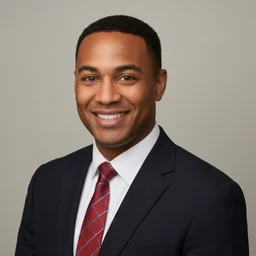
Attorney & Bar Exam Preparation Specialist
Yale Law SchoolJames R. Hargrove is a practicing attorney and legal educator with a Juris Doctor from Yale Law School and an LLM in Constitutional Law. With over a decade of experience coaching bar exam candidates across multiple jurisdictions, he specializes in MBE strategy, state-specific essay preparation, and multistate performance test techniques.
Join the Discussion
Connect with other students preparing for this exam. Share tips, ask questions, and get advice from people who have been there.
View discussion (8 replies)