
Prometric Test Centers: SAEE Locations, Booking, and Test-Day Guide 2026 October
🔎 Find Prometric test centers near you for the SAEE. Booking steps, ID rules, security checks, and what to expect on test day.

If you are sitting for the Saudi Aramco Employment Entry Exam (SAEE), the first thing you want to know is where you will actually take the test. Prometric runs thousands of testing centers around the world, and the experience inside one of them is surprisingly similar whether you are in Riyadh, Manila, or your home city.
What changes is the local detail: which IDs the center accepts, how strict the security check is, and how reliable the workstations feel. Candidates routinely arrive thirty minutes before their slot, get checked in, and start writing within ten minutes.
This guide walks through the practical side of Prometric test centers for the SAEE. By the time you finish reading, the building itself should feel like a solved problem.
For most international applicants, the Saudi Aramco recruitment flow ends at a Prometric center. That is by design. Aramco wants a controlled, audited environment for the SAEE, and Prometric is the largest standardized testing operator on the planet. Their centers are the same logistical product whether you book one in Cairo, Manila, Mumbai, Houston, or Manchester — same lockers, same partitioned desks, same palm vein scan, same proctor walking the aisle.
Knowing that the experience is standardized is genuinely useful. It means you can prepare for the room before you ever walk into it. Every story you read in a forum about a Prometric center in another city applies, with small local variations, to the one you will sit in.

Prometric Network at a Glance
The Prometric network is enormous, but for SAEE candidates only a fraction matters. Saudi Aramco contracts specific centers in specific cities to deliver the exam. You cannot walk into a random Prometric site and ask to sit the SAEE.
That is why two candidates in the same country can see different lists. The system matches supply (seats) with demand (eligible candidates). Do not panic if your friend booked Dubai and you only see Abu Dhabi — that is the routing engine, not a glitch.
Booking windows open as soon as your eligibility is loaded. The portal will email you a unique candidate ID. Print the confirmation PDF. Email it to yourself. Treat it like a boarding pass.
Center allocation is also tied to your role family. Engineering positions, geosciences positions, refining positions, and administrative positions sometimes flow through different scheduling buckets. Aramco does this to balance specialist seats — for example, sites that can deliver longer technical batteries may be reserved for engineering candidates. The portal will only ever surface what your eligibility allows, so do not waste time searching cities that do not appear.
If you genuinely cannot reach any of your listed centers (medical reason, travel restriction), reach out to your recruiter and ask for a manual reassignment. This is not automated. You will need a real human in Aramco's resourcing team to push the change through, but it is a request they handle every week.
Your candidate ID is everything
The candidate ID Prometric sends you is the single most important number in this process. It links your eligibility, booking, ID documents, and score report. Save it in your phone notes, your email, and on paper. If the center cannot find it on test morning, they cannot start your exam.
The physical layout of a Prometric center is intentionally boring. A small reception area, a row of lockers along one wall, a sign-in desk, and a glass door leading into the testing room. Reception is where you will spend the first fifteen minutes — signing rules, showing IDs, getting your palm scanned.
Once you clear reception, a staff member walks you to your assigned workstation. The room is dimly lit, the desks are partitioned, and each station has a single monitor, keyboard, mouse, noise-reducing headphones, and a small whiteboard with a marker.
You type your candidate ID, the system pulls up your exam, you read the non-disclosure agreement, you click agree, and the timer starts. From sit-down to start is usually under three minutes.
The first time you sit at a Prometric workstation, the partition feels close. The walls are shoulder-height, and there is just enough desk space for the keyboard, mouse, and your laminated scratch sheet. This is intentional — you are not meant to see your neighbor's screen, and they are not meant to see yours. After about ten minutes you forget the walls are there.
The chair is adjustable. Most candidates do not realize this and sit in whatever height the previous candidate left it at. Take ten seconds when you sit down to set the chair to your height. A keyboard that is too high or too low for hours becomes a real source of fatigue and distraction.
Inside a Prometric Center
The check-in desk, ID verification, palm vein scan, and secure lockers for your personal items. Expect 10 to 15 minutes here before you go in. Phones, watches, wallets, jackets, hats, food, water, jewelry, and tissues all stay in the locker.
Staff walk you through the rules, the raise-hand-for-help system, the bathroom location, and the protocol if a workstation has hardware problems. About two minutes total, but absorb every word — these rules are strict and uniformly enforced.
Partitioned desks at shoulder height, single monitor per candidate, full keyboard and mouse, noise-reducing headphones, and a laminated scratch sheet with a dry-erase marker. Lighting is fluorescent and uniform. Climate is cool — around 19 to 21 degrees Celsius.
Raise your hand when finished, the proctor escorts you out, hand back the scratch sheet at the door, scan your palm one last time, and retrieve your locker items. Some centers print an unofficial preliminary score on a thermal printer at reception.

Identification is the single biggest reason candidates get turned away on test day. Prometric typically requires two forms of ID. The name on both must match the name in your candidate profile letter-for-letter. Middle names, hyphens, suffixes — all of it has to align.
For SAEE candidates outside Saudi Arabia, the passport is almost always the safest primary ID. Driving licenses and national ID cards are accepted in some countries but not others. The local center has the final call.
The secondary ID can be a credit card with your name on it, a work badge, or another government document. Centers will not accept handwritten ID cards, expired documents, or photocopies.
If your eligibility letter has a typo in your name, get it fixed before you book, not after. Saudi Aramco's HR team can update the candidate record in Prometric, but the change must propagate before your booking is locked in. Once you book under a name spelling that does not match your passport, the center will refuse you on test day regardless of why the mismatch happened.
Bring more documents than you think you need. A passport, a national ID, a credit card, a work badge, and a recent utility bill is a strong combination. The proctor will pick the two strongest from your stack. You only need one to be the right ID — having backups removes the stress of betting on a single document.
SAEE Booking Timeline
Confirm with your Saudi Aramco recruiter that your eligibility is in the Prometric system. Verify the spelling of your name in the eligibility email exactly matches your passport letter-for-letter. Check passport expiry — it must be valid for at least six months past the test date in most jurisdictions. Look at which centers appear in your portal and decide which one is most convenient by transport, parking, and timing. If none of the centers feel reachable, contact your recruiter and request a manual reassignment before you confirm the booking.
Center quality varies more than Prometric likes to admit. The global headquarters sets standards, but individual sites are operated by local partners. Candidates have reported keyboards with sticky keys, headphones with static, and screens that flicker. The protocol is the same: raise your hand immediately.
The proctor will pause your test and either fix the issue or move you to another workstation. The new workstation pulls up exactly where you left off — your answers are saved continuously to the Prometric cloud, not just to the local machine.
One nuance that surprises candidates is climate. Prometric rooms run cold — usually 19 to 21 degrees Celsius — to keep the workstations cool. After two hours of sitting still, a lot of people start shivering. A thin long-sleeve layer under your shirt makes a real difference. Hoodies are forbidden in most centers, so a simple cardigan or pullover without large pockets is your best option.
Sound is the other underappreciated factor. The room is mostly silent, but not totally. You will hear keyboard clicks, soft footsteps from the proctor, and the occasional cough. The noise-reducing headphones on your station help. If silence helps you think, wear them throughout. If a low hum keeps you focused, keep them on too.
Smart watches, fitness trackers, hearing aids without prior approval, religious head coverings without prior declaration, gum, mints, water bottles, and even fabric face masks are screened individually. Anything in your pockets must be removed and inspected. The penalty for an attempted contraband item is forfeiture of the test session with no refund.
The check-in process is a series of small steps that feel slow but exist for a reason. You hand over your IDs. The receptionist scans them, takes a digital photograph of you on a webcam, and asks you to read and sign the candidate rules. You then place your right palm on a vein scanner — this biometric proves you, and only you, sat for the test.
The palm vein scan takes about three seconds. Dry skin and heavy hand lotion both interfere with it. If the first scan fails, the receptionist will ask you to wash your hands and try again. This is normal.
From check-in to first question is often 12 to 15 minutes, which is why the 30-minute early arrival window matters. If you arrive on the dot, you will start late.
Watch how the receptionist looks at your passport. They flip pages, check the photo against your face, and run their finger over the embossed seal. This is normal — they are trained to spot tampered documents. If they ask you to verify the spelling of your name out loud, just read it slowly. They are confirming the database matches what they see in the booklet.
The biometric image they take of your palm becomes the anchor for every future Prometric exam you ever take, anywhere in the world. If you sit for another Prometric test in three years, your palm vein print will already be on file. That speeds up the next check-in considerably.

SAEE Test-Day Bring-Along Checklist
- ✓Primary photo ID — passport recommended, must be valid for 6+ months past test date
- ✓Secondary ID with full name matching passport — credit card, work badge, or second government document
- ✓Printed booking confirmation PDF with your unique Prometric candidate ID number visible
- ✓Phone number of your Saudi Aramco recruiter or sponsor in case of last-minute issue
- ✓Exact street address of the center plus a backup transport route if the first fails
- ✓Light jacket or cardigan without a hood or large pockets — testing rooms run cold
- ✓Snack and bottle of water to consume after check-in but before entering the room
- ✓Quiet, comfortable clothes — no hoodies, no smart watches, no fitness trackers
- ✓Final confirmation that your candidate name spelling matches your passport letter-for-letter
Once the test starts, the room rhythm takes over. The headphones go on if you want them. The clock counts down in the top corner. Each question appears with multiple-choice options, a flag button, and forward and back navigation.
Proctors walk the room every few minutes. They observe silently. If you raise your hand for the bathroom, a fresh whiteboard, or a hardware problem, they resolve it. Talking loudly is grounds for a warning. Looking at another candidate's screen is grounds for ejection.
Bathroom breaks deserve their own paragraph. You raise your hand, you are escorted to the door, you scan out via palm vein, you go, you scan back in. The whole process takes four to six minutes. The clock continues running unless the center policy says otherwise.
Most candidates settle into the test rhythm within the first ten minutes. The early questions feel slightly harder than they really are because you are still adjusting to the partition, the headphones, and the timer. By question fifteen, your nerves drop and you are working at your normal pace. Knowing this in advance is a huge advantage — do not panic in the first ten minutes.
Use the flag feature. If you are unsure on a question, flag it, pick the best guess, and move on. At the end you can come back. Spending five minutes on a single question early in the test is one of the most common mistakes candidates make. The clock does not pause for any single question.
Prometric Test Center Pros and Cons
- +Standardized experience across all 8,000+ global Prometric locations
- +Continuous cloud save protects your answers from any hardware failure
- +Strict security minimizes cheating and protects the value of your final score
- +Comfortable, partitioned workstations with noise-reducing headphones included
- +Same-day preliminary score available for some exam programs at most centers
- +Professional, trained proctors who handle issues quickly and silently
- −No food, water, jewelry, or personal items allowed inside the testing room
- −Strict ID matching rules that turn away unprepared candidates at reception
- −Exam clock typically continues running during bathroom breaks at most centers
- −Some centers have aging keyboards, headphones, or inconsistent climate control
- −Limited control over which center Saudi Aramco assigns to your eligibility cluster
- −Booking windows can fill quickly in busy hiring seasons — reserve early
Pros and Cons at a Glance
| Pros | Cons |
|---|---|
| Continuous cloud save protects your answers from any hardware failure | No food, water, jewelry, or personal items allowed inside the testing room |
| Strict security minimizes cheating and protects the value of your final score | Strict ID matching rules that turn away unprepared candidates at reception |
| Comfortable, partitioned workstations with noise-reducing headphones included | Exam clock typically continues running during bathroom breaks at most centers |
| Same-day preliminary score available for some exam programs at most centers | Some centers have aging keyboards, headphones, or inconsistent climate control |
| Professional, trained proctors who handle issues quickly and silently | Limited control over which center Saudi Aramco assigns to your eligibility cluster |
After you submit your final answer, the experience flips quickly. You raise your hand, walk out with the proctor, scan your palm one last time, and collect your locker contents. Some centers print a preliminary unofficial result. For SAEE candidates the official score goes to Saudi Aramco first.
The walk out of the building is a strange feeling. You have spent weeks or months preparing, and the test itself is suddenly behind you. Most candidates report a fifteen-minute wave of relief followed by a slow trickle of second-guessing about specific questions. Go eat a real meal and put it down for the day.
Score release is the next milestone. Saudi Aramco's recruitment team reviews your score against the role's threshold. The timeline varies — some candidates hear back within two weeks, others wait a month.
If you do not pass, the retake policy is the part of the process most candidates overlook. Saudi Aramco typically requires a waiting period of 90 days or more before a second attempt. The retake uses the same network, the same booking flow.
The most useful preparation tip is to do at least one full-length practice test under timed conditions. The SAEE is not just a knowledge test — it is also a stamina test. Two to three hours of focused performance is exhausting if you have not practiced sitting still that long. Treat your final practice session as a dress rehearsal: same time of day, no phone breaks, light meal beforehand.
Bring optimism into the room. Candidates who walk in expecting to do well usually do. The room itself is neutral — your mindset colors the experience. Two hours later, when you walk out, that small choice to enter with confidence will have shaped how you read every question.
Learn more in our guide on Whiff Test: KOH Amine Test for Bacterial Vaginosis Diagnosis. Learn more in our guide on mensa international iq test. Learn more in our guide on prometric testing centers.
You can continue preparing with the saee practice test, which includes answer explanations for every question.
Sample SAEE Test Practice Questions
Try these questions from our free SAEE Test practice tests. The correct answer and an explanation follow each question.
A teacher administers the same test to two classes. Class 1 has a mean score of 74 with a standard deviation of 5, and Class 2 has a mean score of 74 with a standard deviation of 12. Which conclusion is best supported?
- A. Class 1 scores are more consistently clustered around the mean than Class 2 scores
- B. Class 2 students performed better overall than Class 1
- C. Both classes have identical score distributions
- D. Class 1 has more outliers than Class 2
Answer: A. Class 1 scores are more consistently clustered around the mean than Class 2 scores
A smaller standard deviation indicates that Class 1's scores are more tightly grouped around the mean compared to Class 2.
A school team reviews multiple data points — test scores, discipline referrals, and teacher feedback — and makes an improvement plan. This process is an example of:
- A. Summative evaluation
- B. Data-driven decision making
- C. Accountability reporting only
- D. Standardized norm referencing
Answer: B. Data-driven decision making
Data-driven decision making uses multiple evidence sources to inform school improvement planning and resource allocation.
Which of the following is the BEST strategy for maximizing recall during the photograph-viewing phase of the SAEE Detail Observation section?
- A. Focus exclusively on any people present and ignore background and environmental details
- B. Scan the image systematically — for example, left to right and top to bottom — to ensure all areas of the photo are registered
- C. Concentrate only on the single most prominent or unusual object in the image
- D. Memorize only colors and numbers, since those are the most commonly tested details
Answer: B. Scan the image systematically — for example, left to right and top to bottom — to ensure all areas of the photo are registered
A structured, systematic scan (such as dividing the image into quadrants or sweeping left to right, top to bottom) ensures no area of the photo is overlooked. Fixating on a single element or category of detail leaves large portions of the scene unregistered, while a grid-based method balances coverage across people, objects, environment, and spatial relationships.
When an administrator must choose between two equally qualified candidates for a promotion, which ethical principle should guide the decision?
- A. Personal loyalty to the longer-tenured employee
- B. Alignment of skills with specific program needs and student outcomes
- C. Preference for the candidate with the higher degree
- D. Selection based on informal peer recommendations
Answer: B. Alignment of skills with specific program needs and student outcomes
Ethical personnel decisions prioritize the alignment of candidate strengths with organizational needs and the welfare of students.
SAEE Questions and Answers
The Prometric building is not your enemy. It is a controlled, predictable, slightly cold room with a chair and a screen. The systems inside it have been refined over more than two decades of high-stakes testing.
The candidates who walk out smiling are not the ones who memorized the lockers — they are the ones who treated logistics as a separate, solvable problem from the studying itself. Book early. Print your confirmation twice. Bring two IDs. Eat breakfast. Show up thirty minutes ahead. Trust the room.
The SAEE itself is what matters. Practice questions, timed drills, and mock exams are where your preparation hours should live. The center exists to give you a fair, monitored environment to demonstrate what you already know.
If this is your first standardized test in many years, give yourself permission to be a little rusty in the opening minutes. The test-taking muscle comes back. By the second section you will feel like a student again — calculating, scanning, eliminating wrong answers, picking the strongest match. That muscle memory is real and reliable.
For everyone reading this who is about to walk into a Prometric center for the SAEE: you have already done the hard part by preparing seriously. The building is just the venue. The proctor is just a referee. The chair is just a chair. The test is the test you have been training for. Go in steady, breathe, and back yourself.
About the Author
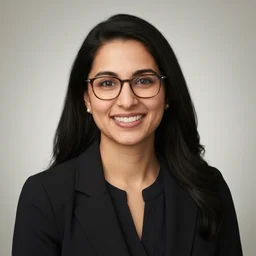
Educational Psychologist & Academic Test Preparation Expert
Columbia University Teachers CollegeDr. Lisa Patel holds a Doctorate in Education from Columbia University Teachers College and has spent 17 years researching standardized test design and academic assessment. She has developed preparation programs for SAT, ACT, GRE, LSAT, UCAT, and numerous professional licensing exams, helping students of all backgrounds achieve their target scores.