
RHIT Programs in Michigan: Complete Guide to Schools, Requirements, and Certification
Find the best RHIT programs in Michigan. Compare schools, costs, and career outcomes. 🎯 Learn requirements, salary, and how to earn your RHIT certification.

If you are exploring RHIT programs in Michigan, you have chosen one of the most in-demand healthcare career paths in the state. The Registered Health Information Technician credential, awarded by the American Health Information Management Association (AHIMA), validates your ability to manage patient health records, ensure coding accuracy, and maintain compliance with federal privacy regulations. Michigan's growing hospital networks, outpatient clinics, and integrated health systems create consistent demand for credentialed RHIT professionals in cities like Detroit, Grand Rapids, Lansing, and Ann Arbor.
Understanding what the rhit credential requires is the first step toward building a career in health information management. The process involves completing an AHIMA-accredited associate degree program, passing the national RHIT examination, and maintaining your credential through ongoing continuing education. Michigan offers multiple accredited program options — both on-campus and online — making it accessible whether you are a recent high school graduate, a working healthcare professional, or someone transitioning from another field entirely.
The health information management field has evolved dramatically over the past decade. Electronic Health Record (EHR) adoption, value-based care models, and the expansion of telehealth services have all increased the complexity and importance of accurate health data management. Michigan hospitals and health systems — including Beaumont Health, Henry Ford Health System, Spectrum Health, and McLaren Health Care — rely on credentialed RHIT professionals to maintain data integrity, support clinical documentation improvement initiatives, and ensure proper reimbursement through accurate ICD-10-CM and CPT coding.
One of the most attractive aspects of pursuing RHIT programs in Michigan is the flexibility now available to students. Many of the state's accredited programs offer hybrid or fully online coursework, allowing students to complete the didactic portions of their education remotely while completing required clinical practice experiences locally. This arrangement is particularly valuable for working adults who cannot attend traditional daytime classes but still need hands-on experience in an actual health information department.
Michigan's community colleges are the primary delivery channel for RHIT education in the state. Schools like Ferris State University, Baker College, Henry Ford College, Schoolcraft College, and Oakland Community College have established reputations for preparing students for the RHIT exam and for entry-level positions in the field. Program lengths typically range from 18 to 24 months for full-time students, though part-time options extend that timeline. Tuition varies considerably between institutions, with community college programs generally offering the most affordable pathway to credentialing.
Career prospects for RHIT-credentialed professionals in Michigan are strong and diversifying. Beyond traditional roles in hospital health information departments, RHIT holders in Michigan now work as outpatient coding specialists, compliance officers, revenue cycle analysts, data quality coordinators, and EHR implementation consultants. The Bureau of Labor Statistics projects steady growth in health information technologist and medical records roles through 2032, and Michigan's aging population makes healthcare data management particularly critical to the state's healthcare infrastructure.
This guide covers everything you need to know about RHIT programs in Michigan — from accredited school options and admission requirements to exam preparation strategies, salary expectations, and tips for landing your first RHIT job after credentialing. Whether you are just starting your research or are ready to apply, the information here will help you make a confident, well-informed decision about your health information management education.
RHIT Programs in Michigan by the Numbers

Top AHIMA-Accredited RHIT Programs in Michigan
Located in Big Rapids, Ferris State offers a well-established Health Information Management program with strong clinical partnerships across West Michigan. The program is fully CAHIIM-accredited and offers both on-campus and online delivery options for working students. Graduates consistently achieve high RHIT exam pass rates.
Baker College offers a flexible Health Information Technology associate degree available across multiple Michigan campuses and online. The curriculum emphasizes EHR systems, ICD-10-CM coding, and healthcare compliance. Baker's industry partnerships help students secure clinical externship placements throughout Southeast and Mid-Michigan.
Henry Ford College in Dearborn provides an accredited HIT program with direct connections to Henry Ford Health System for clinical training. The program is ideal for students in the Metro Detroit area seeking strong local networking opportunities and access to one of Michigan's largest healthcare employers.
Schoolcraft College in Livonia offers a Health Information Technology program known for small class sizes and personalized instruction. Students gain hands-on training in coding software, health record management, and quality data analysis. The Livonia campus provides convenient access to Wayne and Oakland County healthcare facilities.
OCC's Health Information Management Technology program spans multiple campuses in Oakland County and offers evening and weekend options for non-traditional students. The program prepares graduates for the RHIT exam and entry-level roles in Southeast Michigan's strong healthcare sector, including large hospital systems and specialty clinics.
Admission requirements for RHIT programs in Michigan are generally manageable for students with a standard high school diploma or GED equivalent. Most AHIMA-accredited programs require a minimum cumulative GPA of 2.0 to 2.5 from prior coursework, though competitive programs may set the bar higher.
Many Michigan colleges also require placement testing in math and English to ensure students are prepared for the quantitative and written communication demands of the health information curriculum. Some programs — particularly those with nursing or allied health prerequisites — may require completion of foundational science courses like anatomy and physiology or medical terminology before formal admission.
The core curriculum of an RHIT program in Michigan covers a well-defined set of competency domains aligned with AHIMA's national standards. Students study health data management, coding and classification systems (including ICD-10-CM, ICD-10-PCS, and CPT), health information technology infrastructure, revenue cycle management, compliance and privacy regulations (HIPAA), quality management, and organizational management. Most Michigan programs integrate these topics across four to six semesters, building from foundational concepts toward advanced application and critical analysis. Students also develop proficiency with industry-standard EHR platforms and coding software used in real healthcare settings.
Clinical practicum experiences are a required component of every accredited RHIT program, and Michigan programs take this requirement seriously. Students typically complete 160 to 200 hours of supervised clinical practice in an approved healthcare facility — a hospital health information department, outpatient clinic, long-term care facility, or other AHIMA-approved site. These practicums are invaluable for building professional competence, developing industry contacts, and demonstrating real-world readiness to future employers. Michigan's density of healthcare facilities — from Detroit Medical Center to Munson Healthcare in Northern Michigan — means students across the state can usually find clinical placements within a reasonable commute.
Online RHIT programs have expanded considerably in Michigan, and students interested in rhit certification online should know that AHIMA fully supports distance education for its credentialing pathway. Accredited online programs deliver the same curriculum as their on-campus counterparts, with coursework completed asynchronously through learning management systems. The primary caveat is the clinical practicum: online students must arrange their own local clinical site, which AHIMA must approve. Most online programs provide guidance and support for this process, but students should begin identifying potential clinical sites well before they reach that point in their coursework.
Program costs in Michigan vary depending on whether you attend a community college or university, and whether you are enrolled as an in-district, in-state, or out-of-state student. Community college programs tend to be the most affordable, with total program costs (tuition, fees, and books) typically ranging from $8,000 to $18,000 for in-district students. University programs may run higher, from $15,000 to $30,000 or more. Financial aid — including federal Pell Grants, subsidized loans, and Michigan-specific scholarships — is available to eligible students at accredited institutions. Some Michigan employers also offer tuition reimbursement programs for employees pursuing RHIT credentials.
Transfer credit policies vary between Michigan RHIT programs, which is important to understand if you have already completed some college coursework. Many programs will accept transfer credits for general education requirements like English composition, college mathematics, and sociology, but health information-specific courses may need to be repeated if they were not taken at an AHIMA-accredited institution. Always consult with an academic advisor at your target program to understand exactly which credits will transfer and which requirements you still need to fulfill before applying.
Students who complete an accredited program and meet all graduation requirements are eligible to sit for the RHIT examination. Michigan program graduates typically schedule their exam through AHIMA's online portal within a few months of graduation. AHIMA issues a 90-day testing window once eligibility is approved, and testing is conducted at Pearson VUE testing centers located throughout Michigan — including facilities in Detroit, Grand Rapids, Lansing, and Kalamazoo. Planning your exam date strategically and beginning dedicated exam preparation at least eight weeks before your scheduled test date is strongly recommended.
Understanding the RHIT Exam and Certification Process
The RHIT exam consists of 170 multiple-choice questions administered over three hours at a Pearson VUE testing center. Of those 170 questions, 150 are scored and 20 are unscored pilot questions that AHIMA uses to develop future exams. Questions are distributed across six content domains: Data Content, Structure, and Standards; Information Protection; Informatics, Analytics, and Data Use; Revenue Cycle Management; Compliance; and Leadership. Understanding how questions are weighted across these domains helps you allocate your study time proportionally.
The national first-attempt pass rate for the RHIT exam hovers around 54%, which means the exam is legitimately challenging and requires deliberate preparation. Many candidates underestimate the depth of coding and compliance knowledge required. AHIMA uses a scaled scoring model, and candidates must achieve a minimum scaled score of 300 out of 400 to pass. Results are provided immediately upon completing the computer-based exam, so you will know your outcome before leaving the testing center. If you do not pass, AHIMA allows retakes after a 91-day waiting period.

Pros and Cons of Pursuing an RHIT Credential in Michigan
- +Multiple AHIMA-accredited programs across Michigan, from community colleges to universities
- +Online and hybrid program options accommodate working students and those in rural areas
- +Strong local job market with major health systems actively recruiting RHIT-credentialed staff
- +Relatively affordable community college programs with total costs under $18,000
- +RHIT credential opens doors to diverse specializations including coding, compliance, and analytics
- +Michigan's healthcare sector growth creates long-term job security for credentialed professionals
- −National first-attempt pass rate of 54% means the exam requires serious, structured preparation
- −Clinical practicum requirements must be completed locally, limiting pure online flexibility
- −Some Michigan programs have limited cohort sizes and competitive admissions for top schools
- −Associate degree programs may limit advancement compared to the bachelor's-level RHIA credential
- −Recertification requires 20 CEUs every two years, adding ongoing time and cost commitments
- −Entry-level salaries in smaller Michigan markets may be lower than in Detroit or Grand Rapids
RHIT Certification Checklist for Michigan Students
- ✓Research and compare AHIMA-accredited RHIT programs in Michigan for location, cost, and format
- ✓Confirm the program is CAHIIM-accredited before enrolling to ensure RHIT exam eligibility
- ✓Apply for AHIMA student membership to access study resources and save on exam fees
- ✓Complete all required prerequisite courses, including medical terminology and anatomy if required
- ✓Identify and contact potential clinical practicum sites in your area before you reach that semester
- ✓Begin reviewing AHIMA's candidate guide and content outline at least 12 weeks before your exam date
- ✓Use AHIMA's practice exams, the RHIT study guide, and free practice tests to assess your readiness
- ✓Schedule your Pearson VUE exam appointment as soon as you receive your Authorization to Test letter
- ✓Gather two valid forms of ID and confirm testing center policies at least one week before exam day
- ✓After passing, register in AHIMA's online portal and track your CEUs from day one of credentialing
CAHIIM Accreditation Is Non-Negotiable
Only graduates of CAHIIM-accredited programs are eligible to sit for the RHIT exam. Before enrolling in any Michigan program — especially online programs marketed broadly — verify CAHIIM accreditation directly on AHIMA's official website. Completing a non-accredited program means you cannot earn the RHIT credential, regardless of how much money or time you invest.
The salary picture for RHIT-credentialed professionals in Michigan is encouraging and continues to improve as healthcare data demands grow. According to AHIMA's most recent compensation surveys and Bureau of Labor Statistics data, the median annual salary for health information technicians in Michigan ranges from approximately $45,000 for entry-level positions to $65,000 or more for experienced professionals in specialized roles. Metro Detroit and Grand Rapids tend to offer higher salaries than rural Michigan markets, reflecting both the higher cost of living and the larger, more complex health systems that operate in those regions.
Entry-level RHIT positions in Michigan commonly include titles like Health Information Technician, Medical Records Technician, Coding Specialist I, and Health Data Analyst. Starting salaries in these roles typically fall between $38,000 and $48,000 annually, depending on the employer, facility type, and geographic market. Hospital-based positions generally pay more than long-term care or physician office roles, and remote coding positions — which have expanded dramatically since 2020 — may come with competitive compensation packages tied to productivity metrics rather than flat hourly rates.
With a few years of experience and the RHIT credential in hand, Michigan health information professionals often advance into higher-paying specializations. Clinical Documentation Improvement (CDI) specialists, outpatient coding leads, compliance coordinators, and revenue cycle analysts can earn $55,000 to $75,000 or more annually. Those who add additional certifications — such as the Certified Coding Specialist (CCS), Certified Documentation Improvement Practitioner (CDIP), or the bachelor's-level RHIA credential — position themselves for management-track roles with salaries exceeding $80,000 in larger Michigan health systems.
Michigan's major healthcare employers consistently rank among the state's top workplaces for health information professionals. Henry Ford Health System, Beaumont Health (now Corewell Health East), Spectrum Health (now Corewell Health West), Ascension Michigan, McLaren Health Care, and the University of Michigan Health System all employ significant numbers of RHIT-credentialed staff across their networks. Many of these organizations offer comprehensive benefits packages that include health insurance, retirement contributions, paid time off, and — critically for RHIT holders — tuition reimbursement and continuing education support that can help offset CEU costs over time.
Remote work opportunities have transformed the RHIT job market in Michigan, particularly in medical coding roles. Many health systems and coding companies now hire remote coders with RHIT credentials who can work from anywhere in the state, which has been especially beneficial for Michigan professionals living in the Upper Peninsula or other rural areas where local healthcare employers may be limited.
Productivity-based remote coding positions often offer competitive per-chart pay rates that translate to total compensation packages competitive with or exceeding traditional in-person roles. Exploring rhit license opportunities in the remote market significantly broadens your options beyond your immediate geographic area.
When comparing the RHIT versus RHIA credential — a common consideration for Michigan students — the key distinction is education level and career ceiling. The RHIT requires an associate degree and positions graduates for technical and specialist roles, while the RHIA requires a bachelor's degree and opens doors to management, director, and chief health information officer positions. Many Michigan professionals begin with the RHIT to enter the workforce quickly, then complete a bachelor's completion program to earn the RHIA while working. AHIMA-accredited bachelor's completion programs are available online and designed specifically for working RHIT holders looking to advance.
The long-term career trajectory for RHIT professionals in Michigan is positive. As artificial intelligence and machine learning tools become more integrated into health information management workflows, RHIT-credentialed professionals who develop data analytics skills, understand natural language processing applications in clinical documentation, and can oversee AI-assisted coding review processes will be positioned for the most in-demand and highest-paying roles in the field. Michigan's leading health systems are already investing in these technologies, creating new hybrid roles that blend traditional HIM expertise with emerging healthcare technology competencies.

Not all health information programs in Michigan are CAHIIM-accredited, and some online programs marketed to Michigan students may not qualify graduates for the RHIT exam. Always verify CAHIIM accreditation status directly through AHIMA's official program directory at ahima.org before submitting an application or paying any enrollment deposit. This single check can save you thousands of dollars and years of time.
Choosing the right RHIT program in Michigan requires balancing several factors: accreditation status, program format, cost, clinical placement support, and the strength of the institution's relationships with local employers. No single program is ideal for every student, and the best choice depends heavily on your personal circumstances — including your work schedule, family obligations, geographic location within Michigan, and long-term career goals. Taking time to research each program thoroughly before applying will pay dividends throughout your education and into your career.
Start by verifying that any program you are considering holds current CAHIIM accreditation. AHIMA maintains an up-to-date directory of accredited programs on its website, and you should cross-check any program's accreditation claims against this official source. Once you have confirmed accreditation, request information from each program about their most recent RHIT exam pass rates. High-quality programs are transparent about this data and typically report first-attempt pass rates of 70% or above. Programs unwilling to share this information should be viewed with caution.
Program format is a critical consideration for many Michigan students. If you are working full-time in a healthcare setting, an online or hybrid program that allows you to complete coursework in the evenings and on weekends will likely be more sustainable than a traditional daytime program. However, fully online students must be self-disciplined and proactive about arranging their clinical practicum independently. If you prefer structured learning environments and value direct instructor access, an on-campus program at a local community college may serve you better — even if it requires adjusting your work schedule temporarily.
Financial planning is essential for any healthcare education investment. Before choosing a program based primarily on cost, request a full breakdown of tuition, mandatory fees, textbooks, software access, clinical uniform requirements, and certification exam fees. Some programs advertise low tuition but add significant costs through required lab fees, proprietary coding software subscriptions, or mandatory background check fees for clinical placement. The total out-of-pocket cost for a Michigan RHIT program can vary significantly from the advertised tuition figure, so always ask for a complete cost estimate before committing.
Look closely at each program's clinical practicum support structure. Programs that have established agreements with area health systems — like Henry Ford College's partnership with Henry Ford Health System or programs affiliated with Spectrum Health or McLaren — can often place students more reliably and in more educationally rich environments than programs that leave students entirely on their own to find sites. Strong clinical placement support is especially important if you are new to healthcare and do not yet have a professional network to draw on for practicum connections.
Students interested in rhit jobs in specialized areas like clinical documentation improvement, outpatient coding, or health data analytics should ask prospective programs about their curriculum depth in those areas. Some Michigan programs go beyond the AHIMA minimum standards and offer elective coursework or concentrations in coding specialization, healthcare analytics, or healthcare leadership. If you already know you want to pursue a specific career path within health information management, choosing a program with curriculum strengths aligned to that path will give you a competitive edge in the job market.
Finally, consider the professional networking opportunities each program offers. Programs affiliated with AHIMA student chapters, MiHIMA events, and industry advisory boards connect students with working professionals, potential mentors, and future employers. Some Michigan RHIT programs bring industry speakers into the classroom, host career fairs, or help informational interviews with local health system HIM directors. These connections often lead directly to job offers after graduation, making the professional network access a program provides nearly as valuable as the curriculum itself.
Once you have gathered information from your top program choices, compare them honestly across all of these dimensions — not just cost or convenience. The RHIT credential is an investment that will serve your career for decades, and choosing a program that truly prepares you for the exam and for the workplace is the single most important decision you will make on this path. Schedule campus visits or virtual information sessions with your top choices before making your final decision.
Preparing for the RHIT exam while enrolled in a Michigan program requires a strategic approach that goes beyond simply attending class and completing assignments. The most successful RHIT candidates treat exam preparation as a separate, parallel effort that begins well before graduation. AHIMA publishes a detailed content outline that maps every domain and subdomain tested on the exam, and students who study this outline systematically — rather than simply reviewing class notes — are far better positioned to pass on their first attempt.
The single most effective RHIT study strategy is consistent practice testing. Research in cognitive psychology consistently shows that active retrieval practice — the act of trying to recall information from memory — produces stronger, more durable learning than passive rereading of textbooks or notes.
For RHIT candidates, this means completing hundreds of practice questions across all six content domains, reviewing every wrong answer carefully to understand the concept behind it, and tracking your performance by domain so you can focus additional study time on your weakest areas. Free practice resources are widely available online and are an excellent complement to AHIMA's official study materials.
ICD-10-CM and CPT coding accuracy is one of the areas where many Michigan RHIT candidates struggle on the exam. Unlike the conceptual knowledge tested in other domains, coding requires precise application of complex classification rules, guidelines, and sequencing conventions. The best way to build coding accuracy is through deliberate practice with real coding scenarios, using the actual code books or approved encoder tools. Many Michigan RHIT programs integrate coding practice throughout the curriculum, but students who want to strengthen their coding skills further should seek out additional coding exercises and case studies beyond what their coursework requires.
HIPAA Privacy and Security rules, compliance frameworks, and healthcare law are also heavily tested on the RHIT exam and represent areas where many candidates have surface-level knowledge but lack the depth needed to answer nuanced scenario-based questions correctly. Spend dedicated study sessions working through HIPAA compliance scenarios, understanding the distinctions between the Privacy Rule and Security Rule, and familiarizing yourself with enforcement mechanisms and breach notification requirements. The Office for Civil Rights (OCR) publishes free guidance documents on HIPAA compliance that can supplement your program textbooks with real-world regulatory context.
Revenue cycle management questions on the RHIT exam test your understanding of the entire billing and reimbursement process — from charge capture and coding to claim submission, denial management, and appeals. Michigan students often have the advantage of practical exposure to revenue cycle workflows through their clinical practicums, but translating that practical experience into exam-ready conceptual knowledge requires deliberate review. Understanding diagnosis-related groups (DRGs), ambulatory payment classifications (APCs), the Medicare Severity-DRG (MS-DRG) system, and common billing compliance issues will serve you well on exam day and throughout your career.
Study schedule discipline is perhaps the most underrated factor in RHIT exam success. Most Michigan candidates who fail their first attempt report that they studied inconsistently, cramming in the weeks immediately before the exam rather than building knowledge steadily over two to three months.
Setting aside a specific number of study hours each week — ideally 10 to 15 hours per week for eight to twelve weeks — and treating those study sessions as non-negotiable appointments produces dramatically better outcomes than irregular, marathon study sessions. Use a calendar or study planner to map out your preparation timeline from your intended exam date backward to today.
Finally, take care of yourself in the weeks leading up to your RHIT exam. Sleep deprivation, poor nutrition, and high stress all measurably impair cognitive performance and test-taking accuracy. Michigan's RHIT candidates who perform best on exam day typically report that they maintained their normal sleep schedule in the week before the exam, avoided cramming the night before, and arrived at their Pearson VUE testing center well-rested and prepared with their required identification.
The exam is three hours long and cognitively demanding — treating it like the serious professional assessment it is will help you perform at your best when it matters most.
RHIT Questions and Answers
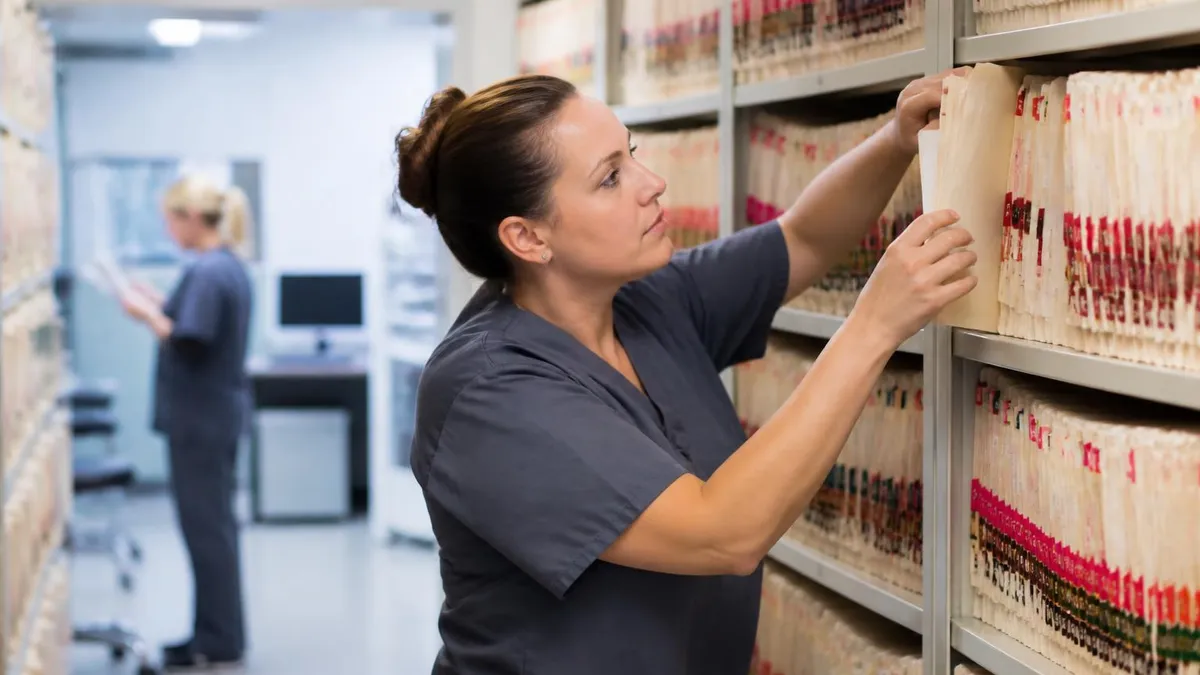
RHIT Certification Requirements: Eligibility, Exam, and How to Earn Your Credential in 2026

RHIT Course Guide: Best Programs, Study Plans, and Certification Prep for 2026

RHIT School: How to Choose the Right Program and Earn Your RHIT Certification

RHIT Jobs: Careers, Salary, and How the Certification Pays Off in 2026
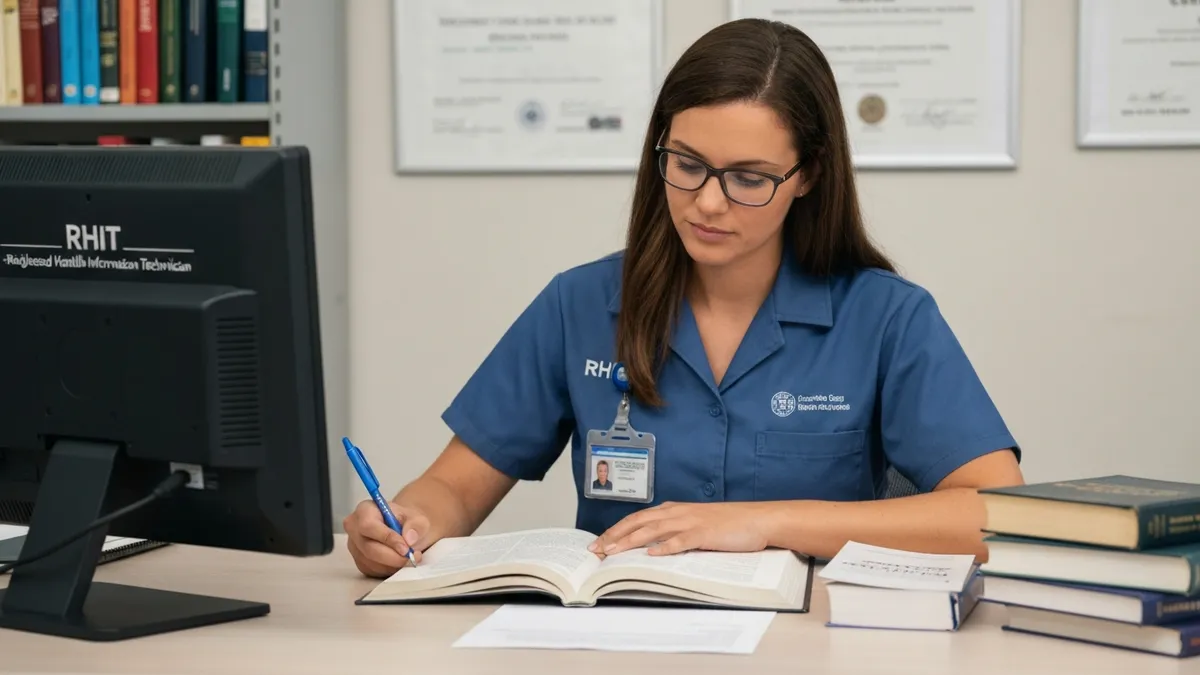
RHIT Exam Prep — Complete Guide (2026)
About the Author

Educational Psychologist & Academic Test Preparation Expert
Columbia University Teachers CollegeDr. Lisa Patel holds a Doctorate in Education from Columbia University Teachers College and has spent 17 years researching standardized test design and academic assessment. She has developed preparation programs for SAT, ACT, GRE, LSAT, UCAT, and numerous professional licensing exams, helping students of all backgrounds achieve their target scores.