
PCT Medical Abbreviation: What It Stands For and Why It Matters 2026 July
📝 PCT medical abbreviation explained: what PCT stands for in healthcare, what these technicians do, training, certification, and salary expectations.

Walk into any busy hospital floor and you will hear the letters fly. RN, CNA, LPN, MA, and somewhere in that mix, PCT. So what does PCT actually stand for in a medical setting? The most common meaning is Patient Care Technician, a frontline healthcare worker who supports nurses with hands-on patient care, vital signs, and basic clinical tasks.
The abbreviation can stretch further in narrow contexts (Percutaneous Coronary Transluminal procedures in cardiology, or Patient Care Tech in shorthand staffing rosters), but when a hiring page or scrubs badge says PCT, it almost always points to that bedside support role. New patients, new families, and even new nursing students often need a moment to decode the acronym, and that moment can shape an entire shift.
You will also see PCT scrolling across job boards, hospital orientation packets, and training brochures. The role exists because nurses cannot be in eight rooms at once. Patient Care Technicians fill the gap. They lift, listen, log, and translate. They are the eyes and ears of the unit and they are the first to notice when a patient's color changes or their pulse climbs.
The acronym carries weight beyond the badge. Insurance forms refer to PCT-administered care. Hospital quality dashboards track PCT-completed tasks like turning schedules and fall prevention rounds. Even Medicare reimbursement models indirectly value the work PCTs do because their tasks underpin metrics like hospital-acquired pressure injuries and length of stay.
What Does PCT Stand For in Healthcare?
Patient Care Technician is the dominant meaning across U.S. hospitals, long-term care facilities, dialysis centers, and rehabilitation clinics. A PCT is not a nurse. The role sits one notch above the certified nursing assistant in many facilities because PCTs are trained in a wider scope of clinical skills, including phlebotomy, EKG lead placement, and basic point-of-care testing.
Some employers use Patient Care Tech as a synonym. A few use Patient Care Associate or Nursing Assistant Tech to mean the same thing. There is a secondary meaning too. In cardiology you may bump into PCT inside the phrase Percutaneous Transluminal Coronary intervention, although the standard abbreviation there is PTCA or PCI. Outside cardiology, the laboratory term procalcitonin (a blood marker for bacterial infection) also uses PCT on lab slips.
Both are real. Neither is what most people mean on day one of a hospital orientation. Context tells you which version is in play, and 95% of the time it is the staff role. If the abbreviation appears next to a name or shift schedule it is the job title. If it appears on a lab report it is procalcitonin. If it appears in a cardiology consult note it is a procedure shorthand. Three uses, three worlds, one acronym.
Quick Answer: PCT in medical terminology stands for Patient Care Technician, an entry-to-mid level healthcare worker trained in vitals, phlebotomy, EKG, and bedside support. A small minority of contexts use PCT for procalcitonin (a lab marker) or coronary intervention shorthand. On a hospital badge or job posting, assume the staff role 95% of the time.
PCT Career Snapshot 2026
What a Patient Care Technician Actually Does
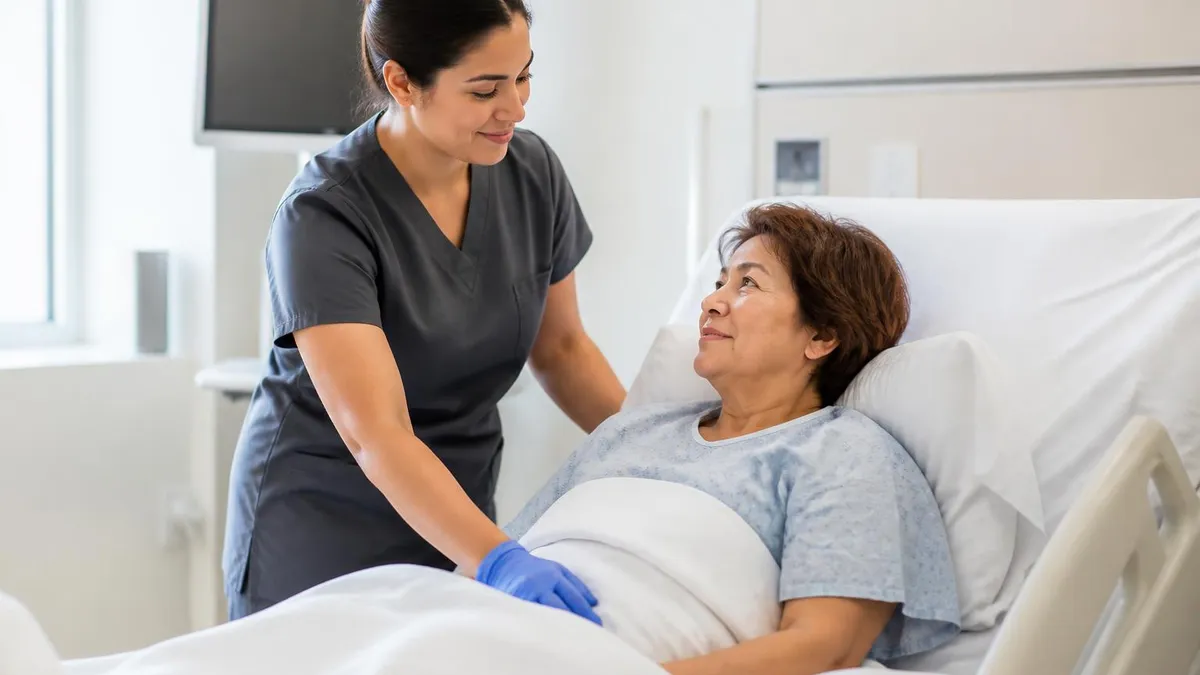
The job is physical, social, and clinical all at once. A typical 12-hour shift mixes routine checks with unexpected moments that demand quick judgment. PCTs are not making diagnoses. They are reporting what they see and feeding accurate data into the chart so nurses and physicians can act.
Daily tasks usually include vital signs (temperature, pulse, blood pressure, respirations, oxygen saturation), assistance with bathing and dressing, ambulation support, intake and output tracking, blood glucose checks, specimen collection, and stocking patient rooms. On units that allow expanded scope, PCTs draw blood, run 12-lead EKGs, perform telemetry monitoring, and assist with sterile setup.
Documentation is constant. If it was not charted, it did not happen, and PCTs feel that rule every shift. A missed initial in a chart can mean a delayed lab, a delayed lab can mean a delayed treatment, and a delayed treatment can become a quality-of-care issue. The chart is small. The stakes are not.
Some PCTs specialize. Dialysis PCTs work in outpatient clinics setting up hemodialysis machines and monitoring patients during treatment. Telemetry PCTs spend their shifts watching cardiac rhythms on a bank of monitors and calling out arrhythmias the moment they show up. Emergency department PCTs juggle splints, EKGs, and rapid triage support. The acronym is the same. The day is wildly different.
PCT vs CNA: Where the Confusion Comes From
People mix these up constantly. They overlap, but they are not identical. Certified Nursing Assistants complete a shorter state-approved program (often 75 to 120 hours) and focus on basic activities of daily living. PCTs usually complete a longer program that builds in phlebotomy, EKG, and sometimes wound care or dialysis basics.
In many hospitals, every PCT is also a CNA, but not every CNA is a PCT. Pay reflects the difference. A CNA in 2026 averages around $17 per hour nationwide. A PCT averages closer to $19 to $22 per hour depending on state, shift, and unit specialty. Dialysis and ICU PCTs sit at the high end. You can dig into the full pay picture on our patient care technician salary guide, which breaks down hourly rates state by state and by setting.
Three Most Common PCT Certifications
National Healthcareer Association credential. Most widely recognized in hospitals across the United States.
- ▸100 scored items plus 20 pretest
- ▸2 hour 10 minute window
- ▸Pass mark around 390 on a 200-500 scale
- ▸Renewal: 10 CE credits every 2 years
American Medical Certification Association credential. Strong representation in long-term care and skilled nursing settings.
- ▸150 questions across six domains
- ▸3-hour testing window
- ▸Online or in-person delivery
- ▸Renewal: annual CEU submission required
National Center for Competency Testing credential. Common in school-based pipelines and vocational programs.
- ▸165 questions, multiple choice
- ▸3-hour testing window
- ▸Paper or computer-based delivery
- ▸Renewal: 14 CE clock hours every 5 years
Training: How Long It Takes
Most accelerated PCT programs run 8 to 16 weeks. Community college tracks stretch to 6 months because they fold in clinical rotations and a wider lab block. Online hybrid options exist for the theory portion, but every legitimate program requires in-person skills hours and a supervised clinical externship before sitting for certification.
Curriculum hits the obvious clinical skills (vitals, infection control, body mechanics, mobility) and adds the technical layer that makes a PCT employable: 12-lead EKG, venipuncture, capillary blood collection, basic laboratory procedures, and electronic health record documentation. CPR-BLS is mandatory.
Some programs also include a brief introduction to telemetry interpretation, which can fast-track placement on cardiac floors. For a full breakdown of schools, accreditation, and program costs, see our PCT training programs guide.
Certification: What Employers Actually Want
You can work as a Patient Care Tech in some facilities without a national certification, but the path narrows fast. Most hospitals now require one of three credentials. The National Healthcareer Association offers the Certified Patient Care Technician/Assistant exam, known as the CPCT/A. The American Medical Certification Association issues the PCT-C credential. The National Center for Competency Testing offers the NCPCT.
The NHA CPCT/A is the most widely recognized. The exam runs 100 scored questions plus 20 pretest items, with a 2-hour 10-minute window. Topics cover basic patient care (38%), safety (16%), professional responsibilities (10%), infection control (10%), phlebotomy (15%), and EKG (11%). The pass mark sits around 390 on a 200 to 500 scale.
Renewal requires 10 continuing education credits every two years. Our PCT certification guide covers each exam in detail with eligibility paths, fees, and study timelines.
Where PCTs Work by Setting
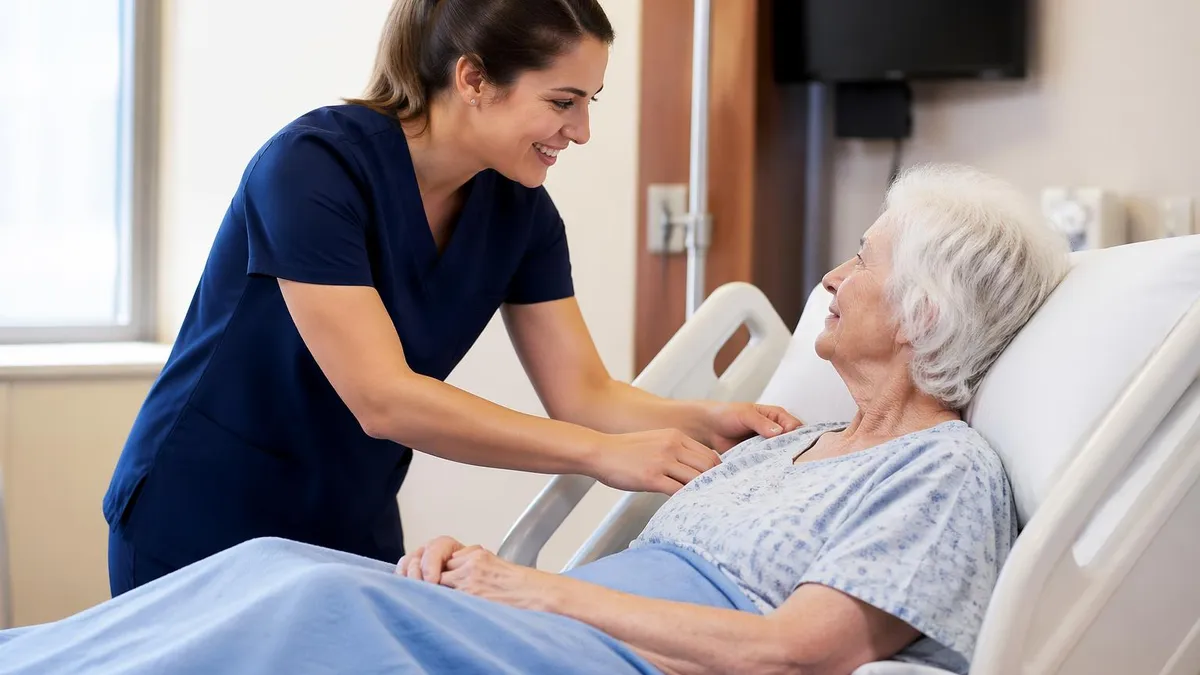
Vitals every 4 hours, assistance with hygiene, blood draws, EKGs, intake and output tracking. PCTs typically carry 8 to 12 patients per shift on a medical-surgical floor and rotate tasks across a 12-hour day. Pay tends to track the regional hospital wage scale.
Where PCTs Work
Hospitals employ the largest share of PCTs, roughly 60% of the workforce. Long-term care facilities take another 15%. Dialysis centers, surgical centers, rehabilitation hospitals, and home health agencies fill out the rest. Schedules vary. Hospital PCTs typically pick from 7am-7pm or 7pm-7am shifts, three days a week. Dialysis runs Monday-Wednesday-Friday or Tuesday-Thursday-Saturday clinics with predictable hours.
The setting changes the pace. A medical-surgical floor PCT can carry responsibilities for 8 to 12 patients at a time, rotating vitals and assists across the shift. An ICU PCT supports 4 to 6 patients with closer monitoring and more complex care. A dialysis PCT typically handles 3 to 4 patients per chair rotation across a shift.
Pace, autonomy, and skill mix shift with the unit. For a tour of the employer landscape and which settings pay best, our PCT job market overview maps it out.
Salary and Career Outlook
The Bureau of Labor Statistics groups Patient Care Technicians under nursing assistants for reporting purposes, but hospital pay scales treat them separately. National median pay sits near $40,000 per year for full-time PCTs in 2026, with experienced techs in high-cost metro areas pushing past $55,000. Night-shift differentials, weekend bonuses, and unit-specific stipends (telemetry, dialysis, oncology) can add 10% to 20% on top.
Growth is steady. Aging demographics, expanded outpatient surgery, and the dialysis pipeline keep demand high. The BLS projects 4% employment growth for nursing assistants and orderlies through 2032, but hospital PCT roles are growing faster because health systems are pushing nurses upstream and offloading bedside tasks to trained techs.
Most PCTs use the role as a launchpad. A typical path goes PCT, then LPN or RN bridge program, sometimes with tuition support from the employer. Some pivot sideways into phlebotomy, EKG technician roles, or dialysis technician certification.
Some facilities use Patient Care Associate (PCA) as a synonym for PCT, while others use PCA for a less-skilled role similar to a nurse aide. Always read the actual job description, not just the title, before accepting an offer. Scope of practice, pay band, and required certifications can differ widely between two hospitals using the same three letters on the badge.
Day in the Life
0645: You arrive, clock in, and get assignments. Eight patients on a med-surg floor. Two need showers, three need blood sugars before breakfast. 0700: Bedside report from the night shift PCT. 0715: Start vitals.
0830: Two blood draws for morning labs. Patient in 412 has a difficult stick. You try, miss, ask the nurse. 0915: Breakfast trays. Help the patient in 405 set up because his right hand is weak post-stroke. 1030: Assist with a transfer to radiology. 1130: Recheck vitals for the patient who spiked overnight.
1215: Lunch, if you are lucky and quick. 1330: A patient falls in 410. Quick assessment, alert the nurse, document. 1500: EKG order on 408. You run it, hand the strip to the charge nurse, note the rhythm. 1700: Second round of vitals. Restock supplies. Help the new admit settle in. 1830: Bedside report back to the night crew. 1900: Clock out. Some shifts feel like a sprint. Others feel like a slow drumbeat punctuated by small emergencies. Both are normal.
Skills That Make a Strong PCT
Stamina matters because you are on your feet for 12 hours. Pattern recognition matters because the difference between a tired patient and a deteriorating patient is often subtle. Documentation discipline matters because charts protect patients and protect you. Communication matters because you are the bridge between patient, family, and nurse. Empathy matters because the worst day of someone's year is your Tuesday.
Teamwork rounds out the skill list. PCTs work alongside nurses, respiratory therapists, phlebotomists, transport staff, and unit secretaries. The shift goes smoothly when every team member knows what the others are doing, and it falls apart when communication breaks down. A strong PCT signals early, asks questions, and never disappears in the middle of a task without telling someone where the work was left.
Technical skills you should drill before your exam include accurate vital signs without rushing, sterile and clean technique distinction, proper specimen labeling, 12-lead EKG placement (especially the precordial leads V1-V6), and venipuncture technique on the median cubital, cephalic, and basilic veins.

Pre-Exam Readiness Checklist
- ✓Completed an accredited PCT program including the full clinical externship hours required for your chosen certifying body
- ✓Current CPR-BLS certification through the American Heart Association or American Red Cross, valid through your scheduled exam date
- ✓At least 100 practice questions reviewed across all six NHA domains with detailed rationales studied for each missed item
- ✓Phlebotomy lab demonstration signed off by an instructor and at least five successful supervised venipunctures on real patients or peers
- ✓12-lead EKG placement performed under supervision five or more times with correct precordial lead positioning verified
- ✓Background check (federal and state) and full immunization records ready for employer onboarding within 14 days of exam pass
- ✓Two professional references queued up from clinical instructors or externship preceptors with current phone and email contacts
- ✓Government-issued photo ID and exam confirmation email printed and saved digitally for test-day check-in at the Pearson VUE center
How PCT Compares to Adjacent Roles
Medical Assistants work in outpatient clinics and physician offices. They do front and back office tasks, including vitals, injections, and clerical work. PCTs work in inpatient and acute settings. Phlebotomists draw blood all day, every day, in labs and donor centers. PCTs draw blood as part of a broader role.
EKG technicians focus on cardiac testing, often in cardiology offices or testing centers. PCTs run EKGs as one of many tasks on a hospital floor. The crossover means a PCT credential can open doors to all three adjacent paths if you decide the bedside is not for you.
Getting Started
If the abbreviation PCT lit a spark, here is the practical sequence. Pick a state-approved or nationally accredited program. Confirm the program preps you for the CPCT/A or PCT-C exam. Complete the clinical externship. Sit for the national exam. Apply to hospital float pools or specialty floors. Negotiate shift differentials. Use tuition assistance to climb into nursing if that is your goal.
Costs vary. Short programs run $800 to $1,500. Community college programs run $1,500 to $4,000 depending on residency. Exam fees sit between $117 (NHA CPCT/A with their study bundle discount) and $155 (AMCA PCT-C). Add $50 to $90 for the required background check and immunization records, and you are typically out the door for under $2,500 from zero experience to credentialed hire.
Common Misreadings of PCT
Patients sometimes confuse PCT with PA (Physician Assistant), which is a master's-level provider with prescriptive authority in many states. The two have nothing in common beyond two letters. Families occasionally mistake the PCT for a nurse, especially when the PCT is the first staff member they meet during admission. Polite introductions and clear scope of practice statements at the bedside resolve that quickly.
Insurance documents may use PCT in a billing context that has nothing to do with staffing. The acronym there can stand for Pre-Certification Team or Pre-Certification Tracking, internal claims-processing language that escapes hospital walls and lands in patient mail. When in doubt, read the surrounding sentence and the document header before assuming the meaning.
The Bottom Line
The PCT medical abbreviation almost always means Patient Care Technician, a frontline healthcare worker who handles vitals, blood draws, EKGs, hygiene support, and the dozens of small tasks that keep an inpatient unit running. The role is broader than a CNA and narrower than an LPN. Training takes 8 to 24 weeks. Certification through NHA, AMCA, or NCCT signals to employers you can hit the floor competent and safe.
Salary lands between $19 and $22 per hour for most settings, with specialty floors paying more. If you want a fast, affordable, and meaningful entry into healthcare with a clear path to nursing, the abbreviation behind the badge could be yours within a single semester. Run a few timed practice tests, learn the scoring rubric, and walk into the testing center calm and ready.
Should You Choose the PCT Path
- +Fast entry to healthcare with most programs completing in under 6 months
- +Affordable training compared with nursing or allied health degree programs
- +Clear career ladder into LPN, RN, dialysis tech, or phlebotomy certifications
- +Hands-on patient impact every shift with visible day-to-day results
- +Multiple employer settings including hospitals, clinics, dialysis, and home health
- +Tuition assistance commonly available through hospital employers for bridge programs
- −Physically demanding work with 12-hour shifts, frequent lifting, and long stretches on your feet
- −Emotional weight of bedside care, end-of-life moments, and difficult family conversations
- −Night, weekend, and holiday rotations are standard for hospital-based positions
- −Pay ceiling remains lower than nursing without pursuing additional education
- −Exposure to infectious disease, bodily fluids, and occasionally combative or agitated patients
- −Limited autonomy compared with nursing because PCTs cannot administer medications
PCT Questions and Answers
About the Author
Educational Psychologist & Academic Test Preparation Expert
Columbia University Teachers CollegeDr. Lisa Patel holds a Doctorate in Education from Columbia University Teachers College and has spent 17 years researching standardized test design and academic assessment. She has developed preparation programs for SAT, ACT, GRE, LSAT, UCAT, and numerous professional licensing exams, helping students of all backgrounds achieve their target scores.