
Nursing Practitioner Online Programs: Complete Training Guide and Requirements for 2026 October
Explore nursing practitioner online programs: requirements, costs, top specialties & how to choose the right NP program for your career. 🎓

Nursing practitioner online programs have transformed the path to advanced practice nursing, making it possible for working RNs to earn their MSN or DNP without relocating or leaving their jobs. Today, more than 400 accredited programs across the United States offer fully online or hybrid NP curricula, covering specialties from family practice to psychiatric mental health. Enrollment in these programs has grown by over 35% since 2020, driven by a national shortage of primary care providers and expanded telehealth infrastructure that makes remote clinical coordination more feasible than ever before.
Choosing the right program requires understanding the distinctions between degree types, accreditation bodies, and clinical hour requirements. Most online NP programs lead to either a Master of Science in Nursing (MSN) or a Doctor of Nursing Practice (DNP), both of which qualify graduates to sit for national certification exams. Accreditation by the Commission on Collegiate Nursing Education (CCNE) or the Accreditation Commission for Education in Nursing (ACEN) is non-negotiable — without it, your degree may not be recognized by your state board or by potential employers. Always verify accreditation status before applying.
Program length varies considerably depending on your educational background and the specialty you choose. An MSN-level program typically takes 2 to 3 years of part-time study, assuming you already hold a BSN. Bridge programs designed for ADN-prepared nurses can add 1 to 2 additional semesters of foundational coursework. DNP programs, which are increasingly required for NP practice in several states, generally run 3 to 4 years part-time and include a scholarly practice project in addition to advanced clinical rotations. Understanding these timelines helps you plan your finances, your schedule, and your career transition realistically.
Clinical hours are perhaps the most misunderstood aspect of online NP education. While didactic coursework is delivered entirely online, clinical rotations must be completed in person at approved healthcare sites. Most programs require between 500 and 750 supervised clinical hours, with top-tier programs often requiring 750 or more. Many online programs help students identify preceptors and clinical sites in their local area, but some require students to secure their own placements — a process that can take months and demands proactive networking with local physicians, clinics, and hospital systems.
Tuition for online NP programs ranges from roughly $18,000 at in-state public universities to more than $75,000 at private institutions. However, sticker price is rarely what students actually pay. Financial aid, employer tuition reimbursement, federal nursing workforce grants, and HRSA scholarship programs can dramatically reduce out-of-pocket costs. Veterans and active-duty military personnel may also qualify for GI Bill benefits that cover a significant portion of program costs. Running a full cost-of-attendance analysis — including fees, technology requirements, and lost income during clinical rotations — is essential before committing to any program.
Specialty selection is one of the most consequential decisions you will make in your NP journey. The Family Nurse Practitioner (FNP) credential remains the most versatile, authorizing practice across the lifespan in primary care, urgent care, and telehealth settings. Psychiatric Mental Health NP (PMHNP) programs have seen explosive growth due to the national mental health crisis, while Adult-Gerontology, Pediatric, and Women's Health specialties offer targeted scopes of practice with strong regional demand. Your choice of specialty should align with your clinical background, your geographic market, and the population you are most passionate about serving.
This guide covers everything you need to know about selecting, applying to, and succeeding in an online NP program — from admission requirements and clinical placement strategies to certification exams and salary outcomes. Whether you are just beginning to research nurse practitioner online programs or you are ready to submit your applications, the sections below will give you the concrete information and frameworks you need to make a well-informed decision.
NP Online Programs by the Numbers

NP Program Types and Degree Options
The traditional entry point to NP practice. Typically 2–3 years part-time online. Qualifies graduates for national certification exams. Accepted by all state boards and most employers. Still the most common NP credential in the workforce.
Designed for MSN-prepared nurses adding a second NP specialty or transitioning from education/administration to clinical practice. Usually 12–18 months and 300–500 clinical hours. Efficient path for experienced advanced practice nurses.
The terminal practice degree in nursing. Required by some states and health systems for NP licensure by 2030. Adds a scholarly practice project. Typically 3–4 years part-time. Commands higher salaries and leadership roles in clinical settings.
For ADN or diploma-prepared RNs who lack a BSN. Integrates BSN completion with NP coursework into one continuous online program. Adds 1–2 semesters but eliminates the need to earn a standalone BSN before advancing.
Understanding the admission requirements for online NP programs is essential before you invest time in applications. While requirements vary by institution, certain baseline criteria are nearly universal across CCNE- and ACEN-accredited programs. Meeting minimum requirements does not guarantee admission — competitive programs at flagship state universities and private nursing schools routinely receive three to five applications for every available seat, meaning your overall package must stand out in a crowded applicant pool.
The most fundamental prerequisite is an active, unencumbered Registered Nurse (RN) license. Most programs also require that you hold a Bachelor of Science in Nursing (BSN) from an accredited institution with a minimum GPA of 3.0, though many programs prefer 3.2 or above. Some programs waive the GPA floor if applicants have extensive clinical experience, particularly if that experience includes ICU, emergency, or other high-acuity settings. Your academic transcript will be evaluated not just for overall GPA but for performance in science prerequisites such as pathophysiology, pharmacology, and health assessment.
Clinical experience requirements have become more specific in recent years. Most programs now require 1 to 2 years of RN practice post-licensure, and many explicitly prefer applicants with experience in the specialty they plan to pursue. Applicants to Family NP programs benefit from primary care or outpatient experience, while those applying to PMHNP programs are strengthened by behavioral health or psychiatric nursing backgrounds. Some programs require 2,000 or more hours of direct patient care in the past three years, and a few elite programs set the bar at 3,000 hours or higher.
Letters of recommendation carry significant weight in NP program admissions. Most programs require three letters: typically one from a nursing supervisor or clinical manager, one from a physician or advanced practice provider who has observed your clinical work, and one from an academic reference who can speak to your scholarly potential.
Generic letters that simply confirm your employment are far less effective than specific, narrative letters that describe particular clinical situations where you demonstrated advanced clinical judgment, leadership, or patient advocacy. Give your recommenders at least 6 to 8 weeks and provide them with a detailed summary of your goals and accomplishments.
The personal statement or essay is your opportunity to articulate why you are pursuing NP practice, which specialty you have chosen and why, and how your clinical background has prepared you for graduate-level work. Admissions committees read hundreds of personal statements and can instantly identify vague, unfocused writing.
The strongest essays include a specific patient care narrative that illustrates a gap in care you observed as an RN, a clear explanation of how the NP role would allow you to address that gap, and a concrete vision of where you will practice after graduation. Aim for 600 to 800 words, well-edited and free of jargon.
Many programs now require either the GRE or a nursing-specific entrance assessment, though this requirement has declined significantly since 2020. Check each program's current requirements carefully, as policies change frequently. If a program requires the GRE, aim for a combined Verbal and Quantitative score of at least 300, with a strong Analytical Writing score. Some programs offer conditional admission for applicants who fall slightly below academic thresholds, particularly if clinical experience and professional references are strong.
Technology requirements for online NP programs are often underestimated by prospective students. You will need a reliable high-speed internet connection, a computer that meets program specifications for proctored exam software, a webcam and microphone for synchronous sessions, and sometimes access to simulation software that requires specific hardware. Budget at least $200 to $500 for technology upgrades if your current setup is more than three years old. Simulation lab requirements vary by program — some require brief on-campus intensives one to three times per year, while others partner with local simulation centers to fulfill this requirement closer to students' homes.
Top NP Specialties in Online Programs
The Family Nurse Practitioner specialty is the most widely chosen concentration in online NP programs, accounting for nearly 40% of all NP graduates annually. FNPs are licensed to care for patients across the entire lifespan — from newborns to geriatric patients — and practice in primary care clinics, urgent care centers, telehealth platforms, retail health, and rural health settings. The AANP FNP certification exam covers health promotion, diagnosis, and management across all age groups, and requires 500 clinical hours with diverse patient populations.
FNP graduates consistently report strong job market outcomes. The BLS projects 38% job growth for NPs through 2032, and FNPs represent the largest segment of that demand. Median annual salaries for FNPs in 2025 ranged from $108,000 in lower-cost rural markets to over $145,000 in high-demand urban and coastal areas. Telehealth FNP positions, which allow fully remote practice in states with appropriate licensure, have multiplied since 2020 and now represent a significant share of new FNP job postings on major healthcare employment platforms.
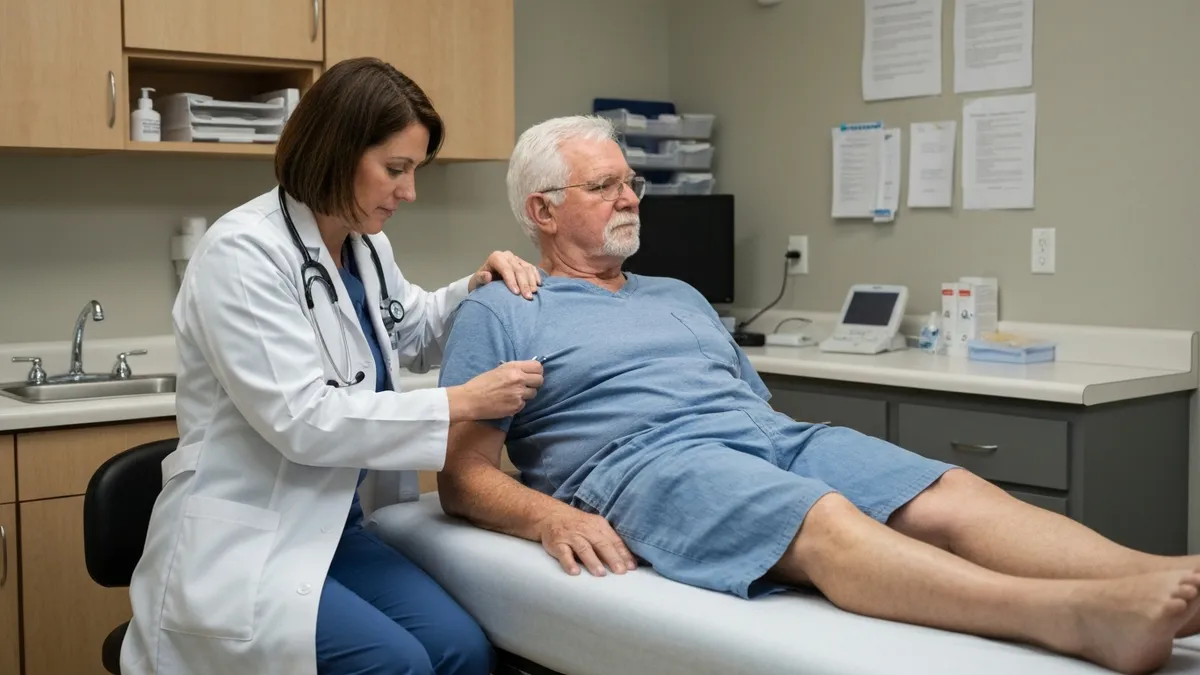
Online NP Programs: Benefits and Tradeoffs
- +Complete coursework on your own schedule without relocating or quitting your nursing job
- +Access programs at top universities regardless of your geographic location
- +Tuition at public online programs is often 30–50% less than comparable on-campus private programs
- +Asynchronous lectures allow you to replay and review complex pharmacology or pathophysiology content at your own pace
- +Build a national professional network with cohort peers from diverse clinical backgrounds and geographic markets
- +Many programs offer dedicated clinical placement support, reducing the burden of finding your own preceptors
- −Clinical hours must still be completed in person, requiring local preceptor relationships and travel
- −Self-directed learning demands strong time management — attrition rates in online programs can reach 20–30%
- −Some employers still perceive online degrees as less rigorous, particularly for acute-care hospital positions
- −Simulation and hands-on skills labs may require periodic on-campus travel, adding cost and logistical complexity
- −Technology issues, time zone conflicts in synchronous sessions, and isolation can affect academic performance
- −State licensure endorsement across multiple states adds cost and administrative burden for graduates seeking multi-state practice
Pros and Cons at a Glance
| Pros | Cons |
|---|---|
| Complete coursework on your own schedule without relocating or quitting your nursing job | Clinical hours must still be completed in person, requiring local preceptor relationships and travel |
| Access programs at top universities regardless of your geographic location | Some employers still perceive online degrees as less rigorous, particularly for acute-care hospital positions |
| Asynchronous lectures allow you to replay and review complex pharmacology or pathophysiology content at your own pace | Simulation and hands-on skills labs may require periodic on-campus travel, adding cost and logistical complexity |
| Build a national professional network with cohort peers from diverse clinical backgrounds and geographic markets | Technology issues, time zone conflicts in synchronous sessions, and isolation can affect academic performance |
| Many programs offer dedicated clinical placement support, reducing the burden of finding your own preceptors | State licensure endorsement across multiple states adds cost and administrative burden for graduates seeking multi-state practice |
How to Choose the Right Online NP Program
- ✓Verify the program holds active CCNE or ACEN accreditation before submitting any application materials.
- ✓Confirm the program's clinical hour requirements (500 minimum; 750+ preferred) and whether they assist with preceptor placement.
- ✓Research whether the program offers your specific NP specialty — not all online programs offer every concentration.
- ✓Calculate total cost of attendance including tuition, fees, technology, clinical travel, and lost income during rotations.
- ✓Check whether your state board of nursing accepts the program's degree for licensure as a Nurse Practitioner.
- ✓Review NCLEX and national certification first-time pass rates for recent program graduates — aim for programs above 85%.
- ✓Evaluate the synchronous vs. asynchronous balance: determine whether required live sessions fit your work schedule.
- ✓Ask admissions about cohort size and faculty-to-student ratios — smaller cohorts typically mean more individualized mentorship.
- ✓Investigate whether the program has relationships with clinical sites in your region or requires you to secure your own placements.
- ✓Connect with current students or recent alumni via LinkedIn to gather unfiltered feedback on program quality and support services.
Both CCNE and ACEN accreditation are fully valid — but always check your state board's requirements.
Some state boards of nursing explicitly list approved accreditors, and a handful of states have additional program-specific approval requirements beyond national accreditation. Before enrolling, email your state board directly with the program name and ask whether graduates are eligible for NP licensure in your state. This 10-minute verification step can save you years of effort and tens of thousands of dollars in tuition.
The financial investment required to complete an online NP program is substantial, but so is the return. Understanding the full cost picture — and the financial resources available to offset it — is critical to making a sustainable decision. Tuition at public in-state online programs currently ranges from $18,000 to $38,000 for a complete MSN-NP, while private nonprofit online programs typically charge $45,000 to $75,000. For-profit online programs can exceed $80,000 in total tuition and fees, which is rarely justified given the comparable outcomes of accredited public programs.
Beyond tuition, students should budget for program fees ($500 to $2,000 per year), technology upgrades ($200 to $500), textbooks and digital resources ($800 to $1,500 over the program), clinical travel and uniforms ($500 to $2,000 depending on site locations), and national certification exam fees ($290 to $395 for most NP certification exams). If your program requires on-campus intensives, add lodging and travel costs of $500 to $1,500 per visit. Total program costs at a mid-range public institution realistically land between $28,000 and $48,000 when all ancillary expenses are factored in.
Federal financial aid remains available to graduate nursing students through the Free Application for Federal Student Aid (FAFSA). Unsubsidized Direct Loans at the graduate level allow you to borrow up to $20,500 per academic year, and Graduate PLUS Loans cover the gap between that limit and your total cost of attendance.
Interest rates on graduate federal loans have risen in recent years, making it essential to borrow conservatively and project your repayment burden against your expected NP salary before over-borrowing. The Public Service Loan Forgiveness (PSLF) program remains an important option for NPs who plan to work for qualifying nonprofit health systems or government employers.
Employer tuition reimbursement is one of the most underutilized financial resources available to working RNs pursuing NP education. Many large health systems, including HCA Healthcare, Ascension, CommonSpirit, and large academic medical centers, offer annual tuition reimbursement of $3,000 to $10,000 per year for qualifying graduate nursing programs.
Some employers have expanded these benefits significantly in response to nursing workforce shortages, and a few offer full tuition coverage in exchange for service commitments of 2 to 3 years after graduation. Check your HR handbook and speak with your nurse manager about available education benefits before assuming you must finance the entire program yourself.
Federal and state grant programs offer additional funding that does not require repayment. The Health Resources and Services Administration (HRSA) administers several nursing workforce development grant programs, including the Nurse Faculty Loan Program and the Advanced Nursing Education Workforce grant, which support NP students committed to underserved populations or academic careers.
State-level grants and loan repayment programs vary widely — many prioritize NPs willing to practice in rural or medically underserved areas. The NHSC Loan Repayment Program, administered by HRSA, offers up to $50,000 in loan repayment for NPs who commit to two years of service in a Health Professional Shortage Area.
The return on investment for completing an online NP program is compelling by almost any financial analysis. The median annual salary for nurse practitioners in the United States reached $126,260 in BLS 2025 data, representing a premium of roughly $35,000 to $50,000 per year over the median RN salary.
Over a 20-year career, that salary differential alone represents $700,000 to $1,000,000 in additional earnings — far exceeding the total cost of even the most expensive NP program. NPs with DNP credentials or in high-demand specialties like PMHNP, CRNA, or AGACNP frequently earn $140,000 to $175,000 annually, compressing the payback period to as little as 2 to 3 years post-graduation.
Geographic variation in NP salaries adds another dimension to the financial calculus. California, Washington, New York, and Massachusetts consistently rank as the highest-paying states for NPs, with median salaries exceeding $145,000 in metropolitan markets. States in the Southeast and Midwest offer lower median salaries but also significantly lower costs of living, meaning purchasing power may be comparable across regions. If you are open to relocation after graduation, researching salary and cost-of-living data by state will help you identify markets where your NP credential yields the greatest financial and professional return.
Multiple professional nursing organizations and some state legislatures are moving toward requiring a Doctor of Nursing Practice (DNP) for new NP licensure, with target dates ranging from 2027 to 2030. If you are currently enrolled in or considering an MSN-NP program, research whether your state has passed or is considering DNP-entry legislation — and whether your target employers are beginning to prefer or require DNP credentials for new hires. Acting now on a post-master's DNP program can protect your competitive position before these mandates take effect.
Earning your NP degree is a major milestone, but national certification is what actually authorizes you to practice. Two organizations administer most NP certification exams in the United States: the American Association of Nurse Practitioners Certification Board (AANPCB) and the American Nurses Credentialing Center (ANCC). Both are recognized by all state boards of nursing, though some states specify which certifying body's credential they accept for specific specialties. Confirming that your target certification aligns with your state's licensure requirements before you graduate avoids costly surprises at the finish line.
The most commonly pursued NP certifications include the FNP-C and FNP-BC for family practice, the PMHNP-BC for psychiatric mental health, the AGPCNP-C and AGPCNP-BC for adult-gerontology primary care, and the AGACNP-BC for acute care. Each exam consists of 150 to 200 multiple-choice questions delivered in a computer-based format at authorized testing centers nationwide. Eligibility typically requires a graduate NP degree from an accredited program, completion of required clinical hours, and an active RN license. Exam fees range from $290 to $395 depending on the certifying organization and whether you are an AANP or ANA member.
Pass rates on NP certification exams vary by specialty and certifying body. The AANP FNP-C exam historically posts first-time pass rates of 82 to 87%, while the ANCC FNP-BC runs slightly lower at 78 to 83%. PMHNP-BC first-time pass rates through ANCC are approximately 72 to 78%, reflecting the breadth and depth of the psychiatric specialty content.
Regardless of which exam you face, structured preparation using practice question banks, content review courses, and timed simulated exams gives you the strongest chance of passing on your first attempt — which matters both financially (retake fees apply) and professionally (some employers condition job offers on first-attempt certification).
State licensure as an Advanced Practice Registered Nurse (APRN) or Nurse Practitioner follows national certification. Each state has its own APRN licensure application process, fees ($75 to $250), and timeline — expect 4 to 12 weeks for licensure processing after submitting your application, degree verification, and certification credential.
If you plan to practice in multiple states, the Nurse Licensure Compact (NLC) streamlines multi-state RN licensure, but APRN compact legislation is still in early stages and not yet available in all participating states. Plan your job offer and start date accordingly, building in sufficient time for full licensure before your first day of practice.
Career outcomes for online NP graduates are strong and continuing to improve. The NP workforce is projected to grow from approximately 385,000 practitioners in 2025 to over 500,000 by 2033, according to HRSA workforce projections. Demand is particularly acute in primary care, behavioral health, and rural health, where NPs are increasingly functioning as the primary or sole healthcare provider for entire communities. NPs with full practice authority in their states report the highest career satisfaction, greatest earning potential, and most entrepreneurial career trajectories — including opening independent clinics, concierge practices, and telehealth businesses.
Professional development after NP licensure is an ongoing commitment. Most NP certifications require renewal every 5 years, which involves completing 75 to 100 continuing education hours, including pharmacology-specific CE and evidence of ongoing clinical practice. Many NPs pursue additional credentials such as Diabetes Educator (CDE), Wound Care Specialist (CWS), or board certifications in areas like HIV medicine or lipidology to differentiate themselves in competitive markets or expand their scope. Professional organization membership in AANP, specialty nursing associations, and your state NP association provides access to CE resources, advocacy networks, mentorship programs, and job boards that support long-term career advancement.
The decision to pursue NP practice through an online program is one of the most significant professional investments a nurse can make. With the right program, rigorous preparation, and a clear specialty focus, online NP education delivers career transformation that is sustainable, financially rewarding, and deeply meaningful. The resources, practice questions, and guidance on this site are designed to support you from your first application through your certification exam and into your first NP position — every step of the way toward the advanced practice career you have worked so hard to achieve.
Succeeding in an online NP program requires a fundamentally different approach to studying than most RNs used in their undergraduate nursing education. Graduate-level coursework moves faster, demands more independent synthesis of complex material, and expects you to integrate pharmacology, pathophysiology, and clinical decision-making simultaneously rather than sequentially. Students who treat online NP coursework like a self-paced reading course — checking in whenever convenient — typically struggle with the volume and depth of content by midterms. Building structured weekly study routines from day one is the single most important academic habit you can establish.
Time management is the competency that most often separates successful online NP students from those who withdraw or fail. The standard recommendation for graduate coursework is 2 to 3 hours of study per credit hour per week. For a 9-credit-hour semester — typical for online NP programs — that translates to 18 to 27 hours of weekly academic work in addition to your clinical hours, your nursing job, and your personal responsibilities.
Before enrolling, honestly audit your weekly schedule to identify where those hours will come from. Most successful online NP students reduce work hours during their most intensive semesters, typically by 8 to 16 hours per week, to protect study time without burning out.
Pharmacology is consistently identified by NP students as the most challenging content area, and for good reason. NP pharmacology goes far beyond memorizing drug names — it requires deep understanding of mechanisms of action, drug interactions, contraindications, monitoring parameters, and patient-specific prescribing considerations across dozens of drug classes.
Build a pharmacology review system early: create drug class summaries, use spaced repetition flashcard tools like Anki, and practice applying pharmacology in clinical case scenarios rather than simply memorizing facts in isolation. Your prescribing accuracy and patient safety as an NP will be grounded in the pharmacology foundation you build during your program.
Clinical rotations in online NP programs offer invaluable learning opportunities that no amount of online reading or simulation can fully replace. Approach each clinical hour as a high-value learning experience rather than a checkbox to complete. Ask your preceptor to walk you through their clinical reasoning on every patient encounter, not just the diagnosis and treatment plan.
Request opportunities to see a wide variety of presenting complaints, including complex multi-system patients who challenge your differential diagnosis skills. Keep a reflective clinical journal documenting each encounter, what you learned, what questions arose, and how your understanding of NP practice deepened — this practice pays dividends when you review for board exams and when you interview for your first NP position.
Board exam preparation should begin at least 3 months before your scheduled exam date, ideally with a dedicated review course and a large-volume practice question bank. The most effective NP board prep strategy combines content review (organized by body system or specialty domain) with high-volume practice questions (minimum 1,500 to 2,000 questions across your full preparation period) and thorough analysis of every incorrect answer.
Do not simply record your score and move on — the explanations for incorrect answers are where the deepest learning occurs. Identify your weakest content domains after the first two weeks of practice and allocate proportionally more review time to those areas.
Networking during your NP program is an investment that pays off immediately upon graduation. Your clinical preceptors are your most important professional references and, frequently, your first job leads. NP students who approach preceptorship as a professional relationship — arriving prepared, following up on questions between sessions, and expressing genuine appreciation — consistently receive stronger references and more job referrals than those who treat rotations as passive observation experiences.
Join your state NP association as a student member (most offer significantly discounted dues) and attend at least one regional or national NP conference before you graduate. The connections you make in these environments often lead directly to job opportunities, mentorship relationships, and continuing education partnerships that benefit your career for decades.
Finally, take your physical and mental health seriously during the program. The combination of full-time or near-full-time nursing employment, graduate coursework, clinical rotations, and personal responsibilities creates a sustained high-stress environment that can erode your wellbeing if you do not actively manage it.
Build non-negotiable rest and recovery habits — sleep, exercise, and social connection are not luxuries during NP school, they are the infrastructure that keeps your cognitive performance high enough to learn complex material and deliver safe patient care. NPs who model self-care during their training are far better positioned to model it for their patients and sustain long, satisfying careers in advanced practice nursing.
Sample NP - Nurse Practitioner Practice Questions
Try these questions from our free NP - Nurse Practitioner practice tests. The correct answer and an explanation follow each question.
Which action constitutes unprofessional conduct that could result in disciplinary action by a state nursing board?
- A. Declining to prescribe a medication the NP is unfamiliar with and requesting a consult
- B. Practicing beyond one's scope of competence without seeking consultation
- C. Referring a complex patient to a specialist
- D. Disclosing a medication error to the patient and documenting it
Answer: B. Practicing beyond one's scope of competence without seeking consultation
Practicing beyond the scope of one's competence without consultation constitutes unprofessional conduct and is subject to state board disciplinary action.
An NP wants to implement evidence-based fall prevention protocols but faces resistance from nursing staff who believe current practice is adequate. According to Rogers' Diffusion of Innovations theory, these nurses are best classified as:
- A. Late majority
- B. Early majority
- C. Laggards
- D. Early adopters
Answer: C. Laggards
Laggards are resistant to change, skeptical of innovation, and tend to adopt only when traditional alternatives are no longer available.
An NP-led QI project reduces time to antibiotic administration in pneumonia. However, the team notices increased nursing overtime costs. This overtime metric is an example of a:
- A. Process measure
- B. Outcome measure
- C. Balancing measure
- D. Sentinel event metric
Answer: C. Balancing measure
Balancing measures track unintended consequences of improvement efforts on other parts of the system to ensure the change doesn't cause new problems.
When educating a patient about proper blood pressure measurement at home, the NP should instruct the patient to:
- A. Measure immediately after exercise for accuracy
- B. Sit quietly for 5 minutes before measuring with feet flat and arm at heart level
- C. Use the dominant arm and inflate the cuff while talking
- D. Take only one reading per session
Answer: B. Sit quietly for 5 minutes before measuring with feet flat and arm at heart level
Accurate home blood pressure monitoring requires 5 minutes of seated rest, feet on the floor, arm supported at heart level, and at least two readings per session to account for variability.
NP Questions and Answers
Nurse Practitioner vs Physician Assistant: Side-by-Side

Nurse Practitioner Taxonomy Code: Complete 2026 Guide to NPI Classification, Specialty Codes, and Billing Compliance

Family Nurse Practitioner Remote Jobs: Complete 2026 Guide to Telehealth Careers

Psychiatric Nurse Practitioner Programs Online: Complete Training Guide and Requirements

Nurse Practitioner Side Hustle: 10+ Ways NPs Earn Extra Income in 2026
About the Author

Registered Nurse & Healthcare Educator
Johns Hopkins University School of NursingDr. Sarah Mitchell is a board-certified registered nurse with over 15 years of clinical and academic experience. She completed her PhD in Nursing Science at Johns Hopkins University and has taught NCLEX preparation and clinical skills courses for nursing students across the United States. Her research focuses on evidence-based exam preparation strategies for healthcare certification candidates.