
N-400 Checklist: Documents and Requirements for Naturalization 2026 June
🏆 Get ready for your n-400 checklist certification exam. Practice questions with step-by-step answer explanations and instant scoring.

N-400 Application Checklist: What You Need to Apply for Naturalization
The N-400, Application for Naturalization, is the form you file with USCIS to become a United States citizen. Getting it right the first time matters — a missing document, inconsistent answer, or incomplete section can delay your case by months. Using a thorough checklist before you submit protects your timeline and reduces the chance of a Request for Evidence (RFE) from USCIS.
This checklist covers the core documents and requirements for most applicants. The exact documents you need depend on your specific eligibility category — a five-year permanent resident has different requirements than someone applying under the three-year rule for spouses of US citizens or under military provisions. Read through the complete list and mark only what applies to your situation.
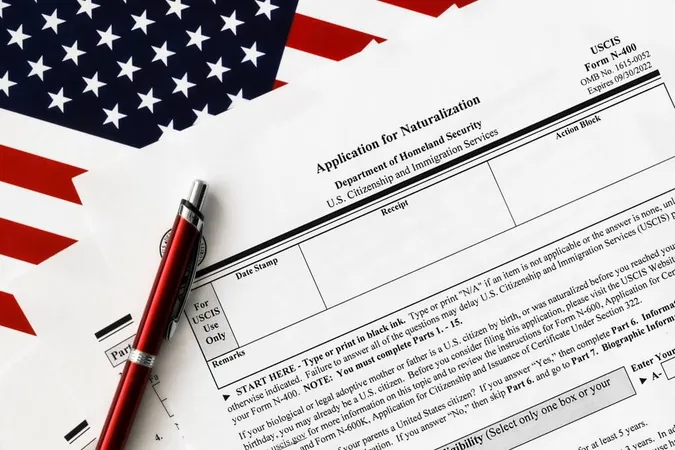
Start with the form itself. The N-400 must be the current version — USCIS occasionally updates forms, and submitting an outdated version will get your application rejected. Download the current N-400 directly from uscis.gov before you start. The form runs approximately 20 pages and covers your personal history, addresses, employment, travel, and background information over the past five years or since obtaining your green card.
Answer every question on the N-400 honestly, even if the answer might complicate your application. USCIS conducts background checks and compares your answers against immigration records, tax records, law enforcement databases, and other sources. An inconsistency between your answers and official records is treated as a material misrepresentation — which is grounds for denial and can permanently bar you from citizenship. If you have arrests, criminal history, tax issues, or other complications, consult an immigration attorney before filing rather than attempting to handle them yourself.
Once you've completed the form, assemble your supporting documents. These fall into two categories: documents USCIS requires everyone to submit and documents specific to your individual situation. The checklist below covers both. Keep copies of everything you send — USCIS will not return original documents, but you may need them for your own records or future applications.
Required Documents for All N-400 Applicants
These documents are required regardless of your specific eligibility category. Gather them before you start filling out the form — many sections of the N-400 reference information from these documents directly.
Green Card and Identity Documents
You must submit a copy of both sides of your Permanent Resident Card (green card). If your card is expired, USCIS still accepts it — you don't need to renew your green card before applying for citizenship. However, if your card is lost or stolen, file Form I-90 to replace it before filing your N-400. USCIS also requires government-issued photo ID: a valid passport (any nationality), state driver's license, or state ID card.
If your name has changed since you received your green card — through marriage, divorce, or court order — you'll need documentation of the name change. A marriage certificate for marriage-based name changes; a divorce decree for name changes resulting from divorce; or a court-issued name change order for other changes. Your application should use your current legal name exactly as it appears on that documentation.
Passport-Style Photos
Submit two identical passport-style photos taken within 30 days of filing. Photos must be 2x2 inches, color, with a white background, face fully visible, taken in civilian clothing (no hats or head coverings unless worn daily for religious reasons). Write your A-Number lightly in pencil on the back of each photo. Follow USCIS's photo specifications exactly — nonconforming photos are a common reason for rejection of otherwise complete applications.
Travel History Documentation
If you've traveled outside the United States during the 5-year period before filing (or 3-year period for spouse-of-citizen applicants), document every trip. You'll need the dates of departure and return, and the countries visited. If you can't remember exact dates, use passport stamps, flight records, bank statements showing foreign transactions, or tax records as reference. The N-400 asks for every trip over 24 hours — not just extended absences. Accuracy matters here because USCIS will check your travel records against its own databases.
Absences from the US affect your continuous residence requirement. The five-year rule requires continuous residence in the US for 5 years before filing. An absence of more than 6 months but less than 1 year breaks continuous residence (with some exceptions). An absence of 1 year or more almost always breaks continuous residence. If you have a long absence, consult an attorney before filing — absences that break continuous residence can reset your eligibility clock.
Tax Records
You must be able to demonstrate that you've filed US federal income taxes for each year you were required to do so during the 5-year (or 3-year) period before filing. Bring IRS tax transcripts or copies of your filed returns to your naturalization interview. If you didn't file taxes in a year when you were required to, you must correct this before your interview. USCIS will ask whether you've ever failed to file required returns and whether you owe any back taxes — honest answers are essential.
If you're self-employed or had complex tax situations, bring your complete returns including all schedules. If you filed jointly with a spouse who is already a citizen, bring a copy of the joint return and be prepared to explain your household income. If you owed taxes and set up an installment agreement with the IRS, bring documentation of the agreement and your payment history — USCIS typically accepts an active IRS installment agreement as evidence of responsible financial compliance, even if the underlying balance isn't paid in full.
Maintaining Physical Presence
The N-400 also asks about your physical presence in the United States. The five-year rule requires you to have been physically present in the US for at least 30 months out of the 5 years before filing. That's different from continuous residence — you can maintain continuous residence while still failing the physical presence requirement if you spent significant time abroad. Count your days carefully. If you're close to the 30-month threshold, consider waiting until you're comfortably above it rather than filing at the minimum.

Situation-Specific Documents for the N-400
The universal requirements in the previous section apply to everyone. But your specific circumstances — your marital status, whether you've had legal issues, your history of military service, your employment history — determine what additional documentation you need. Review all the categories below and collect everything that applies to your situation before you finalize your application package. An RFE for a missing document you knew about is avoidable; an RFE for something you overlooked costs you months of processing time.
In addition to the universal requirements, your application will need additional documents based on your individual circumstances. The following covers the most common situations.
Spouses of US Citizens (3-Year Rule)
If you're applying under the 3-year rule — married to a US citizen for at least 3 years, living in marital union throughout — you need your current marriage certificate, proof that your spouse has been a US citizen for at least 3 years (such as a US passport, birth certificate, or naturalization certificate), and evidence that you've been living together throughout the 3-year period. Joint tax returns, joint lease or mortgage documents, and utility bills with both names are all accepted as evidence of a marital union.
If you've been married more than once, include documentation of the termination of all previous marriages: divorce decrees, annulment orders, or death certificates of previous spouses. USCIS needs to verify that your current marriage is legally valid. Missing documentation of a previous marriage's termination is a common avoidable delay.
Criminal History
Any arrest, charge, or criminal proceeding — even if charges were dropped, reduced, or expunged — must be disclosed on the N-400. Expunged records still exist in law enforcement databases and USCIS will find them. The question isn't whether USCIS will discover an undisclosed record — it's whether the conviction affects your good moral character finding and whether you disclosed it honestly.
For each incident, bring the original arrest report, court disposition record, sentencing documents, and proof of completion of any sentence or probation. Your immigration attorney can review your criminal history and advise you on how specific offenses affect your eligibility. Certain convictions bar citizenship permanently; others can be overcome with time and evidence of rehabilitation. Don't rely on general assumptions about what's disqualifying — get a legal opinion before filing if you have any criminal history.
Selective Service Registration
Male applicants who were required to register with the Selective Service and are now between 26 and 31 years old must prove they registered. If you registered, bring your Selective Service registration card or a status information letter from the Selective Service System. If you didn't register when required and are now over 26 (too late to register), USCIS will require an explanation. Failure to register when required is a ground for denial — consult an attorney if this applies to you.
Name Change Requests
You can request a legal name change as part of the naturalization process — the court certificate issued with your citizenship will reflect your new name. If you want to change your name, indicate this on Part 2 of the N-400 and include the new name you want. You don't need to submit additional documents requesting the change; the N-400 itself serves as the request. Be certain about the name you choose — correcting it after your certificate is issued requires a separate legal process.
N-400 Study Tips
What's the best study strategy for N-400?
Focus on weak areas first. Use practice tests to identify gaps, then study those topics intensively.
How far in advance should I start studying?
Most successful candidates begin 4-8 weeks before the exam. Create a structured study schedule.
Should I retake practice tests?
Yes! Take each practice test 2-3 times. Focus on understanding why answers are correct, not memorizing.
What should I do on exam day?
Arrive 30 min early, bring required ID, read questions carefully, flag difficult ones, and review before submitting.

N-400 Checklist by Category
Most green card holders apply under the standard 5-year continuous residence rule. Your checklist:
- Completed N-400 form (current version from uscis.gov)
- Copy of both sides of your Permanent Resident Card
- Two passport-style photos (2x2 inches, white background, within 30 days)
- Government-issued photo ID
- Complete travel history for the past 5 years (dates of departure/return, countries visited)
- Federal tax transcripts or copies of returns for the past 5 years
- Filing fee: $760 (check, money order, or credit card) or fee waiver (Form I-912)
- Documentation of any name changes since receiving your green card
- Records related to any arrests, criminal charges, or convictions
- Selective Service registration evidence (if applicable)
After submitting, you'll receive a biometrics appointment notice. Bring your appointment notice and a valid photo ID to the biometrics service center. After biometrics, USCIS schedules your naturalization interview and civics test — study the 100 official civics questions available at uscis.gov.
Before You Submit: Final Review Tips
Before sealing your envelope or clicking submit online, run through this final review. Missing something at this stage is far better than finding out after USCIS receives your package. A complete, accurate application moves faster and creates fewer complications at your interview.
One category of document that surprises many applicants: prior immigration violations. If you ever overstayed a visa before becoming a permanent resident, were removed or deported from the US, or had a prior application denied for any reason, you must disclose this on the N-400. These aren't disqualifying in all cases, but hiding them is — USCIS has complete access to your immigration history.
Prior violations that were resolved or that don't affect good moral character may not prevent naturalization, but you need to be prepared to explain them at your interview with supporting documentation. An N-400 instructions review from an immigration attorney is worth the cost if your history includes any complexity.
Review your employment history section carefully. The N-400 asks for all employment for the past 5 years, including part-time work, self-employment, and periods of unemployment. "Unemployed" is a valid answer for gaps — don't leave employment periods blank. Include employer names, addresses, and employment dates as accurately as you can. If you worked for your own business, list yourself as the employer. USCIS occasionally cross-references employment history against tax records and Social Security Administration records, so consistency matters.
First, check that every question on the N-400 is answered. Blank fields are a common reason for rejection of otherwise complete applications. If a question doesn't apply to you, write "N/A" rather than leaving it blank. USCIS needs to see that you read the question and determined it was inapplicable — a blank field looks like an oversight rather than a deliberate "not applicable" determination.
Second, verify that your signature appears in every required location. The N-400 requires your signature in Part 18 (Applicant's Certification and Signature) and Part 20 (Interpreter's Certification) if you used an interpreter. If you used a preparer (attorney or accredited representative), they must sign Part 19. Unsigned applications are rejected automatically.
Third, check your photo requirements. Photos must be 2x2 inches, taken within 30 days, with a white background, and your A-Number written in pencil on the back of each. Don't staple or clip photos — use a paper clip if needed.
Fourth, keep copies of everything. Make photocopies of every page of your completed N-400, every supporting document, and every photo before sending. If USCIS asks for something a year from now, you'll have a clear record of exactly what you submitted.
Finally, track your application after filing. USCIS sends a receipt notice (Form I-797) within a few weeks of receiving your application. This notice includes your receipt number, which you can use on the USCIS Case Status Online tool to track progress. Set up email or text notifications so you're alerted when USCIS takes action on your case. Don't wait to hear from USCIS passively — actively track your N-400 processing time relative to current averages and contact USCIS if your case stalls significantly beyond the posted average.
Using the USCIS Online Filing Option
USCIS accepts online N-400 filing at uscis.gov for most applicants. Online filing has practical advantages: you pay by credit card directly on the site, your application is immediately received (no mail delay), and you get email notifications at each processing step. The online system also validates your answers as you go, flagging inconsistencies before submission that paper filing would miss until a USCIS officer reviews your file months later. The N-400 form instructions on the USCIS site walk through each question with specific guidance on what the question is asking and what types of answers are acceptable.

N-400 Submission Checklist
- ✓Current N-400 form downloaded from uscis.gov (not outdated version)
- ✓Copy of both sides of your Permanent Resident Card
- ✓Two passport-style photos (2x2 in, white background, within 30 days, A-Number in pencil on back)
- ✓Government-issued photo ID copy
- ✓Complete travel history with dates for all trips over 24 hours in the past 5 years
- ✓Federal tax transcripts or copies of filed returns for the past 5 years
- ✓Filing fee ($760) or approved fee waiver (Form I-912)
- ✓Documentation of any name changes since your green card was issued
- ✓Court disposition records for any arrests or criminal proceedings (even dismissed or expunged)
- ✓Selective Service registration evidence (if applicable to your age and circumstances)
- ✓Marriage certificate and spouse citizenship proof (if applying under 3-year rule)
- ✓Prior marriage termination documents (divorce decrees, death certificates) if applicable
- ✓Copies made of everything before sending — keep your complete application copy
- ✓N-400 signed in all required signature fields before mailing or submitting
N-400 Pros and Cons
- +N-400 has a publicly available content blueprint — you know exactly what to prepare for
- +Multiple preparation pathways accommodate different schedules and budgets
- +Clear score reporting shows specific strengths and weaknesses
- +Study communities share current insights from recent test-takers
- +Retake policies allow recovery from a difficult first attempt
- −Tested content scope requires substantial preparation time
- −No single resource covers everything optimally
- −Exam-day performance can differ from practice test performance
- −Registration, prep, and retake costs accumulate significantly
- −Content changes between versions can make older materials less reliable



N-400 Checklist Questions and Answers
About the Author
Educational Psychologist & Academic Test Preparation Expert
Columbia University Teachers CollegeDr. Lisa Patel holds a Doctorate in Education from Columbia University Teachers College and has spent 17 years researching standardized test design and academic assessment. She has developed preparation programs for SAT, ACT, GRE, LSAT, UCAT, and numerous professional licensing exams, helping students of all backgrounds achieve their target scores.
Join the Discussion
Connect with other students preparing for this exam. Share tips, ask questions, and get advice from people who have been there.
View discussion (6 replies)