
Makeup Artist Tools: The Complete Pro Kit Guide for 2026 October
Discover essential makeup artist tools for pro MUAs in 2026 October — 📚 brushes, palettes, airbrush systems, sanitation gear, and kit-building tips for every budget.
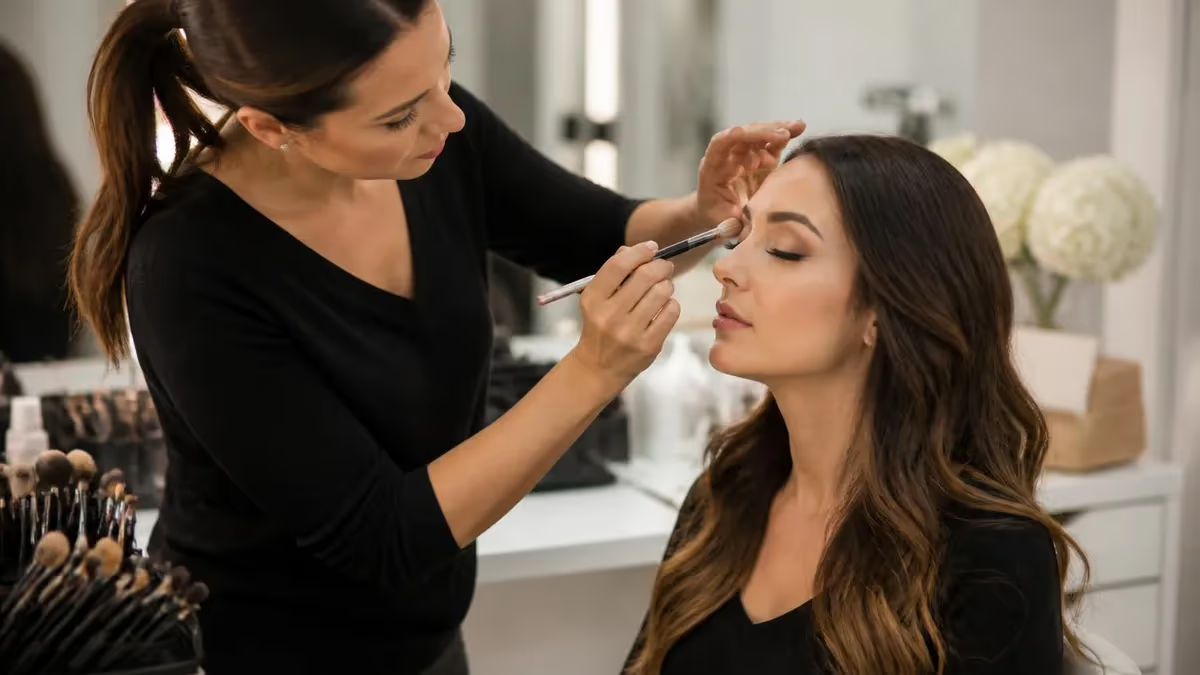
Building a professional kit of makeup artist tools is the single biggest investment most MUAs make in their first year, and the choices you lock in early will follow you through every wedding, photoshoot, and editorial booking. Whether you are a freelance bridal specialist, a film and television technician, or a counter artist eyeing freelance work, the right tools separate a smooth set day from a stressful disaster. This guide breaks down every category of equipment a working makeup artist and kit assistant needs in 2026, from brushes to airbrush compressors.
A common mistake new artists make is buying tools based on social media trends rather than client work. A drag queen building a stage kit needs very different fiber brushes and pigment-dense palettes than a soft-glam bridal MUA who lives and dies by skin finish under camera flash. Before you spend a dollar, define the three types of bookings you want to take in the next twelve months. That decision dictates 80 percent of what belongs in your bag.
The professional kit also reflects how seriously clients and venues take you. When a wedding planner sees a clean rolling case, labeled brush belts, color-coded palettes, and a properly stocked sanitation station, they book you again and refer you to other vendors. When they see a plastic caboodle with crumbling pressed powders rolling around loose, they smile politely and never call back. Tools are part of your pricing and part of your brand reputation in any local market.
Cost matters too. A starter pro kit in 2026 runs between $1,800 and $3,500 for bridal work, $3,000 to $6,000 for editorial and print, and easily $8,000 plus for film, television, or special effects. These numbers include brushes, palettes, foundations across at least 30 shades, lashes, setting sprays, sanitation gear, and the case to carry it all. We will break each line item down so you can budget realistically and avoid the trap of buying twice.
This guide is structured around what working MUAs actually pack, not what looks pretty on Instagram. Every category is rated by how often you will use it on a paid job, how much it costs to replace, and which client types demand it. We pulled the recommendations from interviews with bridal MUAs in twelve US markets, IATSE Local 706 hair and makeup artists, and counter educators at Sephora and MAC Pro. The result is a tools list grounded in real bookings, not affiliate marketing.
You will also see callouts about sanitation, kit hygiene, and OSHA-aligned cleaning protocols, because in 2026 these are no longer optional. Most US state boards now require demonstrable sanitation procedures during licensing inspections, and clients increasingly ask about your protocols before booking. Tools that cannot be sanitized, like cheap sponges or single-use applicators reused across faces, are a fast way to lose your license and your insurance coverage.
Finally, we will tackle the eternal question every new artist asks: do I need an airbrush system, and which brand? Spoiler: the answer depends entirely on your client mix, but we will walk through the calculations so you can decide for yourself rather than buying a $700 compressor that lives in a closet collecting dust between two bookings a year.
MUA Tools by the Numbers
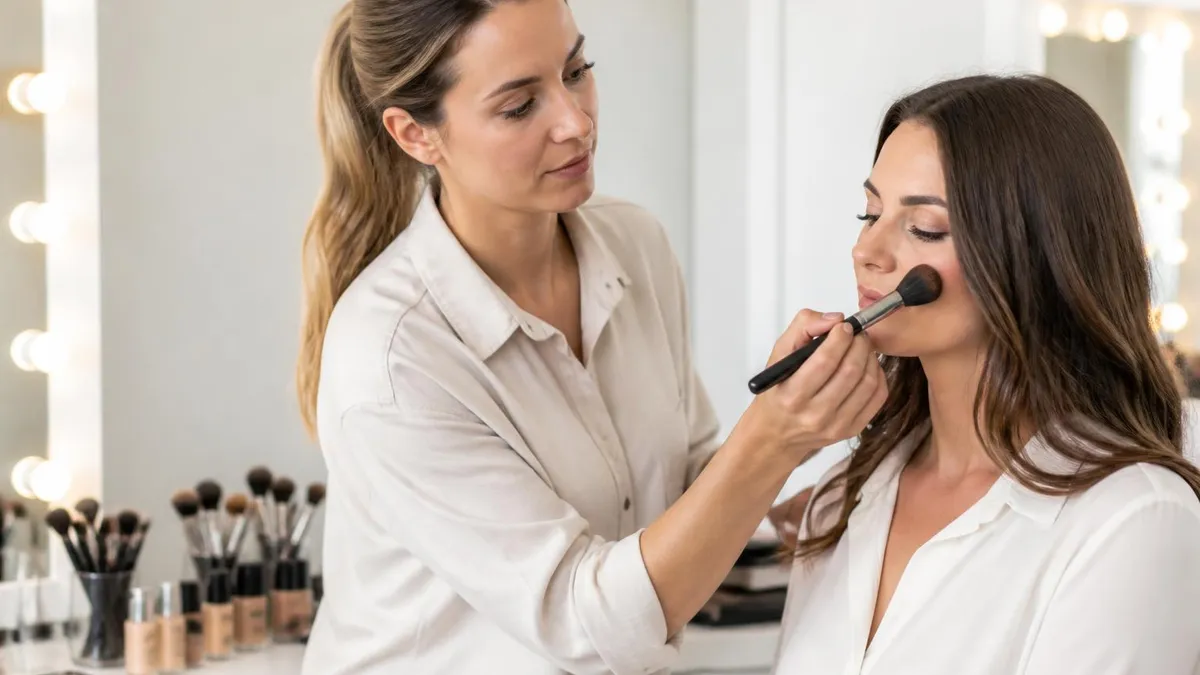
Core Categories of Pro MUA Tools
Synthetic and natural-fiber brushes for face, eyes, lips, and detail work. Includes silicone applicators, beauty sponges, and disposable wands for sanitation.
Foundation palettes, concealers, correctors, blush, contour, highlight, eyeshadow, lip color, and brow products. The most expensive recurring category in any kit.
Setting powders, setting sprays, finishing mists, blotting papers, and primers. These determine whether your work survives a 12-hour wedding day.
Compressor, stylus, airbrush foundations, body paints, prosthetics, and SFX supplies. Optional for bridal, essential for film and editorial.
Brush cleaner, 70% isopropyl alcohol, palette knives, metal spatulas, disposable mascara wands, gloves, and a sealable contamination bin.
Brushes are the foundation of every makeup artist tools list, and they will outlast most other items in your kit if you treat them properly. A working pro kit holds between 35 and 50 brushes, organized by category into face, eye, lip, and detail. The question of natural versus synthetic fiber used to be settled — natural for powder, synthetic for cream — but in 2026 high-end synthetic fibers from Wayne Goss, Rephr, and Hakuhodo perform identically to squirrel and goat hair while being fully vegan and easier to sanitize between clients.
For face brushes, a complete kit includes a large powder brush, a fluffy contour, a denser cheek contour, a blush, a highlight fan, a buffing foundation brush, and a flat foundation brush. Many pros add a kabuki for stippling and a small detail brush for around the nose. Sigma F80, Real Techniques 200, and Hakuhodo J104 are workhorse foundation brushes that every working artist eventually owns. For powder, the MAC 134, Wayne Goss 18, and Charlotte Tilbury Powder & Sculpt are the most-referenced choices among bridal MUAs.
Eye brushes are where novice artists overspend. You do not need 30 eye brushes. You need a fluffy crease, a small fluffy detail crease, a flat shader, a pencil brush, a smudge brush, a winged liner brush, a brow spoolie, and a flat brow brush. Eight brushes will handle any eye look from natural bridal to full smoky drag. Hakuhodo J5523, MAC 217, Wayne Goss 6, and Rephr 09 are the most-versatile starting points. Add specialty brushes only when a client request demands one.
Sponges and silicone applicators have replaced fingers for cream product application on most pro sets. Beautyblender originals, Real Techniques Miracle Complexion sponges, and silicone tear-drop applicators each have their place. Sponges press product into skin for invisible finishes, while silicone applicators waste no product and sanitize with a single alcohol wipe — critical when you are working a wedding party of eight in two hours. Always carry at least four sponges so you can rotate while one dries.
Disposable applicators are non-negotiable in 2026. Every working artist needs a stock of disposable mascara wands, lip wands, eyeshadow Q-tips, and spatulas. Double-dipping into mascara or lip product from the tube to a client's face is a fast route to a pink-eye complaint and an insurance claim. Stock at least 100 of each disposable type, restock monthly, and never reuse them across clients. Anyone learning makeup artist near me standards should treat this as licensing-critical.
Brush care extends working life from one or two years to five or more. Wash with brush shampoo or baby shampoo weekly if you are working multiple bookings, dry flat with the head off the edge of a counter so water does not seep into the ferrule, and use a daily brush cleaner spray between clients on the same set day. Avoid soaking brushes upright in a cup of solution, which destroys the glue holding the bristles and ruins a $35 brush in weeks.
Organize brushes in a roll-up belt or a stand-up brush apron during work so you can grab the next tool without breaking eye contact with your client's face. Cheap plastic brush rolls cost $15 and protect your investment during transport. Pro artists also color-code the handles of dirty brushes versus clean brushes during multi-client jobs by tucking dirty ones into a separate pouch, preventing accidental cross-use.
MUA Practice Test Questions
Prepare for the MUA - Makeup Artist exam with our free practice test modules. Each quiz covers key topics to help you pass on your first try.
MUA Makeup Artist MCQ
MUA Exam Questions covering Makeup Artist MCQ. Master MUA Test concepts for certification prep.
MUA Makeup Artist
Free MUA Practice Test featuring Makeup Artist. Improve your MUA Exam score with mock test prep.
MUA Professional Makeup Artist
MUA Mock Exam on Professional Makeup Artist. MUA Study Guide questions to pass on your first try.
MUA Bridal & Special Occasion Makeup
MUA Test Prep for Bridal & Special Occasion Makeup. Practice MUA Quiz questions and boost your score.
MUA Color Theory & Skin Tone Analysis
MUA Questions and Answers on Color Theory & Skin Tone Analysis. Free MUA practice for exam readiness.
MUA Product Knowledge & Cosmetic Ingredients
MUA Mock Test covering Product Knowledge & Cosmetic Ingredients. Online MUA Test practice with instant feedback.
Tools by Booking Type: Artist Makeup Artist Specialties
A bridal kit prioritizes long-wear foundation, waterproof mascara, lash adhesive that survives tears, and setting sprays rated for humidity and heat. Bridal artists typically carry 30 to 40 foundation shades blended across two or three palette systems, with Temptu, RCMA, Cinema Secrets, and Graftobian leading the pack. Skin finish under DSLR flash is the make-or-break factor, so HD-rated formulas without SPF and without silica flashback are mandatory.
Bridal tools also lean heavily on touch-up kits given to the bride for the day. A small zip pouch with lip color, blotting papers, a mini setting spray, and a disposable lash glue wand wins referrals and Instagram tags. Quality lashes from Velour, Lilly Lashes, and House of Lashes round out the kit. Lash adhesive should be latex-free given how many guests have latex allergies that brides do not want triggered on their wedding day.
Building Your Own Kit vs Buying a Pre-Made Pro Set
- +Custom kits match your specific client demographic and booking type
- +You only pay for tools you will actually use on real jobs
- +Quality tier choices stay within your budget and cash flow
- +Brand mixing avoids being locked into one company's pricing
- +Kit evolves naturally as your skills and bookings grow
- +Higher resale value on individual premium items if you upgrade
- +Lets you justify each purchase as a tax-deductible business expense
- −Initial research time is enormous for new artists
- −Easy to overbuy trendy items that never leave the case
- −Shipping costs add up across 15 different brand orders
- −No single warranty covers the full kit if items fail
- −Pre-made student kits ship faster and look uniform on day one
- −Risk of buying counterfeit pro products from unverified sellers
- −Mistakes early on can cost $500 to $1,500 in unused gear
Pros and Cons at a Glance
| Pros | Cons |
|---|---|
| Custom kits match your specific client demographic and booking type | Initial research time is enormous for new artists |
| You only pay for tools you will actually use on real jobs | Easy to overbuy trendy items that never leave the case |
| Quality tier choices stay within your budget and cash flow | No single warranty covers the full kit if items fail |
| Brand mixing avoids being locked into one company's pricing | Pre-made student kits ship faster and look uniform on day one |
| Kit evolves naturally as your skills and bookings grow | Risk of buying counterfeit pro products from unverified sellers |
Sanitation Checklist for Every MUA Tools Kit
- ✓Stock 70% isopropyl alcohol in a labeled spray bottle for surface and palette wipe-downs
- ✓Carry at least two brush cleaner sprays for between-client refresh during multi-client days
- ✓Use disposable mascara wands and lip wands on every client without exception
- ✓Sharpen pencil eyeliners and lip liners between every client to expose fresh product
- ✓Scrape cream products onto a metal palette with a spatula instead of dipping brushes into the source container
- ✓Decant lipsticks and concealers from tubes onto a sanitized stainless steel palette for application
- ✓Label one zippered pouch for dirty brushes that need full washing at home that night
- ✓Replace beauty sponges every 30 to 60 days based on use, never reusing across clients without disinfection
- ✓Use disposable gloves when working on clients with active acne, cold sores, or open skin
- ✓Wipe down your kit case, chair, and ring light with antibacterial wipes before and after each booking
Buy brushes and palettes before chasing trendy single-use products.
The 80/20 rule applies brutally to makeup artist tools. Eighty percent of your bookings will use the same 20 percent of your kit — your foundation palettes, eight core brushes, mascaras, lashes, and setting spray. Buy those at professional quality first. Trendy face mists, glitter palettes, and TikTok-viral products can wait until you have actual paid client demand for them.
Airbrush makeup is the question every new MUA asks about, and the honest answer is that it depends entirely on your client mix. An airbrush system consists of a compressor, an air hose, a stylus, and a line of airbrush-compatible foundations. The compressor is the heart of the system and the most expensive single component, ranging from $200 for hobby-grade Iwata models to $700 for pro-grade Temptu Air and Dinair systems with adjustable PSI, dual-action triggers, and silent operation rated for set work where boom mics are running.
Foundation chemistry differs across brands. Silicone-based formulas like Temptu S/B and Kett Hydro give the most photo-flawless finish and last 12 to 16 hours, making them the gold standard for film and bridal. Water-based formulas like Dinair and Luminess are easier to clean, gentler on skin, and better for sensitive clients, but they offer lighter coverage. Alcohol-based formulas like Skin Illustrator are reserved for tattoo cover, body painting, and SFX because they dry instantly and resist sweat and rubbing.
The decision tree for airbrush is straightforward. If you book five or more brides per month, an airbrush system pays for itself within a quarter through faster application times and upcharge premiums of $50 to $150 per booking. If you book editorial or film work, airbrush is not optional. If you primarily work counter freelance, parties, or one-off events, a quality traditional foundation routine with sponges and brushes will serve you better and free up that $700 for other gear.
Cleaning the airbrush is where most beginners fail and ruin a $400 stylus within six months. After every client, you should run cleaner through the stylus until it sprays clear, then back-flush by capping the nozzle and gently blowing bubbles into the cup to dislodge dried pigment from internal channels. At the end of the day, do a deep clean with stylus-specific cleaner from the manufacturer, never household alcohol that can degrade O-rings inside the gun.
Beyond airbrush, specialty tools you may add as you grow include hot tools for hair touch-ups on set, a magnification lamp for detail work and lash application, a portable ring light or LED panel for shaded venue rooms, a director's chair with hydraulic height adjustment for client comfort over long sessions, and a foldable rolling cart for transporting product between your case and your station. Each of these reflects a maturing kit aligned with higher-paying bookings.
Pricing-wise, you can review what working professionals charge — including the work of veterans like lori anne allison makeup artist rates and other industry rate cards — to understand how your tool investment translates into client pricing. Generally, MUAs charge a 30 to 50 percent airbrush upcharge over traditional foundation. So if your standard bridal rate is $200, an airbrush bride pays $260 to $300, which covers the foundation cost plus a margin toward your compressor amortization.
Avoid the cheap Amazon airbrush kits that retail for $79 with a starter foundation set. The compressors lack pressure regulation, the styluses clog within weeks, and the foundation chemistry is not photo-stable under flash. You will spend $79 once, get frustrated within a month, and then spend $500 again to do it right. Buy once, cry once is the rule that applies to every airbrush purchase.
Amazon, eBay, and even some Instagram resellers carry counterfeit MAC, Anastasia, Charlotte Tilbury, and Urban Decay products. Counterfeit cosmetics have caused chemical burns, allergic reactions, and bacterial infections in clients. Buy only from authorized retailers — brand websites, Sephora, Ulta, Camera Ready Cosmetics, Frends Beauty, Nigel Beauty, and Naimies Beauty Center. If a deal looks too good, it almost certainly is.
Your kit case is the most-overlooked tool in any working MUA setup, and it deserves as much research as your foundation palette. The case must transport your tools safely from car to venue, organize them so you can find anything within five seconds during a stressed bridal morning, and look professional enough that clients trust you the moment you walk in. The big three case styles are rolling soft cases, hard Pelican-style cases, and segmented Zuca-style cases with built-in seats.
Zuca cases are the most popular among bridal and freelance MUAs because of their modular insert pouches, the integrated seat, the smooth wheels for hotel hallway transport, and the visible professional look that signals you are a working artist, not a hobbyist. Expect to spend $300 to $450 on a properly outfitted Zuca with the artist insert set. Used Zucas appear regularly on MUA Buy Sell Trade Facebook groups at 40 to 60 percent of retail with no real wear penalty.
Inside the case, organization is everything. Use small zippered pouches color-coded by category: red for lips, brown for foundations, gold for highlights, black for brushes, blue for tools and sanitation. Within each pouch, group products by brand or shade family so you can locate them by touch alone. Many pro artists use Muji acrylic dividers, Lazy Susan turntables, and Vivinox drawer organizers to maximize internal real estate. The goal is zero rummaging during a job.
Restock and inventory are weekly tasks, not annual ones. Every Sunday, working MUAs check expiration dates, refill disposables, replace any product running below 25 percent, wash brushes, sanitize the case interior, and update their client-facing kit-shade chart if any new shades were added. This 90-minute ritual prevents the nightmare of arriving at a bride's suite at 5 a.m. to discover the foundation color she needs is empty. Consistency here is what separates working pros from chronic last-minute scramblers.
For transport, invest in a sturdy luggage cart if you carry multiple cases or a Zuca plus a separate rolling brush case. Many MUAs add a small over-the-shoulder belt bag with brushes, touch-up powder, and lip color for the actual application station, leaving the main case nearby as a back stock. This setup mimics how film and television artists structure their carts and dramatically improves efficiency on multi-client mornings like wedding parties or commercial shoots.
Insurance is a tool too, even though it lives in your inbox rather than your case. Liability insurance through Professional Beauty Association, Marine Agency, or Veracity costs $150 to $350 per year and covers client injury claims, kit theft, and damage to client property. Some venues require proof of insurance before you can work onsite. Skipping this is a common rookie mistake that ends careers when a single reaction or accident triggers an uninsured lawsuit.
If you are pursuing formal training, your artist makeup artist program will usually require a baseline kit on day one. Programs publish detailed lists, often partnered with discount retailers like Camera Ready Cosmetics or Frends Beauty. Compare these lists against this guide carefully — student kits often skip airbrush and sanitation depth, which you will need to add yourself before taking paying clients post-graduation.
Putting your kit together is just the first step — the harder discipline is keeping it sharp through hundreds of bookings. The best working MUAs treat their tools like a chef treats knives or a photographer treats lenses. Every item has a place, a cleaning schedule, a replacement timeline, and a documented cost basis for tax season. The artists who treat their kits this way book at higher rates, retain clients longer, and survive the inevitable slow seasons that take down less-organized peers.
Track every tool purchase in a simple spreadsheet from day one. Columns should include date purchased, brand, item, cost, retailer, expected lifespan, and replacement reminder date. At year-end this spreadsheet doubles as your Schedule C deduction record, which for most MUAs saves $1,500 to $4,000 in federal taxes. Your CPA will thank you, and the IRS will not audit you for kit expenses because you have receipts and a defensible system rather than a shoebox of crumpled paper.
Build relationships with two or three trusted retailers. Camera Ready Cosmetics in Texas, Frends Beauty in Los Angeles, Naimies in North Hollywood, and Alcone in New York are the four most-referenced pro stores in 2026. They offer pro discounts of 10 to 30 percent with verified credentials like a state cosmetology license, certification from a recognized program, or proof of working bookings. Apply for pro accounts at all of them on day one of your career — the savings compound dramatically over your first three years.
Network with other working MUAs in your market through MUA Buy Sell Trade groups, IATSE branches, and the Professional Beauty Association. Peers will tell you which brands have changed formulations, which compressors have started failing, which lash glues now contain new allergens, and which counterfeit products are circulating. This insider knowledge cannot be Googled — it lives in private Slack channels, Facebook groups, and post-wedding parking-lot conversations. Join those communities before you need them.
Continuing education is part of the tools list too. The MUA industry evolves every year as new pigments, adhesives, and techniques enter the market. Budget $500 to $1,500 annually for masterclasses, IMATS attendance, and online courses from artists like Lisa Eldridge, Mario Dedivanovic, Sam Fine, and Pat McGrath Labs. Each masterclass typically pays for itself in one or two upgraded bookings as you justify higher pricing through documented advanced training.
Finally, your tools list is never truly finished. Brushes wear out, formulas get discontinued, client trends shift, and new technology enters the market. Plan to reinvest 8 to 12 percent of your gross revenue annually into kit maintenance and upgrades, just as a tradesperson would for their van and tools. Artists who underinvest in their kit hit a ceiling that no amount of marketing can break through, while artists who reinvest consistently keep climbing the rate ladder year over year.
The MUAs who reach $100,000 plus annual revenue in 2026 all share one habit: they treat their tools as their business. They photograph their kit for insurance, they label everything, they sanitize religiously, they upgrade strategically, and they document every dollar. None of this is glamorous, but it is the difference between a side hustle and a career. Start with the basics in this guide, work the discipline daily, and you will build a kit and a reputation that compound for decades.
Sample MUA - Makeup Artist Practice Questions
Try these questions from our free MUA - Makeup Artist practice tests. The correct answer and an explanation follow each question.
What is the correct order of skincare prep steps before applying makeup on a client?
- A. Moisturizer → toner → SPF → primer
- B. Toner → moisturizer → SPF → primer
- C. SPF → toner → moisturizer → primer
- D. Primer → toner → moisturizer → SPF
Answer: B. Toner → moisturizer → SPF → primer
The correct sequence is toner to balance pH, moisturizer to hydrate, SPF for protection, then primer to prep for makeup adhesion.
Prosthetic pieces in theatrical makeup are most commonly adhered to skin using which type of adhesive?
- A. Super glue (cyanoacrylate)
- B. Spirit gum or medical-grade silicone adhesive
- C. Rubber cement
- D. Standard hair glue
Answer: B. Spirit gum or medical-grade silicone adhesive
Spirit gum and medical-grade silicone adhesives are the professional standard for adhering prosthetics safely to skin.
Which product is NOT important when purchasing essential makeup for your kit?
- A. Anti-wrinkle skin cream
- B. Shimmer powder
- C. Shimmer cream
- D. Concealer palette
Answer: A. Anti-wrinkle skin cream
While skincare is important, an anti-wrinkle skin cream is generally not considered an essential makeup product for a basic professional makeup kit. Essential items focus on application, color, and coverage, such as shimmer powder, shimmer cream, and a concealer palette. Anti-wrinkle cream is a specialized skincare treatment, not a core makeup item for general application.
Which technique is used to make the nose appear narrower using makeup?
- A. Applying highlighter down the full length of the nose bridge
- B. Applying contour shading along both sides of the nose bridge
- C. Applying blush to the tip of the nose
- D. Highlighting the nostrils
Answer: B. Applying contour shading along both sides of the nose bridge
Applying a matte contour shade along both sides of the nose bridge creates shadows that give the illusion of a slimmer nose.
MUA Questions and Answers


About the Author
Licensed Cosmetologist & Beauty Licensing Exam Specialist
Paul Mitchell SchoolsMichelle Santos is a licensed cosmetologist with a Bachelor of Science in Esthetics and Salon Management from Paul Mitchell School. She has 16 years of salon industry experience and 8 years preparing students for state cosmetology board exams in theory, practical skills, and sanitation. She specializes in licensure preparation for cosmetologists, estheticians, and nail technicians.
Join the Discussion
Connect with other students preparing for this exam. Share tips, ask questions, and get advice from people who have been there.
View discussion (7 replies)