
MRI MARS Protocol: Complete Guide to Metal Artifact Reduction Sequences for Orthopedic Imaging
🗨️ Complete guide to the MRI MARS protocol — sequence parameters, indications, scanning tips, and troubleshooting for metal artifact reduction imaging.
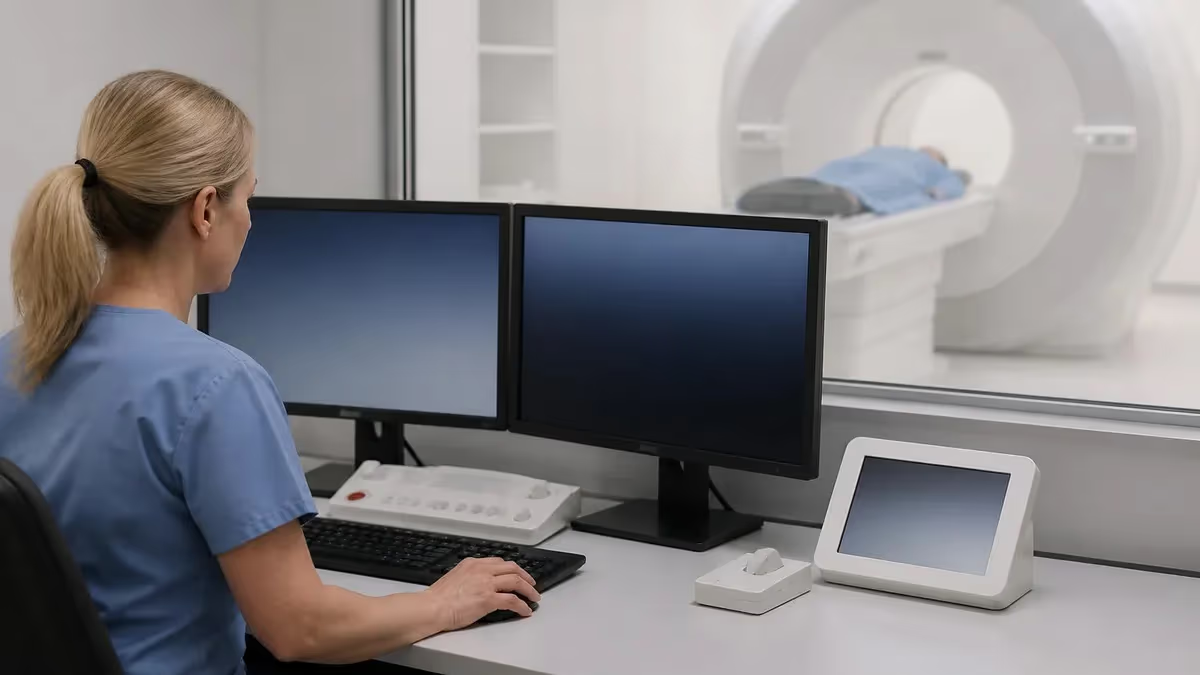
The MRI MARS protocol — short for Metal Artifact Reduction Sequence — is the workhorse imaging technique used to evaluate tissue around orthopedic hardware, joint arthroplasty, spinal instrumentation, and other metallic implants. Standard MRI sequences fail spectacularly near metal because susceptibility differences between titanium, cobalt-chromium, or stainless steel and surrounding tissue cause severe signal pile-up, signal voids, and geometric distortion. The MRI MARS protocol modifies acquisition parameters and sometimes adds advanced techniques to suppress these artifacts and reveal the soft tissue, bone, and fluid that clinicians need to see.
For radiologists and technologists working in musculoskeletal imaging, mastering MARS is no longer optional. The aging population, the explosion of total joint replacements, and the rise of complex spinal fusions mean that nearly every MSK reading list contains patients with metal. According to AAOS data, more than 1.2 million hip and knee arthroplasties are performed annually in the United States, and a meaningful percentage of those patients eventually return with pain, loosening concerns, infection questions, or adverse local tissue reactions that demand imaging answers.
This guide walks you through the technical foundation of the MARS protocol, the indications that drive its use, sequence parameter choices that actually move the needle, and the troubleshooting steps that separate a diagnostic study from a wasted scan slot. It is written for technologists building their first MARS workflow, residents trying to make sense of a confusing protocol sheet, and senior radiographers refining advanced techniques like SEMAC and MAVRIC. The goal is practical: leave with concrete numbers, parameter ranges, and decision rules you can apply on Monday morning.
You will also see how MARS fits into the broader MRI ecosystem alongside contrast protocols and safety screening. If you want a refresher on contrast workflow before diving in, the MRI With and Without Contrast guide pairs well with this material, especially when you are imaging suspected periprosthetic infection or synovitis where gadolinium can add meaningful diagnostic value beyond a non-contrast MARS exam.
Throughout the article, expect concrete bandwidth values, echo train length recommendations, and TR/TE ranges that have been validated in peer-reviewed orthopedic radiology literature. Where techniques diverge — for example whether to use STIR or Dixon for fat suppression near metal — both approaches are explained with their trade-offs so you can match the technique to your scanner, your magnet strength, and the specific implant in front of you.
Finally, this is not a one-size-fits-all manual. A 3T scanner imaging a titanium cervical plate behaves very differently from a 1.5T scanner imaging a cobalt-chromium hip resurfacing. The MARS philosophy is to layer modifications until artifact is acceptable while preserving signal-to-noise, contrast resolution, and acquisition time within a tolerable window for the patient. Treat the numbers below as starting points, then iterate against your own phantom data and clinical experience.
By the end, you should be able to recognize when a MARS protocol is indicated, choose appropriate sequences, optimize parameters for the implant type, troubleshoot residual artifact in real time, and communicate clearly with referring orthopedic surgeons about what your images can and cannot show. That diagnostic confidence is what makes MARS imaging clinically valuable rather than a checkbox on the protocol list.
MRI MARS Protocol by the Numbers
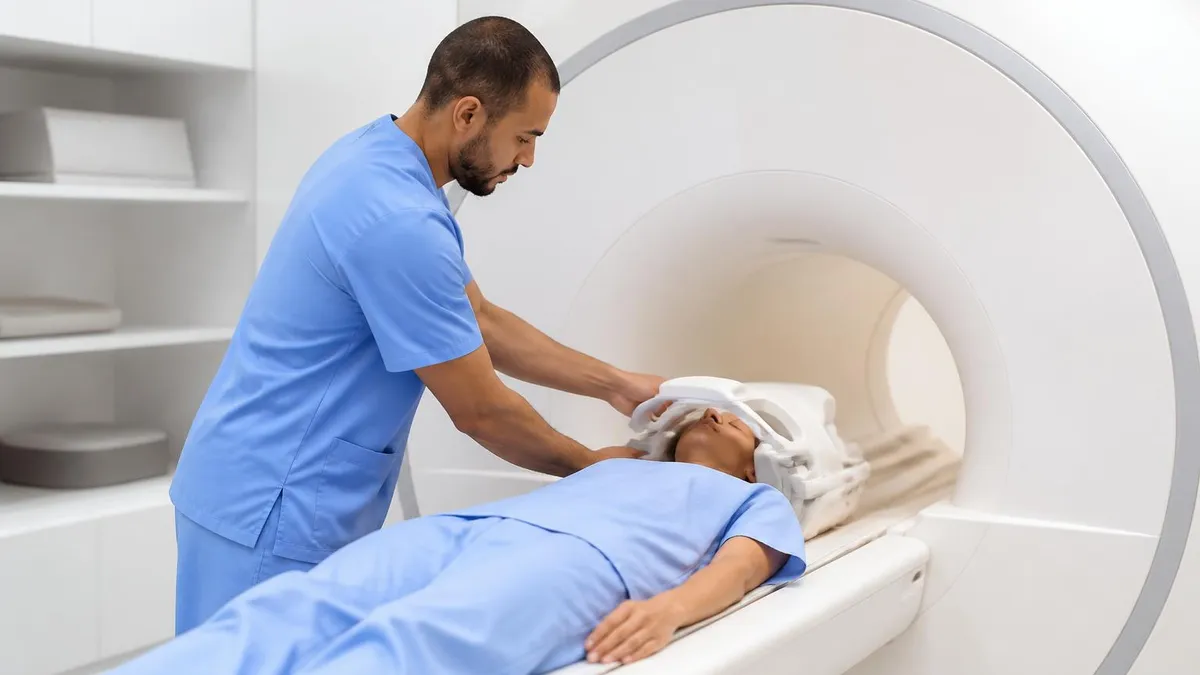
Core Components of a MARS Protocol
Turbo spin echo sequences run at 400-600 Hz/pixel or higher form the backbone of MARS. The 180-degree refocusing pulses inherent to TSE recover signal lost to T2* dephasing, dramatically reducing signal voids around metal.
VAT applies a compensating gradient during readout that tilts the imaging plane to correct in-plane displacement artifact. It is a low-cost add-on available on most modern scanners and pairs with TSE for solid baseline correction.
Frequency-selective fat saturation fails near metal because B0 is too inhomogeneous. STIR uses an inversion pulse based on T1 timing, and Dixon separates fat and water mathematically. Both outperform spectral fat sat in MARS imaging.
Slice Encoding for Metal Artifact Correction and Multi-Acquisition Variable-Resonance Image Combination are advanced multi-spectral techniques that resolve through-plane distortion. They add time but rescue otherwise nondiagnostic studies near large implants.
Higher bandwidth costs SNR, so MARS protocols compensate with larger matrices (320-512) and more signal averages (2-4 NEX). This preserves spatial resolution and contrast while keeping noise within diagnostic range.
To optimize a MARS protocol, you have to understand why metal corrupts MRI signal in the first place. The fundamental issue is magnetic susceptibility. Soft tissue, bone, and water have susceptibility values close to zero, meaning they barely perturb the local magnetic field. Metals, depending on composition, can have susceptibility values hundreds or thousands of times higher. When you place a titanium screw or a cobalt-chromium femoral head into the bore, the local B0 field warps around it, sometimes by several parts per million across the affected region.
That field warping creates four distinct artifacts. First, signal pile-up appears as bright crescents where protons from different physical locations precess at the same Larmor frequency and get encoded into one voxel. Second, signal voids form where the field gradient is so steep that intravoxel dephasing destroys signal entirely. Third, geometric distortion bends anatomy because the frequency-encoding axis assumes a linear B0. Fourth, failed fat saturation occurs because spectral techniques rely on a narrow, well-defined frequency offset between fat and water — an offset that no longer holds when B0 is inhomogeneous.
The susceptibility of common orthopedic metals varies dramatically. Titanium alloy, which dominates modern spinal hardware and many fracture plates, has the lowest susceptibility and is the easiest to image. Stainless steel is significantly worse. Cobalt-chromium alloys used in older joint replacements and femoral heads produce the most severe artifact, and ferromagnetic materials like some older surgical clips can render an entire field of view nondiagnostic. Knowing what is inside your patient before they hit the table is half the battle.
Field strength also matters in counterintuitive ways. Higher field scanners deliver more SNR for standard imaging, but susceptibility artifact scales linearly with B0. A cobalt-chromium hip on a 3T scanner produces roughly twice the artifact extent of the same hip at 1.5T. For this reason, many MSK practices preferentially route MARS cases to 1.5T scanners even when 3T is available. The exception is small titanium hardware where 3T may still be acceptable and the SNR advantage helps recover fine detail.
Sequence type matters as much as field strength. Gradient echo sequences are catastrophically bad near metal because they have no refocusing pulse to recover T2* dephasing. Spin echo and especially turbo spin echo sequences are the foundation of MARS because the 180-degree pulses re-phase spins regardless of local B0 offset, up to a limit. Echo planar imaging is essentially unusable near significant metal, which is why standard diffusion sequences are typically dropped from MARS protocols or replaced with TSE-based diffusion variants.
Receiver bandwidth is the single most powerful knob a technologist can turn. Higher bandwidth means shorter readout, which means less time for spins to dephase and less spatial mismapping along the frequency-encoding axis. A standard MSK knee protocol might run at 130 Hz/pixel; a MARS knee runs at 500 Hz/pixel or higher. The cost is SNR — bandwidth and SNR have an inverse square root relationship — but for MARS the trade is almost always worth it.
Finally, no parameter trick alone can fully correct through-plane distortion. That requires multi-spectral imaging techniques like SEMAC or MAVRIC, which acquire data at multiple frequency offsets and combine them to resolve where signal actually originated. These techniques are computationally expensive and add scan time, but they are the only way to image confidently around large prosthetic joints, and they have transformed the diagnostic yield of MARS protocols since their widespread availability around 2010.
MRI Practice Test Questions
Prepare for the MRI - Magnetic Resonance Imaging exam with our free practice test modules. Each quiz covers key topics to help you pass on your first try.
MRI Knowledge
MRI Exam Questions covering Knowledge. Master MRI Test concepts for certification prep.
MRI Physics
Free MRI Practice Test featuring Physics. Improve your MRI Exam score with mock test prep.
MRI Anatomy and Pathology
MRI Test Prep for MRI Anatomy and Pathology. Practice MRI Quiz questions and boost your score.
MRI Anatomy and Positioning
MRI Questions and Answers on MRI Anatomy and Positioning. Free MRI practice for exam readiness.
MRI Contrast Agents
Free MRI Quiz on MRI Contrast Agents. MRI Exam prep questions with detailed explanations.
MRI Patient Care and Positioning
MRI Practice Questions for MRI Patient Care and Positioning. Build confidence for your MRI certification exam.
MRI MARS Protocol Sequence Parameter Optimization
Receiver bandwidth in MARS imaging typically ranges from 400 to 700 Hz/pixel, compared to 130-200 Hz/pixel for standard musculoskeletal protocols. The goal is to shorten the readout window so that spins do not have time to accumulate phase errors from B0 inhomogeneity. Doubling bandwidth halves readout time and roughly halves in-plane displacement artifact, at the cost of about 30 percent SNR.
Echo time should be kept as short as practical for T2-weighted images, generally 30-60 ms, to minimize T2* dephasing effects between refocusing pulses. For proton density and T1 imaging, conventional TE values work fine. Avoid long-TE T2 sequences near severe artifact because intravoxel dephasing accumulates rapidly. Pair short TE with high bandwidth and high echo train length for the best results in TSE MARS.

MRI MARS Protocol: Strengths and Limitations
- +Provides soft tissue detail that CT cannot match for periprosthetic infection, synovitis, and adverse local tissue reactions
- +Allows direct visualization of pseudotumors and fluid collections around metal-on-metal hips
- +Avoids ionizing radiation, important for repeat imaging in younger arthroplasty patients
- +Detects component loosening, polyethylene wear, and osteolysis with high sensitivity
- +Evaluates spinal cord and nerve roots near instrumentation when CT myelography is contraindicated
- +Compatible with most modern titanium and cobalt-chromium implants when proper safety screening is performed
- +Identifies bone marrow edema patterns suggesting infection, stress reaction, or component subsidence
- −Significantly longer scan times than standard MSK protocols, often 25-40 minutes per joint
- −Reduced spatial resolution due to high bandwidth and trade-offs with SNR
- −Severe ferromagnetic implants may still produce nondiagnostic regions despite full MARS optimization
- −Requires careful pre-scan safety screening and implant identification
- −Advanced techniques like SEMAC and MAVRIC are not available on all scanner platforms
- −Higher field strengths increase artifact, limiting 3T utility for some implant types
- −Image interpretation requires specialized MSK radiology training to distinguish artifact from pathology
Pros and Cons at a Glance
| Pros | Cons |
|---|---|
| Provides soft tissue detail that CT cannot match for periprosthetic infection, synovitis, and adverse local tissue reactions | Reduced spatial resolution due to high bandwidth and trade-offs with SNR |
| Allows direct visualization of pseudotumors and fluid collections around metal-on-metal hips | Severe ferromagnetic implants may still produce nondiagnostic regions despite full MARS optimization |
| Avoids ionizing radiation, important for repeat imaging in younger arthroplasty patients | Requires careful pre-scan safety screening and implant identification |
| Detects component loosening, polyethylene wear, and osteolysis with high sensitivity | Advanced techniques like SEMAC and MAVRIC are not available on all scanner platforms |
| Evaluates spinal cord and nerve roots near instrumentation when CT myelography is contraindicated | Image interpretation requires specialized MSK radiology training to distinguish artifact from pathology |
Pre-Scan MARS Protocol Checklist
- ✓Confirm implant type, composition, and manufacturer from operative report or implant card
- ✓Verify MR conditional labeling and scan within specified field strength and SAR limits
- ✓Document time since implantation — most orthopedic hardware is safe immediately post-op
- ✓Screen for additional metal: pacemakers, cochlear implants, retained shrapnel, dental work
- ✓Select 1.5T scanner when available for cobalt-chromium or stainless steel implants
- ✓Position the implant at isocenter to maximize B0 homogeneity over the region of interest
- ✓Choose TSE-based sequences with bandwidth 400-700 Hz/pixel as baseline
- ✓Substitute STIR or Dixon for spectral fat saturation in all fluid-sensitive sequences
- ✓Add SEMAC or MAVRIC for large arthroplasty or severe artifact cases
- ✓Communicate expected scan time to patient and provide comfort measures for longer protocols
Bandwidth is the highest-use parameter.
Of all the changes you can make to reduce metal artifact, increasing receiver bandwidth from 200 to 500 Hz/pixel typically delivers the largest visible improvement in a single step. Pair it with high echo train length TSE and Dixon fat separation before reaching for SEMAC or MAVRIC, and you will rescue the majority of MARS cases without adding significant scan time.
Clinical indications for MARS imaging cluster around four broad categories: painful joint arthroplasty, suspected periprosthetic infection, spinal instrumentation evaluation, and fracture hardware complications. Each scenario has distinct sequence priorities and reporting expectations that the technologist should understand before starting the scan. A painful total hip replacement, for example, demands fluid-sensitive imaging to detect pseudotumors and adverse local tissue reactions, while a suspected spinal hardware infection prioritizes post-contrast imaging to characterize epidural abscess and paraspinal collections.
Painful arthroplasty is the most common MARS indication in MSK practice. The differential includes mechanical loosening, polyethylene wear with osteolysis, periprosthetic infection, adverse local tissue reaction from metal-on-metal articulations, and referred pain from unrelated sources like the lumbar spine. MARS imaging excels at distinguishing these because it shows synovial thickness, fluid character, marrow signal around the implant, and any extra-articular collections. CT can show osteolysis and component position but cannot characterize soft tissue with the same fidelity.
Periprosthetic joint infection deserves special attention because the imaging stakes are high. A patient diagnosed with infection typically faces a two-stage revision involving prolonged antibiotics, hardware removal, and prosthesis re-implantation. MARS protocols for suspected infection should include post-contrast T1-weighted imaging with Dixon fat suppression, fluid-sensitive STIR or Dixon water imaging, and high-resolution T1 to evaluate marrow signal. The combination provides sensitivity for sinus tracts, soft tissue collections, marrow edema, and rim-enhancing fluid that suggest infection over aseptic loosening.
Spinal instrumentation imaging carries its own considerations. Cervical and thoracic fusion patients may need MARS imaging for myelopathy workup, adjacent segment disease, or hardware complications. Titanium dominates modern spinal hardware, which is fortunate because titanium produces relatively modest susceptibility artifact compared to cobalt-chromium. Even so, sagittal STIR and T2 TSE sequences with high bandwidth are essential to visualize the cord and exiting nerve roots adjacent to pedicle screws and interbody cages.
Fracture hardware imaging tends to focus on nonunion, hardware failure, infection, and adjacent soft tissue complications. The hardware here is often plates and screws rather than large prostheses, which means artifact is usually manageable with standard MARS optimization without requiring SEMAC or MAVRIC. The key sequences are PD-weighted TSE for anatomic detail, STIR for marrow edema and soft tissue fluid, and post-contrast imaging when infection is in the differential.
Workflow planning matters as much as sequence selection. MARS protocols take longer than standard MSK exams, and scheduling templates need to accommodate this. A bilateral hip MARS for adverse local tissue reaction can easily run 45 minutes on the table, plus positioning and contrast administration. Many practices have moved to dedicated MARS slots and reserve them for cases meeting specific clinical criteria. For background on facility-level workflow considerations, the MRI Imaging Centers guide covers outpatient MRI operations in detail.
Communication with the referring orthopedic surgeon is the final pillar of effective MARS workflow. Surgeons want to know not just whether artifact is present but whether the specific clinical question can be answered despite the artifact. A report that states the diagnostic limitations transparently is far more useful than a vague hedge. When MARS cannot answer the question, ultrasound, nuclear medicine, or aspirated fluid analysis becomes the next step, and the radiologist should be the one suggesting it.
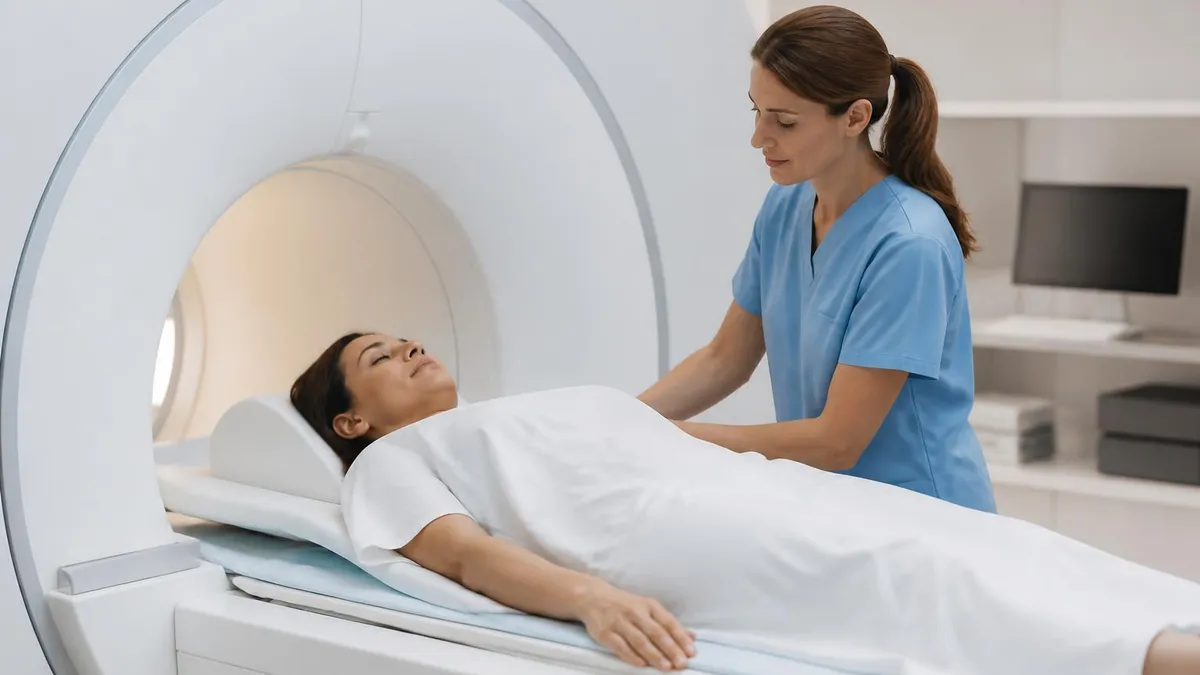
Most modern orthopedic hardware is MR conditional, not MR safe. This means scanning is only permitted within specific field strength, gradient slew rate, and SAR limits documented by the manufacturer. Always verify the conditions before scanning, especially for newer implants, magnetically programmable shunts, neurostimulators, and active implants. Document the verification in the patient record. Scanning outside conditional limits has caused patient injury and is preventable with disciplined screening.
When you encounter residual artifact despite a properly built MARS protocol, troubleshooting follows a predictable sequence. The first question is always whether the implant has been correctly positioned at isocenter. B0 is most homogeneous at magnet center, and even small offsets can dramatically worsen susceptibility artifact. Re-center the patient if necessary, even if it means repositioning the coil. This single step rescues more MARS exams than any sequence tweak.
If positioning is optimal and artifact remains, the next move is to increase bandwidth further. Many scanners can run TSE at 800-1000 Hz/pixel, well above standard MARS values. The SNR penalty becomes significant, so compensate by increasing NEX or slice thickness slightly. For 1.5T scanners imaging cobalt-chromium hardware, pushing bandwidth aggressively is often the difference between diagnostic and nondiagnostic images, especially in the immediate region around the femoral stem or acetabular cup.
Echo train length is another lever. Longer echo trains in TSE provide more refocusing pulses per TR, which means more recovery of T2* signal loss. Echo train lengths of 24-32 are typical in MARS, with even longer trains useful in extreme cases. The trade-off is blurring along the phase-encoding direction, so balance ETL against the spatial resolution needed for the clinical question. For pseudotumor evaluation around hips, blurring is usually acceptable; for fine ligament imaging around small hardware, less so.
If parameter tweaks within standard MARS still leave nondiagnostic regions, escalate to SEMAC or MAVRIC if available. These techniques add 4-8 minutes per sequence but resolve through-plane distortion that no amount of bandwidth can fix. Modern implementations use compressed sensing and parallel imaging to keep scan times manageable. For severe ferromagnetic hardware that remains nondiagnostic even with multi-spectral imaging, the honest move is to limit the report to what can be seen and recommend complementary imaging.
Frequency-encoding direction is an underappreciated troubleshooting tool. The artifact extent is greatest along the frequency-encoding axis because spatial mapping in that direction depends on B0 homogeneity. Swapping phase and frequency directions can move artifact away from the region of clinical interest. For example, in a hip with a stem-related question, orient frequency-encoding parallel to the femoral shaft so that artifact extends along the bone rather than across the soft tissues you need to evaluate.
Coil selection and shimming round out the optimization toolkit. Use the smallest dedicated coil that covers the region of interest to maximize SNR and minimize sensitivity to off-center artifact. Run a localized shim over the implant region rather than the default whole-volume shim. Some scanners offer a high-order or volume-restricted shim that can meaningfully improve B0 homogeneity in the residual region around metal. Document the shim approach in your protocol so other technologists can replicate good results.
Finally, build a feedback loop between the reading room and the scanner. Radiologists who flag specific artifact problems back to MR technologists drive protocol improvement faster than any abstract optimization effort. If a particular hip implant model consistently shows artifact in a specific region, develop a sub-protocol for that implant type. Some practices maintain implant-specific MARS variations, especially for high-volume models. For complex implant safety questions, the MRI Safety and Compatibility guide covers manufacturer documentation and screening workflow in detail.
Practical implementation of a MARS protocol starts with a written, version-controlled protocol document that every technologist in your department can follow. Verbal handoff and tribal knowledge produce inconsistent scans, especially at facilities with rotating staff. Document the sequence list, parameter values, expected scan time, fat suppression choice, and any implant-specific variations. Treat the document as a living artifact and update it whenever you discover a setting that consistently improves image quality, or when scanner software upgrades change available options.
Patient comfort during longer MARS scans deserves explicit attention. A patient who shifts position halfway through a 35-minute hip protocol can ruin the entire study, particularly the longer SEMAC or MAVRIC acquisitions. Use comfortable positioning aids, blankets, and clear communication about scan length. Some practices break MARS protocols into smaller blocks with brief pauses between sequences to let the patient adjust. Hearing protection matters too — high-bandwidth, fast-readout sequences can be louder than standard MSK, and patient cooperation improves significantly with proper ear protection.
Contrast administration in MARS imaging requires the same thoughtfulness as any other MRI study. For suspected infection, post-contrast T1 with Dixon fat-water separation is the workhorse sequence. Time your contrast administration so post-contrast acquisitions start at an appropriate delay, typically 3-5 minutes for joint infection questions to capture rim enhancement around fluid collections. For pseudotumor evaluation in metal-on-metal hips, non-contrast imaging is often sufficient, and contrast is reserved for ambiguous cases or when infection enters the differential.
Reporting MARS studies effectively means describing what is seen, what is artifactual, and what remains uncertain. A typical structured report includes implant identification and position, periprosthetic soft tissue assessment, fluid collections with measurements, marrow signal description, and an explicit statement of diagnostic confidence and any limitations. Standard structured templates exist for several implant types and are worth adopting because they ensure no relevant feature is missed and they make findings easier for referring surgeons to interpret quickly.
Continuing education is essential because MARS techniques evolve rapidly. Compressed sensing, AI-based artifact reduction, and zero-echo-time variants are active research areas that will likely change clinical practice in the next several years. Subscribe to MSK radiology journals, attend RSNA or ISMRM annual meetings when possible, and follow scanner vendor application notes. The technologist who keeps current with technique developments delivers better images, and the radiologist who keeps current interprets them with greater confidence and authority.
For technologists preparing for ARRT MRI registry certification or recertification, MARS imaging questions appear regularly in both the structured exam and the clinical experience requirements. Understanding why bandwidth matters, when to choose STIR over Dixon, and how SEMAC differs from MAVRIC is the kind of material that distinguishes a strong candidate. Practical experience with MARS scanning during clinical rotations gives candidates a significant advantage on both exam questions and on-the-job performance, so seek out MARS cases during training when possible.
Finally, remember that the goal of any imaging protocol is to answer a clinical question. MARS imaging is a means, not an end. If a patient's pain is most likely referred from the lumbar spine rather than from the hip implant, the right next step might be a lumbar spine MRI rather than a hip MARS. If component position can be answered with weight-bearing radiographs, perhaps MRI is not needed at all. The most skilled MARS practitioners are those who know when to use the protocol — and when to recommend something else entirely.
Sample MRI - Magnetic Resonance Imaging Practice Questions
Try these questions from our free MRI - Magnetic Resonance Imaging practice tests. The correct answer and an explanation follow each question.
EPI (echo planar imaging) sequences are particularly prone to which artifact caused by off-resonance spins accumulating phase during the long readout?
- A. Truncation artifact
- B. Chemical shift (N/2 ghost or Nyquist ghost) and geometric distortion
- C. Magic angle artifact
- D. Susceptibility artifact only in GRE
Answer: B. Chemical shift (N/2 ghost or Nyquist ghost) and geometric distortion
EPI's long readout makes it sensitive to field inhomogeneity, causing geometric distortion along the phase-encode direction and N/2 ghosting from alternating echo phase inconsistencies.
Which technique is most effective for reducing susceptibility artifact from a metallic implant in MRI?
- A. Increase TE
- B. Use a gradient-echo sequence
- C. Use a spin-echo or fast spin-echo (FSE) sequence with narrow bandwidth
- D. Increase the slice thickness
Answer: C. Use a spin-echo or fast spin-echo (FSE) sequence with narrow bandwidth
Spin-echo and FSE sequences use 180° refocusing pulses that compensate for susceptibility-induced dephasing, and a narrow bandwidth reduces chemical shift but a wide bandwidth reduces susceptibility — MARS protocols use high bandwidth FSE.
Which MRI artifact appears as a ghosting or smearing of bright structures in the phase-encoding direction?
- A. Chemical shift artifact
- B. Gibbs (truncation) artifact
- C. Motion (ghosting) artifact
- D. Susceptibility artifact
Answer: C. Motion (ghosting) artifact
Motion artifact manifests as ghost images displaced in the phase-encoding direction because phase-encoding samples data over many TR intervals while frequency encoding is instantaneous.
Chemical shift artifact of the first kind occurs at interfaces between fat and water and manifests as:
- A. A bright band and a dark band at the fat-water interface in the frequency-encoding direction
- B. Signal voids around metallic implants
- C. Zebra-stripe banding artifact
- D. Image wrap-around from the opposite side
Answer: A. A bright band and a dark band at the fat-water interface in the frequency-encoding direction
First-kind chemical shift artifact creates a bright rim on one side and a dark void on the other side at fat-water interfaces in the frequency-encoding direction due to the 3.5 ppm resonance frequency difference.
Take the full MRI - Magnetic Resonance Imaging practice test
MRI Questions and Answers
The History of MRI: From Discovery to Modern Medicine
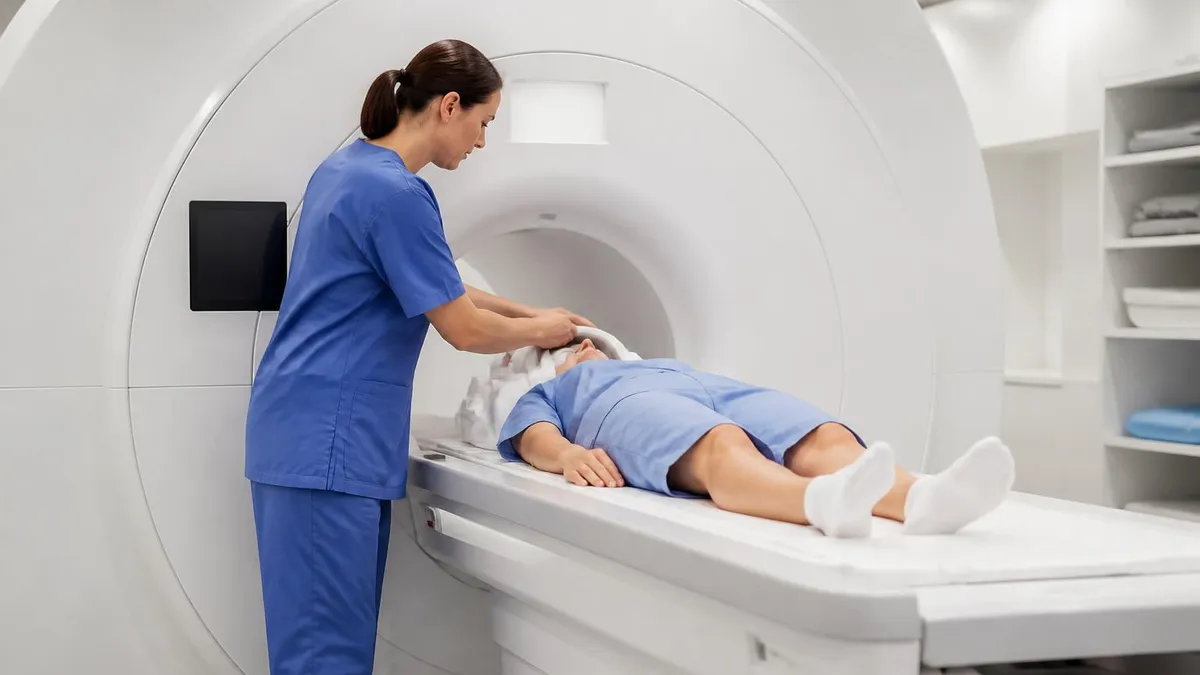
MRI With and Without Contrast: How It Works, What to Expect
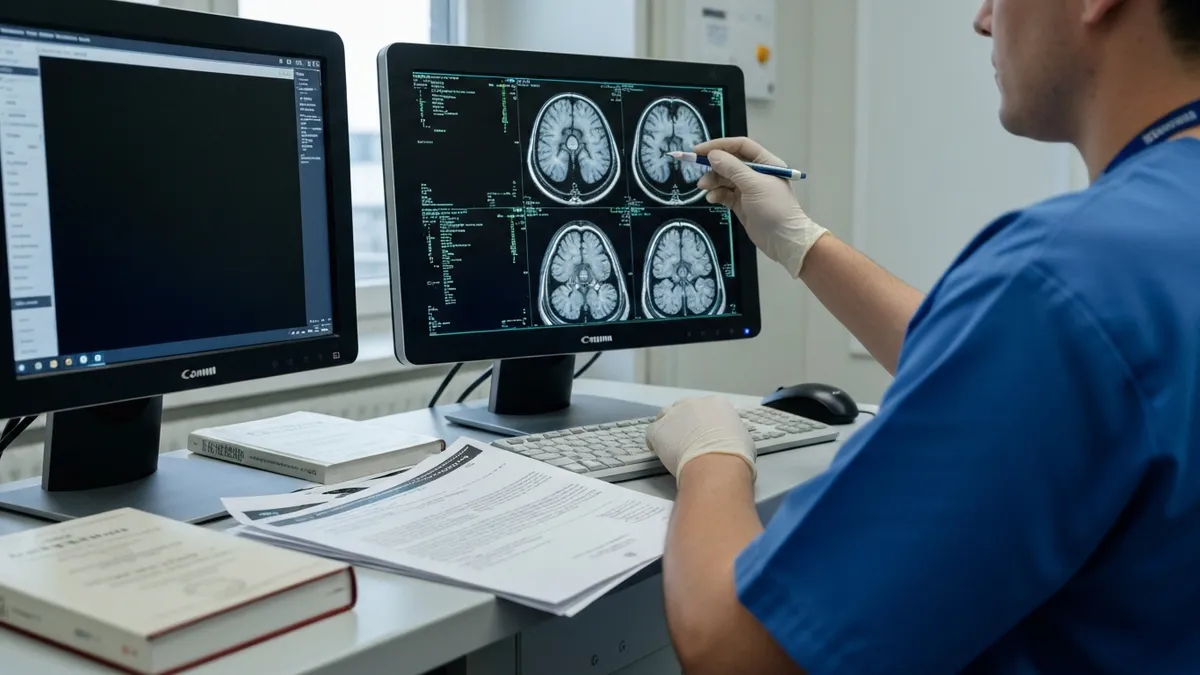
MRI Imaging Centers: Complete Guide to Independent Outpatient MRI Facilities

St Jude Pacemaker MRI Compatibility List: A Complete Safety and Scanning Guide
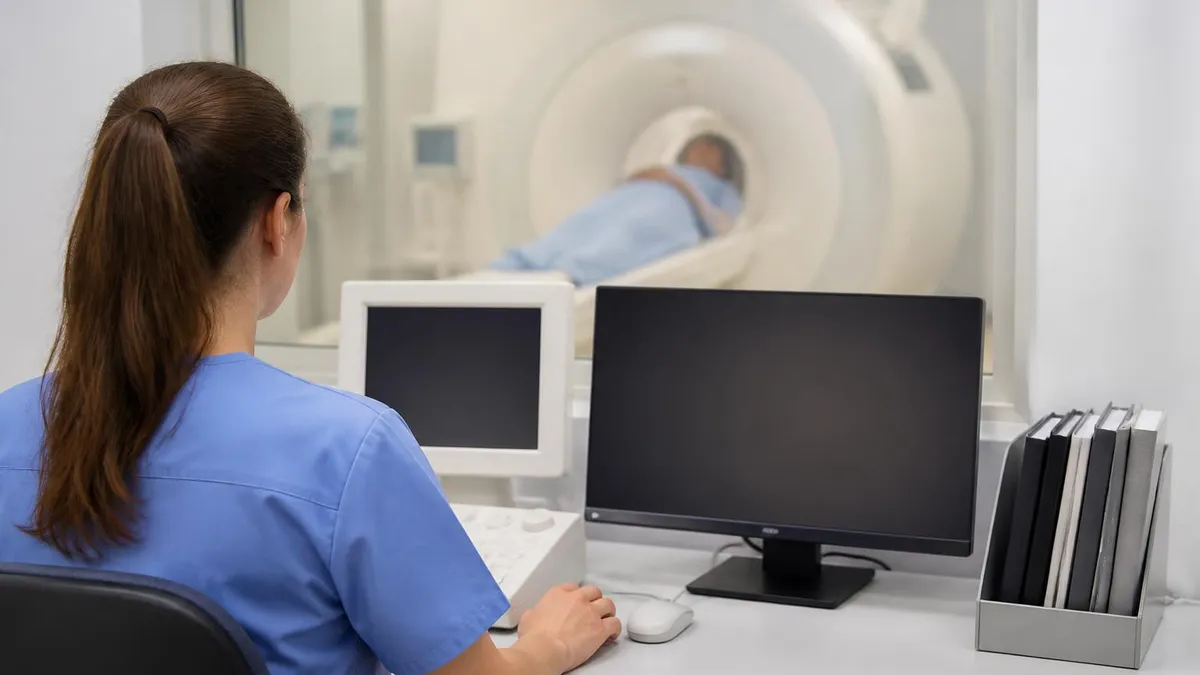
Pigmented Villonodular Synovitis MRI: Imaging Guide for PVNS Diagnosis
About the Author

Medical Laboratory Scientist & Clinical Certification Expert
Johns Hopkins UniversityDr. Sandra Kim holds a PhD in Clinical Laboratory Science from Johns Hopkins University and is certified as a Medical Technologist (MT) and Medical Laboratory Scientist (MLS) through ASCP. With 16 years of clinical laboratory experience spanning hematology, microbiology, and molecular diagnostics, she prepares candidates for ASCP board exams, MLT, MLS, and specialist certification tests.
Join the Discussion
Connect with other students preparing for this exam. Share tips, ask questions, and get advice from people who have been there.
View discussion (8 replies)