
MEPS Requirements: What You Need to Pass in 2026 October
Free MEPS Requirements: What You Need to practice test with questions and answer explanations. Prepare for the 2026 October exam with instant scoring. 🗨️

What Are MEPS Requirements?
MEPS — the Military Entrance Processing Station — is where your military career officially begins or ends. Every branch of the U.S. military routes enlistees through MEPS. Whether you're joining the Army, Navy, Air Force, Marines, or Coast Guard, you'll face the same core requirements: medical evaluation, aptitude testing, background screening, and administrative processing.
The requirements aren't about being an elite athlete. Most of them are about meeting a baseline — no disqualifying medical conditions, a minimum ASVAB score, no serious legal history, and a clean drug test. That said, knowing what's required before you show up isn't just helpful. It's the difference between clearing MEPS in one day and getting sent home with an open question that takes months to resolve.
Medical Requirements at MEPS
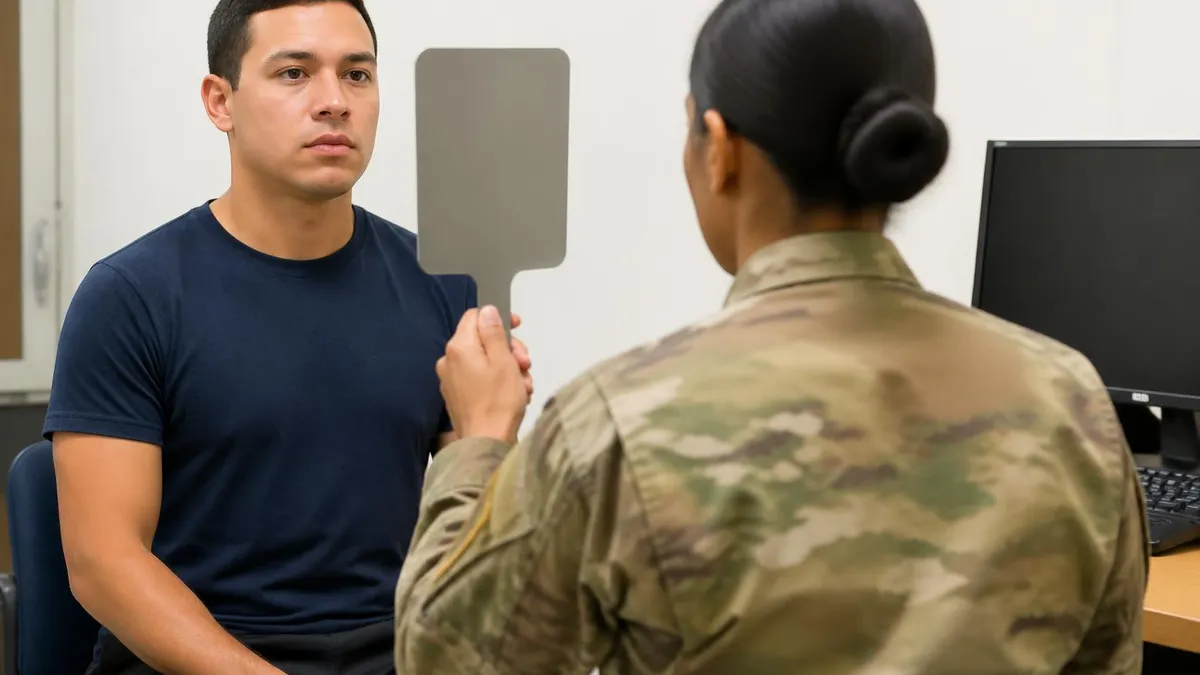
The MEPS medical exam is comprehensive. You'll go through vision and hearing tests, blood pressure and urinalysis, a physical examination of your musculoskeletal system, a dental screening, and blood draws for HIV and other conditions. The whole medical portion typically takes the better part of a morning.
What gets people disqualified medically? The most common issues include:
- Asthma (diagnosed within the last three years)
- History of depression, ADHD, or anxiety requiring medication
- Previous surgeries with incomplete healing or hardware in place
- Vision below the correctable threshold for certain MOS
- Flat feet with documented pain or functional limitations
- BMI outside acceptable range for branch standards
None of these are automatic permanent bars. Many can be waived — but waivers take time and documentation. If you know you have a potential medical issue, discuss it with your recruiter before MEPS, not after. The more documentation you bring (diagnosis records, surgical notes, physician letters), the smoother the waiver process goes.
ASVAB Score Requirements
The ASVAB is typically taken before your MEPS visit, though some candidates take the computerized ASVAB at the MEPS station itself. What matters for basic enlistment is your AFQT score — Armed Forces Qualification Test — which is derived from four ASVAB subtests: Arithmetic Reasoning, Mathematics Knowledge, Paragraph Comprehension, and Word Knowledge.
Minimum AFQT scores by branch:
- Army — 31
- Navy — 35
- Marines — 32
- Air Force/Space Force — 36
- Coast Guard — 40
These are floors, not targets. A higher AFQT unlocks better job options and, in some branches, enlistment bonuses. If your score is borderline, retesting is possible after a waiting period — but preparation before the first attempt is far more efficient than retesting.
Did You Know? Passing the MEPS exam on your first attempt saves both time and money. Start with diagnostic practice tests to identify weak areas.
Legal and Background Requirements
MEPS includes a thorough background check. Minor traffic violations typically aren't a problem. More serious issues — felony convictions, drug-related charges, serious misdemeanors, or a pattern of criminal activity — can result in disqualification or require a conduct waiver.
Be completely honest during your background interview. MEPS staff cross-reference your answers against official records. Discrepancies — even ones that seem small — are flagged. Omitting an arrest you think was expunged is a much bigger problem than disclosing it upfront.
Drug and Alcohol Requirements
MEPS drug testing is urinalysis-based and screens for a standard panel including marijuana, cocaine, opioids, amphetamines, and PCP. A positive result is disqualifying — full stop. There is no legal-state exception. Federal military standards apply regardless of state law.
If you've used marijuana recently, you need to wait. Detection windows vary — typically 3 to 30 days for occasional use, longer for heavy or daily users. Don't guess. Be clean before you go to MEPS.
Age and Citizenship Requirements
You must be at least 17 (with parental consent) or 18 to enlist. Maximum ages vary by branch — generally 35 for Army, 39 for Navy, 28 for Marines. Age waivers above the maximum are rare and branch-dependent.
You must be a U.S. citizen or permanent resident (green card holder) to enlist. Non-citizens with legal permanent residence can enlist in most branches, though some MOS and security clearances require citizenship.
Physical Fitness Standards
Contrary to what many applicants expect, you don't take a fitness test at MEPS. The physical exam checks your medical fitness — not your cardio or strength. That said, you'll have to meet your branch's physical fitness test requirements after you enlist, usually in basic training. Start building your fitness before shipping out. Don't show up to basic unable to run two miles.
What to Bring to MEPS
Bring everything and bring extra copies:
- Photo ID (driver's license, state ID, or passport)
- Social Security card (original, not a copy)
- Birth certificate
- Medical records for any known conditions
- Prescription eyeglasses or contacts (bring glasses, not contacts — contacts must be removed for some tests)
- List of all medications, past surgeries, and diagnoses
Wear comfortable, loose clothing. The MEPS dress code doesn't require anything formal — but avoid clothing with offensive graphics. Arrive rested. You may be there from early morning through mid-afternoon.
If you're staying overnight at a MEPS hotel, use that time to review your paperwork, get a solid night of sleep, and mentally prepare for a long day of waiting punctuated by short bursts of activity.
Understanding MEPS disqualifications ahead of time gives you time to address what you can — and set realistic expectations about what can be waived. Walking in informed is the best advantage you have on processing day.

MEPS: Pros and Cons
- +meps — mEPS credential is recognized by employers and industry professionals
- +Higher earning potential compared to non-credentialed peers
- +Expanded career opportunities and professional advancement
- +Structured learning path builds comprehensive knowledge
- +Professional development that stays current with industry standards
- −Preparation requires significant time and study commitment
- −Associated costs for exams, materials, and renewal fees
- −Continuing education needed to maintain credentials
- −Competition for advanced positions can be challenging
- −Requirements and standards may vary by state or region
Pros and Cons at a Glance
| Pros | Cons |
|---|---|
| meps — mEPS credential is recognized by employers and industry professionals | Preparation requires significant time and study commitment |
| Higher earning potential compared to non-credentialed peers | Associated costs for exams, materials, and renewal fees |
| Expanded career opportunities and professional advancement | Continuing education needed to maintain credentials |
| Structured learning path builds comprehensive knowledge | Competition for advanced positions can be challenging |
| Professional development that stays current with industry standards | Requirements and standards may vary by state or region |

Sample MEPS - Military Entrance Processing Stations Practice Questions
Try these questions from our free MEPS - Military Entrance Processing Stations practice tests. The correct answer and an explanation follow each question.
What is the trick to help pass the depth perception test at MEPS?
- A. Cross your eyes and relax them
- B. Take a break and come back later
- C. Close your eyes and count to 10
- D. Focus on one circle and ignore the rest
Answer: A. Cross your eyes and relax them
Try to stay relaxed and avoid unnecessary stress or tension during the test. A calm and focused mindset can help you perform at your best.
A MEPS applicant is found to have a blood pressure reading of 150/92 mmHg on the first measurement. What is the standard MEPS protocol?
- A. Immediate disqualification with no recourse
- B. A second reading is taken after a rest period; if still elevated, referral or temporary disqualification may follow
- C. The applicant is sent home and must return with a 30-day blood pressure log
- D. The reading is ignored if the applicant has no history of hypertension
Answer: B. A second reading is taken after a rest period; if still elevated, referral or temporary disqualification may follow
MEPS protocol typically allows for a repeat measurement after the applicant rests, recognizing that anxiety or exertion can temporarily elevate blood pressure.
An applicant becomes loud and argumentative with the medical staff after being told they need an additional consultation for a potential hearing issue. What is the most appropriate initial response from the MEPS personnel?
- A. Immediately call the applicant's recruiter to have them removed from the station.
- B. Escort the applicant to a private area, calmly explain the reason for the procedure, and remind them of the station's code of conduct.
- C. Ignore the behavior and proceed with the next step in processing to avoid further conflict.
- D. Permanently disqualify the applicant for demonstrating an inability to follow orders.
Answer: B. Escort the applicant to a private area, calmly explain the reason for the procedure, and remind them of the station's code of conduct.
The professional standard is to de-escalate the situation first. By moving the applicant to a private setting, personnel can address the issue without disrupting others, calmly reiterate the procedural necessity, and reinforce behavioral expectations. Immediate disqualification or removal is an escalatory step reserved for more severe or persistent misconduct.
An applicant at MEPS discloses a single misdemeanor conviction for petty theft from three years ago. What is the immediate and proper next step for the MEPS staff and service liaison to take?
- A. Immediately disqualify the applicant from all branches of service.
- B. Advise the applicant to omit this information from their security questionnaire.
- C. Initiate the process for a moral waiver request with the respective service branch.
- D. Require the applicant to take a polygraph test to verify the details of the offense.
Answer: C. Initiate the process for a moral waiver request with the respective service branch.
A past misdemeanor does not necessarily result in automatic disqualification. The standard procedure is to gather all relevant court documents and personal statements to submit a moral waiver packet to the specific service the applicant is trying to join. The service's waiver authority then decides based on the "whole person" concept, the nature of the offense, and the needs of the service.
Take the full MEPS - Military Entrance Processing Stations practice test



How to Prepare for MEPS Requirements
Most people who struggle at MEPS did one of two things: they didn't know the requirements beforehand, or they knew them and didn't prepare. Don't be either of those people.
Start with your medical history. Pull your records. Know what diagnoses and treatments are in there before a MEPS physician sees them. If something is potentially disqualifying, address it now — bring the documentation, talk to your recruiter, and understand your waiver options before processing day.
On the ASVAB side, your AFQT score is trainable. Practice consistently in the four sections that make up the AFQT — Arithmetic Reasoning, Mathematics Knowledge, Word Knowledge, and Paragraph Comprehension — for at least four to six weeks before your test. A score bump of 5 to 10 points is realistic with disciplined prep. That bump could open MOS options that weren't available at a lower score.
Walk into MEPS knowing what to expect. The MEPS process is long and involves a lot of waiting. Stay calm, stay honest, and follow instructions from MEPS staff. Candidates who know the process rarely get caught off guard. Those who show up blind often do.
About the Author

Retired Military Officer & Armed Forces Test Preparation Specialist
United States Army War CollegeColonel Steven Harris (Ret.) served 28 years in the US Army, earning a Master of Arts in Military Science from the Army War College and a Bachelor of Science in Criminal Justice. He has coached thousands of military enlistment and officer candidate program applicants through the ASVAB, AFQT, AFCT, OAR, and officer selection assessment processes across all military branches.
Join the Discussion
Connect with other students preparing for this exam. Share tips, ask questions, and get advice from people who have been there.
View discussion (8 replies)