
Best LSAT Training Books for 2026 October: Top Study Guides Reviewed
🟢 Free Best LSAT Training Books for 2026 October: Top practice test with questions and answer explanations. Prepare for the 2026 October exam with instant scoring.
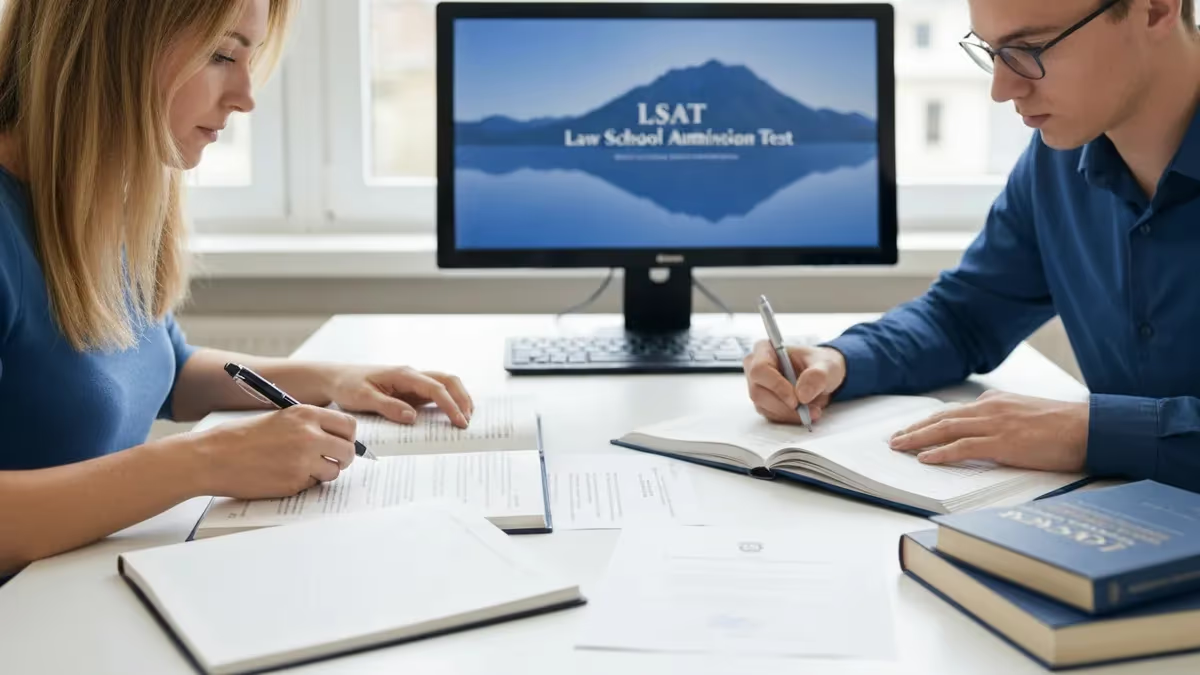
Picking the right LSAT training book can make or break your prep. There are dozens of options on the market — some excellent, most mediocre — and you don't have time to try them all. Whether you're starting from scratch or switching strategies after a disappointing practice score, the book you study from matters more than how many hours you log. A bad book teaches you shortcuts that don't work on the real exam. A good one rewires how you think.
Before buying anything, take a free LSAT practice test to establish your baseline. You need to know where you stand before choosing materials. Scoring 148? You need a fundamentals-heavy book. Already at 162? Skip the basics and grab something focused on advanced logic games and reading comprehension strategies. Your starting score determines your book — not the other way around.
Platforms like LSAT Demon have changed how people think about prep by combining digital tools with adaptive question banks. But books still matter. They're portable, distraction-free, and let you annotate without a screen. The best approach? Use both. A solid LSAT training book for foundational learning, paired with an online platform for timed practice and analytics. That combination consistently produces the highest score improvements according to prep industry data.

LSAT Demon gets a lot of attention — and for good reason. It uses an algorithm to serve you questions at your exact difficulty level, which prevents wasted time on problems that are too easy or too hard. But here's the thing: LSAT Demon works best as a supplement, not a replacement for books. The platform excels at drilling, but it doesn't teach foundational logic the way a well-structured textbook does.
Understanding the LSAT score range is critical before you start buying prep materials. Scores run from 120 to 180, with 152 as the median. If you're aiming for a T14 law school, you need 170+. That's the 97th percentile. For regional schools, 155-160 puts you in a strong position. Your target score determines how aggressively you need to study and which books will actually help you get there.
The Powerscore Logic Games Bible remains the gold standard for analytical reasoning prep. It breaks down every game type — sequencing, grouping, mixed — into learnable patterns. Most students see their biggest score jumps in logic games because the section is the most teachable. Mike Kim's "The LSAT Trainer" takes a different approach: it covers all three sections in one volume with a built-in study schedule. For self-disciplined studiers, it's arguably the most efficient single book on the market.
Knowing your LSAT test dates is essential for building a realistic study plan around your training book. The exam is offered nine times per year — roughly once a month from January through November, with some gaps. Most students need 3-6 months of dedicated prep, so count backward from your target test date and start there. Don't register for a date before you're ready just because you feel pressure to apply early.
Where do you find quality LSAT practice questions outside of books? Start with LSAC's own PrepTests — they're actual retired exams, so the questions are identical in style and difficulty to what you'll face. You can buy them individually or in bundled volumes of 10. Supplement these with the question banks from your training book. LSAT score range improvements of 10-15 points are common when students work through 30+ PrepTests alongside their primary study guide.
One mistake students make: they read through their prep book passively. That's basically useless. Every chapter should involve active work — diagramming problems on paper, timing yourself on practice sections, writing out explanations for why wrong answers are wrong. Your training book is a workbook, not a novel. If you're not writing in the margins and dog-earing pages, you're not using it correctly. The students who improve the most treat their prep book like a conversation partner, not a lecture.
Best LSAT Books by Section
The Powerscore Logic Games Bible is the undisputed champion here. It teaches you to diagram every game type systematically — sequencing, grouping, in/out, and hybrid games. Most students see 5-8 point improvements on this section alone after working through it. Pair it with Powerscore's Logic Games Workbook for extra drills. If you prefer a lighter touch, the LSAT Trainer covers games in less depth but integrates them into an overall study plan that some students find less overwhelming.
LSAT prep courses and LSAT prep resources come in every price range. Free options include Khan Academy's LSAT prep (partnered with LSAC), YouTube channels like 7Sage's free curriculum, and library copies of popular prep books. Paid courses range from $300 for self-paced platforms to $5,000+ for private tutoring. Here's what the data shows: students who combine a quality book with a structured course score 3-5 points higher than those using books alone.
But you don't necessarily need an expensive course. LSAT prep at its core is about repetition and analysis. Read a chapter, do the exercises, review every wrong answer until you understand exactly why you missed it. That last part — reviewing wrong answers — is where most students cut corners. They mark it wrong and move on. That's like a pilot ignoring warning lights. Every wrong answer is diagnostic information. Your LSAT training book can only help you if you actually engage with the corrections, not just the content.
Study groups work for some people and destroy focus for others. If you join one, keep it small — three people max. Meet weekly to discuss challenging questions, not to study together in silence. The value of a group is hearing how someone else approaches a problem you got wrong. Maybe they saw a conditional logic chain you missed, or they spotted a scope shift in a reading comp passage that went over your head. Different perspectives sharpen your own reasoning.
LSAT example questions in training books should mirror real LSAC questions in structure and difficulty. That's what separates great prep books from mediocre ones. Powerscore and the LSAT Trainer use actual LSAC-licensed content. Cheaper knockoff books write their own questions, and they're almost never calibrated correctly — they're either too easy or test skills the real LSAT doesn't care about. Don't waste months studying artificial questions that build false confidence.
LSAT scores aren't just numbers — they're currency. A 170 opens doors that a 160 simply can't. Scholarship money, T14 admissions, prestigious clerkship opportunities — they all correlate strongly with your LSAT score. LSAT test dates are published well in advance, giving you plenty of time to plan. Most law schools accept scores from any test date within five years, so there's no rush to test before you're genuinely ready.
One book that flies under the radar: "10 Actual, Official LSAT PrepTests" volumes published by LSAC itself. These aren't teaching books — they're pure practice material. Each volume contains 10 complete exams with answer keys. No explanations, no strategies, just raw practice. They're perfect for the final month of prep when you should be doing full-length timed exams every few days. Buy the most recent volumes first since the test format has evolved over time.
Books vs Digital LSAT Prep Platforms
- +Books let you annotate freely — underlining, margin notes, and diagrams without screen limitations
- +No subscription fees — buy once, study forever, share with friends when you're done
- +Zero screen fatigue during long study sessions (4+ hours)
- +Powerscore and LSAT Trainer use real LSAC-licensed questions, not artificial approximations
- +Portable study without wifi, battery, or login requirements
- +Physical books build spatial memory — you remember where concepts appeared on the page
- −No adaptive difficulty — books give everyone the same questions regardless of skill level
- −Analytics are manual — you have to track your own accuracy rates and timing data
- −Can't simulate the digital LSAT interface you'll face on test day
- −Updates require buying a new edition when test format changes occur
- −No community features — you study alone unless you organize a group separately
- −Answer explanations in books are sometimes thin compared to video walkthroughs online
Your LSAT schedule should revolve around your training book's structure, not the other way around. Most good books include suggested timelines — the LSAT Trainer has a 12-week plan, and the Powerscore Bibles recommend 4-6 weeks per volume. Map these against your LSAT test date and work backward. If you've got 16 weeks, you can work through two Bibles plus a month of full-length practice exams. Eight weeks? You need a single all-in-one book like the Trainer.
The LSAT training book you choose should match your learning style, not just your score goal. Visual learners benefit from Powerscore's heavy use of diagrams and flowcharts. Verbal learners prefer the Loophole's conversational explanations and the LSAT Trainer's narrative approach. Kinesthetic learners should grab books with lots of exercises and minimal lecture-style text. There's no universally "best" book — there's only the best book for you, given how you process information and how much time you have before test day.
Don't buy more than three books total. Seriously. Students who buy five or six prep books rarely finish any of them. They jump from one to another whenever they hit a difficult section, creating an illusion of progress without actual depth. Pick one primary book, one section-specific supplement, and one volume of official PrepTests. That's it. Master those three resources and you'll outperform someone who skimmed through seven different guides without committing to any of them.
Your LSAT Training Book Prep Checklist
- ✓Take a free diagnostic LSAT practice test before buying any books
- ✓Identify your weakest section — logic games, logical reasoning, or reading comp
- ✓Choose one primary book matched to your score level (see cards above)
- ✓Buy the most recent official PrepTest volume from LSAC
- ✓Create a week-by-week study calendar working backward from your test date
- ✓Do every exercise in your training book — don't skip problems that seem easy
- ✓Review every wrong answer with a written explanation of your mistake
- ✓Take a full timed practice exam every week starting 6 weeks before test day
- ✓Simulate test conditions: no phone, timed breaks, quiet environment
- ✓Register for your LSAT date at least 6 weeks before you plan to test
The LSAT test itself has changed significantly in recent years. Since 2019, it's been administered digitally on tablets — no more paper-and-pencil bubble sheets. Your training book should reflect this shift. Make sure any book you buy was published after 2020 and accounts for the digital format. Older editions might still teach strategies for the old paper test that don't translate well to the tablet interface.
Where can you find good LSAT sample questions for free? LSAC publishes a free PrepTest on their website every year. LSAT practice questions are also available through Khan Academy's free LSAT prep program, which includes thousands of officially licensed questions with video explanations. Between those two sources plus the practice tests on this site, you've got hundreds of free questions to work through before spending money on additional materials.
Timing is the hidden killer on the LSAT. You get 35 minutes per section, which sounds reasonable until you're staring at a complex logic game with eight rules and four questions. Your training book should teach you when to skip and come back. Most students waste time grinding on hard questions when they could grab easy points elsewhere in the section. The 80/20 rule applies: 80% of your score comes from questions you can answer in under 90 seconds each. The remaining 20% are time sinks that may not be worth the effort.
How long is the LSAT? The test takes approximately 3 hours and 30 minutes including breaks. You'll face four scored sections of 35 minutes each — one logic games, one reading comprehension, and two logical reasoning. There's also an unscored experimental section that LSAC uses for future test development. You won't know which section is experimental, so treat every section like it counts. LSAT dates are spread throughout the year, giving you flexibility to test when you're actually ready rather than when you feel rushed.
Your LSAT dates choice affects more than just your study timeline. Law school application cycles are rolling, meaning earlier applicants often have an advantage for both admission and scholarships. September and November test dates are most popular because they align with fall application deadlines. January and March dates work for later applications but may put you at a disadvantage at competitive schools. Plan your training book study around a target test date that gives you enough prep time while still hitting application windows.
The digital LSAT includes a built-in highlighting and flagging tool that you can't practice with using a physical book. Spend at least a few hours using LSAC's free digital practice interface so the tablet format doesn't surprise you on test day. Your training book builds the knowledge; the digital practice builds the comfort with the delivery method. Both matter, and ignoring either one costs you points you shouldn't be losing to unfamiliarity rather than difficulty.
The LSAT eliminated the Logic Games section starting in August 2024, replacing it with a second Logical Reasoning section. Any training book published before 2024 that focuses heavily on logic games may be partially outdated. Check the publication date and edition number before buying. Look for books that address the current two-LR, one-RC format. If you already own an older book, it's still useful for logical reasoning and reading comp sections — just skip the games chapters and supplement with updated material.
A mock LSAT exam should be part of your prep routine starting about six weeks before test day. Take one full-length practice test per week under strict timed conditions. No pausing, no phone checking, no looking up answers mid-section. After each mock exam, spend twice as long reviewing it as you spent taking it. A 3.5-hour exam deserves 7 hours of review. That ratio sounds extreme, but it's how top scorers extract maximum learning from every practice test.
What's the average LSAT score? It hovers around 151-152, which puts you in roughly the 50th percentile. That's good enough for many regional law schools but won't get you into a T14 program. The gap between average and exceptional is bridgeable with the right prep. Students who study consistently for 3-4 months using quality training books typically improve 10-15 points from their initial diagnostic score. Some improve 20+ points, though that level of gain usually requires 6+ months of dedicated work.
Don't overlook the writing sample. While it's not scored numerically, law schools see it as part of your LSAT file. Your training book probably won't cover it in depth, but it's worth practicing two or three writing samples before test day. Read the prompt, plan for five minutes, write for 25 minutes. The writing sample shows schools how you construct an argument under time pressure — essentially a preview of how you'll perform in law school exams. Treat it seriously even though it doesn't affect your 120-180 score.
LSAT Practice Test Questions
Prepare for the LSAT - Law School Admission Test exam with our free practice test modules. Each quiz covers key topics to help you pass on your first try.
LSAT Analytical Reasoning
LSAT Exam Questions covering Analytical Reasoning. Master LSAT Test concepts for certification prep.
LSAT General
Free LSAT Practice Test featuring General. Improve your LSAT Exam score with mock test prep.
LSAT Logic Reasoning
LSAT Mock Exam on Logic Reasoning. LSAT Study Guide questions to pass on your first try.
LSAT - Law School Admission Argument Flaw ...
Free LSAT Quiz on - Law School Admission Argument Flaw Identification. LSAT Exam prep questions with detailed explanations.
LSAT - Law School Admission Comparative Re...
LSAT Practice Questions for - Law School Admission Comparative Reading Analysis. Build confidence for your LSAT certification exam.
LSAT - Law School Admission Inference from...
LSAT Test Online for - Law School Admission Inference from Passages. Free practice with instant results and feedback.
LSAT - Law School Admission Main Point and...
LSAT Study Material on - Law School Admission Main Point and Primary Purpose. Prepare effectively with real exam-style questions.
The best LSAT prep books share three qualities: they use real LSAC-licensed questions, they teach transferable reasoning skills (not just tricks), and they include enough practice material to fill your entire study period. The Powerscore trilogy, the LSAT Trainer, and the Loophole all meet these criteria. Manhattan Prep's guides are solid for reading comp specifically. Avoid any book that promises a 170+ score in 30 days — that's marketing, not education.
LSAT questions test your ability to reason, not your knowledge of any specific subject. That's why training books focus on process — how to break down arguments, how to identify logical flaws, how to diagram conditional relationships. You're not memorizing facts. You're building a mental toolkit. The students who improve the most are the ones who internalize these reasoning frameworks so deeply that they apply them automatically during timed sections without conscious effort.
Your final two weeks before the LSAT should look different from the rest of your prep. Stop learning new material. Do one practice exam, review it thoroughly, then rest. Take a full day off before your test. Eat well, sleep 8 hours, and trust the preparation you've done over the past months. No training book can help you in those final 48 hours — your brain needs consolidation time, not more input. Walk into the test center confident that you've done the work, because at that point, you have.
LSAT Questions and Answers
About the Author

Attorney & Bar Exam Preparation Specialist
Yale Law SchoolJames R. Hargrove is a practicing attorney and legal educator with a Juris Doctor from Yale Law School and an LLM in Constitutional Law. With over a decade of experience coaching bar exam candidates across multiple jurisdictions, he specializes in MBE strategy, state-specific essay preparation, and multistate performance test techniques.