
What Is an LPN? Licensed Practical Nurse Complete Guide 2026 October
Free What Is an LPN? Licensed Practical practice test with instant feedback and detailed answer explanations. Prepare for your exam. 💯
What Does an LPN Do?
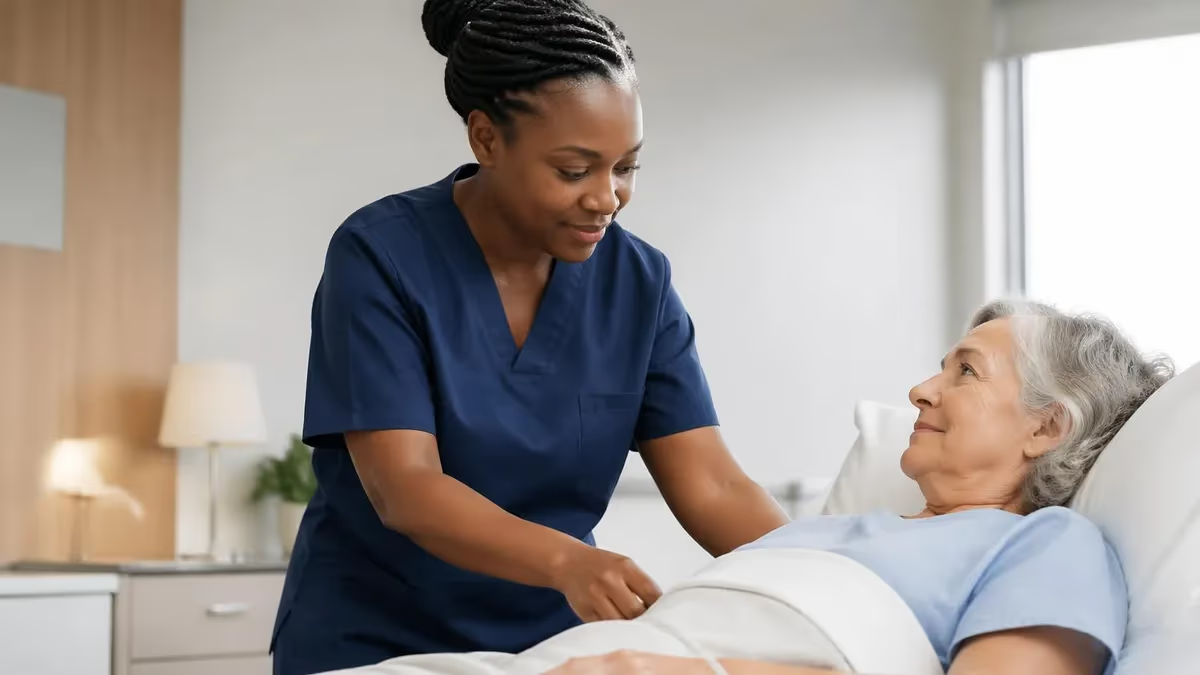
Licensed Practical Nurses provide direct, hands-on nursing care as a primary member of the patient care team. While RNs hold primary responsibility for patient assessment, care planning, and clinical judgment, LPNs carry out a significant portion of the ongoing nursing work that patients require day to day — making them essential to safe, efficient healthcare delivery.
Core LPN responsibilities vary by setting and state scope of practice but typically include:
- Patient monitoring: Measuring and recording vital signs (temperature, pulse, blood pressure, respiratory rate, oxygen saturation), documenting clinical changes, and reporting abnormal findings to the supervising RN or physician
- Medication administration: Preparing and administering oral, subcutaneous, intramuscular, and in some settings intravenous medications (IV administration scope varies by state)
- Wound care: Dressing changes, wound irrigation, assessment of wound healing, and pressure injury prevention care
- Personal care: Assisting with activities of daily living including bathing, dressing, repositioning, and ambulation for patients with limited independence
- Catheter care: Urinary catheter insertion, maintenance, and urinary output monitoring
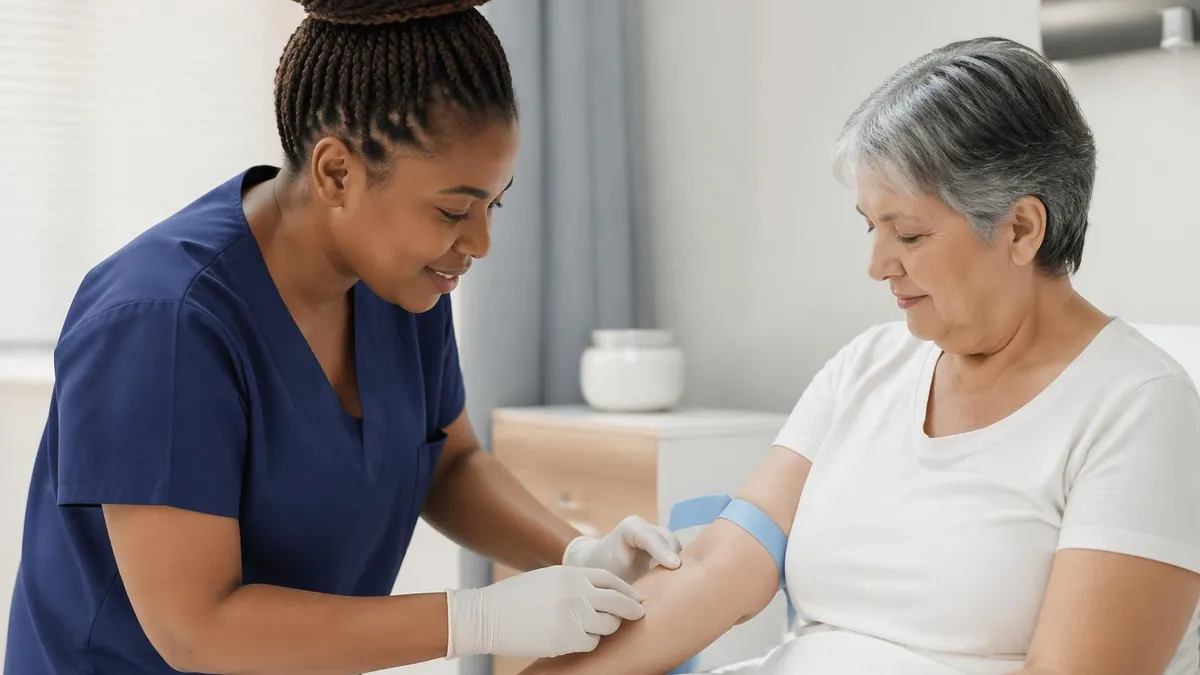
- Specimen collection: Blood draws (phlebotomy), urine collection, throat swabs, and other clinical specimen acquisition in appropriately trained LPNs
- Patient and family education: Providing basic health education under the direction of the RN's care plan, including discharge instructions and medication teaching
- Documentation: Accurate and timely charting in electronic health record (EHR) systems
LPNs work in nursing homes and long-term care facilities (the largest employer of LPNs), home health agencies, outpatient physician and specialty clinics, dialysis centers, correctional healthcare facilities, and hospice settings. Hospital employment of LPNs is less common than in the past but still exists, particularly in non-acute areas such as medical-surgical units, labor and delivery, and post-partum care.
LPN vs RN vs CNA: Key Differences
Understanding how the LPN role fits within the nursing professional hierarchy helps prospective nursing students make informed career decisions about which pathway best aligns with their goals, timeline, and investment tolerance.
Certified Nursing Assistant (CNA) is the entry-level direct care role requiring 4–6 weeks of state-approved training and a competency exam. CNAs perform personal care, basic monitoring, and supportive functions under RN and LPN supervision. CNAs cannot administer medications or perform clinical procedures. Median annual salary: ~$38,200 (BLS 2023).
Licensed Practical Nurse (LPN/LVN) requires a 12–18 month practical nursing program and passing the NCLEX-PN. LPNs can administer medications, perform clinical nursing procedures, and provide more complex care than CNAs. LPNs work under RN supervision for clinical decision-making but often function with considerable day-to-day autonomy in long-term care settings. Median annual salary: ~$59,730.
Registered Nurse (RN) requires an associate degree in nursing (ADN, 2–3 years) or bachelor's degree (BSN, 4 years) plus passing the NCLEX-RN. RNs have full independent assessment and care planning authority, can supervise LPNs and CNAs, and are required in most hospital settings. Median annual salary: ~$86,070 (BLS 2023). For maximum career flexibility and advancement, the BSN is increasingly the employer preference, particularly in Magnet-designated hospitals.
The LPN pathway offers a faster, lower-cost entry into licensed nursing compared to RN programs. Many LPNs subsequently complete an LPN-to-RN bridge program to advance their career and earning potential after gaining clinical experience.
LPN Education and Programs
LPN programs are designed for efficient entry into licensed nursing. Offered at community colleges, vocational and technical schools, and some hospital-based programs, LPN training typically takes 12–18 months for full-time students.
Prerequisites: Most LPN programs require a high school diploma or GED, passing entrance tests (TEAS, HESI, or school-specific tests), and basic health requirements (immunization records, TB test, background check). Some programs require prerequisite courses in anatomy, physiology, or English before admission.
Curriculum: LPN programs cover anatomy and physiology, pharmacology and medication administration, medical-surgical nursing, maternal-newborn nursing, pediatric nursing, mental health nursing, geriatric and long-term care nursing, clinical nutrition, and fundamentals of nursing practice. Most programs include 500–900+ hours of supervised clinical rotations in nursing homes, hospitals, clinics, and specialty settings.
Accreditation: Programs should be accredited by the Accreditation Commission for Education in Nursing (ACEN) or the National League for Nursing Commission for Nursing Education Accreditation (CNEA). Attending an accredited program is important for NCLEX-PN eligibility and, later, for acceptance into LPN-to-RN bridge programs.
Online LPN programs: While some theory coursework is available online, clinical rotations require in-person participation. Hybrid programs typically offer online didactic instruction with in-person clinical components at local partner facilities. Fully online LPN programs do not exist for the clinical portions.
The NCLEX-PN Licensing Exam
After completing an approved LPN program, graduates must pass the NCLEX-PN (National Council Licensure Examination for Practical Nurses) administered by the National Council of State Boards of Nursing (NCSBN). Passing the NCLEX-PN is required for LPN licensure in all 50 states.
As of 2023, the NCSBN transitioned to the Next Generation NCLEX (NGN), which introduces new question types designed to test clinical judgment and higher-order reasoning — not just knowledge recall.
NGN exam format:
- Uses Computerized Adaptive Testing (CAT)
- Minimum 85 questions, maximum 150 questions
- 3.5-hour time limit including introduction and tutorial
- New question types include: Extended Multiple Response, Extended Drag-and-Drop, Cloze (drop-down), Matrix/Grid, and enhanced Hot Spot questions
- Case Studies: 6 unfolding case study questions appearing in groups of 6, testing clinical judgment across multiple steps of a patient scenario
Content areas: The NCLEX-PN tests across four Client Needs categories: Safe and Effective Care Environment (Coordinated Care + Safety & Infection Control), Health Promotion and Maintenance, Psychosocial Integrity, and Physiological Integrity (Basic Care & Comfort + Pharmacological Therapies + Reduction of Risk Potential + Physiological Adaptation).
First-attempt pass rates: NCSBN data shows first-attempt NCLEX-PN pass rates for U.S.-educated candidates are approximately 83–87% — somewhat higher than the NCLEX-RN. Candidates who complete accredited programs and use structured review materials consistently outperform the average.
For detailed NCLEX-PN preparation strategies and practice questions, see our LPN certification test guide and explore the LPN patient care and clinical skills practice tests on this site.
LPN Checklist
- ✓Earn a high school diploma or GED
- ✓Complete any required prerequisite courses (anatomy, English, math)
- ✓Pass entrance exams required by your target LPN program (TEAS, HESI)
- ✓Complete an accredited LPN program (12–18 months)
- ✓Fulfill clinical hours requirements through program rotations
- ✓Apply for NCLEX-PN authorization through your state nursing board
- ✓Register for and pass the NCLEX-PN at a Pearson VUE testing center
- ✓Apply for LPN/LVN state licensure upon notification of NCLEX pass
- ✓Complete any additional state requirements (background check, CPR certification)
- ✓Begin job search in your preferred LPN practice setting
LPN Overview
LPN in Long-Term Care / Nursing Homes
Long-term care is the most common work setting for LPNs — approximately 35% of all LPN jobs are in nursing and residential care facilities. In this setting, LPNs often function as charge nurses on their shift, supervising CNAs and coordinating daily care for a caseload of 15–30 residents. Responsibilities include medication passes (typically 2–3x daily), wound care, skilled nursing documentation (Medicare/MDS), family communication, physician order implementation, and coordination with therapy and social work staff. LPN autonomy in this setting is high relative to hospital environments.
LPN Salary and Job Outlook 2026
According to the Bureau of Labor Statistics, the median annual wage for LPNs and LVNs in 2023 was $59,730 ($28.72/hr). Wages vary substantially by location, setting, and experience:
- Highest-paying states: California ($71,810), Washington ($67,820), Alaska ($66,620), Massachusetts ($65,970), Connecticut ($65,330)
- Lowest-paying states: Alabama ($44,090), Mississippi ($44,500), South Dakota ($47,570)
- By setting: Home health and hospice agencies and hospitals tend to pay LPNs higher hourly rates than nursing homes, though some nursing homes offer shift differentials and overtime that bring total compensation higher
Employment of LPNs is projected to grow 5% from 2022–2032, roughly in line with the average for all occupations. Approximately 54,400 LPN job openings are projected per year over the decade, driven by the need to replace workers who retire or transfer to other occupations as well as growth in demand for elder care services.
The strongest job growth for LPNs is occurring in home health care services (projected 21% growth) and in outpatient care centers, reflecting broader healthcare delivery trends toward lower-cost community-based settings relative to inpatient hospital care.
LPN Career Advancement: LPN to RN Bridge Programs
One of the key advantages of the LPN pathway is the availability of bridge programs that credit LPN experience and education toward RN licensure. Rather than completing an RN program from scratch, LPNs can advance their nursing career more efficiently through dedicated LPN-to-RN bridges.
LPN to ADN (Associate Degree in Nursing) bridge: Most community colleges offering ADN programs have LPN-to-ADN tracks that allow LPNs to waive foundational nursing courses and complete the remaining coursework in as little as 12–18 months. Graduates take the NCLEX-RN upon completion.
LPN to BSN bridge: Available at many 4-year universities, these programs typically take 2–3 years and result in a bachelor's degree in nursing, which is preferred by employers for career advancement. Some programs offer the LPN-to-BSN online with in-person clinical requirements.
LPN to NP (Nurse Practitioner): While not a direct bridge, some master's and doctoral programs have provisions for experienced LPNs who have since completed their RN and have clinical experience. The pathway typically follows: LPN → RN (bridge) → BSN (bridge or completion program) → MSN/DNP NP program.
Many LPNs choose the advancement pathway after gaining 1–3 years of LPN experience, which both clarifies their specialty interest and strengthens their application to RN programs. The work experience also demonstrates clinical competency that can provide confidence in the transition to expanded nursing scope.
LPN Practice Test Questions
Prepare for the LPN - Certified Practical Nurse exam with our free practice test modules. Each quiz covers key topics to help you pass on your first try.
LPN - Certified Practical Nurse Basic Care...
LPN Exam Questions covering - Certified Practical Nurse Basic Care and Comfort. Master LPN Test concepts for certification prep.
LPN - Certified Practical Nurse Coordinate...
Free LPN Practice Test featuring - Certified Practical Nurse Coordinated Care. Improve your LPN Exam score with mock test prep.
LPN - Certified Practical Nurse Health Pro...
LPN Mock Exam on - Certified Practical Nurse Health Promotion and Maintenance. LPN Study Guide questions to pass on your first try.
LPN - Certified Practical Nurse Pharmacolo...
LPN Test Prep for - Certified Practical Nurse Pharmacological Therapies. Practice LPN Quiz questions and boost your score.
LPN - Certified Practical Nurse Physiologi...
LPN Questions and Answers on - Certified Practical Nurse Physiological Adaptation. Free LPN practice for exam readiness.
LPN - Certified Practical Nurse Psychosoci...
LPN Mock Test covering - Certified Practical Nurse Psychosocial Integrity. Online LPN Test practice with instant feedback.
LPN - Certified Practical Nurse Reduction ...
Free LPN Quiz on - Certified Practical Nurse Reduction of Risk Potential. LPN Exam prep questions with detailed explanations.
LPN - Certified Practical Nurse Safety and...
LPN Practice Questions for - Certified Practical Nurse Safety and Infection Control. Build confidence for your LPN certification exam.
LPN Ethical, Legal & Professional Standards
LPN Test Online for Ethical, Legal & Professional Standards. Free practice with instant results and feedback.
LPN Health Evaluation & Monitoring
LPN Study Material on Health Evaluation & Monitoring. Prepare effectively with real exam-style questions.
LPN Pros and Cons
- +LPN has a defined, publicly available content blueprint — candidates know exactly what to prepare for
- +Multiple preparation pathways (self-study, courses, coaching) accommodate different learning styles and schedules
- +A growing ecosystem of study resources means candidates at any budget level can access quality preparation materials
- +Clear score reporting allows candidates to identify specific strengths and weaknesses for targeted remediation
- +Professional recognition associated with strong performance provides tangible career and academic benefits
- −The scope of tested content requires substantial preparation time that competes with existing professional or academic commitments
- −No single resource covers the full content scope — candidates typically need multiple study tools for comprehensive preparation
- −Test anxiety and exam-day performance variability mean preparation effort does not always translate linearly to scores
- −Registration, preparation, and potential retake costs accumulate into a significant financial investment
- −Content and format can change between exam versions, making older preparation materials less reliable
Pros and Cons at a Glance
| Pros | Cons |
|---|---|
| LPN has a defined, publicly available content blueprint — candidates know exactly what to prepare for | The scope of tested content requires substantial preparation time that competes with existing professional or academic commitments |
| Multiple preparation pathways (self-study, courses, coaching) accommodate different learning styles and schedules | No single resource covers the full content scope — candidates typically need multiple study tools for comprehensive preparation |
| A growing ecosystem of study resources means candidates at any budget level can access quality preparation materials | Test anxiety and exam-day performance variability mean preparation effort does not always translate linearly to scores |
| Clear score reporting allows candidates to identify specific strengths and weaknesses for targeted remediation | Registration, preparation, and potential retake costs accumulate into a significant financial investment |
| Professional recognition associated with strong performance provides tangible career and academic benefits | Content and format can change between exam versions, making older preparation materials less reliable |
Sample Certified Practical Nurse Practice Questions
Try these questions from our free Certified Practical Nurse practice tests. The correct answer and an explanation follow each question.
What is the role of a nurse in maintaining professional boundaries?
- A. To be friends with patients
- B. To maintain a professional, therapeutic relationship
- C. To manage personal relationships
- D. To share personal experiences with patients
Answer: B. To maintain a professional, therapeutic relationship
A nurse's role in maintaining professional boundaries is to establish and uphold a clear, professional, and therapeutic relationship with patients. This means avoiding personal involvement, refraining from sharing personal experiences, and ensuring that interactions remain focused on the patient's health needs. Maintaining these boundaries is crucial for fostering trust, ensuring patient safety, and preventing any form of exploitation or misunderstanding within the care relationship.
A patient on clopidogrel (Plavix) is scheduled for elective surgery. What should the nurse communicate to the surgical team?
- A. The patient may need anticoagulation reversal with vitamin K
- B. The medication should typically be stopped 5-7 days before surgery
- C. The drug can be safely continued through surgery
- D. The patient needs a platelet transfusion preoperatively
Answer: B. The medication should typically be stopped 5-7 days before surgery
Clopidogrel inhibits platelet aggregation; it is typically held 5-7 days before surgery to reduce bleeding risk.
What should a nurse do if a patient refuses medication?
- A. Ignore the refusal
- B. Explore the reason and report it
- C. Force the medication
- D. Disregard patient preferences
Answer: B. Explore the reason and report it
If a patient refuses medication, the nurse must respect their autonomy and right to refuse treatment. It is essential to explore the patient's reasons for refusal to address any misunderstandings, fears, or concerns they may have. This refusal, along with the patient's stated reasons, must then be thoroughly documented and reported to the healthcare team for appropriate care plan adjustments.
The LPN notes that a patient's urine output has been less than 30 mL/hour for 2 consecutive hours during IV fluid therapy. What should the nurse do first?
- A. Increase the IV rate immediately
- B. Assess the patient for signs of dehydration or fluid overload
- C. Document the finding and continue monitoring
- D. Insert a urinary catheter
Answer: B. Assess the patient for signs of dehydration or fluid overload
Urine output below 30 mL/hr may indicate inadequate perfusion or fluid imbalance, requiring immediate patient assessment before any intervention.
LPN Questions and Answers

About the Author

Registered Nurse & Healthcare Educator
Johns Hopkins University School of NursingDr. Sarah Mitchell is a board-certified registered nurse with over 15 years of clinical and academic experience. She completed her PhD in Nursing Science at Johns Hopkins University and has taught NCLEX preparation and clinical skills courses for nursing students across the United States. Her research focuses on evidence-based exam preparation strategies for healthcare certification candidates.
Join the Discussion
Connect with other students preparing for this exam. Share tips, ask questions, and get advice from people who have been there.
View discussion (7 replies)