
Accredited LPN Schools: Complete 2026 October Guide to Finding and Choosing the Best Program
Find accredited LPN schools near you. Compare costs, program lengths, and NCLEX pass rates to choose the best path to your nursing career. 🎓
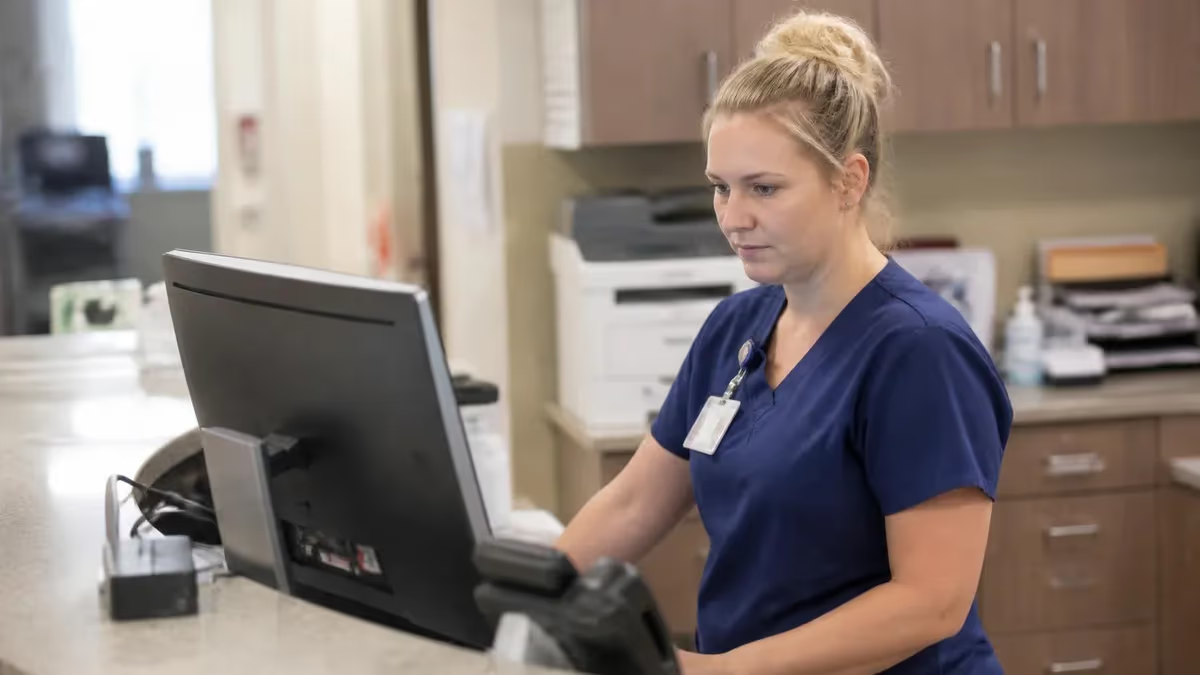
Choosing from the many accredited lpn schools available across the United States is one of the most important decisions you will make on your path to becoming a Licensed Practical Nurse. Accreditation is not just a bureaucratic formality — it is the credential that guarantees your program meets rigorous national standards, that your training will be recognized by state licensing boards, and that your NCLEX-PN exam scores will be accepted by employers. Without graduating from a properly accredited program, you simply cannot sit for the licensure exam that makes you a legal LPN.
LPN programs are typically offered at community colleges, vocational schools, technical institutes, and some hospital-based training centers. The length of these programs generally ranges from 12 to 18 months for full-time students, making LPN one of the fastest healthcare credentials you can earn. Despite the relatively short timeline, accredited programs pack in an intensive curriculum covering anatomy and physiology, pharmacology, medical-surgical nursing, pediatrics, obstetrics, and geriatric care — all areas tested on the NCLEX-PN.
There are two primary national accrediting bodies you should know about when evaluating schools. The Accreditation Commission for Education in Nursing (ACEN) and the Commission on Collegiate Nursing Education (CCNE) are the gold-standard organizations that evaluate and accredit nursing programs at every level. Most LPN and PN programs seek ACEN accreditation specifically, while CCNE focuses more on baccalaureate and graduate nursing programs. In addition, every state has its own board of nursing that approves programs operating within state lines, so a legitimate program will hold both national accreditation and state approval.
Tuition for accredited LPN programs varies widely depending on school type and location. Community college programs often cost between $5,000 and $15,000 in total tuition, making them the most affordable option for many students. Private vocational schools may charge $15,000 to $30,000 or more, but sometimes offer more flexible scheduling options including evening and weekend classes. Hospital-based programs, where they still exist, may offer reduced tuition in exchange for a work commitment after graduation — a worthwhile arrangement for students who want to secure employment early.
NCLEX-PN pass rates are perhaps the single most revealing statistic you can review when comparing accredited LPN schools. A program with a first-time pass rate above 80% is considered strong by national benchmarks. Many community college programs consistently report pass rates above 85%, while some for-profit vocational schools struggle to maintain the 80% threshold required by state boards. Accrediting agencies publicly report these rates, so you can research them before applying. A low pass rate is a red flag that the program's curriculum, clinical training, or student support services may be insufficient.
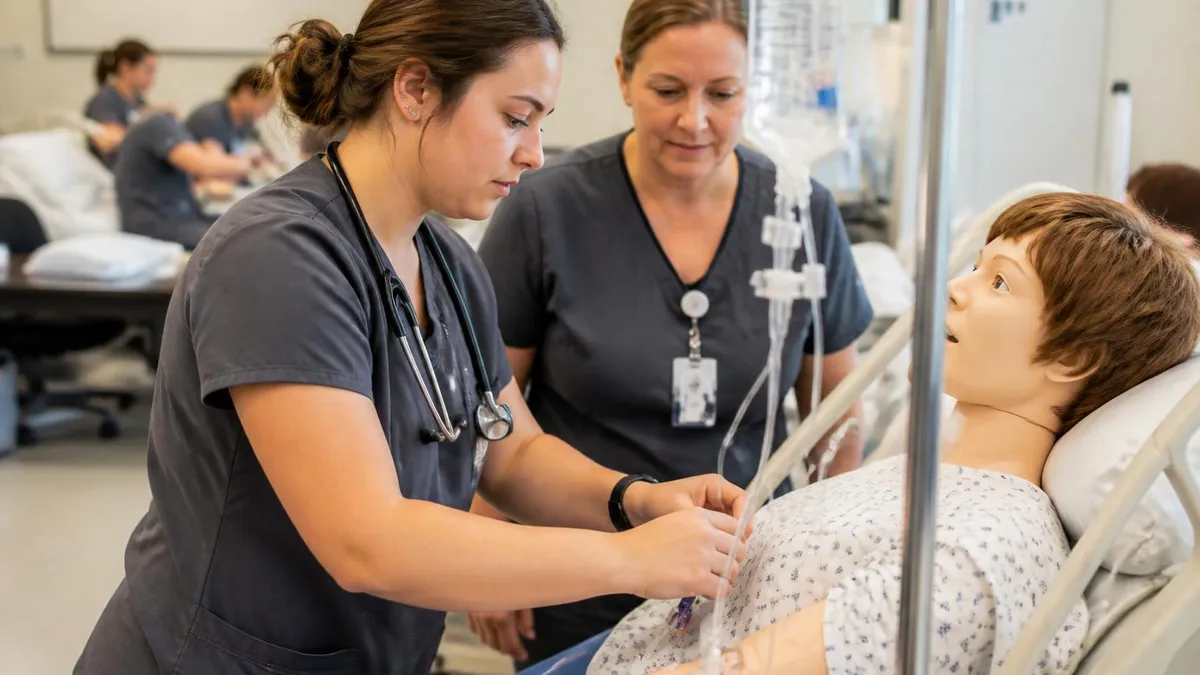
Clinical experience is a non-negotiable component of every legitimate accredited LPN program. Students are required to complete a minimum number of supervised clinical hours — typically 500 to 700 hours — in real healthcare settings such as hospitals, long-term care facilities, clinics, and community health centers. These clinical rotations are where you translate classroom knowledge into hands-on patient care skills. Schools with strong clinical partnerships give students exposure to diverse patient populations and a wider range of procedures, which directly improves readiness for the NCLEX-PN and for employment after graduation.
Financial aid availability is another major consideration when selecting among accredited LPN schools. Accredited programs qualify students for federal financial aid through the Free Application for Federal Student Aid (FAFSA), including Pell Grants, subsidized loans, and work-study programs. Many states also offer scholarship programs specifically for nursing students, particularly in rural or underserved areas facing healthcare workforce shortages. Some employers, especially nursing homes and home health agencies, offer tuition reimbursement or loan forgiveness in exchange for a service commitment, effectively making your education nearly cost-free in some cases.
Accredited LPN Schools by the Numbers
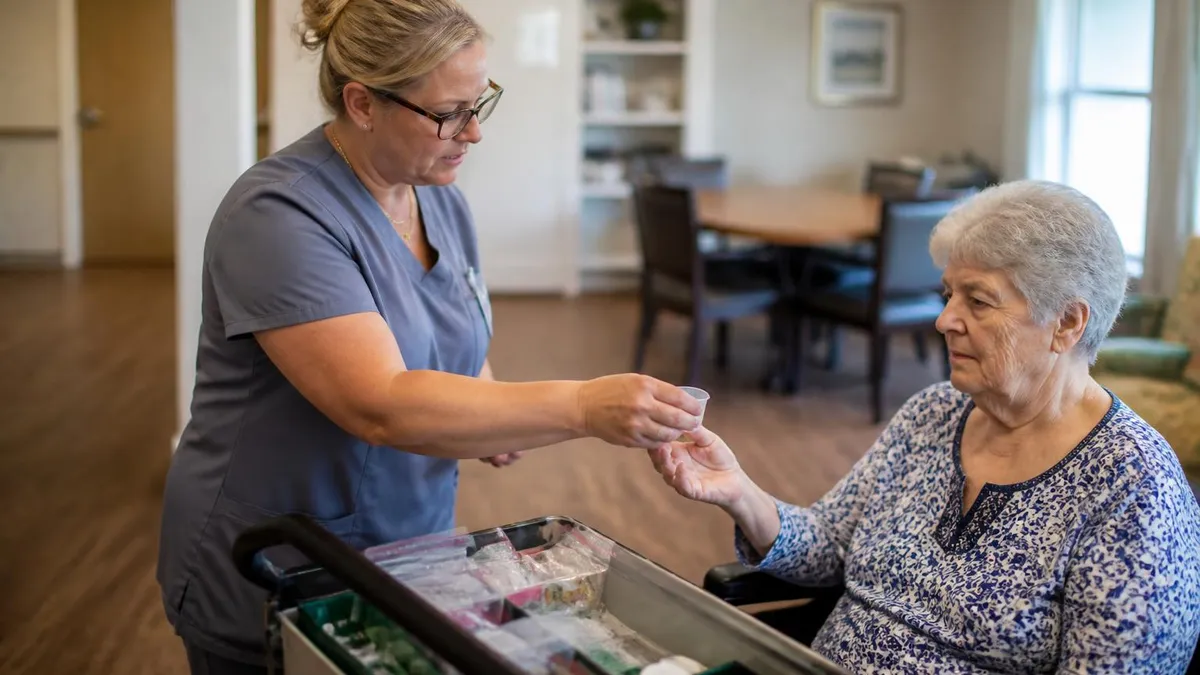
Types of Accredited LPN Programs
The most affordable and widely available option. Community colleges offer ACEN-accredited LPN programs ranging from 12 to 18 months, with tuition typically between $5,000 and $15,000. These programs often have strong local clinical partnerships and excellent NCLEX-PN pass rates.
Private vocational schools offer flexible scheduling including evening and weekend cohorts. Tuition runs higher — $15,000 to $30,000 — but programs may start more frequently throughout the year. Verify ACEN accreditation and state board approval before enrolling.
A smaller but growing option in which healthcare systems run their own LPN training programs. Tuition may be subsidized or waived in exchange for a post-graduation work commitment. These programs typically offer direct pathways to employment within the sponsoring healthcare system.
Some accredited schools offer LPN coursework partially online, with in-person clinical rotations completed locally. This format suits students with work or family obligations. Verify that clinical hours can be arranged in your geographic area before committing to an online-hybrid program.
Understanding what accreditation actually means is essential before you invest more than a year of your life and tens of thousands of dollars into an LPN program. In the United States, nursing education accreditation is a voluntary peer-review process in which an independent agency evaluates a school's curriculum, faculty qualifications, student outcomes, clinical training arrangements, and institutional resources. Programs that meet the agency's standards receive accreditation, which must be renewed periodically through ongoing compliance reviews. A program that loses accreditation is required to notify students and may be prohibited from enrolling new cohorts until deficiencies are corrected.
The Accreditation Commission for Education in Nursing (ACEN) is the primary accrediting body for practical nursing programs. ACEN evaluates programs against standards that cover mission and governance, faculty credentials, student support services, curriculum design, resources and facilities, and most critically, student outcomes including graduation rates and NCLEX-PN pass rates. ACEN publishes its accreditation decisions and program outcome data publicly, giving prospective students a transparent way to compare schools. When you visit the ACEN website, you can search for any program by state and verify its current accreditation status before applying.
State board of nursing approval is a separate but equally important credential that every legitimate LPN program must hold. Even a nationally accredited program must receive approval from the state board of nursing in every state where it operates. State approval confirms that the program meets the minimum statutory requirements for clinical training hours, faculty-to-student ratios, and curriculum content as defined by state law.
Graduating from a state-approved program is a prerequisite for eligibility to take the NCLEX-PN in that state. If you plan to work across state lines, you should also verify that your school's program meets requirements in states where you may seek licensure.
Some programs describe themselves as "approved" or "recognized" by various organizations without holding formal ACEN accreditation. Be cautious with this language. Only ACEN, CCNE, and state board approval carry the regulatory weight needed for NCLEX-PN eligibility and federal financial aid. Certificates from professional associations or industry groups — while they may have educational value — do not substitute for proper nursing education accreditation. Always verify a school's accreditation status directly with ACEN or your state board of nursing, not solely through the school's own marketing materials.
Programmatic accreditation differs from institutional accreditation, and both matter. Institutional accreditation covers the entire college or university as an educational institution, granted by regional accrediting bodies such as the Higher Learning Commission (HLC) or the Southern Association of Colleges and Schools (SACS). Programmatic accreditation — what ACEN provides — focuses specifically on the nursing program within that institution. Ideally, your LPN program should hold both: the host institution should be regionally accredited, and the nursing program should hold ACEN accreditation. This dual accreditation provides the strongest foundation for financial aid eligibility, credit transferability, and professional recognition.
Accreditation also directly affects your ability to continue your education after earning your LPN license. Many bridge programs that allow LPNs to advance to Registered Nurse (RN) status — commonly called LPN-to-RN or LPN-to-ADN bridge programs — require that your original LPN education came from an ACEN-accredited program. If you enroll in a non-accredited program and later want to pursue RN licensure through a bridge pathway, you may find doors closed. Investing in an accredited program from the start protects your long-term career flexibility and eliminates unnecessary obstacles on your advancement path.
When researching programs, pay close attention to how recently a school received its accreditation renewal and whether there were any conditions attached. ACEN sometimes grants conditional accreditation — meaning the program met most standards but must address specific deficiencies within a defined timeframe.
A program under conditional accreditation is still legally operating and its graduates are still eligible for NCLEX-PN, but it is a yellow flag worth investigating. Request information about the program's most recent accreditation review report and ask the admissions office directly whether the program holds full, unconditional accreditation. A reputable program will be transparent about its accreditation status.
Comparing Accredited LPN Program Options
Community colleges represent the gold standard for accessible, affordable LPN education. Most programs run 12 to 18 months and cost between $5,000 and $15,000 in total tuition. Because community colleges are publicly funded institutions with established regional accreditation, their LPN programs almost universally hold ACEN accreditation and strong state board approval records. They typically maintain long-standing relationships with local hospitals and long-term care facilities, giving students access to high-quality clinical rotations across multiple healthcare settings.
One potential drawback of community college programs is limited cohort start dates — many programs begin just once or twice per year and admission is competitive. Waitlists of six months to a year are not uncommon at high-demand schools. If time is a factor, applying to multiple community colleges simultaneously increases your chances of starting sooner. Check each school's NCLEX-PN pass rate published on the state board of nursing website — rates above 85% indicate a program with strong curriculum alignment to the licensure exam content.
Pros and Cons of Enrolling in an Accredited LPN Program
- +NCLEX-PN eligibility guaranteed — only accredited program graduates qualify to sit for the licensure exam
- +Federal financial aid access through FAFSA, including Pell Grants and subsidized student loans
- +Employer confidence — hospitals and healthcare systems preferentially hire graduates of accredited programs
- +LPN-to-RN bridge program eligibility for future career advancement
- +Consistent curriculum standards ensure you graduate with skills that meet national patient safety benchmarks
- +State board approval included — accredited programs meet both national and state regulatory requirements
- −Competitive admission processes with waitlists of 6 to 12 months at popular community college programs
- −Higher tuition at private accredited vocational schools, often $15,000 to $30,000 or more
- −Rigid clinical scheduling requirements that are difficult to accommodate around full-time work
- −Program availability varies significantly by region — rural areas may have very few local options
- −Some accredited programs still have below-average NCLEX-PN pass rates, requiring careful vetting
- −Minimum GPA and prerequisite coursework requirements may delay enrollment for some applicants
Pros and Cons at a Glance
| Pros | Cons |
|---|---|
| NCLEX-PN eligibility guaranteed — only accredited program graduates qualify to sit for the licensure exam | Rigid clinical scheduling requirements that are difficult to accommodate around full-time work |
| Federal financial aid access through FAFSA, including Pell Grants and subsidized student loans | Program availability varies significantly by region — rural areas may have very few local options |
| Employer confidence — hospitals and healthcare systems preferentially hire graduates of accredited programs | Some accredited programs still have below-average NCLEX-PN pass rates, requiring careful vetting |
| LPN-to-RN bridge program eligibility for future career advancement | Minimum GPA and prerequisite coursework requirements may delay enrollment for some applicants |
LPN Program Application Checklist
- ✓Verify the program holds current ACEN accreditation at the official ACEN.org website before applying.
- ✓Confirm the program holds state board of nursing approval in the state where you plan to practice.
- ✓Research the program's NCLEX-PN first-attempt pass rate for the most recent three years.
- ✓Compare total program costs including tuition, fees, supplies, uniforms, and clinical transportation.
- ✓Request information about clinical placement partners and the diversity of available clinical sites.
- ✓Determine whether the program offers full-time, part-time, evening, or weekend scheduling options.
- ✓Complete all prerequisite courses required for admission such as anatomy, physiology, and English composition.
- ✓Gather required application documents including transcripts, immunization records, and background check results.
- ✓Submit your FAFSA and research scholarship opportunities specific to nursing students in your state.
- ✓Attend a program information session or schedule a tour to evaluate faculty, facilities, and learning resources.
NCLEX-PN Pass Rate Is the Most Important Quality Metric
When comparing accredited LPN schools, a program's NCLEX-PN first-attempt pass rate is the single most reliable indicator of educational quality. State boards of nursing publish these rates annually, and any program consistently below 80% should raise serious concerns. A high pass rate signals that the curriculum, faculty, clinical training, and exam preparation resources are all aligned to produce competent, exam-ready nurses — which directly translates to better job prospects and faster time to licensure.
Understanding the full cost of attending an accredited LPN program requires looking beyond tuition alone. Many students focus on the advertised tuition figure and underestimate how much additional expenses add up over 12 to 18 months of enrollment.
Common additional costs include liability insurance ($50 to $100 per year), nursing uniforms and shoes ($150 to $300), a stethoscope and basic clinical equipment ($100 to $200), textbooks and online access codes ($500 to $1,500), drug screening and criminal background checks ($75 to $150), CPR certification ($50 to $100), and ATI or other NCLEX prep materials ($200 to $400). Total out-of-pocket costs beyond tuition can easily reach $2,500 to $3,000.
Federal financial aid is the first place every applicant should look for funding. Completing the FAFSA opens access to Pell Grants, which do not need to be repaid and can provide up to $7,395 per year for eligible students as of the 2024–2025 academic year. Federal subsidized loans offer low interest rates with no interest accruing while you are enrolled at least half-time.
Unsubsidized loans are also available for students who need additional funding beyond the Pell Grant amount. Together, these programs can cover the majority of tuition costs at a community college LPN program, leaving relatively little out-of-pocket expense for financially eligible students.
State-specific scholarship programs represent another significant funding source that many applicants overlook. Dozens of states operate nursing scholarship and loan forgiveness programs designed to address healthcare workforce shortages, particularly in rural and underserved communities. For example, the National Health Service Corps Scholarship Program provides full tuition plus a living stipend to students who commit to serving in a Health Professional Shortage Area after graduation. Similar programs exist at the state level in most states, and some are specifically targeted to LPN and vocational nursing students rather than only bachelor's-level nurses.
Employer tuition reimbursement and sponsorship programs are increasingly common as healthcare organizations compete for qualified nursing staff. Long-term care facilities, home health agencies, and community health centers often struggle to attract enough LPNs and are willing to invest in the education of future employees. Some programs pay tuition upfront in exchange for a one- to two-year work commitment after graduation, while others reimburse tuition costs on a semester-by-semester basis once the student earns passing grades. These arrangements can dramatically reduce or eliminate the net cost of your LPN education while simultaneously securing post-graduation employment.
Payment plans are available at most accredited LPN schools and can help students who do not qualify for substantial financial aid manage the cost of enrollment. Many community colleges allow students to divide each semester's tuition into three or four monthly payments without interest, effectively spreading costs over the program's duration. Private vocational schools may offer similar internal financing options, though some also partner with third-party lenders for student financing — in those cases, carefully review interest rates and repayment terms before signing, as private student loans typically carry higher rates than federal loans.
Tax benefits for education expenses can reduce your net cost further. The American Opportunity Tax Credit (AOTC) provides up to $2,500 per year for eligible students in their first four years of higher education, and the Lifetime Learning Credit provides up to $2,000 per year for any qualifying educational expenses including vocational training. Even if your LPN program is your first college experience, these credits can meaningfully offset tuition costs during the year you are enrolled. Consult a tax professional or use IRS Publication 970 to determine which credits apply to your specific situation.
When comparing total cost of attendance across programs, calculate your expected return on investment based on LPN salary in your target geographic area. The Bureau of Labor Statistics reports a national median annual wage for LPNs of approximately $59,730, with significant variation by state and setting.
If a community college program costs $10,000 total and a private vocational school costs $25,000 for essentially the same credential and NCLEX-PN outcomes, the $15,000 difference represents roughly three months of gross LPN salary that you would need to earn before your education costs equalize. Over a nursing career of 20 or 30 years, these differences become relatively small — but starting your career with less debt gives you more financial flexibility as you build experience.
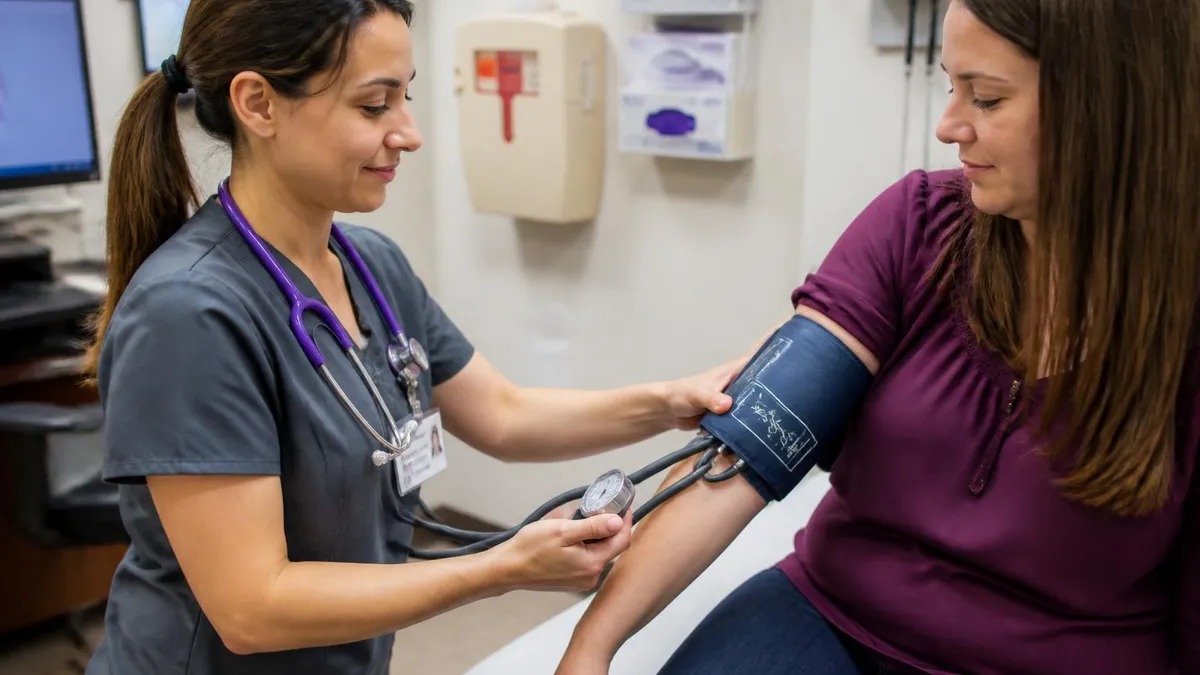
Some schools market LPN or practical nursing training certificates without holding ACEN accreditation or state board of nursing approval. Graduates of these programs are ineligible to sit for the NCLEX-PN exam, meaning they cannot legally practice as LPNs regardless of the quality of instruction they received. Always verify accreditation status on the ACEN.org website and with your state board of nursing before paying any enrollment deposit or beginning coursework at any program.
Evaluating the quality of an accredited LPN program requires digging deeper than simply confirming the school holds ACEN accreditation. Accreditation sets a floor — a minimum acceptable standard — but programs vary widely in quality above that floor. The most revealing data points to examine are NCLEX-PN first-attempt pass rates, graduation rates, graduate employment rates within six months of licensure, and student-to-faculty ratios during clinical rotations. Programs that publish this data transparently and compare favorably to state and national benchmarks are demonstrating genuine commitment to student outcomes rather than mere regulatory compliance.
Faculty credentials matter significantly in clinical nursing education. Look for programs where a majority of full-time faculty hold master's degrees or higher in nursing, and where clinical instructors bring direct, recent experience in the types of settings where LPNs commonly work — medical-surgical units, long-term care facilities, and community health clinics. Faculty who are actively engaged in clinical practice bring current knowledge to the classroom and can speak authentically to the day-to-day realities of LPN roles. Student testimonials and alumni networks can offer informal but valuable insight into faculty quality and responsiveness.
Clinical placement quality varies dramatically across programs and has a direct impact on how prepared graduates feel when they enter the workforce. The best accredited LPN programs maintain clinical affiliations with multiple types of healthcare facilities — acute care hospitals, rehabilitation centers, skilled nursing facilities, pediatric clinics, and community health organizations. This variety exposes students to diverse patient populations and clinical scenarios that build adaptability. Programs with only one or two clinical sites — especially if those sites are primarily long-term care facilities — may produce graduates with narrower clinical experience that limits their initial employment options.
Student support services are an often-underestimated factor in LPN program quality. Attrition rates in nursing programs can be high, and programs that invest in student success services — tutoring, skills labs with open practice hours, NCLEX preparation workshops, academic advising, and mental health resources — tend to have better graduation rates and licensure exam outcomes.
When touring a program, ask specifically what resources are available to students who struggle with the academic or clinical components of the program and what the school's policy is for students who fail a course or clinical rotation. A program with clear, supportive remediation pathways is preferable to one that simply dismisses students at the first academic stumble.
Location and commute factors significantly affect long-term enrollment success. Many students underestimate how exhausting a 12-to-18-month intensive nursing program can be, and adding a long daily commute compounds fatigue in ways that affect academic performance and clinical safety. When possible, choose an accredited program within a reasonable distance of your home, and verify that clinical sites are also accessible from your location without prohibitive commute times. Programs that place students at clinical sites many miles from the main campus may create scheduling and transportation burdens that are difficult to sustain alongside coursework and personal responsibilities.
Program reputation within the local healthcare community is a qualitative factor worth investigating through informational interviews with working LPNs and nursing managers in your area. Healthcare employers form opinions about local nursing programs based on the readiness and professionalism of the graduates they hire.
A program with a strong local reputation may give its graduates a meaningful advantage in the job market compared to graduates of lesser-known programs, even if both programs hold equivalent accreditation status. Ask local nurses and nurse managers which programs they respect and which schools' graduates they have found to be well-prepared — these conversations often yield more candid information than any official school ranking or marketing material.
Finally, consider how a program fits your personal learning style and life circumstances. Some students thrive in the structured, cohort-based environment of a traditional classroom program where all students progress together on a fixed schedule. Others perform better with more individualized pacing or flexible scheduling options.
Reflect honestly on your study habits, support systems, financial situation, and career timeline before making a final enrollment decision. The best accredited LPN program for you is not necessarily the highest-ranked or most prestigious option available — it is the program where you are most likely to succeed academically, complete your clinical hours, pass the NCLEX-PN on your first attempt, and launch a stable, rewarding nursing career.
Once you have identified one or more accredited LPN programs that meet your requirements, the next step is building a strong application. Most accredited LPN programs are competitive, and a well-prepared application significantly improves your chances of admission. Start by reviewing each school's prerequisite requirements carefully. Many programs require completion of high school biology and chemistry, a certified nursing assistant (CNA) credential, or college-level anatomy and physiology before you can apply. Completing these prerequisites with strong grades demonstrates academic readiness and helps you stand out in competitive admissions pools.
Letters of recommendation carry meaningful weight in LPN program applications, particularly at community colleges with limited enrollment capacity. Choose recommenders who can speak to your work ethic, reliability, compassion, and any healthcare or caregiving experience you have. A letter from a supervising nurse, a physician, a healthcare administrator, or a respected academic instructor is more persuasive than a personal character reference. Give recommenders at least four to six weeks of notice and provide them with a brief summary of your goals and qualifications to help them write a focused, compelling letter on your behalf.
Healthcare experience prior to applying — whether as a CNA, medical assistant, home health aide, patient care technician, or even a long-term hospital volunteer — strengthens your application and better prepares you for the demands of clinical nursing training.
Programs consistently report that applicants with prior patient contact experience have higher completion rates and better clinical performance than those who enter nursing education without any direct care background. Even a part-time CNA position of six to twelve months provides immensely valuable context for the nursing curriculum and helps you make an informed decision that LPN is the right career path before committing fully to the program.
Preparing for the entrance exam is another important step in the application process. Many accredited LPN programs require applicants to take the TEAS (Test of Essential Academic Skills) or a similar nursing entrance examination. The TEAS assesses reading comprehension, mathematics, science, and English language skills.
Scores above the 60th percentile are generally competitive for community college LPN programs, while some programs require scores at the 70th percentile or higher. Free and low-cost TEAS preparation resources are available through the ATI website, public libraries, and community college testing centers. Budget four to eight weeks of focused preparation time to achieve a competitive score.
Crafting a compelling personal statement helps admissions committees understand your motivation, background, and goals beyond what transcripts and test scores reveal. A strong personal statement articulates why you chose nursing as a career, what specific experiences drew you toward patient care, and how completing an LPN program aligns with your short- and long-term professional goals.
Avoid generic statements about wanting to help people — every applicant says this. Instead, share a specific experience that solidified your commitment to nursing, describe a challenge you overcame that demonstrates resilience relevant to the demands of clinical training, and explain why you are choosing this specific program over other available options.
Applying to multiple accredited LPN programs simultaneously is the single most effective strategy for minimizing the time between deciding to become an LPN and actually beginning your training. Many students make the mistake of applying to just one program, waiting for a decision, and then starting over if rejected or waitlisted.
By applying concurrently to three to five programs in your region — including at least one community college, one vocational school, and potentially an online hybrid option — you dramatically increase the probability of starting training within the next program cohort. The additional application fees, typically $25 to $75 per school, are a minor investment compared to the cost of delaying your enrollment by six months to a year while waiting for a single program's decision.
After acceptance, prepare for the transition to nursing school with intentional self-management strategies. LPN programs are academically demanding — students often describe the experience as comparable to a full-time job in terms of time commitment, and many programs have strict attendance policies that allow minimal absences from class or clinical rotations.
Before your program begins, arrange reliable childcare if applicable, communicate your schedule to your employer if you are continuing to work part-time, establish a dedicated study space at home, and connect with other incoming students through program orientation events or social media groups. Building a peer support network early in the program helps with accountability, shared studying, and the emotional demands of learning in a high-stakes clinical environment.
Sample Certified Practical Nurse Practice Questions
Try these questions from our free Certified Practical Nurse practice tests. The correct answer and an explanation follow each question.
An LPN is assessing lung sounds and hears a high-pitched, continuous musical sound over the right lower lobe. This finding is best described as:
- A. Crackles
- B. Rhonchi
- C. Wheezing
- D. Pleural friction rub
Answer: C. Wheezing
Wheezing is a high-pitched, continuous, musical sound caused by narrowed or obstructed airways.
A post-operative patient has a blood pressure of 88/54 mmHg and heart rate of 118 bpm. Which additional assessment finding would best confirm hypovolemic shock?
- A. Warm, flushed skin with bounding pulses
- B. Cool, clammy skin with delayed capillary refill
- C. Bradycardia with widened pulse pressure
- D. Hypertension with bounding peripheral pulses
Answer: B. Cool, clammy skin with delayed capillary refill
Cool, clammy skin and delayed capillary refill indicate peripheral vasoconstriction from hypovolemia, confirming early hypovolemic shock.
A patient has a clean surgical cut made by a scalpel. This wound type is best classified as a(n):
- A. Laceration
- B. Abrasion
- C. Incision
- D. Puncture
Answer: C. Incision
An incision is a clean wound made intentionally by a sharp surgical instrument with smooth, well-approximated edges.
A client with a cervical spine injury at C5-C6 is being bathed. Which finding requires the LPN to stop and immediately notify the charge nurse?
- A. Muscle spasms in the upper extremities
- B. Sudden severe headache, sweating above the injury, and bradycardia
- C. Mild skin redness over the sacrum
- D. Urinary incontinence
Answer: B. Sudden severe headache, sweating above the injury, and bradycardia
These are classic signs of autonomic dysreflexia, a life-threatening condition in clients with SCI at T6 or above, caused by an unrecognized stimulus below the injury level.
LPN Questions and Answers

LPN Requirements 2026: Complete Guide to Becoming a Licensed Practical Nurse

LPN IV Certification: Complete 2026 Guide to Training, Requirements & Cost

LPN Programs in Florida: Complete 2026 Guide to Accredited Schools, Costs, Requirements & Licensure

LPN Salary Wisconsin 2026: Average Pay, Top Cities, and How to Earn More

LPN Duties: Complete Guide to Daily Responsibilities and Scope of Practice
About the Author

Registered Nurse & Healthcare Educator
Johns Hopkins University School of NursingDr. Sarah Mitchell is a board-certified registered nurse with over 15 years of clinical and academic experience. She completed her PhD in Nursing Science at Johns Hopkins University and has taught NCLEX preparation and clinical skills courses for nursing students across the United States. Her research focuses on evidence-based exam preparation strategies for healthcare certification candidates.
Join the Discussion
Connect with other students preparing for this exam. Share tips, ask questions, and get advice from people who have been there.
View discussion (7 replies)