
How to Open an ICA File & What ICAS Means for Students in 2026 October
Learn how to open an ICA file, what ICAS stands for, and how students can prepare. Complete guide with practice tests. 🎓

If you have ever searched for how to open an ICA file or wondered what ICAS actually stands for, you are not alone. Thousands of students and parents across the United States encounter these terms every year when preparing for international academic assessments. The WES ICAS program — formally known as the International Competitions and Assessments for Schools — is one of the most respected external academic benchmarking tools available to elementary and middle school students today, offering a clear picture of a child's academic standing compared to peers globally.
Understanding what is an ica requires a bit of background on how the assessment system works. ICAS is developed by ICAS Assessments (Janison), formerly known as UNSW Global (and before that, Educational Assessment Australia, a unit of the University of New South Wales). The assessments are designed for students in Years 2 through 12, covering subjects such as English, Mathematics, Science, Spelling, Writing, and Digital Technologies. Each test is carefully calibrated to challenge students at the top of their academic range while remaining accessible to grade-level performers.
The term "ICA file" can actually refer to two completely different things depending on context. In the world of academic assessments, an ICA file refers to the official ICAS assessment paper or digital test file that students receive during the examination period. In a computing context, an ICA file (Independent Computing Architecture) is a file format associated with Citrix virtual desktop sessions. This article focuses primarily on the academic side, though we will briefly explain the technology side too so you never feel lost again.
Many families first hear about ICAS through their child's school, which registers students as a group and distributes practice materials. Schools in the US that offer ICAS typically partner directly with ICAS Assessments or use an authorized distributor. Once registered, students receive login credentials or physical papers depending on whether they sit the online or paper-based version. Understanding the difference between these two formats is crucial for proper preparation and logistics planning.
The importance of ICAS goes well beyond a single test score. Students who participate regularly in ICAS build confidence in standardized testing environments, develop stronger subject-matter fluency, and gain recognized credentials that can support academic portfolios when applying to gifted programs, selective schools, or scholarship opportunities. A high ICAS performance — particularly a Medal or Distinction award — carries real weight in competitive academic circles and can open doors that ordinary classroom grades cannot.
This guide covers everything you need to know: what ICAS files are, how to open them, what the assessment structure looks like, how students are scored, what preparation strategies work best, and how practice tests can dramatically improve your child's results. Whether you are a parent exploring ICAS for the first time or a student who has already sat one or two papers and wants to improve, this resource has been built specifically for you.
By the time you finish reading, you will have a thorough understanding of the WES ICAS system, the ICA file format in both educational and technical contexts, and a practical, week-by-week roadmap for achieving your best possible result. Let us start at the very beginning with the structure of the assessment itself.
ICAS by the Numbers

ICAS Assessment Structure: What Students Face
Tests reading comprehension, vocabulary, and language conventions across a range of literary and informational texts. Students answer multiple-choice questions about meaning, tone, structure, and author intent. Duration is approximately 40–45 minutes depending on year level.
Covers number and algebra, measurement and geometry, and statistics and probability. Questions progress in difficulty and require both conceptual understanding and procedural fluency. Calculators are not permitted in lower year levels.
Assesses scientific understanding, data interpretation, and experimental reasoning. Questions draw on biology, chemistry, physics, and earth sciences, requiring students to apply knowledge rather than simply recall facts.
Tests computational thinking, coding concepts, data representation, and digital systems knowledge. This subject reflects modern STEM curricula and is increasingly important for students pursuing technology pathways.
Spelling tests correct word forms in context; Writing tasks require students to produce original written responses. Both assess language accuracy, creativity, and communication effectiveness under timed conditions.
So exactly what is an ICA file, and why does the question come up so often? In the academic context, ICA files are the official digital assessment documents used by the ICAS program when schools run computer-based testing. These files contain the test questions, multimedia assets, and timing data that the testing platform loads when a student begins their session. Schools receive ICA files from ICAS Assessments through a secure portal, and IT administrators install or configure them in advance of test day so students experience a smooth, uninterrupted assessment.
In a technology context, knowing what is a ica file means understanding the Citrix Independent Computing Architecture format. An ICA file is a small configuration file that tells the Citrix Workspace client how to connect to a remote server or virtual desktop environment. It stores connection parameters such as the server address, protocol settings, and application launch instructions. When a user double-clicks an ICA file, Citrix Workspace reads the configuration and opens the remote session automatically without requiring manual setup.
For parents and students dealing with school-issued ICAS materials, the most common ICA-related question is simply: why can't I open this file on my home computer? The answer usually comes down to software compatibility. ICAS digital tests are designed to run within the school's secure testing environment, which may use a locked-down browser or a proprietary test-delivery platform. Attempting to open the raw ICA test file outside of that environment will typically fail because the file requires back-end authentication from the school's testing server.
When it comes to Citrix ICA files specifically, opening them is straightforward provided you have the right software installed. The official Citrix Workspace app — available free for Windows, macOS, Linux, iOS, and Android — is the required tool. Once installed, you simply double-click the ICA file and the app handles the rest. Many corporate and healthcare organizations use ICA files to give remote workers seamless access to applications running on central servers, making this one of the most common enterprise virtualization formats in the world.
Running an ICA file (rather than just opening it) involves a few extra considerations. For Citrix sessions, running an ICA file means the Workspace client actively launches the remote application or desktop and maintains a live connection throughout your session. For educational ICA files under the ICAS umbrella, running the file means initiating a proctored test session within the school platform. Both scenarios require stable internet connections and compatible operating systems — typically Windows 10 or later, or macOS 11 Big Sur or later for modern platforms.
The confusion between these two ICA file types is understandable because the acronym is identical. When families receive emails from their school's ICAS coordinator mentioning ICA files, they should treat this as referring to the educational test format, not the Citrix protocol. School IT teams handle the technical setup, so students and parents rarely need to interact with the raw file directly. Instead, students log in to the designated testing platform with their credentials and the system handles file loading transparently in the background.
Understanding what ICA files are — in both senses of the term — helps demystify the test-day process. Students who know what to expect technically feel less anxious walking into the testing room. They understand that the platform has been configured for them, that their responses are being securely recorded, and that the timer is accurate. This baseline technical confidence, combined with solid subject-matter preparation, puts students in the best possible position to perform at their peak on assessment day.
How to Open an ICA File: Step-by-Step by Platform
To open an ICA file on Windows, first download and install the Citrix Workspace app from the official Citrix website. Once installed, navigate to the ICA file in File Explorer and double-click it. The Workspace client will automatically read the configuration parameters embedded in the file and establish a connection to the remote server or virtual desktop. If the file does not open, right-click and choose "Open With" to select Citrix Workspace manually from your installed applications list.
For Windows users dealing with school-based ICAS test files, the process is different. Your school's IT administrator will have pre-configured a secure testing browser or platform on school machines. Log in to the student testing portal using your assigned credentials — typically a username and PIN provided by your teacher. The system handles the ICA test file automatically. If you are attempting to access ICAS materials from home, contact your school's ICAS coordinator, as home access is usually restricted for test-integrity reasons.

Is ICAS Worth It? Benefits and Drawbacks for Families
- +Provides globally benchmarked results that classroom grades alone cannot offer
- +Covers six critical subject areas aligned with modern STEM and literacy curricula
- +Awards (Medal, High Distinction, Distinction) are recognized by selective schools and scholarship programs
- +Detailed performance reports help identify specific knowledge gaps before high school
- +Regular participation builds test-taking stamina and reduces exam anxiety over time
- +Affordable compared to other external assessments, with many schools subsidizing fees
- −Results are not a substitute for teacher assessments or standardized state testing
- −Students in lower year levels may find the top-end questions significantly challenging
- −Paper-based and digital formats are available unevenly depending on the school
- −Preparation materials and official past papers can be difficult to source in the US
- −A single test date per subject means illness or anxiety on the day has an outsized impact
- −Medal and High Distinction cut-scores vary year to year, making exact targets hard to set
Pros and Cons at a Glance
| Pros | Cons |
|---|---|
| Provides globally benchmarked results that classroom grades alone cannot offer | Results are not a substitute for teacher assessments or standardized state testing |
| Covers six critical subject areas aligned with modern STEM and literacy curricula | Students in lower year levels may find the top-end questions significantly challenging |
| Awards (Medal, High Distinction, Distinction) are recognized by selective schools and scholarship programs | Paper-based and digital formats are available unevenly depending on the school |
| Detailed performance reports help identify specific knowledge gaps before high school | Preparation materials and official past papers can be difficult to source in the US |
| Regular participation builds test-taking stamina and reduces exam anxiety over time | A single test date per subject means illness or anxiety on the day has an outsized impact |
| Affordable compared to other external assessments, with many schools subsidizing fees | Medal and High Distinction cut-scores vary year to year, making exact targets hard to set |
ICAS Preparation Checklist: 10 Steps Before Test Day
- ✓Confirm your child's year level and which ICAS subjects their school offers this cycle.
- ✓Register by your school's internal deadline — late registrations are rarely accepted.
- ✓Download or request official ICAS preparation materials from your school coordinator.
- ✓Complete at least two full timed practice papers per subject before the real test.
- ✓Review every incorrect practice question together, focusing on understanding the reasoning, not just the answer.
- ✓Identify the two weakest sub-topics per subject and dedicate extra study sessions to those areas.
- ✓Confirm whether your child is sitting the paper-based or digital version so technology is not a surprise.
- ✓Check that your school's testing devices have the required software or browser configuration installed.
- ✓Ensure your child sleeps at least eight hours the night before each test and eats a solid breakfast.
- ✓Arrive at the testing venue at least ten minutes early and bring all required stationery for paper-based tests.
Medal = Top Scorer — High Distinction = Top 1%
ICAS uses a norm-referenced scoring model, meaning your child's raw score is compared against every other student who sat the same paper globally. A Medal is awarded to the single highest-scoring student in each year level per country — an extraordinarily rare achievement. High Distinction goes to roughly the top 1–3% of sitters, Distinction to the next tier, and Credit to the broad middle band. Even a Credit award signals that a student is performing above average against an international peer group, which is a meaningful benchmark for college-preparatory planning.
The ICAS scoring system is one of the most distinctive features of the program and understanding it helps families interpret results accurately. Unlike percentage-based school tests where 70% might mean a C grade, ICAS uses scaled scores that place students on a continuous performance scale. This scale is equated across years so that a student's growth from Year 4 to Year 6, for example, can be tracked and measured in a meaningful, comparable way. Parents receive a detailed report showing not just the award level but the specific skill bands where their child excelled or struggled.
The five award tiers — Medal, High Distinction, Distinction, Credit, and Merit — each carry specific percentile benchmarks. Medal winners are the top performer in their country and year level, making it an exceptional and rare honor. High Distinction is awarded to approximately the top 1 to 3 percent of sitters globally, while Distinction covers roughly the top 10 percent. Credit recognizes students in the top 25 percent, and Merit certificates go to all students who participate regardless of score, acknowledging the effort of taking on an external academic challenge.
One of the most valuable aspects of the ICAS report is the skills-level breakdown it provides. Rather than a single number, parents see which specific question types or skill domains their child handled with confidence and which ones caused difficulty. For example, a child might score in the Distinction band for Reading Comprehension but only at Merit level for Vocabulary in Context. This granularity turns the ICAS result into an actionable study guide for the following year, helping families and tutors target preparation precisely where it will have the greatest impact.
Knowing what is an ica file in the assessment sense also helps students understand the digital testing experience. For computer-based ICAS, the digital platform records response time per question, flags items left unanswered, and provides a review screen at the end of the session where students can revisit flagged questions before submitting. This is a significant advantage for students who have practiced timed digital tests, as they know to allocate review time at the end of their session rather than spending too long on a single difficult question early in the paper.
What does ICAS stand for in practical terms for a student's academic journey? More than just four letters, ICAS stands for an internationally recognized opportunity to demonstrate academic excellence beyond the walls of your own classroom. When a student earns a High Distinction in ICAS Mathematics, that credential is understood by selective schools, scholarship committees, and gifted program coordinators across multiple countries. It provides a level of external validation that internal school grades, however strong, simply cannot replicate because they lack a common reference point.
The difference between a Credit and a Distinction often comes down to preparation intensity. Students who rely solely on classroom learning and sit ICAS cold — without any dedicated practice — typically land in the Merit to Credit range. Students who spend four to six weeks doing targeted practice, reviewing past papers, and focusing on question types they find difficult routinely move up one or even two award tiers. This makes ICAS one of the highest return-on-investment academic activities a student can undertake, provided that preparation is structured and consistent rather than last-minute and passive.
Families should also understand the timing of ICAS within the academic calendar. In the United States, schools typically schedule ICAS assessments during the second and third school terms, roughly between March and August depending on state and school calendar variations. Registration windows open several months earlier, so families who want their child to participate must confirm enrollment with the school well in advance. Missing the registration deadline is the single most common reason students are unable to sit ICAS in a given year, which is why proactive communication with the school's ICAS coordinator is so important.
ICAS registration closes weeks before the actual test date, and schools cannot add late registrations once the order has been submitted to ICAS Assessments. Check with your school's ICAS coordinator at the start of each academic year to confirm the internal deadline — it is often several weeks earlier than the official ICAS Assessments cutoff. Missing registration means waiting an entire year for the next opportunity, so mark the date on your calendar the moment you receive the information.
Building an effective ICAS preparation strategy starts with understanding the structure of the test you are targeting. Each ICAS subject paper is divided into question sets of progressively increasing difficulty. The early questions in each paper are designed to be accessible to most students at that year level, while the final third of the paper contains questions that challenge the very top performers. Smart test-takers do not get derailed spending too much time on a single hard question at the expense of accessible points that come later in the sequence.
Time management is perhaps the most underrated skill in ICAS preparation. Most ICAS papers allocate between 35 and 45 minutes for 30 to 45 questions, depending on year level and subject. That works out to roughly 60 to 90 seconds per question.
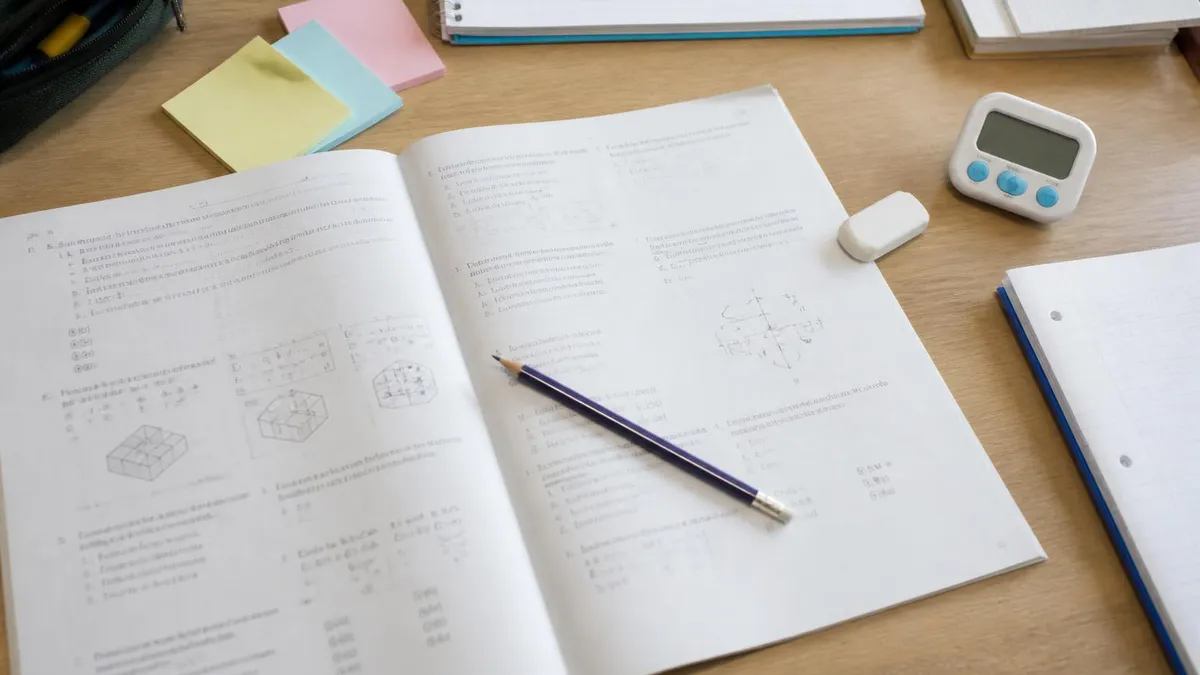
Students who have never practiced under timed conditions often find that the pressure of the clock causes them to second-guess correct answers or to rush through the final section without adequate thought. Simulating real test conditions during practice — timer running, no interruptions, pencil or device only — is one of the most effective preparation habits a student can develop.
Vocabulary building is a cross-subject ICAS strategy that pays dividends in English, Science, and Digital Technologies alike. ICAS questions frequently test whether students can infer the meaning of technical or academic vocabulary from context. Students who read widely — including non-fiction texts, science magazines, and digital literacy articles — consistently outperform peers who read only fiction or assigned classroom texts. Encouraging a daily 20-minute independent reading habit in the months leading up to ICAS can noticeably improve a student's performance across multiple papers.
For the Mathematics paper specifically, the most common preparation mistake is focusing exclusively on calculation practice while neglecting data interpretation and spatial reasoning questions. ICAS Mathematics includes a significant proportion of questions requiring students to read graphs, interpret tables, identify geometric patterns, and reason about probability. Students who practice calculation only — even if they become highly proficient — often lose points on these visual and analytical question types simply because they have not encountered them enough to feel comfortable under timed conditions.
Understanding what does ica stand for in the context of Digital Technologies is increasingly important as schools add this subject to their ICAS lineup. ICAS Digital Technologies tests computational thinking concepts including algorithms, sequencing, data representation in binary and hexadecimal, network fundamentals, and basic programming logic.
Students in Years 5 through 10 who are sitting this paper benefit enormously from hands-on coding practice using platforms such as Scratch, Code.org, or Python-based beginner environments. Abstract understanding of coding concepts is not sufficient — students need to have written and debugged actual programs to internalize the logic that ICAS Digital Technologies questions test.
The ICAS Writing paper deserves special mention because it is structured differently from all other ICAS subjects. Rather than multiple-choice questions, Writing requires students to produce an original written response to a given prompt within a strict time limit. Responses are assessed on criteria including ideas, structure, vocabulary, grammar, punctuation, and spelling. Students who practice writing complete texts under timed conditions — rather than just editing pre-written examples — show the most dramatic score improvements. Aim for at least one timed writing practice per week in the six weeks before the assessment.
Finally, parents play a crucial but often overlooked role in ICAS preparation. The most effective parental support is not doing the work for the child but rather creating the conditions for focused, consistent practice. This means scheduling protected study time, providing access to quality practice materials, celebrating effort over scores, and maintaining a calm, supportive attitude about test performance.
Students whose parents express excessive anxiety about results often internalize that anxiety and underperform relative to their actual knowledge. A matter-of-fact, encouraging approach — acknowledging that a challenging international test is meant to stretch rather than crush — produces far better outcomes than pressure-driven preparation.
In the final weeks before ICAS test day, the most valuable thing a student can do is consolidate rather than frantically cram new material. Consolidation means returning to practice papers already completed, reviewing every question that was answered incorrectly, and understanding the specific reasoning pathway that leads to the correct answer. This kind of deliberate review is far more effective than attempting new content at the last minute, which typically creates confusion and undermines confidence without adding meaningful knowledge.
Sleep and nutrition in the 48 hours before each ICAS paper have a measurable impact on cognitive performance. Research consistently shows that sleep deprivation reduces working memory capacity, slows processing speed, and impairs the ability to retrieve learned information under pressure — all of which are critical functions for standardized test performance. Students who stay up late cramming the night before a test almost universally perform worse than they would have if they had reviewed calmly for an hour and gone to bed at their normal time.
On test day itself, students should read every question twice before choosing an answer. The first read establishes general understanding; the second read catches qualifiers such as "not," "except," "most likely," and "least accurate" that fundamentally change which answer is correct. ICAS questions are carefully worded, and careless misreading of a qualifier is one of the most common sources of avoidable errors. Developing the habit of reading twice during practice makes it automatic under test conditions.
For paper-based ICAS tests, students should bring two sharpened pencils and a good eraser. Answer sheets are scanned optically, so clean, dark pencil marks within the bubbles are essential for accurate scoring. Partially erased or smudged marks can cause scanning errors that result in a question being marked wrong even if the student knew the correct answer. Taking care with the physical mechanics of answering may seem trivial but has real consequences for final scores in a test where every point contributes to award tier placement.
After the test, resist the temptation to immediately discuss every question in detail with classmates. Post-test question analysis is a natural human behavior but often generates unnecessary anxiety, particularly when students realize they chose a different answer from a friend whose reasoning may or may not be correct. Instead, encourage students to take a genuine break from the subject for a day or two before returning to review — by which time the emotional intensity has faded and learning from the experience is actually possible.
When results arrive — typically around 15 business days after the assessment window closes (Writing responses take about 4 to 6 weeks since they are manually marked) — read the report with your child together. Highlight the areas of strength first, celebrate the award level achieved, and then calmly discuss the skill areas identified as below expectation. Frame weaker areas not as failures but as clear targets for the year ahead. ICAS results are most powerful when treated as a diagnostic tool that guides future learning, not as a final verdict on a student's academic worth or potential.
The best time to begin preparing for next year's ICAS is immediately after receiving this year's results. While the memory of the test experience is fresh and the skill-level report reveals exactly where to focus, momentum is at its highest. Students who start light, consistent preparation twelve months out — even just 20 minutes of subject-specific reading or practice per week — are dramatically better positioned than those who compress all preparation into a frantic four-week sprint. Consistency compounds over time, and ICAS rewards students who build knowledge systematically rather than those who simply happen to have a good day.
Sample ICAS Practice Questions
Try these questions from our free ICAS practice tests. The correct answer and an explanation follow each question.
Read the passage: "Leah clutched the envelope, her fingers trembling. She had checked the letterbox every afternoon for three weeks. Now that the reply was finally here, she couldn't bring herself to open it." What does the passage suggest about Leah?
- A. She is bored by the letter
- B. She has been waiting anxiously for important news
- C. She has forgotten who sent the letter
- D. She is angry at the postal service
Answer: B. She has been waiting anxiously for important news
Her trembling fingers and daily checking show she is nervous and has been eagerly waiting.
What does 'open source' mean when referring to software?
- A. Software that costs money to use
- B. Software whose source code is freely available to view, modify, and distribute
- C. Software that only works online
- D. Software developed by large companies
Answer: B. Software whose source code is freely available to view, modify, and distribute
Open source software has its source code made publicly available so anyone can view, modify, and distribute it.
What is the main advantage of using a 'relational database' over a flat-file database?
- A. It stores data in a single table only
- B. It links related data across multiple tables, reducing duplication
- C. It can only be accessed offline
- D. It automatically backs up files to the cloud
Answer: B. It links related data across multiple tables, reducing duplication
A relational database organizes data into linked tables, which eliminates redundancy and makes it easier to query and maintain large datasets.
What process causes rocks to break down into smaller pieces through physical means without changing their chemical composition?
- A. Chemical weathering
- B. Erosion
- C. Mechanical weathering
- D. Deposition
Answer: C. Mechanical weathering
Mechanical (physical) weathering breaks rocks into smaller pieces without altering their chemical makeup, such as through freeze-thaw cycles.
ICAS Questions and Answers

How to Open an ICA File: What ICAS Means for Students and Families

ICAS Answer Sheet: What It Is, How to Use It, and How to Ace Your Practice Test

How to Pass the ICAS Exam in 2026 — Complete Study Guide

ICA Stands For in Education: What ICAS Means for Students and Families

How to Open an ICA File & What ICAS 1 Means for Students
About the Author

Educational Psychologist & Academic Test Preparation Expert
Columbia University Teachers CollegeDr. Lisa Patel holds a Doctorate in Education from Columbia University Teachers College and has spent 17 years researching standardized test design and academic assessment. She has developed preparation programs for SAT, ACT, GRE, LSAT, UCAT, and numerous professional licensing exams, helping students of all backgrounds achieve their target scores.
Join the Discussion
Connect with other students preparing for this exam. Share tips, ask questions, and get advice from people who have been there.
View discussion (8 replies)