
HVAC Contractor Directory: Finding Licensed Pros in Brick, NJ and Beyond
Find a licensed hvac contractor brick nj homeowners trust. ✏️ Compare directories, verify credentials, compare quotes, and avoid common hiring mistakes.
Searching for a reliable hvac contractor brick nj homeowners can actually count on is harder than it should be. The Jersey Shore region has hundreds of HVAC firms ranging from one-truck operators to multi-state franchises, and the quality gap between them is enormous.
A bad install can shorten the life of a $9,000 heat pump by half, void manufacturer warranties, and saddle you with utility bills 30 to 40 percent higher than they need to be. A good contractor, by contrast, will right-size the equipment, seal the duct system, and document everything your insurance company or future buyer will eventually ask for.
This directory-style guide is designed to help you cut through marketing noise and identify the contractors who actually deserve your business. We will walk through how online HVAC directories work, what licensing and insurance you must verify in New Jersey, how to read a load calculation, and which red flags appear most often in the Ocean County market. Whether you live in Brick Township, Toms River, Point Pleasant, or anywhere in Monmouth and Ocean counties, the screening process is the same.
New Jersey requires every residential HVAC contractor to hold a Master HVACR Contractor License issued by the State Board of Examiners of Heating, Ventilating, Air Conditioning and Refrigeration Contractors. That license number must appear on every truck, every estimate, and every advertisement. If a company cannot or will not provide it on first contact, the conversation should end there. The license is your first and cheapest line of defense against unlicensed work that will not pass inspection.
Beyond licensing, the best directories rank contractors on real performance signals: years in business, NATE certifications held by technicians, manufacturer factory authorizations, complaint history with the Division of Consumer Affairs, and verified customer reviews tied to actual installation addresses. Aggregators like Angi, HomeAdvisor, Houzz, and Better Business Bureau each weigh these signals differently, which is why the same contractor can appear at very different rankings depending on where you look.
We will also cover the practical mechanics: how to request bids, what a Manual J load calculation should include, how SEER2 ratings translate to real Brick-area utility savings on JCP&L and New Jersey Natural Gas, and how to use federal Inflation Reduction Act incentives alongside Clean Energy Program rebates. Brick sits in IECC climate zone 4A, which makes heat pumps an increasingly smart pick even when natural gas is available.
If you are simply researching the trade rather than hiring, this guide doubles as orientation for anyone studying for an HVAC certification exam or apprenticeship test. You can sharpen the fundamentals on the HVAC Air Conditioning practice test while you read, since most of the screening questions below assume you understand the basics of refrigeration cycles, airflow, and combustion safety.
By the end you should be able to build a short list of three to five qualified contractors, request apples-to-apples quotes, and confidently sign a contract that protects you for the 15 to 20 years your new system will be in service. The single largest mechanical purchase most homeowners make deserves more diligence than a quick Google search.
Brick, NJ HVAC Market by the Numbers

How Online HVAC Contractor Directories Work
Angi, HomeAdvisor, Networx, and Thumbtack charge contractors per lead. Rankings often reflect ad spend rather than quality, so a top placement is not the same as a top contractor. Always cross-check with independent review sources before requesting a quote.
Carrier, Trane, Lennox, Daikin, and Mitsubishi each run factory-authorized dealer locators. These directories require ongoing training, performance scores, and warranty compliance, making them one of the most reliable filters when shopping for a specific brand of equipment.
ACCA, NATE, and the New Jersey Chapter of PHCC publish member directories. Membership signals a baseline commitment to continuing education and code compliance, though it does not by itself guarantee installation quality.
The NJ Division of Consumer Affairs license verification tool and the BBB profile show complaint history, judgments, and accreditation status. Treat these as the audit trail you check after finding candidates elsewhere.
Google Business Profile, Nextdoor, and neighborhood Facebook groups surface contractors who actually serve Brick, Lavallette, Mantoloking, and surrounding zip codes. Read three-star reviews carefully, since they tend to be the most honest.
Before you talk price with any contractor, verify the license. New Jersey runs a free public lookup at the Division of Consumer Affairs website where you can search by company name, individual name, or license number. A legitimate hvac contractor brick nj firm will carry a Master HVACR Contractor License (license category 19HC) along with a Home Improvement Contractor registration if they also handle related work like duct replacement or thermostat wiring inside walls. Both records should be active, not suspended, and not expired.
The Master HVACR license is held by a qualifying individual, not by the company itself. That means a 40-truck operation may still depend on a single license holder. Ask who that person is, how long they have held the license, and whether they personally review the installation drawings on residential jobs. A license number with no responsible master on site is a common loophole that produces sloppy work.
Insurance is the second non-negotiable. Ask for a Certificate of Insurance (COI) listing general liability of at least $1 million per occurrence and workers compensation that covers every employee who will set foot on your property. Have the certificate emailed directly from the insurance agent, not forwarded by the contractor, and confirm the policy is in force on the date your work is scheduled.
Permits matter just as much as licenses. Brick Township requires a mechanical permit for almost any HVAC replacement, including straightforward condenser swaps, and a separate electrical permit if the disconnect, whip, or breaker is altered. A contractor who suggests skipping permits to save you a few hundred dollars is exposing you to insurance denial, resale problems, and code violations that can cost ten times the permit fee to remediate later.
Manufacturer certifications add another layer. A Carrier Factory Authorized Dealer, Trane Comfort Specialist, or Mitsubishi Diamond Contractor has passed annual audits on installation quality and customer satisfaction. These programs typically unlock extended parts and labor warranties that an unauthorized installer cannot offer, which can be worth $1,500 to $3,000 over the life of the system.
NATE (North American Technician Excellence) certification verifies the technician, not the company. Ask which specific technicians will be on your job and whether they hold current NATE specialty cards in air conditioning, heat pumps, or gas heating. If you want a refresher on what a certified tech actually knows, the HVAC Code Compliance practice test mirrors the kind of code knowledge a qualifying master should have at their fingertips.
Finally, confirm the contractor pulls and closes permits as part of the contract price. The job is not finished until the township inspector signs off and the final certificate is issued. Get a copy for your records and store it with the equipment warranty paperwork. Future buyers and home inspectors will ask for it.
HVAC Practice Test Questions
Prepare for the HVAC - Heating Ventilation and Air Conditioning exam with our free practice test modules. Each quiz covers key topics to help you pass on your first try.
HVAC Air Conditioning
HVAC Exam Questions covering Air Conditioning. Master HVAC Test concepts for certification prep.
HVAC Code Compliance
Free HVAC Practice Test featuring Code Compliance. Improve your HVAC Exam score with mock test prep.
HVAC Electrical Controls
HVAC Test Prep for Electrical Controls. Practice HVAC Quiz questions and boost your score.
HVAC Energy Efficiency
HVAC Questions and Answers on Energy Efficiency. Free HVAC practice for exam readiness.
HVAC Heating Systems
HVAC Mock Test covering Heating Systems. Online HVAC Test practice with instant feedback.
HVAC Load Calculations
Free HVAC Quiz on HVAC Load Calculations. HVAC Exam prep questions with detailed explanations.
HVAC Tools and Equipment
HVAC Practice Questions for HVAC Tools and Equipment. Build confidence for your HVAC certification exam.
HVAC Refrigeration
HVAC Test Online for Refrigeration. Free practice with instant results and feedback.
HVAC Safety Practices
HVAC Study Material on Safety Practices. Prepare effectively with real exam-style questions.
HVAC System Design
Free HVAC Test covering System Design. Practice and track your HVAC exam readiness.
HVAC Thermodynamics
HVAC Exam Questions covering Thermodynamics. Master HVAC Test concepts for certification prep.
Comparing the Top HVAC Contractor Directories
Angi (formerly Angie's List, now merged with HomeAdvisor) is the largest paid HVAC directory in the Brick area. Contractors pay per lead, which inflates pricing and rewards aggressive sales follow-up rather than installation quality. Reviews are verified but skew toward newer jobs, and the algorithm boosts contractors who pay for top placement. Use Angi to build an initial list of five to seven names.
Cross-reference every Angi recommendation with the NJ license lookup and at least one independent platform before scheduling an estimate. Read the lowest-rated reviews first to see what the contractor disputes and how they respond. A pattern of blaming customers, ignoring complaints, or threatening lawsuits is a louder signal than any five-star review.
Hiring a Local Brick HVAC Contractor vs. a Regional Chain
- +Faster emergency response, often same day in coastal storm season
- +Direct relationship with the actual installer and owner
- +Familiarity with Brick Township permit office and inspectors
- +Knowledge of local quirks like salt-air corrosion and flood elevation
- +More flexibility on payment terms and warranty service
- +Word-of-mouth accountability inside a small market
- −Smaller staff means delays if the owner is on vacation
- −Limited financing compared to large chains
- −May carry fewer manufacturer authorizations
- −Less polished sales presentation can feel less reassuring
- −Smaller crews may struggle with very large or commercial jobs
- −Continuing education and tool inventory can lag bigger firms
Pros and Cons at a Glance
| Pros | Cons |
|---|---|
| Faster emergency response, often same day in coastal storm season | Smaller staff means delays if the owner is on vacation |
| Direct relationship with the actual installer and owner | Limited financing compared to large chains |
| Familiarity with Brick Township permit office and inspectors | May carry fewer manufacturer authorizations |
| Knowledge of local quirks like salt-air corrosion and flood elevation | Less polished sales presentation can feel less reassuring |
| More flexibility on payment terms and warranty service | Smaller crews may struggle with very large or commercial jobs |
| Word-of-mouth accountability inside a small market | Continuing education and tool inventory can lag bigger firms |
Brick NJ HVAC Contractor Vetting Checklist
- ✓Verify active NJ Master HVACR license on the Division of Consumer Affairs site
- ✓Confirm Home Improvement Contractor registration if duct work is involved
- ✓Request a Certificate of Insurance directly from the insurance agent
- ✓Check workers compensation coverage for every onsite technician
- ✓Ask for the qualifying master's name and years in the trade
- ✓Confirm at least one NATE-certified technician will be on your job
- ✓Read the 10 most recent Google reviews and the lowest three-star reviews
- ✓Search BBB for complaints filed in the past three years
- ✓Require a written Manual J load calculation before equipment selection
- ✓Get three itemized quotes with model numbers, SEER2, and AFUE ratings
Always demand a Manual J load calculation
An ACCA Manual J load calculation sizes equipment to your home's actual heat loss and gain, not square footage rules of thumb. Contractors who skip it almost always oversize, which causes short cycling, humidity problems, and premature compressor failure. If a contractor cannot produce a Manual J printout, walk away — no exceptions.
Pricing in the Brick area in 2026 reflects improved equipment costs from the A2L refrigerant transition, persistent labor scarcity, and strong demand driven by federal incentives. A straightforward 3-ton 15.2 SEER2 central air replacement runs roughly $6,800 to $9,400 installed. A 3-ton cold-climate heat pump with a new air handler typically lands between $11,000 and $16,500 before incentives. Gas furnace replacements range from $4,500 for an 80 percent AFUE model to $8,500 for a modulating 97 percent AFUE unit with new venting.
Ductless mini-split projects vary widely. A single-zone 12,000 BTU system for a converted garage or addition costs $4,200 to $6,800 installed. A four-zone whole-house system designed to replace baseboard heat can reach $24,000 to $32,000 depending on indoor head selection and electrical upgrades. Salt-air locations on the barrier islands often require coated coils and stainless hardware that add 8 to 12 percent to the equipment price.
Always insist on itemized quotes. Each bid should list the outdoor model number, indoor coil or air handler model, line set length, refrigerant type, thermostat, electrical work, condensate management, and disposal of the old unit. Lump-sum quotes hide substitutions. If two bids appear $3,000 apart, the difference is almost always equipment tier, warranty length, or labor scope, not contractor greed.
Brick homeowners can stack federal and state incentives aggressively in 2026. The 25C Energy Efficient Home Improvement Credit covers 30 percent of qualified heat pump costs up to $2,000 per year. The High-Efficiency Electric Home Rebate Act, administered through NJ's Clean Energy Program, can add $4,000 to $8,000 for income-qualified households. New Jersey Natural Gas and JCP&L both offer equipment rebates on qualifying systems. A good contractor will model these incentives into the quote, not leave them as a vague footnote.
Financing offers deserve careful scrutiny. A 0 percent APR for 60 months promotion almost always carries a 12 to 18 percent dealer fee baked into the equipment price. Cash or HELOC financing frequently nets a 5 to 10 percent discount that pays back faster than the promotional rate. Ask each contractor for the cash price in writing, then compare against the financed price line by line.
Be cautious of unusually low quotes. The Brick market has a stable cost floor based on labor, refrigerant, equipment, and overhead. A bid that comes in 25 percent below the median almost always cuts corners on permits, duct sealing, refrigerant charge verification, or condensate management. Those shortcuts manifest as service calls in years three through seven, well after the cheap contractor has moved on or gone out of business.
Get the warranty in writing as a separate document. Equipment warranties from Carrier, Trane, and Lennox run 10 years on parts but require registration within 60 to 90 days of installation. Labor warranties from the contractor vary from 1 year to 10 years and are the more meaningful protection in practice. A 2-year labor warranty is a strong signal of confidence in the install crew.
Ocean County sees a recurring wave of door-to-door HVAC sales pitches every spring and fall, often after coastal storms. These crews are typically unlicensed, demand large cash deposits, and disappear before warranty work comes due. NJ law gives you a three-day right to cancel any in-home sale — exercise it if you ever feel pressured to sign on the spot.
Red flags rarely arrive as a single dramatic warning. They show up as a pattern of small evasions that, taken together, predict a bad installation. The first is reluctance to provide a license number, COI, or written estimate. Any contractor who insists on a verbal quote or hand-shake deal is signaling that they do not want their work on paper. That is a hard pass even if the price seems attractive.
The second pattern is high-pressure sales. Same-day discount expirations, free system giveaways with strings attached, and aggressive financing pushes all indicate a commission-driven sales process rather than an engineering one. A reputable hvac contractor brick nj firm will let you take the quote home, sleep on it, and call back with questions. They will never threaten that the price will jump $2,000 tomorrow.
Skipping the load calculation is the most technically damaging red flag. A contractor who measures only square footage, glances at the existing equipment, and writes down the same tonnage is gambling with your comfort and utility bills. Oversized equipment short-cycles, fails to dehumidify, and burns out compressors years early. If you want to see what a proper load-conscious system feels like, our HVAC inspection guide walks through exactly what an unbiased third party should verify.
Cash-only demands or large upfront deposits are another warning. NJ Home Improvement Contractor rules cap deposits at one-third of the total contract price for most residential work. A request for 50 percent or more before any equipment arrives is both a legal red flag and a financial risk. Use a credit card whenever possible to preserve dispute rights, even if the contractor charges a 3 percent processing fee.
Vague refrigerant and warranty language is sneaky but common. As the industry transitions from R-410A to R-32 and R-454B refrigerants in 2025 and 2026, some contractors are quietly selling discontinued R-410A inventory without disclosing the implications for long-term parts availability. The quote should specify the refrigerant by name and confirm the equipment meets current DOE efficiency minimums for our region.
Watch the truck. Pull up to a job the contractor has in progress if they will let you. Clean, organized vehicles with branded uniforms and properly stored refrigerant tanks suggest disciplined operations. Cluttered trucks, unlabeled refrigerant cylinders, and crews without ID badges suggest the opposite. The state of the truck is one of the most honest signals in the trade.
Finally, trust your gut on communication. If a contractor will not return calls during the sales process, they will not return calls when your system fails on the coldest night of January. Responsiveness during the quote phase is the single best predictor of warranty service quality. A 24-hour response time during sales typically forecasts 72 hours or worse during a service emergency.
Once you have narrowed the field to three qualified contractors, the final selection comes down to apples-to-apples comparison. Print all three quotes side by side and line up the model numbers, capacity, SEER2, AFUE or HSPF2, refrigerant type, warranty terms, and total installed price. Differences greater than 10 percent on identical equipment usually point to labor scope variation — duct modifications, electrical upgrades, or extended line sets that one contractor included and another buried as a change order.
Schedule a final walk-through before signing. Ask each finalist to physically inspect the installation location, the electrical panel, the existing duct system, and the condensate path. A contractor who quotes without this walk-through is guessing. The walk-through is also when you can ask scenario questions: where will the line set run, how will they protect interior finishes, how will they handle the existing R-410A refrigerant recovery, and who is the lead installer for your job.
Read the contract carefully and require these specific clauses: a fixed completion date, permit responsibility, daily cleanup, removal of old equipment, a defined punch-list closeout, and labor warranty terms in years not promotional language. Strike or amend any language that gives the contractor sole discretion to substitute equipment, change scope, or charge for unforeseen conditions without your written consent.
Plan the install around weather and your schedule. Brick's coastal climate makes mid-spring (April) and mid-fall (October) ideal install windows because equipment is in stock, technicians are not buried in emergencies, and you can test heating and cooling shortly after install. Avoid the July heat wave rush and the January cold snap rush when prices rise 8 to 15 percent and quality control suffers under volume.
Plan for commissioning. A proper commissioning includes refrigerant charge verification by superheat or subcooling, static pressure measurement, airflow verification across the coil, temperature split documentation, and combustion analysis on gas equipment. Ask for the commissioning printout as a deliverable. Without it, you cannot prove the system was installed to specification, and warranty claims later become much harder.
Register the equipment warranty within 60 days. Carrier, Trane, Lennox, Daikin, and Goodman all require online registration to upgrade the base 5-year warranty to the full 10-year parts coverage. Some contractors do this for you; many do not. Set a calendar reminder and verify the registration on the manufacturer's website yourself. The five-minute task is worth thousands of dollars over the life of the equipment.
Maintain the system from day one. Replace filters on the manufacturer's schedule, keep the outdoor coil clear of debris and snow, schedule annual professional maintenance, and keep all paperwork in a single folder with the manuals. Homes with documented annual service history sell faster and at higher prices, and they avoid the premature failures that plague neglected systems. The hiring decision is just the beginning of a 15-year relationship with your HVAC system.
Sample HVAC Practice Questions
Try these questions from our free HVAC practice tests. The correct answer and an explanation follow each question.
What is the value of continuing education in energy efficiency for HVAC professionals?
- A. It is only needed for recertification
- B. It keeps professionals current with evolving standards and practices
- C. It is primarily a social activity
- D. It replaces workplace experience
Answer: B. It keeps professionals current with evolving standards and practices
Continuing education ensures professionals stay current with the latest developments, standards, and best practices in their field.
What role does documentation play in HVAC compliance?
- A. It is optional
- B. It provides evidence of adherence to standards
- C. It is only needed for audits
- D. It replaces practical competency
Answer: B. It provides evidence of adherence to standards
Documentation provides verifiable evidence that standards and regulations are being followed, serving as proof of compliance.
What is 'infiltration' as it applies to HVAC load calculations?
- A. Deliberate introduction of outdoor air through the air handler
- B. Uncontrolled air leakage into a building through cracks and gaps in the envelope
- C. Air transferred between zones through interior partitions
- D. Air leakage out of the duct system
Answer: B. Uncontrolled air leakage into a building through cracks and gaps in the envelope
Infiltration is uncontrolled outdoor air that enters through gaps, cracks, and openings in the building envelope, adding to both heating and cooling loads.
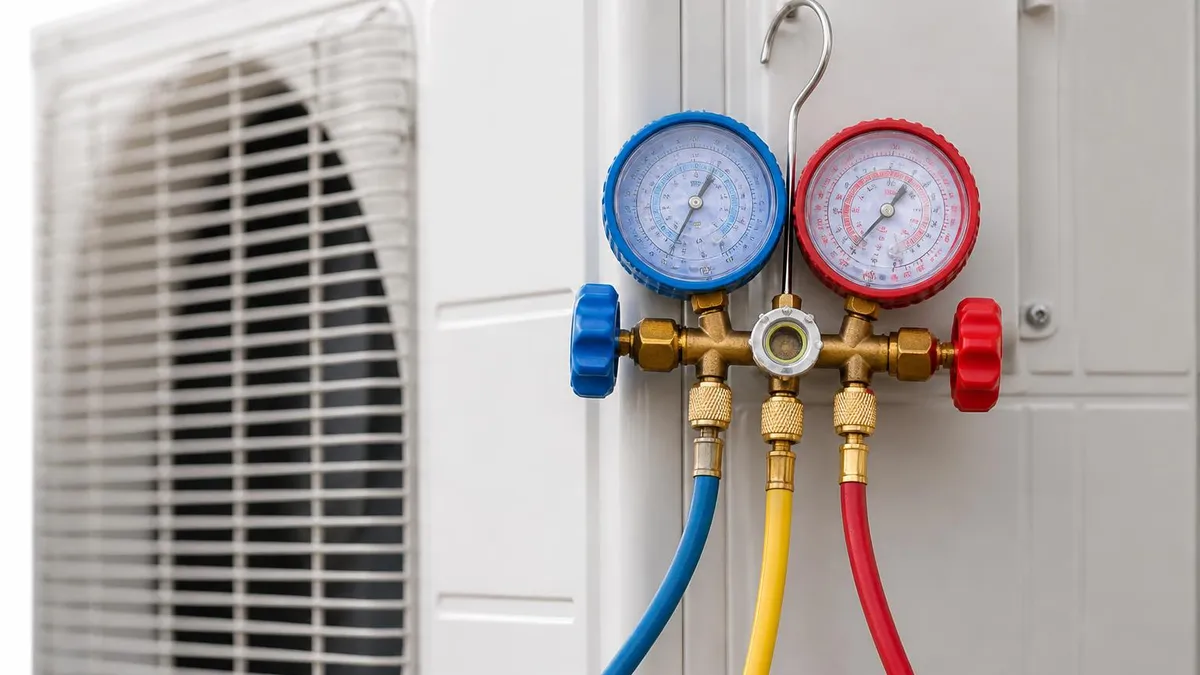
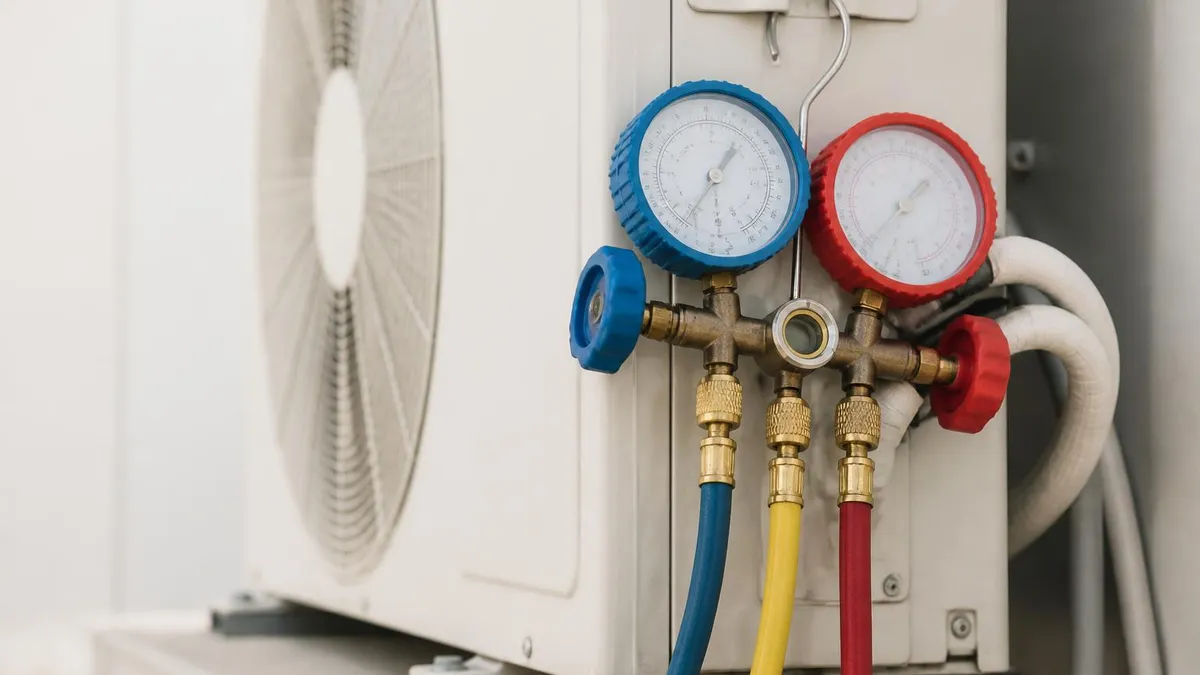
Which tool is used to measure the refrigerant pressure on both the high and low sides of an HVAC system simultaneously?
- A. Manifold gauge set
- B. Digital multimeter
- C. Anemometer
- D. Manometer
Answer: A. Manifold gauge set
A manifold gauge set connects to both the high-pressure and low-pressure service ports to read system pressures at the same time.
HVAC Questions and Answers


About the Author

NATE Certified HVAC Technician & Licensing Exam Trainer
Universal Technical InstituteMike Johnson is a NATE-certified HVAC technician and EPA 608 universal-certified refrigerant handler with a Bachelor of Science in HVAC/R Technology. He has 19 years of commercial and residential HVAC installation and service experience and specializes in preparing technicians for NATE certification, EPA 608, A2L refrigerant safety, and state HVAC contractor licensing examinations.