
HHA Classes Near Me — Training Programs, Costs, and How to Enroll 2026 October
💯 Free HHA Classes Near Me Test practice test with instant feedback and detailed answer explanations. Prepare for your exam.
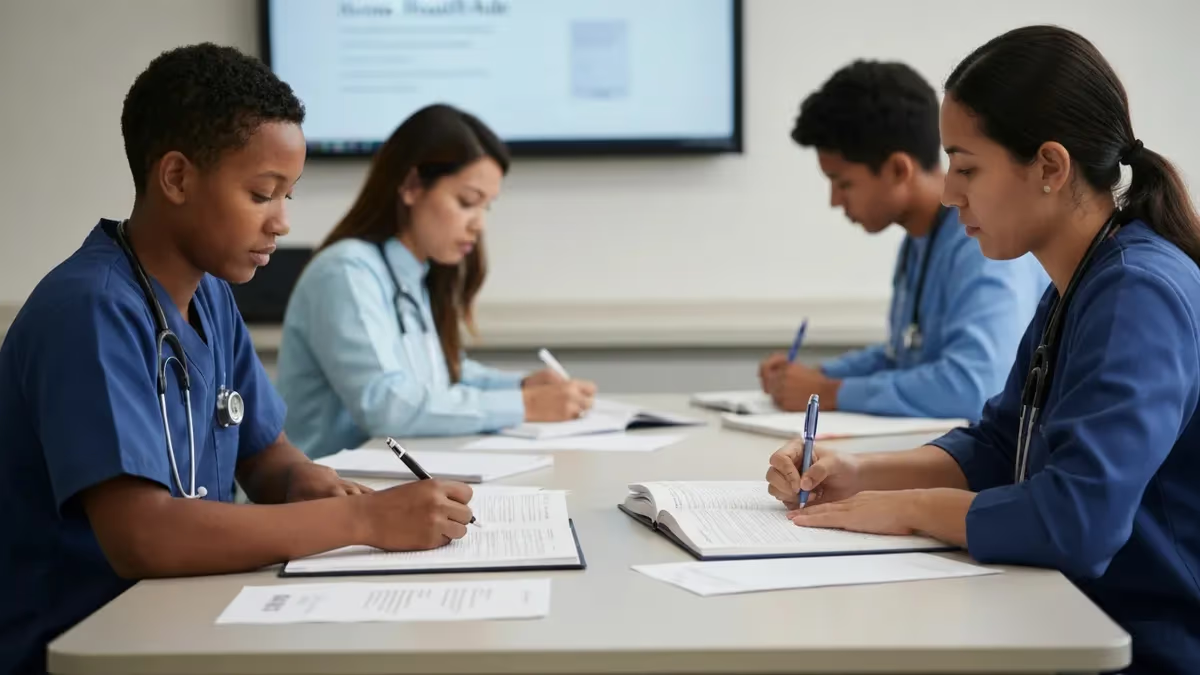
Finding hha classes near me isn't hard — the real challenge is picking a program that's actually worth your time and money. Some states require as few as 40 hours of training. Others demand 120+. The difference matters because your certification only counts if the program meets your state's approval standards, and not every school advertising HHA training has that approval. You'll want to verify before you sign anything.
If you've been searching for an hha class near me, you've probably noticed the options range from weekend crash courses to full semester programs at community colleges. Both can work. What matters is whether the program includes clinical hours — hands-on patient care practice in a real healthcare setting — because that's what separates a credential employers trust from one they don't.
This guide breaks down everything: how to find state-approved programs, what they cost, where the free options are, and whether online HHA training actually leads to a job. We'll cover major cities, rural alternatives, and the specific steps to get from zero experience to a working HHA credential. No fluff. Just the information you need to make a decision and start training.
The home health aide field is growing fast. Bureau of Labor Statistics projects 22% job growth through 2032 — much faster than average. That demand means more training programs, more employers willing to pay for your certification, and more flexibility in how and where you study.

Most people start their HHA search on Google, typing something like "hha class near me" and hoping for a clear answer. Here's what actually works better: go directly to your state's Department of Health website. Every state maintains a list of approved training programs, and that list is the only one that matters. Programs not on it? Skip them — your certificate won't be recognized.
An hha online course can cover the classroom portion of your training, but you'll still need in-person clinical hours. No state accepts 100% online HHA certification. The split is usually 60% classroom and 40% clinical, though some states like New York require specific ratios. Worth checking before you commit to any program format.
Community colleges, vocational schools, and Red Cross chapters are the most common training providers. Each has strengths. Community colleges offer financial aid eligibility. Vocational schools move faster — some finish in 2-3 weeks. Red Cross programs carry strong brand recognition with employers. The best choice depends on your timeline, budget, and whether you qualify for tuition assistance.
Don't overlook employer-sponsored training. Large home health agencies — Bayada, Amedisys, LHC Group — sometimes offer free training in exchange for a work commitment. You train for free, they get a guaranteed employee for 6-12 months. Not a bad deal if you're already planning to work in home health.
When you're looking at hha schools near me, cost is usually the first question. Programs range from completely free to about $1,800 — and price doesn't always predict quality. Some of the best-rated programs in the country charge nothing because they're funded by state workforce development grants or Medicaid reimbursement programs.
If you're searching for free hha classes near me, start with your local Workforce Development Board. These agencies — sometimes called "One-Stop Career Centers" or "American Job Centers" — fund healthcare training for qualifying candidates. Eligibility usually requires being unemployed or underemployed, but the definition varies. Some programs accept anyone below a certain income threshold regardless of employment status.
Medicaid-funded training is another route. States with Medicaid expansion often allocate funds specifically for HHA training because they need more home health workers to serve aging populations. New York, California, and Illinois are particularly generous with these programs. The catch? Wait lists can run 2-4 months, sometimes longer in high-demand areas.
Community college programs typically cost $400-$800 and qualify for federal financial aid — including Pell Grants, which don't need to be repaid. If you're eligible for a full Pell Grant, your HHA training might cost you nothing out of pocket even at a paid program. File your FAFSA first, then compare program costs against your award letter.
HHA Training Formats Compared
Traditional classroom training runs 2-6 weeks depending on your state's hour requirements. You'll attend lectures, practice skills on mannequins, and complete clinical rotations at a healthcare facility — usually a nursing home or home health agency. Best for hands-on learners who want direct instructor feedback. Most programs schedule daytime classes Monday through Friday, though some offer evening and weekend options for working students.
Deciding between HHA classes and online alternatives depends on your learning style and schedule — but it also depends on what your state allows. Not every state accepts online classroom hours. Florida does. New York does for the lecture portion. Texas requires all training in person. Check before you enroll.
HHA classes for free near me — that's one of the most common searches, and for good reason. Training costs eat into earnings you haven't made yet, and most people entering this field don't have thousands in savings to spend on education. The good news: free options exist in nearly every state. They just take more digging to find than paid programs.
Workforce Innovation and Opportunity Act (WIOA) funding covers healthcare training in all 50 states. Your local American Job Center can tell you if HHA programs are covered in your area. These grants pay for tuition, books, and sometimes even transportation and childcare during training. The application takes about a week to process.
State-specific programs fill the gaps. California's Employment Training Panel, New York's Home Care Worker Initiative, and Illinois' Healthcare Worker Training Program all fund HHA education directly. Some even pay a stipend during training — you're earning while you learn. Worth the phone call to check eligibility.
HHA classes online have exploded in popularity since 2020, and the quality has improved dramatically. The best online programs use interactive simulations, video demonstrations, and virtual patient scenarios that go far beyond reading a textbook. Platforms like CareAcademy and myCNAjobs partner directly with state-approved training providers, so your online hours actually count toward certification.
But here's the honest truth about an hha course near me versus a fully online option: employers prefer candidates who've done in-person clinical training. A 2024 survey by the National Association for Home Care found that 73% of agencies rate in-person trained aides as "better prepared" than hybrid-trained ones. That gap is narrowing, but it's still real — especially for your first job.
If you're in a rural area without nearby training programs, online is your best option. Pair the online classroom portion with clinical hours at the closest healthcare facility — most programs help arrange this. Some students drive 45 minutes each way for clinicals. It's a hassle, but it's temporary. Two to three weeks of commuting gets you a credential that lasts indefinitely in most states.
HHA classes online also work well as refresher training. If you let your certification lapse or you're returning to the field after a break, an online review course gets you current on new protocols and regulations without repeating the full in-person program. Most refresher courses run 8-16 hours and cost under $200.
Pros and Cons of HHA Training Programs
- +Most programs finish in 2-6 weeks — one of the fastest healthcare credentials available
- +Free training options exist through workforce development grants and employer sponsorship
- +HHA certification leads to immediate employment in a field with 22% projected growth
- +Clinical hours provide real patient care experience before you're on the job solo
- +Certification transfers between employers, giving you flexibility to change agencies
- +Training covers universal skills — bathing, vitals, safety — applicable across all settings
- −Pay starts low ($14-18/hour in most markets) despite physically demanding work
- −Clinical schedules are rigid and may conflict with current employment
- −Some states require renewal training every 1-2 years at your own expense
- −Free programs often have wait lists of 2-4 months in high-demand areas
- −Not all online programs are state-approved — verifying credentials takes extra research
- −Travel between patient homes adds unpaid time and vehicle wear to your workday
Pros and Cons at a Glance
| Pros | Cons |
|---|---|
| Free training options exist through workforce development grants and employer sponsorship | Clinical schedules are rigid and may conflict with current employment |
| Clinical hours provide real patient care experience before you're on the job solo | Not all online programs are state-approved — verifying credentials takes extra research |
| Certification transfers between employers, giving you flexibility to change agencies | Travel between patient homes adds unpaid time and vehicle wear to your workday |
HHA schools vary wildly in quality, and the differences show up on your first day at work. Graduates from strong programs know how to take blood pressure manually, transfer a patient from bed to wheelchair without injury risk, and recognize the signs of a UTI before it becomes a hospital visit. Graduates from weak programs? They struggle with basics and need heavy on-the-job training.
Free hha classes in Brooklyn are surprisingly abundant. The Brooklyn Adult Learning Center, FEGS Health and Human Services, and several Medicaid-funded agencies offer no-cost HHA training to qualifying residents. Brooklyn's high concentration of home health agencies creates constant demand for new aides, which keeps the free training pipeline flowing. Most programs run 3-4 weeks and include guaranteed job placement interviews.
Outside Brooklyn, every NYC borough has options. Queens has programs through LaGuardia Community College's continuing education division. The Bronx has workforce development programs through BronxWorks and Hostos Community College. Manhattan and Staten Island have fewer dedicated HHA programs but more general healthcare training that includes HHA certification as one pathway.
The key difference between free and paid programs in NYC? Speed. Paid programs start new cohorts monthly — sometimes weekly. Free programs start quarterly and fill up fast. If you need to start immediately, a paid program might be worth the $500-$800 investment. If you can wait 6-8 weeks, the free options are just as good educationally.
HHA Enrollment Checklist — What You Need
- ✓Valid government-issued photo ID (driver's license, state ID, or passport)
- ✓Social Security card or documentation of work authorization
- ✓High school diploma or GED — some states accept equivalency testing
- ✓Physical exam results showing you're fit for patient care duties (TB test included)
- ✓Background check clearance — most programs require this before clinical hours begin
- ✓CPR/BLS certification — some programs include this, others require it before enrollment
- ✓Proof of immunizations (Hepatitis B, MMR, Varicella, flu shot in season)
- ✓Two professional or personal references who can speak to your reliability
- ✓Completed FAFSA if applying for financial aid at a community college program
- ✓Scrubs, closed-toe shoes, and a watch with a second hand for clinicals
Free online HHA classes have become more legitimate over the past few years, though you still need to verify accreditation carefully. The best free online programs are sponsored by state health departments or large healthcare employers. CareAcademy's free introductory course, for example, covers basic HHA topics but doesn't count toward state certification — it's a preview, not a credential.
HHA online classes that actually lead to certification always partner with a state-approved in-person clinical site. When evaluating an online program, the first question to ask is: "Where will I do my clinical hours, and is that site approved by my state?" If they can't answer clearly, keep looking. Legitimate programs have clinical partnerships established before you enroll, not after.
The cost of free hha classes near me isn't always zero even when tuition is waived. You'll still need scrubs ($20-40), textbooks ($30-60 if not included), a stethoscope and blood pressure cuff for practice ($25-50), and transportation to clinical sites. Budget $100-150 for these extras even in a "free" program so you're not caught off guard.
Some online platforms — notably Alison.com and Khan Academy — offer free healthcare courses that look like HHA training but aren't. They're general health education, not state-approved certification programs. Taking them won't hurt, but they won't get you a job as an HHA either. Always verify that online training connects to a state-recognized certification pathway before investing your time.
HHA courses near me — if that's still what you're searching, narrow it by asking three questions. First: is the program state-approved? Second: does it include clinical hours, or will you need to arrange those separately? Third: what's the completion rate? Programs with completion rates below 70% are usually a red flag for poor instruction or inadequate student support.
The hha class you choose should also align with your career goals beyond the initial credential. Some programs include specialized training in dementia care, pediatric home health, or hospice support. These specializations make you more competitive in the job market and often qualify you for higher-paying positions. A basic HHA certificate gets you in the door. Specializations open better doors.
State requirements for HHA training hours vary more than most people expect. Federal minimum is 75 hours — 16 of those must be clinical. But individual states set their own bars: California requires 120 hours, New York mandates 75 hours with specific content breakdowns, and some states like Oregon have moved to competency-based assessment where hours matter less than demonstrated skill. Always check your specific state before assuming any number applies to you.
Continuing education is the part nobody mentions during enrollment. Most states require annual in-service training — usually 12 hours per year — to maintain your HHA certification. Some employers cover this. Others don't. Factor ongoing education costs into your career planning from the start, not as an afterthought when your renewal date arrives.
Some programs advertise "HHA certification in 24 hours" or "instant HHA diploma." These are scams. No legitimate state-approved HHA program takes less than 40 hours, and most require 75-120. If a program promises certification faster than your state's minimum hour requirement, walk away. You'll pay money for a certificate that no employer will accept and no state will recognize.
Free hha classes in the Bronx serve one of NYC's largest populations of home health patients, so agencies there constantly recruit new aides. BronxWorks, Hostos Community College, and several Medicaid-waiver agencies offer free or subsidized HHA programs year-round. The Bronx also has the advantage of shorter wait lists than Brooklyn or Manhattan programs — you can often start within 2-3 weeks of applying.
For HHA courses in NYC more broadly, the city's Human Resources Administration (HRA) funds training through its Career Pathways program. This program covers tuition, supplies, and provides a MetroCard for transportation during training. Eligibility requires NYC residency and either current public assistance enrollment or household income below 200% of the federal poverty line. That covers a surprising number of New Yorkers.
Outside NYC, major metro areas all have strong HHA training options. Chicago's City Colleges system offers affordable programs. Los Angeles has Medicaid-funded training through several community-based organizations. Houston, Phoenix, and Atlanta all have programs through their respective workforce development boards. Rural areas are tougher — fewer programs, longer drives — but telehealth expansion is creating demand for HHA services in those areas too, which means more training opportunities are coming.
If you're comparing programs in any metro area, ask recent graduates. Not testimonials on the school's website — actual graduates you can find through LinkedIn or local HHA Facebook groups. Ask them: did you feel prepared on your first day? How quickly did you find a job? Would you choose the same program again? These answers tell you more than any brochure or website ever will.
HHA Practice Test Questions
Prepare for the HHA - Home Health Aide exam with our free practice test modules. Each quiz covers key topics to help you pass on your first try.
HHA Basic Care and Comfort
HHA Exam Questions covering Basic Care and Comfort. Master HHA Test concepts for certification prep.
HHA Basic Care and Comfort Questions and A...
Free HHA Practice Test featuring Basic Care and Comfort Questions and Answers. Improve your HHA Exam score with mock test prep.
HHA Communication and Interpersonal Skills
HHA Mock Exam on Communication and Interpersonal Skills. HHA Study Guide questions to pass on your first try.
HHA Communication and Interpersonal Skills...
HHA Test Prep for Communication and Interpersonal Skills Questions and Answers. Practice HHA Quiz questions and boost your score.
HHA Infection Control and Safety
HHA Questions and Answers on Infection Control and Safety. Free HHA practice for exam readiness.
HHA Infection Control and Safety Questions...
HHA Mock Test covering Infection Control and Safety Questions and Answers. Online HHA Test practice with instant feedback.
HHA Mental and Emotional Support
Free HHA Quiz on Mental and Emotional Support. HHA Exam prep questions with detailed explanations.
HHA Mental and Emotional Support Questions...
HHA Practice Questions for Mental and Emotional Support Questions and Answers. Build confidence for your HHA certification exam.
HHA Mobility and Transfer Techniques
HHA Test Online for Mobility and Transfer Techniques. Free practice with instant results and feedback.
HHA Mobility and Transfer Techniques Quest...
HHA Study Material on Mobility and Transfer Techniques Questions and Answers. Prepare effectively with real exam-style questions.
HHA Nutrition and Hydration
Free HHA Test covering Nutrition and Hydration. Practice and track your HHA exam readiness.
HHA Nutrition and Hydration Questions and ...
HHA Exam Questions covering Nutrition and Hydration Questions and Answers. Master HHA Test concepts for certification prep.
HHA Observation and Reporting
Free HHA Practice Test featuring Observation and Reporting. Improve your HHA Exam score with mock test prep.
HHA Observation and Reporting Questions an...
HHA Mock Exam on Observation and Reporting Questions and Answers. HHA Study Guide questions to pass on your first try.
HHA Patient Rights and Ethics
HHA Test Prep for Patient Rights and Ethics. Practice HHA Quiz questions and boost your score.
HHA Patient Rights and Ethics Questions an...
HHA Questions and Answers on Patient Rights and Ethics Questions and Answers. Free HHA practice for exam readiness.
HHA Personal Care and Hygiene
HHA Mock Test covering Personal Care and Hygiene. Online HHA Test practice with instant feedback.
HHA Personal Care and Hygiene Questions an...
Free HHA Quiz on Personal Care and Hygiene Questions and Answers. HHA Exam prep questions with detailed explanations.
HHA Home Health Aide Certification Practic...
HHA Practice Questions for Home Health Aide Certification Practice Test. Build confidence for your HHA certification exam.
HHA Home Health Aide Certification Practic...
HHA Test Online for Home Health Aide Certification Practice Test #1. Free practice with instant results and feedback.
HHA Home Health Aide Certification Practic...
HHA Study Material on Home Health Aide Certification Practice Test #2. Prepare effectively with real exam-style questions.
HHA Home Health Aide Certification Practic...
Free HHA Test covering Home Health Aide Certification Practice Test #3. Practice and track your HHA exam readiness.
HHA Home Health Aide Certification Practic...
HHA Exam Questions covering Home Health Aide Certification Practice Test #4. Master HHA Test concepts for certification prep.
HHA HOME HEALTH AIDE COMPETENCY TEST
Free HHA Practice Test featuring HOME HEALTH AIDE COMPETENCY TEST. Improve your HHA Exam score with mock test prep.
HHA HOME HEALTH AIDE COMPETENCY TEST #1
HHA Mock Exam on HOME HEALTH AIDE COMPETENCY TEST #1. HHA Study Guide questions to pass on your first try.
HHA Home Health Aide Competency Test
HHA Test Prep for Home Health Aide Competency Test. Practice HHA Quiz questions and boost your score.
HHA Home Health Aide Competency Test #2
HHA Questions and Answers on Home Health Aide Competency Test #2. Free HHA practice for exam readiness.
HHA free classes exist — they're just not always easy to spot. The most reliable sources are Medicaid-funded workforce programs, employer-sponsored training through large agencies like Bayada or Addus HomeCare, and community action organizations that receive federal WIOA grants. These programs don't advertise as aggressively as paid schools because they don't need to. Their slots fill through word-of-mouth and referrals from social services agencies.
When searching for an hha school near me, don't limit yourself to programs labeled "HHA" specifically. Some community colleges list their program under "Home Health Aide," others under "Personal Care Aide," and some bundle it into a broader "Healthcare Assistant" certificate. The content overlaps significantly. Check whether the program's completion certificate is accepted as HHA credentials in your state — many are, even if the program name doesn't say "HHA" explicitly.
Clinical placement is the make-or-break factor in any HHA program. Strong programs place you at facilities where you'll work with actual patients under direct supervision of a registered nurse. Weak programs rush clinicals in simulated environments that don't prepare you for real-world patient care. When interviewing programs, ask specifically: "Will I work with live patients during clinicals?" The answer should always be yes.
Your final step after completing training is passing your state's competency evaluation — usually a written exam and a skills demonstration. Pass rates for state-approved programs average 85-90% on the first attempt. If a program's pass rate is significantly below that, their instruction isn't cutting it. Ask for their pass rate data. Legitimate programs share it proudly. Programs that dodge the question are telling you something.
Sample HHA Practice Questions
Try these questions from our free HHA practice tests. The correct answer and an explanation follow each question.
At the end of a home health competency training program, a trainee who fails the performance skill evaluation:
- A. Is automatically certified after completing the written portion
- B. Must complete additional training and remediation, then pass a re-evaluation before providing care independently
- C. May work with patients under minimal supervision while awaiting results
- D. Is permanently banned from working in home health
Answer: B. Must complete additional training and remediation, then pass a re-evaluation before providing care independently
Competency evaluation failure requires documented remediation and successful re-evaluation. Patient safety standards do not permit aides to practice independently until all competencies are satisfactorily demonstrated.
Mrs. Wayne, a home health aide, leaves the home of Mr. Davis, a terminally ill client. A neighbor stops her and says, Mr. Davis is very sick, isn’t he? I hear he is near death.” What is it best for Mrs. Wayne to say?
- A. “Yes, Mr. Davis is very ill.”
- B. “How do you know Mr. Davis is so sick?”
- C. “I’m sorry, I can’t discuss Mr. Davis.”
- D. “Mr. Davis is doing as well as can be expected.”
Answer: C. “I’m sorry, I can’t discuss Mr. Davis.”
This question addresses patient confidentiality, a cornerstone of healthcare ethics and legal requirements like HIPAA. Home health aides are bound by strict rules to protect patient privacy and cannot disclose any personal health information to unauthorized individuals, even if they are neighbors or seem well-intentioned. A polite but firm refusal to discuss the client's condition is the only appropriate response to maintain confidentiality.
The aide should report which skin finding to the supervisor?
- A. Skin that is warm and intact without discoloration
- B. A new open area, rash, unusual discoloration, or wound on any part of the body
- C. Skin that looks slightly dry in winter
- D. Normal age-related skin changes such as age spots
Answer: B. A new open area, rash, unusual discoloration, or wound on any part of the body
Any new skin break, wound, unusual rash, or unexplained discoloration must be reported promptly; skin findings can signal infections, pressure injuries, allergic reactions, or abuse.
If you do not know how to do an assigned task, you should:
- A. Call your supervisor and ask for help.
- B. Ask the client how she prefers to have it done.
- C. Follow the instructions in the procedures manual
- D. Call another health aide for help.
Answer: A. Call your supervisor and ask for help.
If a home health aide is unsure how to perform an assigned task, the correct and safest approach is to contact their supervisor immediately. The supervisor can provide proper instruction, clarification, or even demonstrate the task, ensuring it is done correctly and safely. This prevents potential harm to the client and protects the aide from liability, adhering to professional standards.
HHA Questions and Answers
About the Author

Registered Nurse & Healthcare Educator
Johns Hopkins University School of NursingDr. Sarah Mitchell is a board-certified registered nurse with over 15 years of clinical and academic experience. She completed her PhD in Nursing Science at Johns Hopkins University and has taught NCLEX preparation and clinical skills courses for nursing students across the United States. Her research focuses on evidence-based exam preparation strategies for healthcare certification candidates.
Join the Discussion
Connect with other students preparing for this exam. Share tips, ask questions, and get advice from people who have been there.
View discussion (8 replies)