
CDL HazMat Endorsement Requirements: Complete Study Guide & Certification Prep
Master CDL hazardous materials endorsement requirements: TSA background check, written test, renewal steps & free practice tests. ✅ Pass on your first try.

Understanding the cdl hazmat endorsement requirements is the first step toward a career that commands higher pay and opens doors to specialized freight opportunities across the United States. The hazardous materials endorsement requirements are more demanding than any other CDL add-on because they involve a federal security threat assessment administered by the Transportation Security Administration, a state-level knowledge exam covering nine hazmat subject areas, and periodic renewal cycles that keep your credentials current. Drivers who invest the time to meet every requirement consistently earn 15–25% more than their non-endorsed peers.
The hazardous materials endorsement test draws questions from the Federal Motor Carrier Safety Administration (FMCSA) regulations found in Title 49 of the Code of Federal Regulations, specifically Parts 100–185. These rules govern everything from proper placarding of tank trucks to emergency response procedures when a cargo tank ruptures on the highway. Because the subject matter is safety-critical, the exam is intentionally challenging, and first-time pass rates hover around 55% nationally. Thorough preparation using current study materials is not optional — it is essential.
The cdl hazardous materials endorsement process begins well before you sit down for the written test. You must submit fingerprints to the TSA and clear a federal criminal history records check. Disqualifying offenses include felony convictions related to explosives, espionage, or sedition within the past seven years, as well as any conviction for transportation security violations. The background check alone can take four to eight weeks, so smart drivers start the TSA process months before their current endorsement expires or before they plan to haul regulated cargo.
Once TSA clearance is confirmed, you schedule the knowledge exam at your state's driver licensing agency. Most states administer a 30-question test with a 24-correct threshold (80%) to pass, though a handful of states use slightly different question counts. The exam pulls from nine content domains: hazmat communication rules, loading and unloading procedures, bulk packaging requirements, cargo tank standards, safe driving practices for hazmat loads, emergencies, placarding, definitions, and the handling of specific classes of dangerous goods such as poisons, explosives, and radioactive materials.
Preparation strategy matters enormously. Drivers who spread their study across four to six weeks using a combination of the FMCSA Commercial Driver's License Manual, state-specific supplements, and timed practice tests consistently outperform those who cram. The hazardous material endorsement practice test format — timed, randomized, and scored immediately — mirrors real exam conditions and forces you to identify weak areas while there is still time to review them. Aim for consistent 90%+ scores on practice exams before booking your appointment.
State-specific rules add another layer of complexity. Texas hazardous materials endorsement test requirements, for example, follow the same 30-question federal format but are delivered through the Texas DPS system, and the state requires proof of TSA clearance before the exam appointment is confirmed. California, Florida, and other high-volume freight states have their own scheduling systems and fee structures. Always verify current requirements on your state DMV website because fee amounts and scheduling procedures change more often than the exam content itself.
This guide covers every phase of the certification journey — from TSA fingerprinting timelines and disqualifying offenses to the nine exam content domains, renewal procedures, and practical study strategies that have helped thousands of drivers earn their endorsement on the first attempt. Work through each section, complete the free practice quizzes embedded throughout, and you will walk into your exam appointment fully prepared to pass.
CDL HazMat Endorsement by the Numbers
Key Facts at a Glance
| Item | Value | Details |
|---|---|---|
| Exam Questions | 30 | Need 24 correct (80%) to pass |
| TSA Processing Time | 4–8 Wks | Start early — don't miss renewal deadlines |
| Endorsement Renewal Cycle | 5 Years | TSA re-check required each time |

HazMat Endorsement Study Schedule
- ▸Submit fingerprints at an authorized TSA enrollment center
- ▸Read CDL Manual Chapter 9 (Hazardous Materials) sections 1–3
- ▸Study hazmat communication: shipping papers, labels, markings
- ▸Complete 30-question practice quiz on hazmat definitions
- ▸Memorize the placard tables (Table 1 and Table 2 materials)
- ▸Study loading rules: segregation, compatibility, quantity thresholds
- ▸Review unloading procedures and attended vehicle requirements
- ▸Complete two timed practice tests, targeting 85%+ scores
- ▸Study cargo tank vehicle types (MC 306, MC 307, MC 312, MC 331, MC 338)
- ▸Review bulk packaging specs and inspection requirements
- ▸Memorize speed limits, routes, and tunnel/bridge restrictions for hazmat loads
- ▸Practice identifying tank codes and their allowable commodities
- ▸Study emergency response procedures: ERG guide use, spill reporting
- ▸Review Class 1 (Explosives), Class 7 (Radioactive), and poison gas rules
- ▸Complete three full 30-question timed exams; aim for 90%+ consistently
- ▸Schedule your state DMV exam appointment after confirming TSA clearance
The TSA hazardous materials endorsement security threat assessment is the federal gatekeeping mechanism that distinguishes hazmat from every other CDL endorsement. Before your state will even schedule your knowledge exam, the TSA must confirm that you do not appear on any terrorist watch list and that your criminal history contains no disqualifying convictions.
The process starts when you visit a TSA-approved enrollment center — typically operated by IdentoGO — to have your fingerprints digitally captured and your identity documents verified. You will need to bring your current CDL, a second form of government-issued ID, and payment for the enrollment fee, which ranges from $86 to $116 depending on the enrollment center and your state.
After fingerprinting, the TSA runs your prints against FBI criminal history databases and cross-references your identity against the Terrorist Screening Database. You will receive a determination letter by mail or through the TSA portal within four to eight weeks. Most applicants receive an Initial Determination of No Security Threat, which means you are cleared to proceed with the state knowledge exam. A small percentage receive an Initial Determination of Threat Assessment, which triggers an appeal process — you have 60 days to request your records and contest the finding through an administrative law judge if needed.
Disqualifying criminal offenses fall into two categories under 49 CFR Part 1572. Permanent disqualifiers include convictions for sedition, espionage, terrorism financing, and crimes involving weapons of mass destruction regardless of when those convictions occurred. Seven-year disqualifiers include unlawful possession of explosives or firearms, extortion, dishonesty fraud within transportation security, distribution of controlled substances, and a handful of other serious felonies. Arrests without conviction do not automatically disqualify you, but adjudicated deferred adjudication dispositions may be considered depending on the offense.
The renewal timeline is where many experienced drivers get tripped up. The tsa hazardous materials endorsement clearance is valid for five years, but renewal processing takes the same four to eight weeks as the initial application. Drivers who wait until their endorsement expiration date to restart the TSA process frequently experience a lapse during which they are legally prohibited from transporting regulated hazmat quantities. Best practice is to initiate your TSA renewal fingerprinting appointment at least three months before your endorsement expiration date printed on your CDL.
Some drivers wonder whether their employer's hazmat training program substitutes for the TSA process. It does not. Even if your motor carrier requires you to complete a DOT-mandated hazmat employee training program under 49 CFR Part 172 Subpart H — which covers general awareness, function-specific training, safety training, and security awareness — that employer-led training is entirely separate from the state CDL endorsement and the federal TSA clearance. You need all three: employer training, TSA clearance, and the state knowledge endorsement on your CDL.
Once you receive TSA clearance, you have a defined window to complete the state exam and pay your endorsement fee before the clearance letter's reference period closes. Check with your specific state DMV for the exact window, as it ranges from 30 to 90 days. After you pass the knowledge exam and pay the state fee (typically $5–$15 for the endorsement itself, separate from the CDL renewal fee), the hazmat endorsement code — the letter H or X if you also hold a tank endorsement — is added to your CDL.
You can begin legally transporting placardable quantities of hazardous materials the day your updated license is issued. To understand the full hazardous material endorsement knowledge test in detail, review the nine content domains covered on the exam before booking your appointment.
International commercial drivers and recent immigrants who hold a CDL must also confirm their immigration status meets TSA eligibility requirements. Non-U.S. citizens may qualify if they hold lawful permanent resident status, specific non-immigrant visa categories, or refugee/asylee status, but certain visa classifications — including student and tourist visas — are categorically disqualifying. The TSA publishes the full list of eligible immigration statuses in 49 CFR § 1572.105, and drivers with questions about their specific situation should consult a transportation attorney rather than risk an application denial that creates a waiting period before they can reapply.
Hazardous Materials Endorsement Study Guide: Topic Areas
Hazmat communication rules govern how dangerous goods are identified throughout the transportation chain. Shipping papers must list the proper shipping name, hazard class, identification number, and packing group for every regulated material on the load. Labels affixed to individual packages must match the hazard class, and the driver is responsible for verifying that labels are legible and not obscured before departing the shipper's dock.
Markings on packages include the proper shipping name, ID number preceded by "UN" or "NA," and for certain materials like marine pollutants and elevated-temperature materials, special marking requirements apply. Drivers must be able to locate the shipping paper quickly in an emergency — regulations require it within immediate reach while driving and visible to emergency responders from outside the cab if the driver is incapacitated.

Is the HazMat Endorsement Worth the Effort?
- +Pay premium of 15–25% over non-endorsed CDL drivers on most freight lanes
- +Opens access to high-demand, specialized freight including fuel tankers and chemical loads
- +Increases job security — fewer drivers hold the endorsement, reducing competition
- +Qualifies you for combined H+N (tank) or X endorsement, unlocking even higher-paying routes
- +Employer reimbursement is common — many carriers pay TSA fees and exam costs
- +Federal background clearance can strengthen your professional credibility across transportation roles
- −TSA background check takes 4–8 weeks and disqualifies applicants with certain criminal histories
- −Five-year renewal requires repeating the full TSA fingerprinting and clearance process
- −Written exam covers nine complex regulatory domains — preparation demands 30–50 study hours
- −Additional employer training (49 CFR Part 172 Subpart H) is required on top of the CDL exam
- −Route restrictions apply — drivers must avoid tunnels and certain bridges when placarded
- −Higher liability exposure and stricter inspection scrutiny at weigh stations and checkpoints
CDL HazMat Endorsement Requirements Checklist
- ✓Confirm you hold a valid CDL (Class A, B, or C) before starting the endorsement process.
- ✓Locate a TSA-approved IdentoGO fingerprinting center in your area and book your appointment.
- ✓Bring your current CDL and one additional government-issued photo ID to fingerprinting.
- ✓Pay the TSA enrollment fee ($86–$116) at the fingerprinting appointment.
- ✓Monitor your TSA portal account or mail for your Initial Determination letter (allow 4–8 weeks).
- ✓Complete your state CDL Manual Chapter 9 (Hazardous Materials) at least twice.
- ✓Score 90%+ on at least three consecutive timed hazardous materials endorsement practice tests.
- ✓Schedule your state knowledge exam appointment only after receiving TSA clearance.
- ✓Bring TSA clearance documentation and payment for the state endorsement fee to your exam.
- ✓Complete your employer's 49 CFR Part 172 Subpart H hazmat employee training within 90 days of hire.

The 80% Rule — And Why Practice Tests at 90% Are Your Real Target
Most states require 24 correct answers out of 30 (80%) to pass the hazmat knowledge exam. However, experienced test-prep coaches recommend achieving consistent 90%+ scores on practice tests before scheduling your real exam appointment. Exam-day nerves, unfamiliar question phrasing, and time pressure all reduce performance by 5–10 percentage points on average. Building a practice-test cushion means you pass comfortably even on a slightly off day.
Maintaining your hazardous materials endorsement over the long term requires attention to two parallel renewal timelines that do not always align neatly: your CDL renewal cycle (typically every four to eight years depending on your state) and the TSA security threat assessment renewal cycle (every five years). In many states these cycles are partially offset, which means a driver might renew their CDL one year and then face a TSA renewal two years later. Tracking both dates on a calendar and setting reminders 90 days before each deadline is the simplest way to avoid an unintentional endorsement lapse.
The hazardous material endorsement renewal process mirrors the initial process in almost every detail. You return to an IdentoGO enrollment center, have your fingerprints recaptured digitally, verify your identity documents, and pay the enrollment fee again. The TSA then reruns the full criminal history and terrorist database check. Because your circumstances may have changed since your initial clearance, the renewal is not a simple rubber stamp — if you have acquired a disqualifying conviction in the intervening five years, your renewal will be denied and your endorsement will lapse.
Many states now require that you retake the knowledge exam at each CDL renewal even if your endorsement has not lapsed. Others allow continuous renewal without retesting as long as the endorsement has been active and the TSA clearance is current. Check your specific state DMV renewal policy at least six months before your CDL expiration date to determine whether study time will be needed. If your state does require a retest, the exam content and passing threshold remain identical to the initial test.
Employer-required hazmat training under 49 CFR Part 172 Subpart H must also be refreshed periodically. The federal regulation requires training within 90 days of hiring a new hazmat employee and recurrent training at least once every three years thereafter. This employer training is independent of your CDL endorsement renewal — even if your CDL and TSA clearance are both current, you are not legally authorized to perform hazmat functions for your employer if your training certificate has lapsed. Keep copies of your training completion records along with your TSA determination letter and CDL in a dedicated folder.
Some drivers pursue the combined X endorsement — which represents both the hazmat H endorsement and the tank vehicle N endorsement — to maximize their freight options. The X endorsement requires satisfying requirements for both endorsements simultaneously, meaning TSA clearance for hazmat plus the tank vehicle knowledge test. Tank vehicle endorsement questions cover liquid sloshing dynamics, anti-lock braking behavior with liquid loads, rollover prevention, and safe parking procedures for tank trucks. Studying for both simultaneously is efficient, and most CDL manuals present both topics in adjacent chapters so the material flows naturally.
The hazardous materials endorsement study guide landscape has evolved significantly in the past five years. Digital platforms now offer adaptive practice tests that weight your weak areas more heavily in subsequent question sets, substantially improving study efficiency compared to static printed manuals. Audio-format study materials are popular with over-the-road drivers who want to review content during rest periods.
Whatever format you use, verify that the content reflects the current edition of the CDL manual and that the practice questions have been updated within the past 12 months, since regulatory changes — particularly in the explosives and radioactive materials chapters — occur more frequently than many drivers realize.
When your renewal is complete and your updated CDL arrives in the mail, verify immediately that the endorsement code is correctly printed. Errors do occur in state DMV systems, and a missing endorsement code on your physical license creates immediate compliance problems if you are pulled into a weigh station inspection. If the endorsement is missing or incorrect, visit your DMV in person with your TSA clearance documentation and exam score receipt to have the license corrected before you next haul a placarded load.
TSA processing takes 4–8 weeks, and during that window you cannot legally haul placardable quantities of hazardous materials even if your CDL is otherwise valid. Drivers who initiate renewal after their endorsement expires face potential out-of-service orders and employer liability. Start your IdentoGO fingerprinting appointment at least 90 days before your endorsement expiration date — treating this deadline like a scheduled DOT physical rather than an afterthought.
State-specific variations in the hazmat endorsement process create traps for drivers who assume that rules learned in one state apply everywhere. While the federal TSA clearance requirement is uniform nationwide, the scheduling systems, fee structures, identification requirements, and even question counts on the knowledge exam vary by state in ways that can catch unprepared applicants off guard. Spending 30 minutes on your state DMV website before booking appointments will save you from showing up with incorrect documents or insufficient payment.
Texas offers a clear example of state-specific complexity. The texas hazardous materials endorsement test is delivered through the Texas Department of Public Safety system and uses the same 30-question, 80%-threshold format as most states, but Texas requires proof of TSA clearance to be presented at the testing center before the exam is administered.
In practice this means Texas drivers need to have their clearance letter in hand — not just confirmed through an online portal — before arriving. Some Texas testing locations will not schedule the exam appointment at all until they have verified TSA clearance, which adds a day or two to the scheduling process.
California administers the hazmat knowledge exam through the DMV system and charges a separate knowledge test fee in addition to the endorsement fee. California also requires that foreign-language speakers who take the exam in a language other than English verify language availability at their chosen DMV office before scheduling, as not all offices offer all language options. California drivers with commercial licenses face additional scrutiny during endorsement renewal because the state cross-references CDL status with the Employer Pull Notice (EPN) program, so any traffic violation or medical disqualification in the renewal window can complicate the endorsement process.
Florida requires hazmat endorsement applicants to pass the knowledge exam at a Class E license testing facility or a CDL skills testing facility, depending on the county. Florida also imposes a residency requirement — drivers must have a Florida CDL and Florida residential address before applying. Out-of-state CDL holders who move to Florida must first transfer their CDL, then initiate the TSA process with their new Florida license information. Attempting to do both processes simultaneously frequently results in TSA clearance that references an out-of-state license number, creating administrative headaches that delay endorsement issuance by weeks.
Illinois, New York, and Pennsylvania each have their own scheduling portals and ID verification requirements that differ from the national norm. In these high-volume states, exam appointment availability can be limited, particularly in metropolitan areas where demand is high and appointment slots fill weeks in advance. Drivers in these states should book their exam appointment as soon as they receive TSA clearance rather than waiting a few days, since a missed appointment cancellation fee applies in some locations and rescheduling can push the exam date back by three to four weeks.
For drivers operating across multiple states on interstate commerce routes, it is important to understand that your hazmat endorsement is issued by your home state but recognized federally on all interstate routes. You do not need a separate endorsement from every state you drive through — your home-state H or X code is federally valid. However, intrastate-only operations (freight that begins and ends within a single state) may face additional state-level requirements that supersede the federal standard.
If your employer's freight lanes are predominantly intrastate in a state other than your CDL home state, consult with your fleet's compliance officer to confirm that your home-state endorsement satisfies that state's intrastate rules. To start the hazardous materials endorsement application process in your state, gather your TSA determination letter, current CDL, and applicable fees before visiting the DMV scheduling portal.
Rural states with smaller DMV infrastructures — including Wyoming, Montana, and the Dakotas — typically offer faster exam appointment availability but may have fewer IdentoGO fingerprinting centers, requiring longer drives to the enrollment appointment. Drivers in these states should plan the fingerprinting trip and DMV exam trip as separate excursions rather than trying to accomplish both on the same day, since the TSA processing window always falls between the two steps. Planning the logistics carefully, especially for drivers who are already on active OTR schedules, makes the endorsement process far less stressful.
Practical preparation for the hazardous materials endorsement test goes well beyond reading the CDL manual once. Experienced drivers and professional truck driving instructors consistently recommend a structured four-step preparation method: read the manual chapter actively (annotating and highlighting rather than passively skimming), convert key rules into flashcards or memory aids, take untimed practice quizzes to identify knowledge gaps, and then transition to timed full-length practice tests that simulate real exam pressure. This cycle, repeated over four to six weeks, produces dramatically better results than any last-minute cramming approach.
The nine content domains on the hazmat knowledge exam are not equally weighted in practical importance or exam frequency. Communication rules — shipping papers, labels, markings, and placards — account for the largest share of exam questions and the most frequent compliance violations found in roadside inspections.
Drivers who master these areas first gain the most exam points and also protect themselves most effectively against costly out-of-service violations in their actual work. Save the more obscure topics — specific radioactive material handling nuances and bulk tank construction details — for the second half of your study schedule after the high-frequency areas are solid.
Memory techniques significantly improve retention of the placard tables, which many drivers find to be the most confusing part of the exam. The Table 1 versus Table 2 distinction is best learned through repeated application — not passive reading. Create practice scenarios: imagine you are picking up 500 pounds of flammable liquid (a Table 2 material below the 1,001-pound threshold) versus 1,200 pounds (above it) and work through the placarding logic each time.
For Table 1 materials like explosives, walk through real-world scenarios where placards are required regardless of quantity. Active application of the rules to hypothetical loads builds the kind of automatic recall that exam questions test.
Emergency response knowledge is another high-stakes exam domain where scenario-based study pays off. The ERG guide structure — organized by ID number in the yellow-bordered pages, by shipping name in the blue-bordered pages, and by hazard class in the orange-bordered guide pages — should be navigable in under 30 seconds for any material you might encounter. Practice looking up materials by their UN number (a four-digit identifier) until the process is automatic. On the actual exam, ERG-related questions are typically scenario-based: a specific material spills, and you must identify the correct isolation distance or the appropriate emergency contact.
Time management on exam day is straightforward given the 30-question format, but anxiety-driven rushing causes avoidable errors. Experienced test-takers recommend reading every answer choice before selecting one, since hazmat questions are frequently designed with plausible-sounding distractors that differ from the correct answer by a single word — for example, "1,000 pounds" versus "1,001 pounds" in a placarding threshold question. Eliminating obviously wrong answers first and then evaluating the remaining choices carefully catches these precision-dependent questions more reliably than speed-reading through options.
Post-exam logistics deserve planning too. If you pass on your first attempt, ask the testing center staff how long it takes for your state DMV to update your CDL record and issue the physical license with the endorsement code printed. In many states the CDL database is updated within 24–48 hours, which means your employer can verify your endorsement electronically even before the physical card arrives. However, some enforcement agencies require the physical card during roadside inspections, so confirm with your fleet manager whether electronic verification suffices in your primary operating states before dispatching your first hazmat load.
Finally, consider the long-term career trajectory that the hazmat endorsement enables. Tank truck drivers hauling petroleum products or liquid chemicals with the X endorsement (H+N combined) are among the highest-paid CDL drivers in the country, with median annual earnings exceeding $72,000 and experienced drivers in premium markets regularly clearing $90,000 or more.
Specialty hauls — including military propellant transport, nuclear waste shipments (which require additional security training beyond the standard endorsement), and liquefied natural gas delivery — represent the top tier of hazmat compensation. Every hour invested in earning and maintaining your hazardous materials endorsement is an investment in a higher-earning, more specialized career trajectory that the overwhelming majority of CDL holders never access.
Sample HazMat - Hazardous Materials Endorsement Practice Questions
Try these questions from our free HazMat - Hazardous Materials Endorsement practice tests. The correct answer and an explanation follow each question.
What does the term 'proper shipping name' refer to on a HazMat shipping paper?
- A. The trade name of the product as sold by the manufacturer
- B. The standardized name listed in the Hazardous Materials Table (49 CFR 172.101) for identifying the material
- C. The name assigned by the shipper for internal tracking
- D. The chemical formula of the hazardous material
Answer: B. The standardized name listed in the Hazardous Materials Table (49 CFR 172.101) for identifying the material
The proper shipping name is the standardized name from the Hazardous Materials Table in 49 CFR 172.101, which must be used on shipping papers, marks, and labels.
Where must shipping papers be kept when you are driving a hazmat load?
- A. In the glove compartment
- B. Within reach or in a pouch on the driver's door
- C. In a locked briefcase behind the seat
- D. Taped to the dashboard
Answer: B. Within reach or in a pouch on the driver's door
Shipping papers must be within reach while driving or in a pouch on the driver's door so they are immediately accessible to emergency responders.
What emergency response telephone number must be shown on shipping papers for HazMat?
- A. The shipper's main business number
- B. A 24-hour emergency response number where technical information can be obtained
- C. The local fire department number
- D. The FMCSA hotline
Answer: B. A 24-hour emergency response number where technical information can be obtained
Shipping papers must include a 24-hour emergency response phone number staffed by someone knowledgeable about the hazardous material being shipped.
What does 'CHEMTREC' provide to hazmat drivers and emergency responders?
- A. Insurance coverage for chemical spills
- B. 24-hour emergency chemical information and assistance
- C. Hazmat route planning and mapping services
- D. CDL hazmat endorsement training courses
Answer: B. 24-hour emergency chemical information and assistance
CHEMTREC provides 24-hour emergency assistance and chemical safety information to emergency responders dealing with hazmat incidents.
Take the full HazMat - Hazardous Materials Endorsement practice test
HazMat Questions and Answers
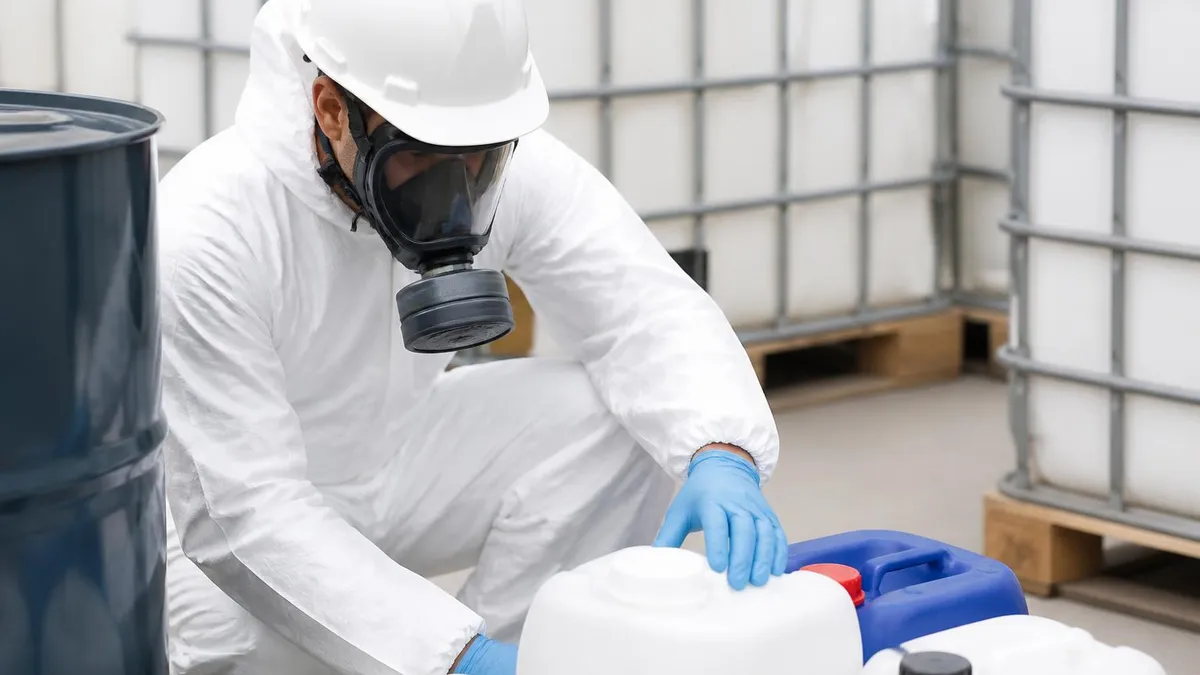
HazMat Endorsement: CDL Requirements, Test, and Cost

Hazmat Endorsement Practice Test — Free Questions & Answers (2026)

HazMat Endorsement License: Complete Study Guide & Certification Prep

JJ Keller HazMat Training Answers: Complete Guide to the Hazardous Materials Endorsement

TSA HazMat Status Check: How to Track Your Hazardous Materials Endorsement Application
About the Author

Educational Psychologist & Academic Test Preparation Expert
Columbia University Teachers CollegeDr. Lisa Patel holds a Doctorate in Education from Columbia University Teachers College and has spent 17 years researching standardized test design and academic assessment. She has developed preparation programs for SAT, ACT, GRE, LSAT, UCAT, and numerous professional licensing exams, helping students of all backgrounds achieve their target scores.
Join the Discussion
Connect with other students preparing for this exam. Share tips, ask questions, and get advice from people who have been there.
View discussion (8 replies)