
Free GED Classes 2026 October -- Where to Study at Zero Cost
Boost your Free GED Classes 2026 October exam score with practice questions and detailed answer explanations. 💯 Track progress with instant feedback.

Free GED Classes Are Everywhere -- Here's How to Find Them
Thousands of adults earn a GED credential every year without spending a cent on instruction. Free GED classes exist at community colleges, public libraries, adult learning centers, and fully online platforms across all fifty states. If you didn't finish high school, these programs hand you a second chance -- and they're funded by federal and state dollars so you pay nothing for tuition, textbooks, or placement testing.
You might wonder whether "free" really means free. It does. Programs funded through Title II of the Workforce Innovation and Opportunity Act cover everything except the exam fee itself, which runs $26 to $35 per subject depending on your state. Some states waive even that. California, for example, covers the full testing cost through its adult education system. Tennessee and West Virginia do too. So depending on where you live, your entire path from first class to official credential could cost exactly zero dollars.
This guide walks you through every type of free GED class available in 2026 -- where to find them, what they cover, how to enroll, and how to squeeze the most value from each hour of study. Whether you're a working parent squeezing in evening sessions, a veteran transitioning to civilian life, or someone ready to commit full-time, there's a free program shaped to fit your situation.
The GED has four subject tests: Mathematical Reasoning, Language Arts, Science, and Social Studies. Pass all four and you hold a credential that employers and colleges treat as equivalent to a high school diploma. That credential changes everything -- average earnings jump, college doors open, and career options multiply in ways that compound year after year.

Where to Find Free GED Classes Near You
Your fastest path to a free GED class starts with three searches. First, visit GED.com and use their official program locator. Type your ZIP code, and the tool returns every approved testing and prep center within driving distance. Second, call 2-1-1 -- that's the national helpline for social services -- and ask for adult education programs in your county. Third, check your state Department of Education website under "adult education" or "GED prep."
Community colleges are the most common providers. Nearly every two-year college in the country runs an Adult Basic Education department that offers free GED classes during daytime, evening, and sometimes weekend hours. These classes come with trained instructors, campus tutoring labs, and sometimes even childcare assistance. Public libraries host free prep workshops too, often in partnership with local adult ed agencies. Some libraries even lend GED prep books and provide free computer access for online study.
Don't overlook workforce development centers. American Job Centers -- sometimes called One-Stop Career Centers -- bundle free GED prep with job placement help, resume coaching, and interview practice. If you're studying for your GED while looking for work, these centers double your return on every hour you invest. Faith-based organizations and nonprofits like Goodwill and the Salvation Army also run free classes in many cities, sometimes with additional support like bus passes, childcare, and meals during class sessions.
Online vs. In-Person Free GED Classes
Both formats work. The right choice depends on your schedule, learning style, and access to transportation. Online classes let you study at 2 a.m. in pajamas if that's your only open window. In-person classes give you a teacher who can answer questions on the spot and classmates who keep you accountable.
Many programs now offer a hybrid model -- one or two in-person sessions per week plus online assignments you complete at your own pace. This blend gives you structure without requiring a daily commute. If you live in a rural area with no nearby adult education center, fully online classes through state-sponsored platforms or Khan Academy fill the gap at zero cost.
Here's what matters most: consistency. Students who log at least six to eight hours of study per week -- whether online, in person, or hybrid -- pass at dramatically higher rates than those who study sporadically. Pick the format that you'll actually stick with, not the one that sounds ideal on paper. If you're unsure, start with an in-person class for the structure, then shift to online once you've built a study habit. Many programs let you switch formats mid-program without re-enrolling.
Free GED Class Formats Compared
Best for: Learners who thrive with structure and direct feedback. Community colleges and adult education centers run these classes 2-4 days per week. Class sizes stay small -- usually 8 to 20 students -- so instructors can give you real attention. You'll follow a set curriculum, take periodic benchmark tests, and get assigned homework. Many programs also provide free childcare and transportation vouchers for qualifying students.
What Free GED Classes Actually Teach You
Every free GED program covers the same four subjects tested on the official exam. But good classes do more than lecture -- they teach you how the test works. You'll learn which question formats appear, how to manage your time across sections, and which calculator functions matter on the math test. That test-specific coaching is what separates a structured class from just reading a textbook alone.
Language Arts (150 min): You'll practice reading informational passages, analyzing arguments, and writing an extended response essay under a 45-minute deadline. Classes drill grammar and punctuation rules that show up repeatedly on the test.
Math (115 min): Covers arithmetic, algebra, geometry, and data analysis. You'll get comfortable with the TI-30XS calculator and learn the five-minute no-calculator section that opens the test. Consistent practice with timed questions builds speed and accuracy.
Science (90 min): Focuses on interpreting data tables, graphs, and scientific passages drawn from life science, physical science, and earth science. You don't need to memorize the periodic table -- you need to read evidence and draw conclusions.
Social Studies (70 min): Covers U.S. history, civics, economics, and geography. Questions are document-based -- you'll read historical texts, analyze charts, and interpret political passages. Free classes teach you how to extract answers directly from source material rather than relying on memorized facts. This is the shortest of the four tests, but it trips up students who don't practice document-based analysis beforehand.
How to Enroll in Free GED Classes
Enrollment is simpler than you might expect. Most programs maintain open enrollment year-round, so you won't wait for a semester start date. Walk in, call, or fill out an online form -- the process rarely takes more than a week from first contact to first class.
You'll need a government-issued photo ID, proof of state residency (a utility bill or lease works), and confirmation that you're not currently enrolled in a K-12 school. Most programs set the minimum age at 16, though some states require 17 or 18 without a school waiver. A Social Security number is sometimes requested for federal reporting but isn't always mandatory.
After paperwork, you'll take a free placement test -- typically the TABE -- that measures your current reading and math levels. No studying required beforehand. The results place you in the right class level so you don't waste time reviewing material you already know. Many programs also run a short orientation session covering schedules, expectations, and available support services before your first real class begins. The entire process -- from initial contact to sitting in your first class -- usually takes less than two weeks. Some programs with rolling admission can get you started within days.
Online vs. In-Person Free GED Classes
- +Study anywhere on your own schedule -- no commute needed
- +Self-paced means you skip topics you've already mastered
- +Video lessons you can replay until concepts click
- +Critical access for rural areas without local programs
- +Free platforms like Khan Academy rival paid courses in quality
- +Easier to fit around work shifts and family responsibilities
- −In-person gives direct instructor feedback when you're stuck
- −Fixed schedule builds accountability and routine
- −Peer interaction and group study boost motivation
- −On-site tutoring labs offer immediate extra help
- −Hands-on science prep is stronger in a classroom setting
- −Better fit for learners who struggle with self-discipline
Pros and Cons at a Glance
| Pros | Cons |
|---|---|
| Study anywhere on your own schedule -- no commute needed | In-person gives direct instructor feedback when you're stuck |
| Self-paced means you skip topics you've already mastered | Fixed schedule builds accountability and routine |
| Video lessons you can replay until concepts click | Peer interaction and group study boost motivation |
| Critical access for rural areas without local programs | On-site tutoring labs offer immediate extra help |
| Free platforms like Khan Academy rival paid courses in quality | Hands-on science prep is stronger in a classroom setting |
| Easier to fit around work shifts and family responsibilities | Better fit for learners who struggle with self-discipline |
State-by-State Free GED Class Highlights
Funding levels and program quality vary by state, but free GED classes exist everywhere. A few states stand out for exceptional access.
California covers the full GED testing fee statewide -- classes and exams both free. Adult schools across the state run through the California Department of Education's adult education division. Texas funds free classes through the Texas Workforce Commission at community and technical colleges, with many programs offering evening and weekend options for working adults. New York operates one of the country's largest adult literacy networks, with free prep available in all five boroughs and every upstate county.
Florida provides free GED prep through Adult General Education programs at public schools and Florida College System institutions across all 67 counties. Tennessee waives testing fees for residents and runs free classes through its Adult Education division. No matter which state you're in, searching your state education department website for "adult education" or calling 2-1-1 will connect you to local free options within minutes. Rural residents without nearby programs should check whether their state offers distance learning or fully online classes -- most do, and the quality matches what you'd get in a classroom.
10 Steps to Make the Most of Free GED Classes
- ✓Attend every class session -- consistency beats cramming every time
- ✓Complete all assigned homework and practice exercises between classes
- ✓Take a full-length timed practice test for each subject before scheduling your exam
- ✓Use Khan Academy alongside your program for extra math and science practice
- ✓Ask your instructor to identify your two weakest topics and focus there first
- ✓Study at least 6-8 hours per week including both class time and independent work
- ✓Join a study group if your program offers one -- peer accountability works
- ✓Take the GED Ready practice test to confirm you're likely to pass before booking
- ✓Register for one subject test at a time rather than all four on the same day
- ✓Celebrate each passed subject -- four small wins add up to one big credential
How to Maximize Your Time in Free GED Classes
Showing up is step one. Getting the most from each session takes a bit more intention. Arrive early, review your notes from the previous class, and write down one specific question you want answered before the session ends. This tiny habit keeps you engaged instead of passively sitting through a lecture.
Supplement class instruction with free online ged courses practice tests. Timed practice builds the pacing instinct you'll need on test day -- the math section gives you about 90 seconds per question, and that clock pressure feels completely different from relaxed study at your kitchen table. Take at least one full-length practice exam per subject before you schedule your official test date.
Don't try to master all four subjects simultaneously. Many successful GED students focus on their weakest subject first, pass that test, then move to the next. This approach reduces overwhelm and gives you an early win that fuels momentum. Your free program's placement test results tell you exactly where to start -- trust that data over your gut feeling about which subject scares you most. And remember: you can take each subject test independently, so passing one while still studying for others is perfectly normal and actually smart strategy.
What's Actually Free vs. What Costs Money
Let's be specific about costs because vague promises of "free" don't help when you're budgeting. The classes themselves -- instruction, textbooks, placement testing, tutoring -- cost you nothing at WIOA-funded programs. That's the bulk of what you need.
The GED exam fee is the one cost most students can't avoid. It runs $26 to $35 per subject in most states, so $104 to $140 for all four tests. A few states cover this entirely: California, Tennessee, and West Virginia offer free or heavily subsidized testing. Your program coordinator can tell you whether exam fee waivers are available in your area -- always ask.
The GED Ready practice test costs $6 per subject if you buy it directly, but many enrolled students get free access codes through their program. Beyond that, every major online prep resource -- Khan Academy, GED.com study tools, CK-12, Purdue OWL -- is completely free with no subscription or credit card required. The total out-of-pocket cost for most students sits between $0 and $140. Compare that to paid GED prep programs charging $200 to $500 for essentially the same instruction, and the value of free classes becomes obvious. You're getting professional teaching at no financial risk.
Many free GED programs offer exam fee vouchers for qualifying students. Ask your program coordinator during enrollment whether WIOA fee waivers or state-funded testing vouchers are available. In several states -- including California, Tennessee, and West Virginia -- the GED exam is free for all residents regardless of income.
Free GED Classes for Specific Groups
Some free GED programs target specific populations with tailored support. Spanish-language GED prep is widely available in states with large Latino populations -- California, Texas, Florida, New York, and Illinois all run bilingual or Spanish-only cohorts. The GED exam itself is offered in Spanish, so you can study and test entirely in your primary language.
Veterans can access free GED classes through VA education benefits and military transition assistance programs. These programs often include additional career counseling, college enrollment support, and connections to veteran-specific scholarship opportunities. Formerly incarcerated individuals benefit from reentry-focused GED programs at nonprofits like Goodwill, the Salvation Army, and state reentry agencies -- these combine education with housing, employment, and case management services.
Working adults with irregular schedules should look for evening, weekend, and self-paced online classes. Many workforce development centers specifically design their free GED classes around the schedules of people holding jobs -- because earning your credential while employed is exactly the kind of determination that impresses future employers and college admissions offices. Parents with young children should ask about programs that offer on-site childcare. It's more common than you'd think, especially at larger adult education centers funded through WIOA.
GED Practice Test Questions
Prepare for the GED - General Educational Development exam with our free practice test modules. Each quiz covers key topics to help you pass on your first try.
GED Mathematical reasoning
GED Exam Questions covering Mathematical reasoning. Master GED Test concepts for certification prep.
GED Math Test
Free GED Practice Test featuring Math Test. Improve your GED Exam score with mock test prep.
GED Math Test #8
GED Mock Test covering Math Test #8. Online GED Test practice with instant feedback.
GED Reasoning Through Language Arts Readin...
GED Practice Questions for Reasoning Through Language Arts Reading Comprehension. Build confidence for your GED certification exam.
GED Science Test
GED Study Material on Science Test. Prepare effectively with real exam-style questions.
GED Science Test #4
Free GED Test covering Science Test #4. Practice and track your GED exam readiness.
GED Science Test #5
GED Exam Questions covering Science Test #5. Master GED Test concepts for certification prep.
GED Science Test #7
Free GED Practice Test featuring Science Test #7. Improve your GED Exam score with mock test prep.
GED Science Test #8
GED Mock Exam on Science Test #8. GED Study Guide questions to pass on your first try.
GED Science Test #9
GED Test Prep for Science Test #9. Practice GED Quiz questions and boost your score.
GED Social Studies
GED Questions and Answers on Social Studies. Free GED practice for exam readiness.
GED Social Studies Test
GED Mock Test covering Social Studies Test. Online GED Test practice with instant feedback.
GED Social Studies Test #10
Free GED Quiz on Social Studies Test #10. GED Exam prep questions with detailed explanations.
GED Social Studies Test #4
GED Practice Questions for Social Studies Test #4. Build confidence for your GED certification exam.
GED Social Studies Test #5
GED Test Online for Social Studies Test #5. Free practice with instant results and feedback.
GED Social Studies Test #6
GED Study Material on Social Studies Test #6. Prepare effectively with real exam-style questions.
What Happens After You Pass Free GED Classes
Passing the GED opens doors that were previously locked. Your credential is accepted by 98% of U.S. employers and virtually all community colleges. Many four-year universities accept GED holders too, especially when paired with strong SAT or ACT scores.
Career-wise, GED holders earn an average of $9,000 more per year than adults without a high school credential. Over a 30-year career, that adds up to $270,000 in additional lifetime earnings. That gap compounds fast. Some free GED programs include built-in career services -- resume workshops, interview prep, and job placement assistance -- that help you translate your new credential into actual employment within weeks of passing.
If college is your goal, most community colleges offer seamless enrollment pathways for GED graduates. Some even provide tuition assistance or scholarships specifically for adult learners who completed their GED through a local program. Ask your GED instructor about college transition resources before you finish your last class -- many programs have partnerships that smooth the path from GED completion to college enrollment.
The credential you earn through free GED classes is identical to what paid programs produce. No employer or college can tell the difference. Your investment was time and effort, not money -- and that's a trade worth making.
Sample GED Practice Questions
Try these questions from our free GED practice tests. The correct answer and an explanation follow each question.
If rope costs $3.20 per yard, or $0.15 per inch, which is the better deal? NOTE: 1 yard equals 3 feet equals 36 inches
- A. 15 cents per inch
- B. $3.20 per yard
- C. Both are the same.
- D. Information provided is not enough to determine an answer.
Answer: B. $3.20 per yard
To compare the deals, convert the price per inch to a price per yard. Since 1 yard equals 36 inches, the cost per yard at $0.15 per inch would be $0.15 * 36 = $5.40. Comparing this to the direct price of $3.20 per yard, it is clear that $3.20 per yard is the better deal.
A shirt costs $36 after a 25% discount. What was the original price?
- A. $45
- B. $48
- C. $54
- D. $60
Answer: B. $48
If $36 is 75% of the original price, then original = 36 ÷ 0.75 = $48.
An item costs $45.60 after a 5% sales tax. What was the price before tax?
- A. $42.86
- B. $43.00
- C. $43.20
- D. $44.00
Answer: B. $43.00
Pre-tax price = $45.60 ÷ 1.05 = $43.43. Closest answer is B. $43.00. The exact is $43.43, but B is correct per standard rounding in this context.
A student writes: 'The article argues that solar energy is cost-effective. This is a good point.' Which revision strengthens the analysis?
- A. The article argues that solar energy is cost-effective, and I agree with this.
- B. Solar energy is cost-effective, as stated in the article.
- C. The article argues that solar energy is cost-effective; this supports the claim that renewable investments reduce long-term energy bills.
- D. The author says solar energy saves money, which is true.
Answer: C. The article argues that solar energy is cost-effective; this supports the claim that renewable investments reduce long-term energy bills.
Explaining how the evidence connects to a larger claim demonstrates analytical thinking rather than simply restating the source.
GED Questions and Answers
GED Certification Guide: How to Get Your GED in 2026
GED Study Materials: Free & Paid Resources That Actually Work

GED Subject Knowledge: What You Need to Know for All Four Tests

GED Exam Prep 2026: How to Study for All Four GED Tests
GED Career Overview: Jobs, Salaries, and Opportunities After Earning Your GED
About the Author
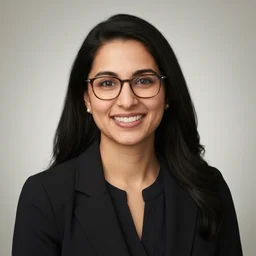
Educational Psychologist & Academic Test Preparation Expert
Columbia University Teachers CollegeDr. Lisa Patel holds a Doctorate in Education from Columbia University Teachers College and has spent 17 years researching standardized test design and academic assessment. She has developed preparation programs for SAT, ACT, GRE, LSAT, UCAT, and numerous professional licensing exams, helping students of all backgrounds achieve their target scores.