
FSC Test Cost: How Much Does the Firearm Safety Certificate Cost in California?
How much does the FSC test cost in California? Full breakdown of fees, what's included, and how to pass the firearm safety certificate exam. ✅
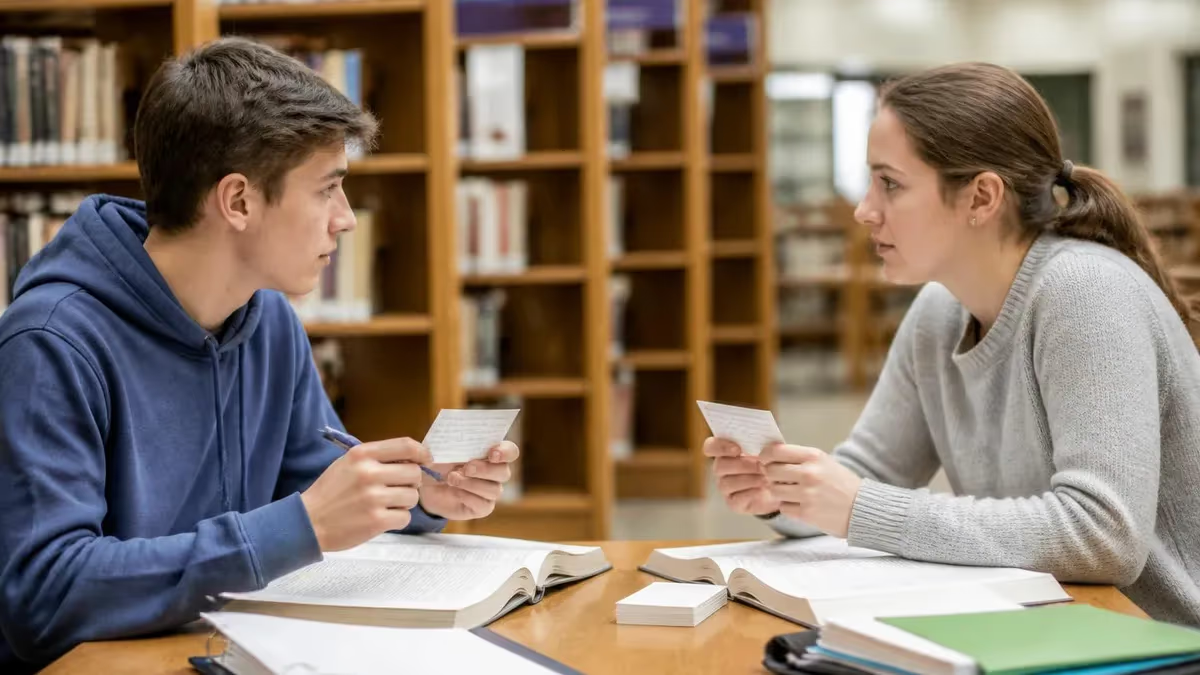
The FSC test cost in California is $25, a state-mandated fee set by the Department of Justice that has remained consistent since the program was restructured under California Penal Code Section 31610. This fee is paid directly to a DOJ-certified instructor or gun dealer who administers the firearm safety certificate exam. Understanding what that $25 covers — and what it doesn't — helps you budget properly and avoid surprises on test day. Whether you're buying your first handgun or a long gun, every California resident must pass this test before completing a firearm transfer.
The firearm safety certificate is a mandatory credential for anyone purchasing or receiving a firearm in California. The certificate is valid for five years, making the $25 fee one of the most affordable firearm-related expenses in the state. Unlike other certifications that require renewal courses, the FSC simply requires you to retake the written exam when your certificate expires. If you fail the exam on your first attempt, most dealers charge a retest fee, typically $5, though this varies by location. Budgeting for a possible retake is a smart step in your preparation plan.
Many first-time buyers are surprised to discover that the $25 FSC test cost is entirely separate from the firearm purchase fees, the Dealer Record of Sale (DROS) fee, and any background check fees. The DROS fee alone adds $37.19 to your transaction, and background check processing is included within that figure. When you add in the FSC fee, sales tax, and optional accessories, the total out-of-pocket cost of legally purchasing a firearm in California can range from a few hundred to several thousand dollars depending on the firearm selected.
Preparation is the most important investment you can make before sitting for the exam. The test consists of 30 multiple-choice questions drawn from topics including safe storage, safe handling, California firearm laws, and child safety. You need to score at least 23 out of 30 — that's 75% — to pass. Many applicants underestimate the specificity of the questions. Vague familiarity with gun safety concepts is rarely enough; the exam tests precise knowledge of California-specific rules that differ from federal law and the laws of other states.
Taking an fsc practice test before your appointment is one of the highest-leverage actions you can take to reduce both test anxiety and the risk of paying a retest fee. Practice tests mirror the actual exam format, expose you to the vocabulary and phrasing used in official questions, and highlight the specific topics where most applicants lose points — particularly questions about safe storage in homes with children and the definitions of various firearm components under California law.
The $25 fee is non-negotiable, but your total prep cost can vary widely. Free online resources, including the California DOJ's official FSC study guide, are available at no charge. Paid prep courses exist but are rarely necessary for the FSC given the depth of free material available. Most candidates who invest 4 to 6 hours in structured study using practice tests and the official guide pass on their first attempt, making the one-time $25 fee their only testing expense.
This guide covers everything you need to know about the FSC test cost, what the fee includes, where to pay it, how to find a testing location near you, and the most effective strategies for passing on your first try. By the end, you'll have a complete financial and practical picture of the California firearm safety certificate process, so you can walk into your exam with confidence and walk out with your certificate in hand.
California FSC Test Cost by the Numbers
Full Cost Breakdown: FSC & Related California Firearm Fees
The California firearm safety certificate exam is administered by DOJ-certified instructors, most of whom operate out of licensed gun dealers across the state. The exam is paper-based and consists of exactly 30 multiple-choice questions. Each question has four answer choices, and you must select the single best answer. The test is not timed in the traditional sense — you're given ample time to complete all 30 questions — but most test-takers finish within 20 to 30 minutes. The questions are drawn from a specific pool maintained by the California DOJ, so the universe of possible questions is finite and learnable.
The exam covers four primary content domains: safe handling of firearms, safe storage of firearms, firearm laws specific to California, and firearms and children safety. The child safety section tends to generate the most errors among first-time test-takers because the questions require precise knowledge of lock box requirements, trigger lock specifications, and the legal definitions of what constitutes unsafe storage under California law. A single missed detail — such as which types of locks qualify as DOJ-approved safety devices — can mean the difference between passing and needing a retake.
The safe handling section tests your knowledge of the Four Rules of firearm safety as interpreted under California law, the correct procedures for loading and unloading common firearm types, and the definitions of semi-automatic versus single-action versus double-action mechanisms. These questions sound straightforward, but the specific language used in correct answers often trips up candidates who rely on general knowledge rather than studying the official terminology. Reading the DOJ's study guide closely and practicing with realistic questions is far more effective than relying on shooting experience alone.
California firearm laws form a substantial portion of the exam. Questions cover the 10-day waiting period, the definition of an assault weapon under California law, restrictions on magazine capacity, prohibited persons categories, and the process for legal private-party transfers. These are California-specific rules, and many of them differ significantly from federal law and the laws of neighboring states like Nevada and Arizona. Candidates who learned firearm law elsewhere often find this section the most challenging, since assumptions based on other states' rules frequently lead to wrong answers.
When you search for a fsc test near me, you'll find that most licensed firearm dealers in California are authorized to administer the FSC exam. You don't need to schedule an appointment at a government office or testing center — the exam is administered at the dealer's location, usually at the same time you're completing a firearm purchase transaction. However, you can also take the FSC exam independently of a purchase, which many candidates choose to do so they can complete their exam preparation without the time pressure of an active transaction.
After you pass the exam, the certified instructor or dealer will issue your official California Firearm Safety Certificate on the spot. This laminated card includes your name, date of issuance, expiration date, and a DOJ-assigned certificate number. Keep this card safe — you'll need to present it every time you purchase or receive a firearm in California during the five-year validity period. If you lose it, you can request a duplicate through the dealer or directly from the DOJ, though a replacement fee may apply.
Understanding the exam structure thoroughly before test day eliminates the mental overhead of figuring out logistics while you're trying to concentrate on questions. The $25 investment in the exam is trivial compared to the time cost of returning for a retake, not to mention the potential delay in your firearm purchase. Treating the exam seriously — even though it is designed to be accessible to the general public — is the surest path to completing your firearm purchase smoothly and on schedule.
Firearm Safety Certificate Study Guide: Topic-by-Topic Breakdown
The safe handling section of the FSC exam tests your understanding of the Four Rules of firearm safety: treat every firearm as if it is loaded, never point a firearm at anything you are not willing to destroy, keep your finger off the trigger until ready to shoot, and know your target and what lies beyond it. California's exam questions require you to apply these rules in specific scenario-based questions, not just recite them. For example, you may be asked what to do if you discover a loaded firearm in a home, or the correct sequence for clearing a semi-automatic pistol.
You should also be prepared for questions about safe transportation of firearms in California. The law requires unloaded firearms to be transported in a locked container separate from ammunition, with specific exceptions for handguns versus long guns. Many candidates lose points on transportation questions because the rules differ between vehicle types and between handguns and rifles. Studying the official DOJ manual section on transportation and practicing with scenario-based questions that mirror these distinctions is the most efficient way to lock in these rules before exam day.
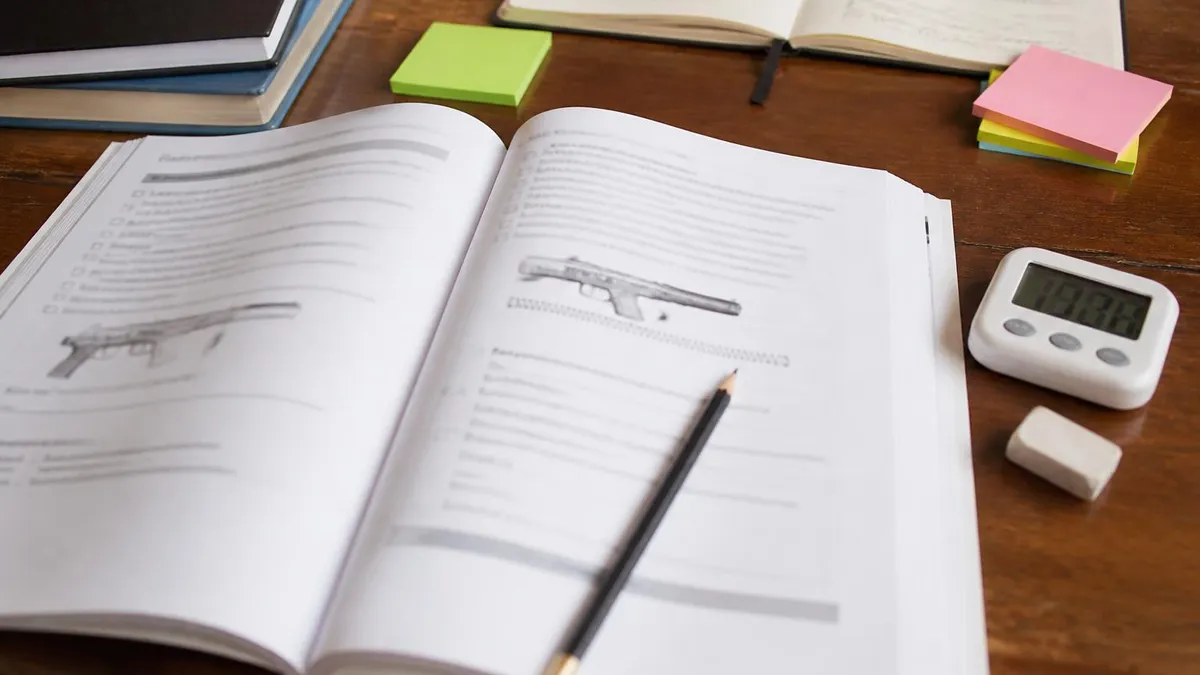
Is the FSC Worth It? Benefits and Drawbacks of the California Certification
- +One of the lowest-cost mandatory firearm certifications in the U.S. at just $25
- +Valid for five years — no annual renewal or recurring fees during that period
- +Exam can be taken at thousands of licensed dealers statewide, making access convenient
- +Passing the exam demonstrates verified knowledge of California-specific firearm law
- +Prepares new gun owners for real-world safe storage and handling responsibilities
- +Study materials, including the official DOJ guide, are completely free online
- −A $25 fee plus potential $5–$10 retest charge adds cost to an already expensive purchase process
- −Certificate does not transfer to other states — no reciprocity agreements exist
- −Expiration requires a full retake of the written exam, not a shorter renewal quiz
- −Test availability depends on dealer hours and willingness to administer the exam outside of a purchase
- −Study guide and exam are only offered in a limited number of languages
- −The exam does not include a practical shooting component, so it doesn't validate real-world firearm skills
FSC Test Prep Checklist: Everything to Do Before Your Exam
- ✓Download and read the official California DOJ Firearm Safety Certificate study guide at least twice
- ✓Complete at least three full-length FSC practice tests under timed conditions
- ✓Review every question you answered incorrectly and read the supporting section of the study guide
- ✓Memorize the four core firearm safety rules using the exact California DOJ phrasing
- ✓Study the specific age thresholds and conditions under California's Child Access Prevention law
- ✓Learn the legal distinctions between trigger locks, lock boxes, and gun safes under California law
- ✓Review California-specific transportation rules for handguns versus long guns in vehicles
- ✓Confirm you have a valid California ID or passport to present at the testing location
- ✓Locate a certified FSC testing location near you and confirm their testing hours and availability
- ✓Bring the $25 fee in cash or card, plus an additional $10 in case a retest fee applies
The #1 reason candidates fail is over-relying on general gun knowledge instead of California-specific rules
Experienced shooters and hunters frequently score lower than expected on the FSC exam because they apply federal or out-of-state rules to California-specific questions. The exam is deliberately written to test whether you know California law — not just general firearm safety concepts. Candidates who spend 90 minutes with the official DOJ study guide specifically focused on California statutes pass at dramatically higher rates than those who rely on prior experience. Specificity beats experience on this exam every time.
Passing the FSC exam on your first attempt is the single most cost-effective outcome for any California firearm buyer. Not only does it keep your total certification cost at the minimum $25, it also keeps your firearm purchase timeline on track. Most dealers initiate the 10-day waiting period at the time the DROS paperwork is filed, which typically happens immediately after you pass the FSC exam. A failed exam means delaying the DROS filing, which can cascade into scheduling complications, especially if you're purchasing from a dealer with high transaction volume and limited appointment windows.
The most reliable path to a first-attempt pass is structured preparation using materials that mirror the actual exam. The California DOJ publishes an official FSC study guide that outlines exactly which topics the exam covers and provides sample questions. Reading this guide is mandatory preparation, not optional supplementary material. The questions on the actual exam are drawn from the same conceptual territory as the sample questions in the guide, so candidates who study the guide thoroughly encounter very few surprises on test day. The guide is available as a free PDF from the DOJ's website.
Beyond the official guide, online practice tests are the most effective supplementary tool available. A good fsc test practice resource will present questions in the same multiple-choice format as the real exam, cover all four content domains proportionally, and include explanations for both correct and incorrect answers. The explanations are crucial — understanding why a wrong answer is wrong, not just knowing that it is, prevents you from making the same conceptual error on a differently worded question. Look for practice resources that include at least 100 unique questions across multiple practice sets.
Time management during the exam is rarely a problem, but test anxiety can be. Many candidates who studied adequately still feel uncertain when they encounter a question with two plausible-sounding answers. In these situations, the correct strategy is to eliminate the two obviously wrong answers first, then choose between the remaining two based on what the California DOJ study guide specifically says — not what feels intuitively correct. California law sometimes contradicts intuition, especially on questions about storage requirements and the definition of prohibited persons.
One underappreciated preparation strategy is to take practice tests in conditions that resemble the real exam environment as closely as possible. Sit at a desk or table, avoid distractions, and time yourself even though the real exam is not strictly timed. This approach trains your brain to perform under mild stress, which is the actual cognitive state you'll be in when you're sitting across the counter from a dealer while other customers wait. Psychological readiness is a real factor in exam performance and is worth deliberately building during your preparation phase.
Candidates who have prior military or law enforcement experience sometimes assume they can skip structured preparation because they've received professional firearms training. This is a mistake that costs some of them a retake fee. Military and law enforcement training is thorough but federal — it does not cover California's specific magazine restrictions, the handgun roster system, or the state's unique assault weapon definitions. Even experienced professionals benefit from a focused review of California-specific statutes before sitting for the FSC exam.
Finally, consider the opportunity cost of failing. A retake means returning to the dealer for a second visit, paying an additional $5 to $10, and potentially delaying your DROS filing. More importantly, it means the time cost of a second trip. The value of that time, for most people, far exceeds the marginal cost of spending an extra hour or two in thorough preparation before the first attempt. Treat the FSC exam as a task worth doing once and doing right, and your total investment remains $25 plus a couple of hours of focused study.
Your California Firearm Safety Certificate expires exactly five years from the date of issue and cannot be extended, transferred, or upgraded. If your certificate expires before you complete a firearm purchase, the transaction cannot proceed until you retake and pass the FSC exam. Plan ahead: if your certificate is within 60 days of expiration and you're planning a purchase, take the exam now rather than risk expiration mid-transaction.
The FSC renewal process is straightforward but requires the same investment of time and money as the original certification. There is no shortened renewal exam, no online renewal option, and no exemption for prior FSC holders. When your five-year certificate expires, you must visit a DOJ-certified instructor or licensed dealer, pay the $25 fee again, and pass the 30-question written exam with a score of at least 75%. The questions on the renewal exam are drawn from the same pool as the original exam, so your prior study materials remain relevant and useful.
Some candidates find the renewal requirement frustrating, particularly those who handle firearms regularly and feel confident in their knowledge. However, California's legislative intent is to ensure that all certificate holders have current knowledge of the law, which evolves over time. Magazine capacity regulations, approved storage device definitions, and prohibited person categories have all changed since the FSC program was introduced. A renewal exam ensures that long-term certificate holders are aware of those changes rather than operating on outdated knowledge from five years prior.
If you're approaching your renewal date, a california fsc practice test is an excellent way to identify which areas of California firearm law may have changed since you last took the exam. Even if you passed your original exam comfortably, laws evolve, and the exam is updated periodically to reflect those changes. Spending an hour on current practice questions before your renewal appointment is the most efficient way to confirm your knowledge is up to date and avoid the surprise of a question that reflects a law you haven't encountered before.
The retest policy after a failed exam is set by individual dealers, not by the state. The California DOJ does not impose a mandatory waiting period before retesting — you can theoretically retake the exam the same day if the dealer allows it and you've had a chance to review your mistakes. Most dealers, however, recommend that candidates take at least a short break to review the study guide before retesting. Some dealers require scheduling a separate appointment for the retake, which means waiting a day or more depending on their availability.
If you fail the FSC exam, ask the examiner to identify the content areas where you lost points. California law requires that candidates be told which sections of the exam they answered incorrectly, by category, not by specific question. This feedback is valuable — it tells you whether to focus your review on safe storage, firearm laws, handling procedures, or child safety. Use the category feedback to direct your study guide review to the specific chapter or chapters where you struggled before scheduling your retake.
The total lifetime cost of maintaining FSC certification in California, assuming you renew every five years over a 30-year period, amounts to $150 — or about $5 per year. When you factor in the cost of the official study guide (free), practice resources (free to low-cost), and your time investment, the FSC is one of the least expensive recurring compliance requirements associated with legal firearm ownership in California. Framing the cost this way helps put the $25 exam fee in proper perspective relative to the total cost of responsible gun ownership.
For buyers who are new to California and previously held a firearm certification in another state, there is no waiver or reciprocity for the FSC requirement. Every California resident must take and pass the California-specific exam, regardless of prior certifications or training in other states. This is by design — California's firearm laws are unique enough that familiarity with another state's program provides only partial preparation, and the DOJ requires verified knowledge of California's specific statutes for all certificate holders.
The week before your FSC exam appointment, shift your preparation from learning new material to consolidating and confirming what you already know. Run through at least two full practice tests without referring to the study guide, simulate the actual testing environment as closely as possible, and note any questions where you feel uncertain. Then go back to the study guide and read the relevant section carefully. This review-and-confirm cycle is more effective in the final days before the exam than trying to absorb new information for the first time.
On the day of your exam, arrive at the dealer with your California driver's license or ID, $25 in payment ready, and a calm, focused mindset. Most dealers administer the exam at a counter or in a small testing area. The test is printed on paper and you'll use a pencil or pen.
Read each question carefully — many wrong answers are designed to be plausible-sounding, and rushing leads to careless errors on questions you actually know. Take the full time available to you, review your answers before submitting, and only change an answer if you have a specific reason based on your knowledge, not just anxiety.
Focus particular attention on questions that include the words "always," "never," "must," or "required." These absolute-language questions are common on the FSC exam and often test the hard edges of California law — situations where there is no flexibility or exception. For example, the requirement to unload a firearm before transporting it in a vehicle is not a general guideline; it is a legal requirement with no exception for licensed carriers in a personal vehicle. Absolute-language questions reward candidates who know the law precisely rather than approximately.
After completing the exam, the certified instructor will grade it immediately in most cases. If you pass, you'll receive your laminated FSC certificate on the spot. If you fail, you'll receive category-level feedback about where you lost points. Either way, the result is immediate — there is no waiting period for scores, no mailing of results, and no online portal to check. The simplicity of the process is one of the FSC exam's genuine strengths compared to other state licensing programs.
For candidates preparing for their first firearm purchase, the FSC exam is often the first direct encounter with California's firearm regulatory system. Use that experience as a foundation for understanding the broader landscape. The same knowledge that helps you pass the exam — safe storage rules, prohibited persons categories, transfer procedures — is the same knowledge that helps you remain legally compliant as a California gun owner over the years. The $25 you spend on the FSC exam is an investment in that foundational legal literacy.
Practice tests remain useful even after you receive your certificate. If you own a firearm and want to test a family member's knowledge before allowing them access, FSC-style practice questions are an excellent tool. If you work in a dealer environment and want to help customers prepare for their exams, recommending quality practice resources is a meaningful service. The knowledge base tested by the FSC is relevant to safe and legal firearm ownership at every stage of experience, not just at the point of first purchase.
Ultimately, the FSC exam is both a legal requirement and a genuine educational experience. California designed the exam to ensure that every firearm owner in the state has been exposed to the foundational rules of safe handling, storage, and legal compliance. The $25 fee is the smallest barrier to entry in the California firearm purchase process, and with proper preparation, passing on your first attempt is well within reach for any motivated candidate who spends a few hours with the right study materials before test day.
FSC Questions and Answers

Does Big 5 Do FSC Tests? FSC Test Locations in California

How Do I Renew My Firearm Safety Certificate? Complete California FSC Renewal Guide
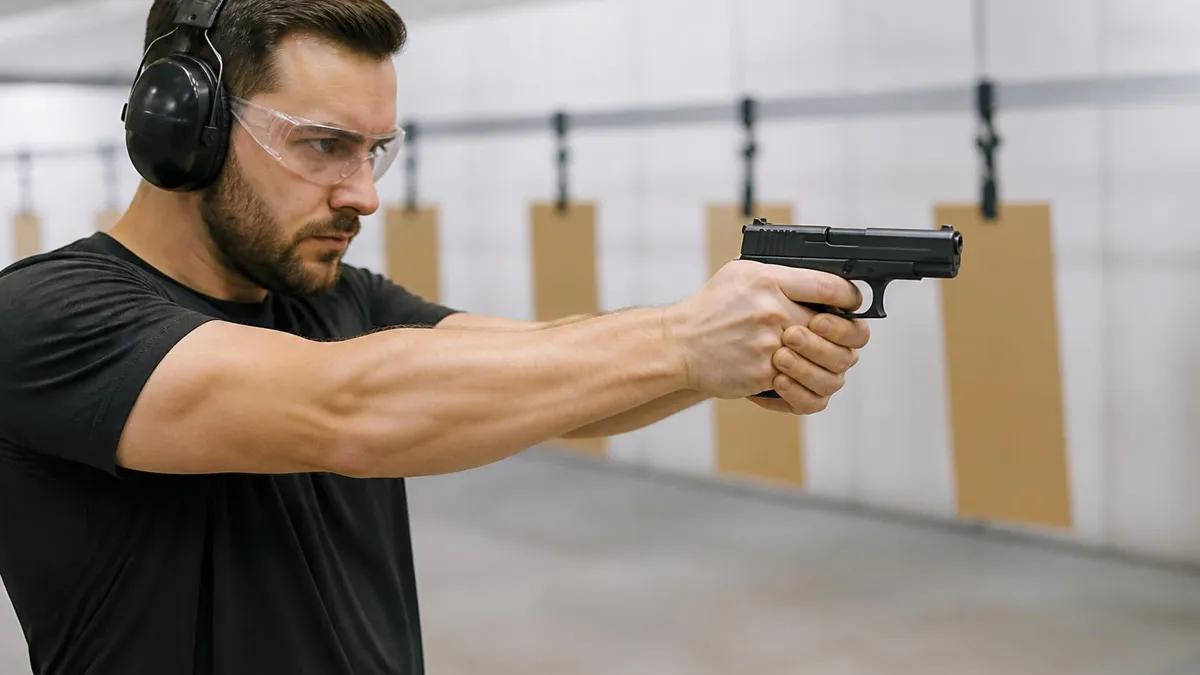
What Is FSC? California Firearm Safety Certificate Guide
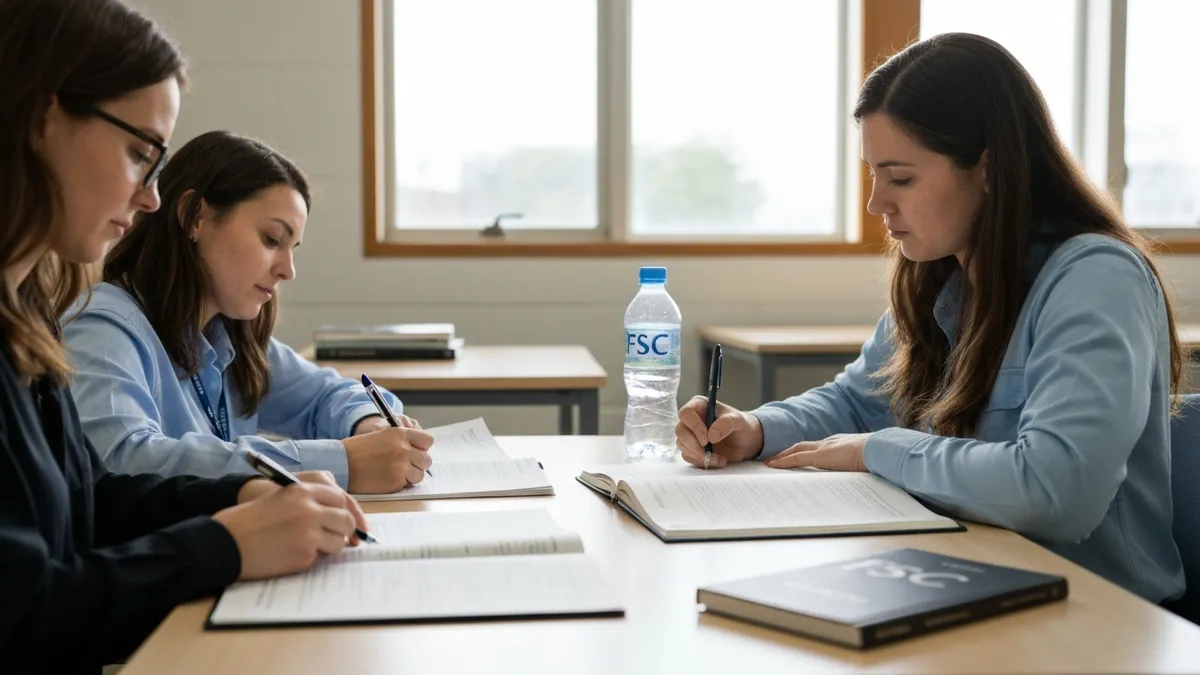
FSC Firearm Safety Certificate — Complete Guide 2026
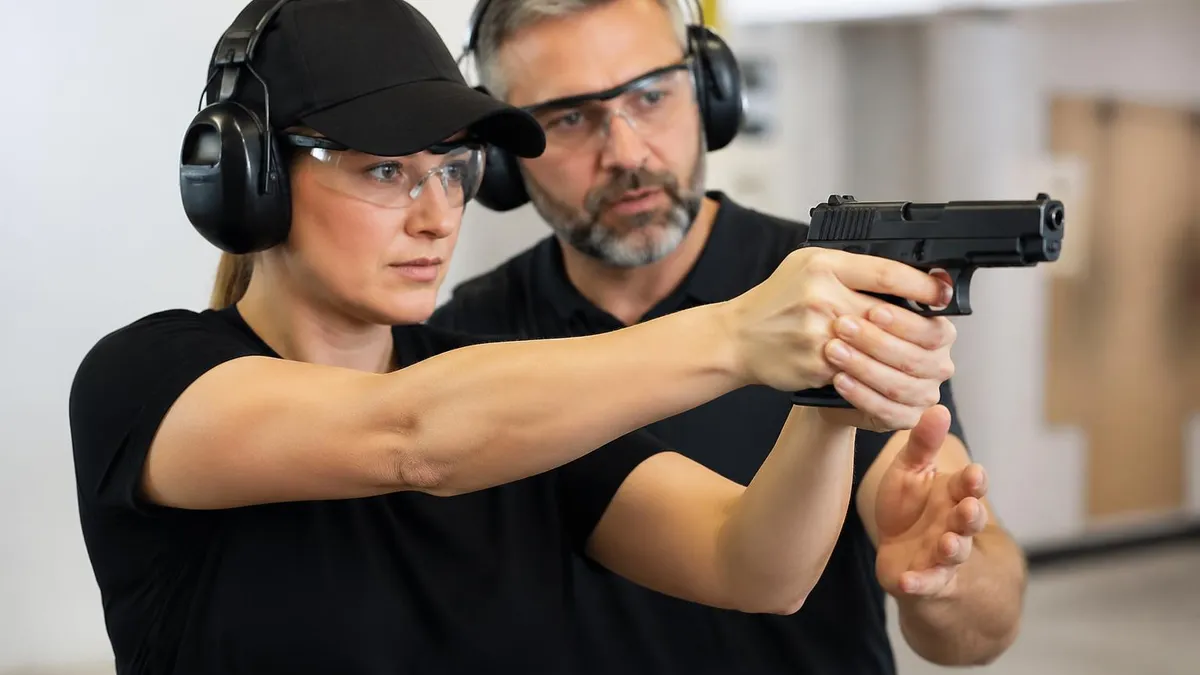
FSC Practice Test: California Firearm Safety Certificate Exam Prep
About the Author
Educational Psychologist & Academic Test Preparation Expert
Columbia University Teachers CollegeDr. Lisa Patel holds a Doctorate in Education from Columbia University Teachers College and has spent 17 years researching standardized test design and academic assessment. She has developed preparation programs for SAT, ACT, GRE, LSAT, UCAT, and numerous professional licensing exams, helping students of all backgrounds achieve their target scores.
Join the Discussion
Connect with other students preparing for this exam. Share tips, ask questions, and get advice from people who have been there.
View discussion (6 replies)