
Flood Out Restoration 2026 October
Pass the Flood Out Restoration exam with confidence. ✅ Practice questions with detailed explanations and instant feedback on every answer.
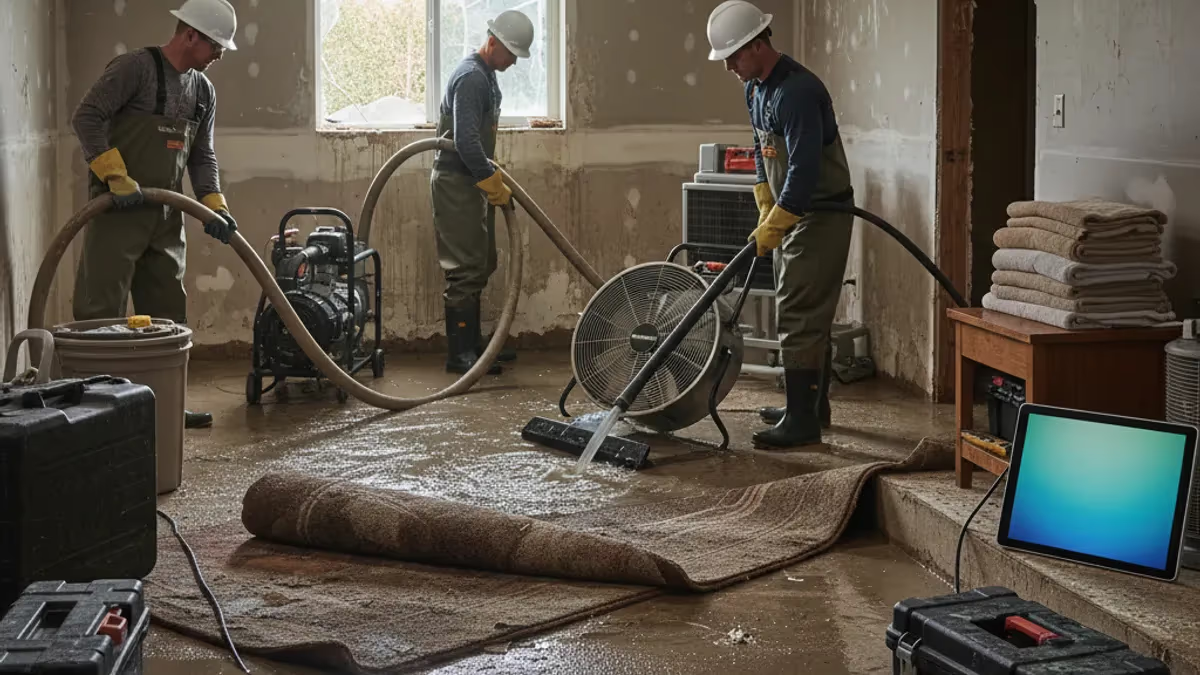
In the aftermath of a devastating flood, the process of restoration can be an overwhelming task. However, amidst the chaos, there lies an opportunity to rebuild better than before. Flood out restoration not only ensures that your property is brought back to its former glory but also allows for improvements and additions that were previously unattainable. One significant advantage of flood out restoration is the chance to implement innovative and sustainable strategies. Incorporating green infrastructure elements such as rain gardens or permeable pavements can help reduce the risk of future flooding while enhancing the aesthetic appeal of your property. Additionally, building materials and techniques can be upgraded to increase resilience against future floods, thereby safeguarding against potential damages.
Another aspect to consider during flood restoration is maximizing energy efficiency. Investing in efficient appliances, insulation upgrades, and renewable energy sources like solar panels can significantly reduce energy consumption and contribute towards a more sustainable future for your property. Moreover, incorporating smart home technology can not only enhance convenience but also provide real-time data on water usage and potential leakages, allowing for prompt action before any further damage occurs. While recovering from a flood is undoubtedly a challenging process, flood out restoration offers an opportunity for transformation. By embracing innovative solutions and adopting sustainable practices in rebuilding efforts, one can bounce back stronger while creating a safer, more resilient environment. So let's turn this tragedy into an opportunity - a chance to build back smarter and greener than ever before!
Pro Tip: Focus your Flood Restoration study time on the areas where you score lowest in practice tests. Most exam questions test application of knowledge, not memorization.
- ✓Review the official Flood Restoration exam content outline
- ✓Take a diagnostic practice test to identify weak areas
- ✓Create a study schedule (4-8 weeks recommended)
- ✓Focus on your weakest domains first
- ✓Complete at least 3 full-length practice exams
- ✓Review all incorrect answers with explanations
- ✓Take a final practice test 1 week before exam day

Flood Restoration Practice Test Questions
Prepare for the Flood Restoration exam with our free practice test modules. Each quiz covers key topics to help you pass on your first try.
Flood Restoration Contamination Categories...
Flood Restoration Exam Questions covering Contamination Categories and Water Classification. Master Flood Restoration Test concepts for certification prep.
Flood Restoration General Safety
Free Flood Restoration Practice Test featuring General Safety. Improve your Flood Restoration Exam score with mock test prep.
Flood Restoration Guide
Flood Restoration Mock Exam on Guide. Flood Restoration Study Guide questions to pass on your first try.
Flood Restoration Insurance Documentation ...
Flood Restoration Test Prep for Insurance Documentation and Claims. Practice Flood Restoration Quiz questions and boost your score.
Flood Restoration Knowledge
Flood Restoration Questions and Answers on Knowledge. Free Flood Restoration practice for exam readiness.
Flood Restoration Mold Prevention and Reme...
Flood Restoration Mock Test covering Mold Prevention and Remediation. Online Flood Restoration Test practice with instant feedback.
- +A recognized restoration credential (such as IICRC WRT) can help demonstrate technical competency to employers and clients
- +Prompt, proper restoration reduces the risk of mold growth and further structural damage
- +Many restoration companies work directly with insurance adjusters to help document claims
- +Structured training builds practical, hands-on skills in water extraction and structural drying
- −Restoration certification exam formats and fees vary by certifying body (e.g., IICRC) — always confirm with the official provider
- −Professional restoration work often requires ongoing continuing education to keep credentials current
- −DIY flood cleanup carries real risks (mold exposure, structural damage, electrical hazards) if not done correctly
- −Costs for professional flood restoration vary widely by damage extent, region, and contractor
Pros and Cons at a Glance
| Pros | Cons |
|---|---|
| A recognized restoration credential (such as IICRC WRT) can help demonstrate technical competency to employers and clients | Restoration certification exam formats and fees vary by certifying body (e.g., IICRC) — always confirm with the official provider |
| Prompt, proper restoration reduces the risk of mold growth and further structural damage | Professional restoration work often requires ongoing continuing education to keep credentials current |
| Many restoration companies work directly with insurance adjusters to help document claims | DIY flood cleanup carries real risks (mold exposure, structural damage, electrical hazards) if not done correctly |
| Structured training builds practical, hands-on skills in water extraction and structural drying | Costs for professional flood restoration vary widely by damage extent, region, and contractor |
Sample Flood Restoration Practice Questions
Try these questions from our free Flood Restoration practice tests. The correct answer and an explanation follow each question.
Which vaccination is commonly recommended for workers exposed to contaminated flood water?
- A. Tetanus
- B. Measles
- C. Chickenpox
- D. Shingles
Answer: A. Tetanus
Cuts and punctures in contaminated environments raise tetanus risk, so a current tetanus shot is advised.
A relative humidity reading that stays high during drying usually indicates what?
- A. Drying is complete
- B. Insufficient dehumidification capacity
- C. The meter is broken
- D. Materials are fully dry
Answer: B. Insufficient dehumidification capacity
Persistently high humidity signals the dehumidification is undersized or not keeping up with evaporation.
What is the purpose of applying an antimicrobial after extraction?
- A. To add fragrance
- B. To inhibit mold and bacterial growth
- C. To dry the structure faster
- D. To strengthen drywall
Answer: B. To inhibit mold and bacterial growth
Antimicrobials are applied to treated surfaces to suppress microbial growth during drying.
How often should desiccant dehumidifiers be preferred over refrigerant dehumidifiers in flood restoration?
- A. In low-temperature environments below 45°F
- B. In high-temperature environments above 80°F
- C. When drying synthetic materials only
- D. When power availability is limited
Answer: A. In low-temperature environments below 45°F
Desiccant dehumidifiers remain effective at low temperatures where refrigerant models lose efficiency, making them ideal for cold conditions.
About the Author

Environmental Scientist & Sustainability Certification Expert
UC Berkeley College of Environmental DesignDr. Laura Chen holds a PhD in Environmental Science and an MS in Chemistry from UC Berkeley. A Certified Hazardous Materials Manager with 15 years of environmental consulting experience, she specializes in ISO 14001 environmental management, HAZWOPER certification, and wastewater operator licensing. She has coached professionals through state and federal environmental certification programs nationwide.