
FDNY Busiest Companies: Which Firehouses Handle the Most Runs in New York City
Which FDNY companies handle the most runs? 🎯 Explore the busiest firehouses, their neighborhoods, and what high call volume means for firefighters.

The fdny busiest companies are more than a trivia curiosity — they represent the front lines of emergency response in one of the most densely populated cities on earth. Engine Company 55 in Little Italy, Ladder Company 3 in the East Village, and several Bronx and Brooklyn units consistently rank among the highest-volume responders in the entire department, logging thousands of runs per year. Understanding which companies are busiest, and why, gives aspiring firefighters critical insight into the realities of the job.
New York City's 180-square-mile footprint contains roughly 8.3 million residents plus millions of daily commuters, tourists, and workers. That population density — combined with aging housing stock, subway tunnels, high-rise commercial towers, and an ever-changing mix of industrial and residential uses — generates a call volume that few fire departments anywhere in the world can match. The FDNY dispatches more than 500,000 incidents per year across its 218 engine companies, 143 ladder companies, and dozens of specialized units.
Run totals are the primary metric firefighters and department analysts use to measure company workload. A single run can mean anything from a confirmed working fire in a six-story walkup to an activated alarm in a Times Square hotel that turns out to be steam from a shower. High-volume companies respond to both ends of that spectrum constantly, and the cumulative physical and mental toll is significant. Crews may return from one run, clean and restock equipment, and be dispatched again before the rig has even cooled down.
Geography plays an enormous role in shaping which companies see the most action. Companies stationed in neighborhoods with dense multiple-dwelling-unit buildings, active commercial corridors, or significant homeless shelter populations tend to generate far more calls than those in quieter outer-borough residential areas. The South Bronx, Central Brooklyn, and lower Manhattan all consistently produce outsized call volumes relative to their geographic size, and the companies assigned to those areas reflect that reality in their annual run tallies.
For anyone preparing for the FDNY exam or considering a career with the department, familiarity with company workload data is genuinely useful. It informs expectations about assignment, physical conditioning requirements, and the pace of on-the-job learning. A probationary firefighter assigned to one of the city's highest-volume houses will accumulate operational experience in months that might take years to achieve in a lower-volume posting. That accelerated experience curve is one reason many aspiring firefighters actively seek out busy assignments.
This article explores the factors that drive high run volume, profiles the types of neighborhoods and building stock that generate the most calls, examines what daily life looks like in a busy firehouse, and explains how this knowledge connects to FDNY exam preparation. Whether you're studying for the written test, preparing for oral interviews, or simply fascinated by how the world's most famous fire department operates, the data behind company run volume tells a compelling story about urban firefighting in the twenty-first century.
We'll also look at how the FDNY tracks and publishes this information, what critics and advocates say about resource allocation in high-volume areas, and what the busiest companies themselves say about the work. The numbers tell one story; the firefighters who live those numbers every shift tell another — and both perspectives matter for anyone serious about joining the department.
FDNY Busy Companies by the Numbers

Key Factors That Drive High Run Volume
Neighborhoods with tens of thousands of residents per square mile generate proportionally more medical emergencies, fire alarms, and rescue calls. The South Bronx and parts of Brooklyn routinely rank among the most densely populated urban zones in the United States.
Pre-war multiple-dwelling units, older commercial buildings, and converted loft spaces lack modern fire suppression systems and have structural characteristics that increase both ignition risk and fire spread, resulting in more alarm activations and confirmed fires.
Restaurant rows, nightlife districts, and busy retail corridors produce cooking fires, mercantile alarms, and hazmat calls at rates far above residential-only zones. Companies covering these mixed-use areas see dramatically improved weekday and weekend run totals.
Engine and ladder companies near major subway stations, bridges, and tunnels respond to incidents involving the millions of daily transit users. Track fires, platform medical emergencies, and tunnel rescues add significant volume to already busy companies.
Homeless shelters, supportive housing sites, and congregate care facilities are statistically associated with higher call volumes due to medical emergencies, cooking incidents, and activated fire suppression systems. Companies near these facilities reflect this in their annual tallies.
When firefighters and department researchers discuss the FDNY's highest-volume units, a handful of companies come up repeatedly. Engine Company 55, headquartered on Lafayette Street in Manhattan's Little Italy neighborhood near the border with SoHo, has spent decades near the top of annual run-volume rankings. Its response district covers a mix of residential lofts, restaurants, commercial buildings, and tourist-heavy streets that generate calls around the clock. The company's proximity to the Holland Tunnel approach also adds transit-related incidents to its already heavy workload.
In the Bronx, companies assigned to the South Bronx — an area that famously saw devastating fire losses in the 1970s and 1980s — continue to rank among the department's most active. Engine Company 82 and Ladder Company 31, made famous by Dennis Smith's 1972 book "Report from Engine Co. 82," remain in service in the Morrisania neighborhood and still handle enormous annual call volumes. The combination of aging housing stock, dense population, and a neighborhood still working through decades of disinvestment keeps these companies among the busiest in the five boroughs.
Brooklyn contributes several perennially high-volume companies as well. Bushwick, Bed-Stuy, and Crown Heights all have engine and ladder companies that consistently log run totals placing them in the department's top tier. These neighborhoods feature dense rows of attached frame and brick residential buildings, many lacking sprinkler systems, where fires can spread rapidly between structures — which not only generates the initial alarm but often draws multiple companies to the same scene, compounding individual run counts.
Manhattan's Harlem and Washington Heights neighborhoods are home to several companies that handle not only structural fires but enormous medical assist and auto accident volumes. Companies on the west side of upper Manhattan also respond to incidents along the Henry Hudson Parkway and the approaches to the George Washington Bridge, adding highway-related calls to an already full roster. A company in this part of the city might respond to a kitchen fire in a tenement, a medical emergency in a high-rise, and a fender bender on the highway all within the same four-hour stretch.
Queens and Staten Island generally have lower per-company run volumes than Manhattan and the Bronx, though specific corridors — Jamaica Avenue in Queens, the North Shore of Staten Island near the ferry terminal — generate enough activity to push companies in those areas well above the department average. The difference between a busy Queens company and a busy Bronx company is largely one of degree rather than kind; the types of calls are similar, but the frequency and the density of response areas differ.
The FDNY publishes annual statistical reports that include run-volume data broken down by borough and unit. Aspiring firefighters can access these reports through the department's official website and through the Mayor's Management Report, which the city publishes each year. Studying these numbers before an oral examination or an interview with a department representative demonstrates genuine engagement with the realities of the job and can meaningfully distinguish a candidate who has done their homework from one relying on general impressions.
It is worth noting that raw run volume is not the only measure of a company's workload or significance. Working fire frequency — the number of runs that result in actual fire suppression activity rather than alarm investigations or false activations — is often considered a better indicator of operational intensity. A company that logs 8,000 runs with 400 workers may be doing more demanding work than one logging 9,500 runs with only 150 workers, and department planners account for this distinction when making staffing and resource decisions.
FDNY Busiest Companies: Borough by Borough Breakdown
Manhattan's busiest companies are concentrated in lower Manhattan, Harlem, and Washington Heights. Engine 55 in Little Italy, Engine 7 near the Manhattan Bridge, and several Harlem-based units consistently rank at or near the top of citywide run tallies. The borough's combination of tourist density, aging pre-war residential stock, and commercial intensity creates a uniquely demanding operating environment that keeps engine and ladder companies in near-constant motion throughout every shift.
Manhattan companies also respond to a disproportionate share of high-rise incidents — elevator emergencies, activated suppression systems, and smoke investigations in towers that can take considerable time to navigate. These calls often require full company response even when the incident turns out to be minor, inflating run counts without necessarily reflecting the kind of suppression-heavy workload associated with the outer boroughs. Still, the overall pace in Manhattan's busiest zones is among the most demanding anywhere in the country.

High-Volume Firehouse Assignment: Advantages and Challenges
- +Accelerated operational experience — probies gain years of knowledge in months
- +Higher exposure to working fires builds suppression skill and confidence
- +Tight crew bonds form quickly in high-tempo shared-work environments
- +Comprehensive understanding of diverse building types and fire behavior
- +Greater chance of promotable experience for those pursuing officer ranks
- +Respect within the department for serving in demanding, high-visibility companies
- −Physical and mental fatigue accumulate faster in very high-volume assignments
- −Increased injury risk from more frequent exposure to active fire environments
- −Less downtime for training, equipment maintenance, and administrative tasks
- −Higher psychological stress and greater risk of cumulative trauma over a career
- −Shift turnovers can be chaotic when companies return from runs at handover time
- −Equipment wear accelerates, meaning gear inspections and replacements are more frequent
Pros and Cons at a Glance
| Pros | Cons |
|---|---|
| Accelerated operational experience — probies gain years of knowledge in months | Physical and mental fatigue accumulate faster in very high-volume assignments |
| Higher exposure to working fires builds suppression skill and confidence | Increased injury risk from more frequent exposure to active fire environments |
| Tight crew bonds form quickly in high-tempo shared-work environments | Less downtime for training, equipment maintenance, and administrative tasks |
| Comprehensive understanding of diverse building types and fire behavior | Higher psychological stress and greater risk of cumulative trauma over a career |
| Greater chance of promotable experience for those pursuing officer ranks | Shift turnovers can be chaotic when companies return from runs at handover time |
| Respect within the department for serving in demanding, high-visibility companies | Equipment wear accelerates, meaning gear inspections and replacements are more frequent |
What to Know About FDNY Company Workload Before Your Exam
- ✓Review the FDNY Annual Statistical Report for the most recent year's run-volume data by company
- ✓Understand the difference between total runs and working fires when analyzing company workload
- ✓Learn which boroughs consistently produce the highest per-company incident volumes
- ✓Study the relationship between building type, construction era, and fire frequency in urban areas
- ✓Familiarize yourself with South Bronx fire history and how it shaped modern FDNY resource allocation
- ✓Know that medical assists count toward a company's total run tally alongside fire and rescue calls
- ✓Understand how geographic factors — highways, transit hubs, waterways — influence company response areas
- ✓Be prepared to discuss why high-volume assignments accelerate a probationary firefighter's development
- ✓Research the Mayor's Management Report as a publicly available source of FDNY operational statistics
- ✓Recognize that staffing decisions, not just geography, affect how well companies manage high call volumes
The Busiest Companies Build the Sharpest Firefighters
Firefighters assigned to New York City's highest-volume companies often describe their first year as the equivalent of a decade of experience elsewhere. The sheer repetition of responding to diverse, real-world emergencies — structural fires, medical assists, vehicle accidents, hazmat calls — compresses a professional learning curve in ways that classroom or simulation training simply cannot replicate. If you are serious about developing operational excellence, understanding where the work happens is the first step.
Resource allocation in high-volume firehouses is one of the most complex and politically sensitive challenges facing FDNY leadership. The department must balance the need to concentrate resources where call volume is highest against the equally valid need to maintain coverage across all five boroughs. Staffing levels, apparatus assignments, and unit locations are negotiated through a combination of data analysis, union agreements, budget cycles, and political input from borough officials and community advocates.
The FDNY's response to changing run volumes has historically included both permanent unit relocations and temporary surge deployments. When a neighborhood experiences a spike in fire activity — sometimes driven by construction, changes in building use, or seasonal factors — the department can reposition companies or assign additional units to cover the increased demand. These adaptive measures are a testament to the operational flexibility that the department has developed over more than 150 years of urban firefighting.
Apparatus matters as much as personnel when it comes to managing high run volumes. Engine companies in the busiest areas log enormous mileage on their rigs, and the department's fleet maintenance operation must keep pace with the accelerated wear that comes with constant deployment. The FDNY operates one of the largest municipal vehicle fleets in the country, and managing that fleet in a city where heavy traffic, narrow streets, and underground infrastructure constantly complicate vehicle operations is a significant logistical undertaking.
Union dynamics also shape how high-volume workload gets managed. The Uniformed Firefighters Association and the Uniformed Fire Officers Association negotiate contract language that addresses staffing minimums, overtime rules, and the conditions under which members can be compelled to cover additional shifts. In high-volume companies, overtime accrual is often substantially higher than department averages, which has both financial implications for the city budget and personal implications for firefighters managing work-life balance over long careers.
Community advocates in high-volume neighborhoods have long argued that their residents deserve not just adequate fire protection but exceptional fire protection, precisely because the risks in their communities are higher. Organizations in the South Bronx and parts of Brooklyn have historically pushed back against unit closures and staffing reductions with the argument that the statistical evidence of improved fire risk demands a proportionally improved response capacity. The FDNY's leadership has generally been sympathetic to this argument, though budget pressures have periodically forced difficult choices.
Interestingly, some of the highest-volume companies in the city handle a significant proportion of non-fire emergencies. Medical assist calls — responding alongside EMS to provide additional manpower at serious medical emergencies — can account for 30 to 40 percent of a busy Manhattan company's total run count. This reflects both the city's aging population and the strategic decision to use firefighters as a first-responder supplement to the EMS system in neighborhoods where ambulance response times might otherwise be insufficient.
For candidates preparing for the FDNY written exam and oral interviews, understanding these resource allocation dynamics demonstrates a level of institutional knowledge that distinguishes serious applicants. Being able to articulate why the busiest companies are where they are — and what that means for staffing, career development, and community service — signals genuine commitment to the department's mission rather than superficial interest in the job's surface-level appeal.

The FDNY publishes annual statistical reports and the Mayor's Management Report includes incident data broken down by borough and unit type. Candidates who review this publicly available data before their oral exam or background interview demonstrate a level of preparation that evaluators consistently note. You can access these reports through the City of New York's official website at no cost.
Daily life in one of New York City's busiest firehouses is defined by a rhythm that alternates between intense, adrenaline-driven response and the quieter but essential routines of equipment maintenance, training, and crew cohesion. Firefighters working in high-volume companies often describe their shifts as physically demanding in a way that builds a specific kind of resilience — the ability to perform at a high cognitive and physical level even under conditions of fatigue, noise, and sensory overload. That resilience is developed over hundreds of runs and cannot be shortcut by any training program.
Morning routines in a busy firehouse begin with rig checks — systematic inspections of the engine or ladder truck to verify that all equipment is present, functional, and properly stowed. In a high-volume company, this inspection is not a formality; gear that was used on the overnight shift may need cleaning, repair, or replacement before it can be relied upon again.
SCBA cylinders need to be checked and refilled, hose lines need to be reloaded, and hand tools need to be returned to their designated positions on the rig. A crew that cuts corners on morning checks may discover their equipment's deficiency at the worst possible moment.
Training in busy firehouses is often compressed into the margins of a shift — early morning before the run pace picks up, or in the quieter stretches of an overnight tour. Company officers use these windows to run drills on building construction, forcible entry, search and rescue patterns, and ventilation techniques. In a high-volume house, theoretical training is constantly reinforced by real-world application, which accelerates skill acquisition in ways that are difficult to replicate in lower-activity environments. New members often report that the first six months in a busy company teach them more than the entire probationary training program.
Meal culture in the firehouse is an important part of crew cohesion in any FDNY company, but in the busiest houses it takes on additional significance. Shared meals are often interrupted by runs, resumed when the crew returns, and sometimes abandoned entirely when call volume peaks. The ability to eat, decompress, and reconnect with crewmates between demanding responses is psychologically protective, and officers in high-volume companies pay close attention to crew morale as a leading indicator of team performance under stress.
The physical demands of the job in a high-volume company are substantial and cumulative. Firefighters carry 50 to 75 pounds of equipment into burning buildings, climb multiple flights of stairs in full gear and self-contained breathing apparatus, and perform strenuous rescue and suppression work in extreme heat and low visibility. Doing this multiple times in a single shift — which is not unusual in the busiest companies — requires a level of cardiovascular fitness and muscular endurance that must be maintained throughout a career spanning two to three decades.
Mental health has become an increasingly prominent conversation within the FDNY, particularly as research on cumulative trauma and occupational PTSD has grown more sophisticated. Firefighters in high-volume companies accumulate traumatic exposures at a higher rate than those in lower-activity postings, and the department has expanded its peer support, counseling, and chaplaincy resources in recognition of this reality. Candidates should understand that caring for one's own mental health is not a sign of weakness but a professional responsibility that contributes directly to crew safety and long-term career sustainability.
For anyone drawn to a career with the FDNY, understanding what life in a busy company actually looks like — not the idealized version from television or movies, but the real daily rhythm of checks, training, runs, meals, and recovery — is an essential part of making an informed decision. The work is genuinely meaningful, the camaraderie is real, and the operational learning is unmatched. But it also demands everything from the people who do it, and those who thrive in it go in with clear eyes and a realistic understanding of what they are committing to.
Preparing for an FDNY career means engaging seriously with the department's history, structure, and operational realities — and run-volume data is one of the most concrete windows into all three. Candidates who understand why certain companies are busier than others demonstrate an analytical mind-set that the department values. The written exam tests cognitive ability, reading comprehension, and spatial reasoning, but oral interviews and background investigations reward candidates who can speak knowledgeably about the institution they are trying to join.
Building construction knowledge is directly relevant to the question of why certain neighborhoods generate more fire activity. Pre-war wood-frame and ordinary construction buildings — the type that dominates the South Bronx and parts of Brooklyn — burn faster, fail structurally sooner, and present firefighters with hazards that newer fire-resistive construction does not. A candidate who can explain the difference between Type III ordinary construction and Type I fire-resistive construction, and articulate what that means for fire behavior and firefighter safety, is demonstrating exactly the kind of job-relevant knowledge that exam preparation should build.
The FDNY exam itself tests a range of abilities, but the oral component often includes situational questions that benefit from real-world context. Being asked why you want to work in a particular borough, or how you think about the challenges of a high-volume posting, requires more than generic enthusiasm. Candidates who have studied actual company data, read department history, and engaged with the operational realities of the job are better equipped to give thoughtful, specific answers that reflect genuine preparation and commitment.
Physical preparation is equally important. The FDNY's Candidate Physical Ability Test (CPAT) is a rigorous standardized assessment of the aerobic capacity and muscular strength that the job demands. Candidates should begin training specifically for the CPAT well in advance of their exam date, focusing on stair climbing under load, hose dragging, equipment carrying, and ladder raises. The busiest firehouses demand peak physical performance consistently, and arriving at the job already in excellent condition gives new firefighters a significant advantage in their early months.
Study resources for the FDNY written exam include the department's own candidate information booklets, practice tests available through preparation websites, and study groups organized through community boards and veterans' organizations. Consistent, structured preparation over several months is far more effective than cramming in the weeks before the test. Candidates who begin preparing early have time to identify weak areas, seek additional resources, and build the kind of deep familiarity with exam content that produces high scores under pressure.
Networking with active FDNY members is also valuable preparation. The department has strong alumni and recruitment networks, and many firefighters are willing to speak with serious candidates about the realities of the job. Informational conversations with members assigned to high-volume companies can provide insights that no study guide can replicate — the texture of a shift in a busy Bronx firehouse, the specific challenges of a high-rise response in midtown Manhattan, the particular demands of an overnight tour in a Brooklyn company that rarely sees a slow night.
The ultimate goal of all this preparation is to arrive at exam day — and ultimately at your first shift as a probationary firefighter — ready to contribute, learn, and grow in one of the most demanding and rewarding careers in public service. The FDNY's busiest companies are looking for members who bring not just physical capability but intellectual curiosity, professional seriousness, and genuine commitment to the communities they protect. That combination of qualities is developed through preparation, and preparation begins now.
Sample Fire Department New York Practice Questions
Try these questions from our free Fire Department New York practice tests. The correct answer and an explanation follow each question.
When educating the public about cooking fires, which action should FDNY educators identify as the MOST dangerous response to a grease fire?
- A. Sliding a lid over the pan
- B. Turning off the heat source
- C. Pouring water on the burning grease
- D. Using a Class K fire extinguisher
Answer: C. Pouring water on the burning grease
Pouring water on a grease fire causes a violent steam explosion that dramatically spreads the fire, making it extremely dangerous.
Under the New York City Fire Code, which entity is primarily responsible for enforcing fire prevention regulations in commercial occupancies?
- A. NYPD Bureau of Fire Safety
- B. FDNY Bureau of Fire Prevention
- C. NYC Department of Buildings
- D. NYC Office of Emergency Management
Answer: B. FDNY Bureau of Fire Prevention
The FDNY Bureau of Fire Prevention (BFP) is the primary agency responsible for enforcing fire prevention regulations and conducting inspections in commercial and other occupancies throughout New York City.
The FDNY's standard operating procedure for a 'surround and drown' tactic is most appropriate for which type of fire?
- A. High-rise office building fires
- B. Large commercial or warehouse fires with no life hazard
- C. Residential apartment fires with trapped occupants
- D. Vehicle fires in underground garages
Answer: B. Large commercial or warehouse fires with no life hazard
Surround and drown is a defensive strategy used when a structure is untenable and the priority shifts to preventing fire spread, typically in large commercial buildings.
Which FDNY unit responds alongside engine and ladder companies and provides additional manpower and equipment for complex operations?
- A. Rescue company
- B. Squad company
- C. Satellite unit
- D. Marine unit
Answer: B. Squad company
Squad companies are cross-trained firefighters who augment engine and ladder operations and also respond to hazmat incidents.
FDNY Questions and Answers
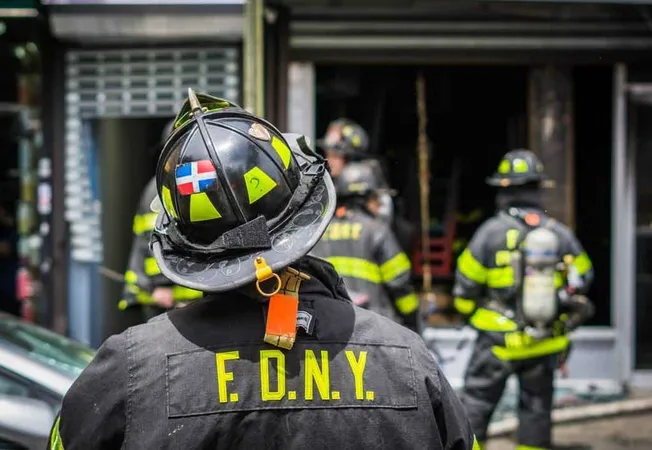
FDNY (Fire Department New York) Test: Your Guide
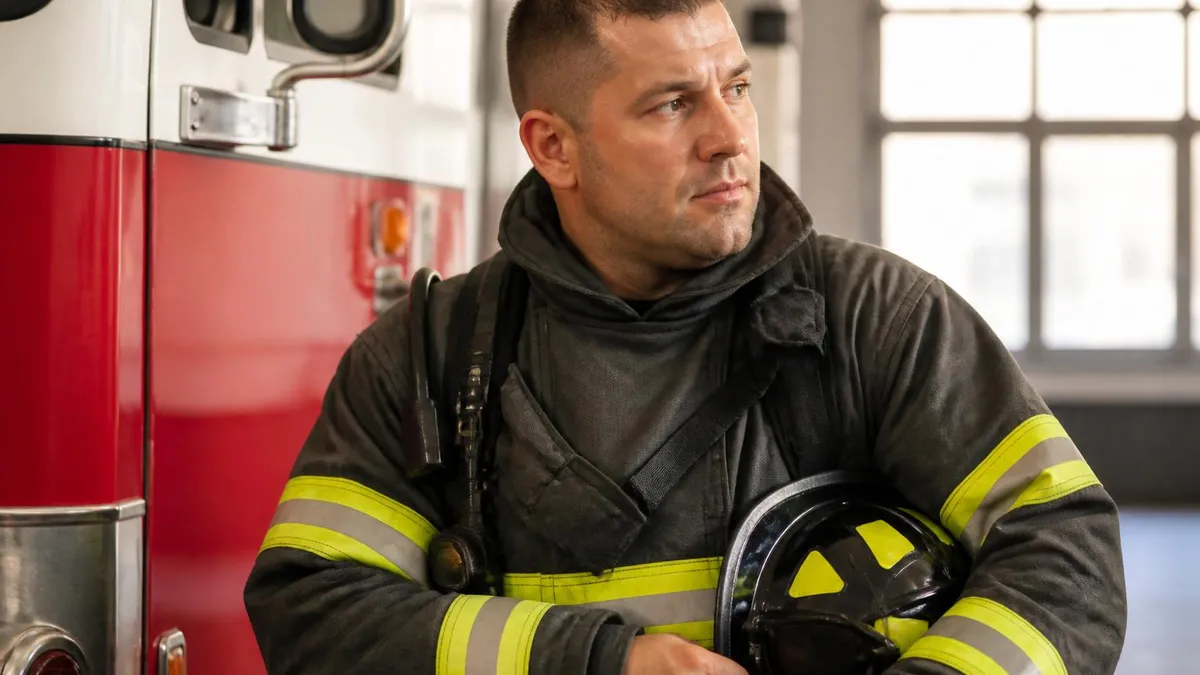
FDNY vs NYPD Hockey Game: Inside New York's Bravest vs Finest Heroes on Ice Rivalry
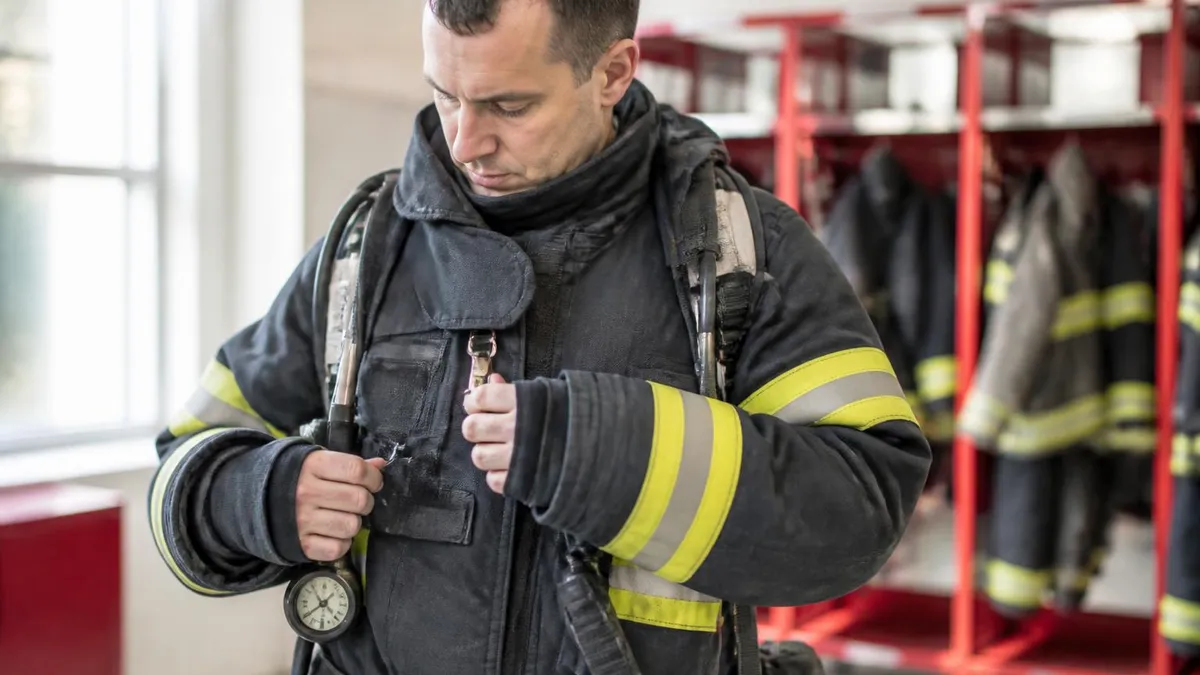
FDNY Runs and Workers: What the Numbers Really Mean

FDNY Podcast September 2025: Your Complete Guide to the Department's Audio Content

FDNY Battalion: Structure, Roles, and What Every Aspiring Firefighter Should Know
About the Author

Law Enforcement Trainer & Civil Service Exam Specialist
John Jay College of Criminal JusticeMarcus B. Thompson earned his Master of Arts in Criminal Justice from John Jay College of Criminal Justice and served 12 years as a law enforcement officer before transitioning to full-time academy instruction. He is a POST-certified instructor who has prepared candidates for police entrance exams, firefighter assessments, and civil service examinations across dozens of agencies.
Join the Discussion
Connect with other students preparing for this exam. Share tips, ask questions, and get advice from people who have been there.
View discussion (9 replies)