
FAA Career Salary Guide: What Aviation Jobs Pay in 2026 October
Pass the FAA Career Salary Guide: What Aviation exam with confidence. Practice questions with detailed explanations and instant feedback on every answer. 🔎

Aviation careers offer some of the best-paying jobs you can land without a four-year degree — and this faa career salary guide breaks down exactly what each role pays. The air traffic controller salary alone draws thousands of applicants every year, with median pay exceeding $137,000 and top earners clearing $200K at busy approach facilities. But controllers aren't the only well-compensated professionals keeping planes in the sky.
The aircraft mechanic salary has climbed steadily as airlines struggle to replace a retiring workforce. Mechanics with A&P certificates now earn $65,000 to $100,000 depending on location and employer, and overtime pushes many well past six figures. Meanwhile, aerospace engineering salary data shows entry-level engineers starting near $80,000, with experienced professionals earning $130,000 or more at defense contractors and NASA facilities.
This guide covers every major FAA-related career path — from tower controllers to avionics technicians, from airline pilots to airport operations managers. You'll find current salary ranges, growth projections, and the certifications or degrees you'll need for each role. We've also included practice quizzes so you can start testing your aviation knowledge right now, whether you're studying for a Part 107 drone license or preparing for the private pilot written exam.

The aircraft mechanic salary varies significantly based on whether you work for a major airline, a regional carrier, an MRO shop, or the military. Major airlines like Delta, United, and American pay their senior mechanics $90,000 to $110,000 with overtime and shift differentials pushing total compensation even higher. Regional carriers pay less — typically $55,000 to $75,000 — but they're often easier to break into as a first job after earning your A&P certificate.
The closely related aviation mechanic salary tracks similarly, though the title sometimes applies to specialists who focus on specific systems like avionics, hydraulics, or powerplant components. Avionics technicians who work on flight computers, radar, and communication systems tend to earn 10% to 15% more than general airframe mechanics. The FAA requires all mechanics to hold at least one rating — Airframe, Powerplant, or both — and the A&P combination opens the widest range of job opportunities.
Location matters enormously for mechanic pay. Hub airports in high-cost cities — Miami, Seattle, Dallas-Fort Worth, Atlanta — pay the highest wages because airlines base their heaviest maintenance operations there. Rural maintenance facilities pay less but often offer lower cost of living and less competition for positions. If you're flexible about where you live, targeting a major hub airport is the fastest way to maximize your earning potential in this field.
The aerospace engineering salary is one of the highest in the STEM fields, and the FAA's regulatory framework touches nearly every corner of this profession. Entry-level aerospace engineers start around $77,000 to $85,000, while mid-career professionals earn $110,000 to $140,000. Senior engineers and engineering managers at defense contractors like Lockheed Martin, Boeing, and Northrop Grumman can exceed $170,000 — and that's before stock options and bonuses.
The aeronautical and aerospace engineering salary is identical in practice — the two titles describe the same degree and the same job market. Some universities call the program "aeronautical engineering" while others use "aerospace engineering," but employers treat them interchangeably. What matters more than the title on your diploma is your specialization: propulsion, structures, aerodynamics, or systems integration. Propulsion engineers tend to command the highest starting salaries because rocket and jet engine work requires deep thermodynamics expertise that's in short supply.
Government positions at NASA, the FAA, and the Department of Defense pay slightly less than private sector roles but offer benefits that close the gap — federal retirement plans, generous leave policies, and job security that private industry can't match. The FAA employs aerospace engineers in its Aircraft Certification Service, where they review and approve new aircraft designs. It's exacting, detail-oriented work, and it pays well for government service — GS-13 and GS-14 engineers earn $110,000 to $145,000 depending on locality pay.
FAA Career Paths Compared
Air traffic controllers manage the flow of aircraft on the ground and in the air. The FAA hires through its AT-CTI program and public bid announcements on USAJobs.gov. Starting pay begins around $42,000 during training at the FAA Academy in Oklahoma City, then jumps to $70,000 to $130,000+ depending on facility level. Controllers must pass a medical exam, security clearance, and the AT-SAT aptitude test. Maximum entry age is 30.
When people look up atc salary, they're usually surprised by how high the numbers go. The Bureau of Labor Statistics reports a median air traffic controller salary of $137,380 — but that figure masks enormous variation. Controllers at Level 12 facilities (the busiest centers and approach controls) earn $180,000 to $210,000, while those at Level 5 or 6 towers may earn $80,000 to $100,000. Your pay grade depends almost entirely on facility traffic volume.
The aeronautical and astronautical engineering salary runs parallel to aerospace engineering because — again — these are different names for the same discipline. Universities that use "astronautical" in their program name typically emphasize spacecraft and orbital mechanics, but graduates compete for the same jobs as those from "aerospace" programs. Starting salaries cluster around $80,000, and the career trajectory is identical: $120,000+ at mid-career, $150,000+ in management or specialist roles.
Both ATC and engineering careers share one important trait: they're resistant to automation and offshoring. The FAA requires human controllers in every active tower and radar facility — there's no AI replacement on the horizon. And aerospace engineering jobs stay domestic because most involve classified defense work or export-controlled technology. If job security matters to you, these are two of the safest bets in the entire labor market.
Beyond the big three careers, the engineer aeronautical salary data reveals a wide range of specializations within the field. Flight test engineers, who evaluate prototype aircraft in actual flight conditions, command premium pay because the work involves physical risk and requires both engineering knowledge and pilot-level systems understanding. Structural engineers who specialize in composite materials are also in high demand as Boeing and Airbus shift toward carbon-fiber airframes.
If you're looking for lax careers specifically, Los Angeles International Airport is one of the largest aviation employment hubs in the country. LAX employs controllers, mechanics, ramp agents, security personnel, operations managers, and hundreds of other roles across its nine terminals. The airport authority — Los Angeles World Airports — posts openings on its own job board, while airlines, ground handlers, and TSA recruit separately. ATC positions at LAX are among the highest-paid in the national system because of the extreme traffic volume and LA's locality pay adjustment.
The aviation industry also offers strong careers in inspection, quality assurance, and regulatory compliance. FAA Aviation Safety Inspectors (ASIs) earn $95,000 to $145,000 and travel extensively to audit airlines, repair stations, and training programs. These positions require either a pilot certificate or an A&P license plus significant industry experience. It's one of the few federal careers where hands-on trade experience is valued as highly as a college degree.
Pros and Cons of FAA Aviation Careers
- +Above-average salaries with many positions exceeding six figures
- +Strong job security — automation and offshoring risks are minimal
- +Federal employees receive excellent retirement and health benefits
- +Multiple entry paths: degree, trade school, military, or experience-based
- +Consistent demand driven by airline expansion and workforce retirements
- +Transferable skills between airlines, government, defense, and private aviation
- −ATC has a strict maximum entry age of 30 for new hires
- −Shift work is standard for controllers, mechanics, and pilots
- −FAA medical certification requirements disqualify some applicants
- −Training pipelines can be long — 2 to 4 years for most careers
- −High-stress environments with zero tolerance for errors
- −Geographic flexibility is often required for first assignments
Pros and Cons at a Glance
| Pros | Cons |
|---|---|
| Above-average salaries with many positions exceeding six figures | Shift work is standard for controllers, mechanics, and pilots |
| Strong job security — automation and offshoring risks are minimal | FAA medical certification requirements disqualify some applicants |
| Federal employees receive excellent retirement and health benefits | High-stress environments with zero tolerance for errors |
| Multiple entry paths: degree, trade school, military, or experience-based | Geographic flexibility is often required for first assignments |
Searching for airport careers opens up a much broader landscape than most people realize. Airports employ thousands of workers in roles that have nothing to do with flying — project managers, IT specialists, environmental compliance officers, fire/rescue crews, wildlife biologists (yes, really — bird strikes are a serious safety concern), and construction managers overseeing terminal expansions. Major airport authorities like those running JFK, O'Hare, and DFW are essentially small cities with corresponding workforce needs.
The air traffic controller starting salary depends on which track you enter through. The FAA's standard hiring pipeline places new controllers at the FAA Academy in Oklahoma City for several months of initial training, where they earn around $42,000 (AG pay band). After graduating and being assigned to a facility, pay jumps to the D or E band — roughly $62,000 to $85,000. From there, your salary increases as you certify on more positions and as your facility's traffic level dictates higher pay grades. The fastest earners reach full performance level (FPL) within 2 to 4 years.
Smaller airports offer their own advantages. While the pay is lower, the pace is calmer and the hiring competition is less fierce. Tower controllers at regional airports still earn $75,000 to $100,000, which goes much further in a small city than $130,000 does in New York or San Francisco. And you can always bid to transfer to a busier facility later once you've built experience and certifications.
Steps to Launch Your FAA Aviation Career
- ✓Research career paths: ATC, mechanics, engineering, or pilot
- ✓Check age and medical requirements for your target position
- ✓Earn the required education — trade school, degree, or flight hours
- ✓Obtain FAA certifications: A&P, ATP, Part 107, or medical certificate
- ✓Create a USAJobs.gov profile for federal aviation positions
- ✓Apply during open bid announcements — these windows close quickly
- ✓Pass the required aptitude tests (AT-SAT for controllers, written exams for pilots)
- ✓Complete background investigation and security clearance if required
- ✓Attend FAA Academy or employer-specific training programs
- ✓Build seniority and pursue advanced ratings for higher pay grades
If you're targeting newark airport careers, Newark Liberty International (EWR) is a United Airlines hub with massive maintenance, ground operations, and ATC staffing needs. The Port Authority of New York and New Jersey manages the airport and posts positions on its careers portal. United's maintenance base at EWR employs hundreds of A&P mechanics, and the FAA's New York TRACON — one of the busiest approach control facilities in the world — is located nearby. ATC positions at N90 are among the highest-compensated in the entire FAA system.
The aviation maintenance technician salary tracks closely with the broader aircraft mechanic pay data, though the "maintenance technician" title sometimes indicates a more junior or specialized role. Entry-level AMTs earn $40,000 to $50,000, while experienced technicians with A&P certificates and type ratings on specific aircraft (like the Boeing 737 or Airbus A320) earn $75,000 to $95,000. Military veterans with aviation maintenance experience often transition directly into these roles — their training satisfies most FAA experience requirements.
Corporate aviation is an underappreciated segment of the job market. Companies that operate their own business jets need mechanics, pilots, and dispatchers — and they often pay competitively with airlines while offering better schedules and working conditions. You won't find these jobs on airline career pages. Instead, search platforms like JSfirm.com, AvCrew, and Corporate Aviation Jobs. Many corporate flight departments also recruit through local A&P schools and aviation job fairs.
The commercial airline pilot salary is the highest in the aviation industry — and it's risen sharply since 2022 due to the pilot shortage. First officers at major airlines now start around $100,000 to $120,000, a dramatic jump from the $40,000 to $60,000 that regional airline first officers earned just five years ago. Captains at Delta, United, and American earn $350,000 to $500,000+ at top seniority, making airline captain one of the best-compensated careers in America.
For those exploring midway airport careers, Chicago Midway (MDW) is a Southwest Airlines stronghold with active hiring for mechanics, ramp agents, customer service agents, and operations staff. The airport itself — managed by the Chicago Department of Aviation — also employs security, maintenance, and administrative personnel. ATC positions at Midway are well-compensated thanks to Chicago's locality pay and the airport's steady traffic volume serving Southwest's point-to-point network.
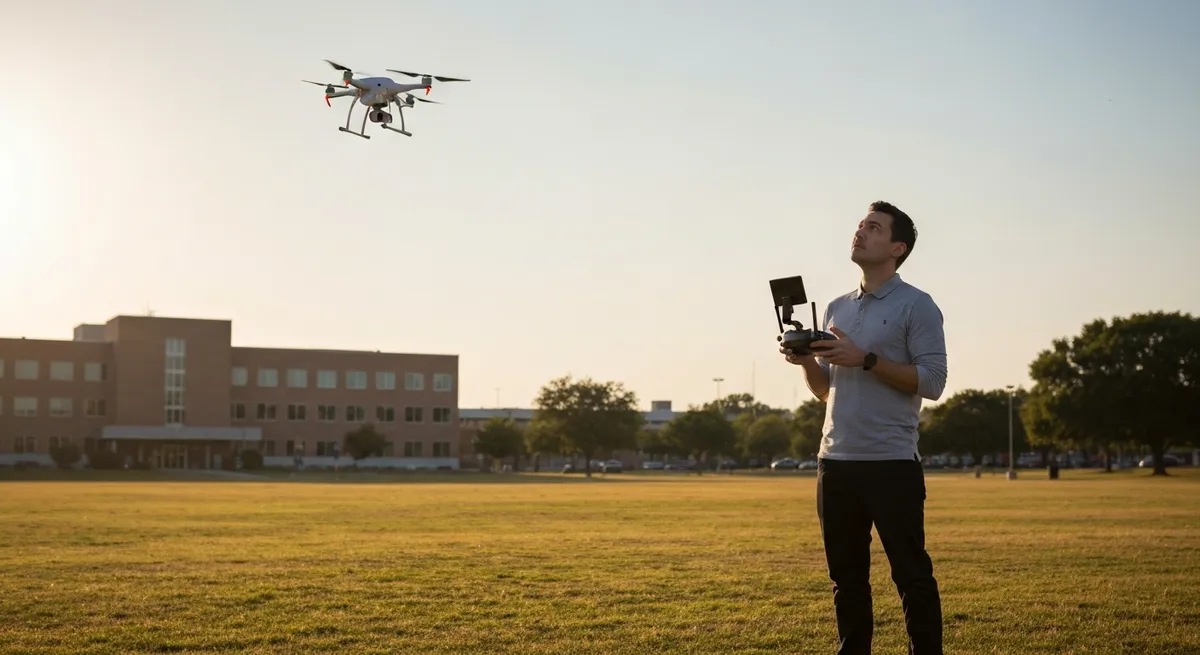
The drone industry represents the newest salary growth area in aviation. FAA Part 107 remote pilots earn $50,000 to $90,000 for commercial operations like infrastructure inspection, aerial photography, agricultural surveying, and mapping. Specialized drone operators working in energy (power line and pipeline inspection) or public safety can earn over $100,000. The barrier to entry is low — a Part 107 certificate requires only a written exam — making it an attractive career starter.
Air traffic controllers must be hired before age 31 and face mandatory retirement at 56. Pilots need a first-class medical certificate renewed every 6 to 12 months. Mechanics have no age limit but need adequate vision (correctable) and physical ability to perform inspections. Aerospace engineers face no FAA medical requirements. Research your target career's specific requirements before investing in training.
The aircraft maintenance technician salary also depends heavily on which type of aircraft you're qualified to work on. Mechanics with type ratings on wide-body aircraft — the Boeing 777, 787 Dreamliner, or Airbus A350 — consistently earn more than those certified only on narrow-body planes. That's because wide-body maintenance is more complex, the aircraft are more expensive, and the consequences of errors are greater. Airlines invest heavily in wide-body type rating training and reward those skills with higher pay and preferential shift assignments.
When searching for jfk airport careers, remember that JFK is operated by the Port Authority of New York and New Jersey and hosts most major international carriers — Delta, JetBlue, American, British Airways, Emirates, and dozens more. The diversity of airlines means a diversity of job opportunities. ATC positions at JFK are handled by the FAA's New York TRACON (N90), consistently one of the highest-paid facilities in the country. Ground-side careers at JFK include customs brokerage, cargo logistics, airport security, and terminal management.
Aviation careers reward specialization. A general A&P mechanic earns well, but one who adds avionics, composite repair, or non-destructive testing (NDT) certifications can earn 20% to 30% more. Similarly, controllers who certify on both tower and radar positions at high-level facilities reach the top of the pay scale faster. And engineers who earn a Professional Engineer (PE) license open doors to senior technical leadership roles. Whatever path you choose, continuous credential building is the surest way to maximize your lifetime earnings in aviation.
You can continue preparing with the faa practice test, which includes answer explanations for every question.
You can continue preparing with the faa written practice test, which includes answer explanations for every question.
FAA Practice Test Questions
Prepare for the FAA - Federal Aviation Administration exam with our free practice test modules. Each quiz covers key topics to help you pass on your first try.
FAA Aviation Flight Instrument Rating Exam
FAA Exam Questions covering Aviation Flight Instrument Rating Exam. Master FAA Test concepts for certification prep.
FAA 107 Drone Pilot Test
Free FAA Practice Test featuring 107 Drone Pilot Test. Improve your FAA Exam score with mock test prep.
FAA Aircraft Performance Test
FAA Mock Exam on Aircraft Performance Test. FAA Study Guide questions to pass on your first try.
FAA Airspace and Weather Minimums Test
FAA Test Prep for Airspace and Weather Minimums Test. Practice FAA Quiz questions and boost your score.
FAA Communications and Radar Services
FAA Questions and Answers on Communications and Radar Services. Free FAA practice for exam readiness.
FAA Cross-Country Planning Test
FAA Mock Test covering Cross-Country Planning Test. Online FAA Test practice with instant feedback.
FAA Electronic Navigation Exam
Free FAA Quiz on Electronic Navigation Exam. FAA Exam prep questions with detailed explanations.
FAA Federal Aviation Regulations Test
FAA Practice Questions for Federal Aviation Regulations Test. Build confidence for your FAA certification exam.
FAA Flight Instrument Test
FAA Test Online for Flight Instrument Test. Free practice with instant results and feedback.
FAA Flight Operations Test
FAA Study Material on Flight Operations Test. Prepare effectively with real exam-style questions.
FAA Private Pilot Exam
Free FAA Test covering Private Pilot Exam. Practice and track your FAA exam readiness.
FAA Private Pilot Weather Test
FAA Exam Questions covering Private Pilot Weather Test. Master FAA Test concepts for certification prep.
The airline mechanic salary has become a major recruitment talking point as carriers compete for a shrinking pool of qualified A&P technicians. United Airlines, for example, recently raised starting mechanic pay to over $39 per hour ($81,000 annually) with overtime opportunities that regularly push total compensation past $100,000. Delta and American have matched or exceeded those figures. The mechanic shortage is projected to worsen through 2030, which means wages will likely continue climbing.
The more specialized aeronautical maintenance technician salary reflects the premium that employers place on advanced diagnostic and repair skills. Technicians who can troubleshoot fly-by-wire systems, composite structures, and next-generation engine controls are commanding $85,000 to $110,000 at major airlines and MRO facilities. Military veterans with avionics or aircraft systems training are especially competitive for these roles — their hands-on experience with advanced military platforms translates directly to commercial aviation needs.
Whether you're drawn to the tower, the hangar, the cockpit, or the engineering lab, aviation offers career stability and compensation that few industries can match. The FAA projects steady growth across all major career categories through 2035, driven by fleet expansion, retirements, and new technology adoption. Start by identifying which path fits your skills and interests, then work backward to the certifications and training you'll need. Every journey in aviation begins with a single step — and for many, that step is a practice test.
Sample FAA Practice Questions
Try these questions from our free FAA practice tests. The correct answer and an explanation follow each question.
(Refer to Figure 23.) On what course should the VOR receiver (OBS) be set to navigate direct from Hampton Varnville Airport (area 1) to Savannah VORTAC (area 3)?
- A. 016°.
- B. 196°.
- C. 200°.
Answer: B. 196°.
To navigate direct from Hampton Varnville Airport (area 1) to Savannah VORTAC (area 3), draw a straight line between these two points on Figure 23. Then, measure the magnetic course of this line from Hampton Varnville to Savannah. By aligning a protractor or visually estimating with the VOR rose, the magnetic course is approximately 196°. This is the course that should be set on the VOR receiver's OBS for a direct flight with a TO indication.
What are the standard temperature and pressure values for sea level?
- A. 15 °C and 29.92 inches Hg.
- B. 59 °C and 1013.2 millibars.
- C. 59 °F and 29.92 millibars.
Answer: A. 15 °C and 29.92 inches Hg.
The International Standard Atmosphere (ISA) defines standard temperature and pressure values at sea level as a reference for aircraft performance and altimeter settings. These standard conditions are 15 degrees Celsius (59 degrees Fahrenheit) for temperature and 29.92 inches of mercury (or 1013.2 millibars) for atmospheric pressure. Pilots use these values to calibrate instruments and calculate performance under standard conditions.
What indications are displayed by the miniature aircraft of a turn coordinator?
- A. Indirect indication of bank angle and pitch attitude
- B. Rate of roll and rate of turn
- C. Direct indication of bank angle and pitch attitude
Answer: B. Rate of roll and rate of turn
The miniature aircraft on a turn coordinator indicates the rate of roll and the rate of turn. When the aircraft is rolling, it shows the rate at which the aircraft is entering or exiting a turn. Once established in a turn, it indicates the rate at which the aircraft is changing its heading, providing crucial information for coordinated turns.
Under what condition may an aircraft operate from a satellite airport within Class C airspace?
- A. The pilot must file a flight plan prior to departure.
- B. The pilot must monitor ATC until clear of the Class C airspace.
- C. The pilot must contact ATC as soon as practicable after takeoff.
Answer: C. The pilot must contact ATC as soon as practicable after takeoff.
When departing from a satellite airport within Class C airspace that does not have an operating control tower, the pilot must establish two-way radio communication with the primary Class C airport's Air Traffic Control (ATC) as soon as practicable after takeoff. This ensures ATC is aware of the aircraft's presence and can provide appropriate services and separation within the controlled airspace. This is a critical safety procedure for integrating into controlled traffic.
FAA Questions and Answers



About the Author

Commercial Pilot & FAA Certification Specialist
Embry-Riddle Aeronautical UniversityCaptain Jennifer Walsh graduated with honors in Aerospace Engineering from Embry-Riddle Aeronautical University and holds FAA Airframe & Powerplant and Airline Transport Pilot certificates. With 11 years of commercial aviation experience and 6 years as a ground school instructor, she guides aviation mechanics and student pilots through FAA written exams and practical tests.
Join the Discussion
Connect with other students preparing for this exam. Share tips, ask questions, and get advice from people who have been there.
View discussion (9 replies)