
Best English Grammar Books: Top Picks for Every Skill Level in 2026 October
🏆 Discover the top english grammar books for beginners, intermediates, and advanced learners. Reviews, comparisons, and study tips to master grammar fast.

Finding the top english grammar books can feel overwhelming when bookstore shelves and online retailers stock hundreds of titles, each promising to transform your writing and speaking abilities overnight. The truth is that no single book works for every learner, and the best resource depends entirely on your current skill level, learning style, and specific goals. Whether you are preparing for a certification, polishing your professional writing, or finally tackling that grammar gap you have ignored for years, the right book becomes a lifelong reference.
This guide reviews the most trusted grammar books used by teachers, students, and self-learners across the United States. We examined each title for clarity, exercise quality, depth of explanation, and real-world usefulness. Books like Murphy's English Grammar in Use, Azar's Understanding and Using English Grammar, and the Oxford Practical English Usage have earned their reputations through decades of classroom testing and learner feedback. They consistently outperform flashy newcomers because they treat grammar as a system, not a list of disconnected rules.
Before diving into specific recommendations, it helps to understand what is about in english grammar as a discipline. Grammar covers parts of speech, sentence structure, verb tenses, agreement rules, punctuation, and the subtle patterns that make English sound natural. A great grammar book explains the why behind each rule, not just the what, so you can apply principles to situations the textbook never covered.
Many readers ask whether english grammar is hard to learn compared to other languages. The honest answer is that English has fewer inflections than Spanish or German but more irregularities, idioms, and exceptions than almost any major language. A structured book gives you a clear path through this complexity, breaking the subject into manageable units that build on each other rather than dumping everything at once.
You will also see how the best titles handle the english grammar assessment test format, which matters if you plan to take the TOEFL, IELTS, SAT, or a state proficiency exam. The right book includes practice items that mirror real test questions, with answer keys that explain why each option works or fails. This kind of feedback turns passive reading into active learning, which research consistently identifies as the fastest route to retention.
Throughout this article we compare price ranges, page counts, exercise types, and answer-key formats so you can match a book to your budget and study habits. Some learners thrive with a workbook-style title, while others need the depth of a reference grammar like Quirk and Greenbaum. We will help you decide which camp you belong to.
By the end, you will have a clear shortlist of three to five titles worth buying, plus a study plan that turns those books into measurable progress. Grammar is a skill, and like any skill, it rewards consistent practice with the right tools far more than sporadic cramming with the wrong ones.
Grammar Books by the Numbers

Top Grammar Books at a Glance
Raymond Murphy's blue book covers intermediate grammar with crystal-clear two-page lessons. Each topic gets explanation on the left and exercises on the right, making it ideal for self-study and classroom use alike.
Betty Azar's comprehensive guide goes deeper than Murphy's, covering advanced structures with detailed charts, contextual examples, and review sections. A favorite among ESL instructors and serious self-learners.
Michael Swan's Oxford reference answers thousands of specific usage questions alphabetically. Not a textbook but an essential lookup tool for writers, editors, and advanced learners stuck on tricky points.
Strunk and White's slim classic focuses on writing clarity rather than rules. Best paired with a grammar reference, it teaches the elegance and economy American academic and professional writing demands.
Mignon Fogarty's modern guide tackles common confusions with humor and memorable mnemonics. Perfect for busy professionals who want grammar fixes without the academic tone of traditional textbooks.
Choosing among the top english grammar books starts with an honest self-assessment. Where do you actually struggle? If you mix up verb tenses or feel uncertain about articles like a, an, and the, you probably need a comprehensive workbook that builds skills from the ground up. If you produce solid sentences but stumble on commas, semicolons, and parallel structure, a writing-focused guide will serve you better than another beginner textbook. Buying the wrong type wastes both money and motivation.
Format matters more than most buyers realize. Workbook-style titles like Murphy's give you immediate practice after each explanation, which research shows dramatically improves retention. Reference grammars like Quirk's Comprehensive Grammar are exhaustive but presume you know what to look up. For most learners, a workbook should be your primary text, with a reference book on the shelf for occasional consultation. Pairing the two formats covers nearly every situation you will face.
Pay close attention to the answer key. Some popular books provide answers without explanations, leaving you confused when you get something wrong. The best titles explain why the correct answer works and why each distractor fails. This kind of feedback turns a single exercise into a mini-lesson, multiplying the value of every page. Before you buy, flip to the back and read three or four answer entries to see how the author handles incorrect responses.
Consider taking an english language grammar test before purchasing anything. A diagnostic quiz reveals exactly which units of a book you need and which you can skip. Many publishers offer free placement tests on their websites, and several apps will assess your level in twenty minutes. Spending that time first saves weeks of working through chapters you already mastered or, worse, chapters too advanced to absorb.
Think about edition and supplements. Major grammar books update every five to seven years, and newer editions often include digital companions, audio files, and online exercise banks. The latest Murphy's edition, for instance, comes with an interactive app that randomizes questions and tracks your weak spots. If you learn well on screen, paying twenty dollars more for the bundled digital access usually pays off within the first month of study.
Price should be a secondary consideration. The difference between a thirty-dollar book that fits your needs and a fifteen-dollar book that frustrates you compounds over hundreds of study hours. Used copies of classic titles are often available for under ten dollars on resale sites, but verify the edition matches the answer key you have. Mismatched editions create maddening confusion when exercise numbers fail to line up.
Finally, commit to one or two books rather than collecting a dozen. Grammar improvement comes from depth, not variety. Working through a single excellent textbook from cover to cover builds the systematic understanding that random chapter-hopping never will. The students who progress fastest are not the ones who own the most books but the ones who finish the books they own.
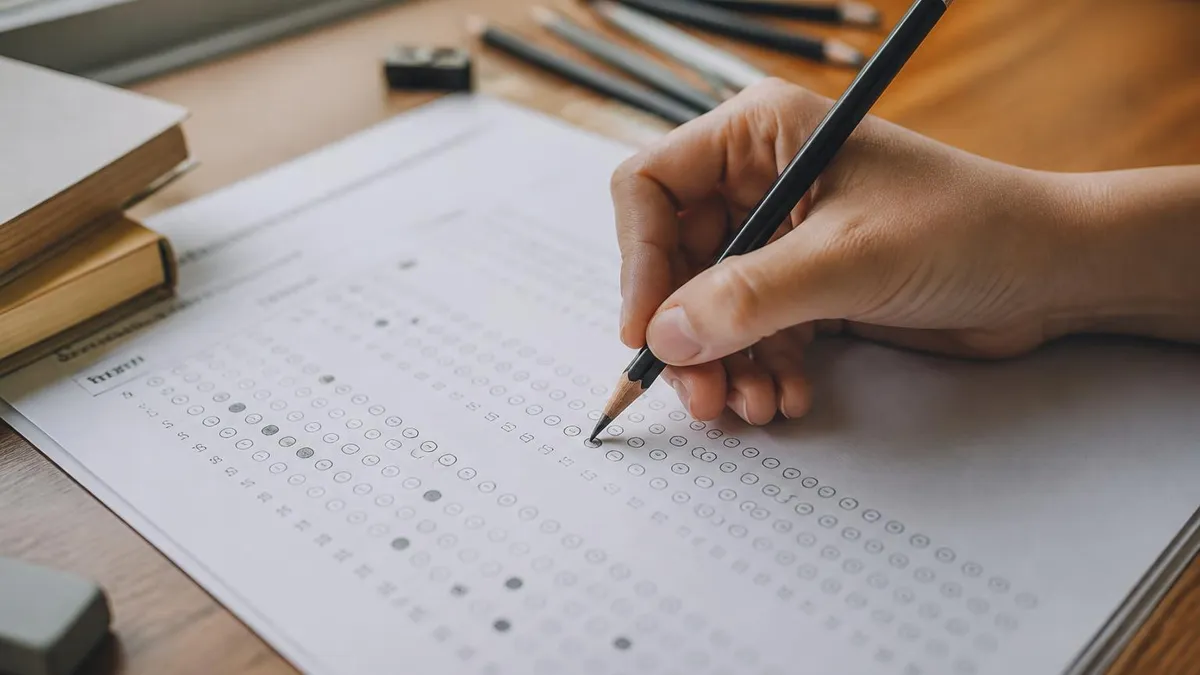
English Grammar Practice Test Questions
Prepare for the English Grammar Test exam with our free practice test modules. Each quiz covers key topics to help you pass on your first try.
English Grammar Test Advanced Topics
English Grammar Exam Questions covering Test Advanced Topics. Master English Grammar Test concepts for certification prep.
English Grammar Test English Grammar Test ...
Free English Grammar Practice Test featuring Test English Grammar Test Subject-Verb Agreement. Improve your English Grammar Exam score with mock test prep.
English Grammar Test English Grammar Test ...
English Grammar Mock Exam on Test English Grammar Test Verb Tenses. English Grammar Study Guide questions to pass on your first try.
English Grammar Test Parts of Speech
English Grammar Test Prep for Test Parts of Speech. Practice English Grammar Quiz questions and boost your score.
English Grammar Test Practical Applications
English Grammar Questions and Answers on Test Practical Applications. Free English Grammar practice for exam readiness.
English Grammar Test Punctuation Rules
English Grammar Mock Test covering Test Punctuation Rules. Online English Grammar Test practice with instant feedback.
English Grammar Test Sentence Structure
Free English Grammar Quiz on Test Sentence Structure. English Grammar Exam prep questions with detailed explanations.
English Grammar Articles
English Grammar Practice Questions for Articles. Build confidence for your English Grammar certification exam.
English Grammar Gerund
English Grammar Test Online for Gerund. Free practice with instant results and feedback.
English Grammar Part of Speech
English Grammar Study Material on Part of Speech. Prepare effectively with real exam-style questions.
English Grammar Punctuation
Free English Grammar Test covering Punctuation. Practice and track your English Grammar exam readiness.
What Is English Grammar Books Cover by Level
Beginner-level books focus on the foundations: parts of speech, basic sentence patterns, simple verb tenses, and high-frequency vocabulary grammar like articles and prepositions. Titles such as Basic English Grammar by Betty Azar and Essential Grammar in Use by Raymond Murphy use color illustrations, short dialogues, and abundant repetition to lock concepts into memory before introducing exceptions or complications.
At this stage, what is the grammar in english really means understanding how words combine into meaningful units. The best beginner books move slowly, giving you ten to fifteen examples per rule and immediate practice. Avoid academic reference grammars at this level; they assume terminology and context you have not yet acquired and will frustrate rather than help you.
Print Grammar Books vs. Apps: Which Wins?
- +Print books require no battery, screen time, or internet connection
- +Margins allow personal notes that become a permanent study record
- +Linear structure prevents the distraction loops common in apps
- +Used copies cost a fraction of new digital subscriptions
- +Eye strain and digital fatigue are completely eliminated
- +Books retain value for reference long after initial study ends
- +Highlighting and tabbing create powerful visual memory anchors
- −Print exercises cannot adapt to your specific weak areas
- −Audio components require companion CDs or website downloads
- −Heavy textbooks are inconvenient for commuting or travel
- −Updates to grammar usage require buying new editions
- −No instant feedback like adaptive apps and online platforms
- −Difficult to search for specific terms without a strong index
Pros and Cons at a Glance
| Pros | Cons |
|---|---|
| Print books require no battery, screen time, or internet connection | Print exercises cannot adapt to your specific weak areas |
| Margins allow personal notes that become a permanent study record | Audio components require companion CDs or website downloads |
| Linear structure prevents the distraction loops common in apps | Heavy textbooks are inconvenient for commuting or travel |
| Used copies cost a fraction of new digital subscriptions | Updates to grammar usage require buying new editions |
| Eye strain and digital fatigue are completely eliminated | No instant feedback like adaptive apps and online platforms |
| Books retain value for reference long after initial study ends | Difficult to search for specific terms without a strong index |

What Is English Grammar Book Buying Checklist
- ✓Identify your current level using a free placement test before shopping
- ✓Verify the book includes a detailed answer key with explanations
- ✓Check the publication date and choose editions less than seven years old
- ✓Read sample pages on the publisher's site to test the explanation style
- ✓Confirm exercises match your goal: speaking, writing, or test prep
- ✓Look for digital companions like apps, audio, or online exercise banks
- ✓Compare the table of contents against your specific weak areas
- ✓Read at least twenty recent reviews from learners at your level
- ✓Make sure the answer key matches your exact edition number
- ✓Budget for one primary workbook plus one reference grammar
- ✓Confirm the book is intended for self-study, not classroom-only use
- ✓Plan a realistic study schedule before purchasing additional titles
Consistency beats intensity
Twenty minutes of focused grammar study every day produces dramatically better results than two-hour weekend cramming sessions. The brain consolidates language patterns during sleep, so daily exposure compounds in ways occasional binge study cannot match. Pick a book, set a timer, and protect that twenty-minute window like an appointment.
Let's look inside the bestselling titles to see what makes each one work. Raymond Murphy's English Grammar in Use, often called the blue book, has sold over twenty million copies worldwide for a reason. Each unit occupies exactly two pages: the left side presents a grammar point with charts and example sentences, and the right side provides four to six exercises. This rigid format lets learners predict the rhythm of study, which lowers cognitive load and increases completion rates.
Betty Azar's Understanding and Using English Grammar takes a different approach. Her chapters are longer, with multiple sub-sections and richer context. Azar excels at showing grammar in extended texts rather than isolated sentences, which prepares learners for the reality of authentic English. Her charts are denser, demanding more attention, but the payoff is a deeper understanding of how structures interact in real communication.
Michael Swan's Practical English Usage is not a textbook but a reference book organized alphabetically. If you wonder whether to say different from or different than, you look up different and find a precise answer with example sentences. Swan does not assume you know the technical name for what confuses you; he indexes by the words themselves. This usability makes it the most-recommended reference in English departments across American universities.
The Elements of Style by Strunk and White is wildly different from the others. At under one hundred pages, it offers prescriptive rules for clear writing rather than comprehensive grammar coverage. Sentences like omit needless words and use the active voice have shaped American prose style for over a century. Some modern linguists criticize its absolutism, but its influence on professional writing remains unmatched.
For test preparation specifically, Cambridge's Grammar for IELTS and Barron's English Grammar for ESL Learners follow exam-aligned formats. They organize material by question type rather than by grammatical category, which feels backwards at first but pays off when you sit for the actual test. If you understand a meaning in english grammar through the lens of how examiners probe it, you score higher than by studying grammar abstractly.
Newer titles like Grammar Girl's Quick and Dirty Tips by Mignon Fogarty target adult professionals who want grammar fixes without the academic apparatus. Each entry is short, punchy, and memorable, with mnemonics designed to stick. Critics argue the breezy tone glosses over complexity, but for busy readers who need to write better emails by next Tuesday, the book delivers.
Whatever title you choose, remember that the book is only the starting point. Your engagement determines outcomes far more than the author's reputation. The most expensive, highly reviewed grammar book on your shelf does nothing unless you open it daily, work the exercises honestly, and apply what you learn to your actual writing and speaking.
Always confirm that the answer key, audio supplements, and exercise numbers match your exact edition. Buying a fourth-edition workbook and a fifth-edition answer key creates confusion that can derail months of study. Check the ISBN twice before checkout, especially when buying used copies online.
Owning a great book is only the first step; using it effectively is where most learners fall short. Start by reading the introduction. Every quality grammar book includes a few pages explaining the author's methodology, recommended pace, and how to use the answer key. Skipping these pages is like buying a complex appliance and ignoring the manual. The fifteen minutes you invest upfront often saves dozens of hours of misdirected study.
Build a daily study ritual rather than relying on motivation. Choose a specific time, a specific place, and a specific duration. Twenty to thirty minutes works for most adults, longer sessions diminish in productivity rapidly. Keep your book and a notebook in the same spot so setup friction never becomes an excuse. After two weeks the habit will feel automatic, and the cumulative gains will surprise you.
Use a notebook alongside the book to write out exercises in full sentences. Filling in blanks directly in the book limits review value and prevents the muscle memory that comes from producing complete written language. When you make a mistake, copy the correct version three times in your notebook and write one original sentence using the same pattern. This three-step correction loop transforms errors into permanent learning.
Take advantage of what is the grammar in english through paired reading. After studying a unit on, say, past perfect tense, read a chapter of a novel or a news article and underline every instance of that structure. Seeing freshly studied grammar in authentic context cements the rule and exposes you to the natural rhythms native writers use. This connection between study and real input is what separates learners who improve from those who plateau.
Review actively rather than passively. Every Friday, return to the units you studied that week and redo the exercises without looking at your previous answers. This spaced retrieval, supported by decades of cognitive science research, is the single most effective study technique discovered. Most learners reread their notes and call it review, but rereading produces minimal retention compared to active retrieval.
Pair your book study with conversation or writing practice. Grammar without application becomes academic trivia. Find a language exchange partner, join a writing group, or simply keep a daily journal where you deliberately use the structures you studied. Real production reveals which rules you actually internalized and which still need work, feedback no textbook alone can provide.
Finally, set milestone checks every four weeks. Take a comprehensive practice test, write a five-hundred-word essay, or record yourself speaking for two minutes. Compare your performance to the same task from the previous milestone. This evidence of progress motivates continued effort and reveals patterns that day-to-day study obscures. Grammar mastery is a long game, and tracking progress makes the journey both visible and rewarding.
Once you have selected your grammar books and built a study routine, several practical strategies will accelerate your progress. First, integrate grammar with the rest of your English practice rather than treating it as a separate, isolated activity. If you are reading a novel, pause to identify how the author uses participial phrases. If you are watching a film, note how speakers use modal verbs to soften requests. Grammar lives in real language, and your study should constantly bridge the gap between textbook and authentic usage.
Second, embrace error as data, not failure. Every wrong answer in your workbook tells you exactly where your understanding breaks down. Keep an error log: write down the original sentence, the rule involved, why you missed it, and a corrected version. After one month, patterns will emerge. Many learners discover their errors cluster around three or four recurring issues, which means targeted practice on those specific points yields enormous returns.
Third, teach what you learn. Explain a grammar point to a friend, write a blog post about it, or record a short video. Teaching forces you to organize knowledge in a way passive study never demands. Even if no one watches your video, the act of producing the explanation reveals gaps in your understanding and locks the material into long-term memory. This technique, known as the protégé effect, consistently outperforms additional reading time.
Fourth, do not neglect punctuation. Many grammar books treat punctuation as an afterthought, but commas, semicolons, dashes, and apostrophes carry as much meaning as words themselves in written English. A separate slim title like Lynne Truss's Eats, Shoots and Leaves or the AP Stylebook addresses punctuation comprehensively and will improve your writing as much as any verb-tense mastery.
Fifth, use technology strategically. Free tools like Grammarly catch errors but rarely explain them in depth. Use these tools to identify problems, then turn to your grammar book for the actual explanation. Treating apps as diagnostic flags rather than teachers preserves the learning benefit. Otherwise you outsource the thinking that builds skill, and your grammar never truly improves regardless of how many corrections the software supplies.
Sixth, prepare for the inevitable plateau. Around month three or four, most learners feel stuck. The fast initial gains slow, and progress becomes harder to see. This is normal. Push through by varying your practice: switch books temporarily, try a different exercise type, or shift to extensive reading for two weeks. The plateau breaks when you change inputs, not when you double down on what stopped working.
Finally, celebrate concrete milestones. Finishing a chapter, passing a unit test at ninety percent, or correctly using a tricky structure in spontaneous conversation all deserve recognition. Grammar study is long and often quiet work, and the learners who persist are those who acknowledge incremental wins. Print your milestones, share them with a study partner, and let visible progress fuel the next phase of your journey toward genuine English fluency.
Sample English Grammar Test Practice Questions
Try these questions from our free English Grammar Test practice tests. The correct answer and an explanation follow each question.
In 'He is *the* best player,' 'the' is classified as:
- A. Indefinite article
- B. Definite article
- C. Demonstrative adjective
- D. Possessive adjective
Answer: B. Definite article
'The' is the only definite article in English, referring to a specific noun.
Which verb form correctly completes this sentence: "Every morning, the dog _____ at the mail carrier."
- A. barked
- B. is barking
- C. barks
- D. will bark
Answer: C. barks
"Barks" is the simple present tense used for a habitual action.
What is the best way to build credibility in a professional field?
- A. Self-promotion only
- B. Demonstrating expertise through consistent quality work, obtaining certifications, and building a portfolio
- C. Having a large social media following
- D. Working for free
Answer: B. Demonstrating expertise through consistent quality work, obtaining certifications, and building a portfolio
Professional credibility is built through a track record of quality work, relevant certifications, and a portfolio that demonstrates your capabilities.
Identify the appositive phrase in: 'My neighbor, a retired teacher, gardens every morning.'
- A. My neighbor
- B. a retired teacher
- C. gardens every morning
- D. every morning
Answer: B. a retired teacher
An appositive renames or identifies the noun next to it; 'a retired teacher' renames 'My neighbor.'
English Grammar Questions and Answers

English Grammar Concepts: A Practical Guide to the Core Rules

Understanding and Using English Grammar: A Complete Guide for Learners
English Grammar Practice Test PDF (Free Printable 2026)

English Grammar: What It Is, How It Works, and How to Master It

English Grammar Being: Complete Guide to Usage, Rules, and Common Mistakes
About the Author

Writing Expert & Communications Certification Educator
Columbia UniversityDr. Rebecca Foster holds a PhD in English Literature and an MFA in Creative Writing from Columbia University. She has 14 years of experience teaching academic writing, professional communications, and editorial skills at the university level. Rebecca coaches candidates through AP English, writing placement assessments, editing certifications, and communication skills examinations.