
4th Grade ELA Worksheets: Complete Guide to Reading, Writing, and Language Skills
Master 4th grade ELA worksheets covering reading, writing, grammar & more. Free practice tests included. 📚 Boost scores today!

4th grade ELA worksheets are one of the most effective tools parents and teachers have for building strong literacy skills during a critical developmental window. Fourth grade marks the transition from learning to read to reading to learn, which means students need solid comprehension strategies, expanded vocabulary, and clear writing skills all at once.
The right worksheets make each of these skills feel manageable by breaking them into focused, bite-sized practice sessions that build confidence alongside competency. Whether you're working at home or in the classroom, targeted worksheet practice helps students master the foundational skills that every future academic subject depends on.
Reading comprehension is the cornerstone of fourth grade ELA instruction. At this level, students move beyond simple recall and begin analyzing why characters make decisions, how authors organize information, and what evidence supports a given conclusion. Worksheets that present a short passage followed by multiple-choice and short-answer questions train students to slow down, reread strategically, and cite specific text evidence — skills that state assessments heavily test and that carry forward into middle school and beyond. Well-designed comprehension worksheets also expose students to a variety of genres, from informational articles to narrative fiction and poetry.
Vocabulary development is equally important in fourth grade, because students encounter hundreds of new academic words across all subjects. Context clue worksheets teach students to decode unfamiliar words by examining surrounding sentences rather than immediately reaching for a dictionary. Synonym-and-antonym exercises, prefix and suffix activities, and word-relationship diagrams deepen word knowledge so that new vocabulary sticks in long-term memory. Students who build a strong vocabulary in fourth grade are far better equipped to comprehend complex texts and express nuanced ideas in writing as they progress through school.
Writing worksheets in fourth grade focus on organization, elaboration, and mechanics. Students practice constructing clear topic sentences, supporting details, and conclusions in opinion, informational, and narrative formats. Grammar worksheets run alongside writing instruction, covering subjects and predicates, verb tenses, pronoun-antecedent agreement, comma rules, and capitalization conventions. When grammar practice is embedded in the context of actual writing rather than isolated drills, students are more likely to transfer those skills into their own compositions. The combination of structured writing frames and authentic writing prompts gives students both the scaffolding and the creative space they need to grow.
Phonics and word-study practice continues in fourth grade, particularly for students who still need to solidify multisyllabic decoding. Worksheets targeting syllable patterns, Greek and Latin roots, and irregular spelling words help bridge any remaining gaps between decoding and fluency. Fluency, in turn, directly supports comprehension: when a student can read words automatically without laboring over decoding, cognitive resources shift toward meaning-making. Fluency-building activities like repeated reading logs and read-aloud tracking sheets complement written worksheet practice by giving students structured opportunities to rehearse and monitor their own reading rate and accuracy.
Parents and teachers alike often wonder which worksheets are worth their time. The most effective ones share a few key features: they are aligned to Common Core or state-specific grade-level standards, they include a mix of question types (multiple choice, short answer, and constructed response), they feature engaging and age-appropriate topics, and they provide enough white space for students to show their thinking rather than just circling answers. Exploring 4th grade ela worksheets through a well-organized resource library ensures that every practice session targets a real standard and moves students measurably forward rather than filling time.
Using data from completed worksheets is the final piece of the puzzle. When students and teachers review incorrect answers together, the error analysis reveals specific misconceptions — whether a student misread the question, lacked the vocabulary to access the passage, or struggled to identify the author's purpose. Targeted reteaching based on worksheet data is far more efficient than re-teaching entire units. Over time, tracking which skill areas show consistent errors gives families and educators a roadmap for where to focus additional practice, how to adjust instruction, and when a student is ready to move on to more complex material.
4th Grade ELA by the Numbers

Key Skill Areas Covered by 4th Grade ELA Worksheets
Worksheets build skills in identifying main idea, summarizing, drawing inferences, and citing text evidence from both literary and informational passages aligned to Grade 4 standards.
Context clues, prefixes, suffixes, Greek/Latin roots, synonyms, antonyms, and figurative language activities expand academic vocabulary students need across all content areas.
Structured prompts and graphic organizers guide students through opinion, informational, and narrative writing, emphasizing clear organization, strong topic sentences, and elaborated supporting details.
Targeted exercises cover verb tenses, pronoun agreement, adjective and adverb usage, comma rules, and capitalization — skills directly tested on state ELA assessments.
Multisyllabic decoding, syllable type practice, and repeated reading activities support students who need additional word-recognition automaticity to free up comprehension capacity.
Reading comprehension worksheets at the fourth grade level are designed around a progression of increasingly complex texts and thinking tasks. Early in the year, students practice identifying the main idea and supporting details in straightforward passages. As the year advances, worksheets introduce multi-paragraph texts with embedded graphics, sidebars, and headings that require students to synthesize information across text features. This gradual increase in complexity mirrors the way state ELA assessments are constructed, making regular worksheet practice one of the best forms of authentic test preparation available to students and families.
One of the most important reading skills introduced through fourth grade worksheets is making inferences. An inference question asks students to use evidence from the text plus their own background knowledge to arrive at a conclusion the author implies but never states directly.
For example, a passage about a character who keeps checking the clock and packing a bag suggests that character is excited or nervous about an upcoming trip — even if the text never says so explicitly. Worksheets that include inference practice teach students to read between the lines, a skill that separates proficient readers from struggling ones at every grade level above fourth.
Text structure is another major focus of fourth grade reading comprehension worksheets. Informational texts use structures like cause-and-effect, compare-and-contrast, problem-and-solution, and sequence. When students can identify which structure an author is using, they can predict what information will come next and organize their notes more efficiently. Worksheets that ask students to fill in graphic organizers matching a passage's structure help build this habit of active reading. Over time, students internalize these structures so that they approach any new informational text with a strategic mental framework already in place.
Literary analysis worksheets at the fourth grade level introduce students to the elements of fiction: character, setting, plot, conflict, and theme. Students practice identifying how a character changes from the beginning to the end of a story and what causes that change.
They examine how the setting influences the mood of a narrative and how the central conflict drives the plot forward. Theme worksheets ask students to move beyond the surface story to identify the universal message or lesson the author wants readers to take away. These analytical reading skills form the bedrock of literary study in every grade that follows.
Poetry worksheets deserve special attention in fourth grade ELA practice. Many students find poetry intimidating because it doesn't follow the same rules as prose, but worksheets that walk students through identifying rhyme scheme, rhythm, figurative language, and tone demystify the genre. Simile, metaphor, personification, hyperbole, and alliteration are all introduced in fourth grade, and worksheets provide the repeated exposure students need to recognize and name these devices fluently. When students learn to read poetry analytically, they also become more attuned to the craft of language in all the texts they encounter, making them stronger readers and more intentional writers.
Comparing and contrasting two texts is a fourth grade standard that regularly appears on state assessments. Worksheets designed around paired texts — two articles about the same topic from different perspectives, or a poem and a prose piece describing the same event — develop this skill directly. Students learn to identify points of agreement, points of disagreement, and the ways different authors' purposes shape the information they include or omit. This critical reading skill prepares students for the kind of source analysis they will encounter in middle school research projects and high school literary studies.
Nonfiction reading worksheets cover a wide range of text types: science articles, historical narratives, procedural texts, biographies, and persuasive essays. Each of these requires slightly different reading strategies, and varied worksheet practice ensures students develop the flexibility to approach any genre confidently. Analyzing an author's point of view in a persuasive essay, for instance, requires different thinking than following the sequential steps of a procedural text. Fourth grade worksheets that draw from multiple text types build the reading range students need to succeed across every subject area throughout their academic careers.
Writing, Grammar, and Vocabulary Practice for 4th Grade ELA
Fourth grade writing worksheets guide students through three distinct genres: opinion writing, informational writing, and narrative writing. Opinion worksheets teach students to state a clear claim, provide at least three supporting reasons backed by evidence, address a potential counterargument, and close with a strong conclusion that restates their position. Structured graphic organizers scaffold this process so students focus on the quality of their argument rather than getting lost in the mechanics of organization.
Informational and explanatory writing worksheets ask students to research a topic, organize facts logically, and explain ideas clearly using domain-specific vocabulary. Students learn to write effective introductions that hook the reader, body paragraphs that develop one idea at a time, and conclusions that synthesize rather than simply repeat. Narrative writing worksheets introduce story structure concepts like rising action, climax, and resolution while encouraging students to experiment with dialogue, sensory details, and pacing to make their stories vivid and engaging.
Worksheet-Based Practice vs. Digital-Only Learning: What Works Best?
- +Printed worksheets eliminate screen distractions and allow students to focus entirely on reading and writing tasks
- +Writing by hand on worksheets strengthens fine motor skills and supports memory consolidation compared to typing
- +Worksheets create a permanent paper record that teachers and parents can review together to identify patterns of error
- +Structured worksheet formats reduce cognitive load, letting students focus on the skill rather than navigating an interface
- +Physical worksheets can be annotated, highlighted, and personalized in ways that support active reading strategies
- +Worksheet packets are accessible to students without reliable internet access, making equity-focused practice possible
- −Printed worksheets cannot provide instant feedback the way interactive digital platforms can, delaying error correction
- −Static worksheets cannot adapt difficulty in real time to match a student's current performance level
- −Worksheet collections can become outdated if not regularly updated to reflect revised state standards and test formats
- −Students who need text-to-speech or other digital accommodations may find worksheets less accessible than digital alternatives
- −Managing, printing, and distributing large volumes of worksheets creates logistical overhead for teachers and families
- −Without structured review, completed worksheets may be filed away without meaningful discussion of errors and corrections
Fourth Grade ELA Worksheet Practice Checklist
- ✓Complete at least one reading comprehension passage per week covering both literary and informational texts.
- ✓Practice identifying the main idea and at least two supporting details in every nonfiction passage.
- ✓Work through one inference worksheet per week and write the text evidence that supports each inference.
- ✓Review one grammar concept per session — verb tenses, pronoun agreement, or comma rules — and apply it in a sentence you write yourself.
- ✓Complete a vocabulary context clues worksheet using academic Tier 2 words at least twice per week.
- ✓Write one full paragraph (topic sentence + three details + conclusion sentence) using a structured organizer worksheet.
- ✓Practice identifying text structures (cause-effect, compare-contrast, sequence) in at least two informational worksheets per week.
- ✓Review poetry analysis worksheets covering simile, metaphor, personification, and rhyme scheme at least once per week.
- ✓Compare two paired texts and list three similarities and three differences using a graphic organizer worksheet.
- ✓Track your scores on each worksheet category and flag any skill where you miss more than 30% of questions for extra review.
Short Daily Practice Outperforms Long Weekly Sessions
Research consistently shows that 15–20 minutes of focused worksheet practice five days per week produces significantly better skill retention than one 90-minute session on the weekend. Distribute ELA worksheet practice across the week, mixing comprehension, vocabulary, and grammar tasks in each short session, to maximize the spaced repetition effect that locks skills into long-term memory.
Choosing the right fourth grade ELA worksheets requires understanding what your student already knows and what gaps are most pressing. Start with a diagnostic: give your student a grade-level reading passage with comprehension questions and a short writing prompt, then examine the results carefully. Note which question types produced the most errors — if inference questions are consistently missed, that becomes your first priority. If the writing sample lacks organization, that tells you where writing worksheets need to focus. A diagnostic-first approach ensures that worksheet time targets real needs rather than reviewing skills already mastered.
Standards alignment is the second major criterion for selecting high-quality worksheets. Fourth grade ELA standards vary slightly from state to state, but most states have adopted or adapted the Common Core State Standards, which specify exactly what reading, writing, and language skills students should master by the end of fourth grade.
Worksheets explicitly tied to standard codes (for example, CCSS.ELA-LITERACY.RI.4.3 for explaining events in informational text) allow teachers and parents to track coverage systematically and ensure no important standard is skipped. When evaluating a new worksheet resource, check whether standard codes are listed and whether the tasks match what the standard actually requires.
Text complexity is a third factor that determines whether a worksheet will challenge students appropriately. The Lexile framework measures text difficulty on a scale, and fourth grade texts typically range from 740L to 940L, though students benefit from encountering texts across the range, including some slightly below and some slightly above grade level. Worksheets that consistently feature texts far below grade level may feel achievable in the short term but do not build the reading stamina and vocabulary exposure students need to pass state assessments and transition successfully to fifth grade and middle school.
Question quality matters as much as text quality. The best worksheets include a balance of literal recall questions (what does the text say directly?), inferential questions (what can you conclude from the text?), and evaluative or analytical questions (how does the author use evidence to support the argument?). This balance mirrors the distribution of question types on most state ELA assessments and pushes students to practice higher-order thinking rather than simply scanning texts for surface-level answers. Avoid worksheets whose questions can all be answered without reading the passage — those measure test-taking tricks, not genuine comprehension.
Answer key quality is an underrated feature of excellent worksheets. A good answer key doesn't just list the correct answer — it explains why that answer is correct and why the other options are wrong. This explanatory feedback is critical for student learning, especially for multiple-choice questions where a student might choose the right answer for the wrong reason.
When reviewing worksheets with your student, use the answer key explanation as a teaching tool, not just a grade-recording device. Walking through each incorrect answer together and discussing what made it appealing but ultimately incorrect is one of the most powerful error-analysis techniques available.
Differentiation is another consideration when selecting worksheets, particularly in classroom settings. The same standard can be addressed with texts at different Lexile levels, allowing teachers to give struggling readers a 700L version of a passage while advanced readers work with an 850L version.
Worksheets that provide scaffolded supports — vocabulary glossaries embedded in the passage, sentence starters for written responses, or visual graphic organizers — are especially valuable for English language learners and students with learning differences. True differentiation means every student is working on the same skill at an appropriately challenging level, not that some students skip the skill entirely.
Finally, variety keeps students engaged and prevents the monotony that can make worksheet practice feel punitive rather than productive. Rotate among different worksheet formats: sometimes a traditional passage-and-questions format, sometimes a close reading with annotation tasks, sometimes a vocabulary-in-context activity built around a high-interest text about animals, sports, history, or science. When students find the topics genuinely interesting, their reading motivation increases, and motivated readers comprehend more deeply and remember more. A diverse and well-curated worksheet library is the foundation of a strong fourth grade ELA practice program at home or in school.

More worksheets do not automatically mean more learning. If a student completes worksheets passively — filling in answers without thinking critically — the practice yields little benefit. Always build in time to review incorrect responses together. Focused discussion of two or three wrong answers teaches more than silently completing five additional worksheets and moving on without reflection.
Test preparation using fourth grade ELA worksheets should begin well before any scheduled state assessment. Most state ELA tests are administered in the spring, which means families and teachers who start structured worksheet practice in September have nearly eight months to build skills systematically. This extended timeline allows for a spiral approach: introduce a skill, practice it through worksheets, move on to new skills, then return and revisit earlier skills at higher complexity levels. Spiraling prevents the forgetting that happens when skills are taught once and never revisited until the night before the test.
Released test items from your state education department are among the most valuable worksheet resources available, and most are free. State education agencies publish previously administered test questions, sample passages, and scoring rubrics that show exactly what the test looks like and how responses are evaluated. Creating worksheets or practice sessions directly from released items gives students authentic test experience while familiarizing them with the specific format, question types, and time constraints of your state's assessment. Students who have practiced extensively with released items arrive at test day feeling familiar with the experience rather than anxious about the unknown.
Time management practice is an aspect of test preparation that traditional worksheets sometimes neglect. On the actual state ELA assessment, students must read passages and answer questions within a set time limit, which means practicing under timed conditions is essential. Once a student has mastered the comprehension and analytical skills through untimed worksheet practice, introduce a timer. Start with generous time limits that allow students to finish comfortably, then gradually reduce the allotted time as efficiency improves. This progressive approach builds the reading speed and question-answering fluency students need without creating test anxiety prematurely.
Extended response questions — often called constructed response or short essay questions — are the most heavily weighted items on most state ELA assessments and the questions students find most challenging. Worksheets that provide a passage, a multi-part question, and a lined response area force students to practice organizing and expressing their thinking in writing under realistic conditions.
Teaching students a simple response framework (restate the question, provide a direct answer, cite specific evidence from the text, explain how the evidence supports the answer) gives them a reliable structure to fall back on even when they are unsure of content. Repeated practice with this framework through worksheets builds the automaticity students need to execute it efficiently on test day.
Annotation habits developed through worksheet practice transfer directly to test performance. When students learn to mark up a passage while reading — underlining key details, circling unknown words, bracketing the main idea of each paragraph, and noting the author's tone or purpose — they engage with the text actively rather than passively. Worksheets that explicitly instruct students to annotate before answering questions train this habit. Over time, annotation becomes second nature, and students naturally slow down and engage with difficult passages rather than rushing through and guessing when comprehension breaks down.
Vocabulary preparation deserves dedicated worksheet time in the months leading up to state assessments. Most fourth grade ELA tests include vocabulary-in-context questions that require students to determine the meaning of a word as it is used in a specific passage, often choosing between multiple plausible definitions. These questions are not answered by memorizing word lists but by practicing the context clue strategies described earlier. Worksheet practice that presents the same word in multiple different contexts — where its meaning shifts slightly each time — is particularly effective for building the contextual reading flexibility these questions demand.
Finally, encourage students to approach ELA worksheet practice with a growth mindset. Fourth grade is an exciting and challenging year academically, and it is completely normal to struggle with inference questions, complex texts, or extended writing tasks at the beginning. Research consistently shows that students who view their intelligence as something that grows through effort and practice achieve at higher levels than students who believe ability is fixed.
Celebrating improvement — even small improvements on specific worksheet categories — reinforces this mindset and keeps students motivated through the sustained practice that building strong ELA skills genuinely requires. The skills developed through consistent, thoughtful fourth grade worksheet practice form the academic foundation every student carries for the rest of their educational life.
Building an effective fourth grade ELA worksheet routine at home starts with a simple weekly plan. Designate three to five short daily sessions of 15 to 20 minutes each, ideally at the same time each day so practice becomes a habit rather than a negotiation. Monday and Wednesday can focus on reading comprehension passages with follow-up questions.
Tuesday and Thursday work well for vocabulary and grammar drills. Friday is an ideal day for a writing prompt, either timed or extended, depending on where the student is in skill development. This rotating structure ensures every major ELA domain receives consistent practice without any single session feeling overwhelming.
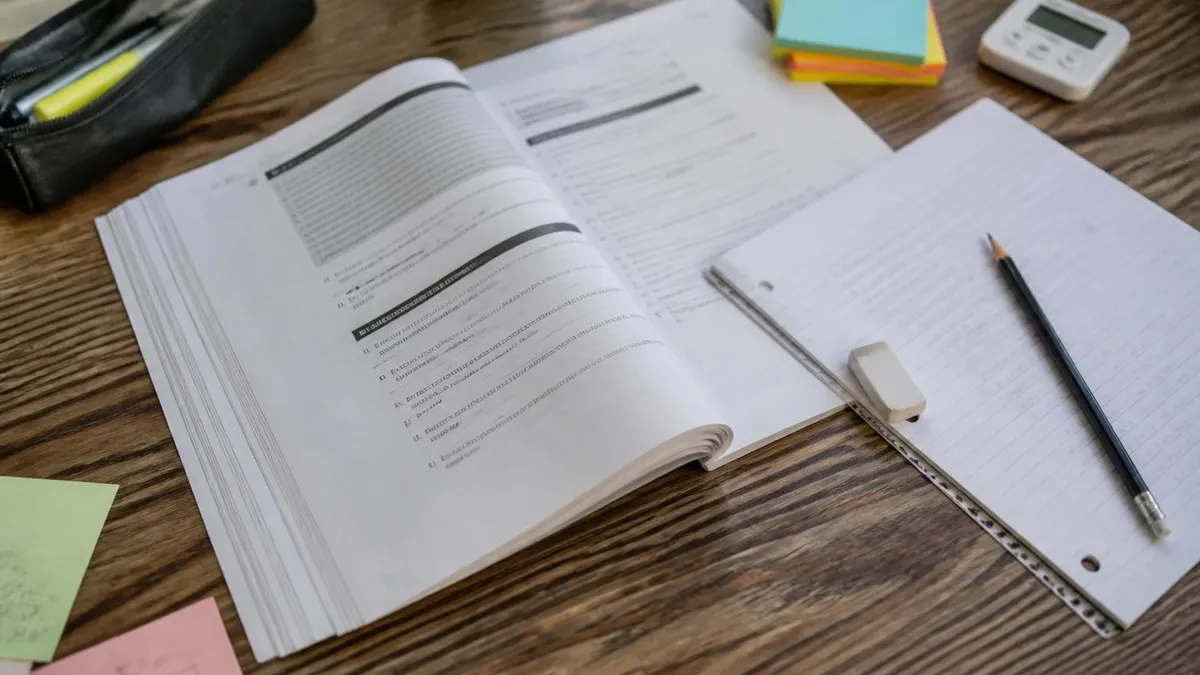
Creating the right physical environment for worksheet practice makes a meaningful difference. Students focus more effectively at a clear desk with minimal visual distractions, good lighting, and the materials they need — pencil, eraser, highlighter for annotating, and a quiet space away from screens and noise.
Some students benefit from background music without lyrics, while others do best in complete silence. Pay attention to which conditions produce the most focused work for your individual student and replicate those conditions consistently. The habit of sitting down to focused practice is itself a skill that pays dividends across every subject and academic situation.
When reviewing completed worksheets, ask your student to explain their thinking before revealing whether an answer is correct or incorrect. This metacognitive practice — thinking about thinking — is one of the most powerful learning strategies available. When a student can articulate why they chose a particular answer, they reveal the underlying reasoning, which allows you to identify whether the logic is sound but the answer choice was poorly selected, or whether there is a fundamental misconception that needs to be addressed directly. The conversation around incorrect answers is often more valuable than the worksheet itself.
Reading aloud together is a powerful complement to independent worksheet practice. When an adult reads a text aloud to a fourth grader — or when student and adult read passages aloud to each other — it models fluent reading and allows the student to access texts above their independent reading level.
After reading aloud, work through the comprehension questions from the corresponding worksheet together, modeling the thought process of a proficient reader: pausing to visualize, asking questions of the text, rereading confusing sections, and making predictions. This explicit modeling accelerates the internalization of strategies far faster than silent independent practice alone.
Digital ELA practice tools pair well with traditional worksheets. Many online platforms provide adaptive practice that adjusts difficulty automatically, instant feedback, and detailed performance reports by standard. Using digital tools for skill reinforcement between worksheet sessions creates a well-rounded practice ecosystem. However, be intentional about balance: the extended writing practice and annotation skills developed through paper-based worksheets are difficult to replicate on screens, and both formats contribute something unique to a student's overall ELA development. The most effective home ELA programs combine both rather than replacing one with the other.
For students who find worksheets frustrating or demoralizing — particularly those working below grade level — consider starting with worksheets slightly below the standard fourth grade level to rebuild confidence and establish basic skills before introducing grade-level challenge. A student who completes a third-grade comprehension worksheet successfully and understands why each answer is correct has learned something important and feels capable. That experience of competence is a prerequisite for willingness to tackle harder tasks. Gradually increase the challenge over several weeks, celebrating each step up in difficulty as evidence of growth rather than proof of past failure.
Sharing progress and goal-setting with your student builds ownership and motivation. Help your fourth grader create a simple tracking chart where they record their scores on each worksheet category each week. When they can see their own data improving over time — fewer inference questions missed, longer and better-organized paragraphs, faster and more accurate completion of grammar tasks — the worksheet practice becomes personally meaningful rather than an external obligation.
Students who understand why they are practicing a skill and can see tangible evidence of improvement are far more likely to persist through difficulty and develop the genuine love of learning that sustains academic success across a lifetime of schooling.
ELA Questions and Answers

ELA Lessons: Grade-Band Guide to Reading, Writing, and Language Strands

NYSED ELA Regents: Complete Guide to Format, Scoring, and How to Pass in 2026

Ace Your ELA (English Language Arts) Test: Expert Tips

ELA Test NYS: Complete Guide to the New York State English Language Arts Assessment

ELA Exam NYS: Complete Study Guide for the New York State English Language Arts Assessment
About the Author
Educational Psychologist & Academic Test Preparation Expert
Columbia University Teachers CollegeDr. Lisa Patel holds a Doctorate in Education from Columbia University Teachers College and has spent 17 years researching standardized test design and academic assessment. She has developed preparation programs for SAT, ACT, GRE, LSAT, UCAT, and numerous professional licensing exams, helping students of all backgrounds achieve their target scores.
Join the Discussion
Connect with other students preparing for this exam. Share tips, ask questions, and get advice from people who have been there.
View discussion (4 replies)