
Practical Test Change: Everything You Need to Know About Updating Your DVSA Driving Test Booking
Need a practical test change? Learn how to reschedule your DVSA driving test online, understand fees, cancellation rules, and avoid losing your booking. ⏳
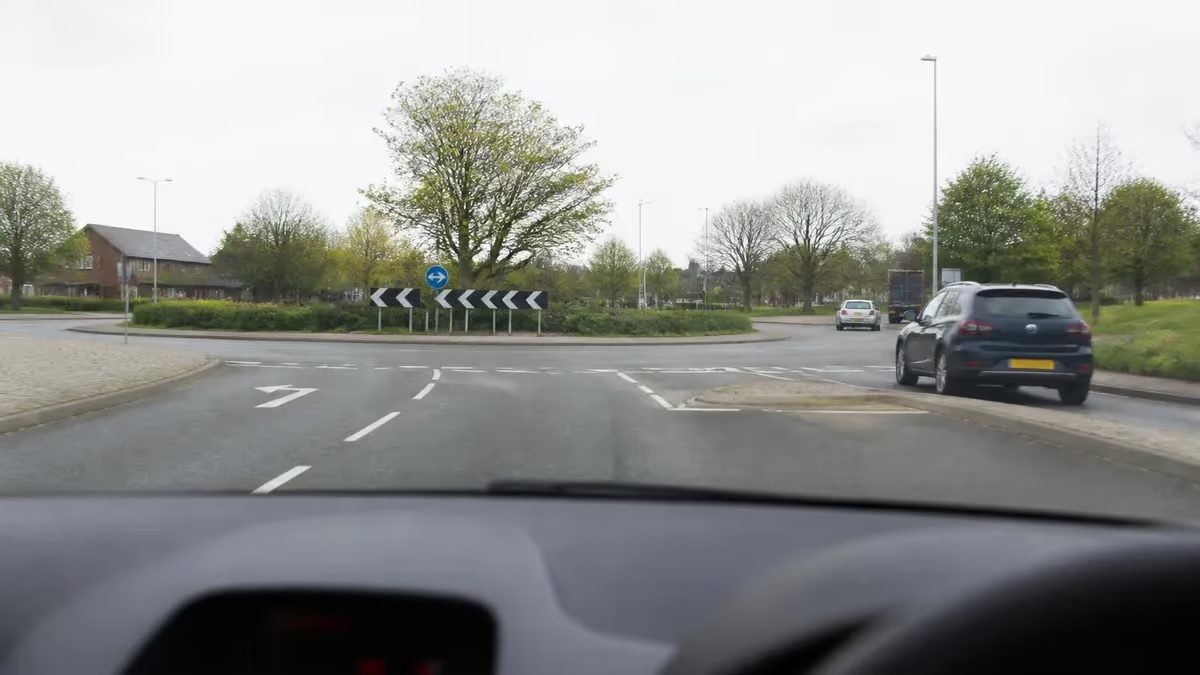
A practical test change is one of the most common actions UK learner drivers need to take after booking their driving assessment with the DVSA. Life gets in the way — your lessons are behind schedule, you fall ill the week before, work shifts suddenly change, or your instructor advises you simply are not ready yet.
Whatever the reason, the DVSA allows candidates to amend or cancel their practical driving test, provided they give the required notice period. Understanding exactly how the process works, how much it costs, and what the rules are can save you money and prevent unnecessary stress.
The DVSA manages all practical test bookings through its official GOV.UK service, and changes must be made with at least 10 full working days' notice before the test date. Failing to meet this threshold means you will lose the full test fee, which currently stands at £62 for car tests conducted on weekdays and £75 for evening and weekend slots. These are not trivial amounts, so knowing the exact cut-off time and how to navigate the online system is genuinely important for every learner on the road to passing.
Many candidates are surprised to discover just how straightforward the rescheduling process actually is when you approach it correctly. You do not need to contact the DVSA by telephone in most cases. The entire process — from logging in to confirming your new date — can be completed in under ten minutes via the GOV.UK booking portal. You will need your driving licence number and your original booking reference, so keeping those details saved somewhere accessible is good practice from the moment you make your initial booking.
It is also worth understanding the distinction between changing a practical test and cancelling it outright. A change moves your appointment to a new date and time without forfeiting your fee, as long as you do so within the permitted window. A cancellation, on the other hand, removes your booking entirely and triggers a refund process that can take several working days to appear in your account. Choosing the right option for your circumstances matters both financially and logistically, particularly if test slots in your preferred area are in high demand.
Test availability varies enormously across the UK. In busy urban areas like London, Birmingham, and Manchester, slots can book out weeks or even months in advance. If you change your practical test and then find that no suitable alternative dates are available soon enough, you may end up waiting longer than anticipated. This makes planning your change carefully — rather than just clicking the first available slot — an essential part of the process rather than an afterthought.
Your instructor plays an important role in this decision too. Many experienced driving instructors will advise candidates when they believe a postponement is the wiser choice, even if it means a short delay. Sitting your practical test before you are genuinely ready leads to failure in the majority of cases, and a failed test still costs the full fee plus the rebooking charge. The financial and emotional cost of failing unprepared is almost always higher than the cost of a timely, well-planned rescheduling.
Throughout this article, we will walk you through every aspect of the practical test change process — from the step-by-step online method to understanding refund timelines, dealing with special circumstances, and making the most of the waiting period between your original and new test date. Whether you are rescheduling for the first time or working out whether changing is the right call, the guidance below covers everything you need to make an informed decision.
DVSA Practical Test Change: Key Numbers
Key Facts at a Glance
| Item | Value | Details |
|---|---|---|
| Weekday Test Fee | £62 | Standard car practical test |
| Minimum Notice Required | 3 days | Clear working days before test |
| Evening & Weekend Fee | £75 | Premium slot surcharge applies |

How to Change Your DVSA Practical Test Step by Step
Gather Your Booking Details
Log In to the GOV.UK Portal
Check the Three-Day Notice Window
Select Your New Date and Centre
Confirm the Change
Notify Your Instructor and Plan Ahead
Understanding the fee structure for a practical test change is essential before you make any decisions about rescheduling. The DVSA does not charge a separate amendment fee for changing your test date, provided you give the required minimum notice of 10 full working days. In practice, this means the change itself is free — you simply shift your existing booking to a new slot without any additional cost. This is one of the most misunderstood aspects of the process, with many candidates assuming they will be charged a penalty simply for moving their appointment.
However, the 10 full working days rule is strict and non-negotiable. If your test is on a Friday, the latest you can change without penalty is by midnight on Monday of the same week, since Tuesday, Wednesday, and Thursday represent the 10 full working days before the Friday appointment. Note that public holidays are excluded from this count entirely. During holiday periods such as Easter or Christmas, you may need to act considerably earlier than you would expect in order to stay within the free-change window.
If you miss the three-day notice threshold, the outcome depends on how you proceed. If you simply do not attend your test without cancelling, you forfeit the entire fee with no refund. If you attempt to cancel after the window has closed, the DVSA may still process a refund in cases of genuine emergency — such as serious illness or bereavement — but this requires documentary evidence and is handled on a case-by-case basis. There is no guarantee of a refund in these circumstances, so treating the notice period as an absolute deadline is the safest approach.
Refunds for cancelled tests within the permitted window are processed back to the original payment method. The DVSA typically completes this within five to ten working days, though some banks may take slightly longer to show the credit on your statement. If you paid by debit card, expect the refund slightly faster than credit card transactions. You do not need to contact the DVSA separately to request the refund; it is processed automatically when you cancel online within the permitted window.
For candidates who booked through a third-party service rather than directly via GOV.UK, the situation is more complicated. Some third-party booking agencies charge their own administrative fees on top of the DVSA cost, and their own refund and change policies may differ from DVSA rules. Always read the terms carefully if you used a third party, and where possible book directly through GOV.UK to retain full control over your booking without additional charges or restrictions applying.
Special dispensation rules apply in a small number of circumstances. If the DVSA cancels your test — for example due to examiner illness or extreme weather conditions — you are entitled to a full refund or a free rebooking regardless of how close to the test date the cancellation occurs. The DVSA will contact you directly in these cases, usually by email or text message, and provide clear instructions on how to proceed. Keeping your contact details up to date in the booking system is therefore important for receiving timely notifications about any DVSA-initiated changes to your appointment.
It is also worth noting that the number of times you can change a practical test is not explicitly capped by the DVSA, but repeatedly rescheduling can reduce the availability of slots and may in some areas trigger attention from the booking system. From a practical standpoint, every unnecessary change delays your progression toward a full licence and increases the total cost of learning to drive when accumulated lesson fees are factored in. Treat each rescheduling as a considered decision rather than a casual adjustment.
When Should You Change, Cancel or Keep Your Practical Test Date?
Changing your practical test date makes sense when you need more preparation time but are confident you will be ready within a matter of weeks. If your instructor has flagged specific skills that need targeted work — parallel parking, meeting oncoming traffic, roundabout exits — a short postponement gives you the focused lesson time to address these gaps without abandoning your momentum entirely. This is the most cost-effective option when availability exists at your preferred centre within a reasonable timeframe.
The key is acting well before the three-day notice window closes. Log in to the GOV.UK portal as soon as you and your instructor agree that a new date is needed, check availability at your local test centre and one or two nearby alternatives, and confirm the change in a single session. Waiting until the last moment creates unnecessary risk. Candidates who change their test two or more weeks in advance typically find far better slot availability than those who leave it until the final few days before the cut-off.
Changing Your Practical Test: Pros and Cons
- +No additional fee charged if you give three or more clear working days' notice
- +Provides extra time to address specific weaknesses identified by your instructor
- +Reduces the risk of a costly test failure by ensuring you are genuinely prepared
- +Can be completed entirely online in under ten minutes via GOV.UK
- +Allows you to choose a date and time that better suits your schedule and energy levels
- +Gives your instructor time to plan targeted lessons around your remaining weak spots
- −Available test slots in busy urban areas can be scarce, leading to long waits for a new date
- −Delay extends your overall learning timeline and can increase total lesson costs
- −Missing the three-day notice window results in losing your full test fee with no refund
- −Repeated rescheduling can undermine confidence and create a habit of avoidance
- −A new test date may conflict with instructor availability, disrupting lesson continuity
- −Some learners find the additional wait increases anxiety rather than reducing it
Practical Test Change Checklist: Everything to Do Before and After Rescheduling
- ✓Confirm with your instructor that rescheduling is the right decision before logging in to change your booking
- ✓Locate your driving licence number and original booking reference before visiting the GOV.UK portal
- ✓Check that your current test date is more than 10 full working days away before attempting the change
- ✓Log in at gov.uk and navigate to the 'Change your driving test' section to access your booking
- ✓Compare multiple test centres and available dates before selecting the most suitable new slot
- ✓Confirm the change online and immediately save the new confirmation email to a secure location
- ✓Notify your driving instructor of the new date so they can adjust your lesson schedule accordingly
- ✓Book additional lessons focusing on the specific skills your instructor has identified as needing work
- ✓Research the test routes used at your chosen centre and practise them during lessons where possible
- ✓Use any extra preparation time to review the Highway Code sections most commonly tested on the practical
10 full working days — Not Three Calendar Days
Many candidates miscount the notice period and arrive at the portal only to find their free-change window has closed. Remember: weekends and UK public holidays do not count as working days. If your test is on a Monday, you must make the change by the previous Wednesday at the latest — giving Thursday, Friday, and the following Monday as 10 full working days. Always count forward carefully before assuming you still have time.
One of the most avoidable and costly mistakes learner drivers make when rescheduling is underestimating how quickly the three clear working days pass. A test booked for a Thursday means the change window closes at midnight on the preceding Sunday — yet many candidates do not realise over the weekend that Monday is already too late. Building the habit of checking your test date regularly, especially in the weeks leading up to it, prevents you from discovering too late that you have missed the free-change threshold entirely.
Another common error is using an unofficial third-party website to attempt the change. Several websites imitate the DVSA booking portal's appearance and charge fees for services that are completely free through the official GOV.UK platform. Always navigate directly to gov.uk and verify the URL in your browser before entering any personal or payment details. The DVSA regularly issues warnings about fraudulent sites, and falling victim to one can cost you both time and money while leaving your actual booking unchanged or cancelled without your knowledge.
Candidates sometimes change to a different test centre without fully considering the practical implications. A test centre in a less busy area may have more available slots, but if you have been training exclusively on the roads around your local centre, switching to an unfamiliar area days before your test creates a new set of challenges.
Test routes vary significantly between centres, and familiarity with the local road layout — including complex junctions, busy roundabouts, and school zones — is a genuine advantage on test day. If you switch centres, build in time for at least a couple of lessons in the new area before the test date.
Forgetting to inform your driving instructor is surprisingly common, particularly when candidates make changes at short notice or late at night. Your instructor needs to know your new date to plan the remaining lessons effectively. Without this information, they may continue a lesson plan designed around a different timeline, leaving key skills under-practised. A quick message or call immediately after confirming the change online takes seconds but can make a significant difference to the quality of your remaining preparation.
Some candidates change their test multiple times, each time feeling slightly underprepared. This pattern can become self-reinforcing — the more often you postpone, the more you associate the test with something to be avoided rather than something to be attempted. Instructors consistently report that some degree of nervousness is present in virtually every test candidate and rarely prevents a competent driver from passing. If you have been driving consistently and your instructor believes you are ready, trust that judgement rather than seeking perfection you may never feel you have achieved.
It is also worth considering the financial impact of repeated changes in the broader context of your driving journey. While the individual change itself is free within the permitted window, every extra week of preparation comes with lesson costs. At typical UK driving lesson rates of £35 to £45 per hour, even two additional weeks of two lessons per week adds £140 to £180 to your total learning cost. Weigh this against the genuine probability that additional lessons will meaningfully improve your test performance before deciding to postpone again.
Finally, be aware that test centre and examiner availability can shift significantly during busy periods such as the summer months, when demand from school leavers and university students spikes sharply. If you are changing your test in June, July, or August, expect reduced slot availability and plan accordingly. Checking multiple nearby centres and being flexible about times of day — including early morning slots that tend to be less popular — gives you the best chance of finding a new date that fits your preparation timeline without pushing you back further than necessary.
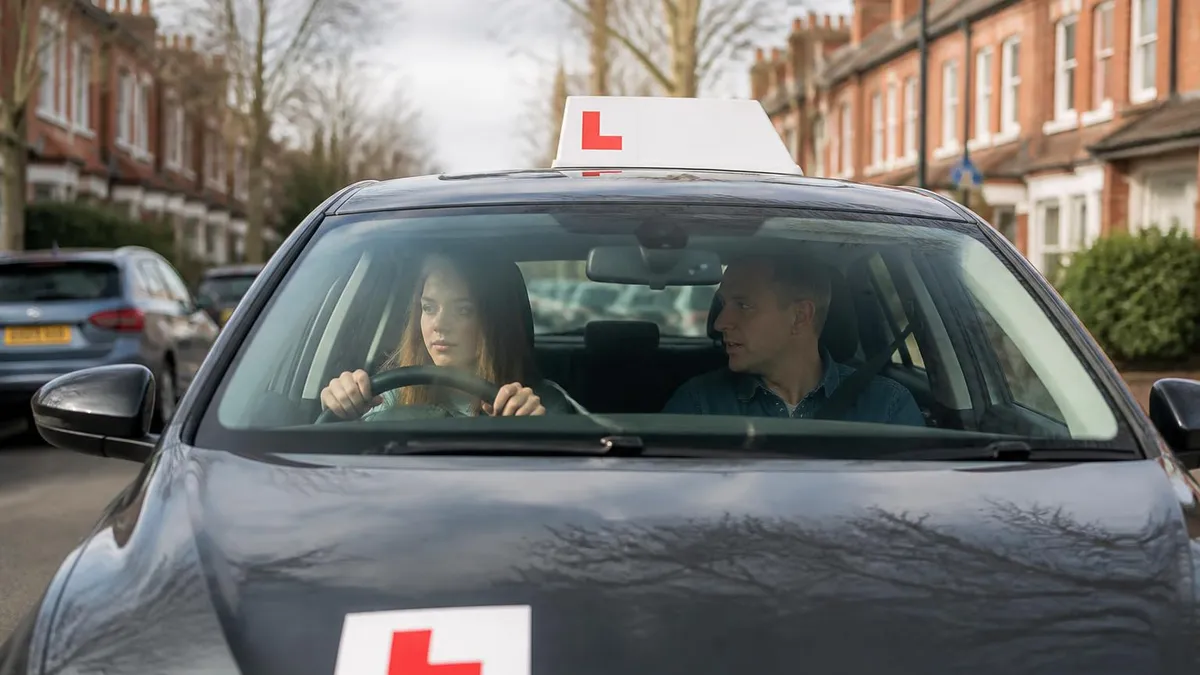
If you change or cancel your practical test with fewer than 10 full working days' notice, you will lose the entire test fee — currently £62 for weekday tests and £75 for evenings and weekends. This rule applies even if you have a genuine reason for needing to reschedule. Only in exceptional circumstances such as serious illness or bereavement, supported by documentary evidence, will the DVSA consider a discretionary refund, and this is never guaranteed.
Making the most of the additional time between your original and rescheduled test date is where many candidates gain a decisive edge. Rather than treating the postponement as a setback, approach it as a structured opportunity to close the specific gaps that made rescheduling necessary in the first place. Begin by having an honest debrief with your instructor immediately after confirming the change. Ask them to identify the top three or four areas where your performance falls below consistent test standard, and build a targeted lesson plan around those priorities rather than simply continuing general practice sessions.
Independent driving is one of the most significant components of the modern UK practical test, accounting for approximately ten minutes of your examination time. During this section, you will be asked to follow either a series of verbal directions or a sat-nav route, demonstrating your ability to navigate safely without prompting. Many candidates who struggle with independent driving simply have not practised it enough as a distinct skill. Ask your instructor to set up dedicated independent driving exercises during lessons, including unfamiliar routes and scenarios where you must make real-time decisions at junctions without guidance.
Manoeuvres remain a high-anxiety area for many learner drivers. The current practical test requires you to perform one of four possible manoeuvres — parallel parking, pulling up on the right-hand side of the road and reversing, forward bay parking, or reverse bay parking. Use the extra preparation weeks to ensure you are genuinely competent at all four, not just the one you feel most comfortable with. Examiners select the manoeuvre randomly on the day, and arriving with a weak spot in any of them introduces unnecessary risk into an otherwise controllable element of the test.
Hazard perception and commentary driving are underused preparation techniques that can make a real difference to your test performance. Commentary driving — narrating what you see and what actions you are taking as you drive — forces you to verbalise your observations, which in turn trains you to scan more systematically and spot developing hazards earlier. Ask your instructor to run commentary driving sessions, and practise hazard perception at home using DVSA-approved materials. The two skills reinforce each other and directly address the observation-related faults that appear most frequently on examiner debrief reports after failed tests.
Sitting a formal mock test with your instructor — conducted under realistic test conditions using actual test routes near your centre — is probably the single most valuable activity you can undertake in the run-up to your rescheduled date. A good mock test will expose remaining weaknesses in a safe context, give you a realistic assessment of where you currently stand, and help normalise the pressure of being observed and assessed while driving. If your mock test result is consistently within the pass threshold, you have strong evidence that you are genuinely ready to sit the real thing.
Mental preparation matters more than most candidates acknowledge. The practical driving test is as much an emotional performance as a technical one. Arriving on test day having slept well, eaten properly, and warmed up with a brief pre-test lesson is associated with better outcomes than arriving cold, stressed, or tired. Some instructors offer a short pre-test session — typically an hour of driving near the test centre — which settles nerves and ensures you arrive in a calm, focused state. This modest additional cost is usually well worth the investment for candidates who experience significant test anxiety.
Finally, use the online resources available to you throughout the additional preparation period. The DVSA's own guidance documents, the Highway Code, and practice theory materials all complement the practical skills you are developing in your lessons. Reading about how examiners mark tests, understanding the difference between minor and serious faults, and familiarising yourself with the format of the test report sheet can demystify the assessment process and reduce the fear of the unknown.
Knowledge and preparation are the most powerful antidotes to test anxiety, and every hour you invest in them between now and your rescheduled date increases your probability of driving away from the test centre with a pass certificate in hand.
As your rescheduled practical test date approaches, shifting from broad preparation to focused, test-specific practice is one of the most effective strategies experienced instructors recommend. In the final two weeks before a practical test, candidates benefit most from consolidating what they already know rather than trying to learn entirely new skills. Attempting to introduce major new techniques this late in the process can create confusion and undermine the confident, automatic responses that examiners expect to see from a test-ready candidate. Focus on consistency, observation quality, and calm, methodical decision-making.
Route familiarity is a legitimate and entirely permitted preparation strategy. While examiners draw from a variety of routes and you cannot know in advance exactly which one you will be given, you can identify the roads and junctions within a few miles of your test centre that are most commonly included in tests there. Driving these roads regularly with your instructor — paying particular attention to tricky junctions, traffic light systems, and any roads with variable speed limits — builds the kind of automatic competence that holds up under test pressure in ways that less familiar roads do not.
On the day of your rescheduled test, arrive at the test centre with time to spare — at least fifteen minutes before your appointment. Use this time to compose yourself, review any last-minute notes, and have a calm final conversation with your instructor. Rushing into a test centre stressed and breathless from a hurried journey is a poor start to what is already a pressure situation. Plan your journey to the centre in advance, identify parking options, and build in buffer time to account for traffic or delays so the final approach feels controlled rather than frantic.
During the test itself, communicate clearly with your examiner. If you do not hear or understand a direction, it is perfectly acceptable to politely ask them to repeat it. Examiners are not trying to catch you out — their role is to observe whether you can drive safely and independently. A missed direction that you handle calmly by pulling over safely and asking for clarification is far less damaging than guessing and driving incorrectly. Many candidates fail not because of poor driving ability but because they hesitate to ask for clarification when they genuinely did not hear an instruction.
Minor faults — previously known as driving faults — accumulate on your test sheet throughout the assessment. You are allowed up to fifteen minor faults before these result in a test failure, though accumulating three or more of the same minor fault can be upgraded to a serious fault by the examiner.
Being aware of your own patterns — for example, consistently not checking mirrors at sufficient frequency, or rolling slightly at junctions — allows you to actively correct them during the test rather than repeating them unconsciously. Your instructor should have given you clear feedback on your most frequent minor fault patterns during the preparation period.
After your practical test, whether you pass or need to rebook, take time to review the examiner's feedback carefully before leaving the test centre. The test result sheet provides a detailed breakdown of every fault recorded during your assessment, including the precise locations and circumstances. This information is invaluable for targeted follow-up preparation if you need to rebook. Candidates who review their result sheet thoroughly and address the specific faults identified consistently perform better on their next attempt than those who simply rebook and continue with general practice without understanding what went wrong.
If you pass your practical test, congratulations — you have earned a full UK driving licence. Remember that passing does not make you an expert driver; it confirms that you have reached the minimum standard required for independent driving. Many newly qualified drivers benefit enormously from additional post-test lessons, particularly on motorways, in poor weather conditions, and during night driving. These are the conditions in which newly qualified drivers are most at risk, and a modest investment in post-test training pays dividends in safety and confidence for years to come.
Sample DVSA UK Driving Theory Practice Questions
Try these questions from our free DVSA UK Driving Theory practice tests. The correct answer and an explanation follow each question.
You are driving in heavy rain and your vehicle begins to aquaplane. What should you do?
- A. Brake hard to regain grip
- B. Steer sharply to the left
- C. Ease off the accelerator and avoid braking until you regain grip
- D. Accelerate to drive through the water
Answer: C. Ease off the accelerator and avoid braking until you regain grip
Aquaplaning occurs when water builds up under the tyres faster than the tread can disperse it, causing a loss of contact with the road. You should ease off the accelerator smoothly and avoid braking or steering until the tyres regain grip.
You have just bought a brand-new car. When will it need its first MOT test?
- A. On the first anniversary of its registration.
- B. After it has been driven 12,000 miles.
- C. On the third anniversary of its registration.
- D. When the manufacturer's warranty expires.
Answer: C. On the third anniversary of its registration.
A new car in the UK does not require an MOT test until the third anniversary of its first registration date. After this, it must be tested annually.
When driving in wet conditions, what is the minimum time gap you should leave between your vehicle and the one in front?
- A. A one-second gap
- B. A two-second gap
- C. A three-second gap
- D. A four-second gap
Answer: D. A four-second gap
The Highway Code advises that in wet weather, you should double the normal two-second gap to at least a four-second gap. This is because your vehicle will take longer to stop on a wet surface, and the increased distance provides a safer stopping margin.
During a 'show me' question on a practical driving test, the examiner asks you to demonstrate how you would check that the brake lights are working. What is the correct procedure?
- A. Switch on the ignition, turn on the hazard lights, and walk around the car.
- B. Operate the brake pedal and check for a warning light on the dashboard.
- C. Operate the brake pedal and use reflections in windows or ask someone to help check.
- D. Pump the brake pedal several times to see if the pressure feels correct.
Answer: C. Operate the brake pedal and use reflections in windows or ask someone to help check.
The correct way to check the brake lights is to operate the brake pedal while making use of reflections in windows, garage doors, or other vehicles, or by asking another person to stand at the rear of the vehicle to confirm they are lit.
DVSA Questions and Answers
DVSA Theory Test: What It Covers, How to Prepare, and What to Expect on Test Day
How to Change Theory Test Date: Complete DVSA Rebooking Guide for 2026
Driving Test Centre Near Me: How to Find, Book, and Prepare for Your Local DVSA Centre (2026)
UK Theory Test Pass Mark: Car, Bike, LGV, PCV & ADI Scores
Driving Lessons Intensive Course Birmingham: Complete UK Guide to Fast-Track Your Licence in 2026
About the Author

Licensed Driving Instructor & DMV Test Specialist
Penn State UniversityRobert J. Williams graduated from Penn State University with a degree in Transportation Management and has spent 20 years as a certified driving instructor and DMV examiner consultant. He has personally coached thousands of applicants through written knowledge tests, skills assessments, and commercial driver licensing programs across more than 30 states.