
Driving Test Centre: How to Find, Book and Prepare in UK 2026 October
🎓 Driving test centre guide UK — how to find your nearest centre, book a practical test, fees, pass rates, what to bring and what to expect on the day.
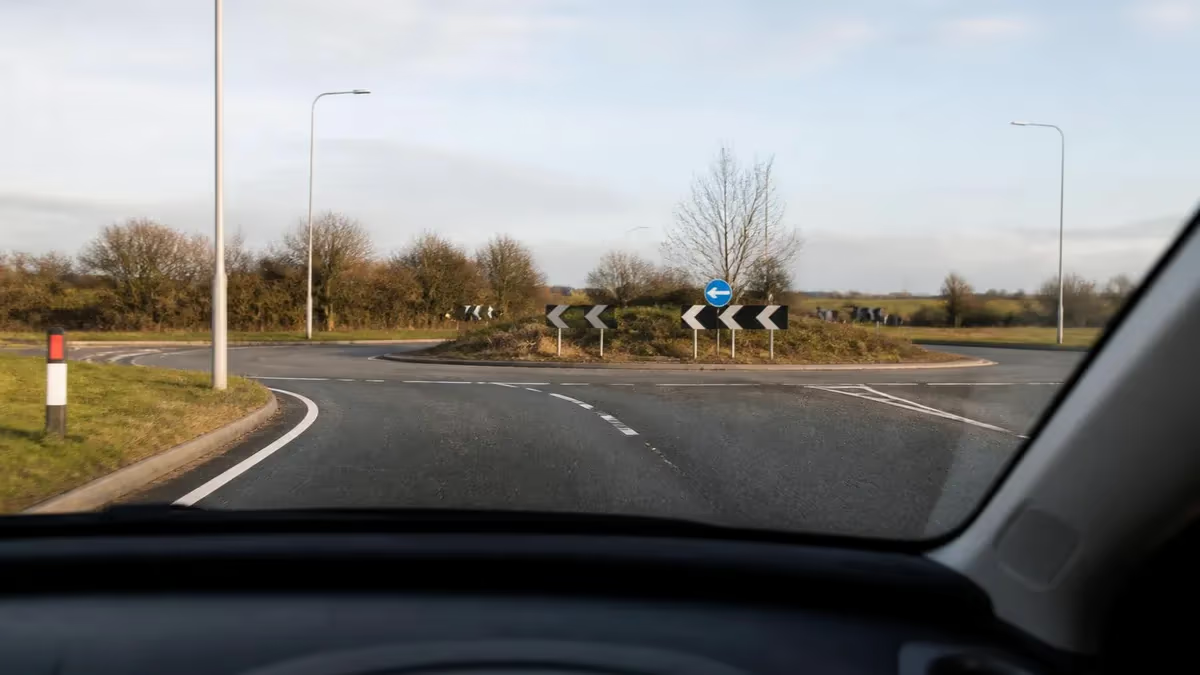
The driving test centre is where every UK learner driver completes their practical driving test, the final step in qualifying for a full driving licence. The Driver and Vehicle Standards Agency (DVSA) operates approximately 300 driving test centres across England, Scotland and Wales, with another network in Northern Ireland operated by the Driver and Vehicle Agency (DVA). Each test centre serves a defined catchment area and runs the standard practical driving test alongside motorcycle, lorry, bus and coach tests in some locations.
The practical driving test fee in 2026 is £62 for weekday tests and £75 for evening, weekend and bank holiday tests, paid through the gov.uk booking system at the time of booking. Tests last about 40 minutes and include an eyesight check, vehicle safety questions (the show me, tell me questions), about 20 minutes of general driving, around 10 minutes of independent driving, and one of four possible reversing manoeuvres. Approximately 1.6 million practical driving tests are taken each year across the UK.
Pass rates vary substantially between test centres. The national average sits around 48% to 50% in 2026, with the highest-passing centres in rural and small-town locations reaching 65% to 70% and the lowest-passing centres in major cities sometimes below 35%. The variation reflects route difficulty, traffic density, and demographic factors more than any difference in examiner standards. Choosing your test centre carefully is one of the few things within your control that influences pass probability.
This guide explains how to find your nearest driving test centre, the booking process on gov.uk, the test centre experience from arrival to debrief, what documents you must bring, what manoeuvres and routes to expect, post-test feedback, and the practical question of whether to choose a different test centre based on pass rate data. Whether you are booking your first attempt or your fourth, the information helps you walk into the centre prepared rather than surprised.
Driving test centre in 30 seconds
About 300 DVSA driving test centres operate across the UK. Practical test fee is £62 weekday, £75 evening or weekend, booked through gov.uk. Tests last 40 minutes and include an eyesight check, show-me-tell-me vehicle safety questions, general driving, 10 minutes of independent driving and one reversing manoeuvre. National pass rate sits around 48% to 50% with substantial variation across centres. Bring your provisional licence — there is no longer a separate paper counterpart for tests booked from June 2015 onward.
Finding your nearest driving test centre is straightforward through gov.uk's online tool. Visit gov.uk/find-driving-test-centre, enter your postcode, and the tool returns the centres within a defined radius along with their addresses and key information. Most learners book the centre nearest to where they have been learning to drive, since the test routes will be in roads they have already practised. Some learners deliberately book centres farther from home for strategic reasons we will discuss below.
Each centre's address, opening hours and accessibility details appear on its dedicated page on gov.uk. Most centres operate Monday through Friday during standard business hours plus selected Saturdays. Evening tests (after 4:30 PM) and Saturday tests carry the higher £75 fee. Test slots become available 18 to 24 weeks in advance, with high demand at popular centres meaning that the next available slot at your preferred centre may be many weeks away. Cancellations free up earlier slots; the gov.uk booking system shows available slots in real time.
The booking process requires your provisional driving licence number, your theory test pass certificate number (the practical test cannot be booked without theory test passage), an instructor's reference number if applicable, and a debit or credit card for payment. You can book a test for yourself or your driving instructor can book on your behalf. The instructor route is common because instructors monitor cancellations and can sometimes secure earlier slots than learners booking themselves.
Cancellation and rebooking rules are practical to understand before booking. Tests cancelled with at least 10 full working days' notice receive a full refund. Cancellations within 10 full working days forfeit the fee. Test rescheduling within the 10-full-working-day window also forfeits the fee. The DVSA's online cancellation finder shows newly available slots from other learners' cancellations — checking the finder daily is how many learners secure earlier test dates than the headline waiting list suggests.

Key driving test centre information
Visit gov.uk/find-driving-test-centre and enter your postcode. The tool returns DVSA test centres within a defined radius with addresses, accessibility information and the category of tests offered. Most learners book the centre nearest to their driving instruction; some deliberately book different centres for higher pass rates.
Book through gov.uk after passing the theory test. Fee £62 weekday or £75 evening and weekend. Required: provisional licence number, theory test pass certificate number and a debit or credit card. Tests are bookable 18 to 24 weeks in advance. High-demand centres often have long waiting lists.
Cancel with at least 10 full working days notice for a full refund. Cancellations within 10 full working days forfeit the fee. The cancellation finder on gov.uk shows newly available slots from other learners' cancellations — checking daily is how many learners secure earlier test dates than the headline waiting list suggests.
National pass rate around 48% to 50%. Highest-passing centres in rural areas reach 65% to 70%; lowest-passing centres in major cities sometimes below 35%. Variation reflects route difficulty, traffic density and demographic factors. Pass rate data is published annually by the DVSA and available through Freedom of Information requests.
The test centre experience starts with arrival. Plan to arrive 10 to 15 minutes before your scheduled test time. The waiting area is typically a small room with seats, a few information posters and sometimes a vending machine. Other learners and their instructors share the space. Check in at the desk if there is one, or simply wait — examiners come out to call the next learner by name when they are ready.
The eyesight check happens first, before you reach the test vehicle. The examiner asks you to read the number plate of a parked vehicle from a measured distance — 20 metres for new-style number plates introduced in 2001 onward, 20.5 metres for older-style plates. You can wear glasses or contact lenses if you need them; if you wear them for the eyesight check, you must wear them throughout the driving test. Failing the eyesight check ends the test before driving begins, with no refund.
The show-me-tell-me vehicle safety questions follow the eyesight check. The examiner asks one tell-me question (explaining how you would perform a check before driving away) and one show-me question while driving (demonstrating a check while you are moving). Examples include checking the brake fluid level, washing the windscreen and operating the demister. Getting either question wrong does not automatically fail the test but counts toward the overall fault count.
The driving portion of the test takes about 30 minutes. The examiner sits in the front passenger seat and gives directions throughout. About 20 minutes of general driving covers a variety of road and traffic conditions chosen by the examiner along established routes from the test centre. Around 10 minutes of independent driving requires you to follow either traffic signs or directions from a sat nav (the examiner brings a TomTom for this section) without examiner-by-examiner direction.
Test centre experience step by step
Arrive 10 to 15 minutes before your test time. The waiting area is small with seats and information posters. Bring all required documents: provisional driving licence and any documentation needed by your instructor. The examiner calls your name when ready. Check that your vehicle is parked correctly and ready for inspection if you are using your own car or a learner driver instructor vehicle.
The reversing manoeuvre on the test is one of four options, chosen by the examiner. Parallel parking on the road behind a parked vehicle. Bay parking either forward or reverse in a marked bay (typically in a car park near the test centre). Pulling up on the right side of the road, reversing about two car lengths and rejoining traffic. Each manoeuvre requires control of the vehicle, awareness of surroundings and ability to recover from minor errors without major faults.
The emergency stop is performed at the examiner's request on about one in three tests. The examiner indicates a quiet stretch of road, then signals the stop with a clear gesture. The driver must stop the vehicle promptly and safely, regaining control without skidding. The manoeuvre tests reaction time and braking control. Examiners have discretion on whether to include the emergency stop based on weather, road conditions and the test schedule.
Faults during the test fall into three categories. Driving faults (sometimes called minor faults) are minor errors that do not threaten safety but indicate imperfect driving. You can accumulate up to 15 driving faults and still pass the test. Serious faults reflect actions that could compromise safety. One serious fault fails the test. Dangerous faults reflect actions that actually endanger the examiner, other road users or property. One dangerous fault fails the test.
Common reasons for failure include observation errors (failing to check mirrors, blind spots or junctions), control issues (poor steering, clutch control or stalling), positioning errors (drifting in the lane, taking turns too widely or tightly), and signal failures (forgetting to signal turns or lane changes). The DVSA publishes annual data on the most common reasons for failure; reviewing the list before your test helps direct final practice toward the highest-impact areas.
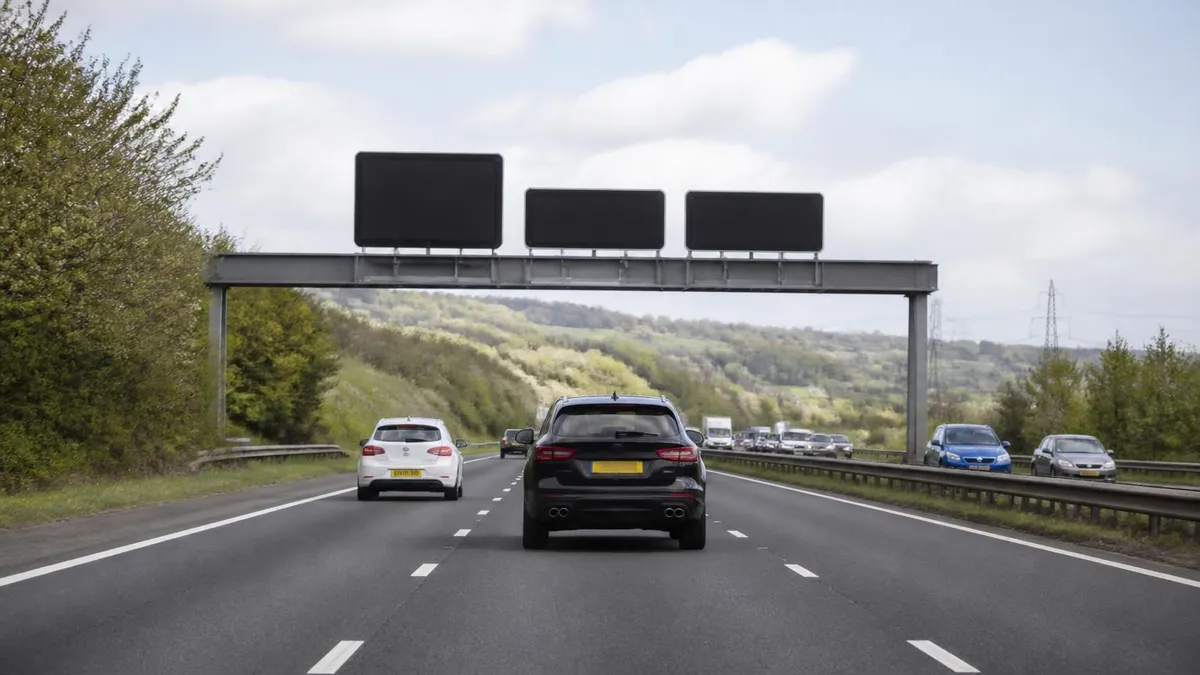
Bring your provisional driving licence. Tests booked from 8 June 2015 onward no longer require the paper counterpart, but earlier-booked tests may. If you wear glasses or contacts for the eyesight check, bring them and a backup pair if possible. If using your own vehicle, ensure it has valid insurance, MOT, road tax, dual controls if required by your insurance and L-plates clearly displayed. Forgetting any required item can mean a forfeited test fee.
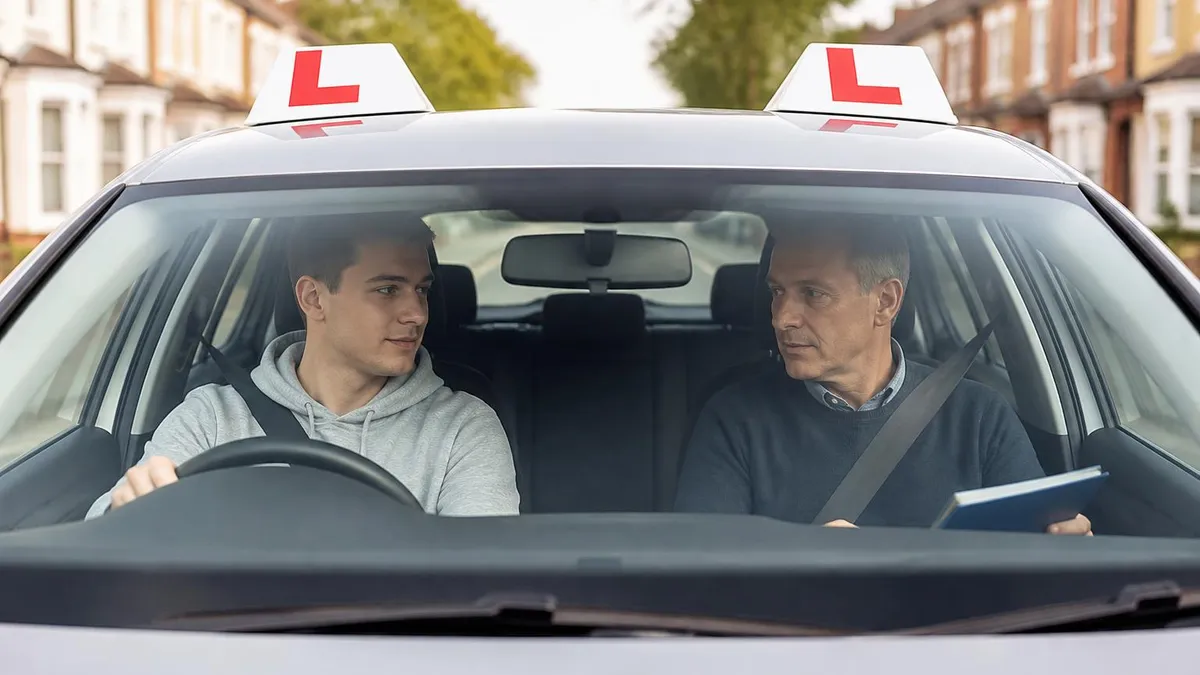
The car you use for the test must meet specific requirements. It must have valid insurance for driving tests, valid MOT (if older than 3 years), valid road tax, no warning lights on the dashboard, an extra interior rear-view mirror for the examiner, dual controls fitted (recommended but not required for the test itself), L-plates clearly displayed front and back, four wheels, working seatbelts, and a fully functioning speedometer reading in both miles per hour and kilometres per hour.
Most learners use their driving instructor's vehicle for the test. The instructor's car is already set up with everything required and the instructor has driven the test routes hundreds of times. Using your own car is permitted but carries the risk that something is wrong on the day — a dashboard warning light, a faulty mirror, an expired MOT — that ends the test before driving begins. Confirm everything well before the test if using your own car.
The post-test feedback is one of the most useful parts of the day, regardless of result. The examiner provides a written list of any faults committed during the test plus a verbal explanation of what went well and what needs work. Even passing learners benefit from understanding their weaker areas because the feedback identifies habits that may cause problems in future independent driving. Failed learners get a clear roadmap for what to work on before the next attempt.
If you fail, you can rebook the test online through gov.uk. The minimum waiting period is 10 working days from the failed attempt to the next test date — this rule prevents same-week rebooking that produces another failure. Rebook for the next available slot once the 10-working-day window passes. Most learners benefit from at least 2 to 4 weeks of additional lessons targeting the specific faults identified before sitting the test again. Same-day rebooking is not possible due to the 10-day rule.
Driving test day checklist
- ✓Provisional driving licence (photocard)
- ✓Glasses or contacts if needed for eyesight check
- ✓Backup pair of glasses if you wear them
- ✓Test booking confirmation email or reference
- ✓Comfortable clothing and shoes suitable for driving
- ✓Vehicle in test-ready condition (insurance, MOT, no warning lights)
- ✓L-plates clearly displayed front and back
- ✓Adequate fuel for at least 40 minutes of driving
- ✓Plan to arrive 10 to 15 minutes before scheduled test time
For learners considering travelling to a different test centre with a higher pass rate, the strategic case is real but limited. Centres in rural areas or small towns with simpler road networks often produce 60% to 70% pass rates compared to 35% to 45% in central London or other major cities. The catch is that you have to drive the unfamiliar test routes, and learning new routes adds practice cost. Travelling 30 to 50 miles to a higher-pass-rate centre makes sense if you can get extra practice on those specific roads with a local instructor.
Some learners take an intensive driving course at a remote location specifically to test there. The intensive course (often 5 to 10 days of full-time tuition followed by the test on day 7, 9 or 11) trains the learner on local roads, includes test prep aimed at that centre's specific quirks, and can produce a faster overall path to a licence than slower local lessons. Intensive courses cost £900 to £1,500 plus the test fee and produce mixed results — they suit some learners and not others.
For long waiting times at popular centres, the practical advice is to use the gov.uk cancellation finder daily and to book at less popular centres in your area. Some centres have 4 to 6 month waits while others within 30 minutes have 4 to 6 week waits for the same test. Trade-off some convenience for substantially earlier dates and you can be on the road months sooner than waiting for the closest centre.
For driving instructor selection, choose an Approved Driving Instructor (ADI) with experience at your target test centre. The ADI's familiarity with the specific test routes, examiners' typical preferences and the local traffic patterns produces meaningfully better preparation than a more general instructor. The ADI register on gov.uk shows credentials and grade ratings. Most ADIs charge £35 to £55 per hour; an intensive package may cost £30 to £45 per hour for bulk lessons.
The route from passing the practical test to receiving your full driving licence is automatic. The examiner records the pass result electronically at the test centre. Your full driving licence is issued by DVLA (the Driver and Vehicle Licensing Agency, separate from DVSA) within 3 weeks of the pass. Your provisional licence is normally exchanged for the full licence in the same envelope. You can drive immediately after passing — there is no waiting period — though you must take down L-plates and observe new-driver rules.
New driver rules apply for the first 2 years after passing. The most significant rule is that accumulating 6 or more penalty points (typically through speeding tickets, mobile phone use while driving and similar offences) within the first 2 years results in licence revocation. The revoked driver must reapply for a provisional licence and pass both theory and practical tests again. The 2-year probation period is the cost of being a new driver and reflects the substantially higher accident risk in the first months of independent driving.
Driving test centre quick numbers
Key Facts at a Glance
| Item | Value | Details |
|---|---|---|
| Practical test fee weekday / evening-weekend | £62 / £75 | |
| Total test duration | 40 min | |
| Minimum wait between attempts | 10 working days |
Choosing the right test centre
The simplest choice — book the centre your instructor uses regularly. You will have practised on the actual test routes during lessons, the instructor knows the typical examiner styles and pass rate patterns, and travel logistics on test day are minimal. Best for most learners who do not have specific reasons to choose elsewhere.
Centres in rural and small-town locations often have higher pass rates than urban centres. Travelling 30 to 50 miles to a higher-pass-rate centre can be strategic if you can get a few practice lessons there beforehand. Make sure the time and travel costs justify the modest pass-rate advantage.
Some centres have 4 to 6 month waits while others within driving distance have 4 to 6 week waits. Booking at a less popular centre saves months of waiting at the cost of taking the test on less familiar roads. The cancellation finder on gov.uk also helps find earlier slots from other learners' cancellations.
Intensive courses combine 5 to 10 days of tuition at a remote location with a test there at the end. Cost £900 to £1,500 plus test fee. Suits some learners who want fast results; not suited to learners who need spaced practice over months. Choose the course location and provider based on reviews and pass rates.
For learners with disabilities or specific accessibility requirements, DVSA accommodates a range of needs. Learners who require an adapted vehicle, additional time, communication support (sign language interpretation), or a parking space close to the test centre entrance can request adjustments at the time of booking. Some test centres have ground-floor or step-free access; others may require advance arrangement for wheelchair access. The accessibility information for each centre appears on its gov.uk page.
For learners taking the test in Northern Ireland, the process differs slightly. The Driver and Vehicle Agency (DVA) operates test centres in Northern Ireland with similar procedures but separate booking and slightly different rules. Fees are similar but the booking system is dvsa-style adapted for Northern Ireland. Learners booked at GB centres can take their tests there if eligible; cross-jurisdiction testing is possible with appropriate documentation.
For learners weighing the practical test as a milestone, recognise that the test centre is just the venue — your preparation is what determines the outcome. Solid lessons, regular practice and confidence on test day matter far more than which centre you book.
DVSA: Pros and Cons
- +DVSA exam preparation strengthens your knowledge across all domains
- +Passing the exam proves competency to employers and clients
- +Study materials and practice tests are widely available
- +Exam-based credentials are portable across states and employers
- +Clear exam objectives help focus your study plan effectively
- −Exam anxiety can affect performance — practice tests help reduce it
- −Registration fees are non-refundable if you miss your test date
- −Limited retake opportunities may apply with waiting periods
- −Exam content updates periodically — use current study materials
- −Testing center availability may require advance scheduling
Sample DVSA UK Driving Theory Practice Questions
Try these questions from our free DVSA UK Driving Theory practice tests. The correct answer and an explanation follow each question.
When loading a vehicle, which items should be placed lowest and closest to the centre of the vehicle?
- A. Light, bulky items
- B. The heaviest items
- C. Fragile items wrapped in packaging
- D. Items needed most frequently during the journey
Answer: B. The heaviest items
Heavy items should be secured as low and central as possible to keep the vehicle's centre of gravity low and maintain stability.
What does a broken white line along the centre of the road indicate?
- A. You must not overtake under any circumstances
- B. You may cross it to overtake if it is safe to do so
- C. The road ahead is closed to through traffic
- D. You must stop and give way to oncoming vehicles
Answer: B. You may cross it to overtake if it is safe to do so
A broken centre line means you may cross it to overtake or turn, provided it is safe and legal to do so.
You are driving on a single carriageway road with double white lines in the centre. The line on your side is broken. When is it permissible to cross these lines?
- A. To overtake a vehicle travelling at 15 mph.
- B. To turn into a side road on the right.
- C. To overtake if you can complete the manoeuvre before the line on your side becomes solid.
- D. To park on the right-hand side of the road.
Answer: C. To overtake if you can complete the manoeuvre before the line on your side becomes solid.
According to the Highway Code (Rule 128), if the white line nearest to you is broken, you may cross the lines to overtake, but only if it is safe and you can complete the manoeuvre before reaching a solid white line on your side. Turning into a side road is also permitted, but overtaking is the more comprehensive correct action described. You must not park on the opposite side of the road, and the speed for overtaking slow-moving vehicles is specified as 10 mph or less.
What does a double white line in the centre of the road mean when the line nearest to you is solid?
- A. You may cross it briefly to pass a slow-moving vehicle
- B. You must not cross or straddle the line
- C. The road ahead narrows to a single lane
- D. You are approaching a mandatory stop point
Answer: B. You must not cross or straddle the line
When the solid white line is on your side, you must not cross or straddle it except in specific emergency circumstances.
DVSA Questions and Answers
About the Author
Licensed Driving Instructor & DMV Test Specialist
Penn State UniversityRobert J. Williams graduated from Penn State University with a degree in Transportation Management and has spent 20 years as a certified driving instructor and DMV examiner consultant. He has personally coached thousands of applicants through written knowledge tests, skills assessments, and commercial driver licensing programs across more than 30 states.