
Driving Test Availability: How to Find and Book Slots Across the UK 2026 October
Check driving test availability across UK test centres, understand waiting times, and secure your slot faster with our complete DVSA booking guide. 💯

What changed for the DVSA practical driving test in 2026
- New car practical test appointments are added 24 weeks in advance, with a fresh week released at 6am every Monday (including bank holidays); as of 14 September 2026 appointments are available up to 28 February 2027. (source)
- Half of all learners who took a driving test in August 2026 waited no more than 11.1 weeks — DVSA's national median waiting time, updated monthly. (source)
- A car practical test costs £62 on weekdays and £75 on evenings, weekends and bank holidays; the theory test costs £23 (booked through GOV.UK). (source)
- You must give at least 10 full working days' notice to change or cancel a car practical test without paying again (3 full working days for other test types); Monday to Saturday count as working days, Sundays and public holidays do not. (source)
- You must pass your theory test before you can book a car practical test, and you must book, change or cancel the test yourself — your driving instructor is not allowed to do it for you. (source)
- There is no waiting list or cancellation list at most test centres and DVSA cannot notify you when earlier appointments appear; earlier slots are added whenever another learner changes or cancels, at any time during the week. (source)
- Book at the test centre you intend to use: a booked car test can only be moved to a nearby centre. The online service runs 6am to 11:40pm. (source)
- The practical test involves around 35 minutes of driving, including 20 to 35 minutes of independent driving following a sat nav, traffic signs or both. (source)
Last verified: 18 September 2026 against GOV.UK / Driver and Vehicle Standards Agency (DVSA).
Driving test availability is one of the most frustrating challenges facing UK learners today. With demand for practical driving tests continuing to outpace supply at many DVSA test centres, thousands of candidates are waiting weeks or even months for a slot (half of learners who tested in August 2026 waited no more than 11.1 weeks, according to DVSA). Understanding how the system works, when new appointments are released, and how to maximise your chances of securing an earlier date can make a significant difference to how quickly you get behind the wheel independently. This guide breaks down everything you need to know about driving test availability across the UK.
The DVSA manages all practical driving test bookings through its official online portal, and new appointments are added 24 weeks in advance, with a fresh week of slots released at 6am every Monday (including bank holidays). Earlier appointments — so-called cancellation appointments — appear at any time during the week when another learner changes or cancels. How long you actually wait varies considerably depending on the test centre, the time of year, and local demand: busy urban centres typically show much longer wait times than rural centres, which may have appointments available within a few weeks. Knowing which centres serve your area and how their availability compares is an essential first step.
Cancellations and rescheduled appointments create a constant churn of newly available slots throughout each day. This means that even if every appointment at your preferred centre appears booked when you first check, a slot can open up minutes later. Many learners and their instructors develop habits around checking the booking portal at specific times — particularly early morning and late evening — when cancellations are most commonly processed. Setting aside time for regular manual checks, or using legitimate DVSA-approved notification services, significantly increases your chances of an earlier test.
Your choice of test centre matters enormously when it comes to availability. Learners who are willing to travel to a less popular centre — even one that is twenty or thirty minutes away from their home — often find appointments available weeks sooner than at their nearest location. The DVSA allows you to book at any centre in England, Scotland, or Wales, so thinking flexibly about geography is a practical strategy worth considering. Your instructor will be familiar with local availability patterns and can advise which neighbouring centres tend to have better slot turnover.
The time of year also plays a meaningful role in driving test availability. January through March tends to see slightly improved availability as post-Christmas demand dips and bad-weather cancellations create gaps. Summer months, particularly July and August, are extremely competitive as school leavers and university students rush to obtain their licences before terms begin. If you have any flexibility in when you aim to sit your test, planning around these seasonal patterns can give you a genuine advantage and reduce your overall wait time considerably.
It is also worth understanding who is allowed to make the booking. For a car driving test you must book, change, swap or cancel the test yourself — your driving instructor is not allowed to do it for you, and it is against the law to book a car driving test for someone else. You will need your driving licence number, a credit or debit card and, if you want to check your instructor is free on the day, their ADI personal reference number. Always book through the official GOV.UK service and make sure you receive a confirmed booking reference immediately after payment is taken.
Finally, preparing thoroughly before your test date is crucial regardless of how quickly you secure a slot. Finding an earlier appointment is only valuable if you are genuinely ready to pass. Use the time between booking and your test date to consolidate your skills, practice in varied road conditions, and complete all required study. The sections below will guide you through every aspect of understanding, finding, and making the most of driving test availability across the UK.
UK Driving Test Availability by the Numbers
How DVSA Test Slots Are Released and Managed
Weekly Release, 24 Weeks Ahead
Cancellations Re-Enter the Pool
You Must Book It Yourself
Peak Demand Periods
DVSA System Maintenance Windows
Finding available test centres that can accommodate you within a reasonable timeframe requires a methodical approach. The DVSA's official booking service at gov.uk allows you to search for test slots by postcode, showing all centres within a specified radius. DVSA advises booking at the centre you actually intend to use: once booked, a car test can only be moved to a nearby centre.
The key is to set your search radius wide — many learners restrict themselves to their immediate locality without realising that a thirty-minute drive to a quieter centre could save them six to eight weeks of waiting. Your first step should always be to map every centre within a forty-mile radius of your home and compare their current availability before deciding where to book.
Each test centre has its own demand profile, shaped by the population density of the area it serves, the number of examiners stationed there, and the volume of driving schools operating nearby. Large urban centres such as Belvedere in London, Hollywood in Birmingham, or Salford in Manchester are perennially oversubscribed.
By contrast, centres in market towns or coastal areas — think Aberystwyth, Wick, or Scarborough — frequently have appointments available within one to three weeks. If you are willing to factor in travel time, these quieter centres can be a very practical choice, and many learners deliberately take their tests away from home to benefit from lighter traffic conditions too.
When evaluating test centres, it is also worth considering the road conditions around each site. Some candidates find that an unfamiliar area actually reduces anxiety because they have no preconceived ideas about the routes. Others prefer the comfort of familiar roads. Either way, your instructor should be able to brief you on the typical test routes used at any centre you are considering, allowing you to practice those specific roads and junctions in the lead-up to your test date. This preparation is just as important as the act of securing the slot itself.
The DVSA booking portal displays availability in a calendar format, with green dates indicating open slots and greyed-out dates showing fully booked days. It is important to refresh this view regularly rather than relying on a single snapshot, because the calendar updates in real time as bookings and cancellations are processed. Some learners find it helpful to check the portal at different times of day to build a picture of when cancellations tend to appear at their preferred centres. Early mornings, lunch breaks, and late evenings are commonly reported as productive windows for spotting newly released slots.
Third-party services exist that monitor DVSA availability and send automated alerts when a slot matching your criteria opens up. DVSA itself cannot send notifications when new or earlier appointments become available. It does not officially endorse or prohibit third-party alert services, provided they interact with the booking system through normal browser-based channels rather than automated scripts that breach the site's terms of use. Before using any third-party tool, verify that it is legitimate and that it will not put your booking at risk. Paying a modest fee for a reputable alert service is often far more cost-effective than paying for additional driving lessons caused by a prolonged wait.
If you have not yet passed your theory test, that is the first priority. You must pass the theory test before you can book a car practical test — the GOV.UK booking service asks for your theory test pass certificate number, so the two cannot be run in parallel. Your theory pass is valid for two years, and your practical test must be taken within that period. Because practical waits can be long, book your practical as soon as your theory pass comes through rather than waiting until you feel test-ready.
Finally, always double-check the specific requirements of the test centre you choose. Some centres have limited parking, specific arrival instructions, or require you to present particular documentation such as your provisional licence. Arriving unprepared or at the wrong entrance can cause delays that eat into your test time or, in extreme cases, result in your test being marked as a non-arrival — an outcome that costs you your full test fee with no refund. Read the centre-specific information provided in your booking confirmation carefully and plan your journey well in advance.
DVSA Practice Test Questions
Prepare for the DVSA - UK Driving Theory Test exam with our free practice test modules. Each quiz covers key topics to help you pass on your first try.
DVSA Eco-Friendly Driving and Vehicle Loading
DVSA Exam Questions covering Eco-Friendly Driving and Vehicle Loading. Master DVSA Test concepts for certification prep.
DVSA Hazard Awareness
Free DVSA Practice Test featuring Hazard Awareness. Improve your DVSA Exam score with mock test prep.
DVSA Incidents, Accidents and First Aid
DVSA Mock Exam on Incidents, Accidents and First Aid. DVSA Study Guide questions to pass on your first try.
DVSA Motorway Rules and Smart Motorways
DVSA Test Prep for Motorway Rules and Smart Motorways. Practice DVSA Quiz questions and boost your score.
DVSA Rules of the Road (Highway Code)
DVSA Questions and Answers on Rules of the Road (Highway Code). Free DVSA practice for exam readiness.
DVSA - UK Driving Theory Hazard Awareness ...
DVSA Mock Test covering - UK Driving Theory Hazard Awareness and Perception. Online DVSA Test practice with instant feedback.
DVSA - UK Driving Theory Motorway Rules an...
Free DVSA Quiz on - UK Driving Theory Motorway Rules and Regulations. DVSA Exam prep questions with detailed explanations.
DVSA - UK Driving Theory Road and Traffic ...
DVSA Practice Questions for - UK Driving Theory Road and Traffic Signs. Build confidence for your DVSA certification exam.
DVSA - UK Driving Theory Rules of the Road
DVSA Test Online for - UK Driving Theory Rules of the Road. Free practice with instant results and feedback.
Driving Test Waiting Times Across UK Regions (DVSA median: 11.1 weeks, August 2026)
England contains the majority of DVSA test centres and also the heaviest demand. DVSA no longer publishes a per-centre waiting time table; instead it publishes a single national figure each month — half of all learners who took a test in August 2026 waited no more than 11.1 weeks. London and the South East (centres such as Belvedere, Mitcham and Tolworth) and the big Midlands and Northern cities (Birmingham, Coventry, Leicester, Nottingham, Leeds, Liverpool, Newcastle) consistently sit at the longer end of that distribution, with demand intensifying sharply between June and September when school leavers flood the system.
Learners in rural England fare considerably better. Centres in counties such as Somerset, Lincolnshire, Cumbria and Norfolk regularly show availability well inside the national median. If you live within reach of a rural centre and your instructor is willing to accompany you, booking at one of these quieter locations can dramatically cut your total wait. Remember that DVSA asks you to book at the centre you intend to use — a booked car test can only be moved to a nearby centre — so pick the quieter centre at the outset. Always weigh the cost of travel and any additional lesson time against the weeks you would save.
Booking Early vs. Waiting for Your Nearest Test Centre
- +Securing any available slot stops the clock on your waiting time immediately
- +Travelling to a quieter centre can mean passing weeks sooner than staying local
- +Earlier tests reduce the cost of maintaining a provisional licence and insurance
- +Candidates often find rural routes less stressful than busy urban alternatives
- +Getting your licence faster means you can start building independent driving experience sooner
- +Booking an early slot motivates more focused and intensive preparation in the lead-up
- −Travelling to a distant test centre adds cost for fuel, transport, or instructor time
- −Unfamiliar roads at a remote centre require additional local familiarisation lessons
- −Earlier slots may arrive before you are genuinely ready, risking a fail and a rebooking fee
- −Coordination between your lesson schedule and a distant test date can be logistically complex
- −Not all instructors are willing or able to accompany pupils to distant centres
- −A fail at a remote centre means rebooking — potentially at an equally distant location if local slots remain full
Pros and Cons at a Glance
| Pros | Cons |
|---|---|
| Securing any available slot stops the clock on your waiting time immediately | Travelling to a distant test centre adds cost for fuel, transport, or instructor time |
| Travelling to a quieter centre can mean passing weeks sooner than staying local | Unfamiliar roads at a remote centre require additional local familiarisation lessons |
| Earlier tests reduce the cost of maintaining a provisional licence and insurance | Earlier slots may arrive before you are genuinely ready, risking a fail and a rebooking fee |
| Candidates often find rural routes less stressful than busy urban alternatives | Coordination between your lesson schedule and a distant test date can be logistically complex |
| Getting your licence faster means you can start building independent driving experience sooner | Not all instructors are willing or able to accompany pupils to distant centres |
| Booking an early slot motivates more focused and intensive preparation in the lead-up | A fail at a remote centre means rebooking — potentially at an equally distant location if local slots remain full |
Driving Test Availability Booking Checklist
- ✓Hold a valid UK provisional driving licence before attempting to book
- ✓Pass your DVSA theory test first — the booking service requires your theory test pass certificate number
- ✓Search availability at all centres within a 40-mile radius and book at the centre you intend to use (a car test can only be moved to a nearby centre)
- ✓Check the booking portal at different times of day to catch cancellation appointments — DVSA cannot notify you and there is no waiting list
- ✓Book, change and cancel the test yourself — your instructor is not allowed to do it for you; enter their ADI number only to check they are free that day
- ✓Compare waiting times across neighbouring centres before committing to one location
- ✓Verify you have a valid payment method ready — fees must be paid in full at time of booking
- ✓Read the centre-specific instructions in your confirmation email before travel
- ✓Plan your route to the test centre and do a practice run to confirm parking and entrance
- ✓Keep your booking reference number safe — you will need it to reschedule or cancel
Cancellations Are Your Fastest Route to an Earlier Test
The DVSA booking service shows cancellation appointments in real time, meaning a slot that was fully booked an hour ago may be open right now. Earlier appointments are not released at 6am on Mondays — that is only when the new week 24 weeks ahead is added — so there is no benefit in queueing at 6am unless you want a date that far out. DVSA cannot notify you when earlier slots appear and there is no waiting list at most centres, so learners who check the portal at least twice daily report consistently better success at securing earlier dates than those who rely on a single weekly check.
Getting an earlier driving test date than the one initially offered requires a combination of persistence, strategy, and flexibility. The most effective single action you can take is to book the first available slot at any nearby centre as soon as you decide you are ready — even if that slot is many weeks away. Having a confirmed booking locks in your position in the queue and gives you a concrete deadline to work towards. From that point, you can continue hunting for something sooner while training continues toward the date you already hold.
The DVSA allows you to change a car driving test at no extra charge provided you give at least 10 full working days' notice before your booked date (Monday to Saturday count as working days; Sundays and public holidays do not). Give less notice and you will have to pay the £62 to £75 fee again. Within that rule you can swap from your current booking to an earlier slot as often as you like without losing money — and moving to an earlier cancellation appointment is done through the change service, which never leaves you without a booking.
Many learners maintain an active watch on the booking portal and reschedule two, three, or even four times before their test — each time landing a slightly earlier appointment. The key is to always keep a confirmed booking in place and never cancel until the new slot is fully confirmed to avoid losing your place entirely.
Your driving instructor is still a valuable source of local knowledge — experienced instructors know which centres have the fastest turnover and when cancellations tend to appear — but they cannot do the booking for you. DVSA rules state that you must book, change, swap or cancel a car driving test yourself; your instructor is not allowed to do it on your behalf. Use their advice to decide where and when to look, then make every change through your own GOV.UK account.
Do not expect a phone call to help. DVSA states that contacting it will not get you an earlier appointment: customer service agents cannot create new appointments and can only see the same slots you can see online. The one exception is refunds — if you have to change or cancel at short notice for an unavoidable reason (for example a school or college exam, a medical appointment or a bereavement), you can email DVSA with the subject 'Unavoidable short notice cancellation' and proof of the reason to ask for the fee back.
Flexibility about test times can also unlock availability. Many learners default to seeking morning slots on weekdays, leaving afternoon appointments and Saturday morning tests less competed for at some centres. Saturday, evening and bank-holiday tests are available at selected centres and cost £75 rather than the £62 weekday fee — check whether your preferred centres offer them, as this is a genuinely underused option. If your schedule permits, being open to any slot on any day dramatically increases the number of openings you can consider.
Using legitimate third-party alert services can be a genuine time-saver if used wisely. These services monitor the DVSA booking portal on your behalf and send a notification — by SMS, email, or app alert — the moment a slot matching your criteria becomes available. Because cancellations can be claimed within minutes of appearing, having an instant alert gives you a meaningful edge over manual checkers. Be selective: choose services with clear terms of use, transparent pricing, and verifiable reviews from UK learners. Avoid any service claiming to guarantee a slot or that asks for your DVSA login credentials.
Once you have secured an earlier appointment, it is essential to immediately reassess your readiness. An earlier test is only an advantage if you are genuinely prepared to pass it. Speak honestly with your instructor about your current standard and whether the new date gives you enough time to consolidate any remaining weaknesses.
If the instructor has concerns, consider whether it is better to hold the earlier date and push hard in training, or retain your original booking for a more assured attempt. A fail costs both money and time — the booking fee is non-refundable if you sit the test and do not pass.
A common and costly mistake is cancelling your existing booking before the replacement is fully processed and confirmed. If anything goes wrong during the rebooking — a payment error, a system timeout, or the slot being claimed by another user in the same moment — you could find yourself with no booking at all and forced to rejoin the queue. Always complete and confirm the new booking first, then cancel the old one. Your DVSA confirmation email or booking reference is proof the new slot is secured.
Preparing effectively while you wait for your test date is just as important as securing the slot itself. The weeks between booking and sitting your test are among the most valuable in your entire learning journey, and how you use them will have a direct bearing on whether you pass first time. A structured approach to lesson content — focusing on documented weaknesses, practising in varied conditions, and completing plenty of independent driving — gives you the best possible platform for success on the day.
Work with your instructor to create a clear lesson plan for the remaining sessions before your test. Each lesson should have a specific focus rather than being a general drive. Common areas where candidates lose marks include emerging at junctions with insufficient observation, failing to check mirrors before signalling or changing direction, poor speed management in residential areas, and hesitancy at roundabouts. Identifying your personal weak points early and targeting them deliberately across multiple lessons produces far more improvement than unfocused practice drives.
Mock tests are one of the most effective preparation tools available to you. Ask your instructor to conduct at least two full mock tests before your actual date, using an unfamiliar route if possible to replicate the experience of navigating unknown roads under instruction. Mock tests reveal how you perform under time pressure with the emotional stakes raised, often surfacing errors that do not appear in ordinary lessons. They also help you develop the mental stamina needed to maintain concentration across roughly 35 minutes of continuous driving without the quality of your driving deteriorating toward the end.
If you have passed your theory test, use any remaining time before your practical test to keep your hazard perception and highway code knowledge sharp. The DVSA periodically reminds candidates that the knowledge examined in the theory test — including rules on speed limits, road markings, and signage — is directly tested through practical scenarios during the driving test itself. An examiner may ask you to respond to a specific road sign or explain a rule as part of the independent driving section, and confident knowledge reinforces confident driving.
Practice driving in a range of conditions and locations broadens your experience in ways that lesson routes alone cannot replicate. If your lessons have been concentrated in one area, ask your instructor or an accompanying supervising driver to take you on motorways, dual carriageways, rural A-roads, and town centres you have not visited before. The DVSA's independent driving section — which lasts 20 to 35 minutes of your test — may take you onto roads you have never used, so comfort with unfamiliar environments is a genuine advantage that comes only through varied practice.
Mental preparation in the days immediately before your test is often underestimated. Sleep, nutrition, and managing anxiety all affect cognitive performance and decision-making speed on the day. Many experienced driving instructors recommend a light revision session the evening before — reviewing the highway code briefly and visualising a smooth, confident drive — rather than attempting a cramming lesson that might introduce new information or highlight weaknesses at an unhelpful moment. On the morning of the test, arrive at the centre with time to spare, take a few slow breaths, and remind yourself that you have prepared thoroughly for this.
Understanding what happens during the test itself also reduces anxiety. The DVSA practical test involves around 35 minutes of driving and includes an eyesight check, a vehicle safety check (the "show me, tell me" questions), manoeuvres, the independent driving section, and general driving tasks assessed throughout. Examiners are trained to put candidates at ease and will give clear, calm instructions. They record faults on a standardised mark sheet but are not looking for a perfect drive — they are looking for a safe driver who demonstrates sound judgement consistently. Knowing this framework allows you to approach the test with realistic and constructive expectations.
Practical tips for the day of your driving test begin well before you arrive at the test centre. Planning your journey carefully — including a reconnaissance drive to confirm the parking area and entrance — eliminates a major source of pre-test anxiety. Arrive at least ten minutes early so you have time to settle, use the facilities, and compose yourself before your name is called. Being rushed or stressed on arrival puts unnecessary pressure on the early minutes of the test, which is often when nerves are most acute and errors most likely to occur.
Bring the right documentation to your test. You must present your valid UK provisional driving licence to the examiner before the test begins. If you hold a paper licence rather than the modern photocard version, you must also bring your theory test pass certificate.
If you arrive without the required documents, your test will be cancelled and you will forfeit the test fee — there is no grace period or the ability to return with the paperwork later. Keep your documents in a dedicated place at home and check for them the evening before your test, not on the morning itself.
During the test, focus on smooth, progressive driving rather than performing for the examiner. Many candidates make the mistake of adopting an exaggerated, almost theatrical style — over-checking mirrors visibly, commenting aloud on their actions — in an attempt to demonstrate competence. Examiners are experienced professionals who observe the actual quality and safety of your driving, not a performance. Drive exactly as you have been trained to drive in your lessons: systematically, observantly, and with appropriate speed and positioning for the conditions you encounter.
If you make a mistake during the test, do not dwell on it. A single driver fault — a minor error — will not cause you to fail, and candidates are allowed up to fifteen minor faults before failing on that basis alone. A serious or dangerous fault will result in a fail regardless of overall performance, but these are rarer than candidates expect.
When you notice you have made an error, acknowledge it mentally, adjust if necessary, and refocus on the road ahead. The ability to recover composure after a mistake is itself a mark of a competent driver and will serve you well both in the test and throughout your driving career.
The independent driving section requires you to follow either a satnav route or a series of verbal road signs and markings without turn-by-turn instruction from the examiner. If you lose your way or miss a turn, do not panic — the examiner will redirect you, and taking a wrong turn is not automatically a fault provided you handle the situation safely.
What matters is that your driving quality remains consistent while you navigate: maintaining appropriate speed, checking mirrors before changing direction, and reading the road ahead. Practise following a satnav on unfamiliar routes in your lessons so this feels natural by test day.
After your test, the examiner will give you a debrief whether you pass or fail. If you pass, you will receive a pass certificate that allows you to drive immediately as a full licence holder while your photocard licence is processed. If you do not pass, the examiner's detailed feedback on the fault sheet is genuinely valuable — treat it as a precise roadmap for what to address before your next attempt.
Many candidates who fail do so on a small number of specific, correctable issues, and targeted work in those areas often results in a pass at the very next test. Book your next slot as quickly as possible to maintain momentum while the experience is fresh.
Through every stage of this process — from first checking driving test availability to collecting your pass certificate — the goal is to become a safe, confident driver for life. The test is a checkpoint, not the destination. Approach it as an opportunity to demonstrate the skills you have genuinely developed, use every resource available to secure your slot efficiently, and give yourself the preparation time your ability deserves. With the right strategy and the right attitude, passing your driving test is an entirely achievable goal, and the independence it brings is well worth every effort invested in getting there.
Driving Test Booking Facts: Quick Flashcards
📅 How far ahead can you book a DVSA practical driving test?
New car driving test appointments are added 24 weeks in advance, and each new batch is released at 6am every Monday. Earlier appointments only appear when another learner changes or cancels a test, and they can become available at any time during the week.
START DVSA PRACTICE TEST💷 How much does the car practical driving test cost?
The DVSA car driving test costs £62 on weekdays and £75 for evenings, weekends and bank holidays. The theory test is £23. If you do not pass, you pay the full fee again to book another test.
START DVSA PRACTICE TEST🔁 How much notice must you give to change or cancel a car driving test?
Since 8 April 2025 you must give at least 10 full working days' notice to change or cancel a car driving test without losing the fee. Monday to Saturday count as working days; Sundays and public holidays do not. Other tests (theory, motorcycle, lorry, bus) still need 3 full working days.
START DVSA PRACTICE TEST🙋 Who is allowed to book, change or cancel your car driving test?
Only you. You must book your car driving test yourself, and any change, swap or cancellation must also be done by you. Your driving instructor is not allowed to do it for you, and it is against the law to book a car driving test for someone else.
START DVSA PRACTICE TEST🎟️ Is there a waiting list or cancellation list for driving test slots?
No. The DVSA runs no waiting list or cancellation list. Cancellation appointments are simply released back into the booking service the moment a learner changes or cancels, so the only way to catch one is to keep checking the change-your-appointment service.
START DVSA PRACTICE TEST⏰ What hours is the DVSA booking service open, and when is it busiest?
The online booking service runs from 6am to 11:40pm. The queue is longest at 6am on Mondays when appointments 24 weeks away are released, so if you want an earlier test there is no benefit in joining the Monday queue.
START DVSA PRACTICE TEST📊 How long are people actually waiting for a driving test?
DVSA publishes a monthly figure on gov.uk. For August 2026, half of all learners who took a test waited no more than 11.1 weeks between booking and test date. The figure is updated each month based on the previous calendar month.
START DVSA PRACTICE TEST📜 How long is a theory test pass valid, and do you need it before booking?
Your theory test pass certificate number lasts for 2 years. You must pass the theory test before you can book your practical driving test, so if the certificate expires before you pass the practical, you have to sit the theory test again.
START DVSA PRACTICE TEST🚗 How long does the practical driving test last?
You drive for around 35 minutes on a car test, which includes an eyesight check, two vehicle safety questions, general driving, one reversing manoeuvre and a period of independent driving following a sat nav or road signs. An extended test for banned drivers lasts around 65 minutes.
START DVSA PRACTICE TEST🩺 Can you get a refund if you cancel at short notice?
Normally no, but DVSA may refund a short-notice cancellation if you have an illness or injury, suffer a bereavement, need to take a school or college exam, or your driving licence is stolen. Email DVSA with the subject "Unavoidable short notice cancellation".
START DVSA PRACTICE TESTSample DVSA UK Driving Theory Practice Questions
Try these questions from our free DVSA UK Driving Theory practice tests. The correct answer and an explanation follow each question.
You are driving in queuing traffic and notice a motorcyclist filtering between the lanes. What is the most appropriate action to take?
- A. Move closer to the vehicle in front to block their path.
- B. Sound your horn to show you are aware of them.
- C. Maintain your position and check your mirrors and blind spots before manoeuvring.
- D. Flash your headlights to let them pass.
Answer: C. Maintain your position and check your mirrors and blind spots before manoeuvring.
Filtering (or lane splitting) by motorcyclists in slow-moving traffic is not illegal in the UK. Drivers should remain aware of their presence. The correct action is to hold your position and be vigilant, checking mirrors and blind spots frequently, especially before any change in position, as a motorcycle could be alongside you.
When driving in the left-hand lane on a three-lane motorway, you see a vehicle broken down on the hard shoulder. What should you do?
- A. Stop on the hard shoulder to help
- B. Move to the middle lane if it is safe to do so
- C. Flash your headlights to warn other drivers
- D. Continue in the left lane at the same speed
Answer: B. Move to the middle lane if it is safe to do so
If you see a vehicle on the hard shoulder, you should move over to the next lane if it is safe, to give them more space. This follows the principle of creating a safety buffer and is recommended in the Highway Code.
You are driving in heavy rain and your vehicle begins to aquaplane. What should you do?
- A. Brake hard to regain grip
- B. Steer sharply to the left
- C. Ease off the accelerator and avoid braking until you regain grip
- D. Accelerate to drive through the water
Answer: C. Ease off the accelerator and avoid braking until you regain grip
Aquaplaning occurs when water builds up under the tyres faster than the tread can disperse it, causing a loss of contact with the road. You should ease off the accelerator smoothly and avoid braking or steering until the tyres regain grip.
You are driving along a residential road with cars parked on the left-hand side. A ball bounces out into the road ahead. What is the most significant potential hazard you should be prepared for?
- A. The ball damaging your car's paintwork.
- B. A child running out to retrieve the ball.
- C. A vehicle door opening suddenly from a parked car.
- D. An oncoming vehicle swerving to avoid the ball.
Answer: B. A child running out to retrieve the ball.
A ball bouncing into the road is a classic sign that a child may follow it without checking for traffic. You must anticipate this and be ready to stop immediately. While other hazards exist, a child running into the road is the most immediate and serious danger.
DVSA Questions and Answers
Official Resources
- Book your driving test (GOV.UK) — the official DVSA booking service, open 6am to 11:40pm, with the current fees and what you need before you start.
- Change your driving test appointment (GOV.UK) — swap to an earlier cancellation appointment and check the 10-working-day rule for changing a car test without losing the fee.
- Driving test appointments: release dates and waiting times (GOV.UK) — DVSA's weekly release calendar and the monthly median waiting-time figure for learners.
DVLA Theory Test Booking: Complete Step-by-Step Guide for UK Learners
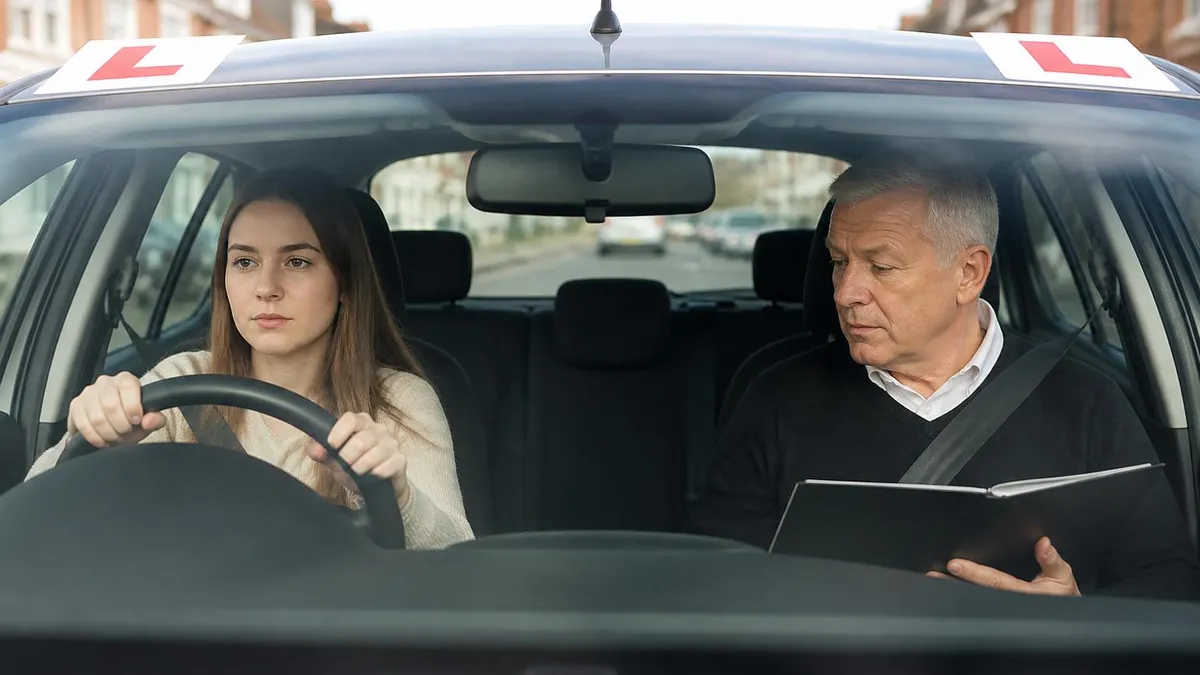
Driving Theory Test App: The Complete Study Guide for UK Learners
How to Book Your DVSA Practical Driving Test: Complete UK Guide

Learn to Drive in the UK: Complete Beginner's Guide to Getting Your Licence

DVSA Car Practical Test: Complete Guide to Passing First Time
About the Author

Licensed Driving Instructor & DMV Test Specialist
Penn State UniversityRobert J. Williams graduated from Penn State University with a degree in Transportation Management and has spent 20 years as a certified driving instructor and DMV examiner consultant. He has personally coached thousands of applicants through written knowledge tests, skills assessments, and commercial driver licensing programs across more than 30 states.