
What Is a Doula? Your 2026 October Guide to Doula Support and Certification
✍🏼 Pass your What Is a Doula? Your 2026 October Guide to exam on the first attempt. Practice questions with detailed answer explanations, hints, and instant scoring.

So what is a doula, exactly? A doula is a trained non-medical professional who provides physical, emotional, and informational support before, during, and after childbirth. They don't deliver babies. They don't prescribe medications. Instead, they stay by your side through every contraction, offering comfort techniques, calm reassurance, and the kind of continuous presence that hospital staff simply can't provide between shift changes and clinical duties.
The doula meaning traces back to ancient Greek, where the word described a woman who serves another woman. Today that definition has expanded far beyond its origins. Modern doulas serve people of all backgrounds and genders, supporting families through birth, postpartum recovery, fertility challenges, and even end-of-life care. The role has grown because research consistently shows that continuous labor support improves outcomes -- shorter labors, fewer cesareans, and higher satisfaction with the birth experience overall.
Whether you're pregnant and wondering if doula support is right for you, or you're considering a career helping families through one of life's most intense experiences, this guide covers everything you need to know. We'll walk through what doulas actually do during labor, the different types of doulas practicing today, how certification works, what you can expect to earn, and how to find qualified support in your area. You'll also find free doula certification practice tests throughout the page to help you prepare if you're pursuing this path professionally.
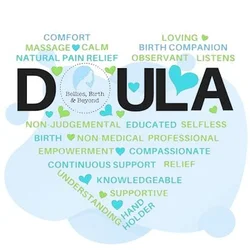
If you've been asking what is a doula, you're not alone. Interest in doula support has surged over the past decade, driven by growing awareness of maternal health disparities and a desire for more personalized birth experiences. Families searching for a doula near me are looking for someone who'll advocate for their preferences -- not by speaking over the medical team, but by helping them ask the right questions and understand their options in real time.
A doula's value shows up in the data. Studies published in the Cochrane Database of Systematic Reviews found that people with continuous labor support were less likely to have cesarean deliveries, less likely to use synthetic oxytocin, and more likely to report satisfaction with their birth experience. These aren't small effects. The emotional and physical presence of a trained support person changes the entire dynamic of a hospital birth.
But doulas aren't just for hospital births. You'll find them at birth centers, home births, and increasingly in postpartum settings where new parents struggle with feeding, sleep deprivation, and the overwhelming adjustment to life with a newborn. The scope of doula work keeps expanding because the need for non-clinical support doesn't end when the baby arrives.
Let's define doula more precisely. A doula is a non-clinical support professional. That's the critical distinction. Midwives catch babies and manage medical care. Nurses monitor vitals and administer medications. OBs perform surgeries and handle complications. A doula does none of those things. Their entire focus is you -- your comfort, your confidence, your informed decision-making. When you search for doulas near me and start interviewing candidates, the first thing a good doula will explain is what falls outside their scope.
The doula definition also encompasses several subspecialties that go well beyond birth support. Postpartum doulas help during the fragile weeks after delivery, teaching newborn care and supporting breastfeeding. Bereavement doulas guide families through pregnancy loss or infant death. End-of-life doulas -- sometimes called death doulas -- provide comfort and companionship to people who are dying. Each specialization requires different training, but they all share the same core principle: being fully present for someone during a vulnerable transition.
What unites every type of doula is the commitment to client-centered, non-directive support. A doula won't tell you what to do. They'll help you figure out what you want, give you the information you need to make that choice, and then support you through it -- whatever "it" turns out to be. That's the heart of it.
Types of Doula Support
A birth doula provides continuous support during active labor and delivery. Their work typically begins with one or two prenatal visits where they learn your birth preferences, discuss comfort measures, and build rapport. When labor starts, they join you -- at home, in a birth center, or at the hospital -- and stay by your side until after the baby is born. Physical support includes positioning, massage, counterpressure for back labor, breathing guidance, and hydrotherapy. Emotional support means calm presence, encouragement through transition, and helping your partner feel confident in their role too. Birth doulas are associated with a 25% reduction in cesarean rates and significantly higher birth satisfaction scores.
Understanding the doula definition means understanding what happens behind closed doors during a birth. Whats a doula actually doing when contractions hit every two minutes and the room gets intense? They're watching your breathing patterns and gently redirecting when tension creeps into your shoulders. They're applying firm counterpressure to your lower back during each wave. They're reminding you that you're strong enough for this -- and meaning it.
Here's the thing about what's a doula versus what a nurse does. A labor nurse might be responsible for three or four patients at once. She's charting, checking monitors, administering meds, and reporting to the attending physician. She's busy with clinical care. A doula has one patient: you. That undivided attention is what makes doula support different from anything else available in a hospital setting. You never have to wonder if someone's coming back.
The doula definition also includes informational support -- and this part matters more than most people realize. When your doctor recommends Pitocin augmentation or discusses the possibility of a cesarean, you might feel overwhelmed. A doula helps translate. They don't give medical advice, but they'll help you formulate questions: What are the benefits? What are the risks? What happens if we wait an hour? This kind of support helps you participate actively in your own care rather than feeling like decisions are happening to you.
What's a doula going to do that your partner can't? That question comes up constantly, and it deserves a straight answer. Your partner loves you. They're emotionally invested. And that emotional investment can make labor terrifying for them too. A doula brings professional calm. They've seen dozens -- sometimes hundreds -- of births.
They know what normal looks like. When your partner sees you in pain and panics, the doula keeps everyone grounded. What does a doula do for partners specifically? She might suggest positions to try, show them where to apply pressure, or simply give them permission to step out for five minutes without guilt.
This is where the doula role gets interesting. Research from the Journal of Perinatal Education shows that partners report higher satisfaction with the birth experience when a doula is present. They don't feel replaced. They feel supported. The doula handles the technical comfort measures while the partner provides the emotional connection that only they can offer. It's teamwork, not competition.
Some doulas also provide prenatal education during the weeks leading up to birth. They'll review your birth preferences, practice comfort techniques together, and discuss what to expect during each stage of labor. This preparation means that when the real thing starts, you're not learning on the fly. You already have a playbook -- and someone in the room who's run it before.
Pros and Cons of Hiring a Doula
- +Continuous one-on-one support throughout labor -- no shift changes or divided attention
- +Research-backed reduction in cesarean rates, epidural use, and labor duration
- +Emotional support reduces anxiety and increases birth satisfaction scores
- +Partner feels more confident and included with doula guidance
- +Postpartum doula support eases the transition to parenthood during vulnerable early weeks
- +Doulas help you ask informed questions and participate actively in medical decisions
- −Out-of-pocket cost of $800-$3,000+ since most insurance doesn't cover doula services yet
- −On-call availability means your doula might attend another birth right before yours
- −Finding the right personality fit requires interviewing multiple candidates
- −Some hospital staff may be unfamiliar with or resistant to doula presence
- −Doulas can't intervene medically -- their scope is limited to non-clinical support only
- −Postpartum doula hours are limited and don't cover 24/7 newborn care needs
Pros and Cons at a Glance
| Pros | Cons |
|---|---|
| Continuous one-on-one support throughout labor -- no shift changes or divided attention | On-call availability means your doula might attend another birth right before yours |
| Research-backed reduction in cesarean rates, epidural use, and labor duration | Finding the right personality fit requires interviewing multiple candidates |
| Emotional support reduces anxiety and increases birth satisfaction scores | Some hospital staff may be unfamiliar with or resistant to doula presence |
| Partner feels more confident and included with doula guidance | Doulas can't intervene medically -- their scope is limited to non-clinical support only |
So what is doula certification, and do you actually need it? Technically, no. There's no U.S. law requiring doulas to hold certification. But practically? Certification matters. Hospitals increasingly require it for doula access to labor and delivery units. Clients prefer it because it signals standardized training and a professional code of ethics. And certification from a recognized body like DONA International or CAPPA gives you credibility in a growing but unregulated field. Understanding what do doulas do at a professional level starts with understanding the training behind it.
The certification process follows a predictable path. You complete a training workshop -- typically two to five days covering birth physiology, comfort measures, the emotional journey of labor, and the boundaries of the doula role. After the workshop, you attend a set number of births (usually three to five) as a certifying doula, collect evaluations from clients and healthcare providers, complete a required reading list, and submit a reflection essay. The whole process takes six to eighteen months depending on how quickly births come your way.
DONA International remains the most widely recognized certifying body worldwide. CAPPA offers strong hospital credentialing. ProDoula takes a business-forward approach. Each organization has slightly different requirements, so research which certification your local hospitals and birth centers prefer before committing. Some doulas pursue both birth and postpartum certifications to offer full-spectrum support.
Doula Certification Step-by-Step Checklist
- ✓Research certifying organizations -- DONA International, CAPPA, and ProDoula are the most recognized
- ✓Complete a DONA- or CAPPA-approved training workshop (2-5 days, in-person or virtual)
- ✓Finish the required reading list from your chosen certifying body
- ✓Begin attending births as a certifying doula -- most programs require 3-5 births
- ✓Collect written evaluations from clients and attending healthcare providers after each birth
- ✓Write the required reflection essay demonstrating understanding of the doula role and scope
- ✓Submit your complete certification application with all documentation
- ✓Create profiles on doula directories: DoulaMatch, DONA directory, and local listings
- ✓Network with midwives, birth centers, OB practices, and childbirth educators for referrals
- ✓Consider adding postpartum doula certification for full-spectrum practice and income stability
The doula def extends beyond birth support into one of the fastest-growing postpartum roles: the post partum doula. These professionals fill a gap that American healthcare largely ignores -- the weeks and months after delivery when new parents are physically recovering, emotionally adjusting, and learning to care for a tiny human on almost no sleep. A postpartum doula shows up at your home, helps you establish feeding routines, teaches safe sleep practices, and gives you permission to rest.
A night doula is a specific type of postpartum doula who works overnight shifts -- typically 10 PM to 6 AM. They handle nighttime feeds (bringing the baby to you for breastfeeding or preparing bottles), diaper changes, and soothing so you can actually sleep. For families with multiples, colicky babies, or parents recovering from cesarean births, night doula support can be transformational. It's expensive -- overnight rates typically run $25 to $45 per hour -- but many families say it saved their sanity during those brutal first weeks.
Postpartum doula work also includes screening for postpartum mood disorders. While doulas aren't diagnosticians, they're trained to recognize warning signs of postpartum depression and anxiety and refer families to appropriate clinical resources. This early identification role is increasingly recognized as a critical part of maternal mental health infrastructure, especially in communities with limited access to perinatal mental health providers.
Let's talk about doula jobs and what the career actually looks like day to day. Most doulas work as independent contractors. You set your own fees, build your own client base, and manage your own schedule -- which sounds liberating until you realize that "on call" means your phone buzzes at 3 AM and you drive to the hospital in your pajamas. The unpredictability is real. Some months bring four births. Others bring one.
Birth doula fees range from $800 to $3,000+ per birth depending on your market, experience level, and certification status. New doulas building their required births for certification often charge $400 to $800 or work on a sliding scale. Experienced certified doulas in major metro areas can command $2,000 to $4,000 per birth. Night doula and postpartum doula rates typically run $25 to $45 per hour, with overnight packages available for families who want consistent support.
Building a doula business takes hustle. Your first clients come from free or low-cost births during certification. After that, referrals from satisfied clients drive most growth. Relationships with midwives, childbirth educators, and OB practices matter enormously. Many successful doulas also teach childbirth education classes, lead prenatal yoga, or offer breastfeeding counseling to diversify their income. The career is rewarding but financially uneven -- be prepared for feast-and-famine cycles, especially in your first two years.
Six U.S. states now cover doula services under Medicaid: Oregon, Minnesota, New Jersey, Virginia, Rhode Island, and Maryland. Several more states have legislation pending. This expansion addresses a critical equity issue -- families who benefit most from doula support often can't afford private doula fees. If you're in a Medicaid-covered state, ask your provider about accessing doula services through your plan.
When you're ready to find support, searching for a doula finder or doula near me is the natural starting point. DoulaMatch.net is the most popular directory -- you enter your zip code and due date, and it surfaces certified doulas in your area with reviews, fees, and availability.
DONA International and CAPPA both maintain searchable directories of their certified members. Local birth centers and midwifery practices often keep referral lists. What's a doula do during the search process? A good one offers a free consultation -- usually 30 minutes by phone or video -- so you can assess personality fit before committing.
Interviewing doulas matters more than most people expect. You're hiring someone to be in the room during one of the most vulnerable experiences of your life. Chemistry is everything. Ask about their training, certification status, and how many births they've attended. Ask what happens if they're at another birth when yours starts (backup doula arrangements). Ask how they handle situations where the birth doesn't go as planned -- emergency cesareans, NICU admissions, unexpected complications. Their answers reveal whether they're flexible and client-centered or rigid and agenda-driven.
Cost shouldn't be the only factor. Many doulas offer sliding scale fees, payment plans, or reduced rates for families in need. Some community doula programs provide free services to underserved populations. If you're on Medicaid in a covered state, doula services may be fully covered. The goal is finding the right person, not the cheapest option.
DOULA Practice Test Questions
Prepare for the Doula Certification exam with our free practice test modules. Each quiz covers key topics to help you pass on your first try.
DOULA Certification Anatomy and Physiology...
DOULA Exam Questions covering Certification Anatomy and Physiology of Birth. Master DOULA Test concepts for certification prep.
DOULA Certification Breastfeeding and Infa...
Free DOULA Practice Test featuring Certification Breastfeeding and Infant Feeding. Improve your DOULA Exam score with mock test prep.
DOULA Certification Evidence-Based Practic...
DOULA Mock Exam on Certification Evidence-Based Practices and Research. DOULA Study Guide questions to pass on your first try.
DOULA Certification Labor Support Techniques
DOULA Test Prep for Certification Labor Support Techniques. Practice DOULA Quiz questions and boost your score.
What a doula might help you through extends well beyond the delivery room. Prenatal anxiety about birth is common, and a doula's reassuring presence during those final weeks can ease the mental load. They'll review your birth preferences with you, practice comfort techniques, and help you feel prepared rather than panicked. For first-time parents especially, having someone who's "been in the room" before provides a confidence boost that reading books and watching videos simply can't replicate.
What are doulas doing for the broader maternal health picture? Their impact reaches far beyond individual families. Research consistently shows that doula support reduces racial disparities in maternal outcomes. Black women in the United States face significantly higher rates of maternal morbidity and mortality, and community-based doula programs targeting these populations have shown measurable improvements in birth outcomes, breastfeeding rates, and postpartum mental health. This is why Medicaid expansion for doula coverage is primarily an equity initiative.
The doula profession is growing because the evidence supports it and because families are demanding it. Hospital systems that once viewed doulas with skepticism are now partnering with doula organizations, hiring staff doulas, and integrating doula services into their care models. If you're considering this path -- as a client or as a professional -- you're joining a movement that's reshaping how we think about birth support in this country. And that's worth showing up for.
Sample Doula Certification Practice Questions
Try these questions from our free Doula Certification practice tests. The correct answer and an explanation follow each question.
How does pumping support a breastfeeding relationship?
- A. It measures milk flow only
- B. It expresses milk for storage and maintains supply when direct nursing is not possible
- C. It is a way to wean babies from breastfeeding
- D. It is a medical intervention only
Answer: B. It expresses milk for storage and maintains supply when direct nursing is not possible
Breast pumping expresses milk for storage, helps maintain supply when direct nursing isn't possible, and can relieve engorgement.
What does 'continuous support' mean in doula care?
- A. Visiting every 2 hours
- B. Being present throughout the entire labor and birth process
- C. Providing phone support only
- D. Checking in once per shift
Answer: B. Being present throughout the entire labor and birth process
Continuous support means the doula remains present with the client throughout labor and birth, not leaving for breaks or shift changes.
What is effleurage in labor support?
- A. Deep tissue massage
- B. Gentle, light stroking massage of the abdomen
- C. Pressure point therapy
- D. Aromatherapy application
Answer: B. Gentle, light stroking massage of the abdomen
Effleurage is a gentle, rhythmic stroking massage applied to the abdomen or back to promote relaxation during contractions.
What does the acronym BRAIN stand for in birth support decision-making?
- A. Benefits, Risks, Alternatives, Intuition, Nothing
- B. Breathing, Relaxation, Advocacy, Information, Nurturing
- C. Birth, Rest, Activity, Intake, Nutrition
- D. Benefits, Resources, Awareness, Integration, Nourishment
Answer: A. Benefits, Risks, Alternatives, Intuition, Nothing
BRAIN stands for Benefits, Risks, Alternatives, Intuition, and Nothing, helping clients make informed decisions about their care.
Doula Questions and Answers


About the Author

Registered Nurse & Healthcare Educator
Johns Hopkins University School of NursingDr. Sarah Mitchell is a board-certified registered nurse with over 15 years of clinical and academic experience. She completed her PhD in Nursing Science at Johns Hopkins University and has taught NCLEX preparation and clinical skills courses for nursing students across the United States. Her research focuses on evidence-based exam preparation strategies for healthcare certification candidates.