
How Do I Take the DLAB? Complete Exam Eligibility and Prep Guide 2026 July
How do I take the DLAB? Learn eligibility requirements, exam format, and prep strategies. Free DLAB practice test included. 🎯

If you have ever asked yourself how do I take the DLAB, you are already on the right path toward one of the military's most selective language assignments. The Defense Language Aptitude Battery (DLAB) is the standardized test the U.S. military uses to determine whether you have the natural cognitive ability to learn a foreign language quickly and accurately in a formal training environment.
Your score on this exam dictates which languages you are eligible to study and, ultimately, which career paths open up to you as a linguist or intelligence specialist. Taking a dlab practice test before your real exam date is the single most effective preparation strategy available to any candidate.
The DLAB is not a test of any foreign language you already know. Instead, it presents you with a completely invented language, complete with invented grammar rules and fictional vocabulary, and then asks you to apply those rules to new sentences. This design is intentional: the military wants to evaluate raw language-learning aptitude, free of any prior experience advantage. Whether you studied French for four years in high school or have never touched a second language in your life, the DLAB puts every test-taker on a theoretically level playing field from the very first question.
Understanding the eligibility requirements before you even think about scheduling your exam is critical. Not every service member qualifies to sit for the DLAB, and not every military occupational specialty (MOS) or Air Force Specialty Code (AFSC) will send you to take it automatically. Your recruiter or career counselor is your primary point of contact for initiating the process, but you should walk into that conversation already knowing what scores you need, what waivers are available, and how the exam is structured so you can advocate for yourself effectively.
Eligibility for the DLAB generally requires that you be an active-duty or reserve service member, or an applicant in the accession pipeline who has been flagged for a language-dependent position. In most cases, you must have already completed the Armed Services Vocational Aptitude Battery (ASVAB) and achieved the minimum qualifying scores in the verbal and academic domains. Each branch sets its own ASVAB prerequisites, but a strong performance on the Word Knowledge, Paragraph Comprehension, and General Science subtests tends to predict DLAB readiness better than any other combination.
The minimum qualifying DLAB score varies by target language and by branch of service. The military groups languages into four categories based on difficulty for English speakers, and each category demands a higher minimum score. Category I languages such as Spanish and French require a score around 85, while Category IV languages such as Arabic, Chinese, Korean, and Japanese typically require a score of 100 or higher. Earning a score above 120 opens every language category and makes you a highly competitive candidate for elite linguist programs.
Preparation time matters enormously. Most successful test-takers report spending between four and eight weeks of consistent daily practice before sitting for the real exam. The exam cannot be retaken for six months after each attempt, which means that underpreparation is extremely costly in terms of both time and career momentum. Building a disciplined study routine that includes grammar-rule application drills, phonetic listening exercises, and timed practice sets is the most reliable way to walk into the testing center with confidence.
This guide walks you through every stage of the DLAB process — from understanding who qualifies and how to request the exam, to breaking down the exact format you will face on test day, to giving you the targeted practice strategies that consistently produce above-average scores. Whether you are preparing for your first attempt or coming back after a disappointing first result, the information here will help you build a concrete, actionable plan.
DLAB by the Numbers

DLAB Exam Format
| Section | Questions | Time | Weight | Notes |
|---|---|---|---|---|
| Part 1 – Audio (Phonology) | 54 | ~45 min | 43% | Listen to invented language sounds; identify patterns and apply phonetic rules |
| Part 2 – Written (Grammar) | 72 | ~60 min | 57% | Read fictional grammar rules and apply them to novel sentences in a made-up language |
| Total | 126 | 2.5 hours (approx.) | 100% |
To sit for the Defense Language Aptitude Battery, you must first meet a series of eligibility criteria that vary slightly by branch but share a common foundation. At the most basic level, you need to be a U.S. citizen, because the linguist specialties that follow a high DLAB score almost always require a security clearance at the Secret or Top Secret level.
Non-citizen permanent residents are ineligible regardless of their language aptitude, and this requirement is non-negotiable across all branches. Understanding the dlab test structure and eligibility rules together helps you plan your military career path more effectively from day one.
Beyond citizenship, your ASVAB scores serve as the primary academic gatekeeper. Each branch has slightly different ASVAB composite requirements for language-related jobs. In the Army, candidates pursuing the 35P Military Intelligence (Cryptologic Linguist) MOS typically need a Skilled Technical (ST) score of at least 101.
The Air Force looks for an Administrative (A) score of 72 or higher for its 1A8 Airborne Cryptologic Language Analyst career field. The Navy and Marine Corps have their own composite requirements for Cryptologic Technician Interpretive (CTI) and military occupational specialties involving language. If your ASVAB scores do not meet these thresholds, you may need to retake the ASVAB before the DLAB becomes an option.
Age and physical fitness standards also play an indirect role in eligibility, particularly for enlisted candidates. Most language-focused positions carry additional screening requirements, including a background investigation for the security clearance. A history of certain financial issues, drug use, or foreign contacts can delay or disqualify your clearance application, effectively blocking you from DLAB-dependent careers even if your test score is excellent. It is wise to review the National Security Adjudicative Guidelines well before you invest significant time in DLAB preparation.
For officer candidates, the pathway to the DLAB differs somewhat from the enlisted route. Officers applying to the Defense Language Institute (DLI) Foreign Language Center at Presidio of Monterey, California, may be required to take the DLAB as part of a competitive selection process for Foreign Area Officer (FAO) programs or specific intelligence billets. In these contexts, the minimum score thresholds can be higher, and competition is more intense because officers are competing for a limited number of funded language training seats each fiscal year.
Prior language experience is neither a requirement nor a disqualifier for taking the DLAB. The test is intentionally designed to be immune to previous foreign language study, so a candidate who speaks three languages has no structural advantage over a monolingual candidate in terms of how the exam is scored. That said, research consistently shows that individuals who have studied a foreign language — even casually — tend to perform better on the DLAB because they have already internalized the concept that languages can organize grammar and phonology in ways dramatically different from English.
Medical eligibility also factors in for certain language roles, particularly those involving signals intelligence or airborne platforms. Hearing acuity requirements are strict for positions that rely on audio-based intercept work, and the DLAB's phonology section itself requires you to distinguish subtle differences in sound patterns. If you have documented hearing loss, consult with your branch's medical review board before investing heavily in DLAB preparation, since a hearing waiver for some linguist specialties is rarely granted.
The good news for most candidates is that if you have already passed your ASVAB, are a U.S. citizen, and have been identified by a recruiter or career counselor as a potential fit for a language-related specialty, you likely meet the basic eligibility requirements to take the DLAB. The next step is understanding the registration process so you can get your test date scheduled and your preparation plan underway without losing valuable lead time.
DLAB Test Registration: Branch-by-Branch Process
Army candidates request the DLAB through their recruiter during the accession process or through their unit's S-1 or career counselor if already on active duty. The exam is administered at Military Entrance Processing Stations (MEPS) for incoming recruits or at designated Army Education Centers on post for active-duty soldiers. You will need your commanding officer's authorization memo if you are already serving, and you should request the exam at least 30 to 45 days before your desired test date to ensure a seat is available at your nearest testing facility.
After taking the DLAB, Army soldiers receive their scores within a few days through their chain of command. Scores are then used by Human Resources Command (HRC) to match soldiers to available 35P or related linguist billets. If you score above the minimum threshold for your target language category, your career counselor will initiate the security clearance investigation process, which can take anywhere from three months to over a year depending on your background complexity. Use that waiting period to continue studying with a dlab exam resource so your language readiness stays sharp.

Is Pursuing a DLAB-Based Career Right for You?
- +High job security — military linguist and intelligence specialties are consistently in high demand across all branches
- +Generous special pay — foreign language proficiency bonuses (FLPB) can add $500 to $1,000 per month to your base pay
- +Elite career path — DLAB qualifiers gain access to specialized schools and assignments unavailable to most service members
- +Global duty stations — language assignments often come with overseas postings in strategic locations across Europe, Asia, and the Middle East
- +Civilian transition advantage — DLI-trained linguists are highly sought after by the NSA, CIA, DIA, FBI, and major defense contractors
- +Cognitive development — immersive language training at DLI is widely regarded as one of the most rigorous and intellectually rewarding programs in the U.S. military
- −Demanding exam with a six-month retake penalty — a poor first attempt sets your timeline back significantly
- −Long initial training — Category IV language courses at DLI can last 63 to 64 weeks before you reach your first operational assignment
- −Security clearance vulnerability — lifestyle factors, finances, and foreign contacts can disqualify otherwise strong candidates
- −Perishable skill — language proficiency degrades quickly without regular use, and the military requires periodic Defense Language Proficiency Tests (DLPT) to maintain pay bonuses
- −Limited MOS flexibility early in career — committing to a linguist specialty early on narrows your initial career options compared to more general combat or logistics roles
- −High-stress operational environments — many linguist assignments involve intelligence collection missions that carry significant psychological and operational pressure
DLAB Exam Eligibility and Prep Checklist
- ✓Confirm U.S. citizenship status — a requirement for all DLAB-dependent security clearance positions
- ✓Review your ASVAB composite scores and verify you meet your branch's minimum thresholds for language specialties
- ✓Speak with your recruiter or career counselor to request a formal DLAB testing appointment
- ✓Research the minimum DLAB score required for your target language category (I through IV)
- ✓Complete at least four weeks of daily practice using fictional grammar and phonology exercises before test day
- ✓Practice listening discrimination exercises daily to sharpen the audio phonology skills tested in Part 1
- ✓Work through timed grammar rule application sets to build speed and accuracy for Part 2
- ✓Review English grammar fundamentals — subject-verb agreement, noun cases, and sentence structure — since these concepts appear in the invented language rules
- ✓Prepare for your security clearance investigation by reviewing the SF-86 form and gathering financial and contact records
- ✓Schedule your test date at least 30 days out to allow adequate preparation time without rushing
- ✓Avoid caffeine and get a full eight hours of sleep the night before the exam to maximize cognitive performance
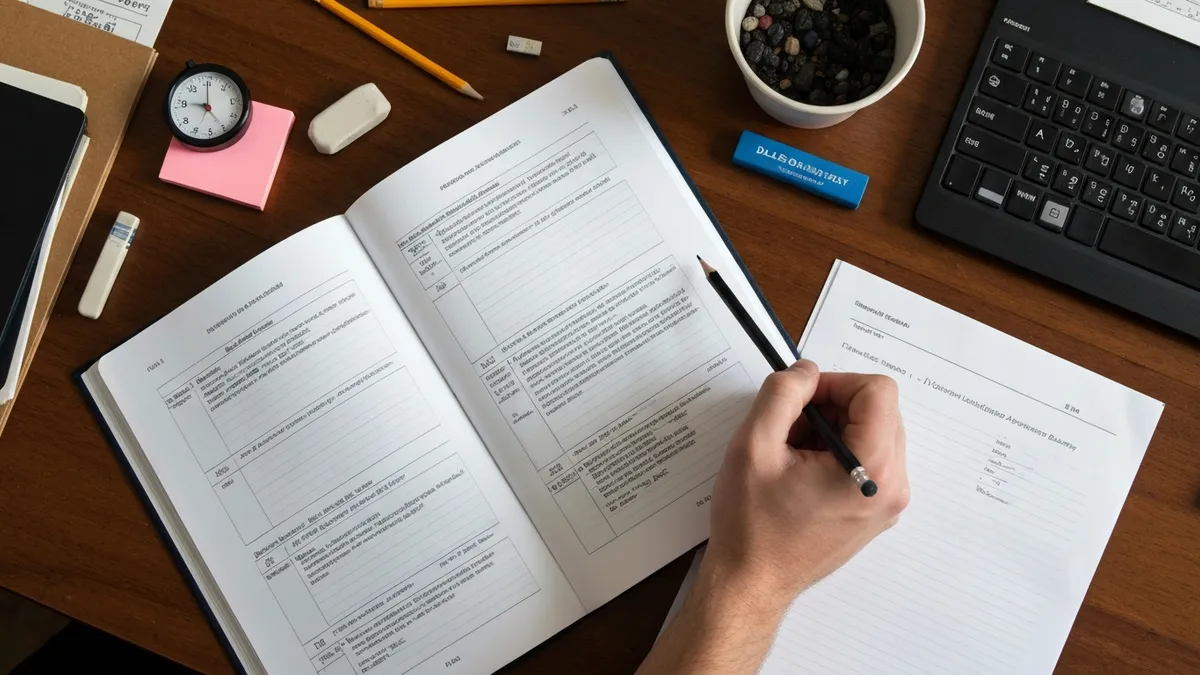
A Score of 100+ Unlocks the Highest-Value Language Assignments
Candidates who score 100 or above on the DLAB become eligible for Category III and IV languages — Arabic, Chinese, Japanese, and Korean — which carry the highest Foreign Language Proficiency Bonuses (up to $1,000/month) and the most competitive career opportunities in military intelligence and national security. Targeting 110+ gives you a meaningful competitive edge when language training seats are limited.
Understanding how the DLAB is scored is essential for setting realistic goals and selecting the right language specialty for your aptitude level. The exam uses a scaled scoring system that ranges from approximately 50 to 164, though most test-takers score between 80 and 130. Unlike the ASVAB, which reports multiple subtest scores, the DLAB produces a single composite score that reflects your overall language-learning aptitude as measured by both the phonological and grammatical sections of the exam. This single score is then matched against the minimum requirements for each language category.
The military classifies all foreign languages into four difficulty categories for English speakers, a system developed and maintained by the Defense Language Institute Foreign Language Center (DLIFLC). Category I includes languages with significant structural and lexical overlap with English, such as Spanish, French, Italian, Portuguese, and Romanian. A DLAB score of around 85 to 95 is generally sufficient to qualify for Category I language training, which typically lasts 26 weeks at DLI. These are the most accessible language assignments for candidates who score in the average range on the DLAB.
Category II languages include German and Indonesian, which share some structural similarities with English but introduce moderate grammatical complexity. A score of around 95 to 100 is typically required for Category II assignments, and training at DLI lasts approximately 35 weeks. Category III languages represent a significant step up in difficulty and include Russian, Hebrew, Persian/Farsi, Hindi, and Thai. These languages feature substantially different grammar systems from English and require scores of 100 or higher, with DLI training lasting around 45 to 47 weeks before candidates reach full course completion.
Category IV languages — Arabic (Modern Standard and colloquial dialects), Chinese Mandarin, Chinese Cantonese, Japanese, and Korean — are the most demanding assignments both in terms of required DLAB score (typically 110 or higher) and training duration (63 to 64 weeks at DLI). These languages feature logographic or complex script systems, tonal phonology in some cases, and grammatical structures that are fundamentally unlike English in nearly every dimension. Candidates who earn DLAB scores above 120 are considered ideal candidates for Category IV language training and are actively recruited for the most elite intelligence and special operations support roles.
It is important to note that meeting the minimum DLAB score for a language category does not guarantee assignment to that language. Language training seats are allocated based on mission requirements, and demand for certain languages — particularly Arabic, Mandarin, and Korean — consistently outstrips the number of qualified candidates. In competitive years, even candidates with scores above the minimum threshold may be assigned a lower-demand language if no seats are available in their preferred category. Expressing your language preferences early and maintaining flexibility significantly improves your chances of receiving a desirable assignment.
If you do not achieve a qualifying score on your first DLAB attempt, the mandatory six-month waiting period before retesting gives you a substantial window to address specific weaknesses. Most candidates who retake the DLAB see their scores improve by 10 to 20 points when they follow a structured preparation program during the waiting period. The phonology section is typically where borderline candidates lose the most points, so dedicating significant preparation time to audio discrimination exercises and invented sound pattern practice is the highest-ROI activity for retake candidates.
Scores are valid indefinitely in most branches once you have been assigned to a language specialty, but if you are in an inactive status and return to pursue a linguist career years later, some branches may require a current DLAB score from within the past few years. Always verify the currency requirements with your branch's manpower or personnel command before assuming a historical score remains valid for a new assignment request. Staying current with DLAB prep resources keeps your skills sharp regardless of where you are in the process.
The DLAB can only be retaken once every six months. A score below the minimum threshold for your target language category does not just delay your training — it can delay your entire enlistment contract execution or security clearance initiation by half a year. Invest the full four to eight weeks of serious preparation before sitting for the exam rather than treating your first attempt as a diagnostic test. The career cost of an under-prepared first attempt is significant and avoidable.
Building an effective DLAB study plan requires understanding exactly which cognitive skills the exam targets and then designing practice sessions that develop those specific abilities. The two sections of the DLAB — the phonology audio portion and the written grammar portion — test fundamentally different aspects of language aptitude, and your preparation should allocate time proportionally to your relative strengths and weaknesses in each area. Most candidates find the written grammar section more approachable initially, but the phonology section is where scores diverge most dramatically between average and high performers.
For the phonology section, the most effective preparation involves daily listening exercises that force you to distinguish between similar but distinct sounds. The DLAB introduces sounds and phonological rules using an invented language, then plays audio clips and asks you to identify patterns, match sounds, or select the correct transcription of what you heard.
Practicing with minimal pair exercises in real foreign languages — such as distinguishing between aspirated and unaspirated consonants in Mandarin, or front and back vowels in German — trains the same cognitive discrimination ability the DLAB tests, even though none of those specific sounds will appear on the actual exam.
For the written grammar section, the key skill is rapid rule internalization and application. The DLAB presents you with a set of fictional grammar rules in English, gives you examples of how those rules work in the invented language, and then asks you to apply the rules to new sentences. The challenge is not remembering the rules — you can refer back to them during the exam — but applying multiple rules simultaneously under time pressure. Practice by working through practice dlab test exercises where you apply stacked grammar rules to novel sentences as quickly and accurately as possible.
English grammar knowledge is a frequently underestimated factor in DLAB performance. The invented language rules are explained using standard English grammatical terminology — nominative case, accusative case, declension, conjugation, agreement — and candidates who do not have a strong grasp of these concepts struggle to understand the rules even when they can see them in print. Spend at least one week reviewing English grammar fundamentals, specifically noun cases, verb tenses, subject-verb agreement, and adjective-noun agreement, before moving on to DLAB-specific practice exercises. This investment pays significant dividends on test day.
Time management during the exam is another critical skill that only develops through timed practice. Many candidates report that the written section feels rushed, particularly toward the end when the invented grammar rules become more layered and complex. Training yourself to spend no more than 45 to 50 seconds per question during practice sessions builds the pace awareness you need to avoid running out of time before reaching the later, higher-difficulty questions. Skipping extremely difficult questions and returning to them only if time permits is a legitimate and effective test-taking strategy on the DLAB.
The phonology section requires a different time-management approach because the audio clips play at a fixed pace and you cannot control the speed or repeat a clip. This makes active listening — where you are constantly anticipating the next element based on the rules you have already learned — absolutely essential. Passive listening, where you wait for each sound to register and then react, is too slow to keep pace with the exam's audio delivery. Training yourself to predict and anticipate patterns during practice sessions is the single most important habit you can build for the phonology section.
Rest and physical readiness on exam day matter more than many candidates realize. The DLAB demands sustained cognitive focus for over two hours, and even mild fatigue or dehydration measurably impairs working memory performance — which is precisely the cognitive resource the exam relies on most heavily.
Avoid studying intensively the night before the exam; instead, review only light summary material and prioritize a full night of sleep. Arrive at the testing center with water, a snack if permitted, and at least 15 minutes to spare so that logistical stress does not consume mental bandwidth you need for the exam itself.
Once you have received a qualifying DLAB score and your security clearance investigation is underway, the next phase of your linguist career begins: language assignment and DLI enrollment. The Defense Language Institute Foreign Language Center in Presidio of Monterey, California, is the primary training facility for military linguists across all branches, and it is consistently ranked among the finest language schools in the world.
Upon arrival, students are immersed in their assigned language from day one, with instruction conducted almost entirely in the target language for the majority of the training day. The academic demands are comparable to a university graduate program compressed into a fraction of the time.
Language maintenance after DLI graduation is a long-term career obligation that many new linguists underestimate. The Defense Language Proficiency Test (DLPT) and the Oral Proficiency Interview (OPI) are the two primary tools the military uses to assess and document language proficiency throughout a service member's career. These tests directly affect your eligibility for Foreign Language Proficiency Bonus payments and your assignment to language-dependent positions. Maintaining a strong score on both tests requires regular engagement with your language through reading, listening, speaking, and writing practice — not just during operational assignments but during stateside tours as well.
For service members who score well on the DLAB but are not immediately assigned to a language specialty due to billet availability, the score remains on record and can be used to support a future retraining or lateral transfer request. Some service members use this window strategically: they serve in their initial specialty for a few years, build foundational military experience and leadership credentials, and then lateral transfer into a linguist or intelligence specialty with both a qualifying DLAB score and operational experience that makes them more competitive candidates for special programs and higher-grade billets.
Veterans who earned high DLAB scores and completed DLI training have an exceptional civilian transition profile. Federal agencies including the National Security Agency, Central Intelligence Agency, Defense Intelligence Agency, and Federal Bureau of Investigation actively recruit DLI graduates because their combination of security clearance, operational experience, and certified language proficiency is extraordinarily difficult to replicate in the civilian talent market. Contracting firms supporting the intelligence community also pay premium salaries — often $90,000 to $150,000 or more annually — for cleared linguists with operational experience in high-demand languages like Arabic, Mandarin, Russian, and Pashto.
The DLAB journey is not just about passing a test; it is about qualifying yourself for one of the most intellectually demanding and operationally significant careers the U.S. military offers. Every hour of preparation you invest before your exam date compounds into real career value — better language assignments, stronger security clearance candidacy, and a more competitive profile for elite programs and follow-on opportunities. Treat your DLAB preparation with the same seriousness you would apply to any professional certification that directly determines your income and career trajectory for the next decade.
Candidates who approach the DLAB with a structured, disciplined preparation plan consistently outperform those who rely on natural aptitude alone. The exam is designed to be beatable with the right preparation, and the resources available today — including timed online practice sets, audio phonology drills, and grammar rule application exercises — are better than anything that existed for linguist candidates a decade ago. Use them systematically, track your progress, identify your weak areas early, and adjust your study plan accordingly before your actual test date arrives.
Your DLAB score is the key that unlocks one of the most unique and rewarding career paths in the entire U.S. military system. Language-qualified service members consistently report higher career satisfaction, more diverse duty assignments, faster promotion rates in competitive career fields, and significantly stronger civilian transition outcomes than their non-linguist peers. The investment in preparation is front-loaded and intense, but the returns compound throughout your military career and long into civilian life. Start your preparation today, take it seriously from the first practice session, and give yourself the best possible chance of earning the score that opens every door.
DLAB Questions and Answers



About the Author
Educational Psychologist & Academic Test Preparation Expert
Columbia University Teachers CollegeDr. Lisa Patel holds a Doctorate in Education from Columbia University Teachers College and has spent 17 years researching standardized test design and academic assessment. She has developed preparation programs for SAT, ACT, GRE, LSAT, UCAT, and numerous professional licensing exams, helping students of all backgrounds achieve their target scores.
Join the Discussion
Connect with other students preparing for this exam. Share tips, ask questions, and get advice from people who have been there.
View discussion (6 replies)