
Certified Welding Inspector Salary: 2026 October Pay & Career Outlook
Certified welding inspector salary data for 2026 October: 📝 base pay, overtime, per diem, regional rates, top-paying industries, and how to boost your CWI income.
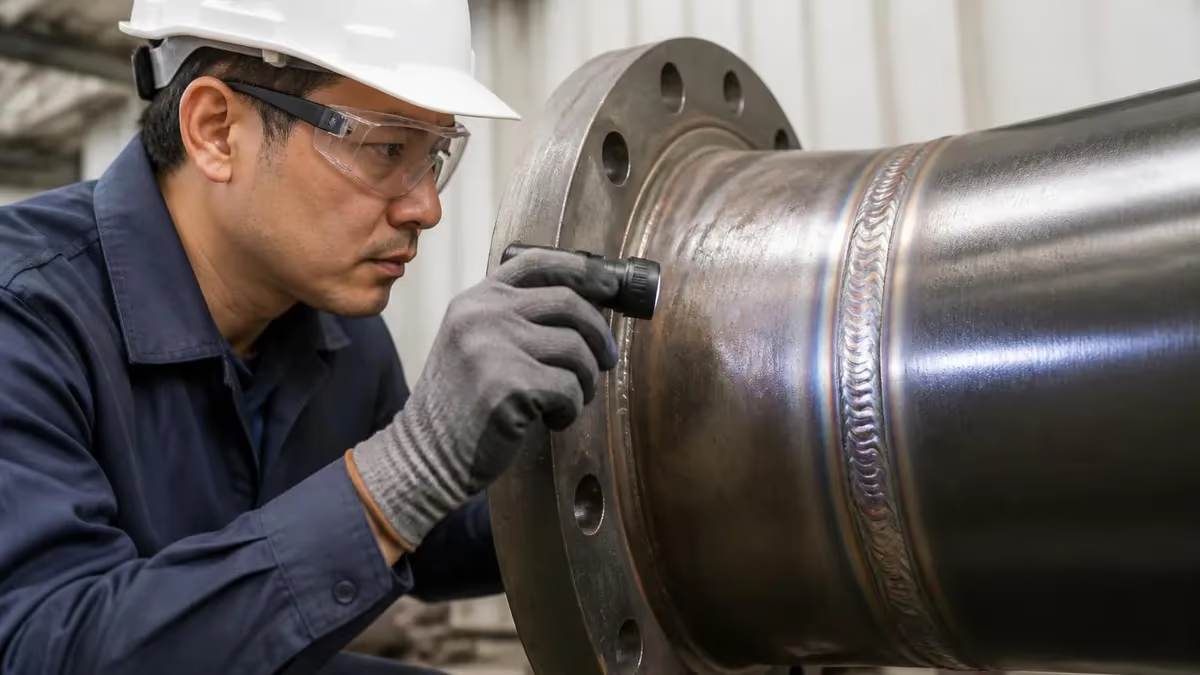
The certified welding inspector salary in 2026 sits comfortably above most skilled trades, with median earnings hovering around $76,400 and experienced inspectors routinely clearing $110,000 when overtime and per diem are factored in. The American Welding Society credential continues to be one of the highest-return certifications in the manufacturing and construction sectors, with most candidates recovering their exam and prep costs within the first three months of certified employment. Pay growth has tracked roughly 4.2 percent year-over-year since 2022.
Pay is not uniform across the country or across industries. A CWI working pipeline construction in West Texas or North Dakota will out-earn a shop inspector in a small Midwest fab shop by a wide margin, sometimes by a factor of two or more. The difference comes down to risk exposure, travel requirements, code complexity, and the dollar value of the welds being inspected. A bad weld on a 36-inch gas transmission line carries financial consequences that justify premium inspector pay.
Most new CWIs land their first certified role within sixty days of passing the exam, and the typical first-year jump in income is between $18,000 and $32,000 compared to what the same person earned as a welder or QC technician. This makes the credential one of the most reliable income accelerators available to tradespeople without a four-year degree. The certification effectively reprices your labor overnight.
This guide breaks down salary by region, industry, experience level, and employment type. We will cover base pay versus contract rates, the role of per diem and overtime, what endorsements add to your paycheck, and which specific industries are paying the most in 2026. We will also look at the longer-term career outlook, including how AI-assisted inspection tools and aging infrastructure spending are reshaping demand.
If you are weighing whether the certification is worth the time and money, the short answer is yes — and the data backs it up. The Bureau of Labor Statistics projects 4 percent growth in welding inspection roles through 2032, but that headline number undersells the actual demand. Retirements among baby-boomer inspectors are creating a replacement gap that is pushing employers to raise wages aggressively, particularly in pipeline, nuclear, and aerospace sectors.
For readers earlier in their decision-making process, you may want to start with the broader What Is a CWI? Certified Welding Inspector Career Guide to understand the role itself before diving into compensation specifics. The rest of this article assumes you already know what a CWI does day-to-day and want to understand exactly what the job pays in different scenarios.
One quick framing note before we dig in: the salary numbers cited here come from BLS Occupational Employment Statistics, AWS member surveys, and 2025 job board aggregate data from Indeed, ZipRecruiter, and LinkedIn. Where ranges differ between sources, we cite the more conservative number to keep expectations realistic.
CWI Salary by the Numbers (2026)
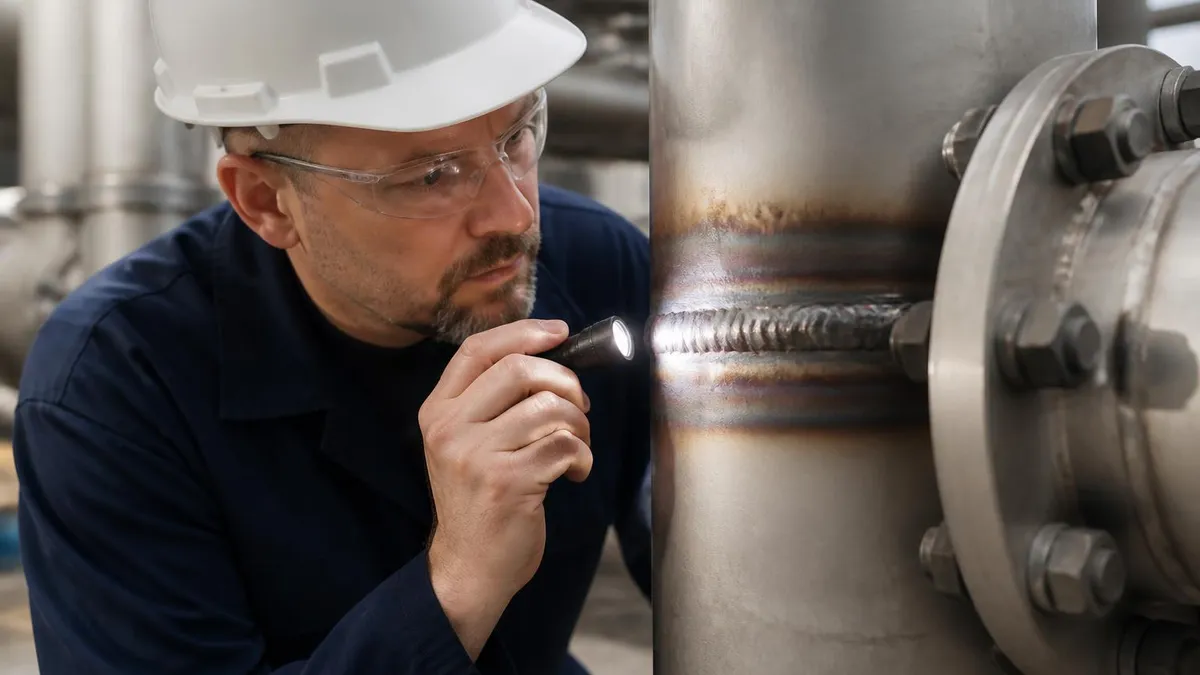
Salary by Experience Level
New CWIs typically earn between $58,000 and $72,000 in their first two years. Most start in shop QC roles or as assistant inspectors learning code application before being trusted with sign-off authority on critical welds.
With three to seven years of certified experience, salaries climb to the $78,000-$98,000 range. This is where most inspectors add endorsements like CWE or CWS and begin handling multi-project oversight or specialized code work.
Senior inspectors with code committee involvement or specialty endorsements earn $100,000-$128,000. Many move into QC manager, NDE Level III, or third-party agency lead roles where supervisory pay stacks on top of base.
At the top of the field, principal inspectors and corporate QC directors earn $130,000-$175,000 plus bonuses. These roles often combine field expertise with audit, procedure writing, and client relationship responsibilities.
Geography is the single biggest variable in CWI pay outside of industry. The Gulf Coast — Texas, Louisiana, and southern Mississippi — leads the country in both volume of CWI jobs and median pay, with experienced inspectors earning $95,000-$120,000 in petrochemical, refinery, and offshore work. The combination of high project density, strict code requirements, and ongoing turnaround work keeps demand improved year-round in this corridor.
The Pacific Northwest and Alaska are the next tier, driven by shipbuilding, aerospace, and oil infrastructure. Washington State CWIs at Puget Sound Naval Shipyard and Boeing supplier shops average $88,000-$108,000. Alaska remains a frontier market where remote-site inspectors command $135,000-plus when per diem and hardship pay are included, though these roles often require 14-on / 14-off rotations and tolerance for cold-weather field work.
The Northeast — particularly Pennsylvania, New York, and Massachusetts — pays well due to nuclear refurbishment projects, bridge infrastructure, and high-rise construction. CWIs working ASME Section III nuclear scope or NYC Department of Buildings special inspection routinely clear six figures. Cost of living offsets some of this premium, but the absolute paychecks remain among the strongest in the country.
The Midwest sits in the middle. Illinois, Ohio, Indiana, and Michigan pay between $68,000 and $92,000 for typical industrial and structural CWI work, with automotive supplier shops and heavy equipment manufacturers like Caterpillar and John Deere being major employers. Pay here is steady rather than spectacular, but cost of living is also more forgiving than the coasts, so net purchasing power can be comparable.
The Southeast outside of Florida — Georgia, Alabama, North Carolina, South Carolina — has seen the fastest wage growth of any region since 2022, with auto plant expansions (BMW, Mercedes, Volvo, Toyota, Hyundai) and battery factory builds pulling inspector wages from the low $60s into the mid-$80s. This is currently one of the best regions for a CWI looking to relocate for a meaningful raise without leaving the country.
The Mountain West and Plains states pay less in base salary but offer strong contract opportunities tied to pipeline, wind energy, and mining. A staff CWI in Wyoming or Montana might earn $72,000, but the same person working a pipeline integrity contract through a third-party agency can pull $140,000+ for nine months of work. If you are willing to chase the work, the geography becomes less of a constraint. For broader context on hiring patterns, the CWI Jobs: Certified Welding Inspector Job Market Guide 2026 covers which employers are actively hiring by region.
One nuance worth flagging: state-level prevailing wage laws materially affect inspector pay on publicly funded jobs. California, New York, Illinois, and New Jersey have aggressive prevailing wage and project labor agreement frameworks that push CWI rates 15-25 percent above private-sector equivalents for the same scope of work.
CWI Practice Test Questions
Prepare for the CWI - Certified Welding Inspector exam with our free practice test modules. Each quiz covers key topics to help you pass on your first try.
CWI Code Book Application
CWI Exam Questions covering Code Book Application. Master CWI Test concepts for certification prep.
CWI Codebook Navigation and Application
Free CWI Practice Test featuring Codebook Navigation and Application. Improve your CWI Exam score with mock test prep.
CWI Destructive Testing and Properties
CWI Mock Exam on Destructive Testing and Properties. CWI Study Guide questions to pass on your first try.
CWI Metallurgy and Weld Discontinuities
CWI Test Prep for Metallurgy and Weld Discontinuities. Practice CWI Quiz questions and boost your score.
CWI NDE Methods and Symbols
CWI Questions and Answers on NDE Methods and Symbols. Free CWI practice for exam readiness.
CWI Nondestructive Examination Methods
CWI Mock Test covering Nondestructive Examination Methods. Online CWI Test practice with instant feedback.
CWI Practical Visual Inspection
Free CWI Quiz on Practical Visual Inspection. CWI Exam prep questions with detailed explanations.
CWI Weld Discontinuities and Defects
CWI Practice Questions for Weld Discontinuities and Defects. Build confidence for your CWI certification exam.
CWI Welding Process Fundamentals
CWI Test Online for Welding Process Fundamentals. Free practice with instant results and feedback.
CWI Welding Process Principles
CWI Study Material on Welding Process Principles. Prepare effectively with real exam-style questions.
CWI WPS and PQR Qualification
Free CWI Test covering WPS and PQR Qualification. Practice and track your CWI exam readiness.
CWI WPS, PQR, and Welder Qualification
CWI Exam Questions covering WPS, PQR, and Welder Qualification. Master CWI Test concepts for certification prep.
CWI AWS CWI
Free CWI Practice Test featuring AWS CWI. Improve your CWI Exam score with mock test prep.
Top-Paying Industries for Certified Welding Inspectors
Oil, gas, and hydrogen pipeline projects pay the highest CWI rates in the country. API 1104 inspectors working transmission line construction typically earn $85-$115 per hour on contract, plus $150-$200 daily per diem. Annual gross earnings of $160,000-$210,000 are common during active spread seasons, though work is cyclical and often requires extensive travel to remote pump stations and ROW crossings.
Midstream and downstream operators also pay well for turnaround inspection work. ExxonMobil, Phillips 66, Chevron, and Marathon all run third-party CWI contracts during major TARs where inspectors earn $1,800-$2,400 per week base plus overtime. Shutdown work compresses a year of income into a few intense months, which suits inspectors who prefer concentrated earning followed by extended time off.
Is the CWI Career Worth It for the Money?
- +Median salary roughly 35 percent above skilled welder pay
- +Certification cost recovered within first three months of certified work
- +Strong overtime and per diem opportunities on field assignments
- +Recession-resistant demand tied to infrastructure and energy spending
- +Clear path to six-figure income within five to seven years
- +Transferable credential — recognized in all 50 states and internationally
- +Aging inspector workforce is pushing wages up faster than inflation
- −Travel requirements can be heavy, especially in pipeline and TAR work
- −Recertification every nine years requires ongoing CEUs and documentation
- −Field work involves outdoor conditions, confined spaces, and heights
- −Salary varies widely by region — relocation may be needed for top pay
- −Liability exposure is real; signed inspector reports carry legal weight
- −Initial exam and prep costs of $1,800-$3,500 are paid out of pocket
Pros and Cons at a Glance
| Pros | Cons |
|---|---|
| Certification cost recovered within first three months of certified work | Travel requirements can be heavy, especially in pipeline and TAR work |
| Strong overtime and per diem opportunities on field assignments | Recertification every nine years requires ongoing CEUs and documentation |
| Recession-resistant demand tied to infrastructure and energy spending | Field work involves outdoor conditions, confined spaces, and heights |
| Clear path to six-figure income within five to seven years | Salary varies widely by region — relocation may be needed for top pay |
| Aging inspector workforce is pushing wages up faster than inflation | Liability exposure is real; signed inspector reports carry legal weight |
Ten Ways to Boost Your CWI Salary in 2026
- ✓Add an API 1104 endorsement to qualify for pipeline contract rates above $85 per hour
- ✓Pursue ASNT NDT Level II certifications in UT, RT, MT, or PT to stack inspection capability
- ✓Take the AWS Certified Welding Educator (CWE) credential for community college instructor side income
- ✓Develop ASME Section IX procedure qualification expertise — PQR and WPS work pays a premium
- ✓Build proficiency in phased array ultrasonic testing for advanced NDE inspector roles
- ✓Relocate to a high-density market like Houston, Baton Rouge, or Pittsburgh for project access
- ✓Move from staff QC to third-party agency work for contract pay and overtime stacking
- ✓Earn AWS Senior Certified Welding Inspector (SCWI) status after fifteen years for management roles
- ✓Document every inspection hour and code variant for stronger resume positioning at renewal
- ✓Network at AWS section meetings and FABTECH — most six-figure jobs are filled through referrals
Stack one NDT Level II inside your first year
The single fastest way to move from a $65,000 starting salary into the $85,000+ range is to add an ASNT NDT Level II certification — most commonly in magnetic particle, liquid penetrant, or visual testing. Employers consistently pay $8,000-$15,000 more per year for inspectors who can perform and document multiple NDE methods, and the prep cost is typically under $1,200.
The decision between staff employment and contract CWI work is one of the most consequential career choices in this field. Staff inspectors earn lower headline numbers but receive paid time off, employer health insurance, 401(k) matching, and predictable schedules. Contract inspectors earn substantially more per hour but absorb their own benefits costs, manage tax estimates quarterly, and face gaps between assignments. The right answer depends entirely on your life stage and risk tolerance.
A typical staff CWI at a fabrication shop earning $82,000 with full benefits is, in total compensation terms, comparable to a contract inspector grossing roughly $115,000 once you back out the self-paid health insurance, missing 401(k) match, paid holidays, and self-employment tax. Contractors who do not at least clear that benefit-adjusted threshold are functionally taking a pay cut for the privilege of more flexibility. Run the math carefully before jumping into contract work.
Per diem is where contract work earns its reputation. IRS-allowed non-taxable per diem of $150-$220 per day on qualifying away-from-home assignments can add $35,000-$55,000 in tax-free income annually for inspectors working steady project work outside their tax home. This is the mechanism that turns a $58-per-hour contract rate into effective $90-per-hour take-home for inspectors who manage their tax home correctly and keep clean documentation.
Overtime treatment also differs sharply. Most staff CWI roles are classified as exempt and pay no overtime regardless of hours worked, though some employers offer comp time or project bonuses. Contract roles almost universally pay time-and-a-half above 40 hours and double-time above 60 hours or on Sundays and holidays. A pipeline CWI working 70-hour weeks during peak construction season can easily earn $4,000-$5,000 per week in raw pay before per diem stacks on top.
Third-party special inspection agencies represent a hybrid that suits many new CWIs. Firms like Terracon, Atlas, ECS, and Intertek pay W-2 hourly with overtime, provide benefits, and rotate inspectors across multiple project types weekly. Pay typically runs $42-$65 per hour with regular overtime, totaling $95,000-$135,000 annually. This structure gives you contract-style variety with staff-style stability — a sensible middle path for the first few years.
Government employment is the lowest-paying but most stable path. Federal CWI roles at the Navy, Army Corps of Engineers, FAA, or Department of Energy pay $68,000-$98,000 depending on GS level and locality adjustment. State DOT bridge inspection roles pay $62,000-$82,000. The trade-off is exceptional pension benefits, federal holidays, and effective job security through economic downturns — meaningful intangibles many inspectors underweight when comparing offers.
One final consideration: contract CWI work often comes with weeks or months of downtime between assignments. Inspectors who plan for this — keeping 4-6 months of expenses in reserve and using slow periods for endorsement study or family time — thrive in the contract model. Inspectors who count on continuous billable hours often end up taking unfavorable assignments to fill calendar gaps, which is how contractors burn out within three or four years.

If you transition from W-2 staff work to 1099 contract inspection, set aside 28-32 percent of every check for federal income tax, self-employment tax, and state tax. Quarterly estimated payments are required, and the IRS underpayment penalties for missing them are not optional. Consider an S-corp election after your second year if net income clears $90,000 — it typically saves $4,000-$8,000 in self-employment tax annually.
The long-term outlook for certified welding inspectors is among the strongest in the skilled-trades and technical-inspection workforce. Three structural tailwinds are converging through the late 2020s: the Infrastructure Investment and Jobs Act funding cycle, the energy transition build-out (LNG export terminals, hydrogen pipelines, nuclear SMRs, transmission grid expansion), and the demographic retirement wave among CWIs who certified in the 1980s and 1990s. Together these create demand that current pipeline of new inspectors cannot meet.
The American Welding Society itself has acknowledged this gap publicly, with current certified inspector counts below 30,000 nationwide against an estimated need of 38,000-42,000 by 2030. This shortfall is what is driving the 4.2 percent annual wage growth — employers are competing for a finite pool of credentialed inspectors and are willing to pay above-market rates to lock in coverage. New CWIs entering the field in 2026 should expect to ride this favorable supply-demand curve for at least the next six to eight years.
AI and automation are reshaping inspection work but not replacing inspectors. Robotic and AI-assisted visual inspection systems are now common in high-volume shop environments, but they augment rather than substitute for human CWIs. Code interpretation, judgment calls on borderline indications, document review, audit functions, and procedure qualification all remain firmly in human hands. The inspectors who lean into these tools — learning to verify and audit AI-generated inspection reports — will be the most valuable hires going forward.
Specialty growth areas worth tracking include hydrogen pipeline inspection (new ASME B31.12 work scope), additive manufacturing weld inspection (AWS D20.1), composite-to-metal joining in aerospace, and offshore wind tower inspection. Each of these niches commands premium rates because the pool of qualified inspectors is small and the codes are still evolving. Early specialists in these areas are already earning 20-30 percent above general structural rates.
The geographic story is also shifting. Texas, Louisiana, and the Gulf Coast remain dominant, but the Southeast manufacturing belt (Georgia through North Carolina) and the Mountain West (driven by data center construction and lithium processing) are rising fast. Inspectors who are mobile and willing to follow the work will continue to out-earn those tied to a single market by significant margins through the late 2020s.
For inspectors thinking about a longer-arc career, the typical progression looks like this: years 0-5 you build code familiarity and add NDE endorsements; years 5-10 you specialize in an industry vertical and either move into senior inspector or QC manager roles; years 10-20 you either climb into corporate QC leadership, start an independent inspection consultancy, or move into AWS examiner / instructor work.
Each of these paths can comfortably support a $150,000+ income with the right specialization. If you want to map out study priorities for the certification itself, the AWS CWI Exam Study Material: What You Need to Pass is a useful next read.
One last note on durability: welding inspection is one of the least off-shorable technical jobs in the United States. The work has to happen where the welds are, and the welds are in American refineries, bridges, power plants, shipyards, and factories. That physical anchoring, combined with the security-sensitive nature of much of the work, means CWIs are insulated from the offshoring pressures that have hollowed out other technical fields over the past two decades.
If you are taking the CWI exam soon and want to maximize your earning potential the moment you pass, a few practical moves matter more than others. First, line up at least two potential employers before your exam date. Recruiters at large special inspection agencies will conditionally offer roles contingent on you passing, and having competing offers in hand on the day your results arrive is the single best use point in your salary negotiation. The pass-to-offer window is your strongest use; it shrinks quickly.
Second, document everything from your pre-CWI welding and QC career carefully. Years of experience translate directly into starting salary, but only if you can prove them with W-2s, project lists, code variants worked, and supervisor references. Inspectors who walk into negotiations with a clean, quantified experience portfolio routinely start $8,000-$12,000 higher than equally qualified peers who show up with a generic resume. Treat your work history as a structured asset.
Third, do not accept the first offer without negotiating. The CWI labor market in 2026 is firmly an employee's market, and employers expect counter-offers. Common winnable concessions include a $5,000-$10,000 base bump, a signing bonus, reimbursement of exam costs, paid recertification CEUs, and a written commitment to one or two specific endorsements within the first eighteen months. Asking is free; not asking costs real money over your career.
Fourth, plan your endorsement stack on a two-year timeline rather than chasing every credential at once. A reasonable sequence is: year one add ASNT VT and MT Level II, year two add API 1104 or ASME Section IX procedure qualification depending on which industry you target. Each endorsement should be tied to a specific salary or rate increase you can point to — credentials without an income story are just hobby certifications that cost real money to maintain.
Fifth, treat the first three years of certified work as a paid graduate program. The inspectors who become highly paid senior CWIs are the ones who use early years to see as many code variants, base metal types, and welding processes as possible. Volunteering for unfamiliar scope, asking to shadow more experienced inspectors, and reading audit findings on your own time will pay dividends in earning power for the next thirty years. This is the compounding phase of your career.
Sixth, build a written record of every project. A simple project log noting client, code, base metals, processes, joint types, NDE methods, and dates is the most valuable career document you will ever maintain. When you negotiate your next role, apply for a senior position, or pursue your SCWI in fifteen years, this log is what proves your experience. Start it on day one and update it weekly — most senior inspectors say this is the single habit they wish they had started earlier in their careers.
Finally, stay connected to the AWS section in your area. Local section meetings, FABTECH, and AWS committee work are where the highest-paying roles get filled informally before they are ever posted publicly. Inspectors who become known faces at section dinners and on D1 or B2 subcommittees consistently field unsolicited job offers above market rate. The credential gets you into the room; the network is what keeps you in the highest-paying seats in that room over the decades.
Sample CWI Practice Questions
Try these questions from our free CWI practice tests. The correct answer and an explanation follow each question.
A fabricator has a Procedure Qualification Record (PQR) that was successfully qualified using the Shielded Metal Arc Welding (SMAW) process. The welding engineer now wishes to write a Welding Procedure Specification (WPS) for a production job using the Gas Metal Arc Welding (GMAW) process. According to ASME Section IX, which of the following is true?
- A. The SMAW PQR can support the GMAW WPS as long as the base material and thickness are the same.
- B. A change from SMAW to GMAW is considered an essential variable change requiring a new PQR.
- C. The SMAW PQR can support the GMAW WPS if a new welder performance qualification is completed with the GMAW process.
- D. A new PQR is only required if the GMAW process uses a different P-Number base material.
Answer: B. A change from SMAW to GMAW is considered an essential variable change requiring a new PQR.
According to ASME Section IX, QW-251.2, each welding process must be qualified separately. Furthermore, QW-402.1 lists a change in the welding process as an essential variable. An essential variable is a parameter that, if changed, is considered to affect the mechanical properties of the weldment and therefore requires the WPS to be requalified by creating a new PQR.
A project's specifications mandate that all pipeline welding inspection must adhere to API 1104. An inspector performing radiographic testing (RT) identifies several indications. In which section of API 1104 would the inspector find the specific limits for the size and distribution of these indications to determine if the weld is acceptable?
- A. Section 5, Qualification of Welding Procedures for Welds Containing Weld-Deposited Filler Metal
- B. Section 6, Qualification of Welders
- C. Section 11, Procedures for Nondestructive Testing
- D. Section 9, Acceptance Standards for Nondestructive Testing
Answer: D. Section 9, Acceptance Standards for Nondestructive Testing
API 1104 is structured with specific sections for different aspects of welding and inspection. Section 9, "Acceptance Standards for Nondestructive Testing," contains the detailed criteria for accepting or rejecting welds based on the results of NDT methods, including radiography. Section 11 describes the procedures for performing NDT but does not contain the acceptance criteria.
A weld inspector notices that a welder has been welding without the specified preheat. What should the inspector do?
- A. Allow the weld to continue and apply post-weld heat treatment afterward
- B. Stop welding immediately and require preheat to be established before continuing
- C. Document the deviation and notify the engineer after welding is complete
- D. Increase the post-weld inspection scope
Answer: B. Stop welding immediately and require preheat to be established before continuing
Preheat is a mandatory WPS requirement; if it is not being maintained, welding must stop immediately until the required temperature is established.
A WPS specifies a minimum preheat temperature of 300°F. During production welding the inspector measures the base metal temperature at 275°F. What action should the inspector take?
- A. Allow welding to proceed since the difference is within 10% tolerance
- B. Stop welding and require the base metal to be reheated to at least 300°F before resuming
- C. Notify the engineer and continue welding while monitoring closely
- D. Accept the weld if final NDE passes
Answer: B. Stop welding and require the base metal to be reheated to at least 300°F before resuming
Preheat is an essential variable; welding below the WPS minimum preheat temperature is a nonconformance that must be corrected before welding continues.
CWI Questions and Answers

About the Author

Educational Psychologist & Academic Test Preparation Expert
Columbia University Teachers CollegeDr. Lisa Patel holds a Doctorate in Education from Columbia University Teachers College and has spent 17 years researching standardized test design and academic assessment. She has developed preparation programs for SAT, ACT, GRE, LSAT, UCAT, and numerous professional licensing exams, helping students of all backgrounds achieve their target scores.
Join the Discussion
Connect with other students preparing for this exam. Share tips, ask questions, and get advice from people who have been there.
View discussion (8 replies)