
First Aid and CPR Course Near Me: How to Find, Compare, and Enroll in the Right Local Class in 2026 October
✏️ Find a first aid and CPR course near me: compare AHA, Red Cross, and National CPR Foundation classes, costs, schedules, and certification options.

Searching for a first aid and cpr course near me is the first step thousands of Americans take every week when a new job, a state licensing rule, or a family emergency pushes them to finally get certified. The good news is that local options have expanded dramatically since 2024, with hybrid blended-learning classes, weekend bootcamps, in-person skill checks at fire stations, and community colleges all competing for your enrollment. Knowing which provider fits your goals saves you money, time, and frustration.
The phrase covers a wide range of training: standard adult CPR with AED use, infant cpr, pediatric first aid, bloodborne pathogens, and even advanced topics like the acls algorithm for healthcare providers. Most beginners only need a Heartsaver-level class, while nurses, EMTs, and lifeguards usually need Basic Life Support (BLS) or pals certification. Choosing the wrong tier wastes money and forces a retake, so confirm the exact card your employer or licensing board requires before paying.
Local availability matters more than people think. A rural learner may drive 45 minutes to the nearest American Heart Association training center, while a city dweller can walk into a class six days a week. Online-only options exist, but most US employers, state boards, and OSHA regulators still require an in-person skills check before issuing a wallet card. That means your search should filter for blended courses with a verified local skills session, not pure e-learning that ends with a printable certificate.
Price is the next big variable. A community Heartsaver CPR/AED/First Aid class typically runs $65 to $110, while a BLS for Healthcare Providers class costs $75 to $125. Group rates at workplaces drop the per-person price to about $45. National CPR Foundation, the American Red Cross, and the American Heart Association dominate the market, but local fire departments, YMCAs, and community colleges often undercut them with subsidized community classes.
Timing flexibility has improved too. You can usually book a 2-to-4-hour Heartsaver class within seven days of searching, and many providers offer evening and Saturday sessions. Blended learning lets you finish the cognitive portion online at your own pace, then attend a 60-to-90-minute hands-on skills session. That format is ideal for shift workers, parents, and students juggling exams. For a refresher, see our AHA CPR overview before you book.
Finally, verify the instructor. Anyone can rent a room and call themselves a CPR trainer, but only AHA Training Center–affiliated instructors and Red Cross authorized providers can issue the cards employers actually accept. Ask for the instructor's ID number, the training center name, and confirmation that the card will be issued electronically within 24 hours of class. If a provider refuses to share that information, walk away and pick someone else from your local search results.
This guide walks through how to evaluate local classes, what the curriculum covers, how much you should expect to pay, what questions to ask before enrolling, and how to verify your card after class. By the end, you will know exactly which course near you fits your job, your budget, and your schedule — and you will be ready to walk in confident on training day.
First Aid & CPR Training by the Numbers
Key Facts at a Glance
| Item | Value | Details |
|---|---|---|
| Typical Local Class Price | $65–$125 | Heartsaver and BLS combined range |
| Certification Validity | 2 years | AHA, Red Cross, National CPR Foundation |
| Employer-Required Classes | 70% | Healthcare, childcare, fitness, education |
Course Types & Certification Levels
For laypeople, teachers, coaches, childcare workers, and parents. Covers adult, child, and infant cpr, AED use, choking, bleeding control, burns, and shock. Most common community class and the lowest-cost option locally.
For nurses, EMTs, dental staff, medical students, and CNAs. Adds 2-rescuer CPR, bag-mask ventilation, and team dynamics. Required by most US hospitals and nursing programs as a hire condition.
Builds on BLS for RNs, paramedics, physicians, and pharmacists. Teaches the acls algorithm for cardiac arrest, bradycardia, tachycardia, and stroke. Usually a 12–16 hour course with high-fidelity manikin simulation.
Pediatric Advanced Life Support for clinicians treating critically ill children. Covers respiratory rate assessment, shock recognition, pediatric arrest algorithms, and team-based resuscitation. Required in pediatric ICUs, EDs, and many transport teams.
Add-on modules for tattoo artists, body piercers, cosmetologists, and school staff. Often bundled with first aid and cpr course near me listings as a discounted package. Required by OSHA in many at-risk workplaces.
Finding the right first aid and cpr course near me starts with a structured search rather than clicking the first sponsored ad. Open Google Maps and search "CPR class near me" or "first aid training [your city]." Filter by rating (4.5 stars or higher), then cross-check the provider against the American Heart Association's official Class Connector at cpr.heart.org or the Red Cross class finder at redcross.org/take-a-class. If the provider doesn't appear in either database, you risk receiving a card that no employer recognizes.
The National CPR Foundation is another major player and offers fully online certification, but be cautious: while their cards are accepted by many private employers, gyms, and some childcare centers, they are typically not accepted by hospitals, state nursing boards, or OSHA-regulated healthcare settings. Always email your HR department or licensing board a screenshot of the provider's logo and ask, "Will this specific card satisfy our requirement?" Get the answer in writing before you pay.
Community colleges and continuing education programs are underrated gems. A semester-long EMT prep program may offer free or low-cost CPR certification baked into the curriculum. Local fire departments often run heavily subsidized community CPR Saturdays for $20 to $40 — perfect for parents, grandparents, and youth coaches. YMCAs, parks and recreation departments, and Boys & Girls Clubs frequently host classes through their lifeguard pipeline that anyone can join.
Workplace group classes are the cheapest per-person option if you can rally five or more colleagues. Most local instructors will travel to your office, bring manikins and AED trainers, and certify a group of 6 to 12 for $45 to $70 per person. HR teams can usually expense this entirely. If your workplace has any healthcare, food service, fitness, or childcare component, ask HR to schedule an annual on-site session — it is often cheaper than reimbursing individual classes.
Beware of "100% online" CPR certifications that promise an instant printable card with no skills check. While convenient, these are not compliant with AHA, Red Cross, or most state licensing requirements. Hands-on chest compression depth, recoil, ventilation seal, and AED pad placement cannot be assessed through a webcam. Stick with blended-learning courses that include a verified in-person skills session — those carry the same weight as fully in-person classes. For background on certification standards, our CPR study guide goes deeper.
Read recent reviews carefully. Look for comments about whether the instructor finished on time, whether equipment worked, and whether the skills check felt rushed. The best instructors give every student multiple practice attempts on the manikin and walk through real scenarios. Avoid classes flagged for selling the wallet card as an upsell after class — your card should be included in the original price and emailed within 24 hours.
Finally, book at least one week in advance. Popular Saturday slots fill quickly, especially in spring (graduating nursing students), late summer (back-to-school teachers and coaches), and December (year-end healthcare compliance deadlines). If your deadline is tight, look for weekday morning or evening sessions, which usually have more openings, or check whether the provider offers a same-week express skills session.
CPR Practice Test Questions
Prepare for the CPR Cardiopulmonary Resuscitation Practice exam with our free practice test modules. Each quiz covers key topics to help you pass on your first try.
CPR Basic CPR
CPR Exam Questions covering Basic CPR. Master CPR Test concepts for certification prep.
CPR and First Aid
Free CPR Practice Test featuring and First Aid. Improve your CPR Exam score with mock test prep.
CPR (Cardiopulmonary Resuscitation) Adult ...
CPR Mock Exam on (Cardiopulmonary Resuscitation) Adult CPR and AED Usage. CPR Study Guide questions to pass on your first try.
CPR (Cardiopulmonary Resuscitation) Airway...
CPR Test Prep for (Cardiopulmonary Resuscitation) Airway Obstruction and Choking. Practice CPR Quiz questions and boost your score.
CPR (Cardiopulmonary Resuscitation) Cardio...
CPR Questions and Answers on (Cardiopulmonary Resuscitation) Cardiopulmonary Emergency Recognition. Free CPR practice for exam readiness.
CPR (Cardiopulmonary Resuscitation) Child ...
CPR Mock Test covering (Cardiopulmonary Resuscitation) Child and Infant CPR. Online CPR Test practice with instant feedback.
CPR (Cardiopulmonary Resuscitation) High-P...
Free CPR Quiz on (Cardiopulmonary Resuscitation) High-Performance Team Dynamics. CPR Exam prep questions with detailed explanations.
CPR (Cardiopulmonary Resuscitation) Legal ...
CPR Practice Questions for (Cardiopulmonary Resuscitation) Legal and Ethical Considerations. Build confidence for your CPR certification exam.
CPR for Specific Populations
CPR Test Online for for Specific Populations. Free practice with instant results and feedback.
CPR Airway & Breathing Management
CPR Exam Questions covering Airway & Breathing Management. Master CPR Test concepts for certification prep.
CPR Assessment & Recognition of Cardiac Ar...
Free CPR Practice Test featuring Assessment & Recognition of Cardiac Arrest. Improve your CPR Exam score with mock test prep.
CPR Chest Compressions & Defibrillation
CPR Mock Exam on Chest Compressions & Defibrillation. CPR Study Guide questions to pass on your first try.
CPR Post-Resuscitation Care & Recovery
CPR Test Prep for Post-Resuscitation Care & Recovery. Practice CPR Quiz questions and boost your score.
Comparing the Major Providers (AHA, Red Cross, National CPR Foundation)
The American Heart Association (AHA) is the gold standard for healthcare-focused certification. Its BLS, ACLS, and pals certification cards are universally accepted by US hospitals, nursing schools, and EMS agencies. AHA classes use the most current resuscitation science, including 2025 guideline updates on chest compression rate and pediatric ventilation. Expect strict skills testing and a written exam for advanced courses.
Local AHA classes are taught by instructors affiliated with regional Training Centers. Cards arrive via the eCard system within 24 hours of class and can be verified by any employer using your eCard code. If your job mentions "BLS," "ACLS," or "PALS" without naming a provider, AHA is almost always the safest choice.

Local In-Person Classes vs Online-Only Certification
- +Hands-on chest compression practice on real manikins with feedback
- +Instructor can correct hand placement, compression depth, and recoil
- +AED pad placement practiced on training devices, not just videos
- +Real-time questions answered by a certified instructor
- +Accepted by hospitals, state boards, and OSHA-regulated employers
- +Skills check builds muscle memory you will actually use in an emergency
- +Networking with other healthcare or workplace peers in the room
- −Travel time and rigid scheduling around work or family
- −Higher upfront cost ($65–$125 vs $20–$50 online)
- −Limited weekend or evening slots in rural areas
- −Possible exposure to illness in shared training spaces
- −Some instructors rush through the skills portion to finish early
- −No instant certification — wait 1–24 hours for the eCard
- −Class size variation can mean less individual coaching time
Pre-Enrollment Checklist for Your Local First Aid and CPR Course
- ✓Confirm exactly which card your employer or licensing board requires (Heartsaver, BLS, ACLS, PALS).
- ✓Verify the provider in the AHA Class Connector or Red Cross class finder before paying.
- ✓Ask whether the price includes the wallet card or eCard — there should be no surprise fees.
- ✓Check the instructor's certification ID and Training Center affiliation.
- ✓Read at least five recent reviews focused on the skills-check experience.
- ✓Confirm class duration: 2–4 hours for Heartsaver, 4–5 hours for BLS, 12–16 hours for ACLS.
- ✓Make sure the location is within reasonable travel distance and accessible.
- ✓Ask whether blended online prework is required and how long it takes.
- ✓Check the cancellation and reschedule policy in case you get sick.
- ✓Save the eCard code immediately after class and forward it to your HR department.
Always confirm card acceptance in writing.
Before paying for any class, email your HR department or licensing board the provider name and ask, "Will this card satisfy our certification requirement?" Get the answer in writing. A $40 online card is worthless if your hospital, nursing program, or state board rejects it on day one of orientation.
Cost varies more by provider and location than by curriculum. A standard Heartsaver CPR/AED/First Aid class runs $65 to $110 in most US metros. BLS for Healthcare Providers averages $75 to $125. ACLS and pals certification courses cost $200 to $300, reflecting the longer class time and more expensive simulation equipment. Renewals are usually 20% to 30% cheaper than initial certifications because they require less classroom time.
Time investment depends on the tier. Heartsaver classes take 2 to 4 hours in-person, or 1 hour online plus a 60–90 minute skills session for blended learning. BLS typically runs 4 to 5 hours full in-person, or 2 hours of online prework plus a 90-minute skills check. ACLS demands 12 to 16 hours including testing, while PALS averages 14 hours over two days. Plan for at least one half-day off work.
All major US providers issue certifications valid for two years. After that, you must take a renewal class — not a full initial class — provided your card has not been expired more than 30 days. If you let your card lapse beyond that window, most providers require the full initial course again. Set a calendar reminder six weeks before expiration to book your renewal slot, especially if your job depends on continuous certification.
Some employers reimburse the full cost as a job-required expense. Healthcare workers, teachers, fitness instructors, and childcare staff should always submit a reimbursement request with the receipt and a copy of the card. Even if your employer does not formally reimburse, many will offer paid time during work hours to attend the class. Always ask HR before paying out-of-pocket — many people leave money on the table by assuming there's no support.
Group discounts are the biggest cost lever. Five or more enrollees from the same employer or family typically drop the per-person price to $45 to $70. Many local instructors will travel to your home, gym, dojo, or office at no extra travel fee for groups of six or more. If you coach a youth sports team, run a daycare, or manage a small business with public-facing staff, group booking is the smartest move.
Hidden costs to watch for include: a $5 to $15 fee to mail a physical card if you also want one beyond the eCard, late-fee surcharges for last-minute booking, parking fees at hospital-based classes, and "materials fees" for the printed student manual. A reputable provider lists every charge up front. If a quote keeps growing as you check out, find a different class.
Finally, consider the opportunity cost of waiting. If your start date is in three weeks and weekend classes book out one week ahead, search and enroll today. A delayed certification can postpone a job offer, a clinical rotation, or a state license issuance by weeks. The class itself is short — the bottleneck is almost always scheduling, not learning.

If your card expired more than 30 days ago, you cannot take a renewal class — you must repeat the full initial course, which costs more and takes longer. If you have a job offer pending, do not assume online-only certification will be accepted. Always email HR a copy of the provider name and confirm acceptance in writing before paying. Mistakes here have delayed many start dates by weeks.
Once you complete a local first aid and cpr course near me, your provider will issue an electronic certification card — usually within 1 to 24 hours of finishing the skills check. For AHA classes this is the eCard, accessible at ecards.heart.org using the code your instructor sends by email. Save this code in your password manager immediately, because losing access means a $10 to $25 reissue fee and a delay you don't want during a job onboarding window.
Forward the eCard PDF or link to your HR department or licensing board the same day. Many hospitals require certification verification before issuing your badge, scheduling clinical shifts, or granting access to medication systems. For state licensing applications, upload the card to the state board portal and keep a screenshot of the confirmation receipt. Treat this like a financial document — never delete it. Our CPR card lookup guide explains how to retrieve a misplaced card.
Print one physical copy for your wallet or work badge clip, even though most employers verify electronically. In an actual emergency, no one checks credentials before you start compressions, but having visible evidence of training can matter at work events, volunteer activities, and travel through some international airports. Lifeguards, swim instructors, and youth coaches are particularly often asked to show physical proof.
Skills fade quickly. Research from the AHA shows that within 6 months of training, most people lose proper compression depth and recoil technique. Practice on a low-cost manikin at home every quarter, watch one 60-second refresher video each month, and consider taking a brief in-person refresher midway through your two-year cycle. Free practice quizzes — like the ones linked throughout this guide — also keep cognitive knowledge sharp between classes.
If you work in a public-facing role, learn the location of every AED in your building, gym, school, or arena. Many states maintain public AED registries, and apps like PulsePoint show nearby AEDs in real time. Knowing exactly where the device is mounted shaves crucial seconds off response time. During cardiac arrest, every minute without defibrillation drops survival by about 10%.
Build a small home first aid kit alongside your certification. Stock it with gloves, a CPR breathing barrier, gauze, an instant cold pack, an EpiPen if prescribed, electrolyte packets, and a tourniquet if you have stop-the-bleed training. Keep it in a known location, refresh expired items every six months, and tell every adult in the household where it is. Skills without supplies leave gaps in any real emergency.
Finally, share what you learned. Talk to family about the recovery position, show your roommates where the AED is at work, and teach your kids how to call 911 with location details. The whole point of a first aid and cpr course near me is not just earning a card — it's becoming the person in the room who steps forward when seconds count. That confidence only grows when you reinforce it through teaching and consistent practice.
Walking into your local class prepared makes the whole experience smoother. Sleep well the night before, eat a normal meal beforehand, and wear comfortable clothes — you will be kneeling on the floor doing chest compressions for extended stretches. Bring a refillable water bottle, a notebook for jotting down compression rate (100–120 per minute) and depth (2 to 2.4 inches for adults), and a pen for any written components. Arrive at least 10 minutes early to handle paperwork.
If you have any physical limitations — back, knee, shoulder, or wrist issues — tell the instructor at the start. Good instructors can adapt the skills demonstration: you may perform compressions on a manikin placed on a table rather than the floor, or partner with another student during the two-rescuer scenarios. A reasonable accommodation does not change the value of your certification, and you should never feel embarrassed asking for one.
During the skills check, focus on the four make-or-break elements: compression rate, depth, full chest recoil, and minimizing interruptions. Most students fail not from lack of knowledge but from compressing too shallowly or leaning on the chest between compressions. Practice the rhythm to a 110-BPM song in your head — "Stayin' Alive," "Walking on Sunshine," or "Crazy in Love" all hit close to the target rate. Avoid songs we cover in our inappropriate CPR songs guide.
For AED use, master four steps: power on, attach pads, let the device analyze, deliver a shock if advised. Don't overthink it — modern AEDs talk you through every step out loud and refuse to shock a non-shockable rhythm. The most common skill-check mistake is forgetting to clear the patient (visually and verbally) before delivering the shock. Say "Clear!" loud enough that the instructor can hear you from across the room.
For first aid scenarios, slow down and verbalize your assessment. Check the scene for safety, check responsiveness, call 911 (or direct someone to), then assess airway, breathing, and circulation. For bleeding control, apply direct pressure first; if it soaks through, do not remove the original dressing — add more on top. For burns, cool with running water for at least 10 minutes and never apply ice, butter, or toothpaste. Instructors love when students narrate their thinking.
After class, request a course completion summary email. If you ever lose access to your eCard, this summary helps the provider locate your record faster. Add your card expiration date to your phone calendar with a reminder 60 days out and another at 30 days. Renew before expiration to avoid retaking the full initial course. If you change jobs, send your eCard to the new employer as soon as the offer is signed — most won't onboard you without proof.
Finally, take one more practice quiz after class while the material is fresh. Locking in the recovery position sequence, the choking algorithm, and the differences between adult, child, and infant cpr cements the knowledge you'll need months from now. The students who retain the most are the ones who treat certification as the beginning of ongoing learning, not the finish line. Cardiac arrest survival in any community depends on how many trained bystanders are ready to act — and now that's you.
CPR Questions and Answers
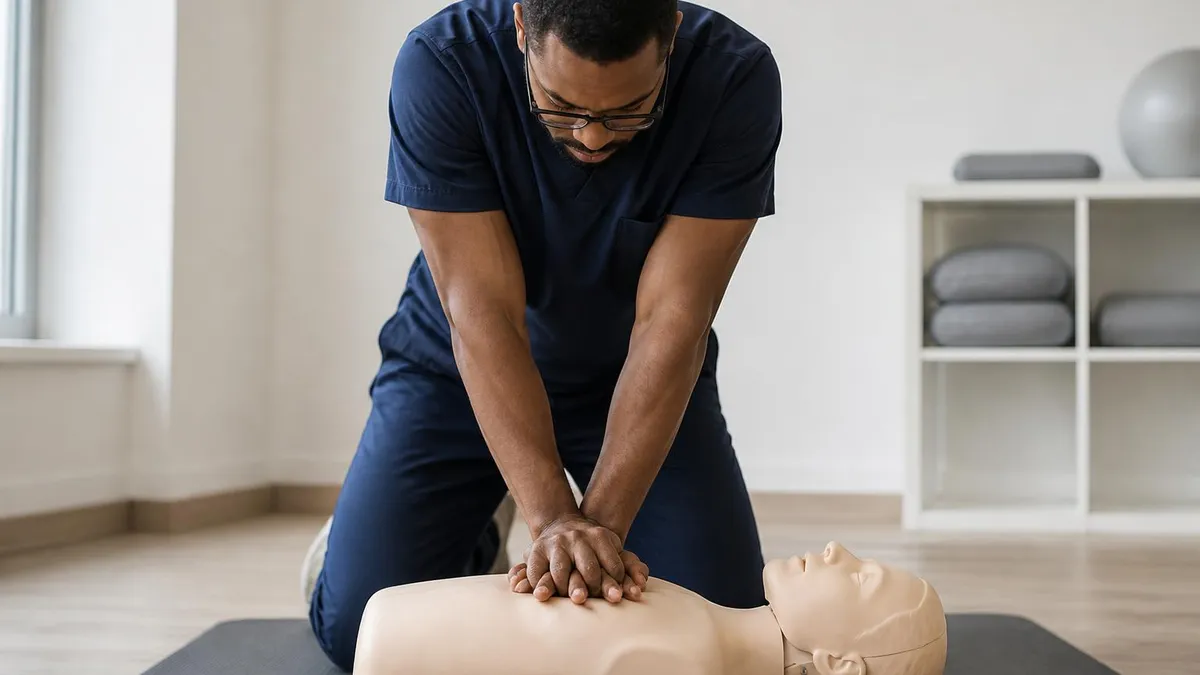
CPR Card Lookup: How to Verify, Replace, and Access Your CPR Certification in 2026
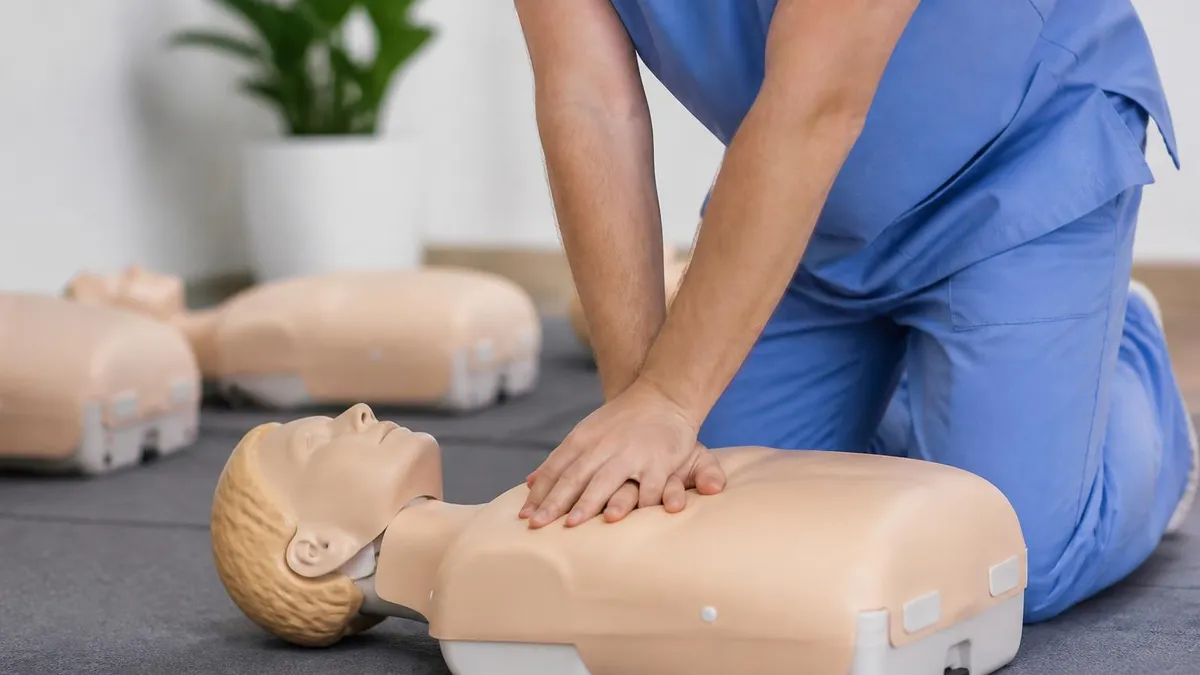
AHA CPR: What It Is, Which Course You Need, and How to Get Certified
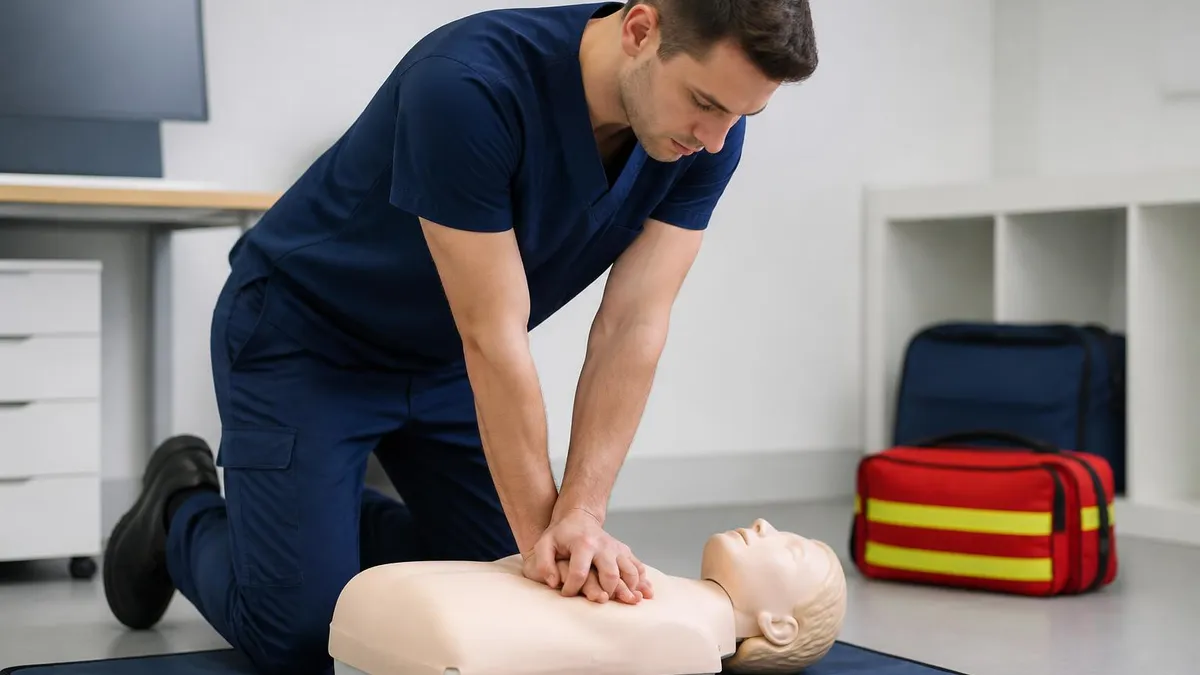
Adult CPR: Complete Step-by-Step Guide to Hands-Only and Standard CPR in 2026
CPR - Cardiopulmonary Resuscitation: Complete Study Guide 2026
Inappropriate CPR Songs: What Not to Play, Why It Matters, and Better Beat-Per-Minute Alternatives
About the Author

Registered Nurse & Healthcare Educator
Johns Hopkins University School of NursingDr. Sarah Mitchell is a board-certified registered nurse with over 15 years of clinical and academic experience. She completed her PhD in Nursing Science at Johns Hopkins University and has taught NCLEX preparation and clinical skills courses for nursing students across the United States. Her research focuses on evidence-based exam preparation strategies for healthcare certification candidates.
Join the Discussion
Connect with other students preparing for this exam. Share tips, ask questions, and get advice from people who have been there.
View discussion (5 replies)