
CPR Online Class: Complete Guide to Virtual Certification, Blended Courses, and What Actually Counts in 2026 October
CPR online class guide: 📗 compare 100% virtual vs blended courses, costs, AHA acceptance, infant CPR skills, and how to get certified fast.
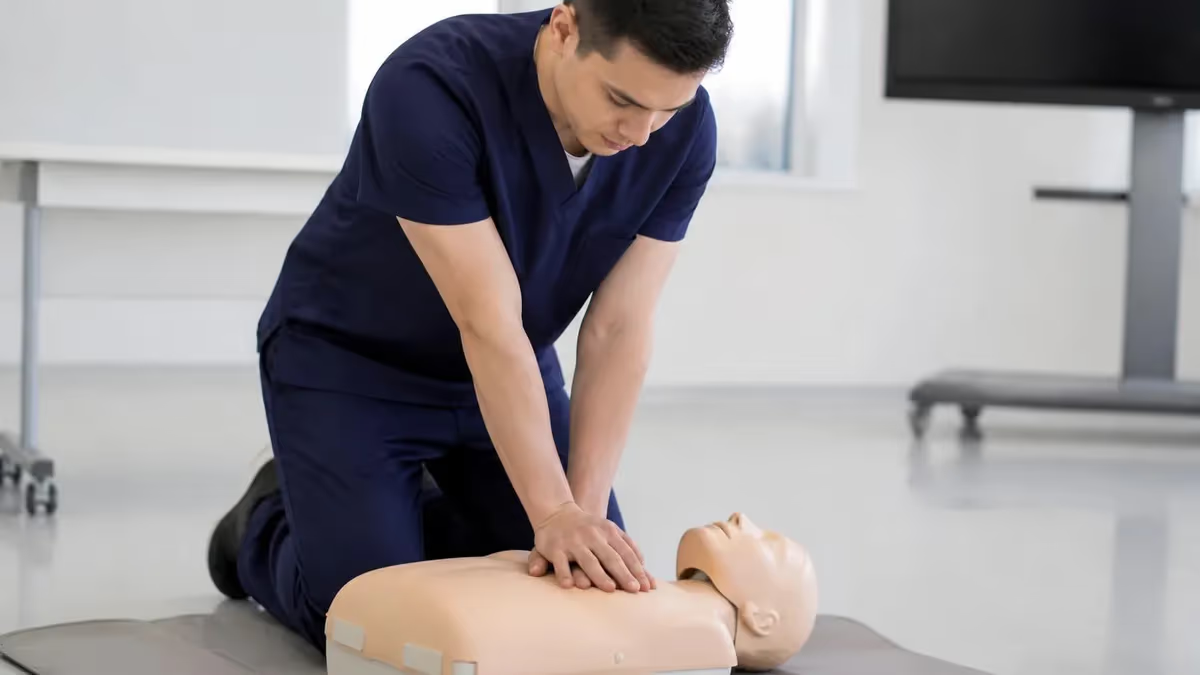
A cpr online class has become the default starting point for nurses, teachers, lifeguards, daycare workers, and ordinary parents who want certification without burning a Saturday in a classroom. In 2026, more than 70% of new CPR learners begin their training online, and most major issuing bodies — the American Heart Association, the American Red Cross, and the national cpr foundation — now offer fully digital or blended formats. The right format depends on whether your employer accepts an online-only card or requires a hands-on skills check.
Online CPR training works because the cognitive content of resuscitation rarely changes year to year. You can learn compression depth, the correct respiratory rate for rescue breathing, the recovery position, and what does aed stand for from a video just as effectively as from a live instructor. What you cannot fully learn online is the muscle memory of 100-to-120 compressions per minute at two inches of depth. That is why blended courses still matter for healthcare providers.
This guide breaks down every meaningful version of a cpr online class available in the United States, including 100% virtual courses, blended learning with in-person skills, free awareness modules, and provider-level certifications like BLS, ACLS, and PALS. We compare costs, time commitments, employer acceptance, renewal rules, and what to do if a hiring manager rejects your card. Whether you need basic adult CPR or want to layer the acls algorithm on top of provider-level skills, you will find a clear path here.
We also address the elephant in the room: scam certifications. Search results for CPR training are flooded with low-cost sites that mint certificates in fifteen minutes for $14.99. Some are legitimate refreshers for non-occupational use; others are not accepted anywhere. Knowing the difference between a legitimate awareness course and a fraudulent certification site can save you a job offer, a clinical rotation, or a teaching license.
By the end of this article you will know exactly which online CPR pathway fits your job, your state regulations, and your timeline. You will also know how to verify your card, what to do when it expires, and how to layer additional certifications like pals certification or BLS provider on top of your foundation skills. The cpr online class market is large and noisy, but the right course is straightforward once you know what to ask.
One more important framing point: CPR is genuinely a life-saving skill. According to the American Heart Association, bystander CPR can double or triple survival from out-of-hospital cardiac arrest, yet only about 40% of victims receive it before EMS arrives. Whether you take a free 20-minute awareness module or a full provider-level course, the goal is the same — being ready to compress a chest competently when the moment comes. That readiness, not the card in your wallet, is what actually matters.
Read on for the full comparison, the format that fits your job, and the practical checklist for completing your online certification this week without wasting money on a course that will be rejected.
CPR Online Class by the Numbers

Four Types of CPR Online Class Formats
Complete video modules and a final exam from any device. You receive a digital certificate immediately. Best for non-clinical roles like office workers, parents, coaches, and personal trainers where state law allows.
You complete cognitive content online, then attend a 30-60 minute in-person skills session with a certified instructor. AHA HeartCode and Red Cross blended courses follow this model. Required for most healthcare jobs.
BLS, ACLS, and pals certification courses with online didactic portions. Skills validation always required in person for clinicians. Layer on additional content like the acls algorithm and pediatric protocols.
Free or low-cost programs designed to teach Hands-Only CPR or refresh knowledge between certifications. They do not produce a recognized certification card but are excellent community readiness tools.
Whether a cpr online class is accepted depends almost entirely on who is asking for the card. Employers, regulators, and licensing boards each have their own standards, and the safest move is always to ask before you pay. Healthcare employers in the United States almost universally require a blended-format card from the American Heart Association — typically BLS for Healthcare Providers — because the Joint Commission and state licensing boards require documented hands-on skills validation for anyone providing patient care.
Non-clinical employers are far more flexible. Daycare licensing in most states accepts a Red Cross or AHA Heartsaver card, including the blended version, and some states allow 100% online certifications from approved providers. Fitness professionals, school staff, build parents, and martial arts instructors can usually use any nationally recognized online card. School districts vary widely; some accept online-only certifications for teachers, while others require an in-person component for coaches and athletic trainers who might respond to a collapse on the field.
The national cpr foundation, ProCPR, ProTrainings, and similar online-first providers issue cards that are accepted by many non-healthcare employers and recognized for OSHA compliance in industrial settings. They are not, however, equivalent to AHA BLS for hospital credentialing. If your job description specifically lists "AHA BLS" or "American Heart Association," only an AHA-branded course — typically completed through an AHA Training Center — will satisfy the requirement.
State law adds another layer. California, Texas, and Florida all have specific statutes governing CPR training for certain occupations such as childcare workers, dental staff, and nursing assistants. Some statutes explicitly allow online portions; others mandate in-person validation. Always check your state's regulations before assuming an online card will meet a licensure requirement. The AHA CPR pathway is the safest default if you are unsure where your career will go in the next two years.
Volunteer fire departments, EMS first responders, and lifeguards typically require provider-level cards with explicit skills validation, meaning a fully online course will not qualify. Workers in industrial OSHA-regulated environments usually need certifications that include actual chest compressions on a manikin, which means blended at minimum. Office staff, retail workers, and personal trainers usually have the most flexibility.
If you already have a non-AHA online card and your new employer rejects it, the fastest fix is to enroll in an AHA Heartsaver or BLS blended course at a local training center. Most centers can fit you into a skills session within a week, and the online didactic portion you already completed will translate, at least in terms of personal preparation, even if you have to redo it formally.
The takeaway is simple: a cpr online class is a powerful, convenient way to gain real skills, but only the right format from the right issuer counts for your specific job. Verify the requirement, choose the matching course, and avoid paying for a card you cannot use.
CPR Practice Test Questions
Prepare for the CPR Cardiopulmonary Resuscitation Practice exam with our free practice test modules. Each quiz covers key topics to help you pass on your first try.
CPR Basic CPR
CPR Exam Questions covering Basic CPR. Master CPR Test concepts for certification prep.
CPR and First Aid
Free CPR Practice Test featuring and First Aid. Improve your CPR Exam score with mock test prep.
CPR (Cardiopulmonary Resuscitation) Adult ...
CPR Mock Exam on (Cardiopulmonary Resuscitation) Adult CPR and AED Usage. CPR Study Guide questions to pass on your first try.
CPR (Cardiopulmonary Resuscitation) Airway...
CPR Test Prep for (Cardiopulmonary Resuscitation) Airway Obstruction and Choking. Practice CPR Quiz questions and boost your score.
CPR (Cardiopulmonary Resuscitation) Cardio...
CPR Questions and Answers on (Cardiopulmonary Resuscitation) Cardiopulmonary Emergency Recognition. Free CPR practice for exam readiness.
CPR (Cardiopulmonary Resuscitation) Child ...
CPR Mock Test covering (Cardiopulmonary Resuscitation) Child and Infant CPR. Online CPR Test practice with instant feedback.
CPR (Cardiopulmonary Resuscitation) High-P...
Free CPR Quiz on (Cardiopulmonary Resuscitation) High-Performance Team Dynamics. CPR Exam prep questions with detailed explanations.
CPR (Cardiopulmonary Resuscitation) Legal ...
CPR Practice Questions for (Cardiopulmonary Resuscitation) Legal and Ethical Considerations. Build confidence for your CPR certification exam.
CPR for Specific Populations
CPR Test Online for for Specific Populations. Free practice with instant results and feedback.
CPR Airway & Breathing Management
CPR Exam Questions covering Airway & Breathing Management. Master CPR Test concepts for certification prep.
CPR Assessment & Recognition of Cardiac Ar...
Free CPR Practice Test featuring Assessment & Recognition of Cardiac Arrest. Improve your CPR Exam score with mock test prep.
CPR Chest Compressions & Defibrillation
CPR Mock Exam on Chest Compressions & Defibrillation. CPR Study Guide questions to pass on your first try.
CPR Post-Resuscitation Care & Recovery
CPR Test Prep for Post-Resuscitation Care & Recovery. Practice CPR Quiz questions and boost your score.
Virtual, Blended, and In-Person CPR Formats
A fully virtual cpr online class delivers all content through video, animations, and interactive quizzes. You watch modules on adult CPR, child and infant cpr, AED use, and choking, then complete a final exam. The entire process typically takes 90 to 180 minutes and costs between $20 and $60. You receive a digital certificate immediately, often with a printable wall card.
Virtual courses are ideal for low-risk non-occupational learners — parents, grandparents, babysitters, coaches, and general office staff. They are not appropriate for clinical roles or any position where documented hands-on competence is required. Most major hospital systems and state nursing boards will not accept a 100% virtual card, and you should always confirm acceptance with your employer before enrolling in this format.

Pros and Cons of a CPR Online Class
- +Complete training from anywhere with internet access
- +Lower cost than most in-person classes
- +Self-paced — pause, rewind, and replay content
- +Immediate digital certificate upon completion
- +Easier to schedule around work or childcare
- +Blended option satisfies most healthcare employers
- +Refresher access often included for two years
- −100% online cards rejected by most hospitals
- −No hands-on feedback during compressions practice
- −Many low-cost providers issue cards employers reject
- −Self-discipline required to absorb content seriously
- −State regulations may forbid online-only for some jobs
- −Technical issues can interrupt or invalidate exams
- −Easy to underestimate physical demands of real CPR
Pros and Cons at a Glance
| Pros | Cons |
|---|---|
| Complete training from anywhere with internet access | No hands-on feedback during compressions practice |
| Lower cost than most in-person classes | Many low-cost providers issue cards employers reject |
| Self-paced — pause, rewind, and replay content | Self-discipline required to absorb content seriously |
| Immediate digital certificate upon completion | State regulations may forbid online-only for some jobs |
| Easier to schedule around work or childcare | Technical issues can interrupt or invalidate exams |
| Blended option satisfies most healthcare employers | Easy to underestimate physical demands of real CPR |
CPR Online Class Completion Checklist
- ✓Confirm your employer accepts online or blended certifications before paying
- ✓Verify the issuer is AHA, Red Cross, or another nationally recognized provider
- ✓Check your state's specific occupational training requirements
- ✓Reserve 2 to 3 hours of uninterrupted time for the modules
- ✓Use a desktop or laptop — some exams do not work on mobile
- ✓Keep paper handy to take notes on compression ratios and respiratory rate targets
- ✓Practice mental rehearsal of the recovery position and AED steps
- ✓Schedule your in-person skills session immediately if blended
- ✓Download and save your certificate as a PDF backup
- ✓Add your card's expiration date to your phone calendar with a 60-day reminder
Not all CPR certifications are created equal
If your job requires "AHA BLS" specifically, only an AHA Training Center-issued course will count — even a perfectly legitimate Red Cross or national cpr foundation card will be rejected. Always read your job description's certification clause word for word, and when in doubt, choose the AHA blended format. It is universally accepted and rarely costs more than $30 above an online-only course.
The biggest risk in shopping for a cpr online class is paying for a certificate that nobody accepts. The internet is full of sites that promise a "nationally recognized" or "OSHA-compliant" CPR card for $14.99 in fifteen minutes. Some of these are legitimate awareness courses for personal preparedness; others are flat-out scams that issue cards no employer or licensing board recognizes. Knowing how to evaluate a provider before paying is essential.
Start with the issuer's name. Legitimate certifications come from the American Heart Association, American Red Cross, American Safety and Health Institute (ASHI), Emergency Care and Safety Institute (ECSI), and a small number of nationally recognized online-first providers like ProCPR and the national cpr foundation. If you have never heard of the issuer and cannot find them listed in any state regulatory document, that is a warning sign. Search the issuer's name plus "accepted by" to see what employers say.
Next, check the course content. A real CPR course covers adult, child, and infant cpr, AED use, choking response, the recovery position, and basic considerations like life support transitions and respiratory rate monitoring. If a course skips infant CPR, omits AED training, or has only 20 minutes of content, it is not a real certification — it is at best an awareness module. The course should also specify the exact card it issues, including expiration period (almost always two years).
Third, look for hands-on validation language. Healthcare-acceptable courses always require either an in-person skills check or a Voice Assisted Manikin session at home. Courses that promise full certification with zero hands-on element should never be used to satisfy an employment requirement at a hospital, clinic, dental practice, or EMS agency. The fact that you can compress a manikin in your living room and submit video also matters less than whether the issuer is recognized by your specific employer.
Pricing is also a clue. Heartsaver and BLS blended courses from AHA Training Centers typically cost $60 to $150. Legitimate online-only awareness modules cost $20 to $40. A course advertised at $9.99 with a same-day card and no skills component is almost never going to satisfy a hiring manager. Cheap is fine for personal preparedness; cheap is dangerous when your job depends on the card.
Be especially skeptical of search ads. Many of the top-ranked Google ads for "CPR certification online" come from companies whose cards have been formally rejected by hospital systems, school districts, and state licensing boards. Read independent reviews on forums like Reddit's nursing community, and ask your future employer directly which providers they accept. A two-minute email saves a $40 mistake.
Finally, remember that a certification is not the same as competence. Even a legitimate course is only valuable if you actually learn the skills. Take the modules seriously, watch every video, practice on a pillow or cushion at home, and treat the skills check as a real test. The point of any cpr online class is not the card — it is being ready to save a life when seconds matter.

Make sure the URL and branding clearly reference cardiopulmonary resuscitation, the American Heart Association, or the Red Cross before entering payment information.
Once you complete your cpr online class, the work is not quite finished. Your card is valid for two years, and treating that two-year window strategically will save you money and stress on renewal day. Most issuers — AHA, Red Cross, and reputable online providers — let you save your digital certificate from a personal dashboard, but you should also download a PDF and store it in cloud storage and a backup email account. Cards get lost; dashboards close.
Verification is the next concern. Employers increasingly verify cards directly with the issuing organization rather than accepting a printed copy. AHA-issued cards include a unique eCard code that any AHA Training Center, hospital HR department, or state regulator can verify in seconds. Red Cross does the same through its digital certificate portal. If you lose your card, you can usually retrieve it through the issuer's website — a process documented in our CPR Card Lookup guide.
Plan your renewal at least 60 days before expiration. Renewal cpr online class courses are usually shorter — often half the time of the original — and the same pricing rules apply. If you took a blended BLS course two years ago, you can typically renew with another blended course rather than a full classroom session. Provider-level renewals for pals certification, ACLS, and BLS all follow the same model: complete online didactic, then attend a short skills session.
Layering certifications is the fastest way to expand your career options. Many learners start with a basic Heartsaver online course, then move up to BLS Provider once they enter healthcare or take a CNA role. From there, ACLS and PALS make sense for any provider who works with critical patients or pediatric populations. Each step builds on the same foundational compressions and ventilation skills you learned in your first online class.
Real-world application matters more than any card. After certification, periodically rehearse the response sequence in your head: scene safety, responsiveness check, call 911, start compressions, attach AED. Walk through scenarios in your home, your office, and your gym. Mentally locate the nearest AED in every place you spend time. Knowing AED locations in advance is one of the strongest predictors of bystander action during a real arrest.
If you are interested in expanding into related skills, consider stop-the-bleed training, basic first aid certification, and Narcan administration courses. Many of these are free or low-cost, and they complement CPR perfectly. Combined, these certifications make you a genuinely effective community responder, not just someone with a card to satisfy a job requirement.
Finally, treat your CPR knowledge as a living skill. The acls algorithm, the recommended respiratory rate for ventilation, and the exact compression depth recommendations evolve as new science emerges. Subscribe to your issuer's newsletter, follow updates from the AHA, and consider an annual refresher even if your card is still valid. People who refresh annually are dramatically more likely to act effectively in a real emergency than people who train once and forget.
Practical tips can make or break your cpr online class experience. First, treat the course as a real class, not a checkbox. Close other tabs, silence your phone, and watch every demonstration video at full attention. The temptation to skip ahead is enormous — the platform often technically allows it — but skipping costs you the muscle memory and decision trees you need when adrenaline kicks in during a real emergency. Two focused hours beat six distracted hours every time.
Second, practice compressions physically while you watch. Grab a couch cushion or a stack of pillows and push at the proper rhythm — 100 to 120 compressions per minute — while the video shows the correct technique. You will be shocked at how quickly your arms tire. Real CPR is exhausting, and most bystanders dramatically underestimate how hard they need to push. Two inches deep on an adult is much deeper than people instinctively go.
Third, memorize the AED steps before your skills check. What does aed stand for — automated external defibrillator — and how does it work? Open it, place pads on bare chest, follow voice prompts, stand clear during analysis, and resume compressions immediately after shock. AEDs are designed for any bystander to use successfully, and panicking is the single biggest failure mode. Confidence with the machine comes from rehearsal, not from watching once and moving on.
Fourth, learn the differences across age groups. Infant CPR uses two fingers on the sternum and a much gentler compression depth — about 1.5 inches. Child CPR can use one or two hands depending on size. Adult CPR uses two hands stacked, with the heel of one hand on the lower sternum. Learners frequently confuse the techniques under stress, so rehearse each scenario distinctly. Our Adult CPR guide walks through every detail.
Fifth, practice the recovery position. Once a victim regains a pulse and breathing but remains unconscious, the recovery position protects their airway from vomit or tongue obstruction. Roll the person onto their side, tilt the head slightly back, and bend the upper knee to stabilize. Many online courses cover this only briefly, but it is a vital handoff step when EMS is still minutes away. Walk through the motion physically with a willing family member.
Sixth, schedule your skills check on a day when you are well-rested. If your blended course requires an in-person component, treat it like a driving test, not a meeting. Eat a real meal, hydrate, wear comfortable clothes, and arrive ten minutes early. The instructor wants you to pass, but you have to demonstrate measurable competence — compression depth, hand placement, ventilation seal, and AED use. A clear head makes that easy.
Finally, after you pass, talk about CPR with your family. Tell them you took the course, walk them through the basic steps, and identify the nearest AED in your home neighborhood. Cardiac arrest happens at home far more often than in public, and the person most likely to need your skills is someone you love. The cpr online class you complete this week is not just career credentialing — it is one of the most valuable family safety investments you will ever make.
CPR Questions and Answers
CPR Card Lookup: How to Verify, Replace, and Access Your CPR Certification in 2026
AHA CPR: What It Is, Which Course You Need, and How to Get Certified
Adult CPR: Complete Step-by-Step Guide to Hands-Only and Standard CPR in 2026
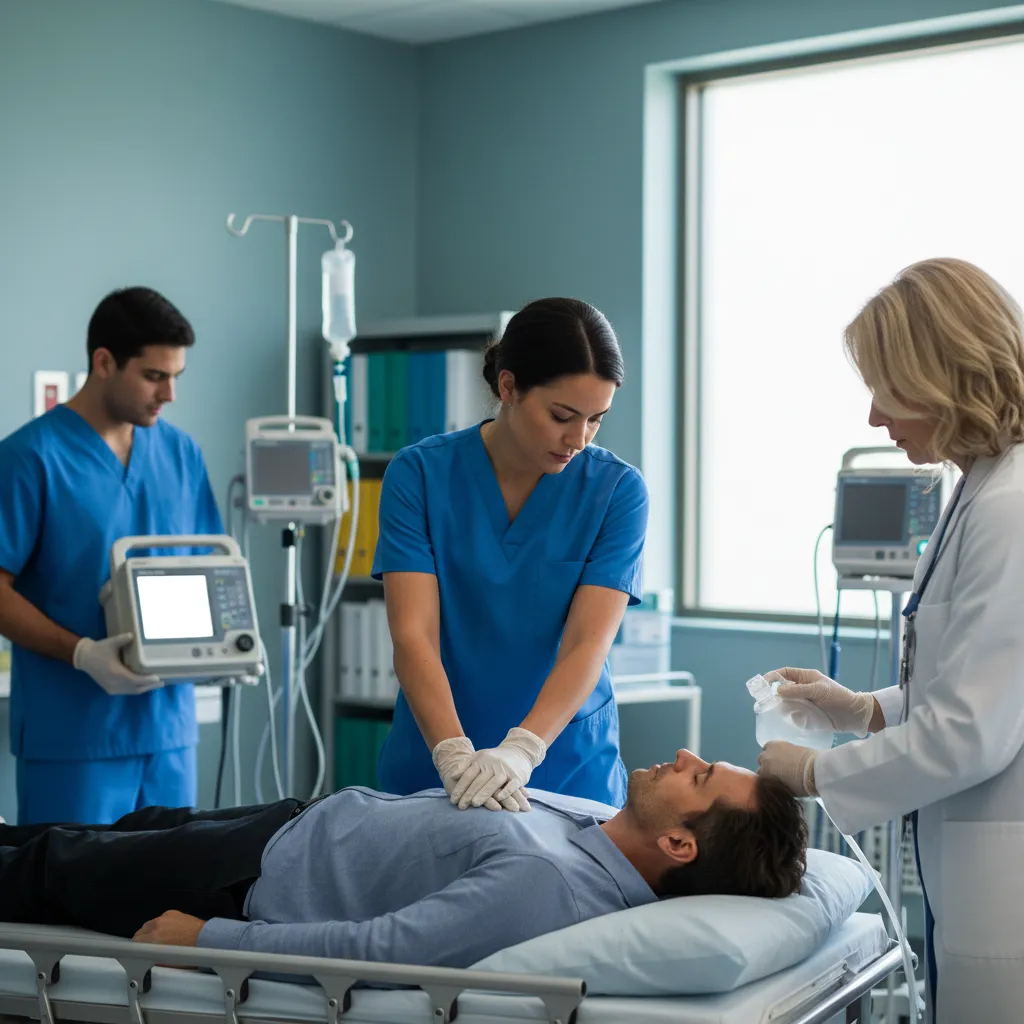
CPR - Cardiopulmonary Resuscitation: Complete Study Guide 2026
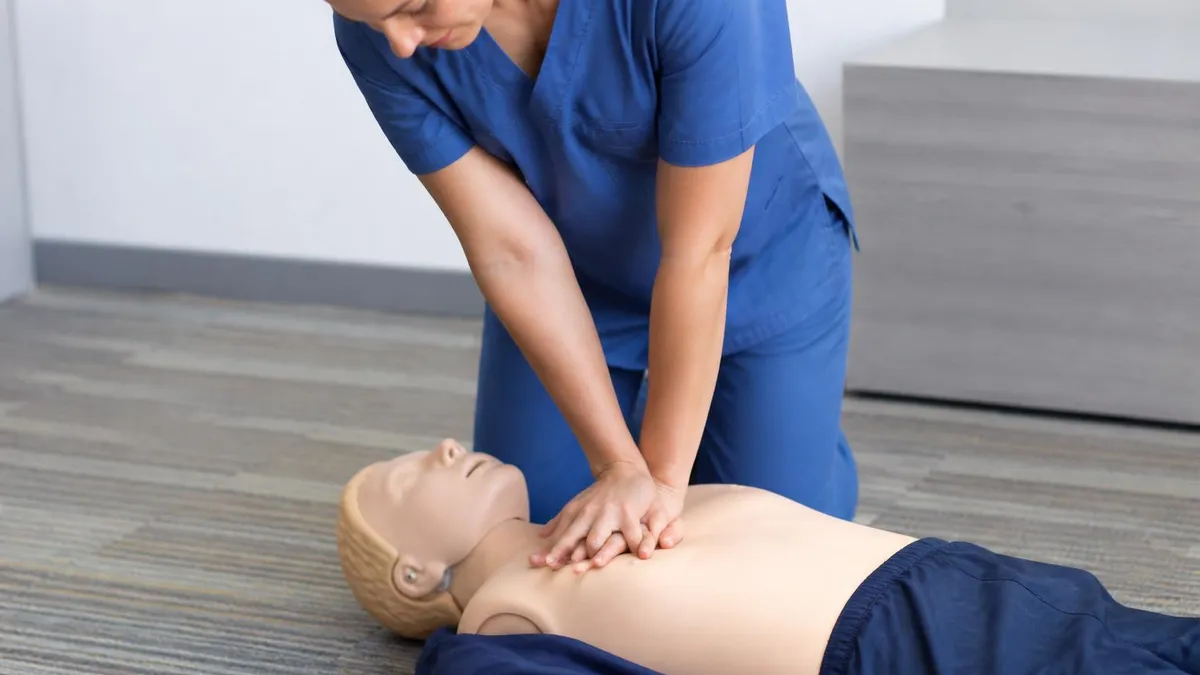
Inappropriate CPR Songs: What Not to Play, Why It Matters, and Better Beat-Per-Minute Alternatives
About the Author

Registered Nurse & Healthcare Educator
Johns Hopkins University School of NursingDr. Sarah Mitchell is a board-certified registered nurse with over 15 years of clinical and academic experience. She completed her PhD in Nursing Science at Johns Hopkins University and has taught NCLEX preparation and clinical skills courses for nursing students across the United States. Her research focuses on evidence-based exam preparation strategies for healthcare certification candidates.
Join the Discussion
Connect with other students preparing for this exam. Share tips, ask questions, and get advice from people who have been there.
View discussion (5 replies)