
CPR Jobs: Complete Guide to Careers, Salaries, and Certifications That Require Lifesaving Skills in 2026 October
Explore CPR jobs in 2026 October: salaries, required certifications like ACLS algorithm and PALS certification, infant CPR training, and top hiring industries. 🎯
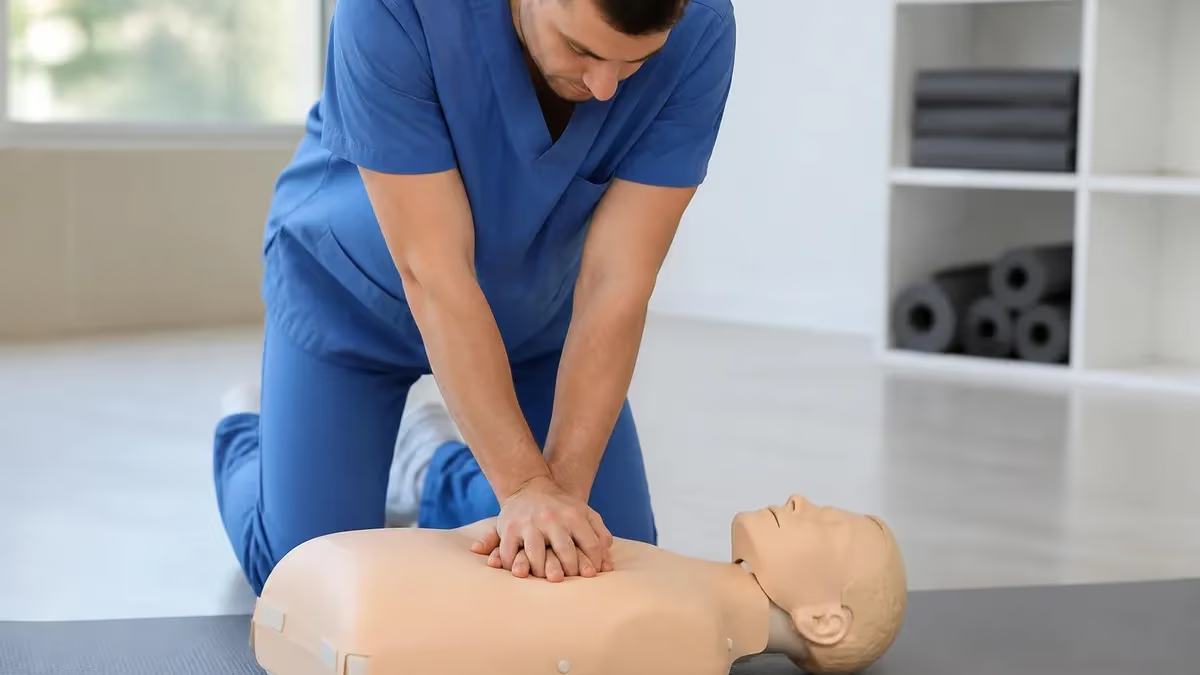
CPR jobs span an enormous range of industries, salaries, and skill levels, making cardiopulmonary resuscitation one of the most universally valuable credentials in the modern workforce. Whether you want to become an emergency room nurse mastering the acls algorithm, a daycare teacher trained in infant cpr, a lifeguard at a community pool, or a flight attendant responding to medical emergencies at 35,000 feet, CPR certification is the common thread that opens doors. In 2026, the demand for CPR-certified workers continues to grow as employers recognize that trained staff save lives and reduce liability.
The U.S. Bureau of Labor Statistics projects that healthcare occupations alone will add about 1.9 million jobs between 2024 and 2034, and the overwhelming majority of these roles require some form of CPR credential. Beyond healthcare, fitness centers, schools, construction sites, corporate offices, hotels, airlines, and even tech campuses now mandate CPR training for designated employees. This widespread adoption means a single afternoon spent earning a CPR card can multiply your job opportunities and bump your starting pay.
This guide breaks down the realistic landscape of CPR jobs: what they pay, which certifications you actually need, how the national cpr foundation and American Heart Association programs differ, and which roles offer the best long-term growth. We'll cover entry-level positions you can land with a basic CPR card, advanced clinical careers that demand pals certification, and side-gig opportunities for instructors who want to teach others. You'll also learn how to verify your current card before applying.
We'll briefly clarify that distinction so you can navigate job boards confidently and filter out unrelated postings.
For job seekers entering healthcare for the first time, knowing what does aed stand for (automated external defibrillator) and being comfortable with position recovery techniques is more than test trivia—these competencies appear on day-one orientation checklists in hospitals, urgent cares, and surgery centers. Employers want candidates who can explain compression depth, recognize agonal breathing, count respiratory rate accurately, and operate an AED without hesitation. If you can demonstrate confidence on those skills during your interview, you'll stand out.
If you're brand-new to the field, brushing up with practice questions like our AHA CPR overview helps you walk into interviews fluent in the terminology hiring managers expect. By the end of this guide, you'll know exactly which CPR certification path aligns with your career goals, how much you can expect to earn at each level, and which credentials to stack to maximize your hiring potential.
We'll also look at remote and hybrid roles, contract opportunities, travel positions, and CPR instructor side income—because not every CPR-certified career happens inside a hospital ward. From corporate trainer to youth sports coach to telehealth triage nurse, the modern CPR job market is broader, more flexible, and better paid than most candidates realize. Let's dig in.
CPR Jobs by the Numbers

Top Industries Hiring CPR-Certified Workers
Nurses, techs, respiratory therapists, and patient care assistants all require active CPR or BLS cards. Many ICU and ER roles also demand the acls algorithm and pals certification on top of basic CPR.
EMTs, paramedics, firefighters, and 911 dispatchers respond to cardiac and respiratory emergencies daily. These roles require CPR plus state-level licensing and ongoing skill verification every two years.
Teachers, school nurses, daycare workers, and after-school program staff need pediatric CPR including infant cpr techniques. Many states mandate it for licensing renewal annually.
Personal trainers, group fitness instructors, lifeguards, ski patrollers, and yoga teachers must maintain CPR cards. Major gym chains require AED training as part of onboarding orientation.
OSHA-designated first responders, construction safety officers, manufacturing floor supervisors, and corporate wellness staff all need CPR. Hazardous worksites often require monthly skills refreshers.
Salary expectations for CPR jobs vary wildly depending on whether CPR is a baseline requirement or a specialized clinical skill layered onto advanced training. At the entry tier, a lifeguard with a basic CPR/AED card might earn $14 to $19 per hour seasonally, while a daycare teacher with pediatric CPR averages around $30,000 to $38,000 annually in most U.S. metros. These roles use CPR as a safety net rather than a primary clinical tool, but the certification is non-negotiable.
Move into the allied health space and the numbers climb quickly. Medical assistants and patient care technicians earn between $36,000 and $46,000, EMTs average around $40,000, and paramedics with advanced cardiac credentials reach $54,000 to $72,000. Registered nurses, who must maintain BLS at minimum and often the acls algorithm certification, command median salaries near $86,000 nationally—with ICU, ER, and PACU specialists frequently exceeding $110,000 once shift differentials and overtime are included.
Specialty clinical roles that require pals certification, neonatal resuscitation, or trauma-specific training pay even better. Pediatric ICU nurses, flight nurses, and critical care transport paramedics regularly clear $100,000 with experience. Anesthesia techs, surgical first assistants, and respiratory therapists who can manage ventilators and monitor respiratory rate continuously sit in the $70,000 to $95,000 band depending on state and facility size. Travel contracts can push these numbers 20 to 40 percent higher temporarily.
Outside of clinical settings, CPR-certified instructors run lucrative side businesses. American Heart Association instructors charge $45 to $95 per student for group classes, and a single Saturday teaching ten students with a co-instructor can net $400 to $800 after card fees. Corporate trainers who contract with local businesses to deliver onsite CPR/AED programs often build five-figure annual side incomes while keeping a full-time clinical role.
Workers there earn $13 to $22 per hour, but the role has nothing to do with lifesaving and shouldn't be confused with clinical CPR jobs when filtering job board search results. Always read postings carefully to avoid wasted application time.
Geographic location matters enormously. California, New York, Massachusetts, Washington, and Hawaii consistently top the salary charts for clinical CPR roles, while the South and Midwest often offer lower nominal pay but stronger cost-of-living adjusted purchasing power. Rural critical-access hospitals frequently pay sign-on bonuses of $5,000 to $20,000 for nurses with current ACLS and PALS credentials because they cannot recruit easily without those incentives. Negotiation matters.
Before applying anywhere, confirm your current credentials are valid using a CPR card lookup tool so you don't list an expired card on a résumé. Hiring managers verify cards through training-organization databases, and a lapsed credential automatically disqualifies you from compliance-driven roles. Renewals are cheap relative to lost wages from a delayed hire, so treat your card like any other professional license.

CPR Practice Test Questions
Prepare for the CPR Cardiopulmonary Resuscitation Practice exam with our free practice test modules. Each quiz covers key topics to help you pass on your first try.
CPR Basic CPR
CPR Exam Questions covering Basic CPR. Master CPR Test concepts for certification prep.
CPR and First Aid
Free CPR Practice Test featuring and First Aid. Improve your CPR Exam score with mock test prep.
CPR (Cardiopulmonary Resuscitation) Adult ...
CPR Mock Exam on (Cardiopulmonary Resuscitation) Adult CPR and AED Usage. CPR Study Guide questions to pass on your first try.
CPR (Cardiopulmonary Resuscitation) Airway...
CPR Test Prep for (Cardiopulmonary Resuscitation) Airway Obstruction and Choking. Practice CPR Quiz questions and boost your score.
CPR (Cardiopulmonary Resuscitation) Cardio...
CPR Questions and Answers on (Cardiopulmonary Resuscitation) Cardiopulmonary Emergency Recognition. Free CPR practice for exam readiness.
CPR (Cardiopulmonary Resuscitation) Child ...
CPR Mock Test covering (Cardiopulmonary Resuscitation) Child and Infant CPR. Online CPR Test practice with instant feedback.
CPR (Cardiopulmonary Resuscitation) High-P...
Free CPR Quiz on (Cardiopulmonary Resuscitation) High-Performance Team Dynamics. CPR Exam prep questions with detailed explanations.
CPR (Cardiopulmonary Resuscitation) Legal ...
CPR Practice Questions for (Cardiopulmonary Resuscitation) Legal and Ethical Considerations. Build confidence for your CPR certification exam.
CPR for Specific Populations
CPR Test Online for for Specific Populations. Free practice with instant results and feedback.
CPR Airway & Breathing Management
CPR Exam Questions covering Airway & Breathing Management. Master CPR Test concepts for certification prep.
CPR Assessment & Recognition of Cardiac Ar...
Free CPR Practice Test featuring Assessment & Recognition of Cardiac Arrest. Improve your CPR Exam score with mock test prep.
CPR Chest Compressions & Defibrillation
CPR Mock Exam on Chest Compressions & Defibrillation. CPR Study Guide questions to pass on your first try.
CPR Post-Resuscitation Care & Recovery
CPR Test Prep for Post-Resuscitation Care & Recovery. Practice CPR Quiz questions and boost your score.
Certifications Required: BLS, ACLS Algorithm, and PALS Certification
Basic Life Support is the foundational credential for nearly every CPR job in the country. It covers adult, child, and infant cpr techniques, AED operation, choking response, and team-based resuscitation in healthcare settings. Most courses run four hours, end with a hands-on skills check, and produce a card valid for two years from organizations like the American Heart Association, American Red Cross, or national cpr foundation.
BLS is the minimum bar for nursing assistants, medical assistants, dental hygienists, optometry techs, and most allied-health entry roles. If you can answer what does aed stand for and demonstrate proper compression depth and rate, you'll pass. Employers generally accept any nationally recognized BLS card, though some hospital systems specifically require AHA-issued cards for compliance auditing purposes.
Is a CPR-Required Career Right for You?
- +High job security across multiple industries that always need certified responders
- +Stackable credentials let you grow income by adding ACLS, PALS, NRP, or TNCC over time
- +Transferable skill set — your card works at any compliant employer nationwide
- +Strong sense of purpose from being able to intervene during real emergencies
- +Many employers fully reimburse certification and renewal costs as continuing education
- +Side-income potential as an instructor offers flexible weekend or evening earnings
- +Pathway into healthcare even for career changers without a four-year degree
- −Renewal every two years requires time, money, and skills testing you must schedule
- −High-acuity roles carry emotional weight and risk of compassion fatigue or burnout
- −Some jobs require nights, weekends, holidays, and 12-hour rotating shifts year-round
- −Liability exposure exists if you fail to act or act incorrectly while on duty
- −Initial certification cost ($75–$250) can be a barrier without employer reimbursement
- −Maintaining proficiency demands ongoing practice beyond the formal renewal classes
Pros and Cons at a Glance
| Pros | Cons |
|---|---|
| High job security across multiple industries that always need certified responders | Renewal every two years requires time, money, and skills testing you must schedule |
| Stackable credentials let you grow income by adding ACLS, PALS, NRP, or TNCC over time | High-acuity roles carry emotional weight and risk of compassion fatigue or burnout |
| Transferable skill set — your card works at any compliant employer nationwide | Liability exposure exists if you fail to act or act incorrectly while on duty |
| Strong sense of purpose from being able to intervene during real emergencies | Maintaining proficiency demands ongoing practice beyond the formal renewal classes |

CPR Jobs Application Checklist
- ✓Verify your current CPR or BLS card is unexpired and from a recognized issuer
- ✓Take a card lookup screenshot to attach with your application if requested
- ✓Stack ACLS, PALS, NRP, or first-aid credentials relevant to the role you want
- ✓Update your résumé with each card's issue date, expiration date, and issuing organization
- ✓Practice answering scenario questions about compression rate, depth, and AED pad placement
- ✓Review respiratory rate norms for adults, children, and infants before clinical interviews
- ✓Prepare a one-sentence explanation of what does aed stand for and when to apply it
- ✓Research the employer's preferred certifying body — some require AHA-specific cards
- ✓Schedule renewals at least 30 days before expiration to avoid employment gaps
- ✓Save digital and printed copies of every card in a secure folder for quick HR uploads
Bring printed proof of every certification
HR systems frequently lose digital uploads, and clinical managers love candidates who hand them a clean printout of CPR, ACLS, and PALS cards during the interview. It signals organization, professionalism, and readiness to start orientation immediately without paperwork delays. Print two copies and store one in your portfolio.
Career growth in CPR-related jobs follows predictable but flexible pathways, and understanding them helps you plan credential stacking strategically rather than reactively. Many workers begin as certified nursing assistants, medical assistants, or EMT-Basics earning entry-level wages, then progress into licensed roles after one to three years. A common trajectory: CNA at age 19, LPN at 21, RN at 24, ICU specialty with the acls algorithm certification at 26, nurse practitioner by 30. Each step roughly doubles earning potential.
Emergency services follow a parallel ladder. EMT-Basics often complete paramedic school within two years, then move into critical care transport, flight medicine, or fire department promotion tracks. Some transition into physician assistant programs or emergency medicine residencies. The skill of leading a code using a standardized resuscitation framework becomes the centerpiece of every interview, performance review, and promotion conversation throughout these careers.
For workers outside traditional healthcare, CPR credentials accelerate movement into safety, training, and compliance roles. A construction worker with first-aid and CPR cards can become an OSHA-designated safety officer, then a site safety manager, then a regional safety director. A fitness instructor can transition into corporate wellness coordination, gym management, or even rehabilitation-focused personal training that requires ACSM and CPR combined credentials for clinical exercise specialist certifications.
Teaching CPR itself is its own career path. Becoming an American Heart Association instructor requires a current provider card, a one-day instructor course, and alignment with a Training Center. Once aligned, you can teach BLS, ACLS, PALS, Heartsaver, and bloodborne pathogens classes, set your own schedule, and charge market rates. Some instructors build franchise-like training businesses with multiple employees and corporate contracts producing six-figure revenue.
Within nursing, advanced certifications like CCRN (critical care), CEN (emergency), and TCRN (trauma) compound on top of ACLS and PALS to drive 10 to 20 percent salary premiums and prioritized hiring at top hospitals. These are nationally administered exams that confirm specialty mastery and signal long-term commitment to a clinical area. Many magnet-designated hospitals require these certifications for charge-nurse and clinical-coordinator roles within two years of hire.
Telehealth and remote roles increasingly value CPR-certified clinicians too. Telephone triage nurses, on-demand telehealth providers, and virtual urgent care physicians often must maintain BLS even though they don't physically deliver chest compressions, because their employers' insurance and accreditation standards demand it. This opens flexible, home-based jobs for parents, semi-retired clinicians, and those with mobility limitations who still want to use clinical credentials productively from home offices.
Don't overlook government roles either—the VA, Indian Health Service, Department of Defense civilian positions, federal prisons, and CDC quarantine stations all hire CPR-certified clinical and support staff with strong federal benefits, pensions, and student-loan forgiveness pathways. These positions are often overlooked because they require Schedule A applications through USAJobs, but the long-term compensation including healthcare, retirement, and leave generally exceeds private-sector totals for equivalent clinical roles after five years of service.
Some online "CPR certification" sites issue cards in minutes without any hands-on skills testing, and many employers reject those credentials outright. Stick with AHA, American Red Cross, ASHI, or other organizations recognized by your target employer. When in doubt, call the hiring manager and ask which issuers they accept before paying for any course.
The skills that separate top-performing CPR-certified workers from average ones go far beyond passing a once-every-two-years skills test. Employers consistently report that what they want most is calm, confident competence during real emergencies, and that comes only from deliberate practice between renewals. Mentally rehearsing scenarios, watching simulation videos, and joining workplace mock codes builds the automatic muscle memory that prevents freezing when seconds matter and a patient's life depends on flawless execution.
Compression mechanics matter more than most candidates realize. Hiring managers and code-team leaders watch closely for proper hand placement, full chest recoil, compression depth of at least 2 inches in adults, and a rate of 100 to 120 per minute. Switching compressors every two minutes to prevent fatigue is part of every team-based protocol. If you can rotate smoothly without breaking compression rhythm, you'll quickly earn a reputation as someone who actually knows the work.
Airway management and ventilation skills round out the technical core. Knowing how to position the head, perform a jaw thrust on a trauma patient, time bag-mask ventilations to compressions during the 30:2 ratio for single rescuers, and synchronize with advanced airway placement separates true clinical performers from check-the-box certificate holders. Practicing on manikins at home or during shift downtime makes a measurable difference on real cases. Asking experienced coworkers for feedback also accelerates skill growth.
Recognition of subtle warning signs is equally critical. Counting respiratory rate over a full 60 seconds rather than guessing, noting agonal breathing patterns that look deceptively like normal breaths, identifying mottled skin, and recognizing the position recovery requirements for unresponsive but breathing patients all reflect the depth employers want. These details rarely come up on certification exams but appear constantly in real bedside care and define how clinicians earn promotions, charge-nurse roles, and specialty unit transfers throughout their careers.
Communication skills bridge technical competence and team performance. Closed-loop communication—announcing each medication order, the dose, the route, and confirmation when administered—prevents medication errors during high-stress codes. Speaking with families during and after resuscitation, debriefing with team members, and documenting accurately for the medical record all matter as much as compressions. Strong communicators routinely advance into team-leader and educator roles within five to seven years of starting their clinical careers.
Finally, lifelong learning attitudes win careers. CPR guidelines update every five years, drug protocols shift, technology evolves, and new evidence reshapes best practices regularly. Top performers subscribe to journals, attend conferences, listen to clinical podcasts during commutes, and treat every code as a learning opportunity to dissect afterward. If you bring that mindset, your CPR career—whether you start as a lifeguard or a paramedic—will keep paying dividends in skill, income, and impact for decades. Curiosity is the multiplier.
For broader study reinforcement that complements on-the-job learning, working through a complete CPR study guide helps you connect classroom theory to bedside reality. Reviewing one or two scenarios weekly keeps your reflexes sharp, your terminology fluent, and your confidence high so that when the next opportunity for promotion or a stretch assignment appears, you're the obvious choice your manager already trusts.
Practical job-search tactics make a measurable difference in how quickly you land your preferred CPR-required role. Start by mapping your target industry: hospitals post on Indeed, LinkedIn, and their own career portals; fire and EMS agencies use civil-service application systems with annual or biannual hiring windows; school districts post through state-level education boards; and private gyms or daycares often hire through referrals. Tailoring your application channel to the industry shaves weeks off your search and meaningfully improves response rates.
Customize your résumé for every posting by mirroring the exact certification language the employer lists. If they write "BLS for Healthcare Providers," use that phrase, not "basic CPR." If they require pals certification, list it with the issuing organization, issue date, expiration date, and certificate number. Applicant tracking systems scan for these exact strings, and applications that omit them get filtered out automatically before any human reviewer ever sees your name, qualifications, or carefully written cover letter.
Cover letters still matter for CPR-required roles, especially in nursing and EMS where culture fit and reliability weigh heavily. Briefly describe a real or simulated emergency you handled, what you did, what you learned, and why you want to bring that mindset to the employer's team. Two short paragraphs beat a long generic letter every time. Use the second paragraph to connect your specific certifications to the unit, school, or service line you're applying to join—specificity persuades.
Interview preparation should include both behavioral and clinical questions. Be ready to walk through the acls algorithm step by step for an arrest scenario, explain pediatric drug dosing concepts if relevant, and demonstrate how you'd respond to a choking infant. Behavioral questions often start with "Tell me about a time when…" so prepare three or four concrete stories that highlight teamwork, calm-under-pressure performance, and willingness to escalate concerns up the chain quickly and respectfully when patient safety is at risk.
Negotiation is a step too many candidates skip, especially in healthcare. Once you receive an offer, request 24 to 48 hours to review it, then come back with a counter that references regional pay data from sites like Salary.com, Payscale, or BLS Occupational Employment Statistics. Sign-on bonuses, certification reimbursements, tuition assistance, and shift differentials are often more negotiable than base hourly rate. Even a modest five-percent improvement compounds significantly over a 30-year career and adds tens of thousands of dollars to your lifetime earnings total.
After you accept, invest in your first 90 days. Show up early, ask questions, volunteer for committee work, and attend every optional in-service training. Building relationships with charge nurses, preceptors, medical directors, and educators positions you for promotions, schedule flexibility, and reference letters that compound into future career moves. Reliability and curiosity are universally noticed and remembered—those traits get you on the short list whenever specialty openings appear or a manager needs to recommend someone trustworthy for a stretch role.
Finally, keep your professional development continuous. Join your specialty's professional association (AACN for critical care, ENA for emergency, AANP for nurse practitioners), subscribe to one clinical journal, and renew certifications early rather than at the last minute. Treating your CPR-driven career as a long-term professional identity rather than a job-to-job grind transforms how employers perceive you and how much they'll invest in your growth. Within five years, the candidates who do this are running departments, teaching new hires, and earning twice what their peers do.
CPR Questions and Answers
CPR Card Lookup: How to Verify, Replace, and Access Your CPR Certification in 2026
AHA CPR: What It Is, Which Course You Need, and How to Get Certified
Adult CPR: Complete Step-by-Step Guide to Hands-Only and Standard CPR in 2026
CPR - Cardiopulmonary Resuscitation: Complete Study Guide 2026
Inappropriate CPR Songs: What Not to Play, Why It Matters, and Better Beat-Per-Minute Alternatives
About the Author

Registered Nurse & Healthcare Educator
Johns Hopkins University School of NursingDr. Sarah Mitchell is a board-certified registered nurse with over 15 years of clinical and academic experience. She completed her PhD in Nursing Science at Johns Hopkins University and has taught NCLEX preparation and clinical skills courses for nursing students across the United States. Her research focuses on evidence-based exam preparation strategies for healthcare certification candidates.
Join the Discussion
Connect with other students preparing for this exam. Share tips, ask questions, and get advice from people who have been there.
View discussion (5 replies)