
CPR Dog Dummy for Sale: Complete Guide to Choosing and Using CPR Training Manikins
Find the best CPR dog dummy for sale. Learn how manikins improve ACLS algorithm training, infant CPR skills & life support readiness. ✅
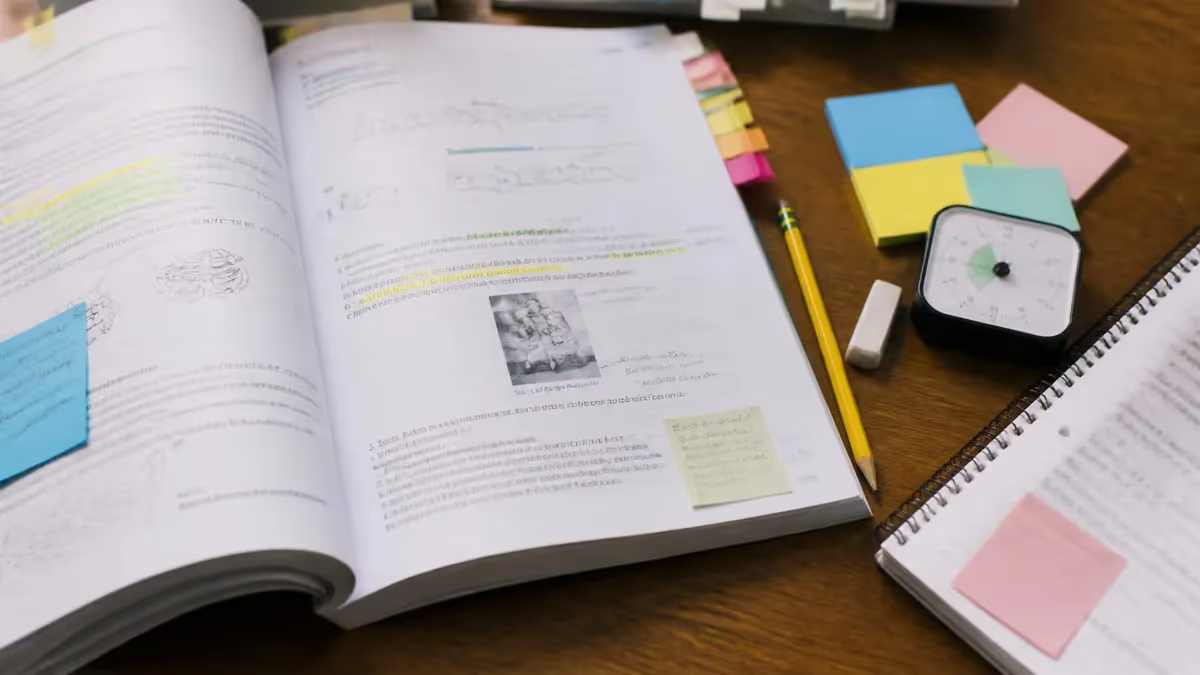
The acls algorithm is one of the most demanding skill sets in emergency medicine, and no amount of reading can replace hands-on repetition with a high-quality cpr dog dummy or full-body manikin. Whether you are a pet owner hoping to save a beloved animal, a veterinary technician building muscle memory, or an emergency responder cross-training in animal-assisted rescue, the right training prop makes the difference between a confident rescuer and a hesitant bystander. Modern manikins replicate the chest compliance, airway geometry, and feedback mechanics of real patients so learners can develop correct technique before an emergency occurs.
Selecting the right manikin starts with understanding what you intend to practice. A cpr dog dummy designed for canine resuscitation differs substantially from a standard adult torso — it mirrors the barrel-chested anatomy of medium to large breeds, includes a snout-shaped airway for mouth-to-snout rescue breathing, and provides tactile feedback when compressions reach the correct depth of one-third to one-half the chest width. Veterinary schools, animal shelters, and pet first aid organizations routinely use these props to certify staff and educate the public on how to respond when a dog collapses from cardiac or respiratory arrest.
Beyond animal-specific props, the broader market for cpr dummy for sale products spans infant CPR manikins, adult torso trainers, full-body simulators, and feedback-equipped digital models. Understanding the spectrum helps buyers invest wisely. A shelter purchasing its first training aid will have different needs than a regional EMS agency standardizing manikins across thirty stations. Price points range from under one hundred dollars for basic foam torsos to several thousand dollars for simulator-grade models with app-connected compression analytics.
The national cpr foundation and the American Heart Association both emphasize that skill retention drops sharply within weeks of initial training if learners do not practice on a physical manikin. Studies cited in AHA guidelines show that rescuers who practiced compressions on a manikin at least once every three months maintained significantly higher rates of correct hand placement, adequate depth, and appropriate rate compared to those who only reviewed written materials.
This evidence makes the case for keeping a training dummy accessible — at home, in the workplace, or in a community center — rather than relying solely on periodic formal classes.
Infant CPR manikins deserve special mention because the anatomical and technique differences from adult CPR are profound. An infant dummy must replicate the fragile neck, the proportionally larger head, and the two-finger compression technique recommended for neonates. Parents of newborns, daycare workers, and school nurses who invest in an infant-specific manikin can rehearse the critical sequence — thirty compressions followed by two gentle puffs — until it becomes automatic. That automaticity is what saves lives in the panicked minutes before emergency medical services arrive.
PALS certification programs (Pediatric Advanced Life Support) require candidates to demonstrate proficiency on both infant and child manikins under simulated clinical conditions. Having access to a quality manikin outside of class allows candidates to rehearse the team dynamics, compression-to-ventilation ratios, and rhythm recognition that PALS examiners evaluate. Many candidates report that personal or workplace manikin access was the single biggest factor in their first-attempt pass rate, reducing the cost and stress of retesting.
This guide walks you through every dimension of selecting, evaluating, and using CPR training manikins — from understanding what a respiratory rate of ten to twelve breaths per minute feels like when practiced on a dummy, to knowing which features justify a premium price, to maximizing the return on your training investment. By the end, you will have the information you need to make a confident purchase and build a practice routine that keeps your skills sharp year-round.
CPR Training Manikins by the Numbers

Types of CPR Training Manikins
The most common training tool, replicating the adult chest for hand-placement practice, compression depth feedback, and rescue breathing. Ranges from basic foam models to sensor-equipped digital versions that connect to coaching apps for real-time performance data.
Scaled to newborn proportions, these manikins teach the two-finger compression technique and gentle puff ventilation required for neonates. Essential for PALS certification candidates, daycare staff, pediatric nurses, and new parents seeking hands-on infant CPR confidence.
Anatomically modeled on medium to large breed dogs, these manikins include a snout-shaped airway for mouth-to-snout breathing practice and a barrel chest that provides authentic compression resistance. Widely used by veterinary schools, shelters, and pet first aid courses.
Advanced training platforms used in hospital simulation labs and ACLS algorithm courses. They feature programmable heart rhythms, reactive pupils, and real-time vital sign displays, allowing teams to practice complex resuscitation scenarios including defibrillation and drug administration sequences.
Mid-range manikins that pair with Bluetooth apps to score compression rate, depth, recoil, and hand position after each practice session. Ideal for individual learners preparing for national CPR foundation certification exams or PALS recertification without instructor oversight.
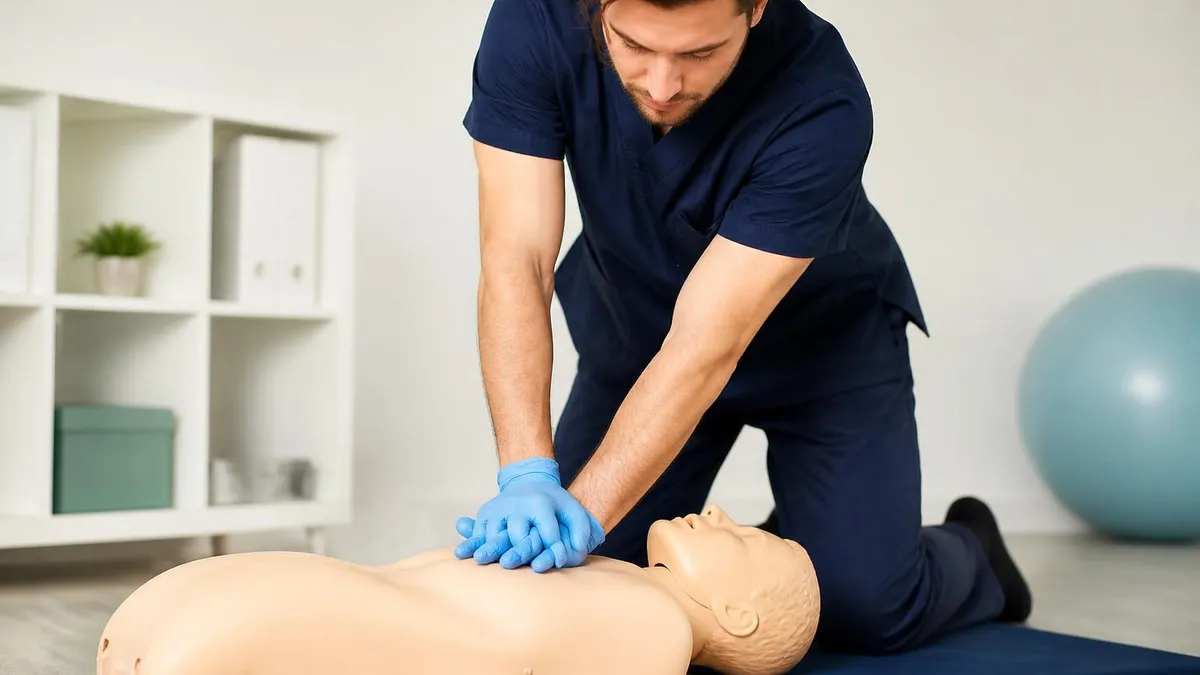
When evaluating any manikin — whether a cpr dog dummy or a human adult torso — the single most important feature is realistic chest compliance. Compliance refers to how much resistance the dummy provides when you press down.
A dummy that collapses too easily will train you to use insufficient force, while one that is too rigid will build the wrong muscle memory and may actually discourage learners from pushing hard enough in a real emergency. High-quality manikins are engineered to require approximately five to six centimeters of compression depth for adults and proportionally less for infants and animals, matching real tissue resistance.
Airway realism is the second critical dimension. Rescue breathing requires that the rescuer tilt the head, lift the chin, create a seal, and deliver a breath that visibly raises the chest without causing stomach inflation. A well-designed manikin will have a chest-rise indicator — often a small window or a rising chest wall — that confirms successful ventilation. Without this feedback, learners may develop the habit of incomplete seal formation or excessive breath volume, both of which reduce the effectiveness of real-world ventilations and are flagged as errors in acls algorithm evaluations.
The life support training community has increasingly embraced feedback technology embedded directly into manikins. Leading brands such as Laerdal, Prestan, and Nasco offer models in which accelerometers and pressure sensors transmit compression data wirelessly to a companion app or dashboard. Instructors can review session logs, identify individual learners who consistently compress too shallowly or allow incomplete recoil, and target corrective coaching. For group courses, some systems display a real-time leaderboard showing each participant's compression quality score, introducing healthy competition that accelerates skill acquisition.
What does AED stand for? Automated External Defibrillator — and many premium manikins now include AED trainer integration. AED trainers are non-functional devices that mimic the prompts and pad placement of real defibrillators, allowing learners to practice the full cardiac arrest response sequence: call 911, begin CPR, retrieve and power on the AED, attach pads, analyze rhythm, and deliver a shock. Integrating AED practice with compression training is now considered best practice by the AHA because the two skills are inseparable in the chain of survival.
Durability and hygiene are practical considerations that significantly affect the total cost of ownership. Classroom manikins are shared by dozens of learners per year and must withstand repeated compression cycles without structural degradation. Look for manikins with replaceable face shields, removable lung bags, and antimicrobial skin surfaces that can be disinfected between users with standard wipes. Some manikins are designed as multi-patient systems where each learner receives a disposable face shield pack, eliminating concern about cross-contamination without requiring full disinfection between stations.
Portability matters for organizations that teach CPR at multiple locations. Lightweight manikins that pack flat or fold into a carrying bag are far more practical for community health educators, corporate wellness trainers, or veterinary technicians who conduct pet first aid workshops at parks and pet stores. Conversely, a permanent simulation lab may prioritize full-body fidelity over portability, opting for weighted manikins mounted on articulating frames that allow repositioning into the position recovery technique — the lateral recovery position used for unconscious but breathing victims — as part of comprehensive first aid training.
Budget planning should account for accessories as well as the manikin itself. Disposable face shields, replacement lung bags, compression mat pads, and carrying cases all add to the total expenditure. Some organizations pair manikin purchases with laminated quick-reference cards showing the acls algorithm steps and post them near the dummy for self-directed learners to follow during solo practice sessions. Factor in these consumables when comparing vendor pricing, as a lower upfront manikin cost can be offset by expensive proprietary accessories that are not interchangeable with competing brands.
ACLS Algorithm Training with Manikins
The acls algorithm encompasses a structured decision tree that guides responders through rhythm recognition, medication administration, airway management, and defibrillation. Practicing these steps on a high-fidelity manikin — ideally one with a programmable cardiac monitor display — allows teams to drill the precise sequence without endangering a real patient. Hospital simulation centers use scenario-based exercises where a facilitator can trigger rhythm changes mid-scenario, forcing the team to adapt their algorithm response in real time and developing the adaptive thinking that code blue situations demand.
Advanced cardiac life support training typically requires candidates to demonstrate competency in at least four distinct arrest rhythms: ventricular fibrillation, pulseless ventricular tachycardia, asystole, and pulseless electrical activity. Each rhythm calls for a different algorithmic response, and manikin-based simulation is the only safe way to rehearse these divergent pathways repeatedly. Programs accredited by the national cpr foundation and the AHA require a minimum number of manikin practice hours before candidates sit for written and skills examinations, reflecting the evidence that simulation time is the strongest predictor of first-attempt pass rates.

Owning vs. Renting a CPR Training Manikin
- +Practice anytime without scheduling a class or facility reservation
- +Builds consistent muscle memory through frequent short sessions rather than one annual class
- +Enables group practice for families, workplace teams, and community organizations
- +Long-term cost savings compared to repeated rental fees over multiple years
- +Allows personalized pace — beginners can repeat sequences until confident
- +Supports ongoing skill maintenance between formal recertification courses
- −Upfront cost can be significant, especially for feedback-equipped or animal-specific models
- −Storage space required, particularly for full-body or multi-station manikins
- −Consumable accessories such as face shields and lung bags add recurring expenses
- −Without instructor oversight, bad habits can develop and go uncorrected
- −Manikins require periodic cleaning and replacement of worn components
- −Depreciation — older manikins may not reflect updated AHA guideline compression targets
CPR Manikin Pre-Purchase Checklist
- ✓Confirm the manikin matches the patient population you will train for (adult, infant, or animal).
- ✓Verify that compression depth feedback is accurate and calibrated to current AHA guidelines (5–6 cm for adults).
- ✓Check whether replacement lung bags and face shields are available and affordably priced from the manufacturer.
- ✓Assess whether the manikin's chest compliance realistically simulates human or animal tissue resistance.
- ✓Determine if an AED trainer is compatible with or bundled into the manikin system for integrated practice.
- ✓Evaluate portability — confirm the unit fits in its carrying case and weighs no more than your team can transport comfortably.
- ✓Research cleaning requirements and confirm the skin surface is compatible with standard CPR manikin disinfectant wipes.
- ✓Compare warranty terms — leading brands typically offer one to two years on the manikin body and ninety days on electronics.
- ✓If purchasing a digital feedback model, test the companion app on your specific mobile operating system before committing.
- ✓Request a demonstration or trial period if buying in bulk for an organization to ensure instructor satisfaction before full deployment.
The 100-Compression Rule for Skill Retention
Research published in Resuscitation journal found that rescuers who performed at least 100 compression cycles on a manikin within two weeks of initial CPR training retained correct technique at a rate 62% higher than those who only reviewed written materials. Short, frequent sessions of five to ten minutes on a training dummy are dramatically more effective than a single annual class for maintaining the depth, rate, and recoil accuracy that saves lives.
Understanding what does AED stand for — Automated External Defibrillator — is foundational to any comprehensive CPR training program, and modern manikin-based curricula integrate AED practice from the very first session. The chain of survival concept, articulated in every major resuscitation guideline, places early defibrillation as the third critical link after early recognition and early CPR.
AED trainer devices connected to manikin training systems allow learners to rehearse the full sequence: recognize unresponsiveness, call for help, begin compressions, retrieve the AED, power it on, apply pads to the correct anatomical landmarks, allow rhythm analysis, clear the victim, and deliver a shock — all before completing their first two-minute CPR rotation.
The respiratory rate component of CPR is frequently undertrained because learners focus almost exclusively on compressions during manikin practice. However, current AHA guidelines specify that rescue breaths should be delivered at a rate of ten to twelve per minute during two-rescuer CPR with an advanced airway in place, and one breath every five to six seconds during single-rescuer CPR.
Practicing with a manikin that has a visible chest-rise indicator trains the rescuer to pace ventilations correctly — long enough to produce visible chest rise (approximately one second each) and spaced appropriately to avoid hyperventilation, which can paradoxically reduce coronary perfusion pressure during resuscitation.
The position recovery technique — placing an unconscious but breathing victim on their side in the lateral recovery position — is a skill that many CPR courses include in the latter portion of training and that benefits directly from manikin practice.
Placing a full-body manikin in the recovery position teaches the sequence of steps: extending the near arm, crossing the far arm over the chest, bending the far knee, rolling the body in a controlled motion, and positioning the head to keep the airway open. Without a physical prop of appropriate size and weight, this maneuver is difficult to visualize and nearly impossible to practice safely on a real person in a classroom setting.
For organizations concerned about life support readiness across a workforce, a tiered manikin investment strategy makes financial sense. Entry-level foam torso manikins costing thirty-five to eighty dollars are suitable for awareness-level training and annual refreshers for general staff. Mid-tier feedback manikins in the two-hundred to eight-hundred dollar range serve teams with a higher duty of care, such as security personnel, lifeguards, and industrial first responders. Advanced simulator-grade units costing two thousand dollars and above belong in medical training programs, nursing schools, EMS academies, and hospital simulation labs where the complexity and fidelity of clinical scenarios justifies the investment.
The national cpr foundation recognizes that access to training equipment is a significant barrier to CPR skill acquisition in underserved communities. Several national programs — including PulsePoint Foundation, the AHA's CPR in Schools initiative, and various state-level firefighter foundations — distribute subsidized or donated manikins to schools, community centers, and faith organizations. If your organization is budget-constrained, researching grant programs, equipment donation networks, and community lending programs can dramatically reduce or eliminate the upfront cost of quality training manikins.
This analogy resonates with the data: AHA research indicates that CPR skills decay to below-threshold performance levels within three to twelve months of initial training without reinforcement. A home manikin serves as the charger in this analogy, available whenever a quick five-minute refresher is needed to keep skills at peak performance.
PALS certification candidates frequently ask whether practicing on an adult manikin will adequately prepare them for pediatric assessments. The honest answer is: partly, but not fully. Adult manikin practice builds the fundamental compression mechanics and rescue breathing habits that transfer to pediatric care, but the nuanced differences in compression depth targets, head tilt angles, and ventilation volumes for infants and children require dedicated practice on age-appropriate manikins.
Organizations that provide PALS preparation courses invariably include both adult and pediatric manikin stations in their skills labs, and candidates who arrange supplemental practice time on infant manikins between class sessions consistently outperform those who do not.

A CPR dog dummy prepares you to respond in the critical minutes before veterinary help arrives, but it is not a substitute for professional emergency veterinary care. If your dog experiences cardiac or respiratory arrest, initiate CPR immediately and simultaneously have someone call a 24-hour emergency veterinary clinic. CPR on animals has a significantly lower survival rate than human CPR — roughly 6% to 8% in out-of-hospital settings — making rapid transport to a veterinary facility an essential parallel action, not an afterthought.
Integrating manikin practice into an organization's ongoing safety culture requires a structured approach rather than ad hoc availability. The most effective workplace CPR programs designate a specific manikin location — a break room cabinet, a safety office shelf, or a mounted wall bracket — and establish a clear expectation that staff will perform a minimum of one five-minute practice session per month. Some organizations pair manikin access with a simple logbook where staff record their practice date and self-assessed compression quality, creating accountability without the overhead of formal instructor-led refresher classes.
The question of which manikin brand to select often comes down to ecosystem compatibility. Organizations already using Laerdal's QCPR app across their ALS training will benefit from purchasing Laerdal's compression feedback manikins to maintain a unified data platform. Those primarily delivering community education courses may prefer Prestan's budget-friendly multi-pack sets, which provide one manikin per learner at a cost that remains practical even for nonprofits and community health departments. Nasco's line of anatomical training models, including their veterinary CPR manikins, is widely used in veterinary technology programs for its detailed anatomical accuracy and durability under repeated use.
Maintenance protocols directly affect both the lifespan of the manikin and the hygiene safety of learners who share it. After each class session, all manikin surfaces that contacted skin should be wiped with a 1:100 bleach solution or an EPA-registered disinfectant specifically approved for CPR manikins. Lung bags should be replaced between learners in high-throughput settings, or each learner should use their own color-coded face shield to minimize cross-contamination risk. Annual inspection of chest compression mechanisms, spring tension, and airway connectors ensures that the manikin continues to provide accurate resistance feedback throughout its operational life.
For individuals purchasing a personal manikin for home practice, storage and setup simplicity are critical. The best home-use manikins fold flat to the thickness of a yoga mat and store in a thin zippered bag under a bed or in a closet. Setup should take under sixty seconds so that the friction of assembling equipment does not become a barrier to spontaneous five-minute practice sessions. Several brands offer manikins pre-loaded with a laminated quick-start card attached to the carrying bag, eliminating the need to recall the full setup sequence between practice sessions spaced weeks apart.
Before finalizing any manikin purchase, it is worth confirming that the model is explicitly compatible with the certification curriculum you intend to use it for. Some acls algorithm simulation courses require manikins that accept simulated IV access ports or endotracheal intubation equipment, features that standard compression-only training manikins do not include. Verify with your course provider which manikin specifications are required before investing in a model that may not satisfy skills station requirements. This is especially important for advanced certifications where the manikin specifications are defined in the provider manual and evaluated during the practical examination.
Community lending programs represent an increasingly popular model for democratizing access to CPR training equipment. Public libraries, fire departments, and public health agencies in dozens of U.S. cities now operate manikin lending programs modeled on book lending — residents check out a manikin kit for a week or two, practice at home, and return it for the next borrower.
If you are interested in starting such a program, the AHA's community CPR initiative provides organizational templates, sanitization guidelines, and grant funding information. These programs have been shown to increase CPR-trained household prevalence by fifteen to twenty-five percent in neighborhoods where they operate, demonstrating that access to a physical training dummy is a genuine public health lever.
When searching for the best options, remember that the market for training equipment overlaps with retail channels that sell secondhand or reconditioned manikins at substantial discounts. Medical surplus dealers, nursing school liquidation sales, and EMS equipment auctions regularly list manikins at thirty to fifty percent below retail price. Inspect used manikins carefully for cracked chest plates, degraded spring tension, and missing airway components before purchasing.
A unit that looks intact externally may no longer provide accurate compression depth feedback if its internal spring mechanism has fatigued — and inaccurate feedback is arguably worse than no feedback at all, because it trains the wrong technique with false confidence. If you want full details on maintaining your certification alongside your equipment investment, explore our guide to cpr dummy for sale options alongside certification renewal timelines.
Building a practical home or workplace CPR practice routine requires thinking in terms of weekly micro-sessions rather than monthly marathons. Research from resuscitation science consistently shows that six five-minute sessions distributed across a week produce significantly better skill retention than a single thirty-minute session. This finding has profound implications for how you schedule manikin use: keep the dummy accessible and visible, set a phone reminder for a brief Monday-Wednesday-Friday morning drill, and track your compression quality scores in the feedback app over time to observe your own improvement curve and identify persistent weaknesses before they become ingrained habits.
One of the most overlooked aspects of manikin practice is the deliberate rehearsal of pre-compression steps. In real cardiac arrest situations, rescuer hesitation most commonly occurs at the decision point — the moment between recognizing unresponsiveness and committing to compressions.
Practicing the full entry sequence on your manikin — tap shoulders, shout, check breathing, call 911 or direct a bystander to call, position hands, begin compressions — builds the neural pathway for rapid action that bypasses the freeze response. Some training experts recommend practicing this entry sequence in dim lighting or with background noise to simulate the cognitive load of a real emergency rather than a calm classroom.
Understanding the full scope of life support training available in the United States helps buyers make smarter equipment decisions. Basic Life Support (BLS) is the entry-level certification appropriate for most healthcare providers and many lay responders. ACLS builds on BLS with pharmacological and electrical interventions. PALS adds pediatric-specific protocols.
Each level benefits from different manikin features — BLS needs compression feedback and basic airway mechanics; ACLS needs rhythm recognition integration and possibly IV access ports; PALS needs infant and child manikins with pediatric-specific calibration. Knowing which certification you are targeting focuses your investment on the features that actually matter for your exam and practice needs.
For pet owners, the investment in a cpr dog dummy pays its greatest dividend when combined with a structured pet first aid course. Several national organizations including the American Red Cross, PetTech, and ProPetHero offer pet first aid certification programs that include canine and feline CPR modules with hands-on manikin stations.
Completing a formal course teaches you the complete emergency response sequence — assessing scene safety, checking consciousness, opening the airway, checking for breathing, initiating compressions — while the take-home practice manikin allows you to rehearse the physical skills until they become automatic. The combination of structured instruction and personal practice equipment is far more effective than either element alone.
The intersection of human and animal CPR training is also relevant for infant CPR in one specific way: the two-finger compression technique used for human infants bears some resemblance to the technique used for small cats and toy-breed dogs, where a single-hand encircling grip compresses the chest from both sides simultaneously. Veterinary instructors sometimes use this parallel to help pet owners who have completed infant CPR training to bridge conceptually to small-animal resuscitation, adapting the gentle but purposeful compression rhythm they already know to the different anatomy and airway geometry of a small pet.
Regulatory considerations matter for organizations purchasing manikins for formal training programs. AHA Training Center Coordinators must ensure that manikins used in BLS Provider and ACLS courses meet AHA equipment standards, which include minimum compression feedback accuracy requirements and specific airway geometry specifications. Manikins that do not meet these standards cannot be used for official AHA course delivery, even if they are otherwise high-quality training tools. Before purchasing in bulk for an AHA-aligned program, download the current Training Center Operations Guide and verify that your intended manikin model appears on the AHA's list of compliant training aids.
Finally, consider the emotional dimension of CPR training that manikin-based practice uniquely addresses. Performing chest compressions on a realistic human form — even a training dummy — activates a psychological response that watching a video or reading a textbook simply cannot replicate. Many first-time manikin users report a moment of initial discomfort when they press down with full force on a human-shaped torso, followed by growing confidence as the physical feedback confirms they are performing the technique correctly.
That psychological arc — from hesitation to confidence — is exactly what transforms a person who knows CPR in theory into a rescuer who will actually act when confronted with a real emergency. The manikin is the vehicle for that transformation, and selecting the right one is an investment in your own capacity to save a life.
CPR Questions and Answers
How Long Does CPR Certification Last? 2026 Renewal Guide
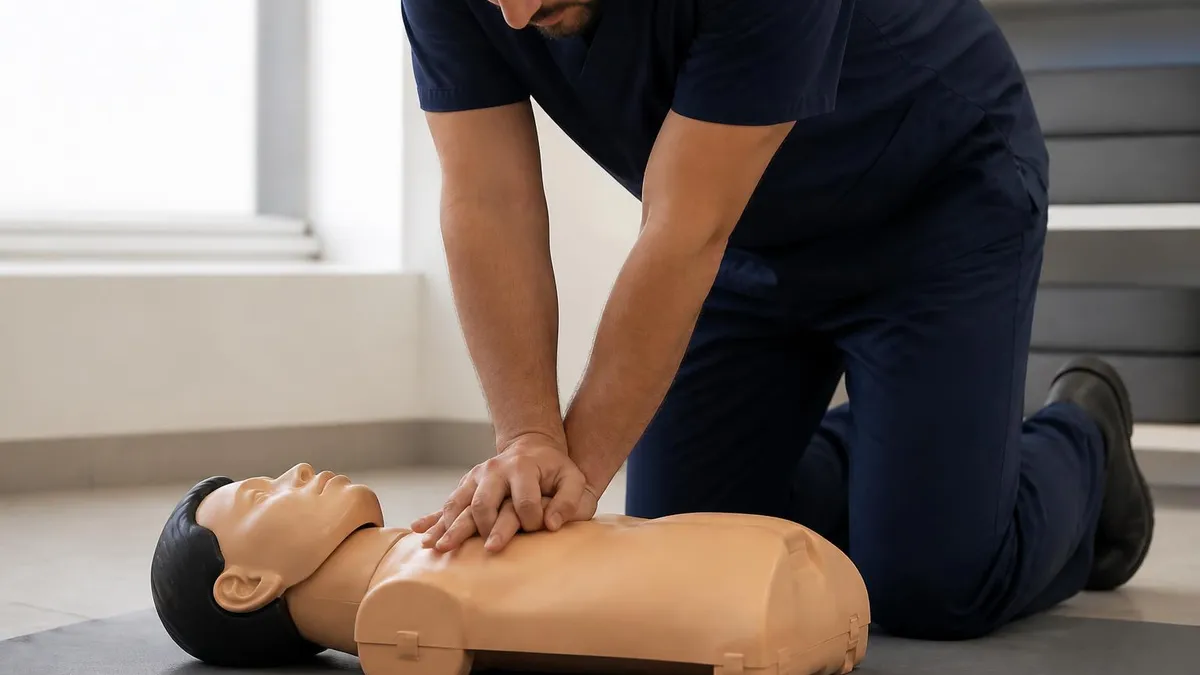
Extracorporeal CPR (ECPR): Complete Guide to Mechanical Circulatory Support During Cardiac Arrest in 2026
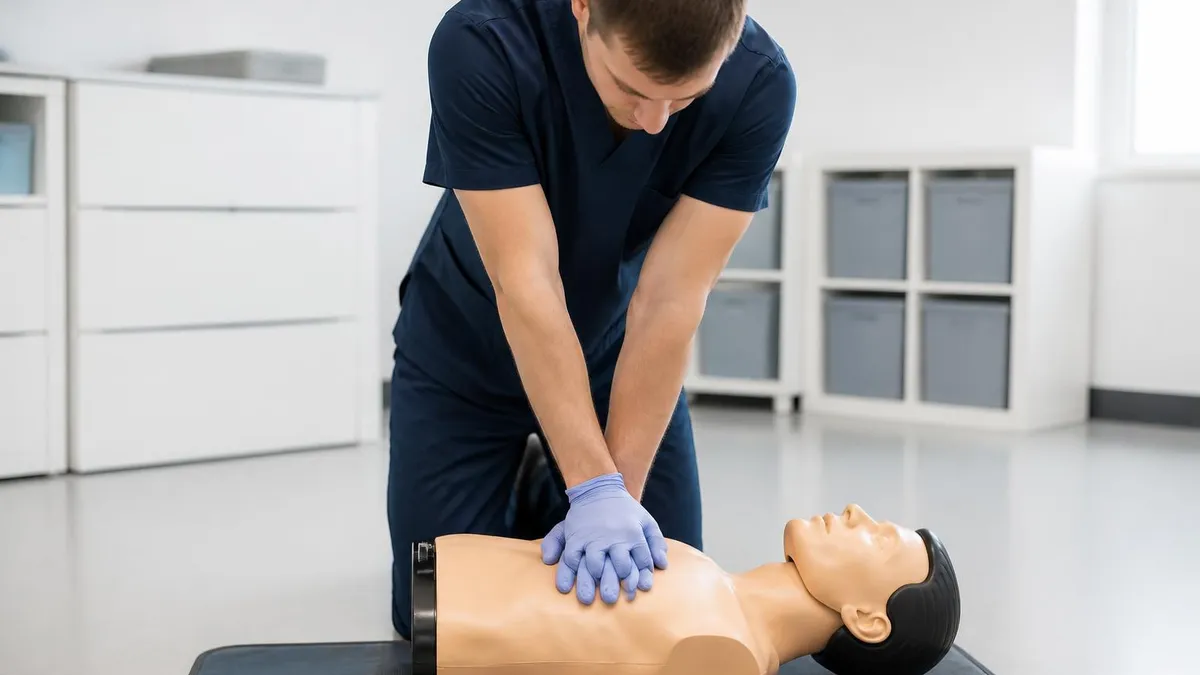
Free Online CPR Certification: Complete Guide to Legitimate Courses, Costs, and Workplace Acceptance in 2026
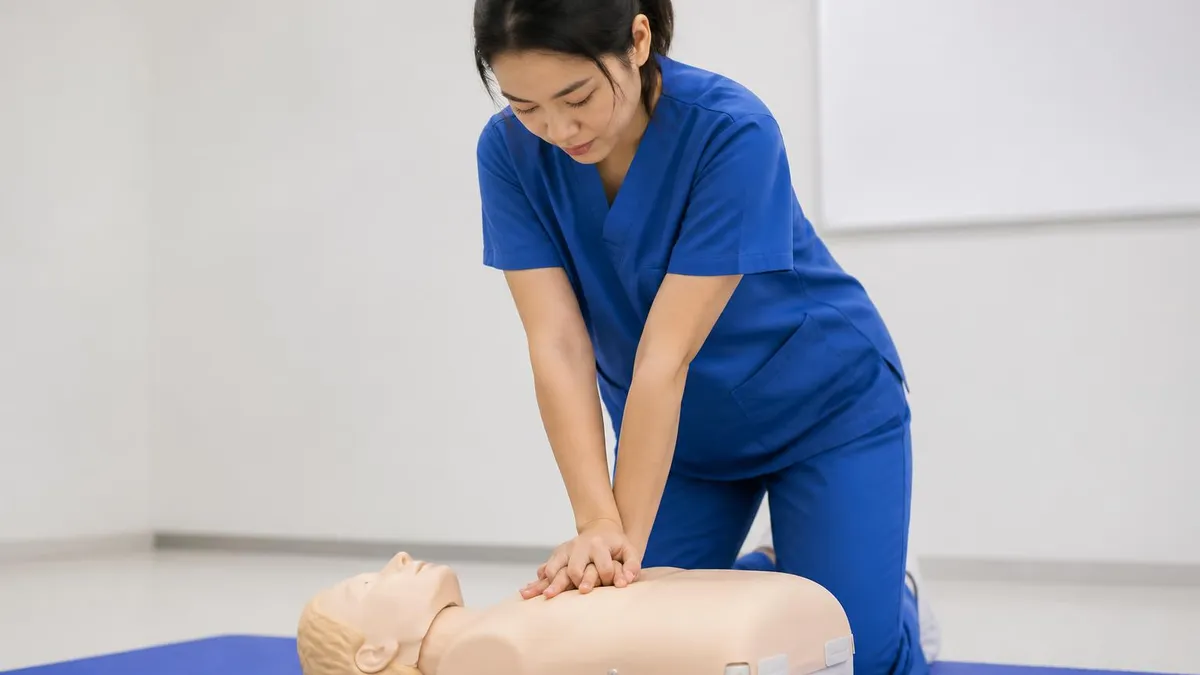
CPR Instructor Certification 2026: Complete Path to Teaching CPR
CPR Course: How to Choose the Right Training Program
About the Author

Registered Nurse & Healthcare Educator
Johns Hopkins University School of NursingDr. Sarah Mitchell is a board-certified registered nurse with over 15 years of clinical and academic experience. She completed her PhD in Nursing Science at Johns Hopkins University and has taught NCLEX preparation and clinical skills courses for nursing students across the United States. Her research focuses on evidence-based exam preparation strategies for healthcare certification candidates.
Join the Discussion
Connect with other students preparing for this exam. Share tips, ask questions, and get advice from people who have been there.
View discussion (5 replies)