
CPR Course Cost: Complete 2026 October Pricing Guide for Every Certification Level
Compare CPR course cost across AHA, Red Cross, and National CPR Foundation. Pricing for BLS, ACLS, PALS, and infant CPR certifications in 2026 October. 🔎
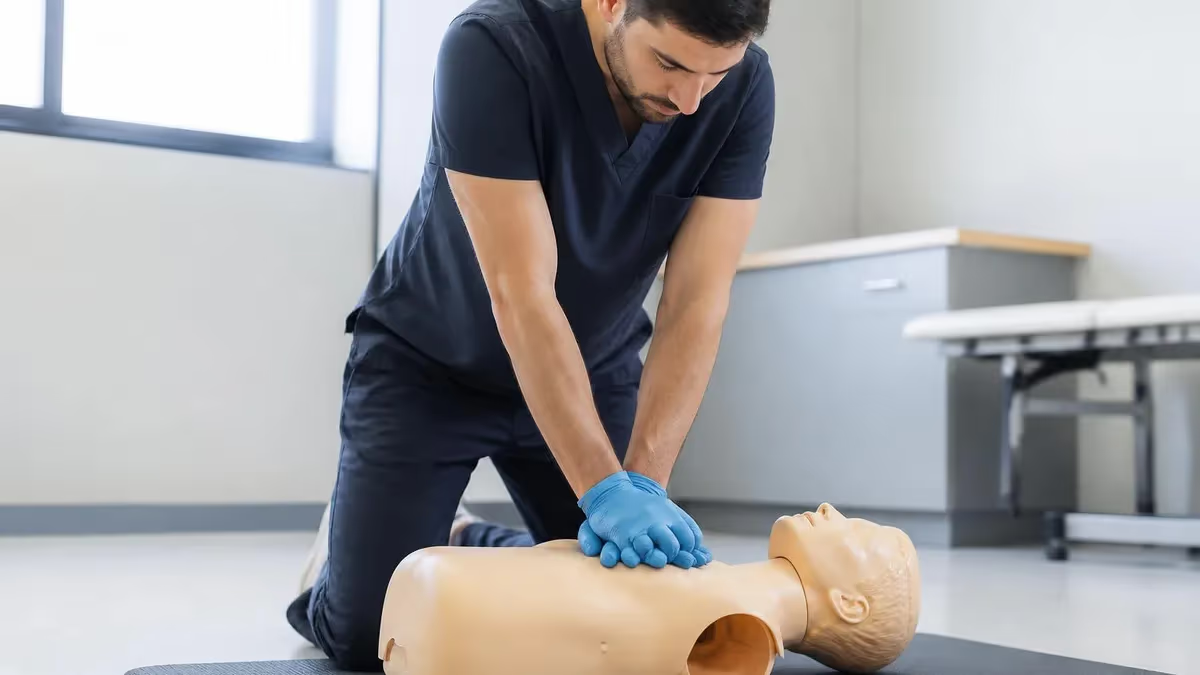
Understanding the true cpr course cost in 2026 means looking far beyond the sticker price advertised on a training center's homepage. The actual investment depends on which certification level you pursue, who provides the training, whether your employer reimburses you, and how much hands-on skills testing the course includes. Entry-level Heartsaver and Hands-Only CPR classes often start around $40 to $75, while advanced courses incorporating the acls algorithm can run $225 to $400 when delivered through hospital-affiliated training centers with provider-grade manikins.
The pricing landscape has shifted significantly over the past three years as online-only providers like the national cpr foundation expanded their footprint, undercutting in-person classes by 60 to 80 percent. That said, not every certification a low-cost online provider issues is accepted by hospitals, nursing schools, EMS agencies, or daycare licensing boards. Before paying any fee, verify your employer's accepted-provider list — a $25 card you cannot use at work is the most expensive CPR card you will ever buy.
This guide breaks down what you should expect to pay for Basic Life Support (BLS), Advanced Cardiac Life Support (ACLS), pediatric pals certification, infant cpr classes, instructor courses, and renewal sessions. We will compare American Heart Association (AHA), American Red Cross, Health & Safety Institute (HSI), American Safety and Health Institute (ASHI), and online-only providers across price, recognition, and skills validation. We also cover hidden costs nobody mentions in marketing materials: book fees, processing fees, expedited shipping, and re-test fees.
For healthcare professionals, the calculus is different than for daycare workers or parents. A registered nurse renewing BLS, ACLS, and pals certification every two years may spend $400 to $700 if she pays out of pocket, while a parent taking a community infant CPR class might pay $35. The course you need is dictated by your job description and your state's scope-of-practice rules, not by what looks cheapest on a Google search results page. We will help you match the right course to your real-world requirement.
You will also see that geography matters. CPR course cost in San Francisco, Boston, and New York City typically runs 25 to 40 percent higher than the national average, while rural Midwest and Southern markets often beat it by 15 to 25 percent. Group rates, employer-sponsored sessions, community college programs, fire department classes, and library-hosted sessions can dramatically reduce out-of-pocket expense — sometimes to zero. Knowing where to look is half the savings battle.
If you want to verify an existing certification or find an in-person option near you, you can start with the red cross cpr classes near me directory, which lists authorized training centers by ZIP code with current pricing transparency. By the end of this guide you will know exactly how much to budget for your specific credential, which providers your employer will accept, and how to avoid the most common upselling traps that inflate course cost by 30 to 50 percent.
We have priced more than 200 courses across the United States in early 2026 to compile the figures you will see here. While individual training centers may charge slightly more or less, the ranges in this guide reflect what an average learner actually pays today — including renewal pricing, skills checks, and the certification card itself.
CPR Course Cost by the Numbers

CPR Course Cost by Certification Level
Designed for the general public, daycare staff, fitness trainers, and lay rescuers. Covers adult CPR and AED use without the depth required for healthcare providers. Typical 2026 pricing runs $40 to $85 depending on whether first aid is bundled and whether the course is offered in person or as a blended online module.
Required for nurses, paramedics, medical students, dental staff, and most hospital employees. Includes adult, child, and infant cpr, two-rescuer techniques, bag-mask ventilation, and AED integration. Expect $80 to $115 for initial certification and $65 to $95 for renewal. Skills checks are mandatory.
Advanced Cardiac Life Support trains providers in the acls algorithm for cardiac arrest, post-arrest care, stroke, bradycardia, and tachyarrhythmias. Initial courses cost $225 to $325 in person; renewal courses run $175 to $250. Required for ICU, ER, telemetry, anesthesia, and cardiology personnel.
Pediatric Advanced Life Support covers the recognition and management of respiratory failure, shock, and arrest in children. A pals certification typically costs $215 to $325 for initial and $165 to $245 for renewal. Required in pediatric ICUs, pediatric ERs, NICUs, and most children's hospitals nationwide.
Becoming an AHA, Red Cross, or HSI instructor requires monitoring, alignment fees, manikin investment, and ongoing teaching minimums. Initial instructor courses run $300 to $650, plus $150 to $300 in materials, $50 annual alignment fees, and another $50 to $100 per discipline you teach.
The three most-recognized providers in the United States are the American Heart Association (AHA), the American Red Cross, and the national cpr foundation. Each one targets a slightly different audience, which is why their pricing structures differ so dramatically. AHA dominates the hospital and healthcare market because most state licensure boards explicitly require AHA BLS, ACLS, or PALS for clinical roles. Their pricing reflects that captive market — and the cost of maintaining a network of authorized training centers nationwide.
The American Red Cross sits in the middle, with strong recognition for community CPR, lifeguard training, daycare staff, and corporate first-aid programs. Pricing is competitive with AHA at the entry level but slightly lower for BLS at the provider tier. Red Cross uses a digital-first delivery model with shorter classroom hours and a more streamlined skills check, which keeps overhead lower than traditional AHA training centers. For non-healthcare learners, Red Cross is often the better value.
The national cpr foundation and similar online-only providers compete almost entirely on price. A complete online CPR and First Aid certification can run as low as $19.95 to $39, with instant digital card delivery. The catch is recognition — not every employer accepts a card that did not involve a hands-on skills evaluation. Construction sites, OSHA-compliant employers, security companies, personal trainers, and some daycares accept online-only cards. Hospitals and EMS agencies generally do not.
HSI (Health & Safety Institute), ASHI, MEDIC First Aid, and Emergency Care & Safety Institute (ECSI) fill the middle ground for workplace compliance. Their pricing typically falls between AHA and online-only providers — $50 to $120 for general workplace CPR and AED courses. Many corporate safety programs default to HSI or ASHI because the curriculum is OSHA-compliant and slightly more affordable than AHA Heartsaver.
One key differentiator nobody talks about in marketing copy: who actually controls the price. AHA does not set training-center prices directly. Each training center buys course materials from AHA, then sets its own classroom price based on local market, instructor pay, manikin maintenance, and facility costs. That is why an AHA BLS course in Manhattan can cost $130 while the identical course in rural Oklahoma costs $65. The card is the same; the overhead is not.
Recognition matters more than price for clinical roles. Following aed pad placement protocols and the specific algorithms taught in AHA courses is what most hospital quality boards audit during code reviews and Joint Commission surveys. A non-AHA card may save you $70 today and cost you a job offer next month. Always confirm with your HR or licensure board before booking a course based on price alone.
Finally, consider the value of the instructor. A bored instructor reading from a script for four hours is a different experience than one who actively coaches your compression depth, ventilation timing, and team dynamics. Reading the Google reviews of a specific training center before paying is one of the highest-return five-minute investments you can make in this entire process.

CPR Practice Test Questions
Prepare for the CPR Cardiopulmonary Resuscitation Practice exam with our free practice test modules. Each quiz covers key topics to help you pass on your first try.
CPR Basic CPR
CPR Exam Questions covering Basic CPR. Master CPR Test concepts for certification prep.
CPR and First Aid
Free CPR Practice Test featuring and First Aid. Improve your CPR Exam score with mock test prep.
CPR (Cardiopulmonary Resuscitation) Adult ...
CPR Mock Exam on (Cardiopulmonary Resuscitation) Adult CPR and AED Usage. CPR Study Guide questions to pass on your first try.
CPR (Cardiopulmonary Resuscitation) Airway...
CPR Test Prep for (Cardiopulmonary Resuscitation) Airway Obstruction and Choking. Practice CPR Quiz questions and boost your score.
CPR (Cardiopulmonary Resuscitation) Cardio...
CPR Questions and Answers on (Cardiopulmonary Resuscitation) Cardiopulmonary Emergency Recognition. Free CPR practice for exam readiness.
CPR (Cardiopulmonary Resuscitation) Child ...
CPR Mock Test covering (Cardiopulmonary Resuscitation) Child and Infant CPR. Online CPR Test practice with instant feedback.
CPR (Cardiopulmonary Resuscitation) High-P...
Free CPR Quiz on (Cardiopulmonary Resuscitation) High-Performance Team Dynamics. CPR Exam prep questions with detailed explanations.
CPR (Cardiopulmonary Resuscitation) Legal ...
CPR Practice Questions for (Cardiopulmonary Resuscitation) Legal and Ethical Considerations. Build confidence for your CPR certification exam.
CPR for Specific Populations
CPR Test Online for for Specific Populations. Free practice with instant results and feedback.
CPR Airway & Breathing Management
CPR Exam Questions covering Airway & Breathing Management. Master CPR Test concepts for certification prep.
CPR Assessment & Recognition of Cardiac Ar...
Free CPR Practice Test featuring Assessment & Recognition of Cardiac Arrest. Improve your CPR Exam score with mock test prep.
CPR Chest Compressions & Defibrillation
CPR Mock Exam on Chest Compressions & Defibrillation. CPR Study Guide questions to pass on your first try.
CPR Post-Resuscitation Care & Recovery
CPR Test Prep for Post-Resuscitation Care & Recovery. Practice CPR Quiz questions and boost your score.
Online vs Blended vs In-Person Pricing
Online-only CPR courses are the least expensive option, ranging from $19.95 to $59 for unlimited attempts and instant digital card delivery. Providers like national cpr foundation, ProCPR, CPR Today, and Save A Life Certifications dominate this segment. The format is video plus multiple-choice quizzes — no skills evaluation, no manikin practice, no instructor sign-off. Cards are typically issued within minutes of passing the final test.
Acceptance is the major caveat. Online-only certifications are commonly accepted by personal trainers, coaches, daycare assistants in some states, security guards, and OSHA-regulated worksites where the employer determines compliance. They are generally not accepted by hospitals, EMS agencies, dental offices, nursing schools, or programs governed by state professional licensing boards. Always confirm acceptance with your specific employer before paying — even a small online fee is wasted if the card is rejected.
Is the Cheapest CPR Course Worth It?
- +Online-only courses cost 60 to 80 percent less than traditional in-person classes
- +Same-day certification with digital card delivery for time-sensitive job applications
- +No commute, no parking fees, and full self-pacing around work or family schedules
- +Unlimited test attempts on most platforms remove pressure during the cognitive exam
- +Free or low-cost renewal options keep ongoing compliance affordable for individuals
- +Course content covers the same algorithms and life support guidelines as AHA
- −Online-only cards are rejected by hospitals, nursing schools, and most EMS agencies
- −No hands-on skills validation means actual rescue performance is never measured
- −Some state licensure boards explicitly exclude non-AHA and non-Red Cross providers
- −Refunds are rarely offered if your employer later refuses to accept the card
- −Skill retention is significantly lower without manikin practice and real coaching
- −Re-doing the course in person doubles your true cpr course cost over two years
Pros and Cons at a Glance
| Pros | Cons |
|---|---|
| Same-day certification with digital card delivery for time-sensitive job applications | Online-only cards are rejected by hospitals, nursing schools, and most EMS agencies |
| No commute, no parking fees, and full self-pacing around work or family schedules | No hands-on skills validation means actual rescue performance is never measured |
| Unlimited test attempts on most platforms remove pressure during the cognitive exam | Some state licensure boards explicitly exclude non-AHA and non-Red Cross providers |
| Free or low-cost renewal options keep ongoing compliance affordable for individuals | Refunds are rarely offered if your employer later refuses to accept the card |
| Course content covers the same algorithms and life support guidelines as AHA | Skill retention is significantly lower without manikin practice and real coaching |
Checklist to Lower Your CPR Course Cost
- ✓Confirm your employer's accepted-provider list in writing before booking any course
- ✓Ask HR if your employer offers in-house CPR sessions at no cost to staff
- ✓Compare at least three local training centers — prices vary 30 percent within five miles
- ✓Search community college continuing-education catalogs for subsidized $35 to $65 classes
- ✓Check your fire department, library, and YMCA for free quarterly community CPR events
- ✓Bundle BLS, ACLS, and PALS at the same center for combined-discount pricing
- ✓Choose a blended (HeartCode) course to cut classroom time and total fees
- ✓Schedule renewal before your card expires to avoid the higher initial-course price
- ✓Bring four classmates for group rates of 10 to 25 percent off list price
- ✓Use a Health Savings Account or FSA — many courses qualify as eligible expenses
Renewal costs less than a brand-new initial course — every time
Most providers price renewal courses 25 to 40 percent below initial certification, but only if your existing card is still valid on the day of class. Let it lapse by even one day and you typically pay full initial-course price plus extra classroom hours. Set a calendar reminder 90 days before expiration so you can shop, schedule, and complete renewal during the discount window.
Healthcare professionals carry the heaviest CPR-credential load and therefore the highest cumulative course cost. A typical bedside RN in a telemetry unit maintains BLS plus ACLS, retaking both every two years. A pediatric ICU nurse adds pals certification on top. A flight nurse may carry BLS, ACLS, PALS, NRP (Neonatal Resuscitation Program), TNCC, and PHTLS simultaneously — a credential stack that can exceed $1,200 in renewal fees every other year if the employer does not reimburse.
Hospital-employed nurses are usually fully reimbursed, with classes offered on the clock at the employer's own training center. Agency, travel, per-diem, and PRN staff often pay out of pocket and then submit receipts to their staffing agency. Independent contractors — nurse practitioners with their own LLCs, locum physicians, and aesthetic injectors — pay the full amount and deduct it as a continuing-education business expense at tax time.
Respiratory therapists track a slightly different stack. BLS and ACLS are standard, with NRP often added for those covering labor and delivery or neonatal units. Their courses emphasize ventilation, airway management, and respiratory rate assessment, which is why their renewal curriculum frequently spends extra hours on bag-mask technique, advanced airway adjuncts, and waveform capnography. Expect the same $95 to $245 ranges as nurses, plus any specialty add-ons.
Paramedics and EMTs have arguably the most algorithm-heavy renewal cycle. ACLS, PALS, and often Pre-Hospital Trauma Life Support (PHTLS) or International Trauma Life Support (ITLS) are required for license renewal. Many EMS agencies run their own in-house training programs, eliminating direct cost but adding mandatory unpaid attendance hours. Career firefighters typically receive all CPR training through their department academy and on-shift continuing education.
Dental teams — dentists, hygienists, and assistants — generally need BLS Provider every two years. Some states also require an additional pediatric component for offices treating children. A typical dental practice spends $700 to $1,400 per cycle covering an entire staff, often offsetting the cost by hosting an on-site instructor for the whole team during a half-day office closure.
Allied health students — nursing students, paramedic students, dental hygiene students, respiratory therapy students — pay full price out of pocket for their first BLS card before clinical rotations begin. Many schools negotiate bulk pricing of $55 to $75 per student with a single regional training center, and some schools cover the cost in lab fees. Always check before booking individually; you may already be paying for it through tuition.
Finally, mental-health and behavioral-health professionals are increasingly required to hold current CPR cards due to workplace-safety regulations and integrated-care settings. The same BLS or Heartsaver requirements apply. Counselors, behavior analysts, and social workers in clinical settings should treat CPR as a routine recurring expense and pursue employer reimbursement just as nurses and therapists do.
Any provider advertising a lifetime CPR card or a certification that never expires is selling something no hospital, EMS agency, or state board will accept. AHA, Red Cross, HSI, and the national cpr foundation all issue cards valid for two years maximum. Renewal is required by every credible employer, every two years, without exception. If you see lifetime in the marketing copy, close the tab and keep shopping.
The advertised CPR course cost rarely reflects what you actually pay at checkout. Online providers commonly add a $5 to $15 processing fee, a $10 to $25 expedited digital card fee, a $20 to $35 physical card mailing fee, and sometimes a $9.95 monthly membership that auto-renews unless you cancel. Read the cart screen carefully before entering a payment method. Screenshots of the total help if a dispute arises later.
In-person training centers add their own line items. Skills check appointments outside posted classroom hours may incur a $25 to $50 scheduling fee. A re-test fee of $35 to $75 applies if you fail the practical evaluation and need to return. Replacement cards for lost certifications usually run $10 to $25. Materials — the AHA student manual, pocket reference cards, and pediatric algorithm cards — can add $25 to $90 if not bundled in tuition.
Renewal pricing is where most learners overpay unnecessarily. A renewal course is shorter than initial certification — usually four hours of BLS or six to seven hours of ACLS — yet some training centers charge the same fee as the full initial course. Always ask explicitly: is this initial-course pricing or renewal pricing? If the website lists only one figure, call before paying. A polite question can save you $40 to $90 instantly.
Cancellation policies are another commonly ignored cost driver. Most centers require 48 to 72 hours notice for a full refund. Same-day cancellations forfeit 50 to 100 percent of the fee. Weather emergencies, family illness, and unexpected work shifts often hit during the no-refund window. Some centers offer a one-time courtesy reschedule even when policy says otherwise — calling and asking nicely costs nothing.
Group pricing is a powerful discount lever most individuals never use. Five learners booking together typically receive a 10 to 15 percent discount; ten or more often drops the per-seat price by 20 to 25 percent. If your workplace, daycare, gym, scout troop, or church needs CPR-trained adults, organize a private session at your location. The training center brings manikins, AED trainers, and an instructor, and your group splits a flat fee that beats individual public-class pricing.
For a deeper walk through actual skill execution including ventilation timing, compression depth, and normal breathing rate reassessment after each cycle, study a comprehensive provider guide before stepping into class. Walking in already familiar with the algorithm sequence reduces the chance you will need a re-test, which is the single most expensive avoidable line item in the entire course cost equation.
Finally, the most overlooked cost reduction strategy is timing. Training centers offer end-of-quarter and end-of-year promotional pricing to fill empty seats and meet revenue targets. Booking the last week of March, June, September, or December often delivers the lowest pricing of the year — sometimes 20 to 30 percent below standard rates. The course is identical; the calendar simply works in your favor.
Preparing for class before paying improves more than your pass rate — it improves the ultimate value you get for the money. Spend 60 to 90 minutes the day before reviewing the basic adult, child, and infant cpr sequence, the AED algorithm, the recognition cues for cardiac arrest versus respiratory failure, and the difference between agonal breathing and effective ventilation. Most failed skills checks happen because the learner walked in cold, not because they could not physically perform the compressions.
Bring the right gear. Comfortable closed-toe shoes, athletic clothing that lets you kneel and lean forward for sustained compressions, and a water bottle make a noticeable difference during a four-to-six-hour session. Some learners forget that compressions are physically demanding — your shoulders, triceps, and lower back will know they worked. Eating a light meal beforehand prevents the lightheadedness some new learners feel partway through the first manikin cycle.
Know what does aed stand for and how the device cues you through analysis, charging, and shock delivery before you arrive. Automated External Defibrillator devices speak to the rescuer in plain English and walk you through pad placement, analysis, and shock decisions. Instructors love seeing students who already understand this — you finish skills faster and free up time for harder content like two-rescuer dynamics, advanced airway use, and post-arrest care discussions.
Pair classroom learning with deliberate review using practice questions afterward. Skill retention curves drop sharply in the first two weeks after certification. A 15-minute weekly review for the first month locks in the algorithm sequence far more durably than passing the test once and moving on. Many providers offer free continuing-education modules between renewals — taking even one quarterly refresher dramatically improves your real-world readiness.
If you carry multiple credentials — BLS plus ACLS plus PALS — schedule them in a sensible order. Take BLS first, then add ACLS, then PALS once the underlying algorithm framework is solid. Trying to absorb three credentials in three consecutive days is possible but rarely retained well. Spacing them across four to six weeks lets each set of algorithms anchor before the next one layers on top.
Understand recovery positioning, the jaw thrust maneuver, choking management, opioid overdose response with naloxone, and team communication. These are the topics that show up in real codes, not in marketing copy. Spending a little time with them before class makes the instructor's coaching faster, more focused, and more rewarding for both of you. Confidence on test day is built in the days before, not the day of.
Finally, plan your post-certification card storage. Snap a photo of both sides of the card the moment it is issued, store it in a secure cloud folder, and email a copy to yourself. Lost-card replacement fees of $10 to $25 are pure waste, and the wait time can stretch two to four weeks. A 10-second photo eliminates that risk forever — the smallest cost-saving habit on this entire page and one of the most useful.
CPR Questions and Answers
CPR Card Lookup: How to Verify, Replace, and Access Your CPR Certification in 2026
AHA CPR: What It Is, Which Course You Need, and How to Get Certified
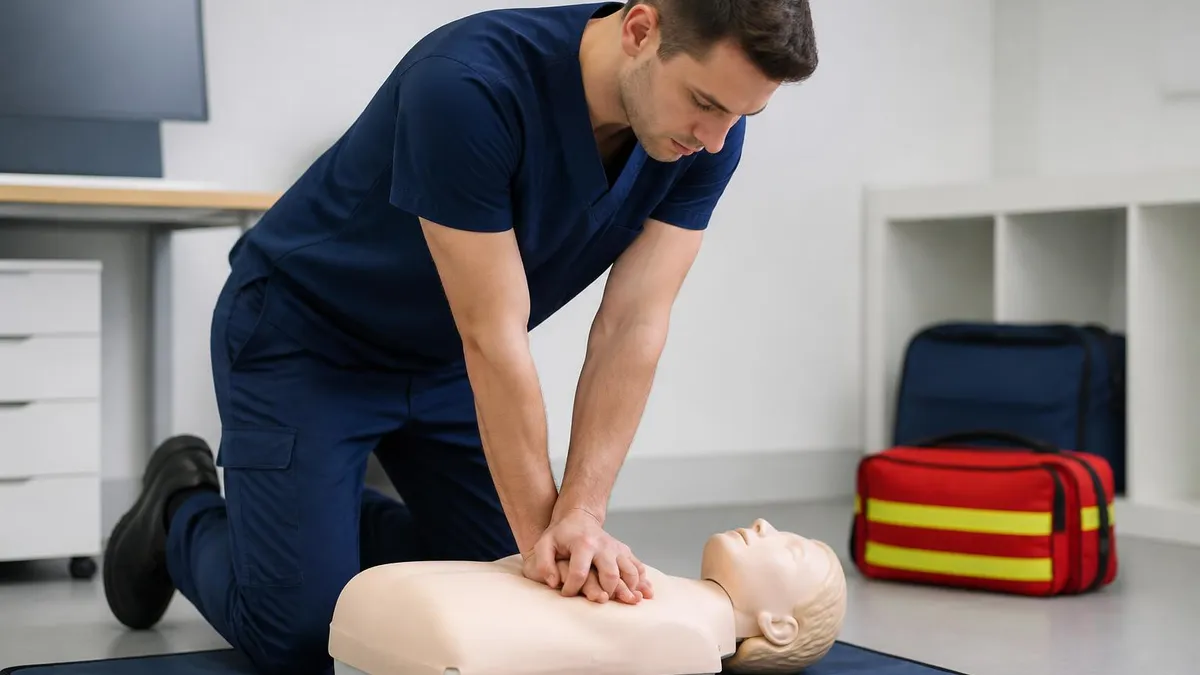
Adult CPR: Complete Step-by-Step Guide to Hands-Only and Standard CPR in 2026
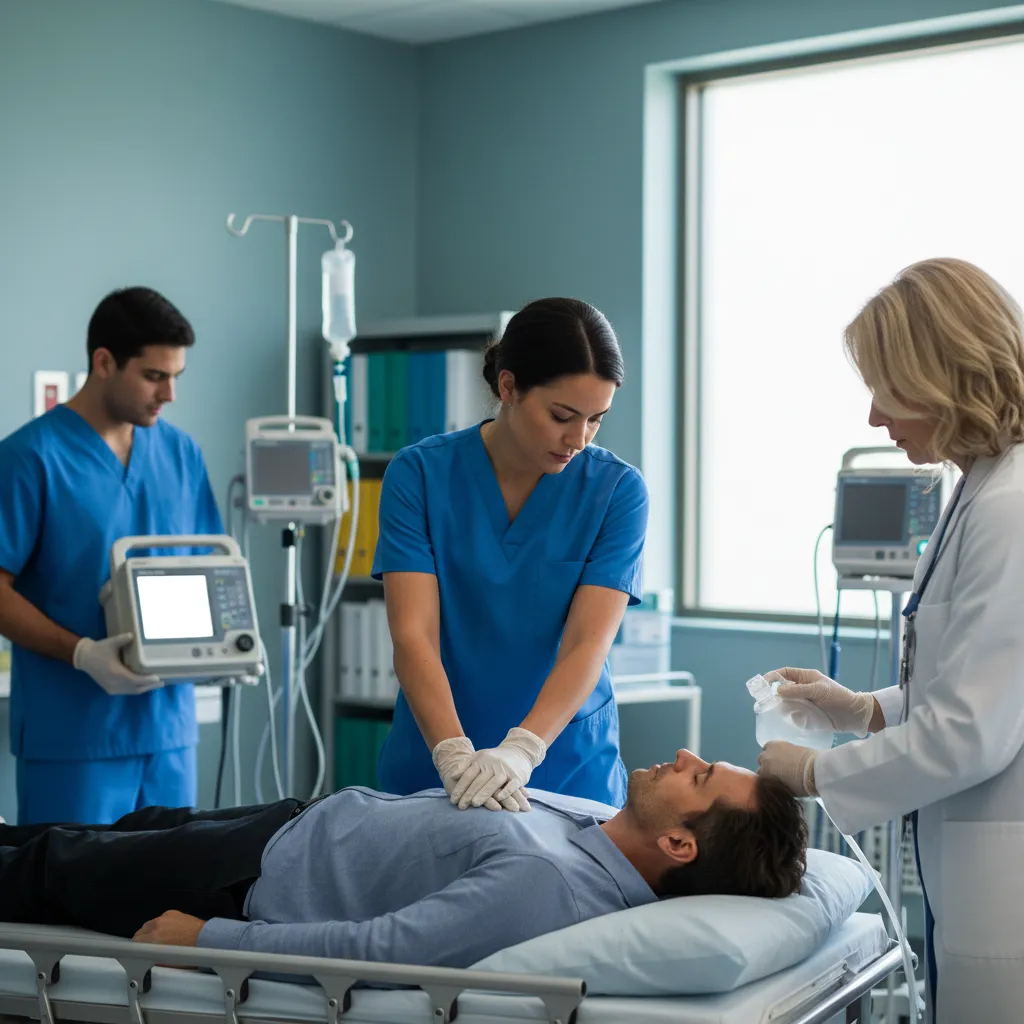
CPR - Cardiopulmonary Resuscitation: Complete Study Guide 2026
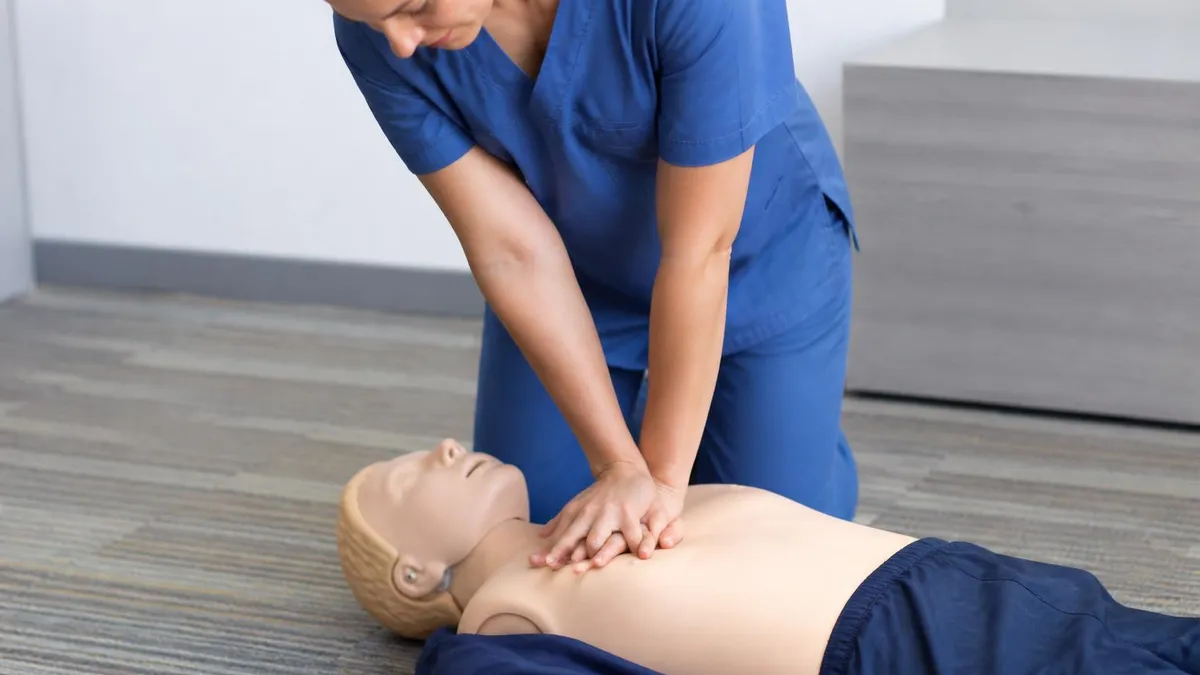
Inappropriate CPR Songs: What Not to Play, Why It Matters, and Better Beat-Per-Minute Alternatives
About the Author

Registered Nurse & Healthcare Educator
Johns Hopkins University School of NursingDr. Sarah Mitchell is a board-certified registered nurse with over 15 years of clinical and academic experience. She completed her PhD in Nursing Science at Johns Hopkins University and has taught NCLEX preparation and clinical skills courses for nursing students across the United States. Her research focuses on evidence-based exam preparation strategies for healthcare certification candidates.
Join the Discussion
Connect with other students preparing for this exam. Share tips, ask questions, and get advice from people who have been there.
View discussion (5 replies)