
How Long Does CPR Certification Last? Renewal Guide 2026 October
Free How Long Does CPR Certification practice test with instant feedback and detailed answer explanations. Prepare for your exam. 💯
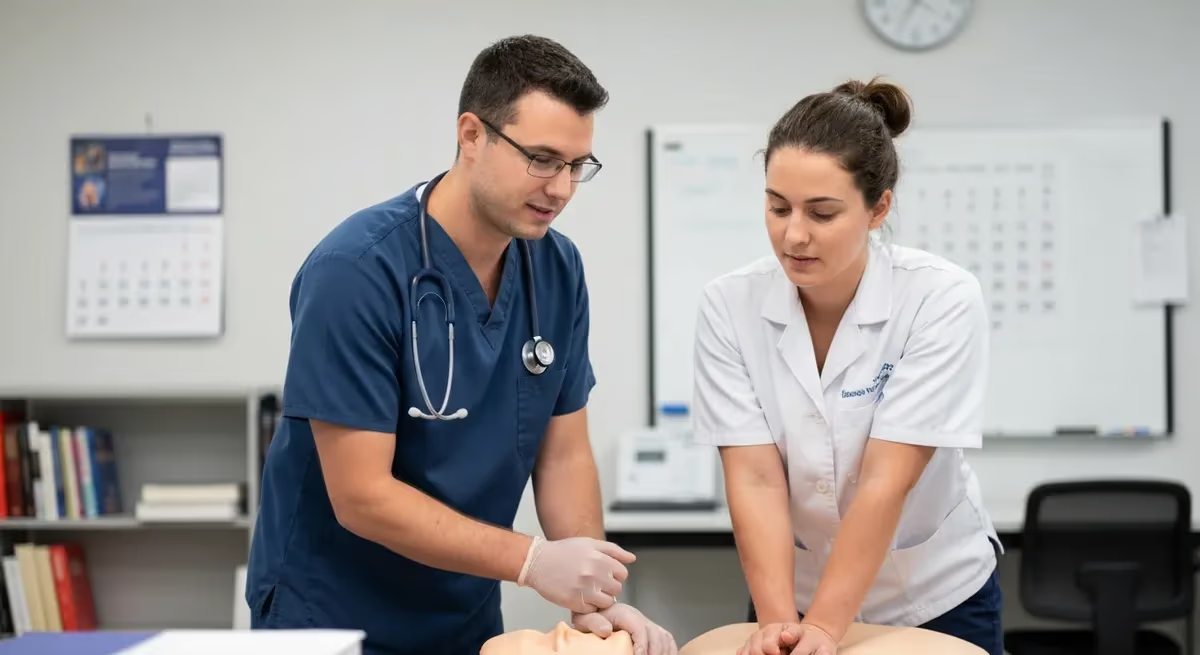
A CPR certification is valid for two years from the date it is issued. This standard is set by major training organizations like the American Heart Association and the American Red Cross to ensure lifesavers stay current with the latest techniques and guidelines. Recertification is required before the expiration date to remain active.
CPR Certification Validity by Provider
How long does AHA CPR certification last?: AHA CPR certifications, including BLS (Basic Life Support), ACLS (Advanced Cardiovascular Life Support), and PALS (Pediatric Advanced Life Support), are valid for two years. This standard duration answers the common questions, 'how long does cpr certification last' and 'how long is cpr certification good for' when it comes to AHA credentials. The expiration date is printed on your certification card, typically at the end of the month two years after issuance.
What is the AHA CPR recertification process?: The AHA requires a cpr recertification course before your current card expires. This is often a shorter, updated version of the initial course, focusing on skill proficiency and any new guideline changes. Completing this cpr certification renewal course issues a new card valid for another two years. It's crucial not to let your certification lapse, as some employers may require you to take the full initial course again.
- ✓Review the official CPR exam content outline
- ✓Take a diagnostic practice test to identify weak areas
- ✓Create a study schedule (4-8 weeks recommended)
- ✓Focus on your weakest domains first
- ✓Complete at least 3 full-length practice exams
- ✓Review all incorrect answers with detailed explanations
- ✓Take a final practice test 1 week before exam day
Online vs In-Person CPR Training Options
When pursuing your initial certification or completing your CPR certification renewal, you'll find three primary training formats: traditional in-person classes, 100% online courses, and a blended hybrid model. The best choice depends on your learning style, schedule, and, most importantly, your employer's or licensing board's requirements. Understanding the differences is key to ensuring your certification is valid and that you have the confidence to act in an emergency.
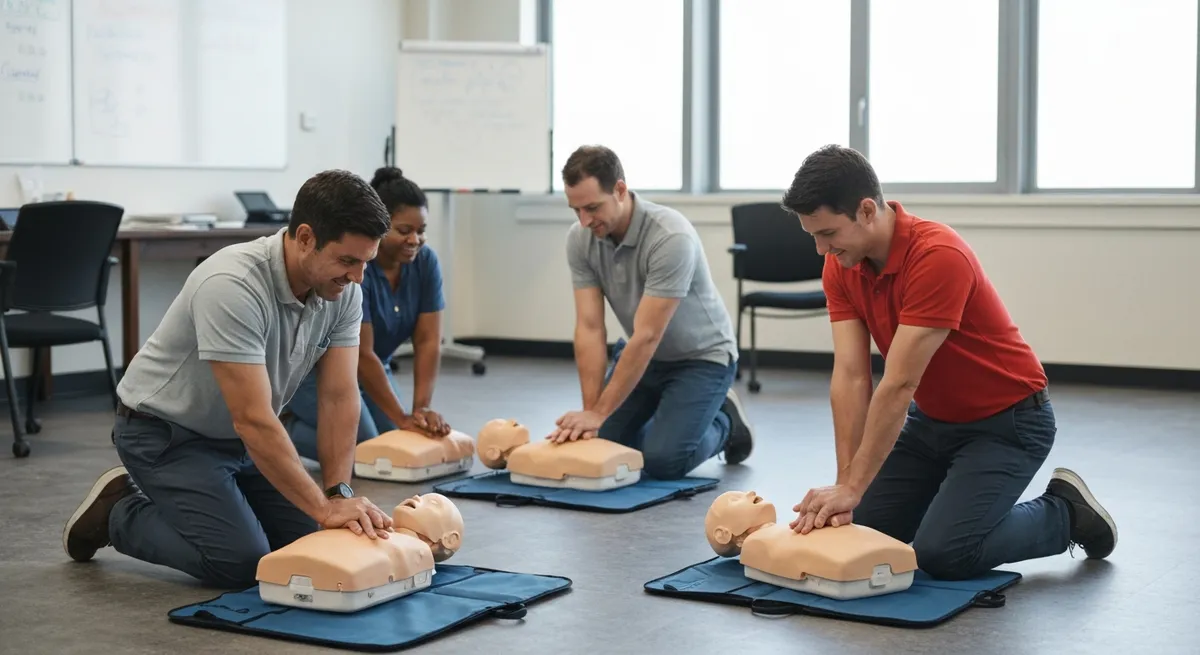
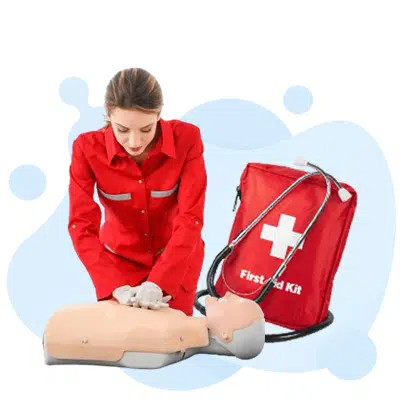
- In-Person CPR Training: This is the classic, hands-on approach. You'll learn in a classroom with a certified instructor, practicing chest compressions and rescue breaths on manikins. This format provides immediate feedback and is ideal for tactile learners. It is often required for healthcare professionals who need to master techniques for different age groups, a topic we cover in our Child and Infant CPR Questions and Answers guide.
- Online-Only CPR Training: Fully online courses offer maximum flexibility. You can complete modules and watch videos at your own pace from anywhere. While convenient, be cautious: many employers, particularly in the medical field, do not accept online-only certifications because they lack a hands-on skills assessment.
- Blended/Hybrid Training: This popular option combines the best of both worlds. You complete the cognitive portion of the cpr training online and then attend a short, in-person session to practice and demonstrate your skills with an instructor. This is an efficient and widely accepted method for both first-time certification and cpr recertification.
A common question is, "how long is cpr training?" In-person classes typically last 3-5 hours, while the online portion of a blended course can be completed at your convenience. Regardless of the format you choose, the answer to "how long does cpr certification last?" remains the same: typically two years from a recognized provider. Always verify which format your employer accepts before enrolling. Whether you're a paramedic preparing for a CPR (Certified Paramedic Response) Test or a camp counselor studying for the CPRP Test, ensuring your certification meets requirements is the first step. The fundamental principles of life support are universal, as outlined in our main CPR (Cardiopulmonary Resuscitation) 2026 resource. After all, knowing how long is cpr certification good for is crucial for maintaining your credentials, a principle that applies across many professional fields, including those detailed in our Guide to Physician Provider Recruitment Certification.
GNA candidates in Maryland often also prepare with our CNA practice test 2026 — both assess geriatric and nursing aide patient care competencies in long-term care settings.
Candidates preparing for insurance adjuster certification exams can broaden their professional knowledge with the Notary Public Practice Test 2026, which covers legal documentation standards and contractual obligations relevant to insurance claim processing.
Community paramedics preparing for certification can reinforce their emergency medical knowledge alongside the NDT Practice Test 2026 for systems diagnostics, and also benefit from reviewing the Certified Nursing Assistant (CNA) Practice Test 2026 to solidify patient assessment and basic care protocols.
If you want more targeted practice, the cpr test and answers page covers the same material with additional questions and explanations.
CPR Pros and Cons
- +CPR has a defined, publicly available content blueprint — candidates know exactly what to prepare for
- +Multiple preparation pathways (self-study, courses, coaching) accommodate different learning styles and schedules
- +A growing ecosystem of study resources means candidates at any budget level can access quality preparation materials
- +Clear score reporting allows candidates to identify specific strengths and weaknesses for targeted remediation
- +Professional recognition associated with strong performance provides tangible career and academic benefits
- −The scope of tested content requires substantial preparation time that competes with existing professional or academic commitments
- −No single resource covers the full content scope — candidates typically need multiple study tools for comprehensive preparation
- −Test anxiety and exam-day performance variability mean preparation effort does not always translate linearly to scores
- −Registration, preparation, and potential retake costs accumulate into a significant financial investment
- −Content and format can change between exam versions, making older preparation materials less reliable
Pros and Cons at a Glance
| Pros | Cons |
|---|---|
| CPR has a defined, publicly available content blueprint — candidates know exactly what to prepare for | The scope of tested content requires substantial preparation time that competes with existing professional or academic commitments |
| Multiple preparation pathways (self-study, courses, coaching) accommodate different learning styles and schedules | No single resource covers the full content scope — candidates typically need multiple study tools for comprehensive preparation |
| A growing ecosystem of study resources means candidates at any budget level can access quality preparation materials | Test anxiety and exam-day performance variability mean preparation effort does not always translate linearly to scores |
| Clear score reporting allows candidates to identify specific strengths and weaknesses for targeted remediation | Registration, preparation, and potential retake costs accumulate into a significant financial investment |
| Professional recognition associated with strong performance provides tangible career and academic benefits | Content and format can change between exam versions, making older preparation materials less reliable |
CPR Questions and Answers
More CPR - Cardiopulmonary Resuscitation Resources
About the Author

Enrolled Agent & Tax Certification Preparation Expert
NYU School of Professional StudiesMichael Chen is a Certified Public Accountant, IRS Enrolled Agent, and holds a Master of Science in Taxation from NYU School of Professional Studies. With 16 years of individual, corporate, and estate tax practice experience, he coaches candidates through the EA Special Enrollment Examination, CPA tax sections, VITA certification, and state tax preparer licensing programs.
Join the Discussion
Connect with other students preparing for this exam. Share tips, ask questions, and get advice from people who have been there.
View discussion (5 replies)