
Certified Phlebotomist 2026 June
Free CPHT practice test with 19 quizzes on venipuncture, specimen handling, safety, and patient care. 🔎 Pass your NHA or ASCP phlebotomy exam.
CPHT Practice Test Questions
Prepare for the CPHT - Certified Phlebotomist exam with our free practice test modules. Each quiz covers key topics to help you pass on your first try.
CPHT Anatomy & Physiology Fundamentals
CPHT Exam Questions covering Anatomy & Physiology Fundamentals. Master CPHT Test concepts for certification prep.
CPHT Clinical Procedures & Protocols
Free CPHT Practice Test featuring Clinical Procedures & Protocols. Improve your CPHT Exam score with mock test prep.
CPHT Communication & Patient Relations
CPHT Mock Exam on Communication & Patient Relations. CPHT Study Guide questions to pass on your first try.
CPHT Disease Pathology & Management
CPHT Test Prep for Disease Pathology & Management. Practice CPHT Quiz questions and boost your score.
CPHT Emergency Procedures & Critical Care
CPHT Questions and Answers on Emergency Procedures & Critical Care. Free CPHT practice for exam readiness.
CPHT Healthcare Technology & Equipment
CPHT Mock Test covering Healthcare Technology & Equipment. Online CPHT Test practice with instant feedback.
CPHT Health Promotion & Prevention
Free CPHT Quiz on Health Promotion & Prevention. CPHT Exam prep questions with detailed explanations.
CPHT Infection Control & Prevention
CPHT Practice Questions for Infection Control & Prevention. Build confidence for your CPHT certification exam.
CPHT Medical Terminology & Documentation
CPHT Test Online for Medical Terminology & Documentation. Free practice with instant results and feedback.
CPHT Patient Assessment & Evaluation
CPHT Study Material on Patient Assessment & Evaluation. Prepare effectively with real exam-style questions.
CPHT Patient Care & Safety
Free CPHT Test covering Patient Care & Safety. Practice and track your CPHT exam readiness.
CPHT Pharmacology & Medication Management
CPHT Exam Questions covering Pharmacology & Medication Management. Master CPHT Test concepts for certification prep.
CPHT Professional Ethics & Legal Standards
Free CPHT Practice Test featuring Professional Ethics & Legal Standards. Improve your CPHT Exam score with mock test prep.
CPHT Quality Improvement & Evidence-Based ...
CPHT Mock Exam on Quality Improvement & Evidence-Based Practice. CPHT Study Guide questions to pass on your first try.
CPHT Treatment Protocols & Interventions
CPHT Test Prep for Treatment Protocols & Interventions. Practice CPHT Quiz questions and boost your score.
CPHT Patient Interaction & Specimen Collec...
CPHT Questions and Answers on Patient Interaction & Specimen Collection. Free CPHT practice for exam readiness.
CPHT Safety Protocols & Regulatory Compliance
CPHT Mock Test covering Safety Protocols & Regulatory Compliance. Online CPHT Test practice with instant feedback.
🪩 What is the order of draw for venipuncture?
The standard order of draw is: Blood cultures (yellow), Citrate (light blue), SST/Serum (red/gold), Heparin (green), EDTA (lavender), Oxalate/Fluoride (gray). This sequence prevents cross-contamination of additives between tubes.
PRACTICE VENIPUNCTURE QUESTIONS💉 What is the most common venipuncture site?
The median cubital vein in the antecubital fossa is the preferred venipuncture site. It is large, well-anchored, and close to the surface, making it the safest and easiest vein to access for blood collection.
START CPHT PATIENT CARE QUIZ⚠️ What are standard precautions in phlebotomy?
Standard precautions include wearing gloves, using sharps containers for needle disposal, hand hygiene before and after patient contact, proper PPE use, and treating all blood specimens as potentially infectious regardless of patient status.
PRACTICE SAFETY PROTOCOLS🧪 How should specimens be transported?
Specimens must be transported in sealed, leak-proof containers at the correct temperature. Light-sensitive specimens require amber tubes or foil wrapping. Time-sensitive specimens like ABGs must be delivered on ice within 15-30 minutes of collection.
SPECIMEN HANDLING QUIZ🌡️ What is a capillary puncture used for?
Capillary puncture (fingerstick or heelstick) is used for small-volume blood samples, particularly for infants, elderly patients, or those with fragile veins. Common tests include blood glucose, hemoglobin, and newborn screening.
CAPILLARY TECHNIQUES QUIZ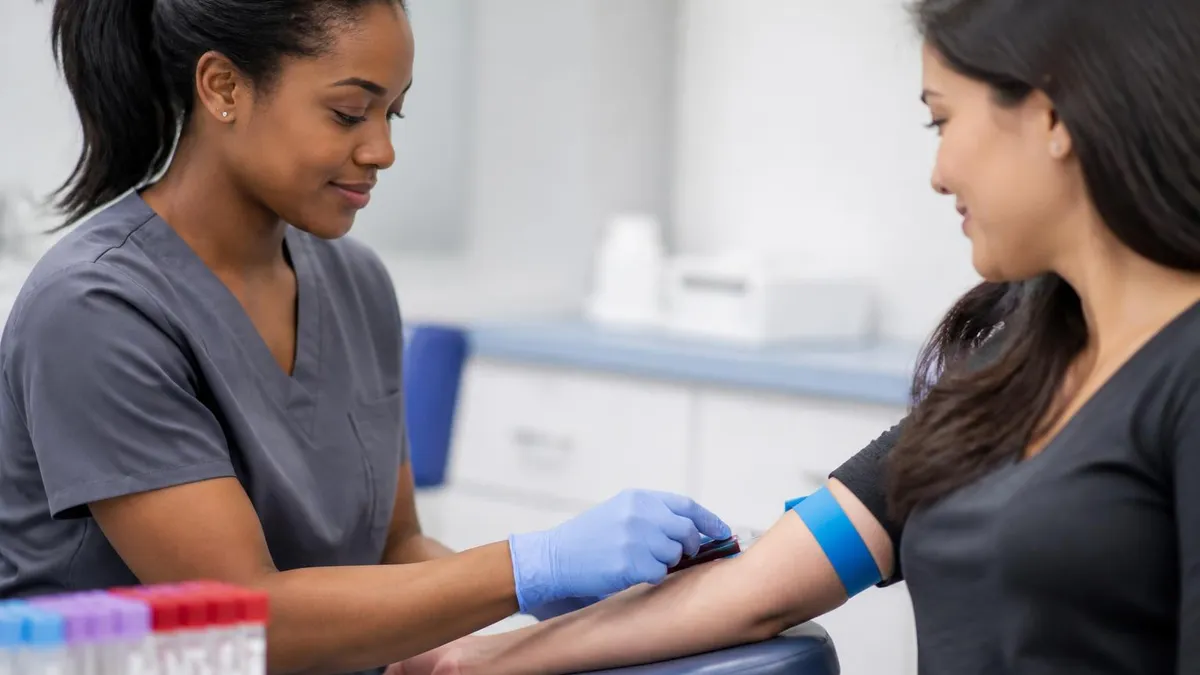
CPHT Exam Study Guide: How to Pass the Phlebotomy Certification
The Certified Phlebotomy Technician (CPHT) exam tests your knowledge across four primary domains: blood collection procedures, specimen handling, safety and compliance, and patient care. Whether you are taking the NHA phlebotomy certification exam or the ASCP Phlebotomy Technician (PBT) exam, a structured study plan is essential for success.
Understand the Exam Format
The NHA CPHT exam consists of 100 scored questions plus 20 pretest items, giving you 2 hours to complete 120 total questions. The ASCP PBT exam features 100 questions with a 2-hour time limit. Both exams are computer-based and offered at authorized testing centers nationwide. You need a scaled score of 390 out of 500 on the NHA exam to pass.
Master Venipuncture Techniques
Blood collection procedures make up the largest portion of the exam. Focus on the order of draw, proper tourniquet application (no longer than 1 minute), needle gauge selection (typically 21-gauge for routine venipuncture), and the differences between evacuated tube systems, syringe draws, and butterfly needle collections. Know when to use each method based on patient vein condition and test requirements.
Study Specimen Handling Protocols
Proper specimen handling is critical for accurate test results. Learn labeling requirements (patient name, DOB, date/time, collector initials), centrifugation speeds and times, storage temperatures for different specimen types, and criteria for specimen rejection. Understanding pre-analytical errors and how to prevent them is a high-yield exam topic.
Review Safety Standards
Know the difference between standard precautions and transmission-based precautions. Study OSHA bloodborne pathogen standards, proper PPE donning and doffing sequences, sharps disposal protocols, and the steps to follow after an accidental needlestick exposure. HIPAA patient privacy requirements and CLIA laboratory regulations are also tested.

How to Become a Certified Phlebotomy Technician
Becoming a Certified Phlebotomy Technician requires completing an approved training program and passing a national certification exam. Here is the step-by-step pathway to earning your CPHT credential.
Step 1: Meet Prerequisites
You must have a high school diploma or GED to enroll in a phlebotomy training program. Some programs may require a background check and current immunization records. No prior healthcare experience is typically required.
Step 2: Complete a Phlebotomy Training Program
Enroll in an accredited phlebotomy training program, which typically lasts 4 to 8 months. Programs include classroom instruction on anatomy, medical terminology, and blood collection techniques, plus hands-on clinical training where you perform supervised venipunctures. Most programs require you to complete 100 or more successful venipunctures during clinical rotations.
Step 3: Gain Clinical Experience
Your training program will include a clinical externship at a hospital, clinic, or laboratory where you practice blood draws on real patients under supervision. This hands-on experience is essential for building competence and confidence before taking the certification exam.
Step 4: Pass the Certification Exam
Register for either the NHA Certified Phlebotomy Technician (CPHT) exam or the ASCP Phlebotomy Technician (PBT) exam. Both are nationally recognized. Study using practice tests, review the exam content outline from your certifying body, and ensure you understand all tested domains.
Step 5: Maintain Your Certification
The NHA CPHT credential must be renewed every 2 years. You need to complete 10 continuing education credits and pay the renewal fee. The ASCP PBT certification requires renewal every 3 years with continuing education or re-examination.
CPHT Certification Cost Breakdown
Understanding the total investment for your phlebotomy certification helps you plan your career path effectively.
- Training Program: $700 to $3,000 depending on the institution (community colleges are typically more affordable than private schools)
- NHA Exam Fee: $125 for first-time test takers
- ASCP Exam Fee: $135 for the PBT certification exam
- Study Materials: $30 to $100 for textbooks and practice tests
- Background Check: $25 to $75 (required by most programs)
- Renewal Fee: $99 every 2 years (NHA) or $80 every 3 years (ASCP)
Many community colleges and vocational schools offer financial aid or payment plans for phlebotomy training programs. Some employers, particularly hospitals and large laboratory networks, offer tuition reimbursement for employees pursuing phlebotomy certification.
CPHT Exam Day Checklist
- ✓Bring two forms of valid, unexpired government-issued ID
- ✓Arrive at the testing center 30 minutes early
- ✓Review the order of draw one final time
- ✓Eat a balanced meal and stay hydrated before the exam
- ✓Read each question carefully before selecting your answer
- ✓Flag difficult questions and return to them after completing easier ones
- ✓Manage your time — aim for about 1 minute per question
- ✓Do not change answers unless you are certain of the correction
- ✓Review all flagged questions before submitting
- ✓Breathe and stay calm — you have prepared for this
CPHT Practice Test Tips: Strategies for Exam Success
Passing the phlebotomy certification exam requires both knowledge and test-taking strategy. Here are proven tips from successful test takers.
Focus on High-Weight Domains
Blood collection procedures account for 35-40% of the exam. Prioritize mastering venipuncture techniques, the order of draw, and equipment selection. Practice identifying the correct tube color and additive for each common laboratory test.
Use Practice Tests Strategically
Take CPHT practice tests under timed conditions to simulate the real exam experience. Review your incorrect answers thoroughly and study the explanations. Focus your study time on domains where you score lowest rather than reviewing topics you already know well.
Memorize Key Values and Standards
The exam tests specific values that you should memorize: tourniquet time limit (1 minute), needle insertion angle (15-30 degrees), minimum venipuncture distance from an IV site (below the IV), and specimen rejection criteria such as hemolysis, lipemia, and incorrect labeling.
About the Author
Registered Nurse & Healthcare Educator
Johns Hopkins University School of NursingDr. Sarah Mitchell is a board-certified registered nurse with over 15 years of clinical and academic experience. She completed her PhD in Nursing Science at Johns Hopkins University and has taught NCLEX preparation and clinical skills courses for nursing students across the United States. Her research focuses on evidence-based exam preparation strategies for healthcare certification candidates.
Join the Discussion
Connect with other students preparing for this exam. Share tips, ask questions, and get advice from people who have been there.
View discussion (5 replies)