
CNA Certification: Training, Exam Requirements & State Registry Guide
Free CNA Certification: Training, practice test with questions and answer explanations. Prepare for the 2026 October exam with instant scoring. 🧠
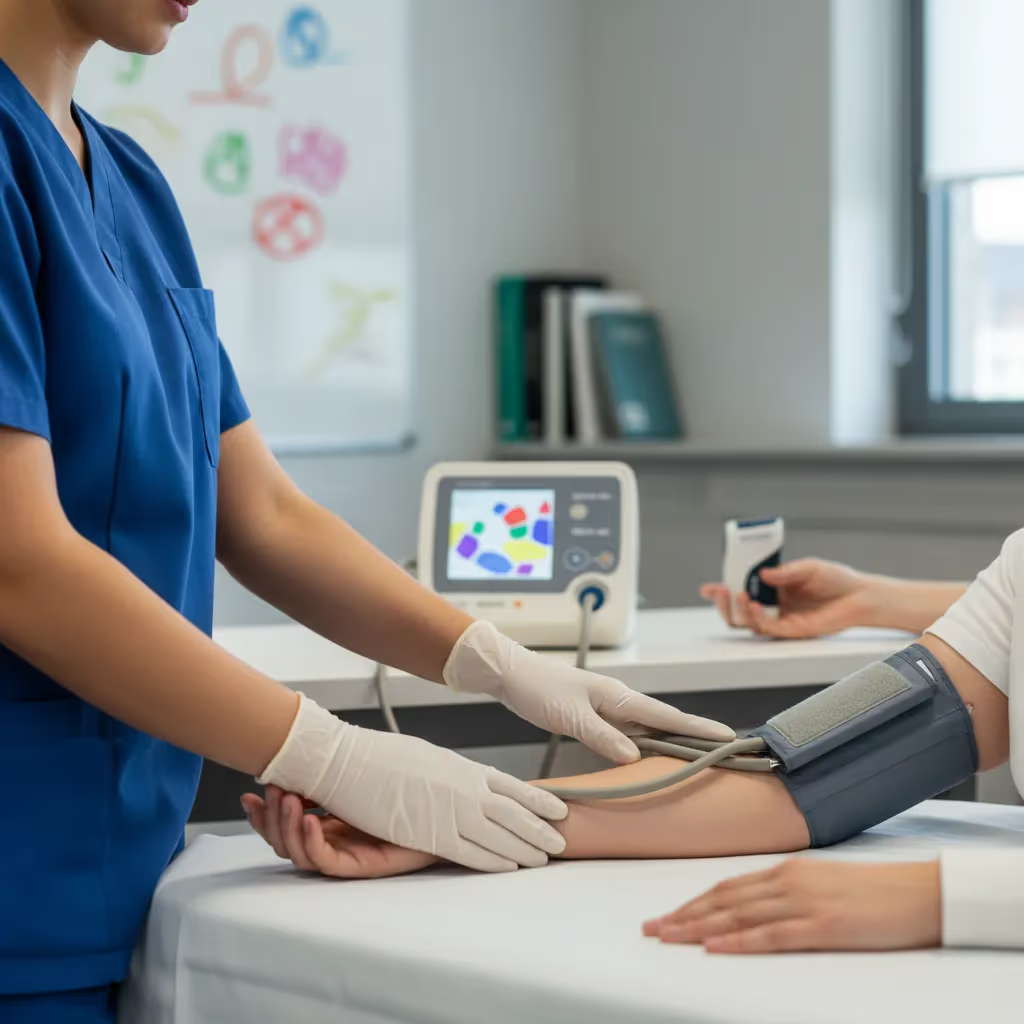
Getting your CNA certification opens the door to one of healthcare's most in-demand entry-level careers. Over 1.4 million certified nursing assistants work across the U.S. right now — in hospitals, long-term care facilities, home health agencies, and rehab centers. The cert CNA process isn't complicated, but it does require a specific sequence of steps that vary by state. Miss one requirement and you're stuck reapplying.
Here's what the path looks like in plain terms: complete a state-approved training program, pass a competency exam (written and clinical skills), then get your name on your state's nurse aide registry. That registry listing is your actual credential. Without it, you can't legally work as a CNA — period. The whole process takes anywhere from 4 weeks to 4 months depending on your program and state.
If you already hold certification in one state and need to transfer, reciprocity agreements exist — but they're inconsistent. California, Texas, and Florida each handle transfers differently. You'll need to cna license lookup through your state's registry portal to confirm your status is active before applying elsewhere. Some states require additional background checks or skills retesting even with an active out-of-state credential.
This guide breaks down every step — from picking a training program to passing your exam to getting listed on the registry. Whether you're starting fresh or trying to verify cna certification california for a job application, you'll find the specifics here. No fluff, no generic advice. Just the actual requirements and how to meet them.

So what exactly are certifications for CNA professionals, and why does the process feel more complicated than it should? The short answer: nursing assistant certification is a state-regulated credential — not a national one. Each state runs its own nurse aide registry, sets its own training hour minimums, and picks its own testing vendor. Federal law (OBRA 1987) sets the floor at 75 hours of training, but most states require more. California demands 150 hours. Texas requires 100. New York sits at 135.
The verification process trips people up more than the exam itself. If you need to verify cna certification california status, you'll use the California Department of Public Health's ATCS portal — not a generic lookup site. Each state has a different portal, different naming conventions, and different response times. Some return results instantly. Others take 5–10 business days to process a verification request.
Why does this matter? Because employers check. Every healthcare facility runs a registry verification before your first shift. If your certification lapsed, if your name doesn't match exactly, or if your state's database is down — you're not working that day. Keeping your registry status current isn't optional. It's the difference between getting hired and getting ghosted by HR.
Running a CNA certification verification CA search is straightforward once you know where to look — but the process catches first-timers off guard. California uses the Aide and Technician Certification Section (ATCS) system. You'll need either your certification number or your full legal name plus date of birth. The system confirms whether you're CNA certified with an active, expired, or revoked status. Results show your original certification date, expiration date, and any disciplinary actions on file.
Other states work similarly but with different portals. Texas uses the DADS Nurse Aide Registry. Florida runs through the Board of Nursing website. New York checks go through NYSED. The common thread: all of them are free to search. You don't need to pay a third-party verification service — those sites that charge $20–$40 for a "certification check" are pulling from the same free public databases you can access directly.
For employers running bulk verifications, most states offer a batch verification system or employer portal. These typically require registration and sometimes a small fee per lookup. But individual CNAs checking their own status? Always free. Bookmark your state's registry page — you'll need it every time you renew, transfer, or apply for a new position.
One thing that catches people: your certification number format varies by state. California uses a 7-digit number. Texas assigns a longer alphanumeric code. Some states issue temporary numbers while your full application processes, and those temporary numbers don't always work for employer verification. If a recruiter says they can't verify you, confirm whether you're giving them your permanent registry number — not the interim one from your exam results letter.
CNA Training Requirements by State
Federal law (OBRA 1987) requires a minimum of 75 hours of nurse aide training — 16 hours of supervised clinical practice plus 59 hours of classroom instruction. This is the baseline. No state can legally certify CNAs with fewer hours than this. The training must cover 17 specific skill areas including infection control, safety procedures, personal care, vital signs, and residents' rights. Programs must be state-approved and taught by a registered nurse with at least two years of nursing experience.
Choosing the right CNA certification course matters more than most people realize. Not all programs are created equal. A $400 community college program and a $2,000 private school program both get you to the same exam — but the quality of instruction, clinical placement, and job placement assistance can vary wildly. The smart move? Check your state's approved program list first, then compare based on schedule flexibility, clinical site reputation, and graduate pass rates.
If you're looking at CNA certification Texas specifically, the state requires 100 hours of training through a DADS-approved program. Texas has one of the faster certification timelines in the country — some programs run 2–3 weeks of intensive daily training followed by immediate exam scheduling. The Prometric exam is the standard testing vendor in Texas, with testing centers in every major metro area including Dallas, Houston, San Antonio, and Austin.
Cost is a real concern for most candidates. Here's the honest breakdown: program tuition runs $600–$2,000 in most states. Add the exam fee ($100–$150), background check ($30–$50), and scrubs/supplies ($50–$100). Total out-of-pocket: $800–$2,400. But free programs exist — Goodwill, Red Cross, and many nursing homes offer sponsored training in exchange for a work commitment after certification. Worth exploring before you pay full price. Some states — including California, New York, and Illinois — also offer state-funded training vouchers through workforce development programs for qualifying applicants who meet income thresholds.
Before you sit for the exam, run a quick CNA certification check to make sure all your paperwork is in order. Training programs are supposed to submit your completion records to the state automatically, but it doesn't always happen on time. Contact your program coordinator 48 hours before your scheduled exam date and confirm they've submitted your eligibility documentation. One missing form and you're turned away at the door — no refund on the exam fee.
Your CNA certificate number gets assigned after you pass both exam components and your state processes the registry application. This number is your professional identity. You'll use it on every job application, every license renewal, and every interstate transfer request. Write it down somewhere permanent. Losing track of your certification number creates headaches that take weeks to resolve — especially in states with slow-processing registries like New York or Illinois.
The exam itself isn't the hardest test you'll ever take. But don't underestimate it either. The written portion covers 60–100 multiple-choice questions depending on your state. Topics span infection control, patient safety, communication, basic nursing skills, and legal/ethical responsibilities. The clinical skills test is where most failures happen — you'll perform 3–5 randomly selected procedures in front of a nurse evaluator. Hand hygiene errors are the number one reason people fail. Practice every skill until it's automatic.
CNA Certification: Benefits and Drawbacks
- +Fast entry into healthcare — certified in as little as 4 weeks with immediate job availability
- +Low upfront cost compared to other healthcare credentials — free programs available through nursing homes and community organizations
- +Stepping stone to LPN, RN, or specialized nursing roles with tuition reimbursement from many employers
- +High demand across all 50 states — hospitals, nursing facilities, home health, and rehab centers always hiring
- +Meaningful patient care work with direct impact on residents' daily quality of life
- +Flexible scheduling options including per diem, part-time, and travel CNA positions
- −Physically demanding work — lifting, repositioning, and standing for 8–12 hour shifts takes a toll
- −Median salary of $38,200 limits financial growth without advancing to higher nursing credentials
- −Emotional strain from working with chronically ill, elderly, or end-of-life patients
- −Certification renewal requirements every 2 years including continuing education hours in most states
- −Interstate transfer complications — reciprocity agreements vary and some states require retesting
- −High turnover rates in long-term care settings due to staffing shortages and burnout
Pros and Cons at a Glance
| Pros | Cons |
|---|---|
| Low upfront cost compared to other healthcare credentials — free programs available through nursing homes and community organizations | Emotional strain from working with chronically ill, elderly, or end-of-life patients |
| Stepping stone to LPN, RN, or specialized nursing roles with tuition reimbursement from many employers | Interstate transfer complications — reciprocity agreements vary and some states require retesting |
| Meaningful patient care work with direct impact on residents' daily quality of life | High turnover rates in long-term care settings due to staffing shortages and burnout |
If you're wondering about CNA certification California requirements specifically, the state is one of the strictest in the country. California mandates 150 hours of training — double the federal minimum. Programs must be approved by the California Department of Public Health (CDPH), and you'll test through Credentia or Headmaster at one of the state's authorized testing sites. The written exam has 70 multiple-choice questions (60 scored + 10 unscored pretest) and the passing score is set by your state. Clinical skills testing covers 5 randomly selected procedures.
So what is CNA certification, really, at its core? It's proof that you've met your state's minimum competency standards to provide direct patient care under nurse supervision. That's it. Not a degree. Not a license in the traditional sense. A certification — a credential that confirms you can safely perform basic nursing tasks like vital signs, patient transfers, hygiene assistance, and documentation. It's regulated because the people you're caring for are vulnerable. The stakes are real.
Every state maintains a nurse aide registry that tracks active certifications, expiration dates, and any findings of abuse, neglect, or misappropriation. Getting placed on the registry with a negative finding is career-ending — not just in that state, but nationally. The federal OIG exclusion list cross-references state registries. One substantiated complaint follows you everywhere. This is why background checks are mandatory, not optional, in every single state's certification process.
CNA Certification Application Checklist
- ✓Verify your state's training hour requirements (75–180 hours depending on state)
- ✓Enroll in a state-approved CNA training program — check your health department's website for the approved list
- ✓Complete all required clinical rotation hours at an approved healthcare facility
- ✓Obtain a clear background check (criminal history and abuse registry screening)
- ✓Submit your training completion documentation to your state's testing vendor
- ✓Schedule your competency exam — written knowledge test and clinical skills evaluation
- ✓Bring valid photo ID, confirmation letter, and any required equipment to the exam site
- ✓Pass both exam components (minimum 70–80% on written, all skills demonstrated correctly)
- ✓Submit your nurse aide registry application with all supporting documents and fees
- ✓Confirm your registry listing is active — check your state's online lookup portal within 6 weeks
Lost your number? Wondering how do I find out my CNA certification number? The process depends on your state, but in most cases you can retrieve it online through your state's nurse aide registry portal. California uses the ATCS system — search by name and date of birth. Texas uses the DADS registry lookup. If the online portal doesn't work or your state doesn't have one, call the registry office directly. Most states can provide your number over the phone after verifying your identity with your Social Security number and date of birth.
For CNA certification verification California requests, the ATCS portal at cdph.ca.gov is the official source. Employers use this same system — so what they see is exactly what you'll see. If your certification shows as expired or inactive, you'll need to complete a renewal application before any employer will move forward with hiring. California requires 48 hours of in-service training and at least 8 hours of paid work as a CNA within the previous 24 months to renew.
Knowing how to find CNA certification number information quickly saves you time during job applications. Most online applications ask for your certification number, expiration date, and issuing state. Having this information ready — not buried in a filing cabinet — speeds up the hiring process significantly. Pro tip: take a screenshot of your registry lookup results and save it to your phone. Recruiters sometimes ask for verification during phone screens, and pulling it up instantly makes you look prepared.
Once you're a certified CNA, the credential opens more doors than most people expect. You're not locked into nursing homes — though that's where the majority of positions are. Hospitals hire CNAs for med-surg floors, emergency departments, and ICU step-down units. Home health agencies need CNAs for one-on-one patient care. Rehab facilities, hospice programs, and dialysis centers all employ certified nursing assistants. Travel CNA positions through staffing agencies pay premium rates — $25–$35 per hour compared to $15–$20 at traditional facilities.
The career ladder from CNA is clear and well-worn. Many LPN and RN programs give preference to applicants with CNA experience. Some hospitals offer tuition reimbursement specifically for CNAs pursuing nursing degrees. Specialized certifications — like Medication Aide, Restorative CNA, or Home Health Aide — add skills and bump your pay without requiring a full nursing degree. Each one builds on the foundation your initial CNA certification provides.
Some employers also accept the Medicare Nurse Aide Registry as a secondary verification source — but only for CNAs who've worked in Medicare-certified facilities. It's not a substitute for your state registry listing.
How to find CNA certification number records when transferring states? Start with your original state's registry. Request a verification letter or certificate of good standing — most states issue these within 5–10 business days. Then submit that document along with your new state's reciprocity application. Some states (like California and New York) require a bridging course or additional clinical hours even with reciprocity. Others (like Texas and Florida) process transfers in 2–3 weeks with no additional testing. Check your destination state's specific requirements before you move.
Any substantiated finding of abuse, neglect, or misappropriation of property gets permanently recorded on your state's nurse aide registry — and cross-referenced to the federal OIG exclusion list. This isn't a suspension. It's a permanent bar from working as a CNA in any state. If you're under investigation, consult a healthcare employment attorney immediately. Don't assume it'll go away.
Looking into CNA certification Dallas Texas or anywhere in the Lone Star State? Texas runs one of the more efficient certification systems in the country. The state requires 100 hours of training through a DADS-approved program, and Prometric handles all testing. Dallas-Fort Worth alone has over 30 approved training programs — community colleges, private vocational schools, and employer-sponsored options through major health systems like Baylor Scott & White and Texas Health Resources. Testing centers operate in most cities with walk-in availability during off-peak months.
For CNA verification in California, remember that the state moved to an updated online system in 2024. The ATCS portal is the only official lookup tool — third-party sites that charge fees are unnecessary. California is also one of the few states that allows employers to submit bulk verification requests through an employer portal, which speeds up the onboarding process for large healthcare systems. Individual lookups remain free and instant during business hours, though the system occasionally goes down for maintenance on weekends.
Interstate challenges are real but manageable. The biggest friction point isn't paperwork — it's timing. Some states take 6–8 weeks to process reciprocity transfers. If you're moving for a job, start the transfer application at least 2 months before your start date. Don't assume your new employer will wait. Many won't. Having your verification letter, training transcripts, and exam scores organized in advance cuts the processing time significantly in states that accept expedited applications. Keep digital copies of everything — a lost transcript adds weeks to an already slow process.
CNA Practice Test Questions
Prepare for the CNA - Certified Nursing Assistant exam with our free practice test modules. Each quiz covers key topics to help you pass on your first try.
CNA Activities of Daily Living
CNA Exam Questions covering Activities of Daily Living. Master CNA Test concepts for certification prep.
CNA Aging Process
Free CNA Practice Test featuring Aging Process. Improve your CNA Exam score with mock test prep.
CNA Anatomy and Physiology Basics
CNA Mock Exam on Anatomy and Physiology Basics. CNA Study Guide questions to pass on your first try.
CNA Assisting with Daily Living
CNA Test Prep for Assisting with Daily Living. Practice CNA Quiz questions and boost your score.
CNA Assisting with Range of Motion Exercises
CNA Questions and Answers on Assisting with Range of Motion Exercises. Free CNA practice for exam readiness.
CNA Basic Human Anatomy and Age-Related Ch...
CNA Mock Test covering Basic Human Anatomy and Age-Related Changes. Online CNA Test practice with instant feedback.
CNA Basic Nursing Skills
Free CNA Quiz on Basic Nursing Skills. CNA Exam prep questions with detailed explanations.
CNA Basic Nursing Skills 10
CNA Practice Questions for Basic Nursing Skills 10. Build confidence for your CNA certification exam.
CNA Basic Nursing Skills 11
CNA Test Online for Basic Nursing Skills 11. Free practice with instant results and feedback.
CNA Basic Nursing Skills 1
CNA Study Material on Basic Nursing Skills 1. Prepare effectively with real exam-style questions.
CNA Basic Nursing Skills 12
Free CNA Test covering Basic Nursing Skills 12. Practice and track your CNA exam readiness.
CNA Basic Nursing Skills 13
CNA Exam Questions covering Basic Nursing Skills 13. Master CNA Test concepts for certification prep.
CNA Basic Nursing Skills 14
Free CNA Practice Test featuring Basic Nursing Skills 14. Improve your CNA Exam score with mock test prep.
CNA Basic Nursing Skills 15
CNA Mock Exam on Basic Nursing Skills 15. CNA Study Guide questions to pass on your first try.
CNA Basic Nursing Skills 16
CNA Test Prep for Basic Nursing Skills 16. Practice CNA Quiz questions and boost your score.
CNA Basic Nursing Skills 17
CNA Questions and Answers on Basic Nursing Skills 17. Free CNA practice for exam readiness.
CNA Basic Nursing Skills 18
CNA Mock Test covering Basic Nursing Skills 18. Online CNA Test practice with instant feedback.
CNA Basic Nursing Skills 19
Free CNA Quiz on Basic Nursing Skills 19. CNA Exam prep questions with detailed explanations.
CNA Basic Nursing Skills 20
CNA Practice Questions for Basic Nursing Skills 20. Build confidence for your CNA certification exam.
CNA Basic Nursing Skills 21
CNA Test Online for Basic Nursing Skills 21. Free practice with instant results and feedback.
CNA Basic Nursing Skills 2
CNA Study Material on Basic Nursing Skills 2. Prepare effectively with real exam-style questions.
CNA Basic Nursing Skills 3
Free CNA Test covering Basic Nursing Skills 3. Practice and track your CNA exam readiness.
CNA Basic Nursing Skills 4
CNA Exam Questions covering Basic Nursing Skills 4. Master CNA Test concepts for certification prep.
CNA Basic Nursing Skills 5
Free CNA Practice Test featuring Basic Nursing Skills 5. Improve your CNA Exam score with mock test prep.
CNA Basic Nursing Skills 6
CNA Mock Exam on Basic Nursing Skills 6. CNA Study Guide questions to pass on your first try.
CNA Basic Nursing Skills 7
CNA Test Prep for Basic Nursing Skills 7. Practice CNA Quiz questions and boost your score.
CNA Basic Nursing Skills 8
CNA Questions and Answers on Basic Nursing Skills 8. Free CNA practice for exam readiness.
CNA Basic Nursing Skills 9
CNA Mock Test covering Basic Nursing Skills 9. Online CNA Test practice with instant feedback.
CNA Basic Restorative Services
Free CNA Quiz on Basic Restorative Services. CNA Exam prep questions with detailed explanations.
CNA Basic Restorative Services 1
CNA Practice Questions for Basic Restorative Services 1. Build confidence for your CNA certification exam.
CNA Bathing and Dressing
CNA Test Online for Bathing and Dressing. Free practice with instant results and feedback.
CNA Body Mechanics
CNA Study Material on Body Mechanics. Prepare effectively with real exam-style questions.
CNA Career Advancement and Opportunities
Free CNA Test covering Career Advancement and Opportunities. Practice and track your CNA exam readiness.
CNA Career Opportunities and Benefits
CNA Exam Questions covering Career Opportunities and Benefits. Master CNA Test concepts for certification prep.
CNA Care for Residents with Cognitive Impa...
Free CNA Practice Test featuring Care for Residents with Cognitive Impairment. Improve your CNA Exam score with mock test prep.
CNA Care of Cognitively Impaired Residents
CNA Mock Exam on Care of Cognitively Impaired Residents. CNA Study Guide questions to pass on your first try.
CNA Care of Cognitively Impaired Residents 1
CNA Test Prep for Care of Cognitively Impaired Residents 1. Practice CNA Quiz questions and boost your score.
CNA Care Of Cognitively Impaired Residents 4
CNA Questions and Answers on Care Of Cognitively Impaired Residents 4. Free CNA practice for exam readiness.
CNA Common Medical Terms and Abbreviations
CNA Mock Test covering Common Medical Terms and Abbreviations. Online CNA Test practice with instant feedback.
CNA Communication and Interpersonal Skills
Free CNA Quiz on Communication and Interpersonal Skills. CNA Exam prep questions with detailed explanations.
CNA Communication and Interpersonal Skills 1
CNA Practice Questions for Communication and Interpersonal Skills 1. Build confidence for your CNA certification exam.
CNA Communication And Interpersonal Skills 4
CNA Test Online for Communication And Interpersonal Skills 4. Free practice with instant results and feedback.
CNA Eligibility and Qualifications
CNA Study Material on Eligibility and Qualifications. Prepare effectively with real exam-style questions.
CNA Emergency Procedure
Free CNA Test covering Emergency Procedure. Practice and track your CNA exam readiness.
CNA Ethics and Professionalism
CNA Exam Questions covering Ethics and Professionalism. Master CNA Test concepts for certification prep.
CNA Exam Structure and Content
Free CNA Practice Test featuring Exam Structure and Content. Improve your CNA Exam score with mock test prep.
CNA Feeding and Hydration
CNA Mock Exam on Feeding and Hydration. CNA Study Guide questions to pass on your first try.
CNA Infection Control
CNA Test Prep for Infection Control. Practice CNA Quiz questions and boost your score.
CNA Infection Control and Safety
CNA Questions and Answers on Infection Control and Safety. Free CNA practice for exam readiness.
CNA Isolation Precautions
CNA Mock Test covering Isolation Precautions. Online CNA Test practice with instant feedback.
CNA Legal & Ethical Behaviours
Free CNA Quiz on Legal & Ethical Behaviours. CNA Exam prep questions with detailed explanations.
CNA Legal & Ethical Behaviours 1
CNA Practice Questions for Legal & Ethical Behaviours 1. Build confidence for your CNA certification exam.
CNA Legal & Ethical Behaviours 4
CNA Test Online for Legal & Ethical Behaviours 4. Free practice with instant results and feedback.
CNA Mental Health and Social Services Needs
CNA Study Material on Mental Health and Social Services Needs. Prepare effectively with real exam-style questions.
CNA Mental Health and Social Services Needs 1
Free CNA Test covering Mental Health and Social Services Needs 1. Practice and track your CNA exam readiness.
CNA Mental Health And Social Services Needs 4
CNA Exam Questions covering Mental Health And Social Services Needs 4. Master CNA Test concepts for certification prep.
CNA Nutrition and Hydration Management
Free CNA Practice Test featuring Nutrition and Hydration Management. Improve your CNA Exam score with mock test prep.
CNA Patient Care Procedure
CNA Mock Exam on Patient Care Procedure. CNA Study Guide questions to pass on your first try.
CNA Personal Care Skills
CNA Test Prep for Personal Care Skills. Practice CNA Quiz questions and boost your score.
CNA Personal Care Skills 1
CNA Questions and Answers on Personal Care Skills 1. Free CNA practice for exam readiness.
CNA Personal Care Skills 4
CNA Mock Test covering Personal Care Skills 4. Online CNA Test practice with instant feedback.
CNA Personal Care Skills 5
Free CNA Quiz on Personal Care Skills 5. CNA Exam prep questions with detailed explanations.
CNA Personal Hygiene and Grooming
CNA Practice Questions for Personal Hygiene and Grooming. Build confidence for your CNA certification exam.
CNA Practice Test - Basic Nursing Skills #2
CNA Test Online for Practice Test - Basic Nursing Skills #2. Free practice with instant results and feedback.
CNA Practice Test - Basic Nursing Skills #2 1
CNA Study Material on Practice Test - Basic Nursing Skills #2 1. Prepare effectively with real exam-style questions.
CNA Preventing Patient Falls and Injuries
Free CNA Test covering Preventing Patient Falls and Injuries. Practice and track your CNA exam readiness.
CNA Promoting Resident Independence and Ch...
CNA Exam Questions covering Promoting Resident Independence and Choice. Master CNA Test concepts for certification prep.
CNA Proper Hand Hygiene and PPE Usage
Free CNA Practice Test featuring Proper Hand Hygiene and PPE Usage. Improve your CNA Exam score with mock test prep.
CNA Resident Rights and Communication
CNA Mock Exam on Resident Rights and Communication. CNA Study Guide questions to pass on your first try.
CNA Resident’s Rights
CNA Test Prep for Resident’s Rights. Practice CNA Quiz questions and boost your score.
CNA Resident's Rights 1
CNA Questions and Answers on Resident's Rights 1. Free CNA practice for exam readiness.
CNA Resident's Rights 4
CNA Mock Test covering Resident's Rights 4. Online CNA Test practice with instant feedback.
CNA Roles and Responsibilities
Free CNA Quiz on Roles and Responsibilities. CNA Exam prep questions with detailed explanations.
CNA Safety and Emergency Procedures
CNA Practice Questions for Safety and Emergency Procedures. Build confidence for your CNA certification exam.
CNA Safety and Emergency Procedures 1
CNA Test Online for Safety and Emergency Procedures 1. Free practice with instant results and feedback.
CNA Safety And Emergency Procedures 4
CNA Study Material on Safety And Emergency Procedures 4. Prepare effectively with real exam-style questions.
CNA Safety and Infection Control
Free CNA Test covering Safety and Infection Control. Practice and track your CNA exam readiness.
CNA Scope of Practice
CNA Exam Questions covering Scope of Practice. Master CNA Test concepts for certification prep.
CNA Skills and Competencies
Free CNA Practice Test featuring Skills and Competencies. Improve your CNA Exam score with mock test prep.
CNA Supporting Rehabilitation Activities
CNA Mock Exam on Supporting Rehabilitation Activities. CNA Study Guide questions to pass on your first try.
CNA The Nurse Aide's Role and Responsibili...
CNA Test Prep for The Nurse Aide's Role and Responsibilities. Practice CNA Quiz questions and boost your score.
CNA Time Management and Prioritization
CNA Questions and Answers on Time Management and Prioritization. Free CNA practice for exam readiness.
CNA Toileting and Elimination
CNA Mock Test covering Toileting and Elimination. Online CNA Test practice with instant feedback.
CNA Using Adaptive Devices
CNA Practice Questions for Using Adaptive Devices. Build confidence for your CNA certification exam.
CNA registration Texas processes typically move faster than most states — 2–4 weeks from exam pass to active registry listing. The state's NATCEP (Nurse Aide Training and Competency Evaluation Program) is well-funded and staffed, which keeps backlogs low compared to states like California or New York where processing can stretch to 6 weeks. If you're in Texas and your registry listing hasn't appeared after 4 weeks, call the DADS registry office directly at (512) 438-2050 rather than waiting.
Every CNA certification program worth attending will prepare you for both exam components — written and clinical. But preparation quality varies dramatically. Programs attached to hospitals or large healthcare systems tend to produce higher pass rates because their clinical rotations happen in active care environments, not simulated labs. Students who practice skills on real patients (under supervision) build muscle memory that simulation alone can't replicate. When comparing programs, ask for their first-time pass rate. Anything below 80% is a red flag.
The clinical skills evaluation is the make-or-break moment. You'll draw 3–5 skills randomly from a bank of about 25 possible procedures. Hand hygiene, vital signs, patient positioning, catheter care, range of motion exercises — any of them could come up. The evaluator watches every step and scores on a binary pass/fail basis per skill. One critical error on any single skill fails that entire skill. Common critical errors: breaking sterile technique, failing to identify the patient, skipping hand hygiene between procedures, or not explaining the procedure to the patient before starting. Practice until every step is automatic.
After passing, your results typically post to the state registry within 2–6 weeks. Some states — Texas and Georgia especially — process results faster, often within 10 business days. California and New York tend to run slower. Don't panic if your registry listing doesn't appear immediately. Call the registry office after 3 weeks if nothing shows up. Keep your exam score report as backup proof of certification during the interim period.
Sample CNA Practice Questions
Try these questions from our free CNA practice tests. The correct answer and an explanation follow each question.
A CNA's certification in Florida became null and void 3 years ago after they failed to meet renewal requirements. To regain active status, what must the individual do?
- A. Complete 48 hours of continuing education and pay a reactivation fee.
- B. Take a refresher course and pass the skills portion of the competency exam.
- C. Work 100 hours under the direct supervision of a Registered Nurse.
- D. Reapply for licensure and meet all current initial application requirements.
Answer: D. Reapply for licensure and meet all current initial application requirements.
According to the Florida Board of Nursing, once a CNA license becomes 'Null and Void,' it cannot be reactivated or renewed. The individual must start the process over by reapplying for licensure and complying with all laws and rules that are current at the time of the new application.
What is the purpose of the Nurse Aide Registry?
- A. To schedule CNA training classes
- B. To track CNA work hours for payroll
- C. To maintain a list of certified CNAs and record any abuse/neglect findings
- D. To issue nursing licenses
Answer: C. To maintain a list of certified CNAs and record any abuse/neglect findings
The Nurse Aide Registry is a state-maintained database that lists all certified nursing assistants in good standing. Employers are required to verify that a CNA's name appears on the registry before hiring them. It also records any substantiated findings of abuse or neglect.
A CNA wants to specialize in wound care. Which certification would best support this career goal?
- A. Wound Care Certified (WCC)
- B. Certified Nursing Assistant Advanced (CNAA)
- C. Certified Medical Assistant (CMA)
- D. Basic Life Support Instructor (BLS-I)
Answer: A. Wound Care Certified (WCC)
The Wound Care Certified (WCC) credential is specifically designed for healthcare professionals who want to specialize in wound management.
A CNA working in a long-term care facility is interested in career advancement but is not yet ready to commit to a full-time nursing program. Which specialized certification would be MOST beneficial for enhancing their skills and value within their current work environment?
- A. Certified EKG Technician (CET)
- B. Restorative Aide Specialist
- C. Certified Phlebotomy Technician (CPT)
- D. Basic Life Support (BLS) Instructor
Answer: B. Restorative Aide Specialist
A Restorative Aide Specialist certification builds directly on CNA skills and is highly valued in long-term care and rehabilitation settings. This role focuses on helping residents maintain or improve their functional abilities through exercise and other therapies, which is a core function of long-term care. While other certifications are valuable, the Restorative Aide role is most directly applicable for immediate career enhancement within that specific environment.
CNA Questions and Answers
About the Author

Registered Nurse & Healthcare Educator
Johns Hopkins University School of NursingDr. Sarah Mitchell is a board-certified registered nurse with over 15 years of clinical and academic experience. She completed her PhD in Nursing Science at Johns Hopkins University and has taught NCLEX preparation and clinical skills courses for nursing students across the United States. Her research focuses on evidence-based exam preparation strategies for healthcare certification candidates.
Join the Discussion
Connect with other students preparing for this exam. Share tips, ask questions, and get advice from people who have been there.
View discussion (8 replies)