
CDL Job Market: Trucking Careers, Salaries, and Industry Demand in 2026 October
🟢 Free CDL Job Market: Trucking Careers, practice test with questions and answer explanations. Prepare for the 2026 October exam with instant scoring.
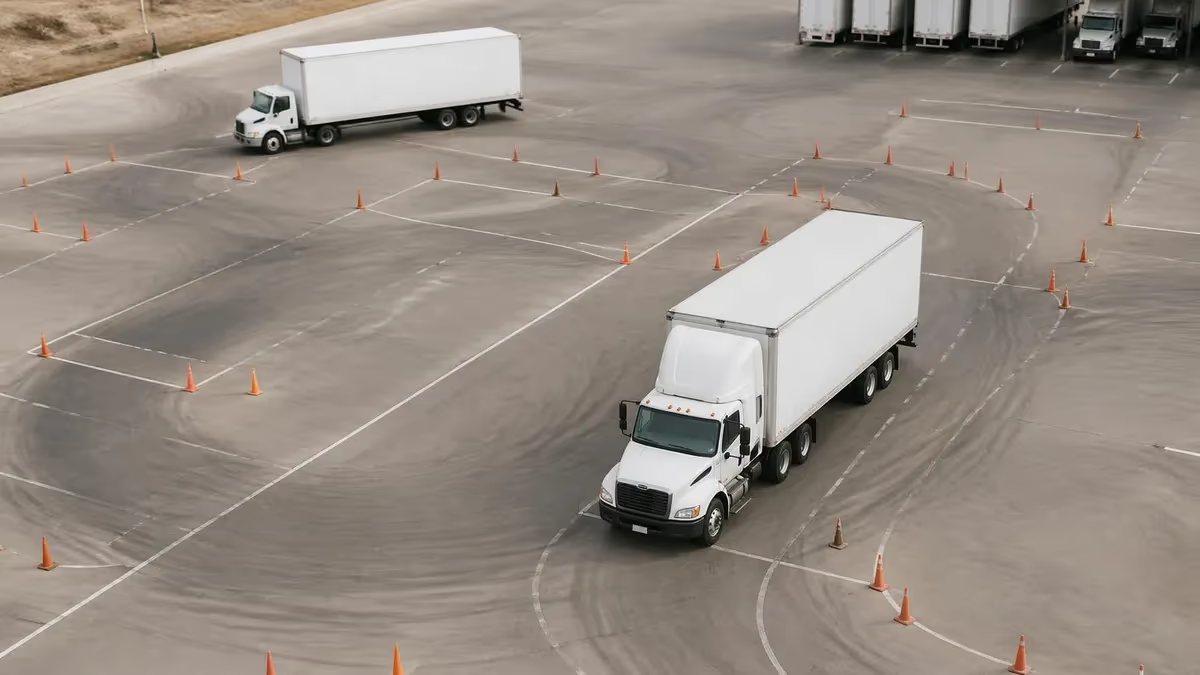
The CDL job market has shifted dramatically over the past few years — and if you're considering a commercial driving career, the timing couldn't be better. Freight volumes keep climbing while experienced drivers retire faster than new ones enter the pipeline. That supply-demand gap means higher starting pay, better benefits, and more bargaining power for qualified CDL holders across every endorsement class.
Understanding cdl market capitalisation gives you a clearer picture of how much money flows through the trucking sector each year. The American Trucking Associations estimates the industry generates over $940 billion in gross revenue — roughly 6% of U.S. GDP. When you factor in fuel, maintenance, insurance, and logistics tech, the total economic footprint is even larger. This isn't a niche field. It's the backbone of domestic commerce.
CDL marketing efforts from major carriers have ramped up significantly as companies compete for a shrinking driver pool. Sign-on bonuses that topped $10,000 a few years ago now regularly exceed $15,000 at mid-size fleets. Regional and local routes — once reserved for senior drivers — are being offered to rookies willing to commit for 12 months. If you've been weighing whether to get your CDL, the economics strongly favor action over waiting.
CDL marketing strategies have evolved beyond billboard ads and truck-stop flyers. Today's carriers run geo-targeted digital campaigns, sponsor CDL school partnerships, and maintain active social media recruiting pages. The sophistication rivals white-collar talent acquisition — and for good reason. Every empty truck seat costs a carrier roughly $1,000 per day in lost revenue. That urgency translates directly into better compensation packages and signing offers for you.
The cdl marketing group approach — where multiple smaller carriers pool resources for joint advertising — has gained traction in mid-market fleets operating between 50 and 500 trucks. These cooperatives negotiate bulk ad rates, share lead databases, and split the cost of recruiter staff. For drivers, this means you'll see coordinated outreach from carriers you might never have discovered individually. It's worth paying attention to these grouped campaigns because they often come with competitive packages designed to match or beat the mega-carriers.
What makes 2025 different from previous hiring booms is the infrastructure investment pipeline. The bipartisan infrastructure law allocated $550 billion in new federal spending — a chunk of which flows into highway construction, bridge repair, and port expansion. Every one of those projects needs materials hauled by CDL drivers. Specialized endorsements like tanker (N) and hazmat (H) command premium pay on infrastructure-related contracts, sometimes adding $8,000 to $12,000 annually on top of base salary.
Regional differences in the CDL job market matter more than most candidates realize. The Southwest and Mountain West corridors — think Phoenix to Denver, Las Vegas to Salt Lake City — have seen the sharpest salary increases since 2022. Intermodal freight hubs in those regions can't keep up with warehouse expansion, so they're paying premiums for local and regional drivers willing to run dedicated routes.
The cdl marketing group model is especially visible along the I-10 and I-40 corridors, where smaller LTL carriers coordinate hiring events at truck stops and training schools. These joint events let you interview with five or six companies in a single afternoon. Drivers who attend consistently report landing offers 15–20% above the initial advertised rate — partly because recruiters at these events have authority to negotiate on the spot.
Don't overlook the less glamorous niches either. Refuse and recycling haulers, concrete mixers, and fuel tanker operators face chronic shortages that rarely make headlines. These roles typically offer Monday-through-Friday schedules, home-every-night guarantees, and union benefits in many metro areas. If work-life balance matters more than maximizing per-mile pay, these sectors deserve serious consideration. Municipal contracts in particular tend to offer pension plans and healthcare packages that rival public-sector employment — a rare combination in the trucking world that attracts drivers looking for long-term stability over peak earning potential.
CDL Job Market by Sector
OTR positions remain the largest hiring segment, accounting for roughly 40% of all CDL job postings. These roles typically involve multi-day or multi-week routes spanning several states. Average OTR pay ranges from $55,000 to $78,000 annually depending on experience, endorsements, and carrier size. The trade-off is time away from home — most OTR schedules involve 2–3 weeks on the road followed by 3–5 days off. Carriers are experimenting with relay models and team-driving incentives to shorten individual trips while maintaining freight velocity.
So how does a cdl marketing group actually influence your job search? Think of it like a buying cooperative — but for recruitment advertising. When six regional carriers in the Midwest pool their recruiting budgets, they can run prime-time radio spots, sponsor local CDL school graduations, and maintain staffed booths at state fairs. None of them could afford that individually, but together the cost per hire drops significantly.
For drivers, the practical impact is more options and faster response times. A cdl marketing group typically operates a shared intake line or web portal where your single application gets routed to whichever member carrier best matches your home location, endorsement set, and schedule preferences. It eliminates the tedious process of filling out the same application twelve times for twelve different companies.
The data backs this up. Carriers participating in cooperative marketing groups report 23% lower cost-per-hire and 18% faster time-to-seat compared to solo recruiting efforts. Driver retention also improves — partly because the matching process produces better fit between driver preferences and route characteristics from the start.
The cdl marketing group strategy doesn't just benefit established fleets. Owner-operators and small fleet owners (1–10 trucks) increasingly tap into these cooperatives for freight matching and backhaul optimization. When you're running your own authority, empty miles are your biggest enemy. Cooperative networks help fill those gaps by connecting members with shipper contracts that no single small carrier could land alone.
Insurance is another area where cooperative membership pays off. Commercial trucking insurance premiums have spiked 30–40% since 2020 due to nuclear verdicts and rising claim severity. A cdl marketing group with 200+ combined trucks can negotiate group policy rates that individual operators can't access. Some cooperatives even self-insure the first $50,000 of each claim, which dramatically lowers member premiums.
If you're exploring the owner-operator path, look for cooperatives that offer both marketing and operational support. The best ones provide fuel card programs, maintenance network discounts, and compliance assistance alongside their recruiting services. That bundled value proposition makes cooperative membership one of the smarter moves a small fleet can make in today's market.
Freight brokers have also started partnering with cdl marketing group cooperatives to create preferred carrier lists. When a broker needs reliable capacity on a consistent lane, they'll often turn to a cooperative's member roster first — knowing that the group enforces minimum safety standards and insurance thresholds. For owner-operators, this broker access alone can justify annual membership fees that typically run $500 to $2,000.
CDL Career: Pros and Cons
- +Driver shortage means consistent demand and strong negotiating use for qualified CDL holders
- +No four-year degree required — most CDL programs take 3 to 8 weeks to complete
- +Salaries for specialized endorsements (hazmat, tanker) regularly exceed $75,000 annually
- +Sign-on bonuses of $10,000 to $20,000 are common at mid-size and large carriers
- +Multiple career paths from OTR to local delivery to owner-operator business ownership
- +Veterans can often use GI Bill benefits to cover CDL training costs entirely
- −OTR schedules typically require 2–3 weeks away from home per rotation
- −Physical demands include loading, vehicle inspection, and long hours of seated driving
- −Insurance and fuel costs make owner-operator margins thin during economic downturns
- −DOT medical requirements can disqualify candidates with certain health conditions
- −Automation and platooning technology may reduce long-haul positions over the next decade
- −Traffic violations and accidents directly impact employability and insurance rates
Pros and Cons at a Glance
| Pros | Cons |
|---|---|
| Driver shortage means consistent demand and strong negotiating use for qualified CDL holders | Physical demands include loading, vehicle inspection, and long hours of seated driving |
| Multiple career paths from OTR to local delivery to owner-operator business ownership | Insurance and fuel costs make owner-operator margins thin during economic downturns |
| Veterans can often use GI Bill benefits to cover CDL training costs entirely | DOT medical requirements can disqualify candidates with certain health conditions |
Salary trends in the CDL job market tell a clear story: specialized beats generalized. Drivers with hazmat endorsements earn an average of $8,200 more per year than those without. Tanker endorsement holders see a similar bump. Stack both endorsements (the so-called HazTanker combo) and you're looking at $12,000 to $18,000 above the median — with significantly less competition for available positions.
The cdl marketing group ecosystem recognizes this hierarchy. Cooperative job boards prominently feature endorsement-specific postings, and several groups run targeted recruitment campaigns for drivers who hold or are willing to obtain specialized credentials. If you already have your Class A but lack endorsements, adding hazmat or tanker typically requires only a written test and (for hazmat) a TSA background check that takes 30–60 days.
Experience-based pay tiers remain standard across the industry, but the gap between entry-level and veteran pay has narrowed considerably. New CDL graduates now start at $45,000 to $55,000 at most national carriers — up from $35,000 to $42,000 just five years ago. By year three, top performers at dedicated accounts routinely clear $70,000. That compressed trajectory reflects the intensity of competition for drivers at every experience level.
CDL Job Market Entry Checklist
- ✓Verify you meet DOT age requirements (21 for interstate, 18 for intrastate in most states)
- ✓Obtain your CDL learner's permit by passing the written knowledge test at your state DMV
- ✓Enroll in an accredited CDL training program (3–8 weeks depending on class and endorsement)
- ✓Pass the DOT physical examination and obtain your medical examiner's certificate
- ✓Complete behind-the-wheel training hours required by your state and FMCSA's ELDT mandate
- ✓Pass the CDL skills test including pre-trip inspection, basic controls, and road test
- ✓Add endorsements (hazmat, tanker, doubles/triples) for higher-paying positions
- ✓Build a clean DAC report by maintaining safe driving records from day one
- ✓Research carriers using FMCSA's SAFER database to verify safety ratings before signing
- ✓Compare at least three job offers — evaluate total compensation, not just per-mile rate
Technology is reshaping the CDL job market in ways that extend well beyond self-driving trucks. Electronic logging devices (ELDs) have been mandatory since 2019, and compliance data now feeds directly into hiring algorithms. Carriers increasingly use telematics scores — hard braking events, idle time, speed compliance — as a primary screening tool. Your digital driving footprint matters as much as your DAC report in today's market.
The cdl marketing group model has adapted to this tech-driven reality. Several cooperatives now offer member drivers access to dashcam coaching programs, where AI-powered systems review footage and provide real-time feedback on following distance, lane discipline, and hazard recognition. Drivers who participate in these programs see measurably lower insurance premiums — often 8–12% reductions after six months of clean data.
Fleet management platforms like Samsara, KeepTruckin (now Motive), and Platform Science have also created marketplaces where drivers with strong telematics profiles get matched to premium freight opportunities. Think of it as a credit score for trucking — the better your data, the better your options. Building a solid digital track record from day one of your CDL career gives you compounding advantages over time.
Blockchain-based credentialing is another emerging trend. Several industry consortiums are piloting digital CDL verification systems that let carriers instantly confirm your license status, endorsements, medical certification, and training history without waiting for manual FMCSA database queries. Early adopters report cutting the onboarding timeline from 10 days to under 48 hours — a significant advantage when you want to start earning quickly after switching carriers.
Women represent only 7% of the CDL workforce — but that number is growing faster than any other demographic segment. Several major carriers now run women-specific recruiting programs, mentorship pairings, and equipment modifications (adjustable pedals, ergonomic seats) to attract and retain female drivers. The cdl marketing group cooperatives have followed suit, with at least four national groups launching dedicated women-in-trucking campaigns since 2023.
Veterans represent another key pipeline. The military-to-CDL transition has been simplified considerably through programs like the Troops into Transportation Act and state-level skills test waivers for former military vehicle operators. If you held an MOS involving heavy equipment or tactical vehicle operation, you may qualify for abbreviated training timelines and immediate CDL issuance in over 40 states.
Immigrant communities — particularly in metro areas with large logistics clusters — also account for a growing share of CDL applications. Language accommodation, translated study materials, and bilingual testing options vary widely by state. Carriers with cdl marketing group affiliations tend to be more proactive about multilingual outreach because the cooperative model incentivizes casting the widest possible recruitment net.
Some unlicensed CDL schools charge $5,000 to $8,000 for training that doesn't meet FMCSA's Entry-Level Driver Training (ELDT) requirements. Graduates of unregistered programs can't take the CDL skills test. Always verify your school's ELDT registration on the FMCSA Training Provider Registry before enrolling. Legitimate programs will have a valid Training Provider Registry (TPR) number displayed on their website and enrollment paperwork.
The future trajectory of the CDL job market hinges on a few key variables. Autonomous trucking technology continues advancing, but full driverless deployment on public highways remains years away — most industry analysts peg widespread commercial adoption at 2030 or later, and even then, autonomous systems will likely handle only the highway segment of long-haul routes. First-mile and last-mile operations still require a human driver for the foreseeable future.
Meanwhile, the cdl marketing group infrastructure keeps expanding. New cooperatives formed in 2024 and 2025 focused on niche verticals: hazmat-only transport, oversized load specialists, and refrigerated pharmaceutical logistics. These narrow-focus groups match highly qualified drivers with highly specific freight — and the pay reflects that specialization. Drivers with clean records and relevant endorsements can command $90,000 or more annually in these verticals.
Electric trucks add another dimension. As battery range improves and charging infrastructure expands, short-haul and regional routes will transition to electric vehicles first. CDL holders who gain early experience operating electric Class 8 trucks will position themselves for premium assignments as fleets electrify. Several carriers already offer EV-specific training programs — and the cdl marketing group cooperatives that include EV education in their member benefits are seeing higher recruitment conversion rates.
CDL Practice Test Questions
Prepare for the CDL - Commercial Driver's License exam with our free practice test modules. Each quiz covers key topics to help you pass on your first try.
CDL Alabama CDL Combination Vehicles Pract...
CDL Exam Questions covering Alabama CDL Combination Vehicles Practice Test. Master CDL Test concepts for certification prep.
CDL Alabama CDL General Knowledge Practice...
Free CDL Practice Test featuring Alabama CDL General Knowledge Practice Test #. Improve your CDL Exam score with mock test prep.
CDL Alabama General Knowledge CDL Practice...
CDL Mock Exam on Alabama General Knowledge CDL Practice Test. CDL Study Guide questions to pass on your first try.
CDL Airbrakes Practice Test
CDL Test Prep for Airbrakes Practice Test. Practice CDL Quiz questions and boost your score.
CDL Air Brakes Practice Test
CDL Questions and Answers on Air Brakes Practice Test. Free CDL practice for exam readiness.
CDL CLASS A COMMERCIAL DRIVER'S LICENSE PR...
CDL Mock Test covering CLASS A COMMERCIAL DRIVER'S LICENSE PRACTICE TEST. Online CDL Test practice with instant feedback.
CDL Class B Commercial Driver's License Pr...
Free CDL Quiz on Class B Commercial Driver's License Practice Test. CDL Exam prep questions with detailed explanations.
CDL Combination Vehicles Practice Test
CDL Practice Questions for Combination Vehicles Practice Test. Build confidence for your CDL certification exam.
CDL Doubles and Triples Practice Test
CDL Test Online for Doubles and Triples Practice Test. Free practice with instant results and feedback.
CDL Doubles Triples Practice Test
CDL Study Material on Doubles Triples Practice Test. Prepare effectively with real exam-style questions.
CDL General Knowledge Practice Test
Free CDL Test covering General Knowledge Practice Test. Practice and track your CDL exam readiness.
CDL General Knowledge Practice Test1
CDL Exam Questions covering General Knowledge Practice Test1. Master CDL Test concepts for certification prep.
CDL Hazardous Materials (Hazmat) Practice ...
Free CDL Practice Test featuring Hazardous Materials (Hazmat) Practice Test. Improve your CDL Exam score with mock test prep.
CDL Hazardous Materials Hazmat Practice Test
CDL Mock Exam on Hazardous Materials Hazmat Practice Test. CDL Study Guide questions to pass on your first try.
CDL Hazmat Practice Test
CDL Test Prep for Hazmat Practice Test. Practice CDL Quiz questions and boost your score.
CDL Passenger Transport Practice Test
CDL Questions and Answers on Passenger Transport Practice Test. Free CDL practice for exam readiness.
CDL Road Signs and Signals Practice Test
CDL Mock Test covering Road Signs and Signals Practice Test. Online CDL Test practice with instant feedback.
CDL School Bus Endorsement Practice Test
Free CDL Quiz on School Bus Endorsement Practice Test. CDL Exam prep questions with detailed explanations.
CDL School Bus Endorsement S Practice Test
CDL Practice Questions for School Bus Endorsement S Practice Test. Build confidence for your CDL certification exam.
CDL Tanker Practice Test
CDL Test Online for Tanker Practice Test. Free practice with instant results and feedback.
CDL Class A Commercial Driver's License Pr...
CDL Study Material on Class A Commercial Driver's License Practice Test -1. Prepare effectively with real exam-style questions.
CDL Class A Driver's License Practice Test -2
Free CDL Test covering Class A Driver's License Practice Test -2. Practice and track your CDL exam readiness.
CDL Class A Driver's License Practice Test -3
CDL Exam Questions covering Class A Driver's License Practice Test -3. Master CDL Test concepts for certification prep.
CDL Class A Driver's License Practice Test -5
Free CDL Practice Test featuring Class A Driver's License Practice Test -5. Improve your CDL Exam score with mock test prep.
CDL Class B Commercial Driver's License Pr...
CDL Mock Exam on Class B Commercial Driver's License Practice Test -2. CDL Study Guide questions to pass on your first try.
CDL Class C CDL with Hazmat Endorsement Pr...
CDL Test Prep for Class C CDL with Hazmat Endorsement Practice Test. Practice CDL Quiz questions and boost your score.
CDL Class C CDL with Hazmat Endorsement Pr...
CDL Questions and Answers on Class C CDL with Hazmat Endorsement Practice Test -2. Free CDL practice for exam readiness.
CDL Class C CDL with Hazmat Endorsement Pr...
CDL Mock Test covering Class C CDL with Hazmat Endorsement Practice Test -3. Online CDL Test practice with instant feedback.
If you're evaluating CDL schools, look beyond the sticker price. Tuition ranges from $3,000 to $10,000 depending on the program length, endorsement coverage, and job placement assistance included. Many community colleges offer CDL programs at significantly lower cost than private schools — and some qualify for Pell Grant funding if you meet income thresholds. The quality difference between a $4,000 community college program and a $9,000 private school is often negligible.
Job placement rates deserve scrutiny. A reputable school should publish its placement rate (typically 85–95% within 30 days of graduation) and provide a list of carrier partners. Schools affiliated with a cdl marketing group cooperative often have stronger placement networks because the cooperative's member carriers commit to interviewing graduates as part of their membership agreement.
One more thing: don't sign a training contract with a carrier without reading the fine print. Some carrier-sponsored programs offer free tuition in exchange for a 12-to-24-month employment commitment. Break the contract early, and you'll owe the full tuition amount — sometimes at inflated rates. These deals can work well if you're committed to that carrier, but make sure you understand the financial exposure before signing anything.
Networking matters more than most new drivers expect. Online forums like TruckersReport and Reddit's r/Truckers provide unfiltered reviews of carriers, training programs, and routes. Experienced drivers share real pay stubs, honest assessments of dispatcher quality, and warnings about companies with high turnover. Spending a few hours reading recent posts about any carrier you're considering can save you months of frustration down the road.
Local trucking associations and state Motor Carrier Advisory Committees also host monthly meetings where you can meet fleet managers, dispatchers, and fellow drivers face-to-face. Those connections often lead to referral bonuses and inside knowledge about which companies are actually worth your time. Don't underestimate the power of showing up in person when everyone else is just clicking apply online.
Sample CDL Practice Questions
Try these questions from our free CDL practice tests. The correct answer and an explanation follow each question.
How much greater is the stopping distance and braking demand on a doubles/triples combination compared to a straight truck?
- A. It requires more room and earlier braking due to greater length and weight
- B. It stops in half the distance
- C. It is exactly the same
- D. It needs no extra space
Answer: A. It requires more room and earlier braking due to greater length and weight
Longer, heavier combinations need more distance and earlier braking to stop safely.
All versions of the Class B Pre-trip inspection tests will include ________.
- A. An engine start and in-cab inspection.
- B. An engine start.
- C. An examination of the student mirrors.
- D. An inspection of the emergency exit.
Answer: A. An engine start and in-cab inspection.
The Class B CDL pre-trip inspection test always includes an engine start and a comprehensive in-cab inspection. This section assesses the driver's ability to check critical interior components like gauges, lights, horn, wipers, and mirrors, as well as starting the engine to check air pressure build-up and other engine-related functions. These steps are essential to ensure the vehicle is safe and operational before driving.
What is the correct position of the shut-off valves for the last trailer of a doubles or triples set?
- A. Fully closed
- B. Fully open
- C. Partially open
- D. Emergency shut-off valve open; service shut-off valve closed
Answer: A. Fully closed
For the last trailer in a doubles or triples set, both the service and emergency shut-off valves must be fully closed. This action seals the air lines at the end of the trailer combination. Closing the valves prevents air from escaping the system, which is crucial for maintaining proper air pressure and ensuring the effective operation of the air brakes on all trailers.
Which of the following is a good indicator that you are driving your bus too fast for a banked curve?
- A. If your horn has stopped working.
- B. None of the listed answers.
- C. If your bus leans toward the outside on a banked curve.
- D. If your air pressure gauge reads very high.
Answer: C. If your bus leans toward the outside on a banked curve.
Banked curves are designed to help vehicles maintain stability at certain speeds by using the road's slope. If your bus leans toward the outside of a banked curve, it indicates that the centrifugal force generated by your speed is overcoming the banking angle. This is a clear sign that you are driving too fast for the curve and risk losing control of the vehicle.
CDL Questions and Answers
CDL Career Overview: Driving Jobs, Salaries, and How to Get Started
CDL Exam Eligibility: DOT Requirements, Medical Exams, and How to Qualify

CDL Hazardous Materials Study Guide and Essential Study Materials
CDL General Knowledge Test: What You Need to Know About Subject Knowledge

CDL Certification Guide: DOT Requirements, Study Tips & Endorsements
About the Author

Licensed Driving Instructor & DMV Test Specialist
Penn State UniversityRobert J. Williams graduated from Penn State University with a degree in Transportation Management and has spent 20 years as a certified driving instructor and DMV examiner consultant. He has personally coached thousands of applicants through written knowledge tests, skills assessments, and commercial driver licensing programs across more than 30 states.
Join the Discussion
Connect with other students preparing for this exam. Share tips, ask questions, and get advice from people who have been there.
View discussion (7 replies)